Melatonin for Hair Growth: What the Evidence Says
Melatonin for hair growth is an idea built on a small amount of real research and a very large amount of marketing. Two published studies of a topical melatonin scalp solution reported modest shifts in the hair cycle in women, but both were small and neither showed a dramatic change. In the UK, melatonin taken by mouth is a prescription-only medicine, so that route is a conversation with your GP rather than a shopping decision.
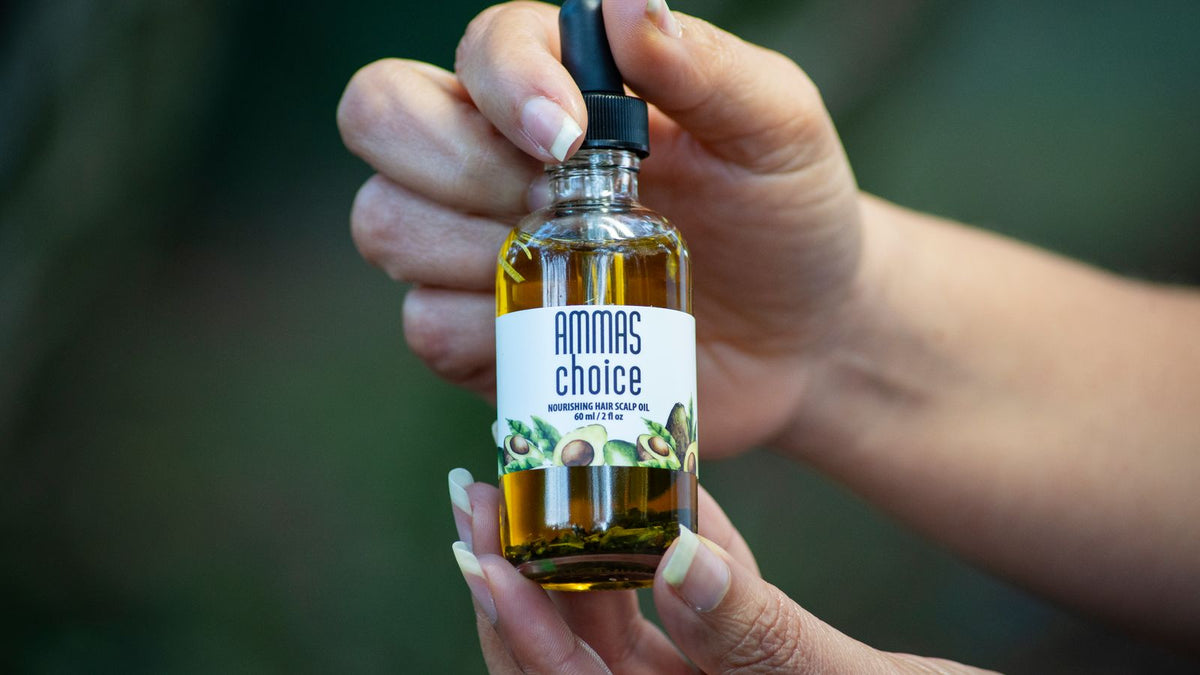
Our overnight scalp elixir
Grow More® Overnight Scalp Elixir, £25.50. A leave in scalp serum worked into the roots at night, supporting a healthy scalp environment while you sleep.
Key takeaways
- Melatonin is a hormone your body makes in the dark. It is best known for timing sleep, not for hair.
- The hair evidence for melatonin is limited, mostly topical, and comes from two small studies rather than a large body of work.
- Oral melatonin is prescription-only in the UK. Buying it from overseas websites is not a sensible shortcut.
- Work out first whether you are seeing hair loss, hair shedding or hair breakage. They have different causes and different answers.
- A consistent, gentle cosmetic routine gives you something visible to do while any underlying cause is being sorted out with your GP.
What is melatonin, and why do people link it to hair?
Melatonin is a hormone produced by the pineal gland in the brain, mainly at night, and it is the body's main signal that darkness has arrived. Its day job is timing: it helps set the sleep and wake rhythm rather than knocking you out the way a sedative would. It is also an antioxidant, and it turns up in tissues far away from the brain, including the skin.
The hair connection comes from that last point. Hair follicles are metabolically busy little organs that run on their own cycles, and laboratory work has found melatonin receptors in human hair follicles. That finding is what launched the interest in melatonin for hair growth: if follicles can respond to melatonin, the reasoning goes, perhaps applying it to the scalp does something useful. That is a reasonable hypothesis. It is not the same thing as a proven result.
Does melatonin for hair growth actually have evidence behind it?
The honest answer is that melatonin for hair growth has two small supporting studies and very little else. In 2004, a team led by Tobias Fischer published a pilot randomised controlled trial in the British Journal of Dermatology in which 40 women with androgenetic alopecia or diffuse hair loss applied a 0.1% topical melatonin solution or a placebo for six months. The researchers reported an increase in the proportion of follicles in the anagen (active) phase compared with placebo.
A 2012 paper in the International Journal of Trichology followed up on topical melatonin in androgenetic alopecia and reported similar directional findings. Both pieces of work are genuine, published research, and neither should be dismissed. But 40 participants is a pilot, not a verdict, and the field has not produced the large, independent, repeated trials that would turn a promising signal into settled science.
So the fair summary is this. There is a plausible mechanism, two small positive studies, and no large-scale confirmation. Anyone selling you melatonin for hair growth as a certainty is going considerably further than the published evidence allows.

Where does melatonin sit against everything else?
Evidence for hair sits on a spectrum, and it helps to see where any one option lands before you spend money on it.
| Strength of evidence | What sits here | What it means for you |
|---|---|---|
| Well established, medical route | Options a GP or dermatology service can discuss with you once the cause is clear | Start here if hair is thinning at the parting or crown, or if shedding has lasted more than six months |
| Cosmetic support, reliable and visible | Gentle cleansing, conditioning, reduced heat, protective styling, leave-on scalp care | Will not change a follicle's biology, but keeps the hair you already have on your head for longer |
| Limited evidence, plausible | Topical melatonin, rosemary oil, caffeine, niacinamide | Worth including if you enjoy the routine, not worth relying on alone |
| No meaningful human evidence | Most exotic powders, tinctures and single-ingredient miracle claims | Save your money |
Melatonin for hair growth belongs in the third row. That is not an insult. It simply means the sensible way to use it is as an extra, alongside a routine that is already doing the reliable work.
Hair loss, hair shedding or hair breakage: which are you actually seeing?
These three words get used interchangeably and they should not be. Getting this right changes what you do next more than any ingredient will.
- Hair loss is a follicular problem. The follicle itself is producing finer, shorter hairs, or has stopped producing them. Androgenetic hair loss and alopecia areata sit here. You notice a widening parting, a thinner ponytail or visible scalp, rather than a pile of hair in the plughole.
- Hair shedding is a cycle problem. A trigger such as illness, surgery, childbirth, a crash diet or a period of severe stress pushes an unusually large batch of follicles into the resting phase at once. Two to three months later they release together. This is telogen effluvium, and it is dramatic, frightening and usually temporary.
- Hair breakage is a fibre problem. The follicle is fine and the hair is growing normally, but the strand is snapping partway along its length because of bleach, heat, tight styling or friction. The giveaway is short broken pieces of varying lengths and hair that never seems to get longer.
Melatonin, if it does anything at all, is aimed at the first category. It has nothing to offer the third. If your hair is snapping, no scalp solution on earth will help you as much as backing off the straighteners will. Our guide to what triggers telogen effluvium and how long it lasts is the better starting point if your problem is sudden, heavy shedding.
Get a discount on the thinning hair range
Join the Watermans mailing list and we will email a discount code straight to your inbox, so you can try the thinning hair range for less. Vegan, made in the UK, over 6.5 million bottles sold since 2012.
Can you buy melatonin in the UK?
Melatonin taken by mouth is a prescription-only medicine in the UK. It is licensed mainly for short-term use in insomnia in adults aged 55 and over, and in certain situations in children and young people, and the NHS and the British National Formulary both set out those limits. You cannot walk into a pharmacy and pick it up the way you can in the United States, where it is sold as a food supplement on the high street.
That difference matters, because a great deal of the internet's enthusiasm comes from countries where it is cheap and unrestricted. Ordering supplements from overseas sellers means no UK quality oversight, no certainty about what is really in the capsule and no one to speak to when something goes wrong. If you think melatonin might genuinely help you sleep, the sensible route is to raise it with your GP.
Topical melatonin scalp solutions occupy a greyer area and are sold in some markets as cosmetics. Availability in the UK is patchy and the formulations vary widely, which is another reason the published research is hard to apply to whatever bottle you find online.
What does sleep itself do for hair?
Sleep is the part of this story that is genuinely worth your attention, and it is free. Poor sleep raises circulating cortisol, and sustained physiological stress is a well recognised trigger for telogen effluvium, the heavy shedding described above. Nobody needs a trial to tell them that a run of broken nights leaves them feeling worse, and hair is not exempt from that.
So the practical version of this may be less about the molecule and more about the behaviour. A dark bedroom, a consistent bedtime, less screen light in the last hour and less late caffeine all raise your own melatonin production at the right time of night. The NHS sleep guidance covers this in more detail, and it costs nothing to try.

What is a realistic timeline for any hair change?
Hair moves slowly, and this catches almost everyone out. Scalp hair grows at roughly one centimetre a month. A follicle that shifts back into its active phase today produces a hair you will not see for weeks, and will not be able to measure for months.
The Fischer study ran for six months, which is about the minimum sensible window. If you try anything for hair and judge it after three weeks, you have not tested it, you have tested your patience. Take a photograph in the same light, in the same place, at the same parting, once a month. Memory is a terrible instrument for this and photographs are an honest one.
One thing worth knowing: as follicles return to the active phase after a shed, you get a fringe of short, fine, sometimes wispy new hairs around the hairline. People routinely mistake these for breakage. They are the opposite. They are the best sign on the whole scalp.
What can you do that gives a visible result sooner?
While the underlying cause is being worked out, the fastest visible change comes from keeping the hair you already have. Retention is unglamorous and it works. That means gentler cleansing, proper conditioning through the mid lengths and ends, far less heat, looser styling and detangling from the ends upwards.
Two of our own products fit alongside a melatonin for hair growth routine without pretending to be medicine. Both are cosmetic.

Grow More Elixir, Leave-In Hair Density Serum, £25.50
An overnight leave-on scalp elixir with biotin, caffeine, rosemary and niacinamide. If the appeal of a topical melatonin solution was the nightly scalp ritual, this is the cosmetic version of that habit, and it is actually available in the UK.

Grow Me Hair Growth Shampoo, £14.95
Sulphate-free, vegan and made in the UK, with caffeine, rosemary and hydrolysed lupine protein. It reduces breakage in the wash, which is where a surprising amount of hair is lost before it ever reaches the towel.
Over 6.5 million bottles sold since 2012. Made in the UK.
If your concern is density rather than damage, our guide to what genuinely makes hair look thicker and what cannot is a more useful read than any single ingredient page. And because so much of this comes back to the skin under the hair, it is worth knowing how to look after your scalp properly.

Who should be cautious about melatonin?
Because oral melatonin is a prescription-only medicine in the UK, the caution list is a matter for your GP rather than for us. That said, melatonin is a hormone, and hormones interact with things. It is not appropriate to self-source it if you are pregnant or breastfeeding, if you take anticoagulants, anticonvulsants, immunosuppressants or sedatives, if you have an autoimmune condition or epilepsy, or for a child, without proper medical advice.
Daytime drowsiness is the most commonly reported effect, which matters if you drive or operate machinery. And if hair is your only reason for considering it, the evidence simply does not justify taking a hormone. That is an easy call. If you are comparing serums, our guide to topical melatonin explains how skin products differ from the sleep medicine and where the reviews disagree.
When to see your GP. Speak to your GP if hair is coming out in patches, if the scalp is sore, scaly, red or itchy, if shedding has carried on for more than six months, if hair loss started after a new medicine, or if it comes with fatigue, weight change or heavy periods. Those point to causes such as iron deficiency or a thyroid problem that a blood test can settle quickly.
Frequently asked questions
Does melatonin for hair growth work?
The evidence here is limited to two small studies of a topical scalp solution, which reported modest shifts in the hair cycle. That is a promising signal rather than a settled answer, and there is no good evidence at all that taking melatonin by mouth does anything for hair.
Can I buy melatonin over the counter in the UK?
No. Oral melatonin is a prescription-only medicine in the UK, unlike in the United States where it is sold as a supplement. Speak to your GP rather than ordering it from an overseas website.
Is topical melatonin the same as taking a melatonin tablet?
No, and the difference matters. The published hair research used a low-strength solution applied to the scalp, not a tablet. Findings from a topical study cannot be transferred to an oral capsule.
How long would I have to use it before I could tell?
Six months is the sensible minimum, because scalp hair grows at roughly one centimetre a month. The 2004 trial ran for six months. Judging any hair routine at three or four weeks tells you nothing.
Will better sleep on its own help my hair?
Possibly, and it is free. Sustained stress and poor sleep are recognised triggers for telogen effluvium, the heavy temporary shedding that shows up two to three months after a stressful period. Fixing sleep will not change a follicle's genetics, but it removes one trigger.
Does melatonin cause hair loss?
There is no good evidence that melatonin causes hair loss. If shedding started shortly after any new medicine, tell your GP, because the timing is the useful clue.
Can I use a scalp serum and melatonin at the same time?
If a GP has advised melatonin for sleep, a cosmetic scalp serum is a separate matter and does not interact with it. Apply the serum to a dry or towel-dried scalp and leave it on.
My hair is snapping rather than falling from the root. Is melatonin relevant?
No. Snapping mid-length is hair breakage, a problem with the fibre rather than the follicle. Heat, bleach and tight styling are the causes, and conditioning, heat protection and gentler handling are the answers.
Sources & References
- Fischer TW et al. Melatonin increases anagen hair rate in women with androgenetic alopecia or diffuse alopecia: results of a pilot randomized controlled trial. British Journal of Dermatology, 2004. PubMed 14996107
- Fischer TW et al. Topical melatonin for treatment of androgenetic alopecia. International Journal of Trichology, 2012. PubMed 23766606
- NHS. Melatonin: a medicine used for sleep problems. nhs.uk
- NICE British National Formulary. Melatonin. bnf.nice.org.uk
- NICE Clinical Knowledge Summaries. Insomnia. cks.nice.org.uk
- NHS. Hair loss. nhs.uk
- NHS. How to get to sleep. nhs.uk
Where sources disagree, we have said so. The two melatonin studies are positive; the wider field has not confirmed them at scale. Both facts are in this article deliberately.
What is the bottom line on melatonin for hair growth?
Melatonin for hair growth is a genuinely interesting idea with two small studies behind it, a real biological rationale, and nowhere near enough evidence to build a plan around. In the UK the oral form is prescription-only anyway, which settles the question for most people. The parts of this you can act on today are free: work out whether you are dealing with hair loss, hair shedding or hair breakage, protect your sleep, handle your hair more gently, and see your GP if the shedding is heavy, patchy or persistent. If your question is about products or a routine rather than a medical one, you can talk to Gail Waterman, our co-founder, as an AI avatar on the Watermans homepage.
If you are changing one thing this month, make it the wash: the Grow Me hair growth shampoo is sulphate free and built for the scalp. Vegan, made in the UK.
Watermans products are 100% cosmetic and do not treat medical hair loss. Individual results may vary.