How to Clean a Derma Roller Properly and Safely
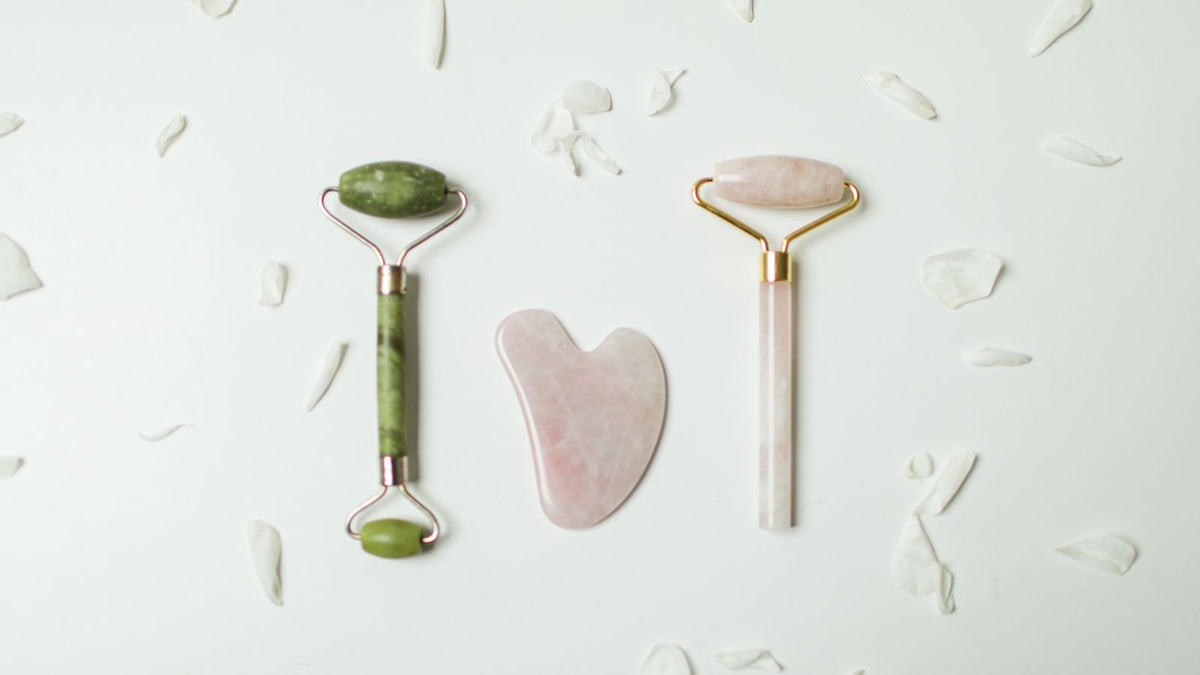
Knowing how to clean a derma roller properly takes about two minutes and matters more than any other part of using one. Rinse it under hot running water straight after use, swirl it in 70 percent isopropyl alcohol for ten minutes, shake it off and stand it needle side up to air dry in a closed case. Never share one, and replace it long before it looks worn. Before you buy a device, our guide to microneedling for hair loss sets out the six checks to make first.
The scalp half of the routine
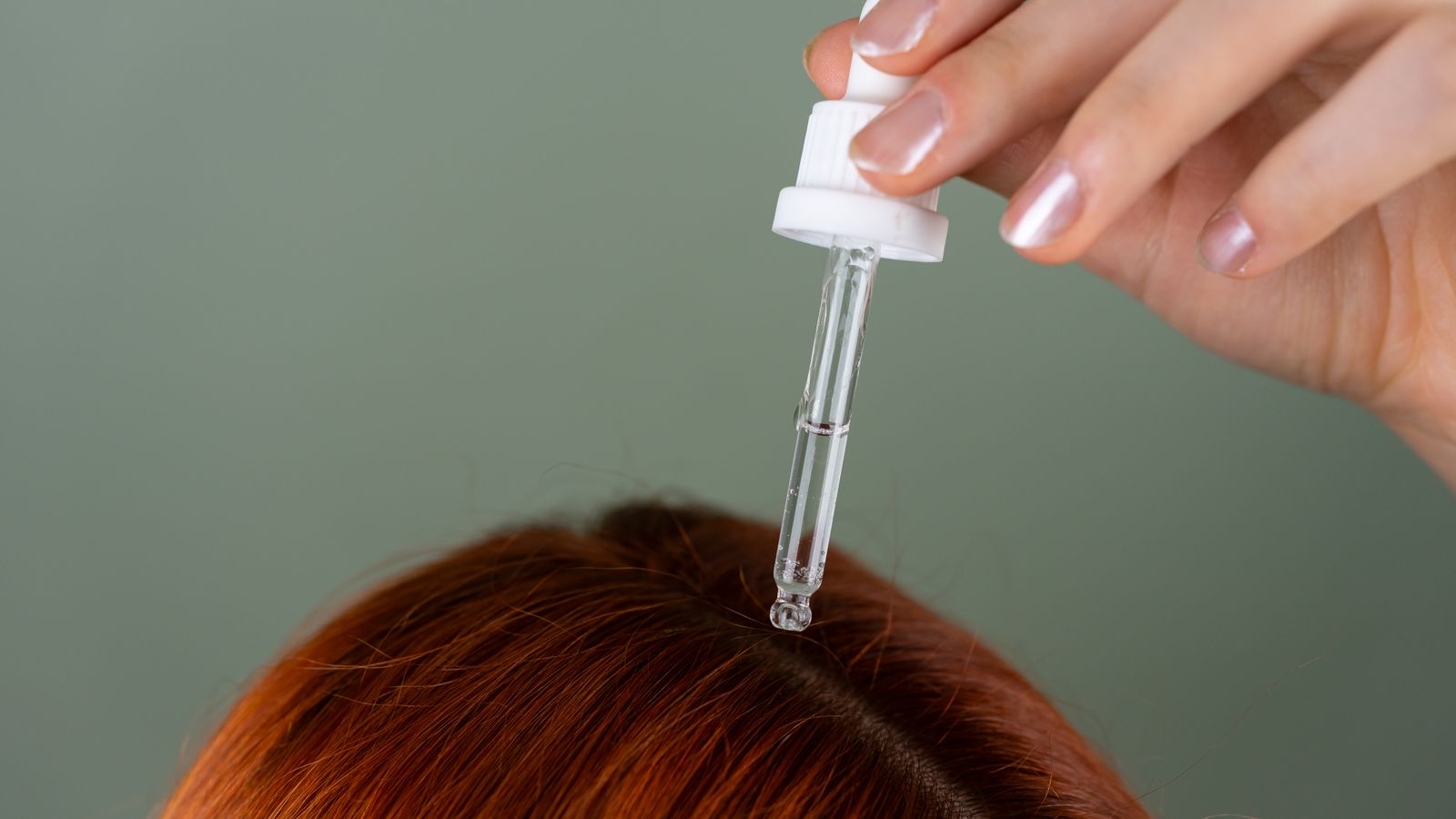
Knowing how to clean a derma roller is the safety half. The routine half is what goes on the scalp between sessions. Grow More® Scalp Elixir, £25.50, is a leave on serum with caffeine, rosemary and niacinamide, and the sulphate free Grow Me® Shampoo, £14.95, washes without stripping a scalp that is being rolled.
Key Takeaways
- Clean it before AND after every session. Before, because it has been sitting in a bathroom; after, because it is covered in skin cells and blood.
- 70 percent isopropyl alcohol is the right strength. Higher percentages evaporate too fast to work properly.
- Alcohol disinfects. It does not sterilise. Nothing you can do at a bathroom sink makes a roller surgically clean.
- Never share a derma roller with anyone, including a partner. It draws blood, so it carries the same logic as a razor.
- Replace it roughly every ten to fifteen sessions. Blunt, bent needles tear rather than pierce and that is how scarring happens.
- Air dry needle side up in its own case. Storing it damp or face down is how you undo the cleaning you just did.
This page is about hygiene and maintenance only. If you are still deciding whether to use one at all, read is a derma roller good for hair growth first, and microneedling versus dermarolling if you are choosing between device types.
Why does cleaning a derma roller matter so much?
Understanding why you clean a derma roller makes the routine stick. A derma roller is not a face brush. It is several hundred fine needles designed to make hundreds of tiny punctures through the skin barrier, and it does so successfully. That means two things happen at once: the device picks up blood, plasma and skin cells, and the skin it just rolled over is temporarily open.
Anything living on those needles at the start of the next session goes straight past the barrier that normally keeps it out. Between sessions, a roller sitting in a warm humid bathroom with organic material dried onto it is close to an ideal culture surface. Bacteria form biofilms on textured surfaces like needle bases, and biofilm is markedly harder to shift than loose contamination, which is exactly why the mechanical rinse matters as much as the alcohol.
The realistic risks are folliculitis, localised bacterial infection and, where a device is shared, transmission of blood borne infection. None of these is common with sensible hygiene, and all of them are avoidable. If the skin or scalp you have rolled becomes hot, spreading red, swollen or painful over the following days, that is one for a GP rather than another session.
How to clean a derma roller: what are the steps?
Doing this properly means two cleans in every session, and people routinely skip the first one. Here is how to clean a derma roller at both ends of a session.
Before you roll
- Fill a clean cup with 70 percent isopropyl alcohol, enough to cover the head completely.
- Soak the head for five to ten minutes. Swirl it a couple of times so alcohol reaches between the needles rather than sitting in a bubble.
- Lift it out and let it air dry for a minute or two. Do not wipe the needles with a towel; you will bend them and add lint.
After you roll
- Rinse under hot running water immediately, holding it so the water flows through the needles rather than at them. Do this before anything has a chance to dry on. This mechanical step removes the bulk of the organic material and is not optional.
- Add a drop of mild washing up liquid or a foaming cleanser to a cup of warm water and swirl the head through it for thirty seconds. Never scrub with a brush or cloth.
- Rinse again under hot running water until no foam remains.
- Soak in 70 percent isopropyl alcohol for ten minutes. This is the disinfecting step and it needs the full contact time. A quick dip does very little.
- Shake off the excess and stand it needle side up on clean kitchen paper, somewhere with air movement, until completely dry.
- Store it in its own closed case, not loose in a drawer or a washbag, and not in the shower.

What alcohol should you use, and what does it actually kill?
Use isopropyl alcohol at 70 percent, or a surgical spirit product of similar strength. This is the single most misunderstood point in every guide on how to clean a derma roller, so it is worth being precise.
Stronger is not better. Ninety or ninety nine percent isopropyl evaporates so quickly that it does not stay in contact long enough to do its job, and it also fixes proteins in place rather than penetrating them. The water in a 70 percent solution is doing real work. If all you have is high strength alcohol, dilute it with previously boiled cooled water to roughly seven parts alcohol to three parts water.
Alcohol disinfects but does not sterilise. This is the honest limit of home cleaning. Alcohol is effective against most vegetative bacteria, many viruses and fungi, but it is not reliably sporicidal, and the gap between disinfection and true sterilisation is well documented in the infection control literature. Work on alcohol as a surgical antiseptic has explicitly questioned how far it can be relied on where genuine sterility is needed. Practically, that means good home hygiene reduces risk a great deal and never eliminates it, and it is another reason not to share a device or to keep one past its useful life.
Do not try to sterilise it yourself. Boiling warps the plastic head and blunts the needles. Dishwashers cook food residue onto it. Household bleach corrodes the metal and is unsafe to leave on skin contact surfaces. UV boxes sold for phones do not reach the shaded metal between needles. A ten minute alcohol soak on a properly rinsed head is as good as home cleaning gets, and it is good enough when the device is replaced on schedule.
Get a discount on the thinning hair range
Join the Watermans mailing list and we will email a discount code straight to your inbox, so you can try the thinning hair range for less. Vegan, made in the UK, over 6.5 million bottles sold since 2012.
How often should you replace a derma roller?
Sooner than most people do. Fine needles blunt and bend with use, and a blunt needle does not make a clean puncture: it drags, tears and pushes skin down ahead of it. Comparative work on microneedle devices has found that the condition and design of the needle head materially affects the result the skin sees, which is the clinical version of a point every user eventually learns the hard way.
| Signal | What it means | Action |
|---|---|---|
| Ten to fifteen sessions used | Normal blunting | Replace it as routine |
| It drags or scratches instead of gliding | Needles bent or blunt | Stop and replace immediately |
| Visible rust, discolouration or residue | Corrosion or poor drying | Bin it, and review how you dry it |
| Dropped on the floor | Bent needles, almost every time | Bin it. Do not clean and reuse. |
| More than six months old | Age alone | Replace regardless of session count |
Rollers are cheap and skin is not. If you are hesitating over whether a head is still good, that hesitation is your answer.

Which mistakes actually cause problems?
- Sharing it. The most serious mistake on the list. A derma roller draws blood. Apply razor logic: one person, one device, no exceptions, including partners and family.
- Rinsing with tap water and calling it done. Water removes debris. It disinfects nothing. The alcohol soak is the step that matters.
- Leaving it to dry face down. Needles pressed into a surface bend, and the trapped moisture underneath is exactly what you were trying to avoid.
- Storing it in the shower or a damp washbag. Warm and wet is the wrong environment for anything you intend to put through your skin.
- Wiping the needles with a towel or cotton pad. Bends needles and leaves fibres behind. Air dry only.
- Reusing the alcohol. Fresh alcohol each time. A cup of used, diluted, debris flecked solution is not doing the job.
- Rolling over active acne, eczema, psoriasis, cold sores, warts or infected skin. You will spread it. Wait until the skin is clear.
Does cleaning differ for a scalp roller?
How to clean a derma roller used on the scalp is exactly the same routine, but two things change in practice. Scalp rolling picks up more sebum and product residue than facial rolling, so the mechanical rinse and detergent step matter more; a head that looks clean can still be greasy between the needles. And hair gets caught, so check the head under good light and remove any strands before the alcohol soak, because a wrapped hair keeps disinfectant off the metal underneath it. Before you buy one, it is worth reading whether a 0.25mm derma roller does anything for thinning hair.
The other practical difference is what you put on afterwards. Skin is at its most permeable straight after rolling, which is precisely when it is least sensible to apply an actively fragranced or high strength product. Leave the scalp alone for the rest of the day and return to your normal routine the following morning. Our guides to microneedling for hair loss at home and whether a 0.25mm roller is effective go further into depth choice and frequency.
Do you have hair loss, hair shedding or hair breakage?
Most people reach a derma roller because of thinning, so it is worth separating three things that look alike and are not.
Hair loss is follicular: the parting widens, the temples recede, the follicle itself is producing less. Hair shedding is a cycle event: full length hairs with pale bulbs come out in quantity a few months after illness, surgery, childbirth or crash dieting, and it usually settles within a year. Hair breakage is fibre failure: short fragments without bulbs, split ends, a rough feel, caused by heat, bleach and tension.
Rolling is aimed at the first of the three, is irrelevant to the second, and can make the third worse if you are dragging a roller through fragile hair. If short broken pieces are what you are finding, address the breakage and leave the roller in the drawer.

Where does cosmetic hair care fit around rolling?
Not on the same day, and not on freshly rolled skin. Cosmetic products are formulated for intact skin, and applying them to a scalp you have just perforated is how people end up with irritation they then blame on the roller. Roll, leave the scalp alone, and pick your routine back up the next morning.

Grow Me® Shampoo · £14.95
Sulfate free, with rosemary, caffeine, biotin and niacinamide. A gentle cleanse the day after a session, once the scalp has closed up, rather than immediately afterwards.

Grow More® Leave In Scalp Elixir · £25.50
A leave on serum for lower density areas, used on ordinary intact scalp on non rolling days. Supports a comfortable scalp environment; it is a cosmetic, not a medicine.
Vegan, made in the UK, and over 6.5 million bottles sold since 2012.
Frequently asked questions
Can you clean a derma roller with boiling water?
No. Boiling warps the plastic head and blunts the fine needles, and it does not sterilise the device anyway. Rinse under hot running water, then soak in 70 percent isopropyl alcohol for ten minutes.
How long should a derma roller soak in alcohol?
Ten minutes in 70 percent isopropyl alcohol, in fresh solution each time. A quick dip does very little because disinfection needs contact time.
Is 70 percent or 99 percent alcohol better for a derma roller?
70 percent. Higher concentrations evaporate too quickly to stay in contact and fix proteins in place rather than penetrating them. The water content in a 70 percent solution is doing useful work.
Can two people share one derma roller if it is cleaned between uses?
No. Home cleaning disinfects but does not sterilise, and the device draws blood. Treat it like a razor or a toothbrush: one person, one device.
How do you know when to throw a derma roller away?
After roughly ten to fifteen sessions, or at six months, or immediately if it drags, scratches, shows rust or has been dropped. Blunt and bent needles tear skin instead of piercing it.
Do you need to clean a derma roller before use as well as after?
Yes. It has been sitting in storage since the last session, so give it a five to ten minute alcohol soak beforehand and let it air dry before it touches skin.
What should you do if your skin gets infected after rolling?
Stop rolling and see a GP or pharmacist, particularly if the area is hot, spreading, swollen or painful. Do not keep rolling over it and do not try to manage a spreading skin infection at home.
Sources & References
- Huerkamp MJ. Alcohol as a disinfectant for aseptic surgery of rodents: crossing the thin blue line? Contemporary Topics in Laboratory Animal Science, 2002. PubMed 11860252. On the gap between disinfection and sterility.
- Oh E, et al. Enhanced biocidal efficacy of alcohol based disinfectants with salt additives. Scientific Reports, 2025. PubMed 39890978. On the limits of alcohol alone.
- El-Domyati M, et al. Atrophic facial acne scars; bilateral comparison of two microneedle devices. Journal of Cosmetic and Laser Therapy, 2024. PubMed 39591948. On device and needle design affecting outcome.
- NHS. Cellulitis, on recognising a spreading skin infection and when to seek urgent advice. nhs.uk
- Medicines and Healthcare products Regulatory Agency. Single-use medical devices: implications and consequences of reuse. gov.uk
What is the bottom line on how to clean a derma roller?
How to clean a derma roller comes down to four things done consistently: rinse it under hot running water the moment you finish, wash it with a drop of detergent, soak it for ten minutes in fresh 70 percent isopropyl alcohol, and air dry it needle side up in its own case. Do the same soak again before the next session. Never share it, never boil it, and replace it every ten to fifteen sessions or the moment it starts to drag. Home cleaning disinfects rather than sterilises, so the discipline of replacing the head on schedule is doing as much of the safety work as the alcohol is. If skin becomes hot, spreading or painful after a session, stop and see your GP. If your question is about products or a routine rather than a medical one, you can talk to Gail Waterman, our co-founder, as an AI avatar on the Watermans homepage.
If you are looking for something to use on the scalp between sessions rather than straight after one, our leave-on hair growth serum goes onto clean, settled skin at the parting and is designed to keep the scalp comfortable and hair looking fuller.
Watermans products are 100% cosmetic and do not treat medical hair loss. Individual results may vary.