Hormone Therapy Hair Vitamins: What to Test Before You Take Any
hormone therapy hair vitamins are worth taking only when a blood test shows something is genuinely low, because correcting a real deficiency helps and topping up a normal level does not. Ask your GP about ferritin, full blood count, thyroid function and vitamin D first. The NHS advises adults consider 10 micrograms of vitamin D daily in autumn and winter, and lists zinc, selenium and iron among nutrients where too much causes harm.
Our hair, skin and nails gummies
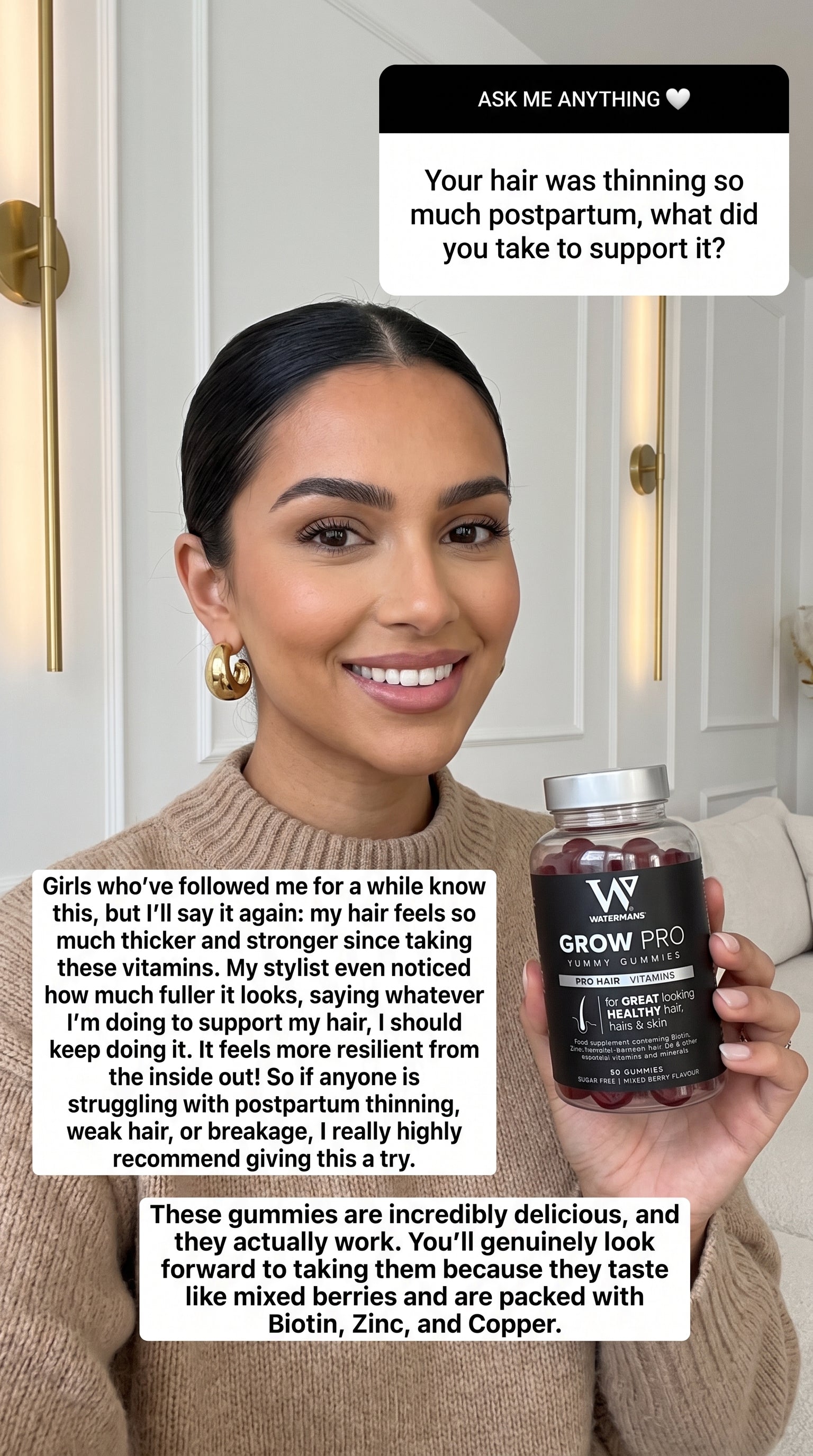
GrowPro® Hair, Skin & Nails Gummies, £22.95. Sugar free daily gummies for people who would rather chew than swallow a tablet, supporting hair care from the inside out.
Key takeaways
- Test first, supplement second. A nutrient you are not short of has nothing to correct.
- Ferritin, full blood count, thyroid function and vitamin D are the usual first panel. B12 and folate are often added.
- The NHS vitamin D advice is 10 micrograms daily for adults, especially October to early March.
- Iron is the one not to self start. It needs a blood test, and excess causes problems.
- Zinc and selenium have real upper limits. Stacking a multivitamin with a hair gummy is how people exceed them.
- A shedding wave from a hormone change runs 6 to 9 months whatever you swallow. Vitamins help only where a deficiency is also involved.
What are hormone therapy hair vitamins meant to do, and what can they not do?
Hormone therapy hair vitamins are food supplements sold on the premise that a nutrient shortfall is holding your hair back. That premise is sometimes correct, because several deficiencies genuinely affect hair, and the NHS hair loss page lists nutritional factors among the causes. The logical limit is straightforward: a supplement can only correct a shortfall that exists.
What they cannot do is change your hair cycle or alter the sensitivity of your follicles to hormones. Those are the two mechanisms that drive most hormone related hair change, and no food supplement acts on either. So a product may be a perfectly reasonable purchase for a person whose ferritin is low, and a waste of money for the person standing next to them whose ferritin is fine.
This is also where marketing gets loose. Claims that a capsule delivers new growth or restores density go beyond what a food supplement can support, and UK advertising rules hold the advertiser to proving what they say. Reading a label sceptically is not cynicism, it is the correct response to a category built largely on hope. Our general hair vitamins guide and our piece on what hair vitamins can support go further into the category.

A blood test is what turns a guess into a decision. Everything in this category depends on it.
Which blood tests are worth asking your GP about?
The tests worth raising are the ones that identify common, correctable causes of hair change that are not hormonal at all. Iron deficiency anaemia and an underactive thyroid both affect hair, both are ordinary, and neither can be seen by looking at your head. A hormone change can be entirely real and still not be the only thing going on.
| Test | Why it is relevant to hair | What the NHS links say |
|---|---|---|
| Ferritin | Reflects iron stores. Low iron is a recognised cause of diffuse hair change | The iron deficiency anaemia page sets out symptoms and why it is confirmed by testing |
| Full blood count | Detects anaemia itself and other blood abnormalities alongside iron stores | Covered under NHS blood tests as a standard first line investigation |
| Thyroid function | An underactive thyroid commonly affects hair texture and density | The hypothyroidism page lists hair and skin changes among the features |
| Vitamin D | Widely low in the UK in winter, and the subject of a specific population recommendation | NHS advises adults consider 10 micrograms daily, particularly October to early March |
| Vitamin B12 and folate | Deficiency causes anaemia, which affects hair along with everything else | The B12 and folate deficiency anaemia page explains testing and causes |
Take the results seriously in both directions. A normal ferritin is useful information, because it removes iron from your list and stops you spending money and months on the wrong thing. If ferritin is the problem, our ferritin guide explains how that is usually approached.
Ask for the numbers, not just the verdict
It is worth noting your actual ferritin, thyroid and vitamin D figures rather than only hearing that they are normal, because a repeat test in six months is much more informative when you can compare it with the first.
Get a discount on the thinning hair range
Join the Watermans mailing list and we will email a discount code straight to your inbox, so you can try the thinning hair range for less. Made in the UK, over 6.5 million bottles sold since 2012.
What do UK safe intake limits actually say?
UK guidance sets out both recommended intakes and the points at which more becomes a problem, and the NHS vitamins and minerals pages are the plain English version. The headline for hair buyers is that several of the nutrients most heavily marketed for hair sit in the group where excess causes harm rather than extra benefit.
| Nutrient | Where UK guidance lands | What that means when buying |
|---|---|---|
| Vitamin D | NHS advises adults consider 10 micrograms daily, especially October to early March | A modest daily dose is the recommended one. Very high strength products go well beyond the advice |
| Iron | Confirmed by blood test, because excess causes side effects and complicates later testing | Do not start this one on your own. It belongs with your GP |
| Zinc | Listed among nutrients where taking too much is harmful | Check totals across every product you take, not per bottle |
| Selenium | Also listed with a meaningful upper limit | Easy to exceed if a multivitamin and a hair supplement overlap |
| Biotin | Deficiency is rare on a normal mixed diet | High strength products are common, but there is nothing to correct if you are not short |

Food covers most of this. Lentils and other iron sources do more for most people than a second bottle.
Food is the unglamorous answer for much of this. A varied diet covers most needs, with the vitamin D winter recommendation as the main general exception in the UK. If you do take something, read the combined totals across everything in your cupboard, because the commonest way people exceed an upper limit is by stacking two products that each looked reasonable alone.
How does this interact with shedding, thinning and breakage?
Nutrition interacts with all three differently, and knowing which one you have tells you whether hormone therapy hair vitamins are even relevant. Shedding is a timing event, in which many follicles release hairs early after a trigger and settle over 6 to 9 months. Thinning is a calibre change, where each hair grows finer across cycles. Breakage is mechanical, the fibre snapping after it has grown.
A deficiency can contribute to shedding, which is precisely why iron and thyroid function are checked. Pattern thinning driven by follicle sensitivity to hormones is not a nutritional problem and does not respond to being fed. Breakage is about handling, heat and tension, so no capsule touches it. Our guides to hair thinning and hair strength deal with the second and third of those.
The practical consequence: if your hair is snapping rather than falling from the root, a supplement is the wrong purchase no matter how good the blood results are. Look at what you are holding. A whole hair with a pale bulb came from the follicle. A short fragment with two blunt ends broke.
Where do supplements and cosmetics each fit?
Hormone therapy hair vitamins address intake, cosmetics address the strand, and neither addresses the follicle's response to hormones. Keeping those three lanes separate is the most useful thing to take away, because it stops you expecting the wrong result from each and then concluding nothing works.
Watermans products are made in the UK and over 6.5 million bottles have sold since 2012. They reduce breakage related hair fall and support a healthy scalp environment, so hair looks fuller and feels stronger. Our GrowPro gummies sit in the food supplement lane at everyday levels, for people who want a simple top up alongside meals rather than a high strength single nutrient product.

A daily gummy with biotin, zinc and selenium at everyday food supplement levels, for people who want a simple top up alongside meals.

Caffeine, biotin and hydrolysed lupine protein in a sulphate free daily cleanse for finer looking hair. Vegan and made in the UK.

A lightweight conditioner that improves slip so wet combing snaps fewer strands, leaving hair looking thicker and feeling stronger.

Two products that each looked sensible alone is the usual route to exceeding an upper limit.
If a blood test comes back normal and your hair is still changing, that result has not wasted your time. It has moved the question to the follicle and the hormone picture, which is a conversation for your GP or the clinician who manages your therapy. Our HRT and hair loss explainer covers what that conversation usually involves.
What is the bottom line on hormone therapy hair vitamins?
The bottom line on hormone therapy hair vitamins is that the blood test is the product decision. Ask your GP about ferritin, full blood count, thyroid function and vitamin D, and correct what is actually low rather than supplementing on principle. Follow NHS guidance on intakes, particularly the 10 microgram daily vitamin D recommendation for autumn and winter, and mind the upper limits on iron, zinc and selenium, especially when two products overlap. Nothing in a capsule changes your hair cycle or your follicle sensitivity.
For the part cosmetics genuinely own, Grow Me hair growth shampoo is a sulphate free daily cleanse for finer looking hair, and it does the job a supplement cannot: keeping the hair you already grew from snapping before you see the benefit of anything else.
Frequently asked questions
Do hormone therapy hair vitamins actually work?
Supplements correct deficiencies, and correcting a real deficiency can improve how hair behaves. If nothing is low, taking more of a nutrient does not add a benefit, and with some nutrients it adds risk. So the honest answer depends entirely on your blood results rather than on the product, which is why testing first is the sensible order.
Which blood tests should I ask about first?
Ferritin, a full blood count, thyroid function and vitamin D are the usual starting points, and vitamin B12 and folate are often added. Iron deficiency anaemia and an underactive thyroid both affect hair and both are common and correctable. Your GP decides which tests are appropriate for you. If your question is about products or a routine rather than a medical one, you can talk to Gail Waterman, our co-founder, as an AI avatar on the Watermans homepage.
How much vitamin D should I take?
The NHS advises that adults consider a daily supplement containing 10 micrograms of vitamin D, particularly between October and early March when sunlight in the UK is not sufficient to make enough. That is a general population recommendation rather than a hair specific one, and it is the figure worth knowing before buying anything stronger.
Is more biotin better for hair?
No. Biotin deficiency is genuinely rare in people eating a normal mixed diet, and where it is not present, extra biotin has nothing to correct. High strength single nutrient products are marketed on the strength of the deficiency case rather than on evidence in people who are not deficient, which is a different thing.
Can I take iron just in case?
No, and this is the one to be careful with. Iron should follow a blood test, because taking it without need can cause side effects and can also muddy the picture on any later test. The NHS pages on iron deficiency anaemia set out why it is treated as something to confirm rather than assume.
Are zinc and selenium safe to supplement?
Both have meaningful upper limits, and the NHS lists them among the nutrients where taking too much causes harm rather than benefit. They are useful where intake is genuinely low, and unhelpful above that. Read the label totals across everything you take, because stacking a multivitamin with a hair gummy is how people quietly exceed a limit.
Will vitamins help with a shedding wave?
Only if a deficiency is part of what set the shed going. A shedding wave triggered purely by a hormone change follows its own timeline of roughly 6 to 9 months regardless of what you take. Where iron or thyroid function is also contributing, correcting that is genuinely worth doing, which is exactly why the blood test comes first.
Do I still need a supplement if I eat well?
Often not, with the vitamin D winter recommendation being the main general exception in the UK. Food sources cover most needs in a varied diet, and the NHS pages on vitamins and minerals set out which nutrients commonly fall short. A blood test answers this for you specifically rather than in the abstract.
Sources and references
- NHS: Vitamins and minerals
- NHS: Vitamin D
- NHS: Others (including zinc and selenium)
- NHS: Iron deficiency anaemia
- NHS: Vitamin B12 or folate deficiency anaemia
- NHS: Underactive thyroid (hypothyroidism)
- NHS: Blood tests
- NHS: Hair loss
Watermans products are 100% cosmetic and do not treat medical hair loss. Individual results may vary.