


Is Juicing Healthy? Juice vs Smoothie, and What It Really Does
Juicing is a pleasant way to drink more vegetables, but it is not better than eating them. Juicing strips out most of the fibre and concentrates the sugar into a glass you can finish in a minute, which is why UK guidance caps juice at 150ml a day and counts it as no more than one of your five a day. Smoothies keep the fibre, so they behave far more like the original food. And no juice detoxes anything: your liver and kidneys already do that job.
Last updated: August 2026
Key takeaways
- Juicing removes most of the fibre. Blending keeps it, which is the single biggest difference between a juice and a smoothie.
- UK guidance limits juice and smoothies combined to 150ml a day, counting as one portion of five a day no matter how much you drink.
- The sugars in juice count as free sugars. The identical sugars inside whole fruit do not.
- Detox is a marketing word. No juice cleanse has been shown to improve how your liver or kidneys clear anything.
- Beetroot juice has genuine evidence behind it for blood pressure and exercise performance. Celery juice does not.
- Vegetable-led juices beat fruit-led ones on sugar, but bring their own cautions around oxalates, vitamin K and grapefruit.
What does juicing actually remove from the food?
A juicer separates liquid from pulp, and the pulp is where most of the fibre lives. You keep water, sugars, most vitamins and many polyphenols. You lose the insoluble fibre that slows digestion and feeds gut bacteria, and a good share of the soluble fibre too, depending on the machine.
That loss is not trivial, because fibre is doing several jobs at once. It slows the rate sugar enters your bloodstream, it makes you feel full, it feeds the gut microbiome, and it adds bulk. Remove it and you have converted a food you would chew for several minutes into a drink you finish in one. A glass of apple juice can represent three or four apples that you would never have sat down and eaten.
Juice or smoothie: which is actually better?
Smoothies, for most purposes and most people. A blender keeps the whole fruit or vegetable, so the fibre stays in and the drink behaves more like the original food. Juice wins only when the pulp is genuinely the problem, such as during certain medical diets, or when a specific compound is the point.

| Juice | Smoothie | |
|---|---|---|
| Fibre | Mostly removed with the pulp | Retained, since nothing is discarded |
| Fullness | Low, easy to drink a lot without noticing | Higher, thicker texture slows you down |
| Blood sugar | Faster rise, especially fruit-led juices | Slower, fibre blunts the curve |
| UK five a day | Maximum one portion, 150ml | Maximum one portion, 150ml |
| Waste | Significant pulp discarded | None |
| Best use | A small glass alongside a meal, or targeted use such as beetroot before exercise | A genuine snack or part of breakfast, especially with protein added |
Worth noting that both are capped at one portion of five a day in UK guidance, whatever the volume. That is a deliberate policy choice: the aim is to stop drinks displacing the whole vegetables and fruit that do the real work.
How much juice is too much?
The UK recommendation is a maximum of 150ml of juice or smoothie per day, which is a small glass rather than the tumbler most people pour. The reason is sugar: once the fibre and structure are gone, the sugars are classed as free sugars, in the same bracket as those added to a soft drink.

Adults are advised to keep total free sugars under about 30g a day, so a large glass of apple or orange juice can account for most of that before you have eaten anything. Two practical habits help: drink juice with a meal rather than alone, which slows absorption, and pour it into a small glass rather than deciding to stop halfway. We covered where the rest of your free sugars are hiding in foods high in fructose, and the underlying metabolism in fructose and insulin resistance.
Does juicing detox your body?
No. Detoxification is a continuous biochemical process carried out by your liver, kidneys, lungs, gut and skin, and it does not pause waiting for a green juice. No juice cleanse has been shown in controlled research to increase the clearance of any specific toxin, and cleanse marketing almost never names the substance it claims to remove.
An earlier version of this article repeated the detox framing, and that was wrong. The change people notice on a juice cleanse is real, but it is explained by eating far fewer calories, cutting alcohol and ultra-processed food, and drinking more fluid. You would get the same effect, with more protein and less expense, by eating normal food for a few days.
Juice-only cleanses carry real risks. They are very low in protein, which matters most for older adults and anyone unwell. Large volumes of green juice deliver a heavy oxalate load, which has been linked to kidney injury in case reports. They are unsuitable during pregnancy, in diabetes, in chronic kidney disease, or alongside many medications. If you are considering more than a day of any restrictive plan, talk to your GP or a registered dietitian first.
If the goal is a healthier liver specifically, the evidence points at weight, alcohol and overall diet quality rather than any drink. We set out what actually reduces liver fat in the fatty liver diet guide.
Which juice ingredients have real evidence behind them?
A few do, most do not, and the honest ranking looks very different from the wellness aisle. The table separates what has decent human trial support from what is popular but unproven.
| Ingredient | Claim | Evidence |
|---|---|---|
| Beetroot juice | Lowers blood pressure, improves exercise endurance | Reasonable. Dietary nitrate converts to nitric oxide. Effects are modest and short-lived, and it is not a substitute for blood pressure medication. |
| Tart cherry juice | Sleep, muscle soreness after exercise | Limited but real. Small trials, mostly in athletes, with modest effects. |
| Pomegranate and berry juices | Antioxidant and cardiovascular benefits | Mixed. Polyphenol content is genuinely high, clinical outcomes are inconsistent. |
| Orange and citrus juice | Immunity | Overstated. Vitamin C is real and useful, but most UK diets already meet the requirement, and extra does not prevent colds. |
| Celery juice | Anti-inflammatory, gut healing, cure-all | None. A social media phenomenon with no supporting human trials. Harmless, but it is just watery celery. |
| Green detox blends | Removing toxins | None. No named toxin, no measured clearance, no trials. |
Are vegetable juices better than fruit juices?
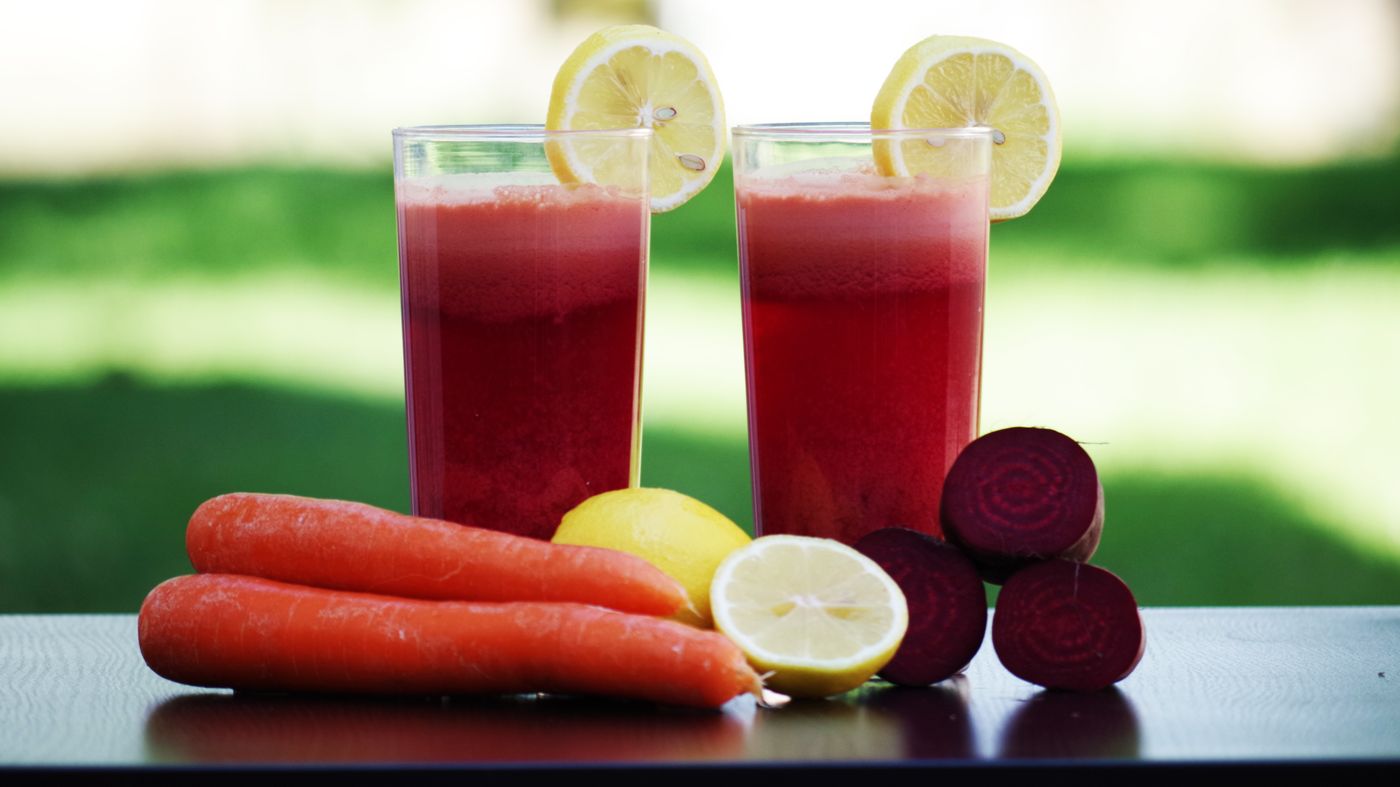
On sugar, clearly yes. A vegetable-led juice built on cucumber, celery, spinach and a little carrot carries a fraction of the sugar of an apple or orange juice, which is why the standard advice is to make vegetables the base and use fruit only to make it drinkable.
The original version of this article described vegetable juices as rich in fibre. That was incorrect, and worth stating plainly: juicing removes fibre regardless of what goes in. If fibre is what you want, you need to blend rather than juice.
Three cautions come with the vegetable side, and none of them get much airtime:
- Oxalates. Spinach, beetroot and chard are high in oxalate, and concentrating several servings into one glass daily raises the load considerably. People with a history of kidney stones should be careful and should ask their GP.
- Vitamin K. Leafy greens are rich in it, and large or wildly varying intakes interfere with warfarin. The rule is consistency, not avoidance, and it should be discussed with whoever manages your anticoagulation.
- Grapefruit. Grapefruit juice inhibits an enzyme system in the gut that metabolises many common medicines, including some statins and blood pressure drugs, which can raise drug levels in the blood. Check the patient information leaflet before you make it a habit.
Does spinach juice actually give you iron?
Some, but far less than the reputation suggests. Plant foods contain non-haem iron, which is absorbed much less efficiently than the haem iron in meat and fish, and spinach compounds the problem because its oxalates bind iron and reduce absorption further.
You can improve the odds. Vitamin C in the same drink meaningfully increases non-haem iron absorption, so a squeeze of citrus or some pepper in the mix is not just for flavour. Tea and coffee do the opposite through their polyphenols, so drinking them alongside an iron-rich meal is a small own goal. What you should not do is treat green juice as a treatment for low iron: if you are tired, pale or breathless, ask your GP for a ferritin and full blood count rather than guessing.

Where do coffee and green tea fit in?
Both are fine, and both are routinely oversold. Black coffee and green tea are the two most studied non-alcoholic drinks in the world, and the honest summary is that moderate intake fits comfortably into a healthy diet without being a health intervention in itself.
Green tea is often credited with fat loss. The trials that support it show very small effects, usually in the range of a rounding error against ordinary weight variation, and they do not justify treating it as a weight loss tool. Coffee genuinely improves alertness and exercise performance through caffeine. Neither compensates for a poor diet, and both are best judged on whether you enjoy them and sleep well.
How do you build a drink that is actually worth having?
Blend rather than juice, keep it mostly vegetables, add protein and fat, and drink it with or as part of a meal. That takes a drink that spikes and disappoints and turns it into something closer to food.
- Start with vegetables. Two thirds vegetables, one third fruit is a good ratio. Cucumber, spinach, celery and carrot form a base; half an apple or a few berries make it drinkable.
- Blend, do not juice. You keep the fibre, you waste nothing, and the drink actually fills you up.
- Add protein. Greek yoghurt, milk, kefir or a plain protein powder turns a snack you will forget into one that holds you until the next meal.
- Add a little fat. A spoon of nut butter, some seeds or a few slices of avocado slows absorption and helps you absorb fat-soluble vitamins such as A, D, E and K.
- Include a vitamin C source if you are relying on plant iron, and keep tea or coffee to a different hour.
- Keep the portion honest. Blended drinks are easy to over-pour. If it is a meal, treat it as one.
The fat point is more important than it sounds, because several vitamins are only absorbed properly in the presence of fat. We explained that pathway, and what goes wrong when it fails, in vitamin A deficiency and the bile link.
Can a juice fill a nutritional gap?
Only partly, and unpredictably. Juice supplies vitamin C, potassium, folate and a range of polyphenols. It supplies almost no protein, very little fat, and negligible iron, zinc, B12 or vitamin D, which are the nutrients most often short in real diets. Treating a green juice as a multivitamin is the most common mistake people make with juicing.
Food first is still the right order: a varied diet with enough protein does more than any drink. Where a supplement has a role, it is to cover a specific gap, not to replace meals. And if you are wondering whether any of this reaches your hair, we have separated what nutrition can and cannot do for it in juices and nutrition for hair growth.

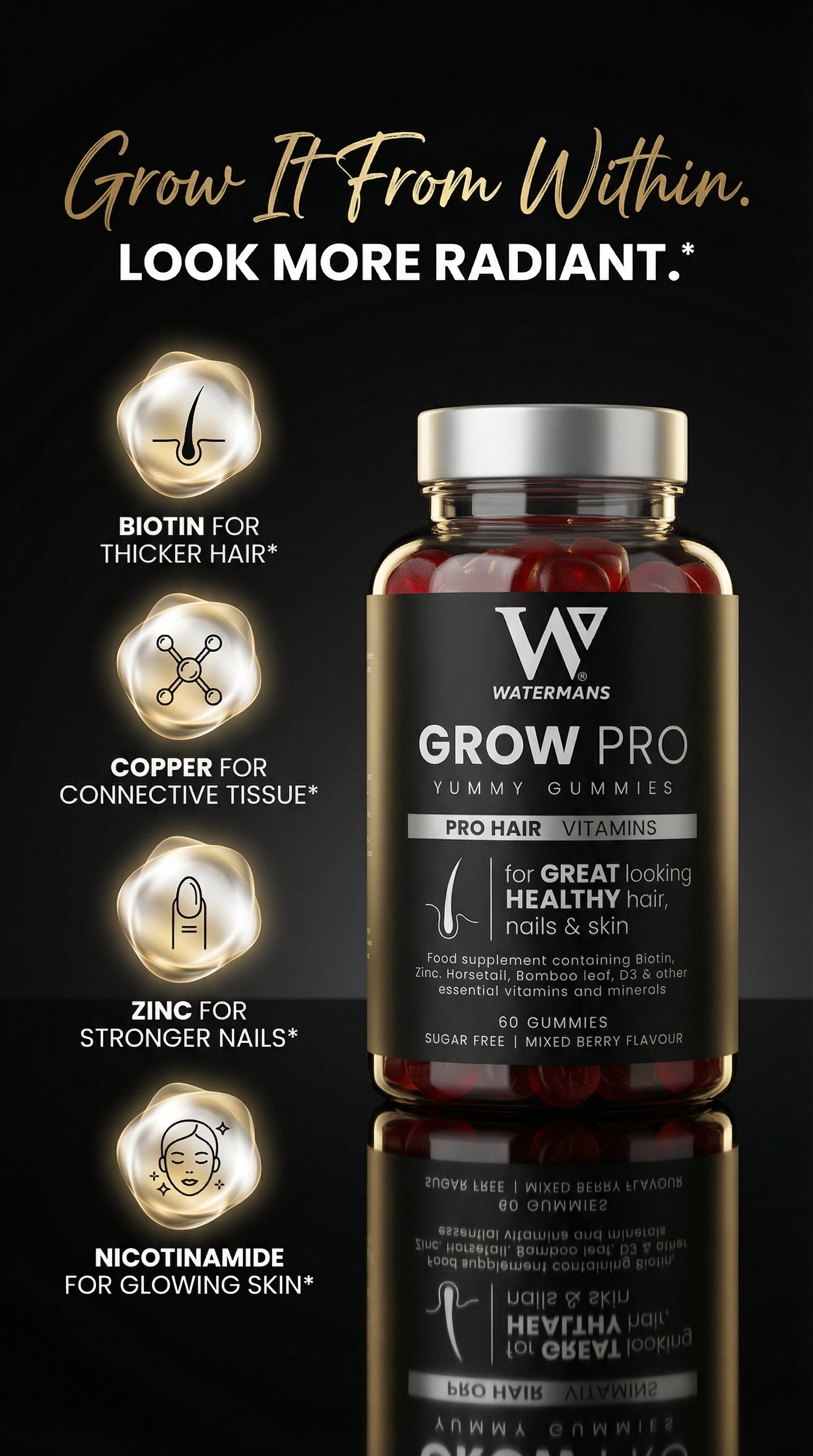
GrowPro® Hair, Skin & Nails Gummies, £22.95
Sugar-free and vegan, with biotin, zinc, selenium and B vitamins that contribute to the maintenance of normal hair, skin and nails. Relevant here for one honest reason: these are the nutrients a juice does not supply, and unlike most gummies these are not sweetened with glucose syrup. A supplement is a gap-filler, not a replacement for eating properly, and it does not treat any medical cause of hair loss. If you suspect a deficiency, ask your GP for a blood test.
Shop GrowPro GummiesFrequently asked questions
Is juicing healthier than eating whole fruit and vegetables?
No. Juicing removes most of the fibre, reduces fullness and speeds up sugar absorption, so the same produce eaten whole does more for you. Juice has a place as a small drink alongside a meal, not as a replacement for the food itself.
How much juice can I drink per day?
UK guidance recommends a maximum of 150ml of juice or smoothie a day, counting as one portion of your five a day regardless of how much you drink. The sugars in juice count as free sugars, which adults are advised to keep under about 30g daily.
Do juice cleanses actually remove toxins?
No. Your liver, kidneys, gut, lungs and skin handle detoxification continuously, and no juice cleanse has been shown to improve that process. Any short-term benefit people notice comes from eating fewer calories and cutting alcohol and processed food, not from the juice.
Is a smoothie better than a juice?
For most purposes, yes. Blending keeps the fibre, so the drink is more filling, releases sugar more slowly and wastes nothing. Adding protein and a little fat improves it further. Both still count as only one portion of five a day.
Which juice has the strongest evidence behind it?
Beetroot juice. Its dietary nitrate converts to nitric oxide, and trials show modest reductions in blood pressure and small improvements in exercise endurance. The effects are short-lived and it is not a replacement for prescribed blood pressure treatment.
Is celery juice good for you?
It is harmless, hydrating and low in sugar, but the health claims made for it have no supporting human trials. If you enjoy it, drink it. If you are drinking it hoping to fix inflammation or gut problems, the evidence simply is not there.
Can green juice interfere with medication?
It can. Leafy greens are high in vitamin K, which interacts with warfarin, and grapefruit juice affects the metabolism of many common medicines including some statins. Check the patient information leaflet, and speak to your pharmacist before making any juice a daily habit.
Does juicing spinach give me enough iron?
Not reliably. Spinach contains non-haem iron, which absorbs poorly, and its oxalates bind iron and reduce absorption further. A vitamin C source in the same drink helps, but persistent tiredness needs a ferritin test from your GP rather than more green juice.
The short version
Juice is a drink, not a health strategy. Keep it to a small glass with a meal, make vegetables the base, blend instead of juicing when you can, and add protein and a little fat to turn it into something that actually sustains you. Ignore detox claims entirely, and if you have kidney stones, take warfarin, or use medicines affected by grapefruit, check before making any juice a daily habit.
For the nutrients a juice cannot supply, our sugar-free GrowPro Hair, Skin & Nails Gummies cover biotin, zinc, selenium and B vitamins. Watermans is a founder-led British brand that has sold more than 5 million bottles since 2012, vegan and made in the UK.