Is 0.25mm Derma Roller Effective? An Honest Answer
Is 0.25mm derma roller effective? For getting a serum through the outer layer of skin, yes, and that is genuinely useful. For building collagen, softening scars or changing hair density, no. At 0.25mm the needles are simply too short to reach the layer of skin where those changes happen, so the honest answer depends entirely on which job you are asking it to do. Before you buy a device, our guide to microneedling for hair loss sets out the six checks to make first.
Our overnight scalp elixir
Grow More® Overnight Scalp Elixir, £25.50. A leave in scalp serum worked into the roots at night, supporting a healthy scalp environment while you sleep.
Key takeaways
- Asking is 0.25mm derma roller effective only has one answer if you also say effective at what. For absorption yes, for collagen and hair density no.
- A 0.25mm needle mainly improves how well a product penetrates the skin barrier. That is a real, measurable effect and the strongest reason to own one.
- The published research on needling and hair density uses far longer needles, typically around 1.5mm, under professional supervision.
- Rolling a 0.25mm device over the scalp is low risk, but it will not change follicle density by itself.
- Two or three sessions a week is plenty. Daily rolling sensitises skin without adding benefit.
- Replace the head every ten to fifteen uses. A blunt needle tears skin instead of piercing it.
- Hair loss, hair shedding and hair breakage are three separate problems, and a roller addresses none of them directly.
What Does a 0.25mm Derma Roller Actually Do to Skin?
Human skin is layered, and the numbers matter here more than the marketing does. The stratum corneum, the dead, flattened outer sheet that keeps water in and everything else out, is only around 10 to 20 microns thick on the face. The full living epidermis beneath it runs to roughly 50 to 100 microns depending on the body site. A 0.25mm needle is 250 microns long, which sounds tiny until you compare it to those figures.
So a 0.25mm needle passes comfortably through the barrier layer and into the epidermis. What it does not reliably do is reach the dermis, the deeper layer that holds the collagen network, the blood supply and the hair follicles. That single anatomical fact explains almost every honest answer about this tool. It works on the top floor of the building. The renovation people want is happening two floors down.

There is also a practical wrinkle that sellers rarely mention. Needle length on a cheap roller is a nominal figure, not a promise about what actually reaches your skin. The needles sit on a curved drum, they meet the skin at an angle, and the skin itself dimples under pressure rather than staying flat. Real-world penetration is usually a fraction of the printed number. That is another reason a 0.25mm device sits firmly in the mild category however hard you push, and pushing harder mostly just bruises you.
Is 0.25mm Derma Roller Effective for Product Absorption?
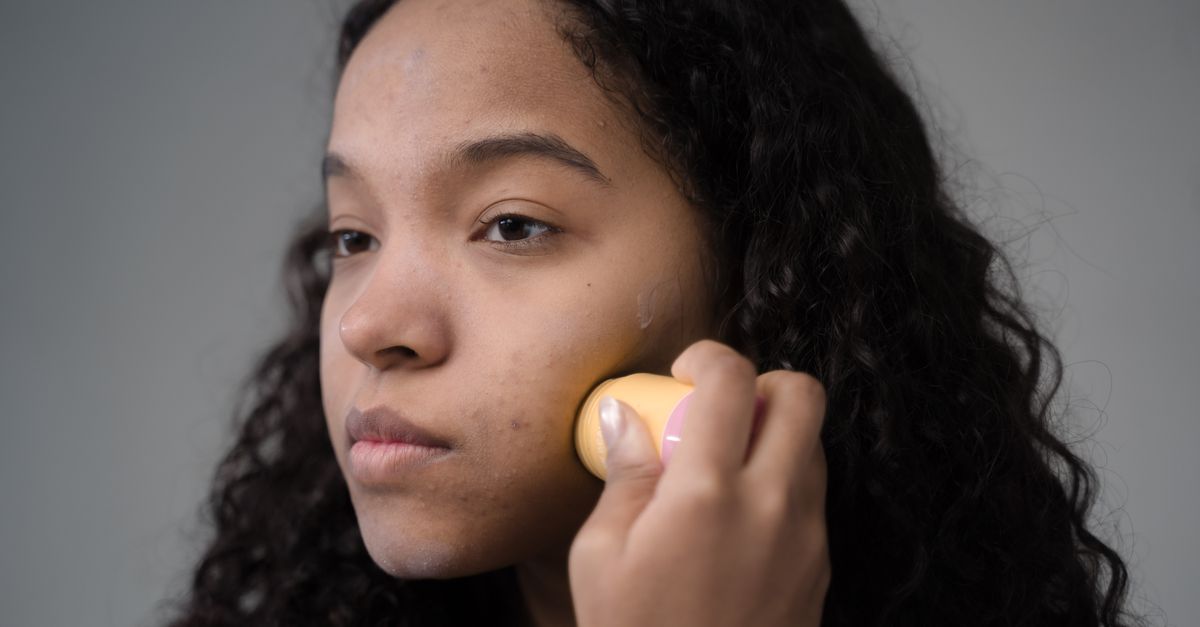
This is the one job where the answer is a clear yes. The stratum corneum is a very good barrier, and most of what you apply to skin sits on top of it and slowly evaporates or rubs off. Creating thousands of temporary micro-channels through that barrier gives a water-soluble ingredient a route in that it would not otherwise have. The channels close over within a few hours, so the window is short, which is exactly why the order of your routine matters so much on a rolling day.
The practical consequence is that a 0.25mm roller is only as good as what you put on afterwards. Rolling and then applying nothing is close to pointless. Rolling and then applying something harsh is actively a bad idea, because you have just removed the barrier that normally protects you from it. Strong acids, retinoids, fragranced products and alcohol-heavy toners all belong on a different day from your roller.
The absorption trade goes both ways
Better penetration is not automatically better. Anything irritating gets in more easily too, and so can bacteria from an unclean device. Roll onto clean skin, follow with something simple and hydrating, and save the actives for the days in between.

Grow More® Scalp Elixir from £25.50
A leave-on overnight scalp elixir with biotin, caffeine, rosemary and niacinamide. If you are rolling the scalp specifically so that something absorbs better, this is the kind of leave-on product worth pairing it with. Cosmetic care for the scalp environment, not a medicine.
Why Does 0.25mm Fall Short of Collagen Induction?
Collagen induction is a wound-healing response. The body lays down new collagen when injury reaches the dermis, because that is where fibroblasts, the cells that manufacture collagen, actually live. A needle that stops in the epidermis does not recruit them in any meaningful way. This is why professional needling protocols for scarring and skin texture use depths measured in whole millimetres rather than fractions.
You will still see a short-term change in the mirror after rolling, and that is where a lot of the enthusiasm comes from. Mild inflammation causes slight swelling, swelling temporarily plumps fine lines, and better-absorbed hydrating ingredients add to the effect. Skin genuinely looks a little smoother that evening. It is a cosmetic, temporary result rather than structural remodelling, and it fades within a day or two.
None of this makes the tool worthless. It makes it a mild cosmetic device that has been marketed with the language of a clinical procedure. Ask is 0.25mm derma roller effective as a skin-texture tool and the answer is a modest yes; ask it as a substitute for a clinic procedure and the answer is no. Judged as what it is, a 0.25mm roller is decent value. Judged against the promises on the packaging, it disappoints almost everyone.
Get a discount on the thinning hair range
Join the Watermans mailing list and we will email a discount code straight to your inbox, so you can try the thinning hair range for less. Made in the UK, over 6.5 million bottles sold since 2012.
What Happens When You Use a 0.25mm Roller on the Scalp?
The scalp is not a cheek. It is thicker, it sits on bone rather than fat, and it is covered in fibres that catch on a rotating drum. Rolling there is more awkward than the demonstration videos suggest, and the needles snag hair as often as they meet skin. Anyone with hair longer than a few centimetres will find a stamp far easier to control, which is covered in our guide to using a derma stamp on the scalp safely.

The realistic benefit on a scalp is the same as on a face: whatever you apply afterwards makes better contact with the skin. That is not nothing, particularly if you have been using a leave-on scalp product and wondering whether any of it is getting past the surface. It is simply a much smaller claim than the one being sold. Is 0.25mm derma roller effective on a scalp in the way the adverts imply? No. Is it a reasonable way to help a serum make contact? Yes. If your interest is specifically about density rather than absorption, the sister article on a 0.25mm derma roller for thinning hair covers the scalp routine in detail, and our broader piece on whether a derma roller is good for hair growth looks at longer needle lengths.
How Does 0.25mm Compare With Longer Needle Lengths?
Needle length is the single variable that changes what a roller can do, so it is worth seeing the range laid out rather than picking whatever the shop had in stock.
| Length | Layer reached | Realistic use | Home use? |
|---|---|---|---|
| 0.25mm | Outer barrier and epidermis | Product absorption, mild temporary smoothing | Yes, lowest risk |
| 0.5mm | Epidermis, occasionally upper dermis | Texture, mild pigmentation, absorption | Cautiously, weekly at most |
| 1.0mm | Dermis | Collagen response, scarring | Better supervised |
| 1.5mm | Deeper dermis, follicular level | The depth used in published hair studies | Professional setting |
Reading down that table answers the original question more usefully than a yes or no. Is 0.25mm derma roller effective compared with a 1.5mm device? For hair density, plainly not, and no amount of technique closes a gap that is anatomical. For a beginner who wants better absorption without bruising themselves, the shortest needle is the right choice precisely because it is the mildest one. The difference between the two is not effort, it is depth.
How Do You Use a 0.25mm Derma Roller Safely?
- Sterilise first. Soak the head in at least 70 percent isopropyl alcohol for around ten minutes, then let it air dry. Do this before and after, every single time.
- Start with clean, dry skin. No make-up, no oils, no leftover styling product on a scalp.
- Roll in one direction at a time. Four to six passes vertically, then lift the roller, then four to six horizontally. Never drag it back and forth while it is in contact.
- Use almost no pressure. The weight of the handle is enough. If you see pinpoint bleeding on a 0.25mm device, you are pressing far too hard.
- Apply something simple straight afterwards. A hydrating, fragrance-free leave-on product. Save acids and retinoids for other days.
- Leave at least two days between sessions and skip a week if skin looks irritated.
- Replace the head after ten to fifteen uses. Blunt needles are the main cause of marks and irritation.
Cleaning is the step people skip, and it is the one most likely to cause harm. Our step-by-step on how to clean a derma roller properly covers what to do if yours has been sitting in a drawer.

What is the difference between hair loss, hair shedding and hair breakage?
Most disappointment with rolling comes from aiming a skin tool at the wrong problem, and the three things people call hair loss are not interchangeable.
Hair loss is follicular. The follicle itself is miniaturising or has been damaged, which is what happens in androgenetic alopecia and in scarring conditions. It is a medical matter and it needs medical assessment, not a cosmetic device.
Hair shedding is a cycle problem. An unusually large share of follicles has shifted into the resting phase at once, which is telogen effluvium, and it typically follows illness, surgery, a crash diet, a nutritional gap or a hard few months. It is usually self-limiting, and the fix is finding the cause rather than buying a tool. Our guide to what actually helps with hair shedding goes through the common causes.
Hair breakage is fibre damage. The hair is growing perfectly well and then snapping partway along the shaft because of heat, bleach, tension or aggressive brushing. Breakage is the one a good routine genuinely changes, because it is happening outside the body where your habits reach it.
A derma roller of any length has nothing to say about breakage, and a 0.25mm roller has nothing meaningful to say about the other two either. Knowing which of the three you have is worth more than any device.
Please note: Watermans products are 100% cosmetic and do not treat medical hair loss. Individual results may vary.

Grow Me® Hair Growth Shampoo from £14.95
A sulfate-free everyday shampoo with biotin, caffeine and rosemary that cleanses without stripping. It supports a comfortable scalp environment and reduces breakage for fuller-looking hair. Cosmetic care, not a medicine.

Condition Me® Conditioner from £13.95
Breakage defence for the part of the problem a device cannot touch. Slip means less snapping when you detangle, which matters far more to how thick your hair looks than any needle length does.
Who Should Not Use a Derma Roller at All?
Skip it entirely, at any needle length, if any of the following apply to you. Active acne, eczema, psoriasis or rosacea in the area you would be rolling, because you would be spreading inflammation across the skin. Any active infection, including cold sores. A history of keloid scarring. Blood-clotting disorders or blood-thinning medication. Pregnancy, where the sensible default is to leave elective skin procedures alone. Recent sunburn or a fresh chemical peel.
If you have a scalp condition producing flaking, weeping or persistent soreness, see your GP or a qualified trichologist before putting any device on it. Needling inflamed scalp skin makes things worse, and a condition that needs proper medical attention will not improve because you rolled over it.
Frequently Asked Questions
Is 0.25mm derma roller effective for a complete beginner?
Yes, in the narrow sense that 0.25mm is the safest length to start with. A 0.25mm roller barely breaches the outer skin barrier, so the risk of bruising, scarring or infection is far lower than with longer needles. Beginners should expect better product absorption and slightly smoother-looking skin, not a change in hair density.
Is 0.25mm derma roller effective for acne scars?
No. Scar tissue sits in the dermis, and a 0.25mm needle does not reach it. The depths used for scarring are measured in whole millimetres and are usually done under professional supervision. A 0.25mm roller can help a scar-fading serum absorb better, which is a supporting role rather than the main event.
Is 0.25mm derma roller effective at making hair thicker?
Not on its own. The published needling work on hair density uses needles around six times longer, and almost always alongside a topical medicine, so the needling effect cannot be separated out. On the scalp a 0.25mm roller is best understood as an absorption aid for whatever leave-on product you use, not as a density tool.
How often should I use a 0.25mm derma roller?
Because a 0.25mm needle causes very little disruption, the skin recovers quickly, so two or three sessions a week is a reasonable ceiling. Rolling daily gives the barrier no time to settle and tends to leave skin sensitised, flaky and more reactive to everything else in your routine.
Does a 0.25mm derma roller hurt?
A 0.25mm roller should feel like light scratching or a prickly sensation, not sharp pain. Pain, pinpoint bleeding or lasting redness means you are pressing too hard, the needles are blunt, or the roller is longer than the label claims. Ease off the pressure and let the weight of the tool do the work.
Can I use a 0.25mm roller on my scalp?
You can, and it is the least risky length to use there, but the scalp is a harder surface than the cheek and the needles drag through hair. The realistic benefit is better contact between a scalp serum and the skin. Do not expect a 0.25mm roller to change hair density on its own.
How long do 0.25mm derma roller needles last?
Most manufacturers rate a roller for roughly ten to fifteen uses. Needle tips blunt quickly, and a blunt needle tears rather than punctures, which is exactly what causes irritation and marks. If you cannot remember when you bought it, replace it.
Is a 0.25mm derma roller better than a derma stamp?
A stamp presses straight down and lifts straight off, so it is gentler on hair and easier to control around a parting. A roller drags sideways as it turns, which is fine on a cheek and awkward on a scalp. For hairy areas, most people find a stamp easier to handle at any needle length.
Do I need to sterilise a 0.25mm roller if it barely breaks the skin?
Yes. Any device that breaks the skin at all can carry bacteria into it. Rinse the head, soak it in at least 70 percent isopropyl alcohol for around ten minutes before and after each session, then let it air dry in its case.
Will a 0.25mm derma roller help with hair shedding?
Hair shedding is usually driven by something systemic such as illness, a very low calorie diet, low iron or a stressful few months, and a roller does nothing about any of those. If you are shedding heavily and it has lasted more than about three months, see your GP for blood tests rather than buying a tool. If your question is about products or a routine rather than a medical one, you can talk to Gail Waterman, our co-founder, as an AI avatar on the Watermans homepage.
Is 0.25mm derma roller effective, and what is the bottom line?
So, one last time: is 0.25mm derma roller effective? Yes at one job and no at the others, and the honest version of that answer is more useful than either a sales pitch or a dismissal. It reliably improves how well a product gets through the skin barrier, it produces a mild temporary smoothing that people notice and enjoy, and it is the safest length to learn on. It does not build collagen, it does not change hair density, and no technique will make 250 microns reach a layer that sits deeper than that.
Buy one for what it does. Pair it with something worth absorbing, keep it clean, replace it often, and put your effort for hair into the things that genuinely move: finding the cause of shedding, protecting the fibre from breakage, and getting a proper opinion if density is changing.
If you would rather work on the scalp overnight, that is what our overnight scalp serum is for. Made in the UK.
Sources and References
- Tieu IT, Goldstein DR. Role of dermaroller-mediated microneedling in hair follicle stimulation and hair growth. Dermatology Online Journal, 2026. PubMed 42522488
- NHS. Hair loss: overview, causes and when to get medical advice. nhs.uk/conditions/hair-loss
- Robertson K, Rees JL. Variation in epidermal morphology in human skin at different body sites as measured by reflectance confocal microscopy. Acta Dermato-Venereologica, 2010. PubMed 20574601
- Monnier J, Tognetti L. In vivo characterization of healthy human skin with line-field confocal optical coherence tomography. Journal of the European Academy of Dermatology and Venereology, 2020. PubMed 32786124
Note on the evidence: the published work on needling and hair density is small, uses longer needles than a 0.25mm home device, and usually combines needling with a topical medicine, which makes it impossible to separate the effect of the needling itself. We have described that limitation rather than borrowing the result.