Trichologists Derby: Hair Shedding After Illness or Surgery
Losing far more hair than usual a few months after being ill or having an operation? Here is what is going on.
If you are searching for trichologists Derby because handfuls of hair started coming out two or three months after a fever, an operation, a hospital stay or fast weight loss, you are most likely seeing telogen effluvium. The trigger pushed many growing hairs into their resting phase at once, and they are now being released together. The British Association of Dermatologists says the shedding phase usually lasts three to six months. Start with your GP for blood tests, and add a trichologist if it does not settle.
Our hair growth shampoo
Grow Me® Hair Growth Shampoo, £14.95. A sulphate free daily shampoo that supports a healthy scalp environment and helps reduce breakage, so lengths hold on and look fuller.
Key takeaways
- Shedding after an illness, surgery or rapid weight loss usually starts around three months after the event, when most people already feel better.
- The NHS says losing between 50 and 100 hairs a day is normal, often without noticing.
- A shed hair is full length with a small pale bulb at the root. A snapped hair is short with a blunt end and no bulb.
- Most episodes settle within three to six months, although volume can take many more months to come back.
- See your GP first for iron, thyroid and blood count checks. Trichologists Derby residents can see privately are most useful when results are normal but shedding carries on.
Why does hair shed two to three months after an illness or operation?
Hair sheds two to three months after an illness or operation because a shock to the body pushes a large number of growing hairs into their resting phase at the same moment, and resting hairs stay in the follicle for a few months before new growth underneath pushes them all out together.
The British Association of Dermatologists (BAD) puts around 85% of scalp follicles in the growing phase and around 15% resting, where a hair rests for two to four months before the new hair beneath pushes it out. In telogen effluvium, the medical name for this shedding, the resting share climbs to 30% or more, and DermNet notes that a major shock can push as many as 70% of growing hairs into rest. If you have a distinct bald patch rather than all-over shedding, our Croydon guide to patchy hair loss covers that pattern and who to see first.
StatPearls, on the NCBI Bookshelf, places the trigger roughly three months before shedding starts, with a range of one to six months. That delay is why so many people never connect the two.

- A high fever. The BAD singles out severe illness, especially with a high fever, and DermNet lists illness with fever too.
- Surgery and hospital stays. Major surgery, severe infection and serious injury all appear on the StatPearls list.
- Rapid weight loss. Crash dieting and low protein intake can set it off, however the weight comes off.
- Low iron and thyroid changes. Both are recognised causes, and both can keep shedding going after the original trigger has passed.
- New medicines. Starting a medicine, or stopping a hormone such as the contraceptive pill, is on the BAD list. Never stop a medicine without first talking to the GP or pharmacist who started it.
The BAD says no cause is ever found for about 1 in 3 people. Childbirth is the best known trigger of all, and our Stoke-on-Trent guide to postpartum shedding covers that version of the same process. For every trigger in detail, read what causes telogen effluvium and how recovery unfolds.
How much hair shedding is normal, and when is it too much?
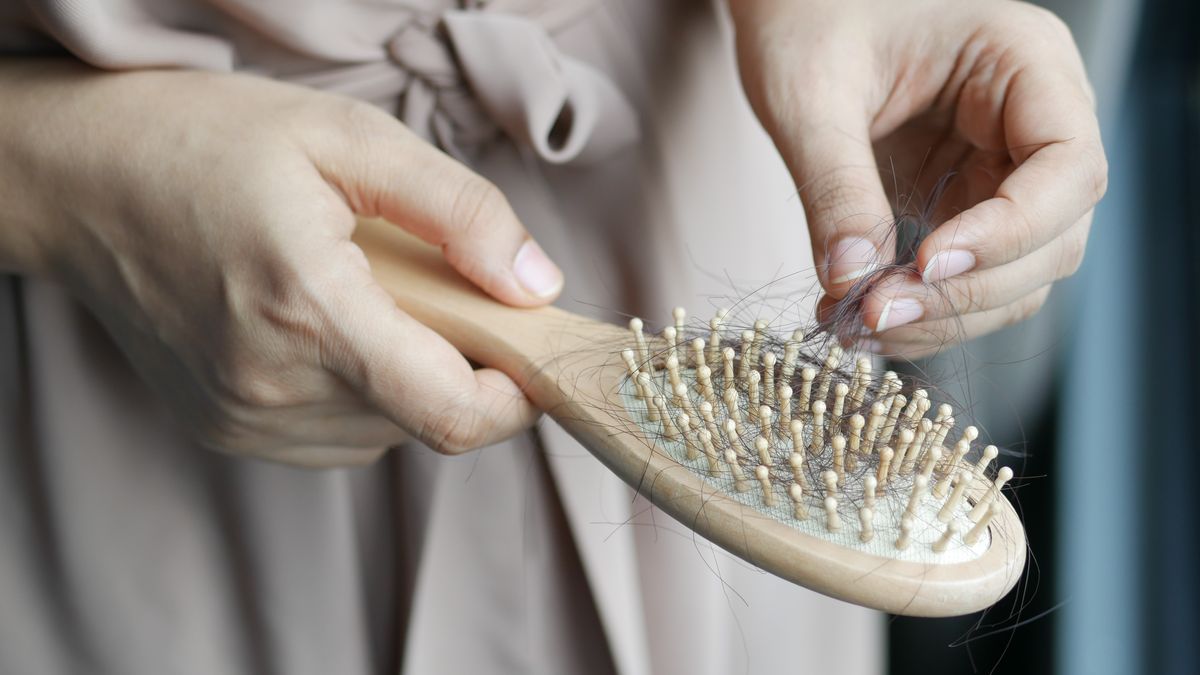
Normal hair shedding is somewhere between 50 and 100 hairs a day according to the NHS, and shedding after an illness is usually noticeably more than that: hair coming out in handfuls in the shower, clumps on the brush, and a ponytail that suddenly feels thinner in your hand.
Sources differ on the normal figure: the NHS says 50 to 100 hairs a day, DermNet up to about 100, and the BAD 30 to 150. What matters is a clear change from your own baseline. Telogen effluvium thins hair across the whole scalp rather than in one spot, and DermNet says it can affect up to 50% of scalp hair but does not cause complete baldness.
The fingernail clue
A serious illness can briefly slow nail growth and leave a horizontal groove across the nail, known as a Beau line. DermNet points out that a fingernail takes around five months to grow out, so a groove halfway along the nail dates the shock to roughly two and a half months ago. That often matches the week your shedding began. The timeline after an operation is set out in hair loss after anaesthesia and surgery.
Is it shedding, breakage or genuine hair loss?
Shedding, breakage and genuine hair loss look similar in the plughole but are three different problems: shedding is the growth cycle releasing whole hairs, breakage is the hair fibre snapping partway along its length, and genuine hair loss means the follicles themselves are changing, as in pattern hair loss or alopecia areata.
In pattern hair loss, follicles gradually shrink and produce finer hairs; in alopecia areata, they stop producing hair in patches. After an illness, the follicle keeps working and produces a new hair.
| Sign | Shedding after illness | Breakage | Hair loss |
|---|---|---|---|
| What you find | Full length hairs, each with a small pale bulb | Short pieces with blunt or frayed ends | Finer, shorter hairs over time, or smooth patches |
| Timing | Sudden, around three months after a trigger | Builds up with heat, colour and tension | Gradual over months or years, or sudden patches |
| Where | All over the scalp | Ends, crown and where hair is tied | Parting, crown, temples or round patches |
| Usual course | Settles within about three to six months | Improves once the routine changes | Needs assessment, often long term |
| First step | GP blood tests if heavy or lasting | A gentler routine | GP, then specialist assessment |
The three can overlap. StatPearls notes a gentle pull on a small bunch of hair removes at least four hairs during active shedding, and DermNet and the BAD warn that telogen effluvium can unmask pattern hair loss already developing, so thinning that lingers deserves a proper look.
Can COVID-19 trigger this kind of shedding?
COVID-19 can trigger telogen effluvium in the same way as any illness with a fever or a hospital stay, and a 2022 systematic review in the Journal of Medical Virology found the shedding tended to begin sooner than in classic cases, on average 74 days after symptoms started.
That review pooled 19 studies covering 465 people. Around two thirds (67.5%) were women, the median age was 44, and most recovered from the hair fall, although a few had shedding that persisted.
A 2024 cohort study from North Macedonia followed 77 people after a hospital stay for severe COVID-19. In total, 68.8% reported shedding. Among them, about one in five were fully back to normal within three months and a further 60% within six months, while 7.5% developed long running shedding. Shedding was linked with being female, anaemia and low blood protein, but not with fever. If your shedding has no obvious trigger, our Northampton guide to blood tests and nutrition checks covers the iron, thyroid and vitamin results a GP can look at first.
That last finding sits awkwardly beside the BAD, which highlights high fever as a classic trigger. In that group, low iron and protein seemed to matter more. A 2024 study across 22 South Korean hospitals found telogen effluvium cases rose after the pandemic began but found no association with COVID-19 vaccination, though a retrospective study cannot prove cause. Our article on why COVID hair loss happens and how long it lasts goes further.
How long does shedding after an illness last?
Shedding after an illness usually lasts between three and six months, according to the British Association of Dermatologists, and new hairs start growing through once the shedding phase ends, although it can take many more months for your hair to return to its usual volume and thickness.
StatPearls defines acute telogen effluvium as shedding that lasts less than six months. The BAD calls it chronic beyond six months, and says it can come back if an underlying cause such as low iron is not put right.
| Time since the trigger | What usually happens | What to do |
|---|---|---|
| 0 to 1 month | Nothing visible. Hairs quietly move into their resting phase | Focus on recovery and eat enough protein |
| 1 to 3 months | Shedding starts, often suddenly | Note the date and photograph your parting in the same light |
| 3 to 6 months | Shedding peaks, then eases | See your GP if it is heavy or you feel unwell |
| 6 to 12 months | Short new hairs appear along the parting and hairline, and density slowly returns | Keep the routine gentle and compare photos monthly |
| Shedding beyond 6 months | Classed as chronic telogen effluvium | GP review, then a trichologist or NHS dermatology |
Get a discount on the hair shedding range
Join the Watermans mailing list and we will email a discount code straight to your inbox, so you can try the hair shedding range for less. Made in the UK, over 6.5 million bottles sold since 2012.
Which GP checks make sense for shedding after an illness?
The GP checks that make most sense for shedding after an illness are a full blood count, ferritin for your iron stores and thyroid function, with vitamin B12 and folate added when your diet or symptoms point that way, because low iron and thyroid changes can trigger the same shedding pattern or keep it going.

- Full blood count. The NHS says a GP will usually start here to check for anaemia, and lists noticing more hair coming out when brushing or washing among the less common symptoms of iron deficiency anaemia.
- Ferritin. StatPearls notes that ferritin rises with inflammation, so a normal result soon after an illness does not rule out low iron. Ask your GP whether a later recheck makes sense.
- Thyroid function. The NHS lists dry hair or hair loss among the common symptoms of an underactive thyroid, checked with blood tests for TSH and thyroxine (T4).
- Vitamin B12 and folate. DermNet advises checking these alongside iron and thyroid function when shedding is investigated.
If you were in Royal Derby Hospital or elsewhere and told your blood count or iron was low, ask whether it has been rechecked, since the North Macedonian study linked anaemia with shedding. Results in hand also make any later visit to trichologists Derby residents use more worthwhile.
When do trichologists Derby add something your GP cannot?
Trichologists Derby residents can see privately add value when your blood tests come back normal but the shedding carries on past a few months, when you cannot tell shedding from breakage or early pattern thinning, or when you want someone to measure and record how your hair changes over several months.
A good trichologist will take a detailed history, examine your scalp and collected hairs under magnification, and may do a gentle pull test. They can look for the short new hairs StatPearls describes near the scalp once shedding eases, and for finer hairs at the parting that suggest pattern thinning.
A trichologist cannot run NHS blood tests or manage a medical condition, so a reputable one will send you back to your GP when needed. Check that any practitioner is a member of the Institute of Trichologists, which publishes a Find a Trichologist register, or the Trichological Society, and ask what the fee covers. The same checks apply whether you choose from trichologists Derby lists locally or travel to Nottingham, the neighbouring city, where our guide to hair worries in your twenties explains how exam stress can cause the same resting phase shedding.
Take your timeline with you
Write down the dates of the illness, operation or weight loss and of the first shedding, plus any new medicines and blood results, and add dated photos of your parting in the same light. With the trigger landing one to six months earlier, a written timeline is often the most useful thing you can bring. The same written-timeline approach is set out for readers further south in our Leicester guide to preparing for a first visit.
How should you care for your hair while the shedding settles?
Caring for your hair while shedding settles means washing as normal with a mild shampoo, conditioning every time, and cutting out anything that adds breakage on top of the shedding, because the British Association of Dermatologists advises avoiding harsh brushing, limiting heated tools, and avoiding bleaching, relaxing and tight hairstyles.

- Keep washing. Washing does not cause telogen effluvium. The hairs in the shower were already resting, and skipping washes just brings more of them out on one day.
- Condition every time. Detangle from the ends upwards with a wide tooth comb, so hairs separate rather than snap.
- Go easy on heat. Let hair air dry most of the way and save straighteners for occasions.
- Loosen your styles. Swap tight bands for soft scrunchies and change where you tie your hair each day.
- Eat enough protein. DermNet recommends a nutritious diet with plenty of protein, fruit and vegetables.

A sulfate-free 250ml shampoo with biotin, caffeine, rosemary, niacinamide, hydrolysed lupine protein and argan oil. It cleans gently, so wash day feels less daunting while shedding settles, and helps hair look and feel fuller.

A conditioner with cholesterol, shea butter, glycerin and hydrolysed lupine protein. It adds slip, so detangling snaps fewer hairs on top of the ones you are already shedding, and lengths look thicker.

Sugar-free vegan gummies, taken two a day, with biotin and zinc, which contribute to the maintenance of normal hair. They sit alongside a balanced diet and are no substitute for the GP blood tests above.
When should you see a GP straight away?
See a GP promptly rather than waiting if shedding comes with smooth bald patches, a sore, red, weeping or heavily scaling scalp, shiny scarred skin where hair used to grow, or symptoms such as extreme tiredness, breathlessness, feeling cold all the time, unexplained weight change or heavy periods.
The NHS lists tiredness, shortness of breath and pale skin among iron deficiency anaemia symptoms, and feeling cold and weight gain among underactive thyroid symptoms. Shedding lasting over six months, or returning, also deserves a GP review, and your GP can refer you to NHS dermatology.
We sell hair care, so weigh our view accordingly. Our range is made in the UK and has sold over 6.5 million bottles since 2012. It is cosmetic: it reduces breakage and helps hair look and feel healthier.
Frequently asked questions
Should I see trichologists Derby for shedding after an illness?
Start with your GP, who can check iron, thyroid and blood count for free. If those come back normal and heavy shedding carries on beyond three to six months, or you cannot tell shedding from thinning, a registered trichologist can examine your scalp under magnification and track changes over time.
Will my hair grow back after telogen effluvium?
In most cases, yes. The British Association of Dermatologists says the shedding phase lasts three to six months, after which new hair starts to grow, though full volume can take many months longer. The follicles keep working, but shedding that lasts beyond six months is worth a GP review.
Can COVID-19 cause hair shedding?
Yes. Research links COVID-19 with telogen effluvium, and a 2022 systematic review found it began on average 74 days after symptoms started, a little earlier than classic cases. Most people recovered. A large study across 22 South Korean hospitals found no association between shedding and COVID-19 vaccination.
Does washing my hair make shedding worse?
No. Washing releases hairs that were already in their resting phase, so the same hairs would otherwise come out on your brush or pillow. Skipping washes only means more hair arrives on one day, which feels alarming. A gentle shampoo and conditioner used as normal is fine.
What blood tests should I ask my GP about?
A full blood count, ferritin for iron stores and thyroid function are the usual starting points, with vitamin B12 and folate if your diet or symptoms suggest them. Ferritin can read normal soon after an illness because inflammation raises it, so timing is worth discussing with your GP.
Can a trichologist tell shedding from pattern hair loss?
A trichologist can look for signs of both under magnification, such as many short new hairs after shedding, or finer hairs at the parting in pattern thinning. Shedding can unmask pattern hair loss that was already developing, so ongoing thinning deserves a GP or dermatology opinion as well. If you train hard, our Loughborough guide to training, sweat and hair shedding goes through ferritin, energy intake and what the creatine evidence really shows.
Sources & references
- NHS, Hair loss
- NHS, Iron deficiency anaemia
- NHS, Underactive thyroid (hypothyroidism)
- British Association of Dermatologists, Telogen effluvium
- DermNet, Telogen effluvium (hair shedding)
- StatPearls, Telogen Effluvium (NCBI Bookshelf)
- Hussain N et al. A systematic review of acute telogen effluvium, a harrowing post-COVID-19 manifestation. J Med Virol, 2022
- Damevska K et al. COVID-19-associated Telogen Effluvium After Hospital Discharge: A Prospective Cohort Study. Acta Dermatovenerol Croat, 2024
- Choi JW et al. Impact of the COVID-19 pandemic on telogen effluvium: a nationwide multicentre interrupted time series study. Clin Exp Dermatol, 2024
- The Institute of Trichologists
- The Trichological Society
What is the bottom line on trichologists Derby?
Shedding that starts a few months after an illness, a high fever, surgery, a hospital stay or rapid weight loss is most likely telogen effluvium, and it usually settles within three to six months. Before you pay for any of the trichologists Derby or Nottingham offer, see your GP for blood count, ferritin and thyroid checks, keep your routine gentle and track the shedding with dated photos. If it runs past six months, comes with patches or a sore scalp, or looks like thinning, a registered trichologist earns the fee. If your question is about products or a routine rather than a medical one, you can talk to Gail Waterman, our co-founder, as an AI avatar on the Watermans homepage.
While the shedding runs its course, keep wash day kind with a sulfate-free hair growth shampoo such as Grow Me, made with biotin, caffeine and rosemary to help hair look and feel fuller.
Watermans products are 100% cosmetic and do not treat medical hair loss. Individual results may vary.