Trichologists Portsmouth: Sea, Sun and Salt Water Hair
Portsmouth sits on an island, and your hair feels it: salt, wind, bright reflected sun and, for many swimmers, the pool as well.
Most people searching for trichologists Portsmouth after a summer of sea swimming have damaged lengths, not failing follicles. Salt water, UV light, wind and pool chlorine all weaken the hair shaft, fading colour and roughening the cuticle until the ends snap. That is breakage, and a gentler pre-swim and post-swim routine usually improves it within weeks. Long hairs with a pale bulb at the root, a widening parting or patches are a different matter, and they start with your GP. Whether the sea helps or harms depends almost entirely on your hair type, which we break down in is salt water good for your hair.
Our heat protection spray
Protect Me® Heat Protection Spray, £13.95. A leave in spray that shields hair from heat styling, helps control frizz and keeps colour looking fresher for longer.
Key takeaways
- Salt water, UV and chlorine mostly damage the hair shaft: dryness, faded colour, a roughened cuticle and snapped ends.
- In one study, 61% of elite swimmers had discoloured hair, compared with none of the non-swimmers.
- Your parting is bare scalp, and the NHS says a wide-brimmed hat beats sunscreen alone for the head.
- Wet your hair with fresh water and coat the lengths before a swim, rinse straight after, and mask once a week.
- Bulbed hairs, a widening parting, patches or a sore scalp go to your GP before anyone private.
What do salt water, sun and chlorine actually do to your hair?
Salt water, sunlight and pool chlorine all work on the hair shaft rather than the follicle: they dry the fibre, fade natural and dyed colour, and wear away the cuticle, the layer of flat overlapping cells that keeps hair smooth, until the weakened lengths split and snap.
The hair you can see is non-living, keratinised tissue, according to the StatPearls physiology review, so it has no way to mend itself. Damage simply builds up along the length. Hair grows at about 1 cm a month, which means the ends of shoulder-length hair can easily be two or three years old and have lived through two or three summers on the seafront.

- Sun. A dermatology review of UV damage describes excessive sun exposure as the most frequent cause of structural damage to the hair shaft, with UVB driving protein loss and UVA driving colour change (Sebetić and colleagues, 2008). In a 2025 laboratory study, unprotected hair lost about 14% of its tensile strength after UV exposure.
- Salt water. Sea water leaves salt on the lengths as it dries, and stiff, wind-whipped hair knots easily. Every knot you brush out costs a few fibres, so rough ends after a day at Southsea are a friction problem, not a follicle one.
- Pool chlorine. Chlorinated water reaches the pigment once the cuticle is worn, leaving lighter, drier ends (more below).
Colour suffers most when sun and washing combine: a study of dyed hair found the greatest fading when hair was both exposed to light and shampooed, with coloured bleached hair fading far more than coloured brown hair (Locke and Jachowicz, 2005). A 2026 study found that bleaching made hair more vulnerable to UV damage.
| Exposure | What it does to the fibre | What you notice | First step |
|---|---|---|---|
| Sea water | Salt dries on the lengths; waves and wind add friction | Stiff, rough, knotted ends | Rinse in fresh water straight after |
| Sun (UV) | UVB breaks down hair protein, UVA changes colour | Brassy or faded colour, dry, brittle ends | Hat and shade from 11am to 3pm |
| Pool chlorine | Oxidises pigment through a worn cuticle | Lighter, straw-like or green-tinged ends | Swim cap and a fresh water rinse |
| Wind | Tangling and friction between strands | Knots, splits, snapped pieces | Loose braid, detangle from the ends up |
Salt-dried hair often frizzes, and the reflex is to reach for the straighteners, adding heat to sun-weakened lengths. Our guide to what causes hair damage explains how heat and chemical damage differ at the ends.

Protect Me® Heat Protection Spray
A leave in heat protection spray for use up to 230°C, with panthenol, niacinamide and sunflower oil, plus colour protection and frizz control. It is a heat product, not a sun product, so mist it through damp lengths before blow-drying or straightening beach-dried hair and keep a hat for the sun.
Why is pool chlorine so hard on swimmers' hair?
Pool chlorine is hard on hair because hypochlorous acid, the active form of chlorine in pool water, can pass through a damaged cuticle into the cortex and oxidise the melanin that gives hair its colour, which is why regular swimmers so often notice lighter, drier, straw-textured lengths.
The clearest evidence comes from a 2000 Journal of Dermatology study of 67 elite swimmers on the Japan National Swimming Team: 61% had discoloured hair, compared with none of 54 non-swimmers of the same age. Under the electron microscope, the swimmers' golden hairs had lost their cuticle completely, held less sulphur, and carried chlorine inside the pigment granules. The researchers blamed mainly friction with water, with chlorine then reaching the pigment through the stripped cuticle.

Green hair is a separate issue. A sports dermatology review notes that fair-haired swimmers can develop a green tint from copper deposited in the hair (Adams, 2002). It shows most on blonde and lightened hair.
Occasionally the shaft itself becomes fragile. A 2024 case report described a 19-year-old volleyball player and recreational swimmer with white knots and frayed, brush-like breaks along the shaft, listing years of chlorinated water among several possible contributors. That is rare, but it shows clearly under magnification. For a pool-specific routine, see our guide to protecting hair from chlorine and tap water.
Can your scalp get sunburnt along your parting?
Your scalp can burn along the parting and at the crown, because those lines of bare skin take direct overhead sun, and NHS guidance says you can burn in the UK even when it is cloudy, so a bright afternoon on the seafront or a long swim in the Solent is plenty.
The NHS advice is specific: seek shade between 11am and 3pm from March to October, and protect your skin when the UV index is 3 or higher. Sunscreen should go on the head if your hair is thinning, but a wide-brimmed hat is better. Water washes sunscreen off, reflects UV, and its cooling effect can make you think you are not burning. For hats, scalp sprays and when a scaly patch needs a GP, our Eastbourne guide to protecting a thinning parting or scalp from the sun goes further.

According to the NHS, sunburnt skin feels hot and sore and may peel a few days later, and it usually gets better within 7 days. On the scalp, that peeling shows as fine flakes along the parting, easily mistaken for dandruff. Contact your GP urgently or NHS 111 if the skin is blistered or swollen, or you have a very high temperature, feel dizzy or sick, or have a headache.
The parting check
In summer, move your parting a centimetre every few days so the same strip of scalp is not always exposed, and wear a hat out of the water between 11am and 3pm: it shades the scalp and keeps UV off the lengths.
What is the best pre-swim and post-swim routine for your hair?
The best routine for sea and pool swimmers is simple: soak your hair in fresh water and coat the lengths with a little oil or conditioner before you swim, rinse in fresh water as soon as you get out, then shampoo gently, condition, and use a deep conditioning mask once a week. If you are also worried that washing makes more hair fall out, our guide to washing fine or thinning hair covers how often to shampoo.
Before you swim
- Wet your hair under the beach or pool shower. The thinking is that hair already full of fresh water takes up less sea or pool water.
- Smooth a few drops of oil or leave in conditioner through the mid lengths and ends, where the oldest hair sits.
- Tie long hair in a loose braid, wear a swim cap in the pool, and a wide-brimmed hat out of the water.
After you swim
- Rinse with fresh water as soon as you can, before salt or chlorine dries on the lengths.
- Shampoo gently, condition the mid lengths and ends, and detangle from the ends up with a wide tooth comb.
- Once a week, use a deep conditioning mask in place of conditioner, and use a heat protection spray if you style.
There is little formal research on pre-swim oiling, so see it as sensible care rather than tested protection.

Camellia & Black Castor Hair & Body Oil
A hair and body oil with black castor oil, camellia oil and omega 3, 6 and 9. Smooth a few drops through damp lengths before a swim or after a fresh water rinse so salt-dried, sun-dried ends feel softer and tangle less.

A weekly deep conditioning mask with hydrolysed lupine protein, provitamin B5 and argan oil. Use it in place of conditioner once a week through the swimming season so dry, sun-faded lengths feel softer and bend rather than snap.
Get a discount on the sun and sea damaged hair range
Join the Watermans mailing list and we will email a discount code straight to your inbox, so you can try the sun and sea damaged hair range for less. Made in the UK, over 6.5 million bottles sold since 2012.
Is it sea and sun breakage, shedding or genuine hair loss?
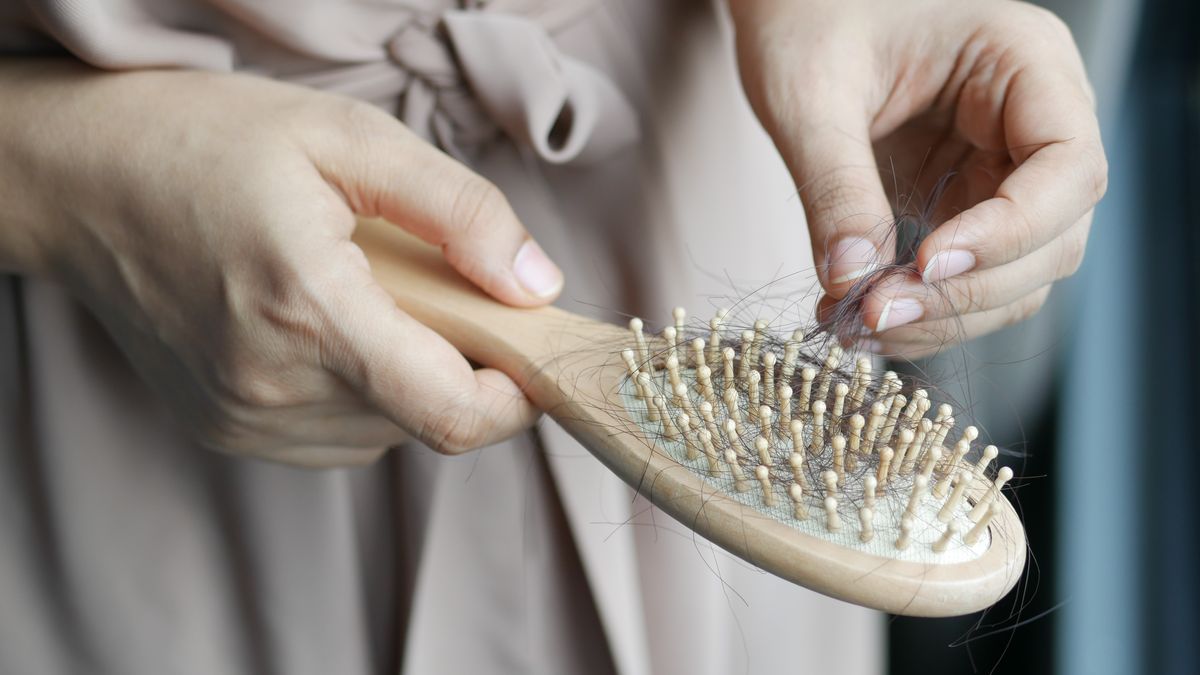
Sea and sun damage causes breakage, meaning short snapped pieces with no bulb and rough, faded ends, whereas shedding produces full-length hairs with a small pale bulb at the root, and genuine hair loss shows as a widening parting, a receding hairline or patches where the follicle itself is changing.
- Hair breakage is the fibre snapping along its length while the follicle carries on as normal. Salt, sun, chlorine and wind all cause it.
- Hair shedding is the growth cycle. After a trigger such as illness, a high fever, surgery, childbirth or a crash diet, more follicles rest at once, and DermNet puts the increased hair fall at 2 to 4 months after the trigger.
- Hair loss means the follicle itself is changing, as in pattern hair loss or the patches of alopecia areata.
| Sign | Sea and sun breakage | Shedding | Hair loss |
|---|---|---|---|
| Hairs you find | Short pieces, often from the ends | Full length, with a pale bulb | Finer and shorter over time |
| Look of the lengths | Dry, rough, lighter or brassy, split | Normal | Normal, but less density |
| Timing | Builds through the summer, worst after beach days | 2 to 4 months after a trigger | Gradual, over months or years |
| Where you notice it | Ends, nape, wherever wind knots the hair | All over | Parting, crown, temples or patches |
| First step | Change your routine | GP if it carries on | GP, then specialist assessment |
Sources disagree on what is normal. The NHS says we can lose between 50 and 100 hairs a day, while the StatPearls review puts scalp shedding at around 100 to 200 a day. Judge by change from your own normal rather than by a single number. Our Coventry guide to telling breakage from shedding walks through a simple one week bag test that settles it.
If the change is at your parting rather than your lengths, the sea is probably not the cause. Our Brighton guide to a widening parting and thinning in women is the better read, and your GP is the right first stop.
What do trichologists Portsmouth offer for sea and sun damaged hair?
For sea and sun damage, trichologists Portsmouth can examine the hair shaft under magnification, confirm whether you are seeing breakage, shedding or both, spot rarer shaft problems such as the knotted, frayed breaks described in swimmers, and audit your swimming, washing and styling routine in writing.
A trichologist earns the fee when breakage carries on after six to eight weeks of a genuinely gentler routine, when you cannot tell snapped hairs from shed ones, or when you see white specks or knots along the shaft.
Anything involving the follicle or the scalp skin goes to a GP first, who can arrange blood tests and refer you to NHS dermatology for free. Trichology is private and self referred, and the NHS hair loss page advises seeing a GP about the cause before going to a commercial hair clinic.
Where can you find a registered trichologist around Portsmouth?
You can find a registered trichologist around Portsmouth by searching the member directories of the Institute of Trichologists and the Trichological Society, then widening the search along the coast to Fareham, Havant, Chichester and Southampton if nothing close suits you or your timetable.
Check registration every time, because "trichologist" is not a protected title in UK law and anyone can use it. Before you contact any of the trichologists Portsmouth directories list, have these five questions ready:
- Are you a registered member of the Institute of Trichologists or the Trichological Society?
- Will you look at the hair shaft under magnification, not just the scalp?
- Do you see many swimmers, and do you ask about sun, sea and pool exposure?
- What is the fee, what does it include, and will I get written findings?
- If I buy none of your products, what would you advise?
When should you see a GP instead of a trichologist?
See your GP before anyone private if you have smooth bald patches, a painful, weeping, crusted or heavily scaling scalp, shiny scarred areas where hair used to grow, long bulbed hairs shedding for more than a couple of months, or shedding together with tiredness, weight change or feeling generally unwell.
- Bad scalp sunburn. Blistered or swollen skin, a very high temperature or dizziness after time in the sun needs your GP urgently or NHS 111.
- Marks on the scalp. The NHS notes that getting sunburnt can increase your risk of skin cancer. Show your GP any spot, mole or rough patch on your scalp or parting that is new, changing or not clearing up.
We sell hair care, so weigh our view accordingly. The Watermans range is made in the UK, and has sold over 6.5 million bottles since 2012. It is cosmetic: it is built to reduce breakage and help dry, sun and sea stressed hair look and feel healthier, and we say so plainly.
Frequently asked questions
Do trichologists Portsmouth based help with sea and sun damaged hair?
Yes. Trichologists Portsmouth based can examine the hair shaft under magnification, tell breakage from shedding, and review your swimming and styling routine. For straightforward salt, sun and chlorine dryness, a gentler routine with fresh water rinses and a weekly mask often improves things first, so give that six to eight weeks.
Does salt water damage your hair?
Salt water dries on the lengths and leaves them stiff, rough and prone to tangling, especially in wind, and every knot you brush out costs fibres. Regular sea swimmers usually notice dry, brittle ends rather than thinning. Rinse in fresh water straight after swimming and condition at every wash to keep breakage down.
Is chlorine worse for hair than sea water?
Chlorine has the stronger research trail. A study of 67 elite swimmers found discoloured hair in 61% of them and in none of the non-swimmers, with chlorine detected inside the pigment granules. There is much less published research on sea water and hair. Both dry the fibre, so the same rinse, coat and condition habits suit both.
Can you get sunburnt on your scalp in the UK?
Yes. The NHS says you can burn in the UK even when it is cloudy, and your parting and crown take direct overhead sun. The NHS suggests sunscreen on the head if your hair is thinning, but says a wide-brimmed hat is better, especially between 11am and 3pm from March to October.
Can sun and sea damage cause hair loss?
The research on sun and hair focuses on the shaft: protein loss, colour change and rougher, weaker lengths. That produces breakage, meaning short snapped pieces with no bulb, rather than follicle changes. Long hairs with bulbs, a widening parting or patches point to shedding or hair loss, and those need your GP rather than a new routine. We look at dream of hair separately, with the practical steps.
Will sun damaged hair repair itself?
No. The hair you can see is non-living keratin, so damaged lengths cannot mend themselves. New hair grows through at around a centimetre a month, unaffected by what happened to the old ends. Masks and conditioners improve how damaged lengths look and feel until you trim them away gradually. If tight styling is part of your picture, our Eastleigh guide to traction alopecia and tight styles covers the fringe sign, recovery times and when the change becomes permanent.
Sources & references
- NHS, Sunburn
- NHS, Sunscreen and sun safety
- NHS, Hair loss
- StatPearls, Physiology, Hair (NCBI Bookshelf)
- DermNet, Telogen effluvium
- Nanko H et al. Hair-discoloration of Japanese elite swimmers. J Dermatol, 2000
- Sebetić K et al. UV damage of the hair. Coll Antropol, 2008
- Locke B, Jachowicz J. Fading of artificial hair color and its prevention by photofilters. J Cosmet Sci, 2005
- Machado RCL et al. Unveiling the link between surface physicochemistry and nanomechanical behavior in bleached and UV-irradiated human hair fibers. J Mech Behav Biomed Mater, 2026
- Fan J et al. Performance and Mechanism of Hydrolyzed Keratin for Hair Photoaging Prevention. Molecules, 2025
- S A et al. Hair Shaft Fracture in a Young Athlete: A Rare Case Report of Acquired Trichorrhexis Nodosa. Cureus, 2024
- Adams BB. Dermatologic disorders of the athlete. Sports Med, 2002
- British Association of Dermatologists
- The Institute of Trichologists
- The Trichological Society
What is the bottom line on trichologists Portsmouth?
Most sea and sun damage that sends people looking for trichologists Portsmouth is breakage rather than hair loss, so start with your own routine: rinse in fresh water, coat your lengths before you swim, wear a hat, condition every wash and mask weekly for six to eight weeks. Long hairs with bulbs, a widening parting, patches or a sore scalp go to your GP first. If breakage still will not settle, a registered trichologist is worth the fee. If your question is about products or a routine rather than a medical one, you can talk to Gail Waterman, our co-founder, as an AI avatar on the Watermans homepage.
Start with the step that helps most: add Masque Me, our weekly deep conditioning hair mask with hydrolysed lupine protein, provitamin B5 and argan oil, from your first sea swim of the year.
Watermans products are 100% cosmetic and do not treat medical hair loss. Individual results may vary.