Trichologists Southampton: Hard Water and Dry, Brittle Hair
Hair that feels like straw after every wash in Southampton? The tap water is part of the story, though rarely the whole of it.
Many people searching for trichologists Southampton are really dealing with hard water. Southern Water's own postcode checker rates central Southampton as hard, at 120 mg/l of calcium. Calcium and magnesium leave a film on the hair fibre that can make it feel dry, dull and tangly, and small studies disagree on whether that film weakens hair. Hard water can add to breakage, but it does not make hair fall out from the root, and a gentler routine usually helps within weeks.
Our hair growth conditioner
Condition Me® Hair Growth Conditioner, £13.95. Detangles and strengthens the hair fibre so lengths snap less on the brush and look thicker through the ends.
Key takeaways
- Southern Water rates central Southampton's tap water as hard: 120 mg/l of calcium, which its converter puts at 300 mg/l as calcium carbonate.
- The minerals settle mostly in the outer cuticle, so hard water changes how hair feels, combs and shines far more than how it grows.
- The research is split. A 2013 study found no loss of strength, while studies in 2016 and 2018 found hair soaked in hard water was measurably weaker.
- Hard water can only add to breakage, which shows up as short snapped pieces. Long hairs with a bulb are shedding, and a widening parting or patches is hair loss.
- Conditioner at every wash, a weekly mask and an occasional chelating wash suit most people. Patches, a sore scalp or heavy shedding go to your GP.
How hard is the tap water in Southampton?
Southampton's tap water is hard, according to Southern Water's own postcode checker, which gives 120 mg/l of calcium for the central SO14 and SO15 postcodes we checked and 109.2 mg/l for the SO16 and SO17 postcodes, both rated hard on the company's own scale. On its converter, 120 mg/l of calcium equals 300 mg/l as calcium carbonate, the top of its hard band. Cold weather and central heating can add to the same dryness, and our Aberdeen guide to winter-dry, brittle hair covers that side of it.
The difference comes down to where your water starts. For the central postcodes, Southern Water says the supply comes from both the River Itchen and underground sources in the chalk at Otterbourne. For the SO16 and SO17 postcodes we checked, it comes from the River Test at Testwood. Chalk is calcium carbonate, so rainwater that filters through it picks up calcium on the way.

Southern Water grades hardness in milligrams of calcium carbonate per litre: soft is under 100, moderately hard 100 to 200, hard 200 to 300 and very hard over 300. Central Southampton, at 300, sits at the very top of the hard band.
Check your own postcode first
Hardness follows the supply zone, not the city boundary. Put your postcode into Southern Water's hard water checker, switch the unit to calcium carbonate to compare it with the bands above, and write the figure down for any trichologist you see.
What does hard water do to your hair and scalp?
Hard water leaves calcium and magnesium on the hair, and those minerals collect mainly in the outer cuticle layers, where they can make strands feel rough, stiff and dry, dull their natural shine and make wet hair noticeably harder to detangle after every wash. Hair that is already bleached or heat damaged tends to take up more of them.
A 2011 study in the International Journal of Cosmetic Science found that how much calcium and magnesium hair absorbs depends mainly on its condition: damaged hair picked up notable amounts even from soft water, and the minerals stiffened the fibres. A 2013 Procter & Gamble study of over 300 women in nine countries found these minerals rose from root to tip, were significantly higher in women who coloured their hair, and were higher in people who rated their own hair health as poor.
In everyday terms, this is what most people in a hard water area notice:
- A coated feel. Shampoo lathers less in hard water, so it is easy to use more and scrub harder.
- Dryness. A roughened cuticle lets moisture escape, so the ends feel like straw.
- Dullness. A rough, coated surface scatters light, so clean hair still looks flat.
- Tangling. Rough fibres catch on each other, so knots form faster.
- Brittleness, then breakage. Stiffer, drier hair bends less before it snaps.
What does the research actually say about hard water and hair strength?
The research on hard water and hair strength genuinely disagrees: a 2013 study in the International Journal of Trichology found no difference in strength or elasticity, while studies published in 2016 and 2018 found that hair soaked in hard water snapped under noticeably less force than hair soaked in deionised water.
| Study | What was tested | What it found |
|---|---|---|
| Srinivasan and colleagues, International Journal of Trichology, 2013 | Hairs from 15 volunteers, half soaked in hard water (212.5 ppm calcium carbonate), half in distilled water, 10 minutes on alternate days for 30 days | No significant difference in tensile strength or elasticity |
| Luqman and colleagues, Journal of the Pakistan Medical Association, 2016 | Hairs from 76 men, half soaked in the hardest local water, half in deionised water, 10 minutes on alternate days for 3 months | Hard water half significantly weaker, with average strength about 7% lower |
| Luqman and colleagues, International Journal of Trichology, 2018 | Hair from 70 men, split three ways: untouched, deionised water and hard water | Hard water group about 8% weaker than the deionised group; the authors link this to breakage |
So which is right? Each is probably right about its own set up. All three are small laboratory studies on cut hairs soaked in water, with no shampoo, conditioner, brushing or heat, and the water differed each time. The 2013 study used water at 212.5 ppm calcium carbonate, softer than central Southampton's, so its reassuring result cannot simply be applied here.
The fair reading is that hard water is unlikely to be the main reason your hair is weak, but it can add a modest extra load, most of all on bleached or heat styled hair. None of these studies measured hair falling out, and the 2016 paper says plainly it studied weakening of hair, not hair loss. Any trichologists Southampton based who blame the water alone for thinning are going beyond the evidence.
Get a discount on the dry, brittle hair range
Join the Watermans mailing list and we will email a discount code straight to your inbox, so you can try the dry, brittle hair range for less. Made in the UK, over 6.5 million bottles sold since 2012.
Is it hard water breakage, shedding or hair loss?
Hard water can only contribute to breakage, which is the hair fibre snapping somewhere along its length; shedding is the growth cycle releasing whole hairs from the follicle, and hair loss means the follicle itself is changing, so the hairs you actually find tell you which one you are dealing with.
- Hair breakage is a fibre problem. The follicle keeps working but the lengths snap, so hair seems stuck at one length. It is the only one of the three that hard water plays any part in.
- Hair shedding is a timing problem. After a trigger such as illness, childbirth, a crash diet or major stress, many hairs rest together and fall out two to four months later, each with a small pale bulb.
- Hair loss is a follicle problem. In pattern hair loss the follicles gradually shrink, and in alopecia areata they stop making hair in smooth patches. Water plays no part in either.

| What you notice | Hard water breakage | Shedding | Hair loss |
|---|---|---|---|
| The hairs you collect | Short broken pieces of mixed length | Whole, full length hairs | Hairs that get finer and shorter over months |
| The end nearest the scalp | Blunt, frayed or split, no bulb | A small pale bulb | Varies |
| How the hair feels | Dry, rough, tangly, dull | Usually normal | Usually normal, just less of it |
| Sensible first step | Change the wash routine for six to eight weeks | Think back two to four months for a trigger; GP if it lasts | Your GP, then specialist assessment |
The white paper test
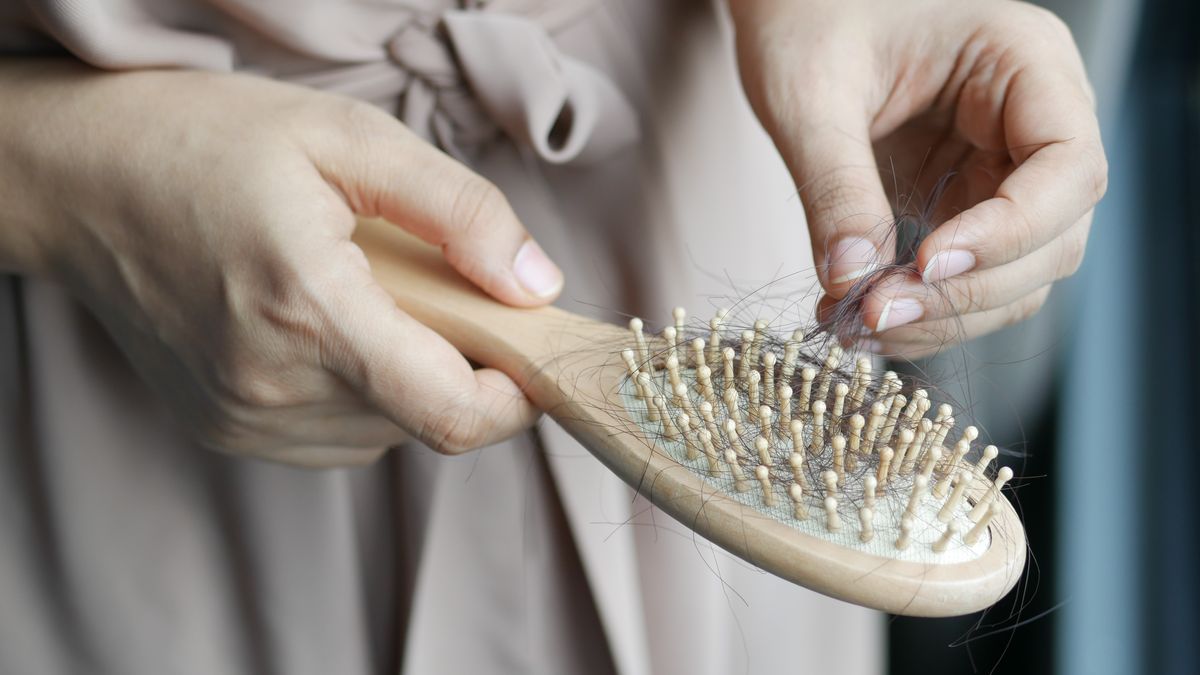
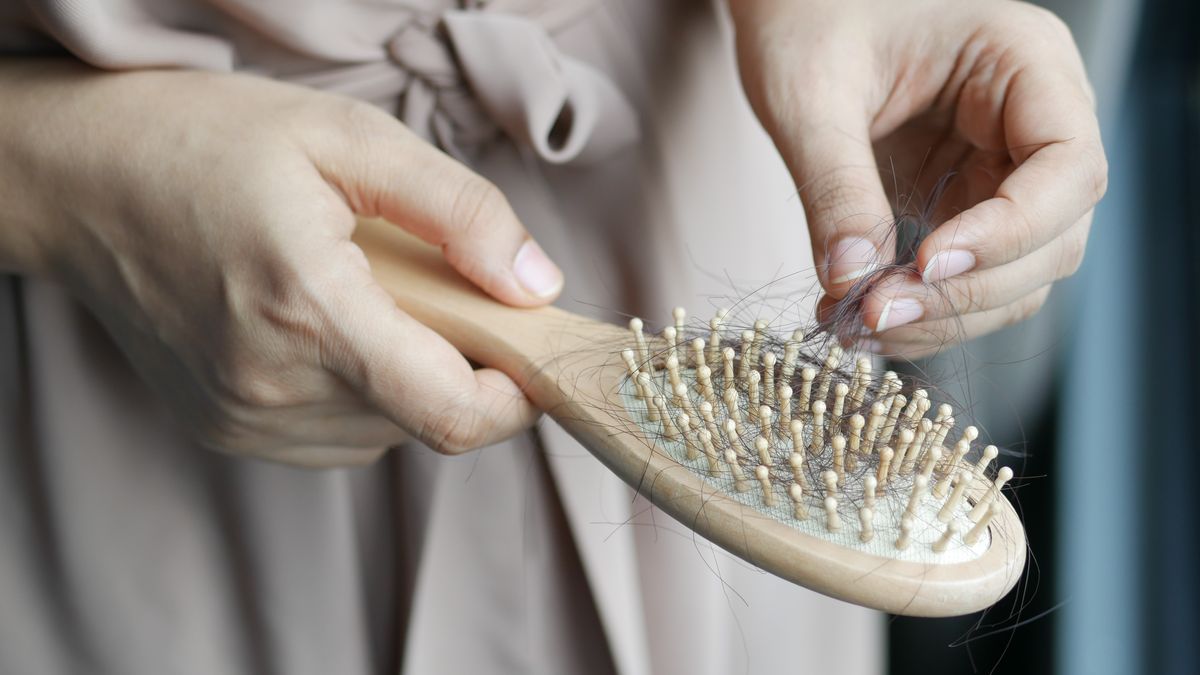
For five days, keep every hair from your brush, pillow and plughole in an envelope, then tip them onto white paper. Mostly short pieces with blunt or split ends means breakage, and your water and routine are fair suspects. Mostly long hairs with a bulb means shedding, which water does not explain.
How should you wash your hair if you live with hard water?
Washing hair in hard water goes best with a routine that limits how much mineral builds up and keeps the lengths soft: shampoo on the scalp rather than the ends, conditioner at every wash, a weekly mask in place of conditioner and an occasional chelating wash, with a filter or softener as an optional extra. If your scalp swings the other way and turns greasy fast, our Walsall guide to an oily scalp and flat roots covers that side of it. Winter adds its own load on top of the water, and our Worcester guide explains how central heating, static and wool leave hair brittle through the colder months.
- Shampoo the scalp, not the lengths. Massage a small amount into the roots and let the rinse carry it down; scrubbing the ends roughens the cuticle further.
- Condition every wash. Smooth conditioner through the mid lengths and ends, leave it two or three minutes, and comb through with a wide tooth comb before rinsing.
- Mask once a week. Use a deep conditioning mask instead of conditioner, on towel dried hair, for five to ten minutes.
- Chelating wash every one to two weeks. Look for disodium EDTA, tetrasodium EDTA or sodium phytate, which bind calcium and magnesium so they rinse away. These washes can be drying, so always condition afterwards.
- Finish cool. A cool final rinse is kinder to a tight scalp, and some people pour a final jug from a limescale reducing filter jug over the lengths.
- Dry gently. Pat with a soft towel, detangle from the ends upwards, and use the lowest heat that works.

A conditioner with cholesterol, shea butter, glycerin and hydrolysed lupine protein. It gives rough, hard water lengths more slip, so detangling snaps fewer hairs and strands feel softer and look thicker.
Check shower filters before you buy: many are sold mainly to reduce chlorine rather than calcium, so look for a limescale claim. A whole house water softener is the only option that changes the water itself, and Southern Water points out that most softeners work by adding sodium, so you need a separate unsoftened tap for drinking and cooking. Our guide to protecting hair from chlorine and tap water compares filter types in more detail.

If your ends already feel like straw, our step by step plan for rescuing dry hair builds the weekly mask into a full routine. Hair grows around a centimetre a month, so judge the routine on fewer broken pieces in the brush after three to six weeks rather than on length.

A weekly deep conditioning mask with hydrolysed lupine protein, provitamin B5 and argan oil. It does not remove minerals; it softens and smooths dry lengths so they comb through easily and bend rather than snap.
When do trichologists Southampton based add value for hard water hair?
Trichologists Southampton based add most value when dry, brittle hair keeps breaking after six to eight weeks of a gentler routine, or when you cannot tell breakage from shedding, because a trichologist can examine the hair shaft under magnification and review your whole routine, products and water in a single visit.
Under magnification, a trichologist can see worn cuticles, splitting ends and hairs fraying at weak points along the shaft, a pattern called trichorrhexis nodosa that repeated heat and chemical damage can cause. That shows whether water is a plausible contributor or whether bleach, straighteners or tight styles are the real culprit. A good practitioner will also spot when the history points to shedding or a scalp condition, and send you to your GP.
To get the most from a visit, bring:
- Your envelope of collected hairs from the white paper test.
- Your postcode's hardness figure from Southern Water's checker.
- A list of every product you use, and how often you colour, bleach or heat style.
- Photos from a year or two ago, if length or thickness has changed.
"Trichologist" is not a protected title in UK law, and trichology is private rather than part of the NHS. Before choosing between trichologists Southampton wide, search the Institute of Trichologists and the Trichological Society directories, and ask about the fee and what it includes before you pay. If you also swim in the Solent or spend weekends by the sea, our guide to sea, sun and salt water hair damage in Portsmouth covers the other mineral problem on this stretch of coast.
When should you see a GP instead of blaming the water?
See your GP rather than blaming the water if you notice bald patches, a red, sore, weeping or heavily scaling scalp, shiny skin where hair used to grow, sudden handfuls of hair, or shedding alongside tiredness, heavy periods, weight change or feeling cold, because hard water explains none of these signs. Reputable trichologists Southampton based will send you to your GP for them too.
Your GP can arrange blood tests such as ferritin, a full blood count and thyroid function where your symptoms warrant them, and refer you to NHS dermatology, all free of charge. The NHS lists dry hair or hair loss among the symptoms of an underactive thyroid, and tiredness and more hair coming out when brushing among the symptoms of iron deficiency anaemia, so dry hair that arrives with other symptoms deserves a proper look. Shedding that starts two to four months after an illness, operation or major stress is usually the growth cycle catching up, and your GP can rule out anything else. Mention any biotin or hair gummies before the blood is taken, as our Exeter guide to hair supplements and biotin explains why high doses can skew some results.
We sell hair care, so weigh our view accordingly. Masque Me is vegan. Watermans products are made in the UK, and over 6.5 million bottles have sold since 2012. They are cosmetic: they help hair look and feel healthier and reduce breakage, but they do not change your water or remove minerals.
Frequently asked questions
Can trichologists Southampton based tell if hard water is damaging my hair?
Trichologists Southampton based can look at your hair shaft under magnification for worn cuticles, split ends and snapped fibres, and ask about your routine and water. No single test proves hard water is the cause, but if breakage eases after a few weeks of conditioning and a chelating wash, minerals were probably part of it.
Is Southampton's tap water hard or soft?
Hard. Southern Water's postcode checker gives 120 mg/l of calcium for the central Southampton postcodes we checked and 109.2 mg/l for SO16 and SO17. On its own converter that is 300 and 273 mg/l as calcium carbonate, inside its hard band. Check your exact postcode on Southern Water's website.
Can hard water cause hair loss?
There is no good evidence that hard water makes hair fall out from the follicle. The studies that exist looked only at hair strength, and their results are mixed. Hard water can add to dryness and breakage, so you may see more short snapped pieces, but long hairs with a bulb point to shedding instead.
Will a hair mask remove hard water build-up?
No. A hair mask does not remove minerals. What a weekly mask does is soften and smooth dry lengths so they comb through more easily and bend rather than snap. Pair it with an occasional chelating wash if you want to lift build-up, and keep conditioning at every wash in between.
Is it worth paying a trichologist for dry, brittle hair?
Usually only after you have given a gentler routine six to eight weeks. If breakage continues, or you cannot tell whether hairs are snapping or shedding, a registered trichologist can examine the shaft under magnification. Search the Institute of Trichologists or Trichological Society directories, and ask about fees before you pay.
Should I see a GP or a trichologist first?
See your GP first if you have patches, a sore or scaling scalp, sudden heavy shedding, or other symptoms such as tiredness or feeling cold. A GP can arrange blood tests and refer you to NHS dermatology free of charge. For breakage on its own, a better routine or a trichologist is the usual first step. If tight styling is part of your picture, our Eastleigh guide to traction alopecia and tight styles covers the fringe sign, recovery times and when the change becomes permanent.
Sources & references
- Southern Water, Hard water checker and full water quality report
- Srinivasan G et al. Effects of hard water on hair. International Journal of Trichology, 2013
- Luqman MW et al. Effect of topical application of hard water in weakening of hair in men. Journal of the Pakistan Medical Association, 2016
- Luqman MW et al. Changes in baseline strength of hairs after deionized water and hard water, and its role in hair breakage (title shortened). International Journal of Trichology, 2018
- Evans AO, Marsh JM, Wickett RR. The structural implications of water hardness metal uptake by human hair. International Journal of Cosmetic Science, 2011
- Godfrey S et al. Metals in female scalp hair globally and its impact on perceived hair health. International Journal of Cosmetic Science, 2013
- NHS, Hair loss
- NHS, Underactive thyroid (hypothyroidism)
- NHS, Iron deficiency anaemia
- DermNet, Telogen effluvium
- StatPearls, Physiology, Hair (NCBI Bookshelf)
- The Institute of Trichologists
- The Trichological Society
What is the bottom line on trichologists Southampton?
Southampton's water is hard by Southern Water's own figures, and it can leave hair drier, duller and quicker to snap, though research on hair strength is split and nothing links it to the follicle. Before paying any of the trichologists Southampton has to offer, give a gentler routine six to eight weeks: shampoo the scalp, condition every wash, mask weekly and use a chelating wash now and then. If breakage carries on, a registered trichologist can examine the shaft for you. If you have patches, a sore scalp or heavy shedding, your GP comes first. If your question is about products or a routine rather than a medical one, you can talk to Gail Waterman, our co-founder, as an AI avatar on the Watermans homepage.
For the weekly step, our deep conditioning hair mask, Masque Me, pairs hydrolysed lupine protein with provitamin B5 and argan oil to leave hard water lengths softer and easier to comb.
Watermans products are 100% cosmetic and do not treat medical hair loss. Individual results may vary.