


The Minimal Combination Skin Routine: 5 Minutes a Day
A combination skin routine does not need ten steps. It needs four products and about five minutes a day, split between morning and night. Cleanser, two moisturiser textures, and sunscreen. That is the whole thing, and for most people it outperforms the elaborate routine it replaces, because a routine you complete every day beats a better routine you abandon by Thursday.
This is the pared back version. If you want the full explanation of zoning, seasonal swaps and treatment layering, that lives in our complete guide to a combination skin routine. This article is about doing the least that still works.
Key takeaways
- Four products, five minutes. Cleanser, light moisturiser, rich moisturiser, sunscreen.
- Three of the four are non negotiable. Cleansing at night, moisturiser where skin is dry, sunscreen every morning.
- Nearly everything else is optional. Toner, essence, eye cream, weekly masks and daily exfoliants can all go without loss.
- Consistency beats sophistication. Six weeks of four products will do more than two weeks of twelve.
- Your hair is combination too. Oily at the roots, dry at the ends, for exactly the same reason your face is oily in the middle.
- Expect two to six weeks for skin to settle after stripping a routine back.
The five minute routine in full
Here is the entire thing. Nothing has been left out for a follow up article.
| When | Do this | Time |
|---|---|---|
| Morning | Rinse with lukewarm water, or a gentle cleanser if you are oily overnight | 30 sec |
| Light moisturiser on the T-zone, rich moisturiser on the cheeks, while skin is damp | 30 sec | |
| Sunscreen, roughly a teaspoon for face and neck | 45 sec | |
| Evening | Cleanse properly, lukewarm water, fingertips, no scrubbing | 60 sec |
| Same two moisturisers, same zones, on damp skin | 30 sec | |
| Optional | One active on the T-zone, two or three evenings a week, once the above is automatic | 20 sec |
Under four minutes on a normal day. The two moisturisers are the only concession to combination skin, and they exist because the alternative is one product that is wrong for half your face.

Why does a shorter routine often work better?
Three reasons, and none of them are about willpower.
The first is barrier tolerance. Every active ingredient is a controlled insult to the outer layer of skin. One at a time, skin adapts. Several at once, and the lipid matrix that holds water in stops sealing properly, which produces the stinging, flaking and new sensitivity that people usually blame on the most recent product rather than the pile.
The second is attribution. With twelve products you cannot tell which one is helping and which one is the reason your chin is peeling. With four, a change is legible. Adding one thing at a time is the only way to learn anything about your own skin.
The third is simple adherence. Skin works on a turnover cycle of roughly 28 to 40 days, so results take months of daily use. A four product routine survives late nights, illness, travel and bad weeks. A twelve step routine does not, and a routine performed sporadically produces sporadic results.
What you can cut without losing anything
Most of a full routine is optional. These are the steps that can go first, and what they were actually doing.
- Toner. A holdover from when cleansers were harsh and alkaline and skin needed rebalancing afterwards. Modern gentle cleansers made it redundant.
- Essence and hydrating mists. Pleasant, and the water evaporates. If they are followed by a moisturiser they are largely doing that moisturiser's job first.
- Eye cream. Usually a lighter moisturiser at a higher price. Your normal moisturiser can go around the eye area.
- Daily exfoliant. Actively counterproductive on combination skin. Weekly at most, and only on the T-zone.
- Sheet and clay masks. Cosmetic and temporary. Keep them if you enjoy them, but understand them as a nice hour rather than a step.
- Multiple serums. Keep at most one, and only after the basics have been boring for a month.

What you should not cut
Three things earn their place every single day, and cutting them is where minimalism turns into neglect.
- Sunscreen in the morning. The highest value step in any routine by a wide margin, and the one most often dropped by people with oily T-zones because of texture. Fluid and gel formulas solve that.
- Cleansing at night. Sunscreen, sebum and the day need removing. Morning cleansing is negotiable, evening cleansing is not.
- Moisturiser where skin is dry. Skipping it on the cheeks to keep the T-zone matte is the trade that starts the whole problem over again.
If you will genuinely only own one moisturiser, buy for your cheeks rather than your T-zone, and manage shine with blotting paper during the day. A dry, damaged barrier takes weeks to repair. Shine takes ten seconds to blot. Optimise for the harder problem.
The three product travel version
For a weekend away, drop to one moisturiser, chosen for whichever zone is currently misbehaving most, plus cleanser and sunscreen. Three items, and skin will be entirely fine for a few days. Routines are for the long run, and a short interruption changes nothing measurable.
What does matter on the road is water and air. Hard water and hotel air conditioning both dry skin out, and long flights are drier still. If you travel often, that is an argument for the richer moisturiser being your default rather than the light one.
Your hair is combination skin too
This is the part almost nobody connects, and it is the same biology one level up. If you have an oily T-zone and dry cheeks, you very likely have oily roots and dry ends, and it happens for exactly the same reason.
Sebum is produced by glands in the scalp, and the scalp has the highest density of sebaceous glands anywhere on the body. That oil coats the hair nearest the scalp first, then travels down the shaft slowly, helped along by brushing. The ends of your hair are the oldest part of it. On shoulder length hair the ends are roughly two years old, have been washed a couple of hundred times, and have been heated, coloured, brushed and rubbed on collars the whole way. They receive the least oil and have taken the most damage.

So the same mistake gets made. People pick one shampoo for oily hair, strip the ends, then pick one rich conditioner, weigh the roots down, and conclude their hair is difficult. The fix is identical to the facial one: shampoo the roots, condition the ends. Work shampoo into the scalp with your fingertips and let the rinse water carry dilute lather down the lengths. Apply conditioner from the ears down and keep it off the scalp entirely.
That one change lets you wash as often as your scalp needs without punishing hair that is already three years old at the tips. Our guides to using conditioner properly and to rescuing dry hair cover the technique in more detail.

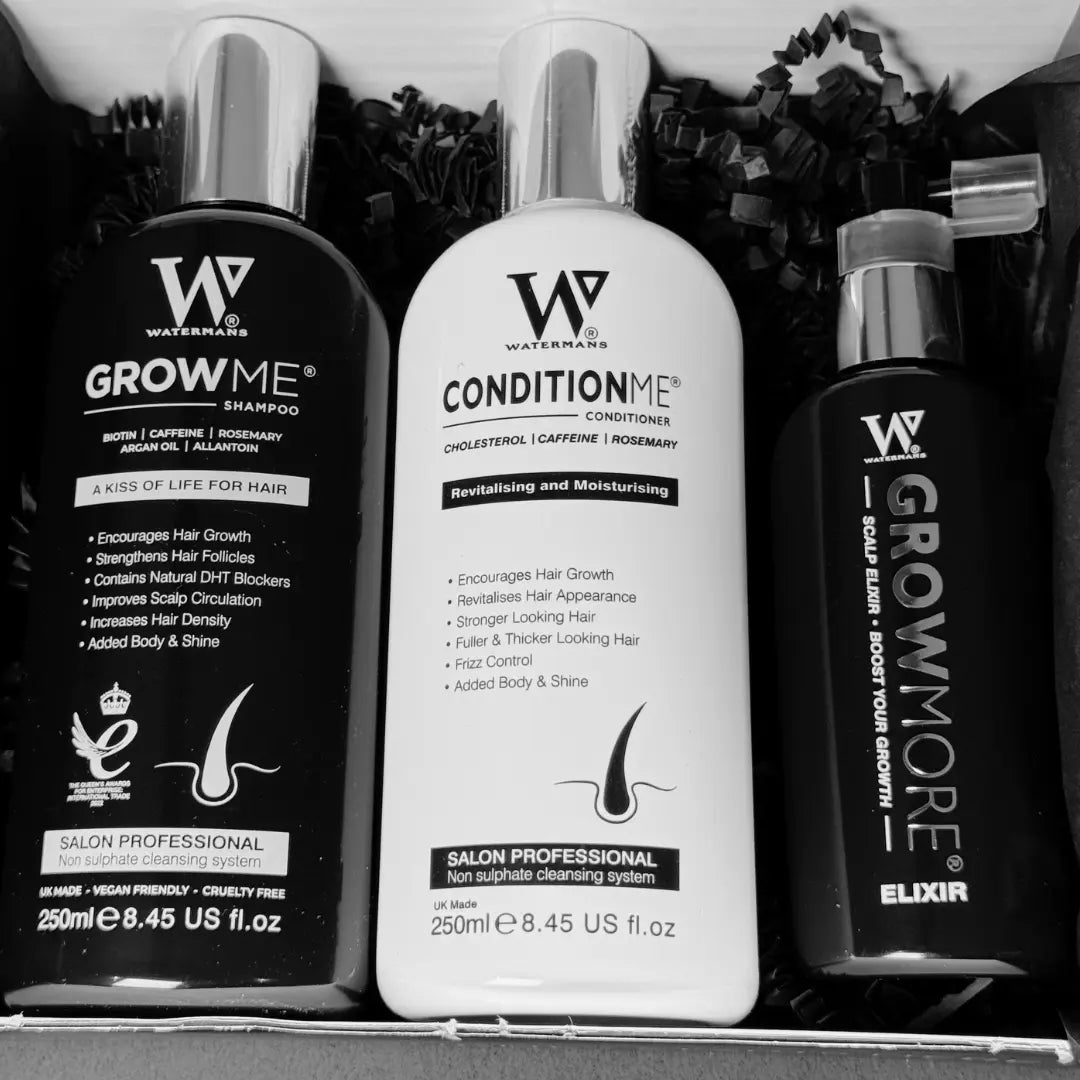
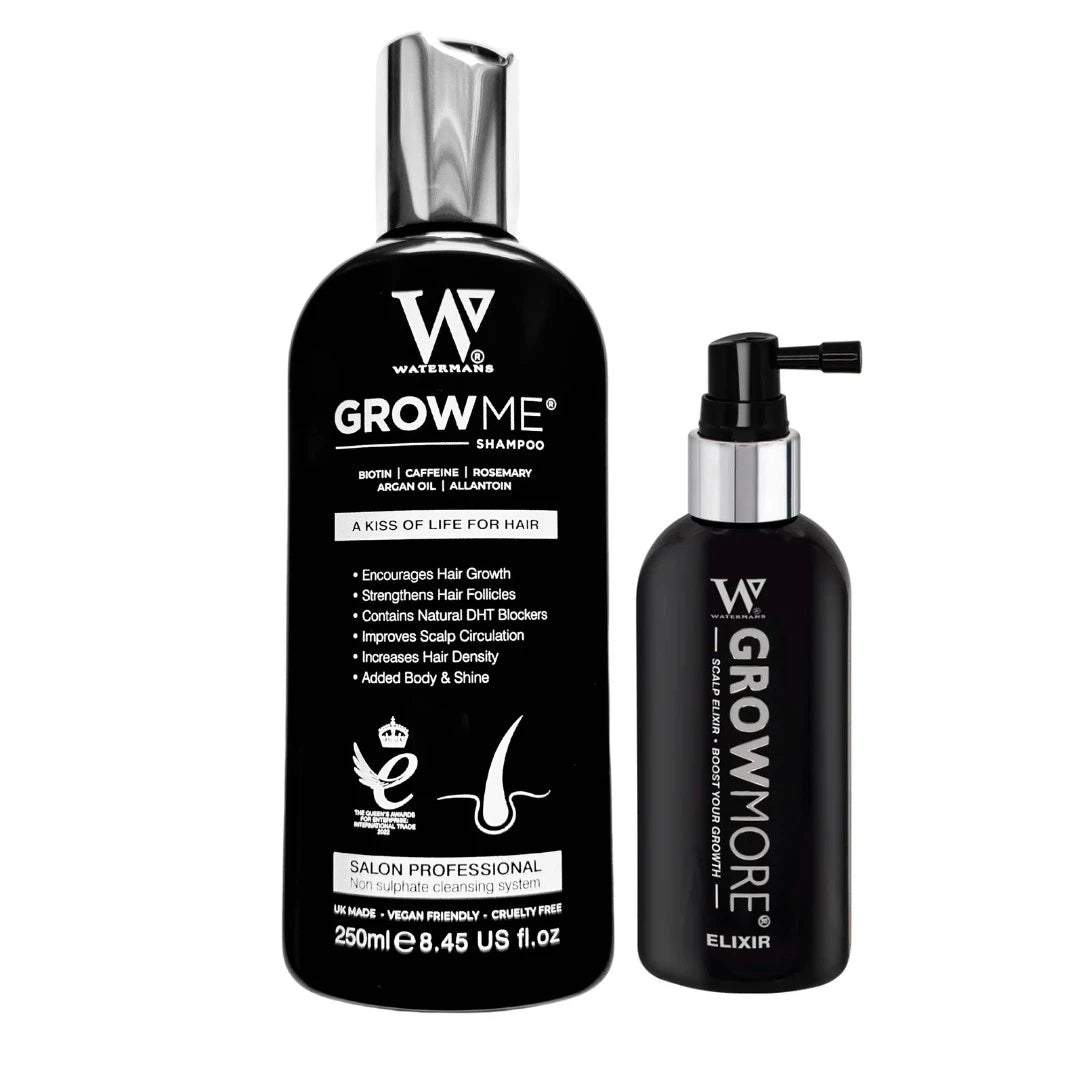
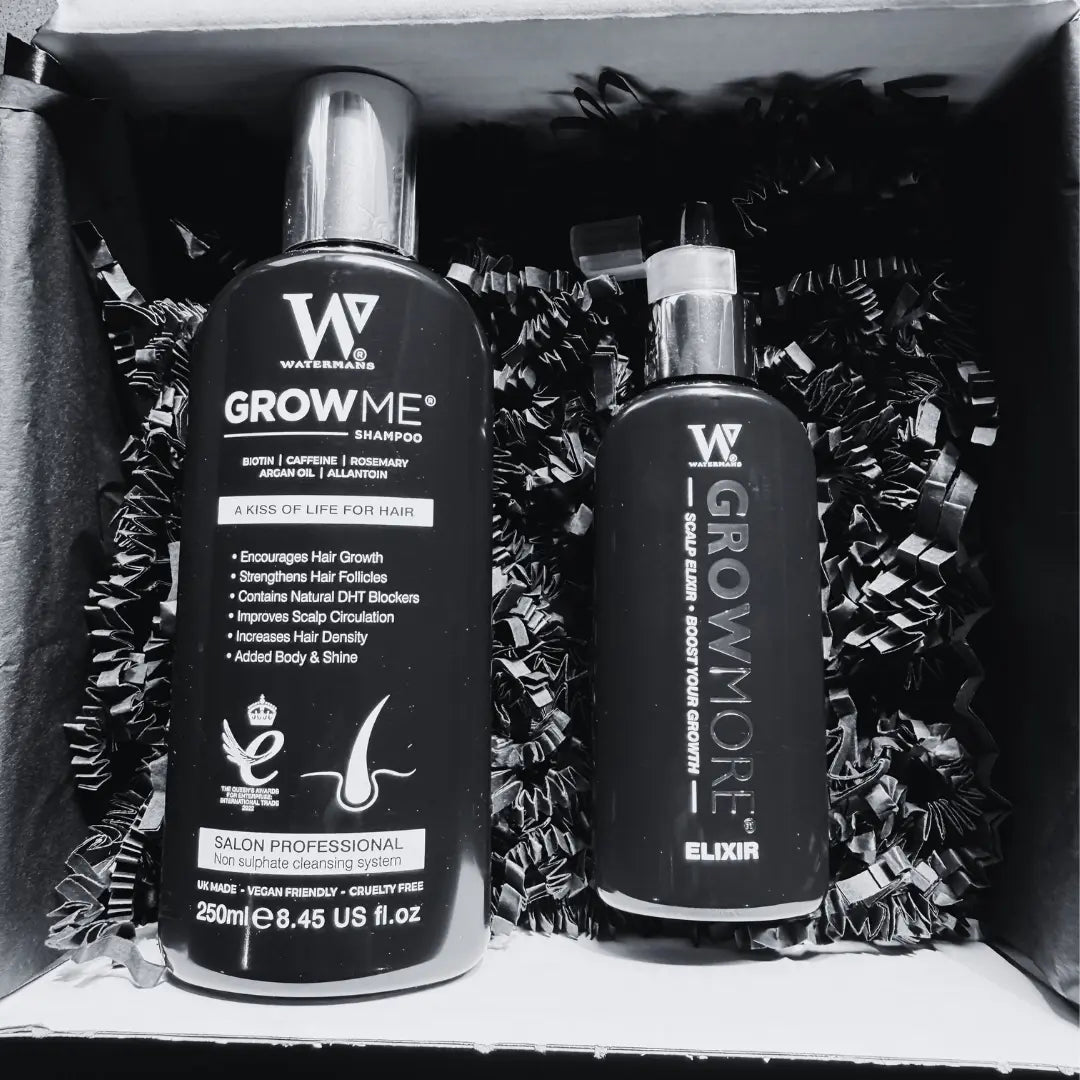
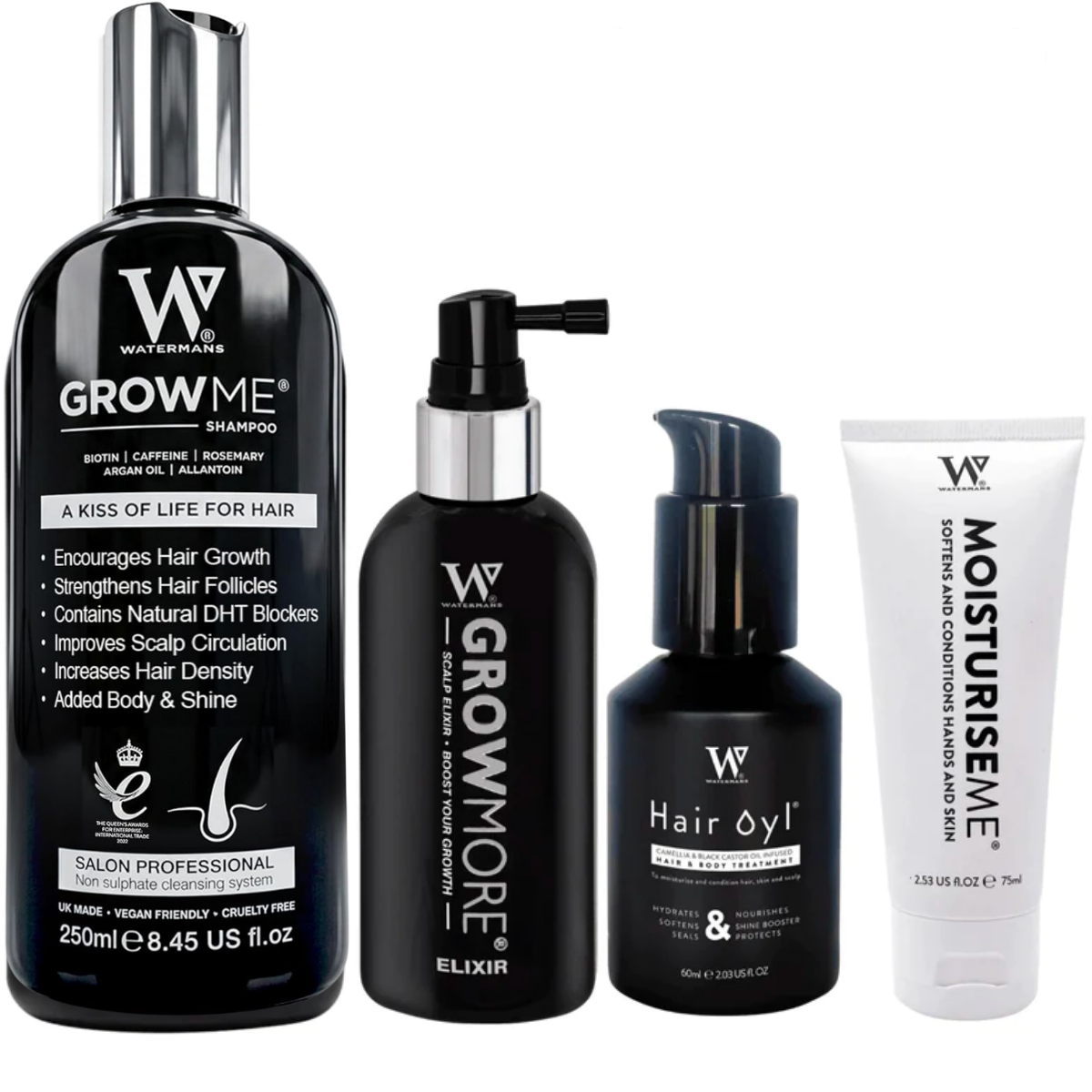
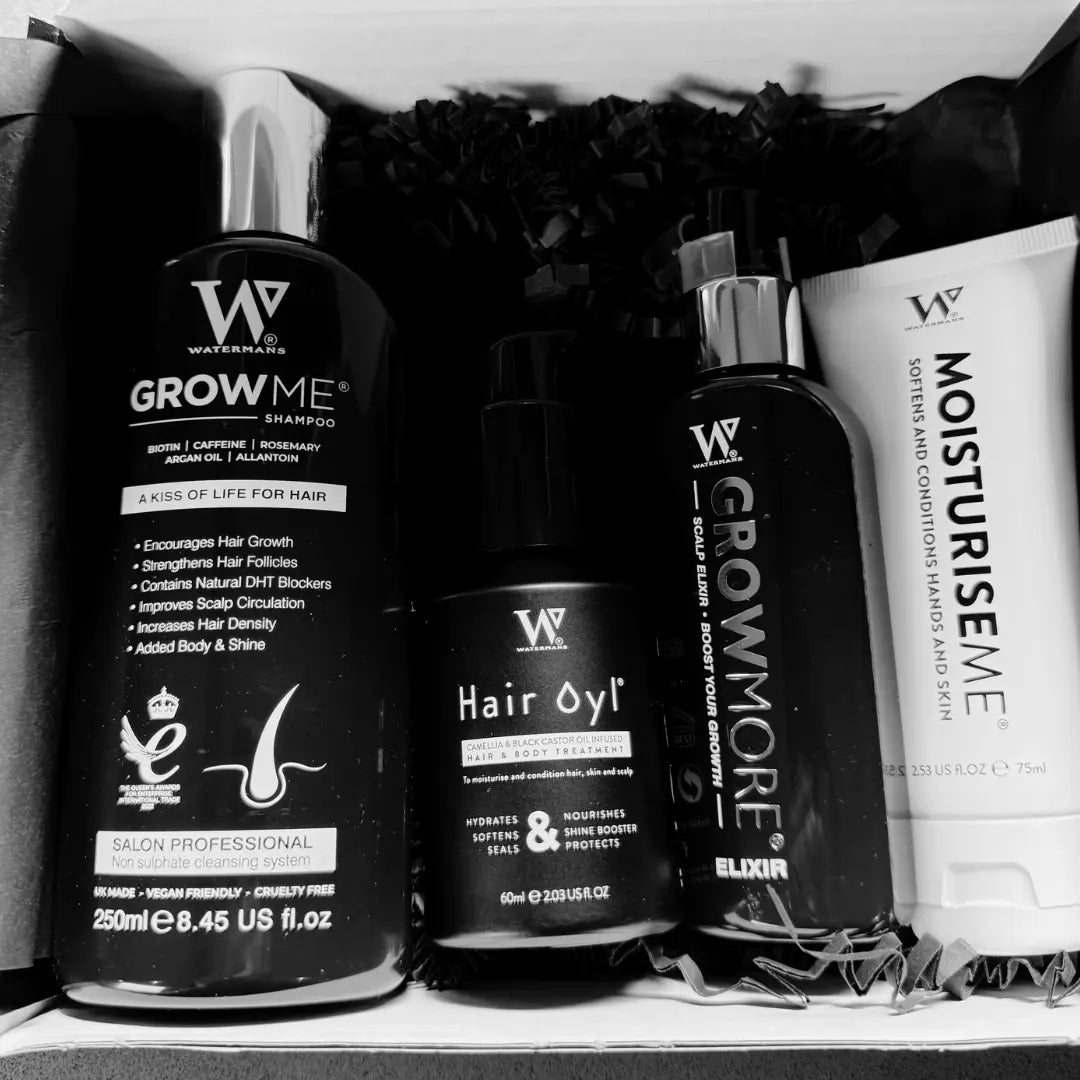
Grow Me® Hair Growth Shampoo, £14.95
Sulphate free, so it is mild enough to use on oily roots as often as they need without stripping the lengths on the way past. Scope: a cosmetic shampoo for scalp and hair. Not a facial product and not a medicated treatment.

Condition Me® Hair Growth Conditioner, £13.95
The ends half of the pair. Cholesterol, shea butter and glycerin add slip and reduce breakage where hair is oldest. Scope: a cosmetic conditioner for hair fibre. Apply from the ears down and keep it off the roots.
How long before a stripped back routine settles?
Give it two to six weeks. If you are coming off a heavy routine with several actives, the first week or two can look worse rather than better, because skin that has been repeatedly exfoliated is briefly less smooth once you stop. That is not a sign the simplification failed.
What should improve early is comfort. Less stinging when you apply things, less tightness after cleansing, fewer random reactive days. Those come first, usually within two weeks. Appearance follows over the next month or two as the barrier rebuilds and turnover normalises.
One caution about the word purging. Genuine purging is a real, temporary phenomenon specific to ingredients that accelerate cell turnover, mainly retinoids and some acids, and it should settle within six to eight weeks. It is not a universal excuse. If a product is stinging, burning or producing a rash, that is irritation, and the correct response is to stop rather than to persist.
A realistic week
| Day | Evening addition |
|---|---|
| Monday | Active on the T-zone |
| Tuesday | Nothing |
| Wednesday | Active on the T-zone |
| Thursday | Nothing |
| Friday | Active on the T-zone |
| Weekend | Nothing, or a mask if you enjoy one |
Note how much of the week is the base routine alone. That is deliberate, and it is what makes the whole thing sustainable.
Being straight with you: Watermans makes hair care and a face and hand cream. We do not make a cleanser or a sunscreen, which are two of the four items in the routine above. That advice sends you elsewhere for half of it, and we would rather write it accurately than write it to suit our shelf.
When minimal is not enough
A simple routine handles ordinary combination skin well. It will not resolve a medical problem, and persisting with it in the face of one just delays treatment. See your GP or a pharmacist for painful or cystic spots, acne that is scarring, persistent redness or flushing, scaly patches that will not clear, or a sudden loss of tolerance to products you used for years.
Frequently asked questions
What is the simplest routine for combination skin?
Cleanser at night, a light moisturiser on the T-zone and a rich one on the cheeks morning and night, and sunscreen every morning. Four products, under five minutes a day. Optional actives come later, on the T-zone only.
Is a 4 step skincare routine enough?
For most people, yes. Cleanser, moisturiser and sunscreen cover the evidence backed essentials, and the second moisturiser texture is the only adjustment combination skin genuinely requires.
Do I really need a toner?
No. Toners date from an era of harsh alkaline cleansers that left skin needing rebalancing. A gentle modern cleanser makes the step unnecessary.
Can I skip moisturiser if my skin is oily?
Not on the areas that are dry. Oil and water are different things, and dehydrated skin often responds by producing more oil. Use a light texture on oily areas rather than nothing at all.
Why do my hair roots get oily while my ends stay dry?
Sebum is produced at the scalp and travels down the shaft slowly, so roots receive the most and ends the least. The ends are also the oldest part of the hair and have accumulated the most damage. Shampoo the roots and condition from the ears down.
How long does it take for skin to adjust to a simpler routine?
Two to six weeks. Comfort usually improves within two weeks, appearance over the following month or two. Coming off heavy exfoliation can briefly look worse before it looks better.
Is skin purging real?
Yes, but only with ingredients that speed up cell turnover, mainly retinoids and some acids, and it should settle within six to eight weeks. Stinging, burning or a rash is irritation, not purging, and means stop.
What can I cut from my routine first?
Toner, essence, eye cream, daily exfoliant and any serum beyond the first. Keep cleanser, moisturiser and sunscreen, which are the steps with the evidence behind them.
The short version
Four products, twice a day, two zones on your face and two zones on your head. Cut the rest without guilt, keep sunscreen without exception, and give it six weeks before you judge it. If you want the reasoning in full, read the complete combination skin guide, and for the wider principles, the hard truths about skincare.
Watermans has been making vegan, cruelty free hair care in the United Kingdom since 2012, and has sold over 5 million bottles. The full range is at watermanshair.com.