Do Collagen Supplements Work for Skin and Hair?
Collagen supplements have a small, real effect on skin hydration and elasticity, a weaker case for nails, and almost no evidence behind the hair claims. That is a duller answer than either side of the argument usually gives you. They are not the fraud that sceptics claim, because peptides genuinely do survive digestion and trials do show measurable changes. They are also nowhere near the transformation the marketing implies, most of the research is funded by the companies selling the powder, and nothing in a tub will outperform sunscreen.
This is a guide to the supplement aisle rather than the food shop. If you want to know which foods support your skin, we have covered that separately in our guide to what the evidence says about diet and glowing skin. Here we are looking at what happens when you buy the nutrient in a capsule instead.
Key takeaways
- Collagen supplements are hydrolysed collagen peptides, essentially a purified protein broken into short fragments. Most come from cow hide or fish skin and scales.
- The old objection that you just digest it is partly wrong. Specific dipeptides such as Pro-Hyp are measurable in blood after a dose, which is a plausible mechanism.
- Meta analyses of randomised trials show modest improvements in skin hydration and elasticity, usually after eight to twelve weeks of daily use.
- Those trials are mostly short, small and industry funded, so treat the effect size with caution rather than dismissing it entirely.
- Evidence for hair is the weakest of the three claims. Nails have a little more support, mainly for brittleness.
- Vegan collagen does not exist as collagen. Those products supply vitamin C and amino acids and hope your body does the rest.
- Biotin can distort blood tests, including the troponin test used to diagnose heart attacks. Tell staff about supplements before any blood test.
- Adequate total protein, vitamin C and daily SPF will do more for your skin than any collagen product.
What is actually in a collagen supplement?
Collagen is the most abundant protein in the body and the main structural component of skin, tendon and bone. What you buy is not intact collagen, which would be useless, but hydrolysed collagen peptides, sometimes labelled collagen hydrolysate. Manufacturers take collagen rich animal tissue, usually bovine hide or fish skin and scales, and use heat and enzymes to chop the long triple helix into short chains of a few amino acids.
That processing is the whole point. Intact collagen is not absorbable, and gelatin, which is partially broken down collagen, gels rather than dissolving cleanly. Hydrolysed peptides dissolve in a cold drink and pass through the gut wall more readily.
Collagen is unusually rich in three amino acids: glycine, proline and the modified form hydroxyproline. Hydroxyproline is close to unique to collagen, which matters for the research, because it gives scientists a marker they can trace in blood.
It is worth knowing that collagen is an incomplete protein. It lacks tryptophan entirely, so it is a poor choice as your main protein source, whatever the tub says about protein content.

Does eating collagen put collagen in your skin?
This is the objection you will have heard, and it deserves a fair hearing because it sounds decisive. Your digestive system does not care what a protein used to be. It breaks proteins into amino acids and short peptides, absorbs those, and your body builds whatever it needs. Eating a heart does not strengthen your heart, and eating collagen should not obviously deposit collagen in your face.
The honest position is that this argument is partly right and partly outdated.
It is right that no collagen molecule travels from the tub to your dermis intact. That does not happen and no serious researcher claims it does.
It is outdated because absorption is not purely amino acid by amino acid. Some di and tripeptides cross the intestinal wall whole, and studies measuring blood after a hydrolysed collagen dose have detected specific peptides, most notably Pro-Hyp and Hyp-Gly, circulating for hours. The working hypothesis is that these peptides act as signals rather than raw materials, and that fibroblasts, the cells that manufacture collagen in your skin, may respond to their presence by increasing production. Laboratory work supports fibroblast stimulation.
So there is a plausible mechanism. That is genuinely more than most beauty supplements can claim. It is still a hypothesis about signalling, not proof of a visible result, which is why the clinical trials matter more than the mechanism.
What do the skin trials actually show?
There is a reasonable body of randomised controlled evidence, and several meta analyses pooling it. The consistent findings are small improvements in skin hydration and elasticity, typically measured by instruments such as a corneometer or cutometer, after around eight to twelve weeks of daily supplementation at doses between roughly 2.5 and 10 grams. Wrinkle depth results are less consistent.
Before you order, four caveats deserve equal billing.
- Funding. A large share of these trials are sponsored by collagen manufacturers or run on a specific branded peptide. Industry funded nutrition research reports positive results more often than independent research does. That is a documented pattern across the field, not an accusation about any one study.
- Duration. Most run eight to twelve weeks. Skin ageing happens over decades. Nobody knows whether a twelve week hydration gain means anything at year five.
- Heterogeneity. Different peptides, sources, doses and measuring instruments get pooled together, which makes a tidy summary number less meaningful than it looks.
- Baseline. Benefits tend to be larger in older participants and those with drier skin. If you are 25 with well hydrated skin, there is less to improve.
A fair reading is that collagen peptides probably produce a real but modest improvement in how hydrated and springy skin feels, most noticeable if your skin is dry or ageing, and that the effect stops when you stop taking it.
What about hair and nails?
The three claims are usually sold together on one label, but the evidence behind them is not equal.
| Claim | Strength of evidence | Honest summary |
|---|---|---|
| Skin hydration and elasticity | Moderate, several RCTs and meta analyses | Small real effect likely, mostly industry funded |
| Wrinkle depth | Weak to moderate, inconsistent | Possible, less reliable than hydration |
| Brittle nails | Weak, small studies | Some support for reduced breakage and faster growth |
| Hair growth or thickness | Very weak | Little direct evidence, mostly extrapolation and marketing |
Hair is the weakest link, and the reason is structural. Hair is made of keratin, not collagen. Collagen sits in the dermis surrounding the follicle rather than in the hair fibre itself, so the argument has to run indirectly through dermal support, and that chain has not been demonstrated to produce measurable hair growth in humans. If someone is selling you collagen specifically for hair, they are ahead of the evidence. We looked at what does and does not have support in our guide to hair vitamins and what actually works.
Marine, bovine or vegan?
| Type | Source | Worth knowing |
|---|---|---|
| Bovine | Cow hide and bone | Types I and III, cheapest, most widely studied |
| Marine | Fish skin and scales | Type I, smaller peptides often claimed to absorb better, pescatarian friendly, costs more |
| Porcine | Pig skin | Common in research, unsuitable for several diets |
| Vegan collagen | No collagen at all | Vitamin C, amino acids and botanicals sold as a collagen builder |
Marine collagen is frequently marketed as superior on absorption. The peptides are somewhat smaller, but head to head clinical evidence showing a better outcome for skin is thin. Choose on diet, ethics and price rather than on the absorption claim.
Vegan collagen deserves a plain statement. Collagen is an animal protein, so a plant product cannot contain it. These supplements provide the raw materials and cofactors your body uses to make its own, which is a legitimate idea, just not the same product, and it should not be sold at collagen prices on the implication that it is.

Could you just eat more protein instead?
For most people this is the more useful question, and the answer is largely yes.
Your body synthesises collagen continuously from ordinary dietary amino acids. It does not need collagen shaped input to do it. What it does need is enough total protein and the right cofactors, and if either is short, no supplement fixes the bottleneck.
The cofactor that genuinely matters is vitamin C. The enzymes prolyl hydroxylase and lysyl hydroxylase require vitamin C to hydroxylate proline and lysine, a step without which the collagen triple helix cannot form stable cross links. This is not marketing. It is the reason scurvy causes bleeding gums, poor wound healing and the corkscrew hairs that dermatologists recognise. Collagen made without vitamin C is structurally defective.
Glycine is the other amino acid worth a thought, since it makes up roughly a third of collagen and is one of the few where a very low protein diet could plausibly limit supply. Ordinary sources include meat, fish, eggs, dairy, pulses and gelatin rich foods such as slow cooked stock.
If you eat adequate protein and a normal amount of fruit and vegetables, you are already supplying what collagen synthesis needs. A supplement then becomes a question of whether the peptide signalling effect adds anything on top, which is exactly the modest and uncertain benefit described above.
The rest of the beauty supplement shelf
| Supplement | What the evidence supports | Verdict |
|---|---|---|
| Collagen peptides | Modest hydration and elasticity gains | Reasonable if you want it, not essential |
| Biotin | Corrects a deficiency, which is rare | Useful only if deficient, see the warning below |
| Omega 3 | Supports barrier function, may help inflammatory skin conditions | Worth it mainly if you eat little oily fish |
| Vitamin C | Essential cofactor for collagen synthesis | Easy to get from food, deficiency is the only real gap |
| Zinc | Wound healing and skin integrity, deficiency causes visible problems | Correct a shortfall, do not megadose |
| Iron | Low ferritin is linked to hair shedding | Only supplement on a blood test, excess iron is harmful |
Important: biotin can make blood tests read wrongly
High dose biotin, common in hair, skin and nail products, interferes with many laboratory immunoassays. It can produce falsely high or falsely low results for thyroid hormones, and, most seriously, it can make troponin read falsely low. Troponin is the blood test used to diagnose a heart attack, so a falsely low result in an emergency department is a real safety issue. Regulators including the MHRA and the FDA have issued warnings about this.
The fix is simple: tell the nurse, doctor or phlebotomist about every supplement you take before any blood test, and mention biotin by name. If you want the detail on why chest pain is investigated with troponin in the first place, see our guide to stable and unstable angina.

What changes skin more than any supplement
If the goal is skin that ages well, the ranking of what actually works is not close, and no oral supplement is near the top.
- Daily sun protection. Ultraviolet exposure is the dominant driver of collagen breakdown in skin. UVA penetrates to the dermis and activates enzymes that degrade the collagen you already have, which is why photoageing looks different from chronological ageing. Our piece on why some people burn and others go brown explains the mechanism.
- Not smoking. Smoking accelerates collagen loss and impairs the blood supply to skin.
- A topical retinoid. This is the ingredient class with the strongest evidence for increasing dermal collagen, and it is applied where you want it rather than swallowed.
- Enough protein, sleep and a sensible diet. Unglamorous and genuinely foundational.
- Then, optionally, a supplement. A collagen peptide sits here, as a small potential addition once the four above are handled.
The order matters. Taking collagen while skipping sunscreen is spending money to slowly replace something you are actively destroying. If you want a simple routine that covers the basics properly, see our guide to the right order to apply skincare.
How to judge a supplement claim in thirty seconds
Ask four questions. Was it tested in humans, or only in a dish? Was the trial longer than twelve weeks? Who paid for it? And is the outcome something you would actually notice, or an instrument reading that changed by a few percent? A claim that fails three of the four is marketing.

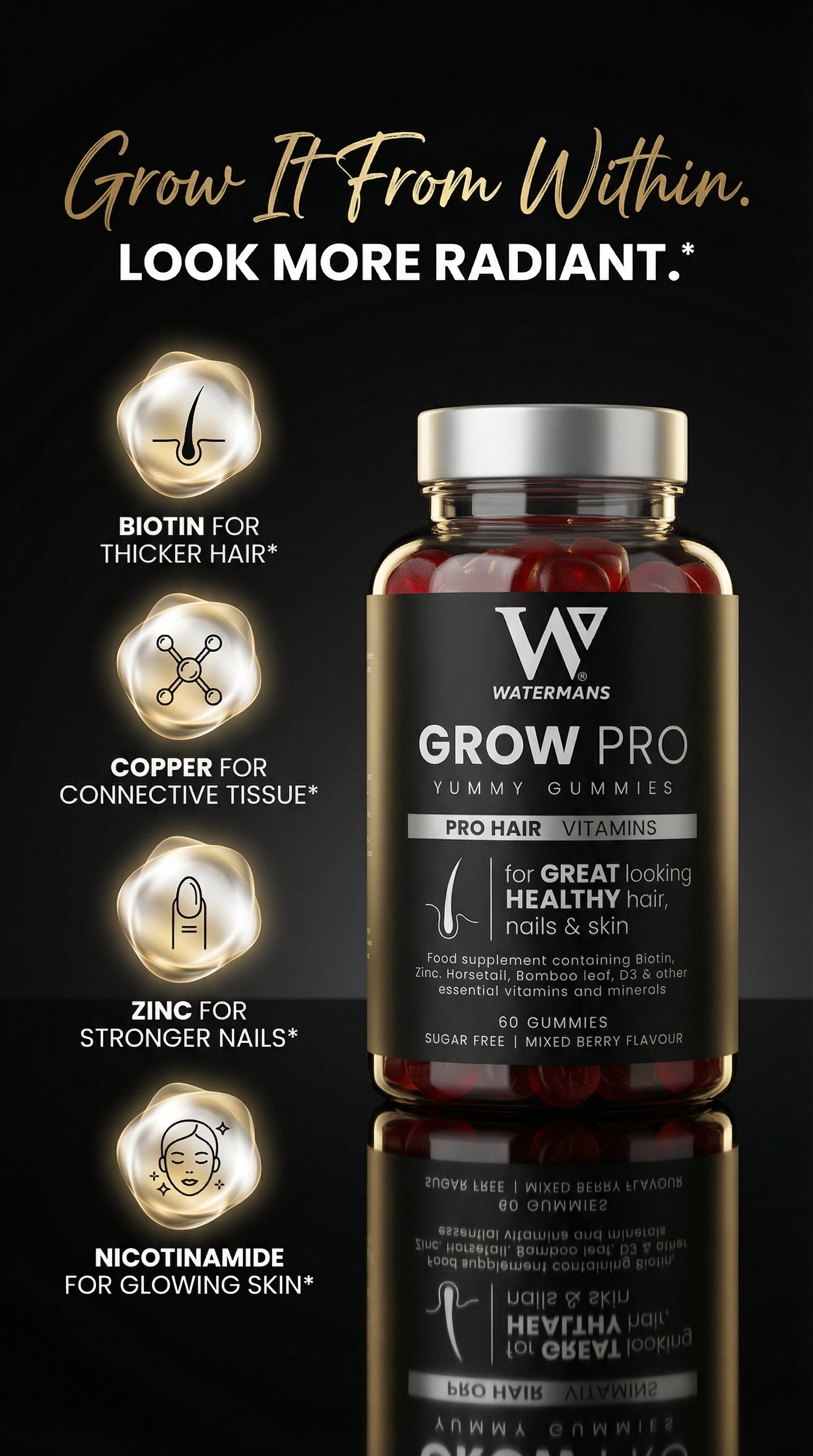
GrowPro® Hair, Skin & Nails Gummies, £22.95
Sugar free vegan gummies with biotin, zinc, bamboo silica, MSM and vitamins C, D3 and B12. In the interest of being straight with you: these contain no collagen, and we are not going to pretend a gummy rebuilds your dermis. They supply nutrients that contribute to the maintenance of normal hair, skin and nails, which is useful if your intake is patchy and does nothing extra if it is already good. They do contain biotin, so mention them before a blood test.
Frequently asked questions
Do collagen supplements actually work?
Partly. Randomised trials and meta analyses show modest improvements in skin hydration and elasticity after eight to twelve weeks of daily use, though most of that research is industry funded and short term. The effect is real but small, and it fades when you stop taking it.
How long do collagen supplements take to work?
Trials that report benefits generally do so at eight to twelve weeks. If you are going to try one, judge it after about three months rather than three weeks, and be realistic about the size of change to expect.
Does collagen help hair growth?
There is very little evidence for it. Hair fibre is made of keratin, not collagen, so any effect would have to work indirectly through the dermis around the follicle, and that has not been shown to produce measurable growth in humans.
Is marine collagen better than bovine?
Not demonstrably. Marine peptides are somewhat smaller and this is often marketed as better absorption, but head to head clinical evidence of a better skin outcome is lacking. Choose on diet, ethics and price.
Can I get collagen from food instead?
Your body makes collagen from ordinary dietary amino acids, so adequate total protein plus vitamin C covers the requirement. Bone broth and slow cooked stock supply gelatin, though the amounts and consistency vary far more than a measured supplement.
Are collagen supplements safe?
They are generally well tolerated, with mild digestive upset or an aftertaste being the usual complaints. They are animal derived, so they are unsuitable for vegetarians and vegans, and marine versions are a concern with fish allergy. Speak to a GP or midwife before starting supplements in pregnancy.
Does vitamin C need to be taken with collagen?
You need adequate vitamin C for collagen synthesis, because the hydroxylase enzymes cannot function without it. That does not mean it must be in the same product or taken at the same moment. A normal diet containing fruit and vegetables covers it.
Should I tell my doctor I take beauty supplements?
Yes, particularly anything containing biotin. High dose biotin interferes with common laboratory immunoassays and can make troponin, the heart attack test, read falsely low. Mention supplements before any blood test.
The bottom line
Collagen supplements sit in an unusual position: better supported than most of the beauty aisle, and far weaker than their advertising. If you enjoy taking one, the risk is low and the likely benefit is a small improvement in how hydrated and elastic your skin feels. If you would rather not, you are not missing anything important, and the money is better spent on a good sunscreen.
Watermans has sold over five million bottles since 2012, our products are vegan and made in the UK, and we sell hair care rather than collagen. That is precisely why we are comfortable telling you the evidence here is modest.