

Is Garlic a Natural Antibiotic? What It Can and Cannot Do
Read this first: garlic is not a replacement for antibiotics.
If a doctor has prescribed antibiotics, take them as prescribed and finish the course. Do not stop them, delay them, or swap them for garlic. A bacterial infection that is left untreated can spread and become life threatening within hours.
Call 999 or go to A and E if you or someone else has a very high or very low temperature with shivering, confusion or slurred speech, a rash that does not fade when you press a glass against it, breathlessness, blue or grey lips or skin, or has not passed urine all day. These can be signs of sepsis. For anything else that worries you, call NHS 111.
Garlic is not a natural antibiotic in any clinically meaningful sense. It does contain a genuinely antimicrobial compound, allicin, which kills bacteria, fungi and some viruses in a laboratory dish. But the effect happens at concentrations you cannot achieve in your bloodstream by eating garlic, allicin breaks down within hours of being formed, and no trial has shown garlic clearing an established infection in a human being. Garlic is a good food with some modest, real health signals. It is not a drug, and treating it as one is where the danger lies.
This article is the honest version of a claim you will see repeated everywhere online. It explains what allicin actually does, why the laboratory findings are real but do not transfer to your body, and the one serious mistake this myth encourages people to make.
Key takeaways
- Garlic's antimicrobial compound is allicin, which does not exist in an intact clove. It is created when you crush or chop garlic.
- Allicin kills bacteria in a dish, including some resistant strains. That is a real finding and it is not the same as treating an infection.
- Allicin is chemically unstable. It degrades within hours, and is largely broken down by cooking and by digestion, so very little reaches your blood intact.
- There is no evidence that garlic treats any bacterial infection in humans. It has never replaced an antibiotic in a clinical trial.
- Infective endocarditis, often cited in these articles, is a heart valve infection needing weeks of intravenous antibiotics in hospital and sometimes surgery. It is never a self treatment target.
- Garlic supplements can increase bleeding risk alongside warfarin, clopidogrel or aspirin, and should usually be stopped before surgery.
- Never put raw garlic on your skin or scalp. It causes chemical burns and contact dermatitis, and it does not grow hair.
- Eating garlic regularly as part of a normal diet is sensible and safe. That is the correct place for it.
Is garlic actually an antibiotic?
An antibiotic is a medicine that reaches an infected tissue at a concentration high enough to kill or stop the bacteria growing there, for long enough to clear the infection, without poisoning you in the process. That is a demanding set of conditions, and it is the reason antibiotic development is difficult and expensive.
Garlic meets the first part of that description in a test tube and fails the rest in a person.
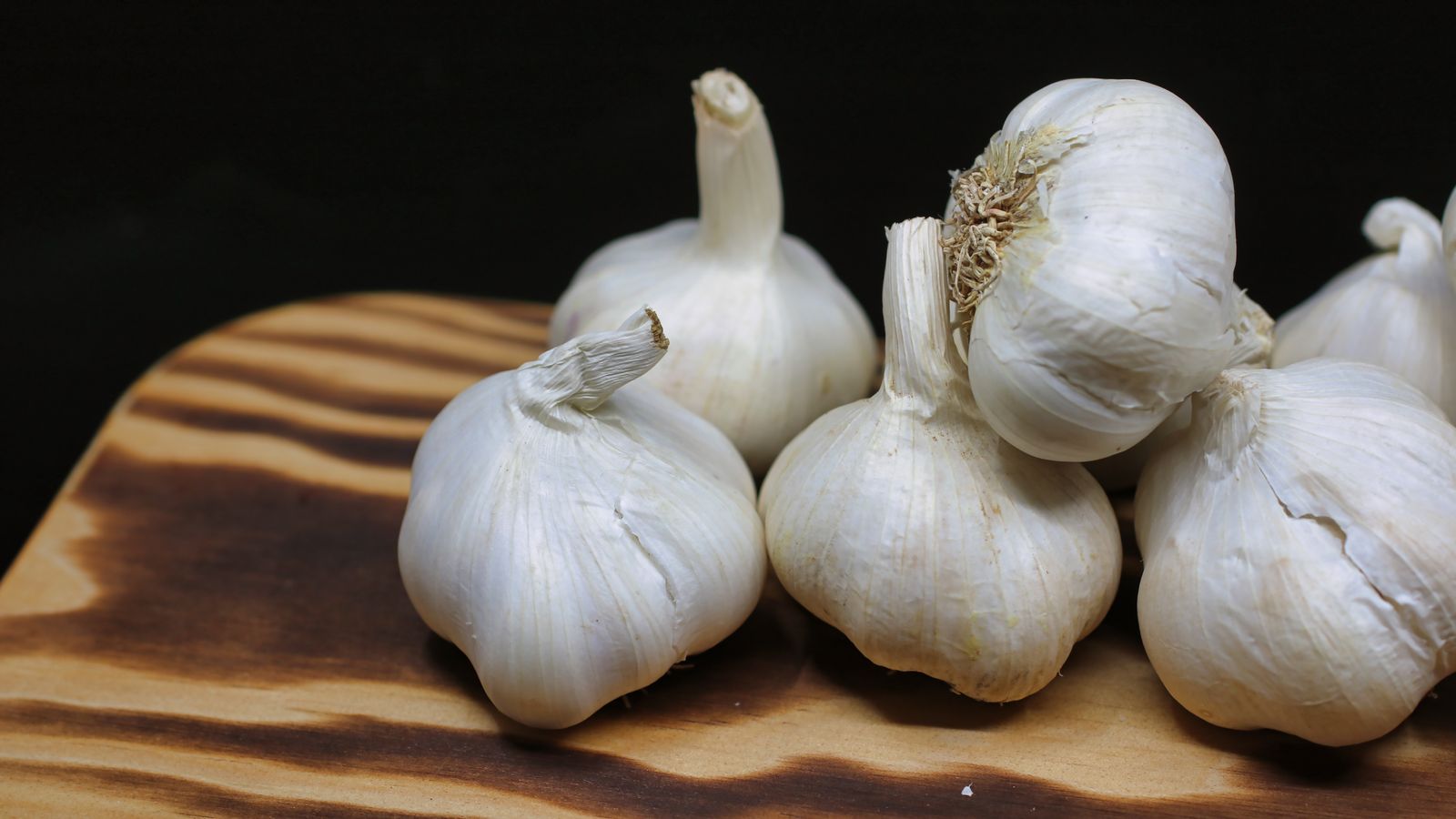
The chemistry is genuinely interesting. An intact garlic clove contains almost no allicin. What it contains is a stable, odourless amino acid derivative called alliin, kept physically separated from an enzyme called alliinase. When you crush, chop or chew the clove, you rupture the cells, the enzyme meets its substrate, and allicin is produced within seconds. That reaction is also why garlic only smells strongly once it is cut. It is a chemical defence system, evolved to punish whatever is biting the plant.

Allicin is a reactive sulfur compound. It works by reacting with thiol groups on proteins, which is a blunt and general mechanism. It will damage a bacterial enzyme, and it will react with your own proteins too. That lack of selectivity is exactly what a useful drug needs to avoid, and it is a good early hint that allicin was never going to become a systemic medicine.
What does the laboratory evidence actually show?
Quite a lot, and it is worth being fair to it. Garlic extracts and purified allicin have been shown in laboratory conditions to inhibit a wide range of organisms, including Staphylococcus aureus and some methicillin resistant strains, Escherichia coli, Helicobacter pylori, and Candida species. Some studies also show allicin disrupting biofilms, the protective matrix that makes certain infections stubborn.
None of this is fabricated. The problem is entirely in the translation from a dish to a person.
| What the study did | What it can tell you | What it cannot tell you |
|---|---|---|
| Applied garlic extract directly to bacteria on a plate | Allicin has antimicrobial activity | Whether eating garlic reaches bacteria in your lung, kidney or heart valve |
| Measured a minimum inhibitory concentration | The concentration needed to stop growth | Whether that concentration is achievable, or survivable, in human blood |
| Tested allicin against a resistant strain | Resistance to antibiotics does not confer resistance to allicin | Whether it would work as a treatment in a resistant infection |
| Showed biofilm disruption in vitro | A plausible mechanism worth researching | Any clinical benefit in an actual patient |
This is the single most misused pattern in natural health writing. A compound that kills something in a dish gets reported as a cure, when in reality bleach, vinegar, alcohol and boiling water all kill bacteria in a dish too, and none of them are treatments for an internal infection.
Why in vitro results do not survive the journey into your body
Three separate problems break the chain between the laboratory bench and a real infection.
The dose problem. The concentrations used to inhibit bacteria in vitro are far above anything a normal diet produces in blood or tissue. Scaling up to reach them would mean quantities of raw garlic no one could physically eat, and long before you approached them you would be dealing with severe gastrointestinal irritation.
The stability problem. Allicin is short lived. It begins decomposing almost immediately into a family of other sulfur compounds, and it is degraded substantially by heat, so cooked garlic contains very little. This is also why supplement labelling is confusing. Products are often sold on an allicin potential or allicin yield figure rather than actual allicin content, because the finished capsule does not contain much stable allicin at all.
The absorption problem. What survives your stomach is extensively metabolised. The compounds detectable in blood after eating garlic are largely breakdown products, not allicin itself, and they appear at trace levels. That is a reasonable outcome for a food and a hopeless one for an antimicrobial drug.

The endocarditis claim, and why it is the dangerous one
Articles promoting garlic as a natural antibiotic frequently reach for infective endocarditis, usually describing it as an infection of biofilms inside the arteries that garlic can help clear. That description is wrong twice over, and the correction matters.
Infective endocarditis is an infection of the endocardium, the inner lining of the heart, and above all of the heart valves. It is not an arterial condition. Bacteria that get into the bloodstream, often from the mouth, the gut, the skin or an intravenous line, settle on a valve surface and form a vegetation, a clump of organisms, platelets and fibrin that antibiotics penetrate poorly.
It is one of the most serious infections in medicine. Standard treatment is typically two to six weeks of intravenous antibiotics in hospital, guided by blood cultures identifying the exact organism, and a substantial proportion of patients need heart valve surgery. In hospital mortality remains high despite modern treatment. Pieces of the vegetation can break off and travel, causing strokes and abscesses elsewhere in the body.
Nothing about that description leaves room for a kitchen ingredient. A person who delays hospital treatment for endocarditis while eating garlic is not choosing a gentler option. They are choosing a much worse outcome. If you have a heart valve problem, a prosthetic valve, or a history of endocarditis, your dentist and cardiologist may also discuss antibiotic prophylaxis before certain procedures, and that is a conversation to have with them rather than to self manage.
Does garlic help with antibiotic resistance?
Antibiotic resistance is a genuine and serious problem, and it is often the emotional hook these articles use. The reasoning goes that since conventional antibiotics are failing, a natural alternative must be needed.
It is an understandable thought and it does not hold up. The response to resistance is not to substitute something weaker that has never been shown to work. If anything, using an ineffective remedy while an infection progresses makes the eventual infection harder to treat, not easier.
If you want to do something real about resistance, the genuinely useful actions are unglamorous. Take prescribed antibiotics exactly as directed and complete the course. Do not press a GP for antibiotics for a cold, flu or most sore throats, which are viral and will not respond. Never take antibiotics left over from a previous illness or given to you by someone else. Keep vaccinations up to date, since preventing infection prevents antibiotic use in the first place.
So when is garlic genuinely worth eating?
Often, and for reasons that have nothing to do with treating infection. Garlic is a flavourful, low calorie, inexpensive food that makes vegetables and pulses more appealing, and it sits inside dietary patterns associated with better cardiovascular health.
The evidence for its specific effects is modest rather than dramatic, and it is more interesting on blood pressure than on cholesterol. We have looked at the wider evidence in detail in our guide to what garlic actually does for your health, and we have taken apart one particularly persistent myth in why garlic is not an alternative to a statin. If you prefer it as a drink rather than in food, our piece on making garlic water covers the practical side.
The sensible summary is this. Cook with garlic because it is good food. Do not take it because you think it is a medicine.
Will garlic help a cold?
This is the most reasonable version of the question, because a cold is self limiting and nobody is risking their life by trying garlic for one.
The honest answer is that the evidence is thin. A single small placebo controlled trial published in 2001 reported fewer colds in a group taking a garlic supplement over twelve weeks, and it is cited constantly because there is so little else. Cochrane reviewers examining garlic for the common cold have repeatedly concluded that there is insufficient evidence to draw conclusions, because that one trial carries almost all the weight and its methods were limited.
Colds are caused by viruses, so an antibacterial argument is beside the point anyway. If garlic soup makes you feel better while a cold runs its course, that is a perfectly good reason to have it.
Garlic safety, briefly
Garlic has genuine antiplatelet activity, so garlic supplements can add to the effect of warfarin, clopidogrel or aspirin and increase bleeding risk. Surgeons commonly ask patients to stop garlic supplements around seven to fourteen days before an operation. Garlic can also worsen reflux and cause bloating in people with irritable bowel syndrome, since it is high in fructans. Garlic allergy exists and is uncommon but real. Tell your pharmacist or GP about any supplement you take, including ones you consider to be just food.

Please do not put raw garlic on your scalp
This is where the natural antibiotic idea reaches us most often, and it is worth addressing directly because the harm is real and common.
The logic circulating online runs that since garlic is antimicrobial and scalp problems can involve microbes, rubbing crushed garlic into the scalp will clear dandruff, unblock follicles and encourage growth. In practice, the same reactive sulfur chemistry that makes allicin interesting in a dish makes it aggressive on skin.
Dermatology literature documents garlic burns, which are chemical, not thermal, and which occur reliably when raw garlic is held against skin under occlusion for an extended period. People have produced second degree burns this way, usually while following a home remedy and assuming that the burning sensation meant it was working. Beyond outright burns, garlic causes irritant contact dermatitis readily, and diallyl disulfide is a recognised allergic contact sensitiser, which is why garlic dermatitis is a familiar occupational problem on the fingertips of chefs.
On an already inflamed or itchy scalp you are adding injury to irritation. Inflammation and scratching do not help hair. This is the same category of mistake as the traditional remedies we warned about in our piece on why datura should never be used for hair growth: a plant with potent chemistry is not automatically a safe topical treatment, and being natural says nothing at all about being gentle.
If your scalp is flaking, itchy or sore, the useful steps are ordinary ones. Wash regularly rather than less often, since a dirty scalp is not being protected. Use a gentle, well formulated shampoo. If flaking is persistent or greasy and yellow, an over the counter antifungal shampoo is the evidence based option, and a pharmacist can point you to one. If there is pain, spreading redness, pus or hair loss in patches, see a GP rather than experimenting.

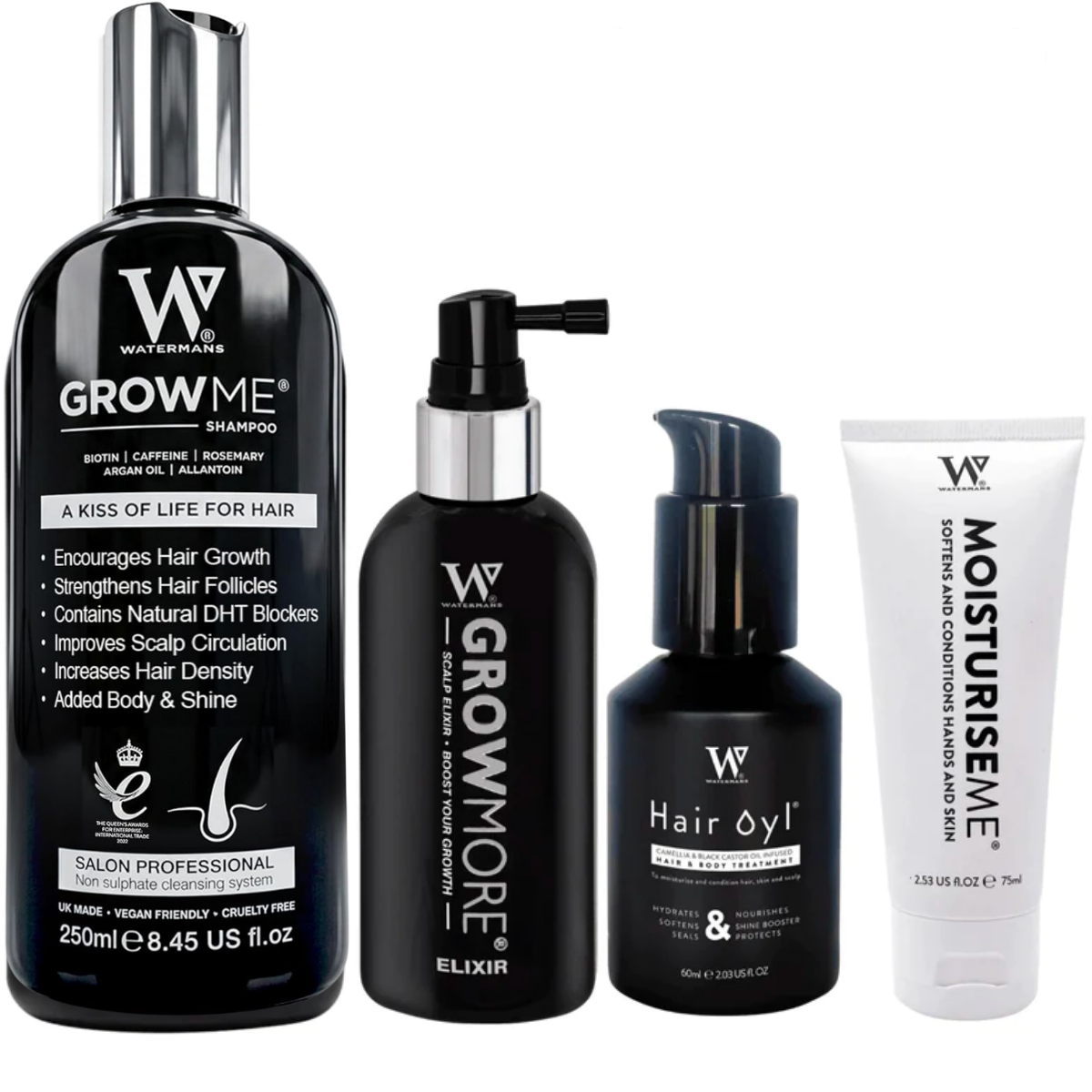
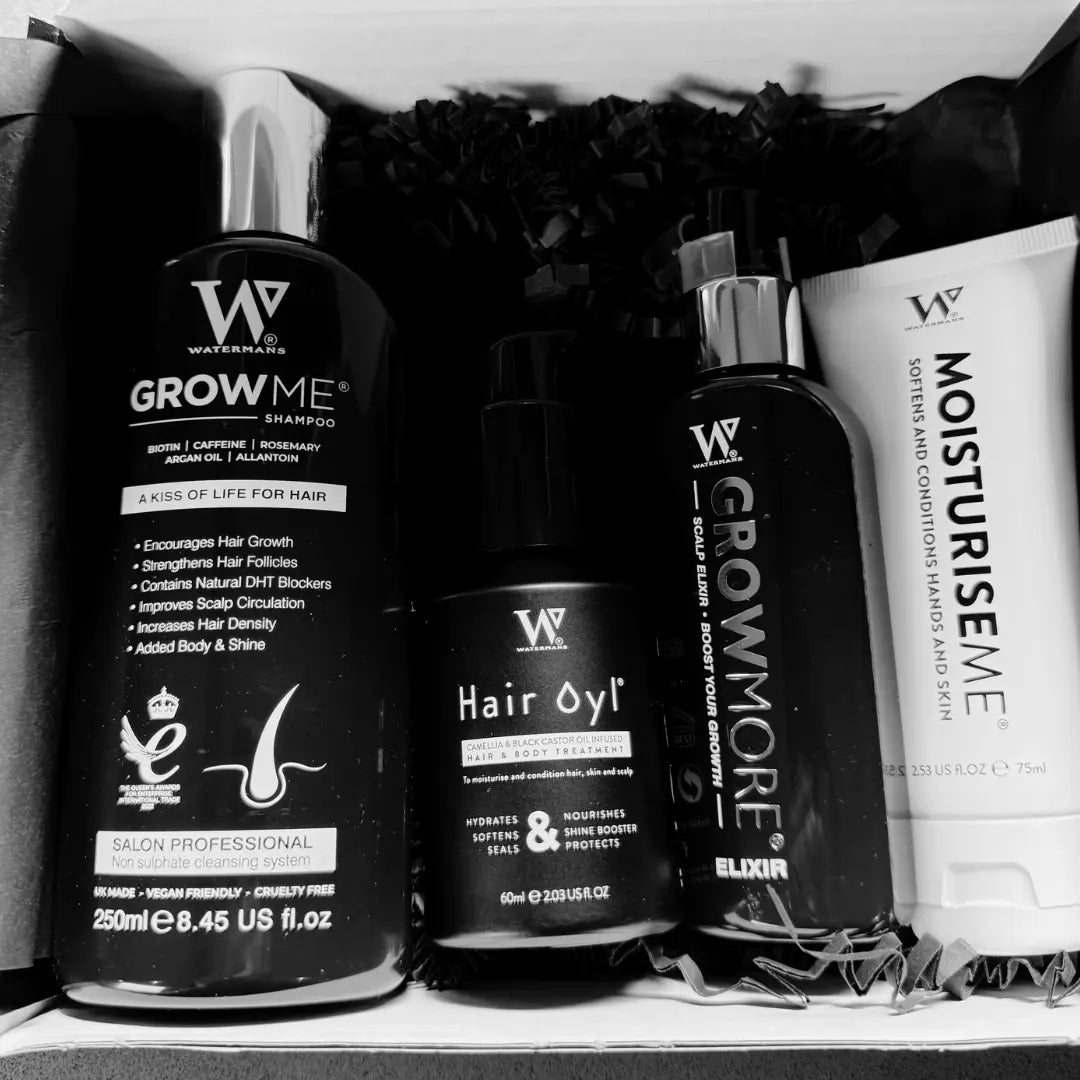
Grow Me® Hair Growth Shampoo, £14.95
A sulfate free daily shampoo with caffeine, rosemary, biotin and niacinamide. It is a cosmetic product for cleansing and for hair that looks fuller and breaks less, not a treatment for any scalp infection or skin condition. If you have been tempted by a raw garlic scalp remedy, this is the boring, formulated alternative that will not burn you.
Garlic and a real antibiotic, side by side
| Garlic | A prescribed antibiotic | |
|---|---|---|
| Kills bacteria in a laboratory dish | Yes | Yes |
| Reaches infected tissue at an effective concentration | No | Yes, that is the point of the dose |
| Active ingredient is chemically stable | No, allicin degrades quickly | Yes, formulated for stability |
| Matched to the specific organism | No | Yes, often guided by cultures and sensitivities |
| Proven to cure infections in humans | No | Yes |
| Sensible everyday use | As food, freely | Only when prescribed, and finish the course |
Frequently asked questions
Is garlic a natural antibiotic?
Not in any practical sense. Garlic produces allicin, which is antimicrobial in laboratory conditions, but it does not reach effective concentrations in the body, it degrades rapidly, and it has never been shown to treat an infection in humans. It is a food with some antimicrobial chemistry, not a medicine.
Can I take garlic instead of antibiotics?
No. If antibiotics have been prescribed, take them as directed and finish the course. Substituting garlic allows a bacterial infection to progress, and untreated infections can become life threatening.
How much allicin is in a clove of garlic?
None until you damage it. An intact clove contains alliin and the enzyme alliinase stored separately. Crushing or chopping brings them together and allicin forms within seconds, then starts breaking down. Cooking destroys much of it, which is why letting crushed garlic stand for a few minutes before heating is often suggested.
Does garlic kill MRSA?
Allicin inhibits methicillin resistant Staphylococcus aureus in a dish, which is a genuine laboratory finding. It does not follow that eating garlic treats an MRSA infection, and no trial supports that. MRSA infection needs specialist medical treatment.
Are garlic supplements better than fresh garlic?
Not for this purpose. Supplements vary widely and are usually labelled with an allicin potential rather than a measured allicin content, because stable allicin is hard to keep in a capsule. Supplements also carry the bleeding interaction risk more than culinary amounts do.
Can garlic treat a urinary tract infection or a tooth infection?
No, and both are worth taking seriously. An untreated urinary infection can reach the kidneys, and a dental abscess can spread into the face and neck. See a GP, a pharmacist through the NHS Pharmacy First service where appropriate, or a dentist.
Is it safe to put garlic on my skin or in my ear?
No. Raw garlic on skin can cause chemical burns and contact dermatitis, and garlic or garlic oil in the ear risks irritation and does not treat an ear infection. If you have ear pain or discharge, see a GP or pharmacist.
Does garlic interact with any medicines?
Yes. Garlic has antiplatelet activity and can increase bleeding risk with warfarin, clopidogrel and aspirin. It has also been reported to reduce levels of some medicines, including certain HIV antiretrovirals. Tell your GP or pharmacist about garlic supplements before surgery or when starting a new prescription.
The bottom line
Garlic earns its place in the kitchen and it does not belong in the medicine cabinet. The antimicrobial chemistry is real, which is precisely why the myth is so persistent, but real chemistry in a dish is not a treatment in a person. Eat garlic freely, enjoy it, and if you have an infection let a clinician treat it properly.
At Watermans we have sold over five million bottles since 2012, and our hair care is vegan and made in the UK. We are a cosmetics company, so we will always tell you plainly when something is a medical question rather than a cosmetic one. This is one of those times.