Hair Density Measurement: How to Track Thinning Properly
Most people decide their hair is thinning in a badly lit bathroom. That is the problem.
Hair density measurement counts how many hairs occupy a given area of scalp, usually expressed as hairs or follicular units per square centimetre. It is done in clinic with a dermatoscope over a marked area, and approximated at home with standardised photographs of the same parting. The absolute number matters far less than whether your own number is changing, which is why a repeatable method beats a precise one-off reading.
Our hair growth conditioner
Condition Me® Hair Growth Conditioner, £13.95. Detangles and strengthens the hair fibre so lengths snap less on the brush and look thicker through the ends.
Key takeaways
- Density is hairs per unit area, not how much hair you shed or how fast it grows.
- DermNet describes trichoscopy, magnified scalp examination, as a non-invasive way to see what the eye cannot.
- At home you are tracking a trend, not producing a clinical figure.
- Same light, same parting, same distance, same dryness, or the comparison means nothing.
- Three months is the shortest sensible gap between two comparisons.

What does hair density measurement actually count?
Hair density measurement counts the number of hairs growing in a defined area of scalp, most often one square centimetre. A proper assessment records three related things: how many follicular units sit in the area, how many hairs each unit contains, and how thick those individual fibres are. Two scalps with the same unit count can look very different if one grows coarse hair and the other fine.
That third figure explains a common frustration. People whose hair has become noticeably see-through are sometimes told their hair count is normal, because the follicles are still present and still cycling. What has changed is calibre: the same number of hairs, each one thinner, covering less scalp. Density and coverage are related but they are not the same measurement.
How is hair density measurement done in a clinic?
A clinician marks a small area of scalp, usually with a dot of dye or a template, then examines it under magnification with a dermatoscope. DermNet describes this technique, trichoscopy, as a non-invasive method that allows recognition of structures not visible to the naked eye. Hairs and follicular units within the marked square are counted directly, and the same square is revisited at follow-up.
More formal versions add photography and time. A phototrichogram clips a small area, photographs it, then photographs it again after a set interval to separate growing hairs from resting ones, which gives information density alone cannot. We cover that method in detail in what a phototrichogram measures, and the underlying metric in terminal hair density explained.
| Method | Where | What it gives | Limitation |
|---|---|---|---|
| Naked-eye parting check | Home | Rough impression only | Lighting and mood dominate |
| Standardised photo series | Home | A reliable trend over months | Not an absolute count |
| Trichoscopy | Clinic | Counts and fibre calibre | Needs equipment and training |
| Phototrichogram | Clinic | Density plus growing and resting split | Two visits, small clipped area |
Can you do a hair density measurement at home?
You can do something genuinely useful at home, provided you are honest about what it is. A home method cannot give you hairs per square centimetre, because that needs magnification and a marked area. What it can do, and do well, is tell you whether your scalp is showing more, less or about the same as it was three months ago, which is the question most people actually want answered.
The trick is removing every variable except your hair. Photographs taken in different rooms, at different times of day, with hair at different levels of dryness are not comparable, and people routinely convince themselves things are worse or better on the strength of two incomparable pictures. Control the conditions and the comparison becomes meaningful.
What you are not measuring
Density is not shedding and it is not breakage. Shedding is how many hairs leave per day, and the NHS puts normal at 50 to 100. Breakage is fibres snapping partway along their length, which makes hair look thinner without a single follicle being lost. A density photo cannot tell these apart, which is why the three need separate checks.
How do you photograph a parting so the comparison is fair?
Follow the same five rules every time, and write them down so you are not relying on memory in three months. Same light source, same parting line, same camera distance, same hair state, same time of day. Consistency is worth more than photographic quality, and a mediocre photo repeated identically beats a beautiful one taken differently.
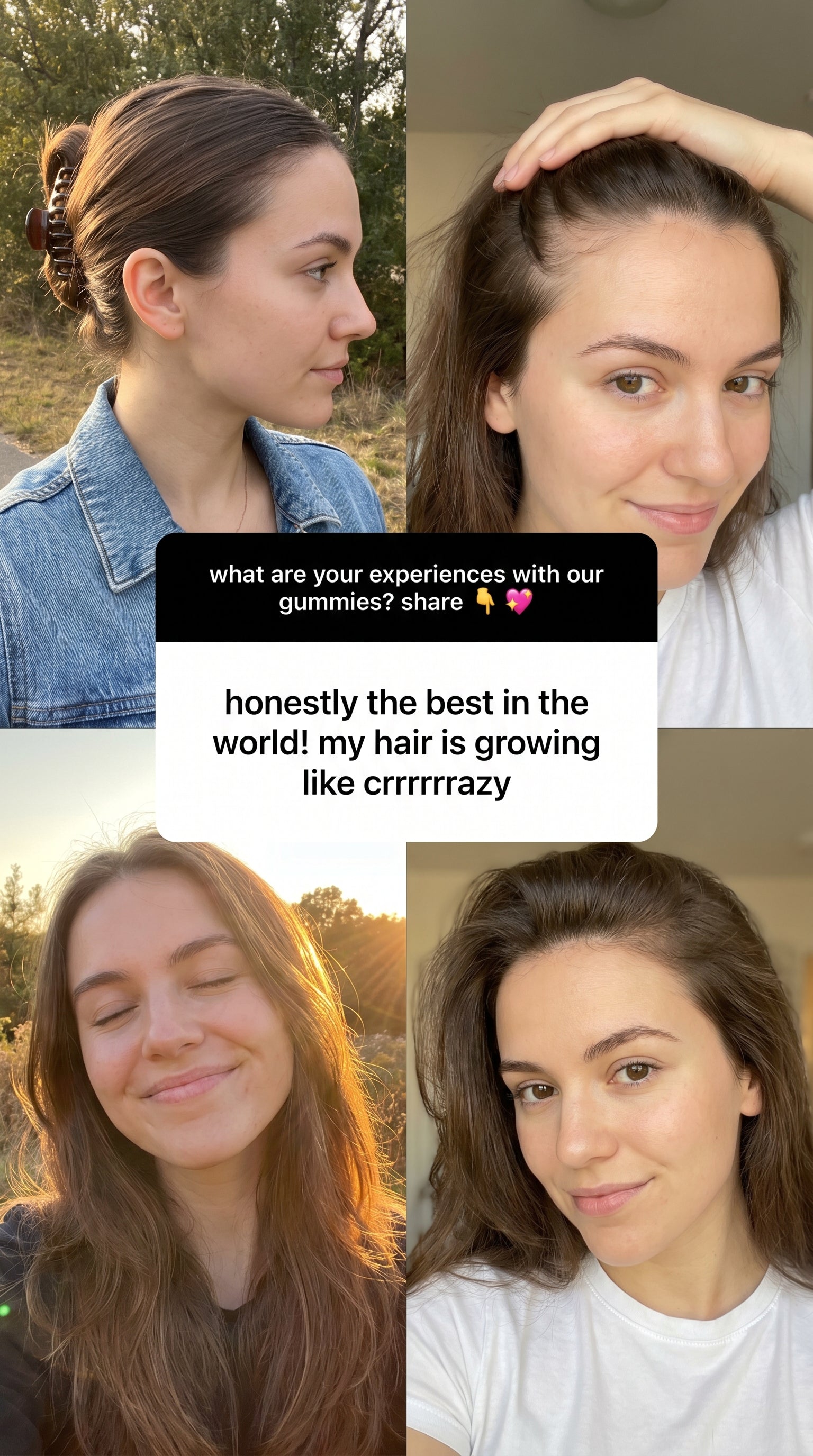
In practice: use daylight from a window rather than an overhead bathroom light, which casts shadows into the parting and exaggerates scalp. Part the hair along the same line, ideally your natural parting, and use a comb to make it crisp. Hold the camera at a fixed distance, and if you can, mark that distance with a piece of string or note the setting. Photograph on dry hair, always, because wet hair clumps and makes any scalp look worse.
Take three frames each time: the parting from directly above, the crown from behind, and the hairline from the front. Those three cover the areas where pattern thinning shows first. Store them in a dated folder and do not look at them in between, because month-to-month comparison is mostly noise.

How do you set up a repeatable baseline in one evening?
Do the whole setup once and the next four comparisons take two minutes each. Choose a window that gets indirect daylight, stand in the same spot facing it, and note which window and roughly what time. Overcast daylight is the most neutral light most homes have, and it removes the single biggest source of false alarm.
Next, fix the geometry. Decide your parting line and comb it crisply, then set a repeatable camera distance: an arm fully extended, or a phone propped at a marked spot on a shelf. Write both down in the same note where the photographs live. If someone can take the crown shot for you, agree the distance with them too, because the back of the head is the hardest area to shoot consistently alone.
Finally, fix the hair state. Fully dry, one day after washing, no styling product, brushed but not pulled tight. Photograph the parting from above, the crown from behind and the hairline from the front, then file the three in a folder named with the date. That folder is your baseline, and the next one goes beside it in three months.
Write the conditions down, not just the photos
The commonest reason a home series becomes useless is that nobody recorded how the first set was taken. Six months later the light, distance and parting have all drifted and the comparison is meaningless. Two lines of notes in the same folder protect the whole exercise.
What makes a home hair density measurement unreliable?
Five things wreck home comparisons, and all five are avoidable. Overhead lighting deepens the shadow along the parting. Wet or damp hair separates into strands and shows scalp. A parting placed a centimetre to one side lands on a different patch of scalp entirely. Recent product build-up flattens hair against the head. And seasonal shedding shifts hair volume on its own timetable.
There is a sixth that is harder to control. You are not a neutral observer of your own head, and expectation shapes what you see in a photograph. This is precisely why dated photographs taken under fixed conditions are worth the trouble: they outlast your mood in a way that a glance in the mirror never does.
How often should you repeat a hair density measurement?
Three months is the minimum useful interval, and six is often better. Hair growth is slow, and the cycle means any change you make takes months to show at the surface. Comparing photographs a fortnight apart tells you about lighting and hair washing, not about density, and it is the fastest route to unnecessary worry.
Pick a fixed schedule rather than photographing whenever you feel anxious, because the anxious moments are exactly when you are most likely to break your own conditions. Four dated sets a year is plenty. If you also want to track length and growth rate, that is a different exercise with a different method, covered in how to measure hair growth progress.
What counts as a normal hair density?
There is no single normal, and anyone quoting one number for everybody is oversimplifying. Density varies with hair colour, ethnicity, site on the scalp and age, and the coarseness of individual fibres changes how much scalp a given count covers. A figure that would look sparse on one head looks perfectly full on another with thicker fibres.
This is why your own baseline is the useful comparator. A reading taken today is most valuable as the thing a reading in six months gets compared against. Chasing a population average is a distraction, and it leads people to worry about a perfectly normal head of hair or to feel reassured while a genuine downward trend continues unnoticed.
Get a discount on the thinning hair range
Join the Watermans mailing list and we will email a discount code straight to your inbox, so you can try the thinning hair range for less. Made in the UK, over 6.5 million bottles sold since 2012.
How does hair density measurement differ from a shedding check?
Density asks how much hair is on your head right now. A shedding check asks how much is leaving. They answer different questions and can move independently: you can shed heavily for three months and end up with similar density once the cycle resettles, or shed entirely normally while density falls slowly year on year through miniaturisation.
The practical implication is that you need both if you want a full picture. Count what collects on a light towel after washing, or use a rough hair pull test, alongside your photographs. Where the two disagree, believe the photographs on density and the count on shedding, and take the combination to a GP rather than trying to interpret it alone.
| Question | Best check | Useful interval |
|---|---|---|
| Is my hair thinner than before? | Standardised parting photographs | 3 to 6 months |
| Am I shedding more than usual? | Daily count or wash-day collection | 1 to 2 weeks |
| Is my hair snapping? | Look for short frayed ends at the parting | Any time |
| What is my actual count? | Clinic trichoscopy | As advised |

What should you do once you have a result?
Act on the trend, not on a single set of photographs. If three consecutive sets show the parting widening, that is worth a GP conversation. If the pictures look stable and your worry has not changed, the pictures are the more reliable witness. And if the problem turns out to be short broken hairs rather than fewer hairs, the answer is mechanical and you can start on it this week.
Whatever the photographs show, protecting the hair you have is never wasted. Breakage subtracts from apparent density without any follicle being lost, so a routine that keeps fibres flexible improves the picture on its own terms. Keep the scalp comfortable, condition every wash, and lower the heat.

Condition Me® Hair Growth Conditioner £13.95
Breakage-defence conditioner with cholesterol, shea butter, silica and hydrolysed lupine protein. If your photographs show short broken hairs rather than fewer hairs, this is the product that matters most.

Grow Me® Hair Growth Shampoo £14.95
Sulfate-free daily shampoo with caffeine, rosemary, niacinamide and biotin. Cleanses without stripping and supports a healthy scalp environment between comparisons.

Grow More® Leave-In Scalp Elixir £25.50
Leave-on overnight scalp elixir for lower-density areas at the crown and parting. A leave-on has hours of contact rather than the sixty seconds a wash-off product gets.
When should a GP look at this instead?
See a GP if your photographs show a clear downward trend, if hair is coming out in discrete patches rather than thinning evenly, if the scalp is sore, scaly or itchy, or if hair change arrives with tiredness, weight change or period changes. The NHS advises seeing a GP if you are worried about hair loss, and doing so before going to a commercial hair clinic.
Bring your dated photographs. A clear before and after taken under the same conditions is genuinely useful to a clinician and far better than describing the change from memory. If your question is about products or a routine rather than a medical one, you can talk to Gail Waterman, our co-founder, as an AI avatar on the Watermans homepage. Watermans sells cosmetic hair care and does not run clinics or assess scalps. For how hair groups are counted, our guide to follicular unit density explains the difference between units and single hairs.
What are the frequently asked questions about hair density measurement?
Can an app measure hair density from a phone photo?
Some apps estimate coverage from a photograph, and the output is only as good as the consistency of your photographs. They can be a convenient way to store a dated series, but regard any number they produce as an index of your own trend rather than a clinical count.
Does hair density measurement hurt?
No. Trichoscopy involves resting a magnifying device against the scalp and nothing more. A phototrichogram clips a very small patch of hair short so it can be photographed twice, which is painless but does leave a small clipped area for a few weeks.
Why does my parting look wider in the bathroom mirror?
Overhead bathroom lighting casts a shadow straight down into the parting, which exaggerates how much scalp is visible. Daylight from a window at an angle gives a far more accurate impression, and it is the reason standardised photographs specify the light source.
How much density loss is noticeable to other people?
Noticeable thinning generally requires a substantial proportion of density to be lost before others comment, which is why people are often aware of their own change long before anyone mentions it. Your early awareness is real, not imagined.
Should I measure wet or dry hair?
Dry, every time. Wet hair clumps into strands and exposes scalp between them, which makes any head look thinner and makes two photographs taken at different dampness completely incomparable.
Can density improve, or only decline?
It can improve when the cause was temporary, such as a shedding episode after illness or birth, because those follicles are still present and cycling. Where thinning is gradual and inherited, the realistic aim is slowing the trend and keeping the hair you have in good condition.
Is one square centimetre really enough to judge a whole scalp?
A single square is only representative if it is taken from a site that reflects the area of concern, which is why clinicians sample the affected zone and often a comparison site at the back of the head. One square from a random spot tells you very little.
Does hair density measurement tell me why my hair is thinning?
No. It quantifies what is there, not the cause. Working out the cause needs a look at the pattern, your history and sometimes blood tests, which is a conversation for your GP rather than something a photograph settles.
What is the bottom line on hair density measurement?
Hair density measurement is worth doing because memory and bathroom mirrors are unreliable witnesses, and a dated series of standardised photographs settles arguments that anxiety cannot. Clinic trichoscopy gives real numbers, but for most people the honest home version, same light, same parting, same distance, dry hair, three months apart, answers the actual question.
Use it to separate the three problems that look identical in the mirror: fewer hairs, more shedding, or hair snapping off. Each has a different answer, and only the photographs plus a shedding count will tell you which one you are dealing with. Take the series to a GP if the trend is clearly downward.
If your comparisons show breakage rather than genuine loss, start where it pays back fastest: our hair growth conditioner is built to stop fine hair snapping between washes.
Watermans products are 100% cosmetic and do not treat medical hair loss. Individual results may vary.
Sources & references
- DermNet, Trichoscopy, checked 17 September 2026.
- NHS, Hair loss, checked 17 September 2026.
- DermNet, Female pattern hair loss, checked 17 September 2026.
- DermNet, Male pattern hair loss, checked 17 September 2026.
- The Institute of Trichologists, checked 17 September 2026.