How to Keep Your Scalp Healthy for Longer, Stronger Hair
A healthy scalp is comfortable, not tight, not itchy, and not shedding flakes. It is skin, so it behaves like skin: over-washing, hot water and harsh products dry it out, and a dry, irritated scalp grows weaker hair than a calm one does. The good news is that the most common causes are habits rather than conditions, which means most people can fix theirs inside a few weeks without buying anything medical. If the itch is the main complaint, our guide to choosing an itchy scalp shampoo explains which type suits which cause.
Our hair growth shampoo
Grow Me® Hair Growth Shampoo, £14.95. A sulphate free daily shampoo that supports a healthy scalp environment and helps reduce breakage, so lengths hold on and look fuller.
Every hair on your head grows out of skin, which is the whole argument for paying attention to it. This guide covers what a comfortable scalp actually feels like, the four things that most often dry it out, how to tell ordinary dryness apart from dandruff and from the conditions that need a GP, a three step routine that fits into a normal week, and the point at which the itch is telling you something a shampoo cannot fix.
Key takeaways
- Over-washing and hot water are the two most self-inflicted causes of a dry, itchy scalp.
- Most hair types need one to two washes a week in warm water, never hot.
- Dry scalp and dandruff are different problems: fine dry flakes against larger oily yellowish ones.
- Itching that starts after a new dye or product usually means irritation or an allergy. Stop the product first.
- A scalp problem causes breakage and can worsen shedding. It does not cause pattern hair loss.
- Give any change two to three weeks. Skin turns over on roughly that cycle.
- Persistent itch, pain, weeping, bleeding or bald patches need a GP, not another bottle.

What does a healthy scalp actually feel like?
A healthy scalp is one you do not notice. There is no tightness after washing, no itch that makes you reach up during the day, no visible flaking on a dark jumper, and no soreness when you part your hair or wear it up. The skin is an even colour rather than patchy red, and it produces enough oil that hair looks lived-in by day two rather than straw dry.
That last point catches people out. A faint amount of oil is the scalp doing its job, not a hygiene failure. The barrier that keeps moisture in and irritants out is partly made of the oils shampoo is designed to remove, which is why the most common route to an uncomfortable scalp is simply washing it too enthusiastically.
What causes a dry, itchy scalp?
Washing too often
Shampoo exists to remove oil, so washing daily removes the oils the scalp produces to protect itself. The result is skin that feels tight and itchy and hair that turns brittle at the ends. For most hair types one or two washes a week keeps hair clean without stripping the barrier. Very oily scalps, and anyone training daily, can wash more often provided the formula is gentle.
Water that is too hot
Hot water is a solvent for the oils your skin needs, which is why a long hot shower leaves your scalp feeling exactly like your face does after one. Wash warm rather than hot, and finish with a cooler rinse to settle both the skin and the hair cuticle. This costs nothing and is the single fastest improvement most people can make. Adding a four minute scalp massage to the shampoo step costs nothing either, though the evidence for it is more modest than the marketing suggests.
Weather and indoor heating
Cold winter air, central heating and strong summer sun all pull moisture from the scalp exactly as they do from facial skin. Scalps also sunburn, particularly along a parting or a thinning crown, and a burnt scalp peels and sheds afterwards. A hat in strong sun is the simplest answer. An exposed parting burns more easily than people expect, which is why it is worth reading how to choose and apply sunscreen for men.
Product irritation or an allergy
Itching, redness or flaking that begins after a new dye, styling product or shampoo points to irritation or contact allergy rather than dryness. Stop the suspect product and the scalp should settle within a few weeks. Patch test dyes every single time, because sensitivity can develop to a product you have used happily for years.
Dry scalp, dandruff, or something else?
These get lumped together and they respond to completely different things, so it is worth telling them apart before you buy anything. The table covers the four you are most likely to be dealing with.
| What it is | What it looks like | What actually helps |
|---|---|---|
| Dry scalp | Small fine white flakes, all-over tightness, often worse in winter | Wash less often, cooler water, a gentler formula. Usually fixed at home |
| Dandruff | Larger, oilier, yellowish flakes, often with redness underneath | A dedicated anti dandruff shampoo from a pharmacy. Washing less makes this one worse |
| Scalp psoriasis | Thick silvery scale on well defined raised patches, often past the hairline | A GP. This is a medical condition and cosmetics are not the answer |
| Contact dermatitis | Redness, swelling or blistering that began after a specific product or dye | Stop the product. See a GP if it is severe, spreading or not settling |
The most useful distinction is dryness against dandruff, because the advice is opposite. Dry scalp improves when you wash less. Dandruff is associated with a yeast that lives on the skin, and washing less often lets it build up, so cutting back makes it worse. If your flakes are large, oily and yellowish, our guide to managing a flaky scalp is the right page rather than this one.
What does the scalp have to do with loss, shedding and breakage?
Hair loss, hair shedding and hair breakage are three different things, and scalp condition is genuinely relevant to two of them and largely irrelevant to the third. Being clear about that stops people buying a scalp product for a problem it was never going to solve. For the microbial side of scalp health, our guide to balancing the scalp microbiome sets out a wash schedule by scalp type.
| Which one | The tell | Does scalp care help? |
|---|---|---|
| Hair loss | Parting widening over months, new hairs finer and shorter than the old ones | No. This is hormonal or medical. A comfortable scalp is good, but it is not the answer here |
| Hair shedding | Full length hairs with a small white bulb at one end | Sometimes. Sustained inflammation and scratching can worsen it, so settling the skin helps |
| Hair breakage | Short broken fragments with no bulb, split ends, a frizzy halo along the parting | Yes. Scratching and dry, brittle hair go together, and both respond quickly |
The bulb is the check to run. A hair with a small pale swelling on one end released from the follicle. A hair that is blunt or frayed at both ends snapped. If you are mostly finding fragments and your scalp itches, you have one problem producing two symptoms, and a gentler routine addresses both at once.

What is the three step healthy scalp routine?
A healthy scalp routine does not need to be complicated. Three steps cover it, and the technique matters as much as the products.
Step 1: a gentle wash, on the scalp only
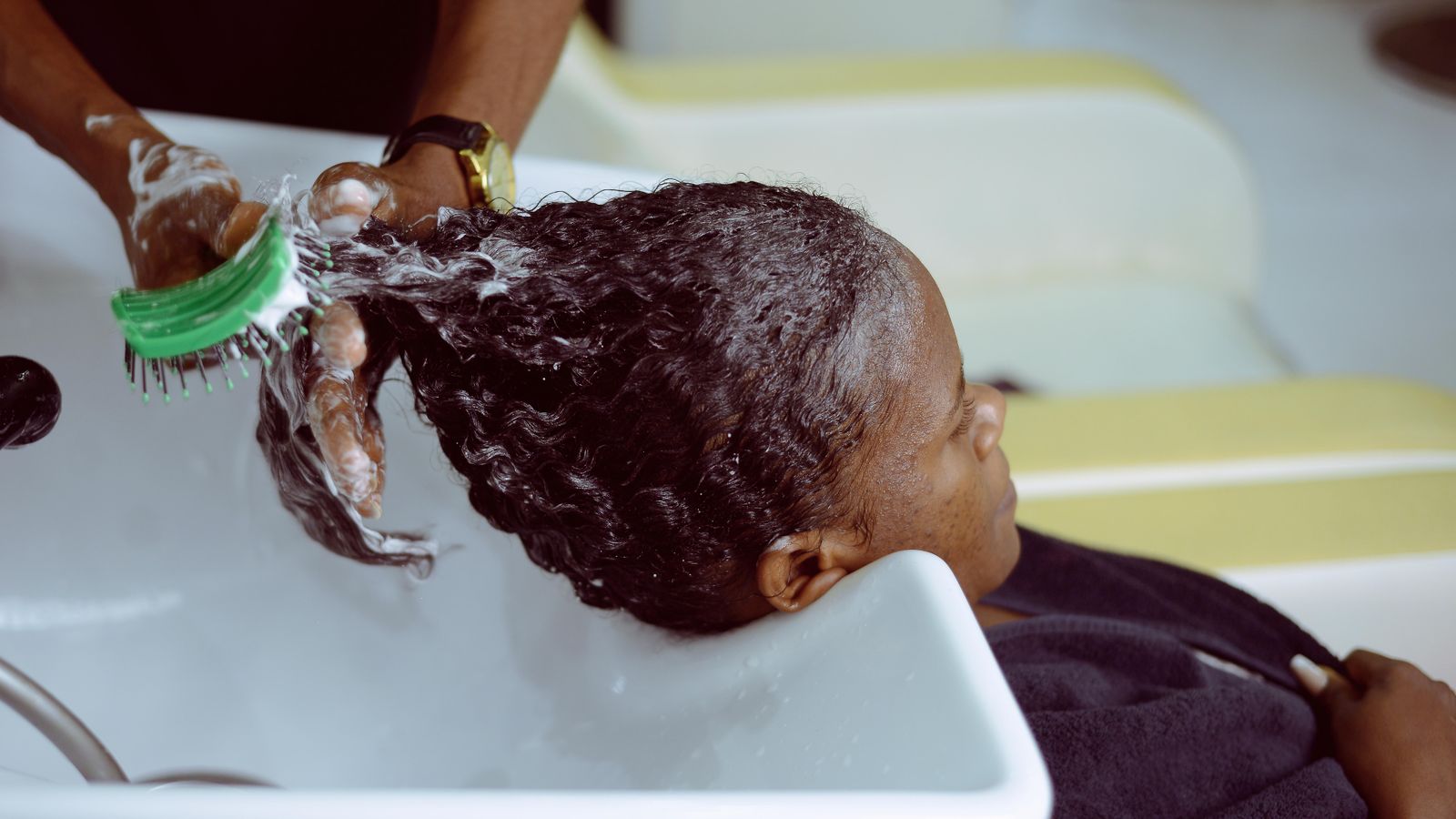
Choose a shampoo that cleans without stripping, and lather it into the scalp with your fingertips rather than your nails. The ends do not need shampoo; the suds running past them on the way out is plenty. Watermans Grow Me is formulated with calcium pantothenate, a water soluble form of vitamin B5 that helps the scalp hold moisture, alongside biotin, caffeine and rosemary.
Step 2: conditioner on the lengths, not the roots
A dry scalp usually comes with thirsty, limp hair, so conditioning is not optional. Apply from the mid lengths to the ends and keep it off the roots, where it weighs hair down without adding anything the scalp needs. Our guide on using conditioner properly covers the technique in more detail.
Step 3: a leave-on step where the scalp needs more
A leave-on serum gets hours of contact with the skin rather than the thirty seconds a shampoo manages, which is the whole point of the format. Apply it along the partings, massage it in with the pads of your fingers, and leave it. The massage is worth doing for its own sake. If you would rather use a tool than your fingertips, our guide to a scalp massager for hair growth explains what to look for and what the studies measured.
Get a discount on the dry scalp range
Join the Watermans mailing list and we will email a discount code straight to your inbox, so you can try the dry scalp range for less. Made in the UK, over 6.5 million bottles sold since 2012.
Which five habits keep a healthy scalp long term?
- Warm water, cooler final rinse. The cheapest change on this list and often the most noticeable within a fortnight.
- Massage weekly. A few minutes of fingertip circles feels good, distributes natural oils along the hair, and gives you a reason to actually look at your scalp regularly.
- Cover up in strong sun. Scalps burn along the parting and on a thinning crown, and a burnt scalp peels and sheds afterwards. A hat solves it.
- Eat and drink properly. Omega 3 fats, zinc and simply enough water all show up in skin comfort, and the scalp is skin.
- Stop scratching. Nails break the skin barrier and damage follicles, which turns a mild itch into a cycle that sustains itself. Keep nails short and use a cool rinse when the urge is strong.
Give any of these two to three weeks before judging them. Skin turns over on roughly that cycle, so a change made today shows up at the surface a fortnight or so later rather than tomorrow.
When should you see a GP about your scalp?
Most scalp discomfort is habit driven and settles once the habits change. A few things are not, and they are worth acting on early rather than working through another three shampoos first.
See a GP if you have any of these
- Itch that persists beyond a few weeks despite gentler washing
- Scalp pain, burning, weeping, crusting, pustules or bleeding
- Thick silvery scale on raised patches, or patches extending past the hairline
- Smooth round bald patches, or shiny scarred skin with no visible follicle openings
- Sudden severe reaction after a dye, particularly with facial swelling
- Any scalp problem in a child
Scarring conditions are the reason not to wait. Where a scalp condition destroys follicles, acting early is the only thing that limits the damage, and no cosmetic product changes that outcome. If shedding rather than itching is your main concern, working out the underlying cause of thinning hair is the better starting point. When a scalp stays flaky despite all of this, our itchy and flaky scalp guide separates dandruff from dermatitis and psoriasis and explains the contact time that decides whether a shampoo works. Before buying an oxygenating product, scalp oxygenation explained sets out which layer of skin these products can reach. For one popular scalp ingredient, our caffeine shampoo guide explains how caffeine reaches the follicle and how to use it.

Grow Me® Shampoo, £14.95
A sulfate free wash with calcium pantothenate for moisture, plus biotin, caffeine and rosemary. Gentle enough for one to two weekly washes that clean without stripping the barrier.
What it is not: a medicine, and not an anti dandruff shampoo. It is cosmetic care for scalp comfort and reduced breakage.

The Boost Set: Shampoo, Conditioner and Elixir, £53.40
All three steps of the routine above in one set: cleansing, moisture on the lengths, and the overnight leave-on step for the scalp itself.
What it is not: a medicine. It is a cosmetic routine for scalp comfort, reduced breakage and fuller-looking hair.
View the set For a low cost habit with one real study behind it, see what the evidence says about scalp massage for hair growth.
Frequently asked questions
How often should I wash my hair to keep a healthy scalp?
Once or twice a week suits most hair types, using warm rather than hot water and a gentle formula. Let the natural oils do their job in between. The exception is dandruff, where washing more often with a dedicated shampoo is what actually helps.
Why is my scalp suddenly dry and itchy?
Look at what changed recently: a new product or dye, colder weather, hotter showers, or more frequent washing. Undo the most likely change and give it two to three weeks, which is roughly how long skin takes to turn over.
Does a dry scalp cause hair loss?
Not directly. Sustained irritation and scratching stress follicles and snap strands, so a badly inflamed scalp can worsen shedding and cause real breakage. It does not cause pattern hair loss, which is driven by hormone sensitivity rather than skin condition.
What is the difference between dry scalp and dandruff?
Dry scalp produces small fine white flakes with a tight feeling all over. Dandruff produces larger, oilier, yellowish flakes, usually with redness underneath, and is associated with a yeast that lives on the skin. They need opposite washing advice, which is why telling them apart matters.
Do leave-on scalp treatments actually help?
They get hours of contact with the skin rather than the seconds a rinse-off product manages, which is genuinely the point of the format. Expect improved comfort and less breakage over several weeks of consistent use, not a change in hair density.
Can I use a body moisturiser on my scalp?
It is not a good idea. Body creams are formulated to sit on skin that is not covered in hair, so they leave hair greasy and can block follicle openings. A product designed for the scalp is thinner and formulated to absorb rather than sit.
Does scalp massage do anything for hair?
The evidence for massage increasing hair thickness is thin and comes from very small studies. What it reliably does is distribute natural oils, feel pleasant, and lower the stress that makes people scratch. Worth doing, but not for the reason the internet claims.
Should I worry about a sunburnt scalp?
Yes, and it is more common than people think along a parting or a thinning crown. A burnt scalp peels and sheds for a couple of weeks afterwards, and repeated burning carries the same longer term skin risks as burning anywhere else. Wear a hat in strong sun.
What is the bottom line on healthy scalp?
A healthy scalp is mostly a matter of doing less rather than buying more. Wash once or twice a week in warm water, lather with fingertips rather than nails, keep conditioner on the lengths, and add a leave-on step only if the skin needs it. Work out whether you have dryness or dandruff first, because the advice runs in opposite directions. Cover up in strong sun and stop scratching. Then give it two to three weeks. If the itch persists, or there is pain, weeping, thick scale or a bald patch, that is a GP conversation rather than another shampoo. It helps to know what you are aiming for, so we set out what a healthy scalp looks like up close.
Watermans has sold over 6.5 million bottles since 2012. The range is cruelty free and made in the UK.
For the everyday version of all this, Grow Me hair growth shampoo does the scalp work while you get on with the rest.
Sources & References
- NHS, Dandruff. What causes it, how it differs from ordinary dryness, and what a pharmacist can offer.
- NHS, Psoriasis. Recognising the thick silvery scale that needs a GP rather than a cosmetic.
- NHS, Contact dermatitis. Reactions to dyes and products, and when to seek help.
- NHS, Sunburn. Why a burnt scalp peels and sheds, and how to avoid it.
- NHS, Hair loss. What is normal shedding and when to see a GP.
Watermans products are 100% cosmetic and do not treat medical hair loss. Individual results may vary.
This article is general information about cosmetic hair and scalp care, not medical advice. See a GP about a persistently itchy, painful or scaling scalp, or any bald patch. If your question is about products or a routine rather than a medical one, you can talk to Gail Waterman, our co-founder, as an AI avatar on the Watermans homepage.