Argan Oil for Hair: What It Really Does and How to Use It
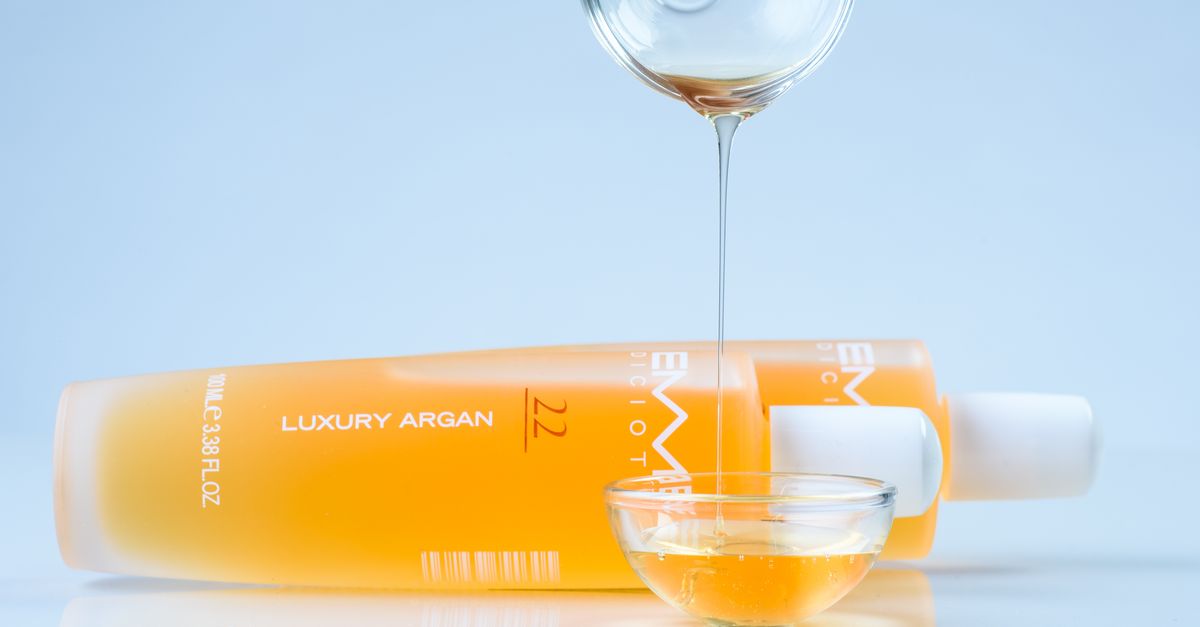
Argan oil for hair is a lightweight finishing oil pressed from the kernels of the Moroccan argan tree, and its job is to sit on the outside of the strand rather than to change what happens inside it. It smooths the cuticle, cuts the friction that causes snapping, tames frizz and adds shine. Used as a few drops on damp mid lengths and ends, it is one of the most useful and least complicated things in a haircare routine. Marula behaves in a similar way on the lengths, and there is a fuller walkthrough of how to use marula oil for hair if you want to compare the two.
Our hair growth conditioner
Condition Me® Hair Growth Conditioner, £13.95. Detangles and strengthens the hair fibre so lengths snap less on the brush and look thicker through the ends.
Key takeaways
- Argan oil is mostly oleic and linoleic acid with a useful amount of vitamin E. Those are large molecules, so it works mainly at the surface.
- Its real benefit is reducing friction and breakage, not feeding the follicle. Oil applied to hair cannot reach the root.
- Two to four drops is a full application for most heads. The single most common mistake is using far too much.
- Apply to damp mid lengths and ends. Keep it off the roots unless your scalp is genuinely dry.
- It will not change hair loss or hair shedding. It works on hair breakage, which is a different problem entirely.

What is argan oil and where does it come from?
Argan oil is pressed from the kernels inside the fruit of Argania spinosa, a slow growing tree that survives in the semi arid southwest of Morocco and almost nowhere else. The tree is the centre of a UNESCO recognised biosphere reserve, and the oil has been produced by Amazigh communities there for centuries, traditionally by cracking each kernel by hand.
Two versions exist and they are not interchangeable. Culinary argan oil is made from lightly roasted kernels, which is what gives it a nutty smell and flavour. Cosmetic argan oil is pressed from unroasted kernels, so it is paler, close to odourless and is the one you want anywhere near your hair. If a bottle smells strongly of toasted nuts, it belongs on a salad.
The composition is what determines how it behaves. Argan oil is roughly 43 to 49 percent oleic acid and 29 to 36 percent linoleic acid, both monounsaturated or polyunsaturated fatty acids with large, bulky molecules, plus tocopherols, which is the family of compounds we call vitamin E. Hold onto the molecule size point, because it explains almost everything about what argan oil for hair can and cannot do.
How does argan oil for hair actually work?
Argan oil for hair works by coating the outside of the hair shaft and lubricating the cuticle, the overlapping scales that form the strand's outer layer. When those scales lie flat, light bounces evenly off the surface, which reads as shine, and neighbouring strands slide past each other instead of catching, which is what stops them snapping.
This surface effect is genuinely worth having. Most of what people call damaged hair is mechanical: cuticle scales lifted or chipped away by heat, bleach, hard brushing and friction against clothes and pillows. A film of oil sitting over that roughened surface fills in the gaps, reduces drag when you comb, and buys the fibre a measure of protection from the next round of styling.
What it does not do
Here is where the honest version differs from the marketing. There is decent evidence that some oils penetrate into the hair cortex and reduce protein loss, but the best studied example is coconut oil, and the reason given is its high lauric acid content, a short straight chain fatty acid with a low molecular weight and an affinity for hair protein. In the same classic comparison, mineral oil and sunflower oil, which have larger molecules, did not show the same protein sparing effect.
Argan oil's fatty acid profile is much closer to sunflower than to coconut. So the reasonable conclusion, and the one worth telling you, is that argan oil for hair is an excellent surface conditioner and a poor deep penetrator. A 2022 systematic review in the Journal of Drugs in Dermatology looking at coconut, castor and argan oil for hair reached a similar place: the evidence for cosmetic benefit is reasonable, the evidence for anything deeper is thin.
It also cannot reach a follicle. Hair emerging from the scalp is not living tissue and there is no route from the strand back down into the root. Any product applied to the length of the hair works on the length of the hair, full stop.
What are the real benefits of argan oil for hair?
The genuine benefits are cosmetic, immediate and easy to see for yourself. It delivers on these:
- Less breakage from combing. Reducing friction is the whole mechanism. Wet hair is at its most fragile, and a lubricated comb through costs you far fewer strands.
- Frizz control. Frizz is raised cuticle scales and moisture moving in and out unevenly. A light oil film flattens and slows both.
- Shine. Flat cuticle equals even light reflection. This is the fastest visible result, usually within one application.
- Softer feel and easier detangling. Particularly noticeable on coarse, curly and coily textures, where the cuticle is naturally more raised.
- Some heat buffering. Applied before drying, an oil slows how fast water leaves the fibre, which softens the shock of hot air.
- Split end camouflage. It makes existing splits sit together and look better. It does not mend them, and nothing does. Only scissors remove a split.
Notice what is absent from that list. Nothing about density, nothing about growth, nothing about the follicle. That is not modesty, it is just where the mechanism stops. Our guide to what causes hair damage covers the wider picture of how strands get into this state in the first place.
Get a discount on the dry and damaged hair range
Join the Watermans mailing list and we will email a discount code straight to your inbox, so you can try the dry and damaged hair range for less. Made in the UK, over 6.5 million bottles sold since 2012.
How should you apply argan oil for hair?
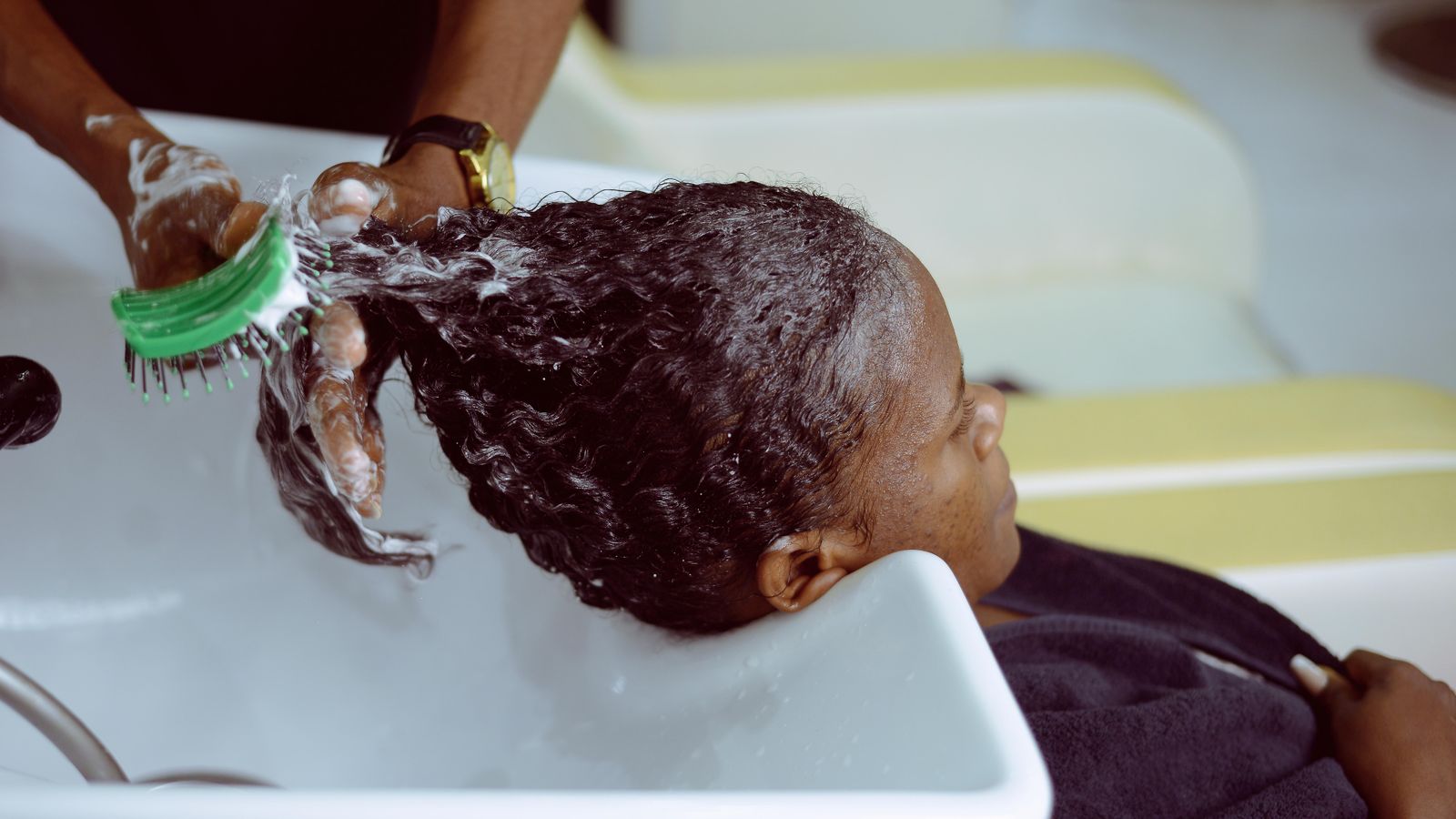
Apply argan oil for hair to damp, towel dried hair, starting at the ends and working upward, using far less than you think. Most people ruin the result by using too much and then conclude that oil makes their hair greasy, when the problem was the dose.

- Start with two drops. Fine or short hair needs one to two. Medium and shoulder length needs two to three. Long, thick, curly or coily hair may take four to six. Add more only after the first amount has disappeared.
- Warm it between your palms. Rub it out into a thin film across both hands so it goes on evenly rather than landing in one greasy patch.
- Ends first, then mid lengths. The ends are the oldest and most damaged part of the hair and should get the most. Whatever is left on your hands is enough for the middle.
- Stay off the roots. The scalp makes its own oil. Adding more at the root is what makes hair look lank by lunchtime.
- Comb it through. A wide tooth comb spreads it evenly and doubles as the detangle, which is exactly the moment the lubrication earns its keep.
The overnight mask version
For a deeper condition, use a larger amount on dry hair, from the ears down, plait it loosely and sleep on an old pillowcase. Wash it out the next morning, and expect to shampoo twice. Once a week is plenty. Doing this nightly leaves residue that dulls the hair and attracts dirt.
Before heat
A single drop through the ends before blow drying is sensible. A dedicated heat protectant is still the better tool for straighteners, since oils have a smoke point and very high direct heat on an oiled strand is not doing you any favours.
Which hair types benefit most from argan oil?
Coarse, curly, coily and chemically processed hair benefit most, because those are the textures where the cuticle sits most raised and friction does the most damage. Fine and straight hair benefits too, but the margin for error on quantity is much smaller.
| Hair type | How much | Where and when |
|---|---|---|
| Fine, straight | 1 drop | Ends only, on damp hair. Skip on days you want volume |
| Medium, wavy | 2 to 3 drops | Mid lengths and ends after washing, before drying |
| Thick, curly | 4 to 6 drops | On soaking wet hair, over leave-in conditioner, to seal moisture in |
| Coily, afro textured | 6 drops or more | As the sealing oil in a layered routine, plus a weekly pre wash mask |
| Bleached or relaxed | 2 to 4 drops | Every wash, ends first. This hair has the most cuticle damage to smooth |
If your hair is fine and you have tried oil before and hated it, try one drop on the bottom two inches only, on damp hair, and judge it once dry. That is usually the difference between "oil doesn't work on my hair" and a permanent place in the routine.
Does argan oil help with hair loss, shedding or breakage?
Argan oil helps with breakage only, and it is worth being precise about the three, because they get lumped together constantly and they are not the same thing.
- Hair loss is follicular. The follicle produces progressively finer hair, or stops. This is pattern thinning and the alopecias, it develops over years, and no topical oil influences it.
- Hair shedding is a cycle problem. A batch of follicles rest at the same time after a trigger such as illness, childbirth or a crash diet, then release together a few months later. It settles on its own once the trigger passes. Oil does not change the timing.
- Hair breakage is fibre failure. The strand snaps partway along its length. This is caused by heat, bleach, tension and friction, and this is the one where the oil genuinely helps.
The confusion is understandable, because heavy breakage makes hair look thinner and feel like it is falling out. The tell is the fallen hair itself: a shed hair is full length with a small pale bulb at the root end, while a broken one is a short piece with no bulb. If you are dealing with shedding or genuine loss, no oil is the answer and a GP visit is the sensible next step. Our guide to seven everyday habits that reduce breakage covers the fibre side in more detail.
How does argan oil compare with other hair oils?
Argan oil sits in the light, fast absorbing category alongside jojoba and grapeseed, rather than the heavy sealing category with castor and shea. Choosing between them is mostly about weight and what you want the oil to do.
| Oil | Weight | Best at | Watch out for |
|---|---|---|---|
| Argan | Light | Everyday shine, frizz and slip on almost any texture | Buy cosmetic grade, not culinary. Price reflects genuine scarcity |
| Coconut | Medium | Pre wash mask. The best evidence for reducing protein loss | Can feel stiff or straw like on protein sensitive hair |
| Jojoba | Light | Scalp use, since it closely resembles our own sebum | Less noticeable shine on the lengths |
| Castor | Very heavy | Sealing coily hair and edges | Thick and difficult to rinse. Always dilute it |
| Olive | Heavy | Cheap, effective overnight mask | Distinct smell, needs a double shampoo |
There is no single best oil. Argan earns its popularity by being the one that suits the widest range of hair types without weighing anything down, which is why it turns up in so many finished formulations rather than only in a dropper bottle.
Which Watermans products contain argan oil?
Argan oil appears in the Watermans range as one ingredient among several rather than as a standalone bottle, which for most people is the more practical way to get it. A conditioner delivers oil evenly across every strand at the exact moment the cuticle is open and receptive, which is harder to achieve by hand.


Condition Me® Strengthening Conditioner
The one to reach for if smoothing and detangling is what you are after. It strengthens and detangles so strands stop catching and snapping. Made in the UK.

Grow Me® Strength & Retention Shampoo
Built around biotin, caffeine, niacinamide, lupin protein and argan oil. It cleans without stripping, which matters because a harsh shampoo undoes whatever the oil did.

Grow Me® Shampoo & Conditioner Set
The pair together, which is the sensible buy if breakage is the problem. Conditioning every wash does more for smoothness than any amount of oil applied afterwards.
Watermans products are 100% cosmetic and do not treat medical hair loss. Individual results may vary.
How do you choose a good argan oil?
Choose an oil whose only ingredient is Argania spinosa kernel oil, sold in dark glass, and priced like something genuinely scarce. Argan is expensive because the trees grow slowly in one small region and yields are low, so a very cheap bottle is almost always cut with something else.
- Read the ingredients. One line, Argania spinosa kernel oil, is what you want. A long list means it is a blend and the argan may be a token amount at the bottom.
- Dark glass, not clear plastic. Light and air oxidise unsaturated oils, and an oxidised oil smells stale and does nothing useful.
- Cosmetic grade, unroasted. Pale gold and nearly odourless. A strong toasted smell means culinary.
- Check the smell before you commit. Rancid oil has a sharp, crayon like note. Bin it.
- Store it in a cupboard. Not on a sunny windowsill, and not in the shower.
Look for the women's cooperatives in Morocco that produce much of the world's supply if fair sourcing matters to you. The argan trade is a significant source of income in the region, and the certifications are easy to check on the bottle.
Is argan oil safe for everyone?
Argan oil is well tolerated by most people, but it comes from a tree nut, so anyone with a tree nut allergy should be cautious and patch test on the inner forearm before putting it anywhere near the scalp. Reactions are uncommon but they are reported. For a related angle, see our guide to tamanu oil for hair.
Beyond that, the practical risks are cosmetic rather than medical. Too much on the roots leaves hair limp. Applying it and then using very high heat is not sensible. And on a scalp that is already itchy, flaking or sore, adding oil can make things worse rather than better, so get the scalp looked at first.
Frequently Asked Questions About Argan Oil for Hair
Can you leave argan oil in your hair overnight?
Yes. Apply a generous amount to dry hair from the ears down, plait it loosely and use an old pillowcase, then shampoo it out in the morning, usually twice. Once a week is enough, because doing it nightly leaves residue that dulls the hair.
How much argan oil should I use?
Start with two drops and add more only if it disappears completely. Fine or short hair needs one to two, medium length two to three, and thick, curly or coily hair four to six or more. Using too much is the most common reason people conclude that oil does not suit their hair.
Does argan oil make hair grow?
No. Oil applied to the hair shaft cannot reach the follicle, and the emerged hair is not living tissue. What argan oil does is reduce breakage, so hair keeps the length it grows instead of snapping off, which can look like faster growth over several months.
Should argan oil go on wet or dry hair?
Damp, towel dried hair is best for everyday use, because the oil spreads more evenly and helps with detangling at the point hair is most fragile. Dry hair suits the weekly mask version, where you want a heavier coating that sits on the surface for hours.
Can argan oil repair split ends?
It makes split ends look and feel better by holding the frayed fibres together, but it does not mend them. A split is a physical separation of the hair shaft and the only real fix is cutting it off. Regular trims plus oil is the workable combination.
Is argan oil good for an oily scalp?
Keep it off the roots if your scalp is already oily. Argan oil belongs on the mid lengths and ends, where the hair is oldest and driest. A scalp that produces plenty of sebum does not need any help.
Is argan oil safe if I have a nut allergy?
Argan oil comes from a tree nut kernel, so anyone with a tree nut allergy should be cautious and patch test on the inner forearm first. If you have had a serious nut reaction before, ask your own doctor or pharmacist before using it. If your question is about products or a routine rather than a medical one, you can talk to Gail Waterman, our co-founder, as an AI avatar on the Watermans homepage.
How can I tell if my argan oil has gone off?
Rancid oil has a sharp, waxy, crayon like smell instead of a faint neutral one, and it may look darker or cloudy. Unsaturated oils oxidise when exposed to light and air, which is why dark glass and a cupboard rather than a windowsill make a real difference.
What is the bottom line on argan oil for hair?
Argan oil for hair is one of the few genuinely useful, genuinely simple products in haircare, provided you are clear about what it is for. It works on the outside of the strand, smoothing the cuticle so hair shines, resists frizz and stops snapping when you comb it. It does not feed the follicle, it does not change hair loss or shedding, and it does not mend a split end. Use two to four drops on damp mid lengths and ends, keep it off the roots, buy cosmetic grade in dark glass, and store it in a cupboard. Do that and it will quietly do its job for years. For the wider picture on why hair gets damaged in the first place, read our guides to preventing split ends and using conditioner properly.
Sources & References
- Journal of Drugs in Dermatology (2022), a systematic review of coconut, castor and argan oil for hair, for the state of the cosmetic evidence on argan oil.
- Rele and Mohile, Journal of Cosmetic Science (2003), Effect of mineral oil, sunflower oil, and coconut oil on prevention of hair damage, for the finding that coconut oil reduced protein loss where the larger molecule oils did not.
- Journal of Ethnopharmacology (2021), a review of the phytochemistry and biological properties of Argania spinosa, for the fatty acid and tocopherol composition quoted above.
- Journal of Cosmetic Science (2011), Hair breakage index: an alternative tool for damage assessment of human hair, for how mechanical breakage is measured.
- NHS, Hair loss, for the distinction between everyday shedding and hair loss that warrants a GP visit.
If the lengths are what keep letting you down, the Condition Me hair growth conditioner is built to cut the snapping.