Tender Scalp: Why It Hurts and How to Calm It
A tender scalp is skin pain, not hair pain. Hair itself has no nerve supply, so the ache you feel when you move your parting or take your hair down is coming from the skin, the follicle openings and the nerve endings wrapped around them. The usual causes are mechanical, from tight styles and pulling, or inflammatory, from irritated follicles, sunburn or a skin condition. Most cases settle within days once you find the pressure and take it off.
Our hair growth shampoo
Grow Me® Hair Growth Shampoo, £14.95. A sulphate free daily shampoo that supports a healthy scalp environment and helps reduce breakage, so lengths hold on and look fuller.
Key takeaways
- Hair has no nerves. Soreness always comes from the skin and the tissue around the follicle.
- The most common cause is mechanical: ponytails, buns, braids, extensions and sleeping with hair tied up.
- Wearing the same parting for years concentrates both tension and sun exposure in one narrow strip.
- A tender scalp that arrives alongside heavy shedding is a recognised pattern, and it usually eases as the shedding does.
- Spots, pustules or crusting mean inflamed follicles rather than simple soreness, and they need a different approach.
- New one-sided scalp pain over the age of fifty, especially with jaw ache, temple tenderness or vision changes, needs urgent medical advice the same day.
What does a tender scalp actually feel like?
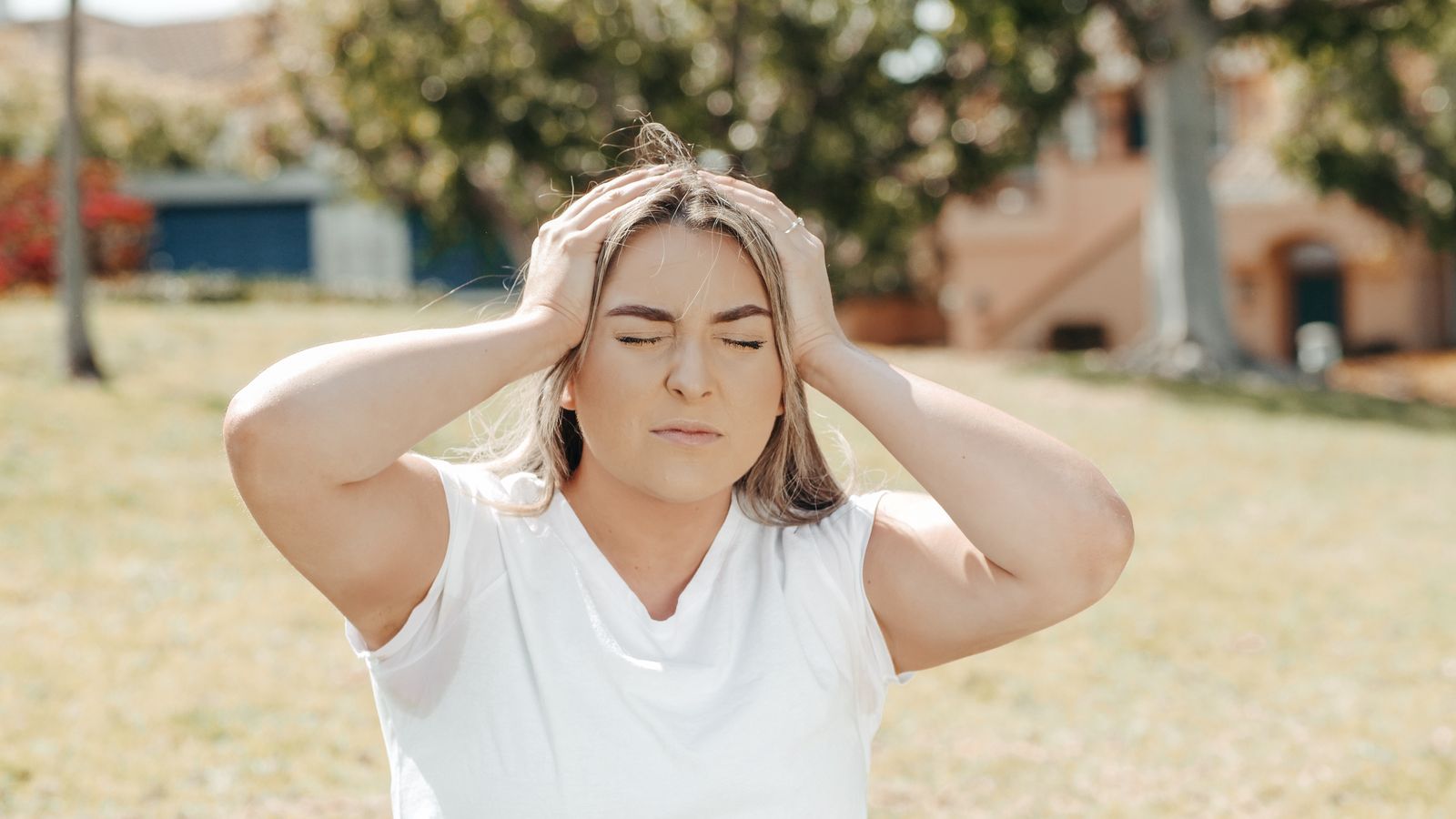
People describe it in a few consistent ways: a bruised feeling at the roots, an ache along the parting, pain when the hair is brushed in a different direction, burning or prickling across one area, or a scalp that feels sunburnt when it has not seen the sun. Touching the hair itself does not hurt. Moving it does, because moving it tugs on the skin. If you want help working out who to see about a sore or tender scalp, our Bournemouth guide to scalp soreness and trichologists sets out the red flags and the gentle care that helps.
That distinction is the most useful thing on this page. If pressure and movement make it worse, the cause is usually mechanical. If the skin looks or feels changed as well, red, flaking, spotty or crusted, the cause is usually inflammatory. Those two roads lead to different fixes. If you can see spots or pus bumps rather than just tenderness, our Middlesbrough guide to spots and bumps on the scalp covers who to see first.
What causes a tender scalp?
Work down this table and look for the pattern that matches yours. Most people find their answer in the first three rows.
| Cause | How it presents | What helps |
|---|---|---|
| Tension from styling | Sore after a ponytail, bun, braids or extensions; worst at the hairline and temples | Loosen it, vary the style, take it down at night |
| The same parting for years | A narrow strip of tenderness that follows the parting exactly | Move the parting a centimetre, and use sun protection on it |
| Irritated follicles | Redness at the follicle openings, small spots, sometimes itching | Wash gently but regularly, stop heavy products, see a pharmacist if pustules appear |
| Sunburn | Sore parting or crown a day after being outside, later peeling | Cool compress, aftersun, hat and SPF on the parting from then on |
| Skin conditions | Soreness with flaking, redness or thick scale | Handle the skin condition, not the pain; a pharmacist or GP is the right route |
| Product reaction | Stinging or soreness starting within days of something new | Stop it for a fortnight, patch test before restarting |
| Shedding-related soreness | Diffuse ache across the whole scalp during a period of heavy shedding | Gentle handling, patience, and a GP if the shedding itself continues |
| Tension headache or migraine | Scalp feels sensitive to touch during or around a headache | Manage the headache; the scalp symptom follows it |
Why does a tender scalp so often turn up with shedding?
This pairing is common enough to have its own name in the literature, and it deserves an honest answer rather than a confident one.
People going through a period of heavy shedding frequently report a sore, burning or itchy scalp at the same time. Researchers have looked at whether the two are causally linked, and the picture is genuinely unsettled. Some studies have found more nerve fibres and more of the inflammatory signalling molecules around follicles in affected people. Others have found no measurable difference from people with no symptoms at all, and note that anxiety about the shedding tracks the pain more closely than any physical finding does.
What can be said fairly is this: the association is real and reported often, the mechanism is not settled, and the soreness usually eases as the shedding does. Anybody telling you they know exactly why your scalp hurts during a shed is going beyond the evidence.
The overnight test. Sleep with your hair completely loose for three nights. If the tenderness improves noticeably, tension was the cause, and no product was ever going to fix it. This costs nothing and settles the question faster than anything you can buy.
What calms a tender scalp quickly?
Seven things, in the order worth trying them.
One, take the tension off. Loosen or drop tight styles for a week, move where the elastic sits each day, and swap thin elastics for a soft coil or a scrunchie. If you wear extensions, weaves or braids, soreness in the first days means they are too tight, and that is worth going back and saying.
Two, move your parting. A centimetre either way redistributes both the tension and the sun exposure that have been landing on one strip of skin for years.
Three, wash gently and regularly. Warm rather than hot water, fingertips rather than nails, a mild shampoo on the skin. Leaving a sore scalp unwashed lets oil and residue build, which makes irritated follicles worse rather than better.
Four, strip the routine back. Drop dry shampoo, waxes, strong-hold sprays and any leave-on scalp product for two weeks. If the soreness eases, reintroduce one thing at a time.
Five, massage briefly, gently. Two or three minutes with the pads of the fingers, moving the skin rather than dragging the hair. It helps tension-related soreness and it costs nothing.
Six, detangle from the ends upwards. Most root pain during brushing comes from pulling a knot at the mid-length while the brush is anchored at the scalp. Work upwards and the tugging disappears.
Seven, reduce the night-time friction. A smoother pillow surface and loose hair overnight both reduce the pulling.
Get a discount on your next order
Join the Watermans mailing list and we will email a discount code straight to your inbox. Made in the UK, over 6.5 million bottles sold since 2012.

When is soreness a warning about traction?
Pain from a tight style is a signal worth respecting, because sustained tension on follicles does real damage over years. Traction alopecia begins at the hairline and temples, or wherever the pull is greatest, and in its early stages it recovers well once the tension stops. Left running for years, the follicles can scar, and at that point the change is permanent. If pressure on the scalp is already part of your routine, read what scalp massage really does before you increase it.
The practical version: soreness is early warning, thinning at the hairline is late warning, and shiny smooth skin with no visible follicle openings means the window has closed. Nobody should be enduring pain to hold a style, and any style that hurts on day one is too tight.
Three terms are worth separating here, because they get run together.
Hair loss means the follicle producing thinner hair or stopping. Sustained traction genuinely can cause this.
Hair shedding means more hairs than usual leaving the head because the growth cycle was disturbed, by illness, stress or a big change. Soreness often accompanies it and both usually recover.
Hair breakage means the fibre snapping. Tight styles and rough detangling cause plenty of it, and it looks like thinning without being it.
Watermans products are 100% cosmetic and do not treat medical hair loss. Individual results may vary.
Which products help, and which make it worse?
Most of what helps a tender scalp is free. Where products matter, they matter by being mild and by reducing the pulling that caused the problem.

Grow Me Shampoo, the mild wash while the skin settles
Sulfate-free, so it cleans a sore scalp without stripping it further. Use warm water, fingertips only, and no scrubbing. If your scalp stings when you apply anything at all, stop and let it settle before reintroducing products one at a time.

Condition Me Conditioner, for the detangling that pulls at the roots
Slip is the point here. Hair that detangles easily gets tugged far less at the scalp, and a lot of everyday root pain is really brushing pain. Mid-lengths and ends, every wash, and comb it through before you leave the shower.
What to avoid while it is sore: anti dandruff actives unless you genuinely have waxy flaking, since they are drying and can sting; high-alcohol leave-on products; scalp scrubs; and hot tools near the roots. If flaking is part of your picture, our guide to telling a dry scalp apart from dandruff will point you at the right shelf.

When should a tender scalp be checked by a doctor?
Most soreness is mechanical and settles. Some needs a professional, and one kind needs one urgently.
Seek urgent medical advice the same day, from NHS 111 or your GP, if you are over fifty and have new pain or tenderness over one temple, especially alongside jaw ache when chewing, headache, scalp tenderness when brushing, fever or any change in vision. That combination can indicate inflammation of the arteries in the head, which is a medical emergency because untreated it can affect sight.
Book an ordinary appointment with your own GP if there are pustules, spreading redness, crusting or swelling; if there are patches of missing hair rather than even thinning; if the soreness has lasted more than a few weeks despite taking the tension off; if the skin is broken or weeping; or if the pain came with a new medicine or a new health problem.
We are a cosmetics company, we do not run clinics and we cannot examine anybody. If you are in real pain, please do not spend three months trying shampoos first. If the pain is a burning sensation more than an ache, our piece on a burning scalp covers that pattern in more detail. If you are weighing up paying for a scalp assessment, what a private trichology consultation should include for the fee sets out what to ask for first. Where a leave on scalp product is involved, the side effects peptide scalp products can cause explains how to tell irritation from an allergy. If your question is about products or a routine rather than a medical one, you can talk to Gail Waterman, our co-founder, as an AI avatar on the Watermans homepage.
Frequently asked questions
Why does my scalp hurt after taking my hair down?
Because the follicles and the skin have been held in one direction for hours, and releasing them lets everything move at once. It is the scalp equivalent of taking off tight shoes. Occasional soreness is normal, daily soreness means the style is too tight.
Can washing my hair too often make my scalp sore?
Washing frequency itself rarely does. Water that is too hot, harsh detergents, scrubbing with nails and vigorous towel drying all can. Change the technique before you change the schedule.
Is a sore scalp a sign I am going bald?
Usually not. Soreness commonly accompanies a period of shedding, which is temporary, and it is far more often caused by tension or irritation. Pattern hair loss itself is typically painless. Judge it by what you can see at the hairline and parting rather than by how it feels. For the wider set of causes, see how to tell folliculitis from other causes of an itchy scalp.
Does stress cause a tender scalp?
Indirectly and often. Stress raises muscle tension across the scalp and neck, worsens headaches, and can trigger a shedding phase a few months later. Many people notice the soreness and the shedding arrive together during a difficult period.
Should I brush a sore scalp?
Gently, yes, and always from the ends upwards. Brushing spreads sebum and lifts residue. It is the tugging on knots at the root that hurts, not the brushing itself.
Can hair extensions cause permanent damage?
They can if they are too tight or worn continuously for years, because sustained tension damages follicles at the hairline. Pain within the first days is the clearest warning sign, and taking breaks between installations is the single best protection.
Why does my parting hurt in summer?
Almost always sunburn. The parting is exposed skin with no protection at all, and it burns quickly on a bright day even in Britain. A hat or an SPF made for the scalp prevents it, and moving the parting occasionally spreads the exposure.
Sources and references
- NHS guidance on giant cell arteritis, for the urgent symptoms listed above and the reason same-day advice matters.
- NHS and NICE Clinical Knowledge Summaries on folliculitis and on hair loss, for the presentation of inflamed follicles and of traction-related change.
- British Association of Dermatologists public information on traction alopecia, for the early reversible stage and the later scarring stage.
- The peer-reviewed literature on trichodynia in the British Journal of Dermatology and the Journal of the American Academy of Dermatology, for the conflicting findings on nerve fibre density, inflammatory signalling and psychological factors in scalp pain during shedding.
- British Association of Dermatologists public information on sun protection, for the advice on the exposed parting.
What is the bottom line on tender scalp?
A tender scalp is a skin problem, so look for what is pressing on it. Take tight styles down for a week, sleep with hair loose, move your parting, wash gently with warm water and mild shampoo, detangle from the ends upwards, and strip the routine back to the basics for a fortnight. Most soreness settles in days. Take pain from a style as an early warning rather than something to endure, because years of tension at the hairline causes damage that eventually will not recover. If there are pustules, bald patches, broken skin or pain lasting weeks, see your GP, and if you are over fifty with new one-sided temple pain, jaw ache or any change in vision, get advice the same day.
If you are changing one thing this month, make it the wash: Grow Me hair growth shampoo is sulphate free and built for the scalp.
Grow Me shampoo is vegan, Watermans is UK made, and we have sold over 6.5 million bottles since 2012.