Microneedling for Hair Loss: What It Does, Risks and Aftercare
Microneedling for hair loss means rolling or stamping very fine needles into the scalp to make controlled micro injuries, on the theory that the healing response is useful to the follicle. Needles run up to 3 mm, though around 0.5 mm is typical to limit bleeding and speed recovery. The micro channels close within about ten minutes, and a minimum of six weeks between sessions is the usual professional advice. The skin resurfacing use is well established; the hair use is popular and far less settled.
Our hair growth shampoo
Grow Me® Hair Growth Shampoo, £14.95. A sulphate free daily shampoo that supports a healthy scalp environment and helps reduce breakage, so lengths hold on and look fuller.
Key takeaways
- Needles can be up to 3 mm long, but around 0.5 mm is the length typically used to minimise bleeding and keep recovery quick.
- The micro channels created close on their own after roughly ten minutes, so the skin barrier is not left open for long.
- A minimum of six weeks between sessions is standard, because that is how long new collagen takes to form.
- Hygiene is the real risk at home. A device that is not properly cleaned and replaced is how a scalp gets infected.
- Never apply anything to a freshly needled scalp that you would not put in a wound.
- Microneedling for hair loss is aimed at follicular thinning only. It does nothing for a shedding phase and makes breakage worse.
What is scalp microneedling, and what do the needles actually do?
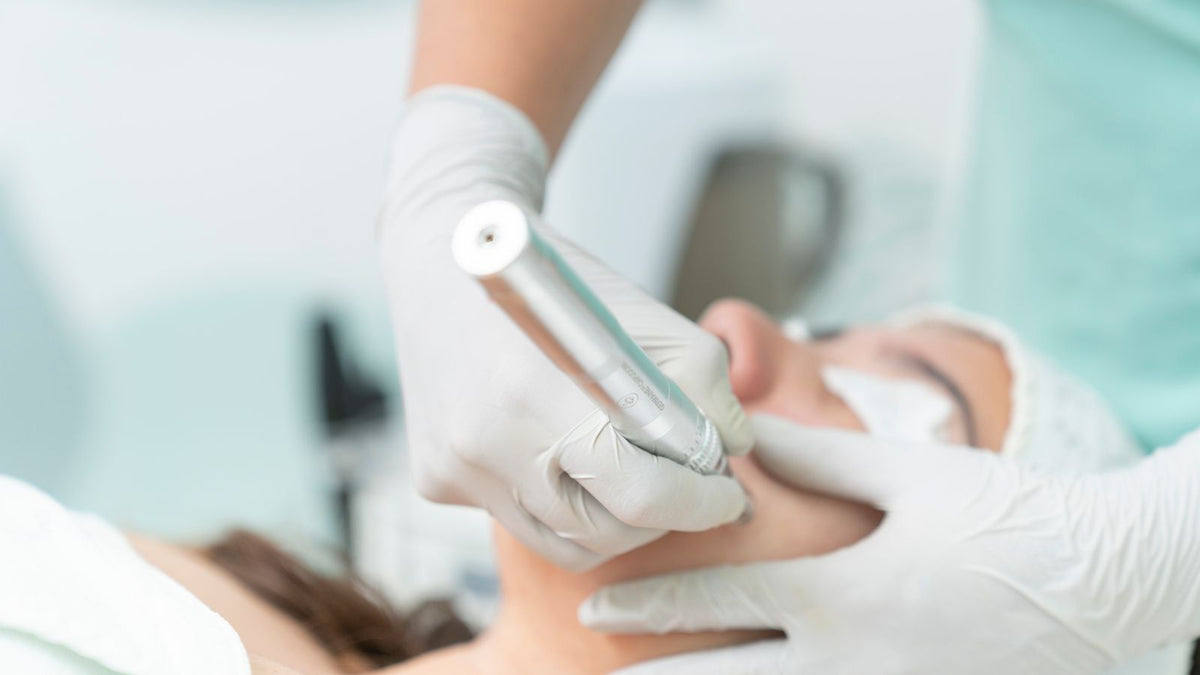
Scalp microneedling uses an array of fine needles, mounted on a roller, a stamp or a motorised pen, to puncture the upper layers of the scalp in a controlled pattern. Each needle creates a microchannel, a tiny wound, and the body responds by repairing it. The repair response is the entire point of the procedure.

DermNet describes the mechanism in the skin generally: the needles injure superficial dermal collagen strands and small blood vessels, which triggers a controlled cascade of inflammation and growth factor release, leading to production of new collagen, elastin and capillaries. That cascade is well documented for skin texture and scarring. Its application to hair is a newer and less settled question.
Worth being straight about the evidence: the skin resurfacing use is long established, and the scalp use is genuinely popular but sits on a smaller and more mixed body of research, much of it combining needling with something else applied at the same time. Anyone presenting it as a settled answer for hair is overstating what is known.
How deep do the needles go, and does depth matter?
Needle depth decides almost everything about risk and recovery. DermNet notes that skin needling devices carry needles up to 3 mm in length, but that around 0.5 mm is typically used, specifically to minimise bleeding and allow rapid recovery. Depth is the difference between a superficial procedure and a genuine wound.
| Depth | What it is | Where it belongs |
|---|---|---|
| 0.2 to 0.3 mm | Barely breaks the surface. Minimal sensation, no bleeding | Home devices. Low risk, and correspondingly modest effect |
| 0.5 mm | The commonly cited working depth. Some tenderness, pinpoint redness | The usual ceiling for home use, and the depth DermNet cites as typical |
| 1.0 mm and above | Reaches deeper dermis. Bleeding is expected, numbing often used | A trained practitioner in a clean clinical setting, not a bathroom |
| Up to 3 mm | The maximum devices are made in | Professional use only, and rarely on the scalp |
The practical rule that follows: if a session draws blood, it is not a home procedure. Bleeding means the needles have reached vascular dermis, which raises both the infection risk and the scarring risk, and it is the point at which sterile technique stops being advisable and starts being essential.
For the at home end of this specifically, our guide to doing it at home, safely or not at all goes through the routine in more detail, and the difference between rollers and pens explains why the device type changes the depth you actually achieve.
What should you check before trying microneedling for hair loss?
Before trying microneedling for hair loss, settle six questions in order: which of the three hair problems you actually have, whether a GP has looked at it, what depth you intend to use, whether you can keep the device sterile, whether anything on the exclusion list applies to you, and what you plan to put on the scalp afterwards. Two of those six answers send most people back to the shop with their money.
| Question | Why it matters | What to do |
|---|---|---|
| Is it hair loss, shedding or breakage? | Microneedling for hair loss is marketed for follicular thinning. A shedding phase settles on its own and a snapping fibre needs conditioning, not needles. | Use the three way table below. Only the first row belongs here. |
| Has a GP looked at it? | Pattern thinning, thyroid problems and low ferritin look similar in a mirror, and the NHS lists hair changes as a reason to see a GP. | Blood tests first. Needling a scalp while an underlying cause goes untreated wastes months. |
| What depth? | DermNet cites around 0.5 mm as typical, specifically to limit bleeding and allow quick recovery. | 0.5 mm is the sensible home ceiling. Anything that draws blood belongs in a clinic. |
| Can you keep it sterile? | A device stored damp and reused a week later pushes whatever grew on it through the skin barrier. | Seventy per cent isopropyl alcohol for ten minutes, air dry, store dry, replace heads regularly. |
| Does the exclusion list apply? | Active infection, psoriasis or eczema flares, keloid tendency, bleeding disorders and anticoagulants all change the risk. | If any applies, or you are unsure, do not do it at home. |
| What goes on afterwards? | The skin stays more permeable and reactive for a day, so fragrance, alcohol and actives irritate more than usual. | Plain water for 24 hours. A mild wash from day two. Nothing you would not put in a wound. |
Cost is the question people ask first and it belongs last. A clinic course typically runs to a few hundred pounds and a home device to under thirty, which is why the home route wins by default, and why the sterility discipline in the table is the one part of the clinic that a bathroom has to copy. For the device decision specifically, our guide to a derma roller for hair covers rollers in their own right.
Is it hair loss, hair shedding or hair breakage you are trying to fix?
Needling is aimed squarely at one of these three and is irrelevant or harmful for the other two. This is the check worth doing before buying a device, because two of the three columns below mean the honest answer is to put the roller down.
| What it is | What you see | Is needling the right tool? |
|---|---|---|
| Hair loss (follicular) | Density drops over years. The parting widens, the crown thins, the scalp shows in bright light | This is the situation it is marketed for. Evidence is mixed rather than absent, and a GP conversation should come first |
| Hair shedding (cycle) | A sharp increase in hairs coming out, often two to three months after illness, childbirth or a major stress | No. Shedding phases usually settle on their own, and needling an already stressed scalp adds nothing |
| Hair breakage (fibre) | Short broken pieces, frizz, ends snapping on the comb. The hairline looks fluffy rather than bare | No. The follicles are fine and the fibre is failing, which is a hair care problem, not a scalp one |
If the middle row fits, our guide to how long a shedding phase lasts sets out the timeline. If the top row fits, how pattern thinning progresses is the better starting point before any device.
What is the difference between a clinic session and a home device?
Clinic sessions differ from home use in four ways: depth, sterility, assessment and accountability. A practitioner works deeper, with single use sterile heads, after looking at your scalp, and carries professional insurance. A home device is shallower, reused, self assessed and entirely your own risk.
| In a clinic | At home | |
|---|---|---|
| Depth | Often 1 mm or more, with numbing | 0.5 mm is the sensible ceiling |
| Needles | Single use, sterile, discarded after | Reused, and blunting invisibly with every session |
| Assessment | Someone looks at the scalp first | You are assessing your own scalp in a mirror |
| If it goes wrong | Insured, with a duty of care | Your own GP appointment |
| Cost | Typically a few hundred pounds a course | Under thirty pounds for a device |
The cost gap is what drives people home, and that is understandable. The thing to carry across with you is the sterility discipline, because it is the only part of the clinical setup that a home user can actually replicate and the only one that prevents the outcome that really matters.
Get a discount on the thinning hair range
Join the Watermans mailing list and we will email a discount code straight to your inbox, so you can try the thinning hair range for less. Made in the UK, over 6.5 million bottles sold since 2012.
What are the real risks of microneedling for hair loss?
Infection is the risk that matters most and the one most often glossed over. A device used on a scalp, stored damp in a bathroom and used again a week later is carrying whatever grew on it in between, and it is being pushed through the skin barrier. That is a straightforward route to folliculitis or worse.

The other risks are more manageable but real: irritation and prolonged redness, especially on a scalp that was already inflamed; worsening of an existing scalp condition; and scarring where needles go too deep or are dragged rather than lifted. Rolling over active spots, sore areas or broken skin spreads whatever is there.
Who should not do this at all
Anyone with an active scalp infection, weeping or crusted skin, psoriasis or eczema flaring on the scalp, a tendency to keloid scarring, a bleeding disorder or anticoagulant medication, or a scalp that has recently had any procedure. If you are not sure which of those applies to you, that uncertainty is itself the answer.
One more, specific to hair: needling does nothing for hair that is snapping rather than thinning, and rolling a device over fragile hair adds mechanical damage to a fibre that is already failing. That is the most common way people make their situation slightly worse while believing they are helping.
How should you look after the scalp afterwards?
Aftercare rests on one fact: the microchannels close after about ten minutes, but the skin stays more permeable and more reactive for considerably longer than that. Whatever goes on the scalp in the first day gets a much easier route in than it normally would, which cuts both ways.

| When | What to do |
|---|---|
| First 10 minutes | Nothing. Let the channels close. This is not the moment to apply anything clever |
| First 24 hours | Plain water only. No shampoo, no styling product, no fragrance, no alcohol based anything |
| Day 2 | A mild wash is usually fine. Stop if the scalp is still red or tender |
| Days 3 to 7 | Back to normal gentle washing. No heat styling directly on tender areas |
| Before the next session | Leave a minimum of six weeks. That is how long new collagen takes to form |
The six week interval is not caution for its own sake. DermNet states plainly that a minimum of six weeks is recommended between skin needling sessions because that is how long it takes for new natural collagen to form. Going more often does not accelerate anything, it just adds irritation.
Between sessions, the scalp wants ordinary, unglamorous care: a wash that cleans without stripping, conditioner kept to the lengths, and no scrubbing. A calm scalp is a better starting point for anything you do next than an irritated one.

Grow Me® Hair Growth Shampoo £14.95
Sulfate free daily shampoo with Biotin, Caffeine, Rosemary, Niacinamide and hydrolysed lupine protein. Cleans without stripping, so hair looks fuller and snaps less on the comb.
A sulfate free daily shampoo for the days between, when the priority is cleaning the scalp without adding any more irritation to it.

Grow More® Leave In Scalp Elixir £25.50
An overnight leave on elixir for lower density areas such as the parting and temples. Applied to the scalp rather than the lengths, with Biotin, Caffeine, Rosemary and Allantoin.
A leave on scalp product for lower density areas such as the parting and temples, used on ordinary days rather than on a freshly needled scalp.

Condition Me® Hair Growth Conditioner £13.95
A breakage defence conditioner with cholesterol, shea butter and silica. It smooths the cuticle so wet combing pulls far less hair out of the brush.
Kept to the mid lengths and ends, so combing does not drag at a scalp that is already tender.
Frequently asked questions
Does microneedling for hair loss work?
The honest answer on microneedling for hair loss is that the skin resurfacing use is well established while the hair use rests on a smaller and more mixed body of research, much of it combining needling with something else applied at the same time. It is popular, it is plausible, and it is not settled.
What needle length should I use at home?
Around 0.5 mm is the ceiling most people should regard as sensible, and DermNet cites roughly that length as typical precisely because it limits bleeding and allows quick recovery. Anything reaching 1 mm and beyond belongs with a trained practitioner.
How often can I do it?
A minimum of six weeks between sessions, because that is how long new collagen formation takes. Weekly rolling, which is widely recommended online, gives the skin no time to complete the process it was injured to start.
Does it hurt?
At 0.25 to 0.5 mm most people describe it as prickly and tolerable without numbing. At 1 mm and above it genuinely hurts and clinics normally use a numbing cream. Pain is a reasonable proxy for depth, and depth is a reasonable proxy for risk.
How do I clean the device?
Rinse it immediately after use, soak it in at least seventy per cent isopropyl alcohol for around ten minutes, let it air dry completely and store it in its case, dry. Replace the head regularly, because needles blunt invisibly and blunt needles tear rather than puncture.
Can I put a serum on straight after?
Not in the first minutes, and not anything you would not be comfortable putting in an open wound. The increased permeability that makes people want to is exactly what makes fragrance, alcohol and active ingredients more irritating than usual.
Will it help a hair transplant scar?
That is a question for the surgeon who did the procedure, and the answer depends on how the scar healed and how long ago. Needling over a recent surgical site without that clearance is not a sensible idea.
Is it safe if I am on blood thinners?
Speak to your GP first. Anticoagulant medication and bleeding disorders both change how a puncture behaves, and they are on the standard list of reasons practitioners decline to needle someone. If your question is about products or a routine rather than a medical one, you can talk to Gail Waterman, our co-founder, as an AI avatar on the Watermans homepage.
What is the bottom line on microneedling for hair loss?
Microneedling for hair loss is a real procedure with a well understood mechanism in skin and a less settled record in hair. If you do it, the numbers that matter are 0.5 mm as a sensible home ceiling, ten minutes for the channels to close, and six weeks between sessions. Hygiene, not depth, is what separates a safe home routine from an infected scalp.
It is also the wrong tool for two of the three problems people buy it for. Shedding usually settles on its own, and breakage is a hair care problem that a device makes worse. Check which one you actually have before spending anything, and take genuine thinning to a GP first.
On the days between sessions, the useful step is a gentle hair growth shampoo that cleans the scalp without adding more irritation to skin you have deliberately provoked.
Sources & references
Every source below was opened and checked while writing this page.
- DermNet: skin needling, needle lengths up to 3 mm with 0.5 mm typical, microchannels closing in about ten minutes, the collagen cascade, and the six week minimum between sessions
- NHS: hair loss, when hair changes are worth seeing a GP about
- NHS: cosmetic procedures, general guidance on checking a practitioner before any cosmetic procedure
- DermNet: female pattern hair loss, how pattern thinning presents and progresses
Watermans products are 100% cosmetic and do not treat medical hair loss. Individual results may vary.