Afro Hair Products: What to Look For and What to Skip
Afro hair products that genuinely help are the ones built for moisture, slip and protection, because afro and coily hair rarely has a growth problem, it has a breakage problem. The hair grows at roughly a centimetre a month like any other type. What differs is how much of that length survives. So the right products are not growth stimulants in a bottle. They are a gentle cleanser, a conditioner with real slip, a leave in that puts water back and an oil that seals it, used in the right order and judged over months rather than one wash day.
The set to start with
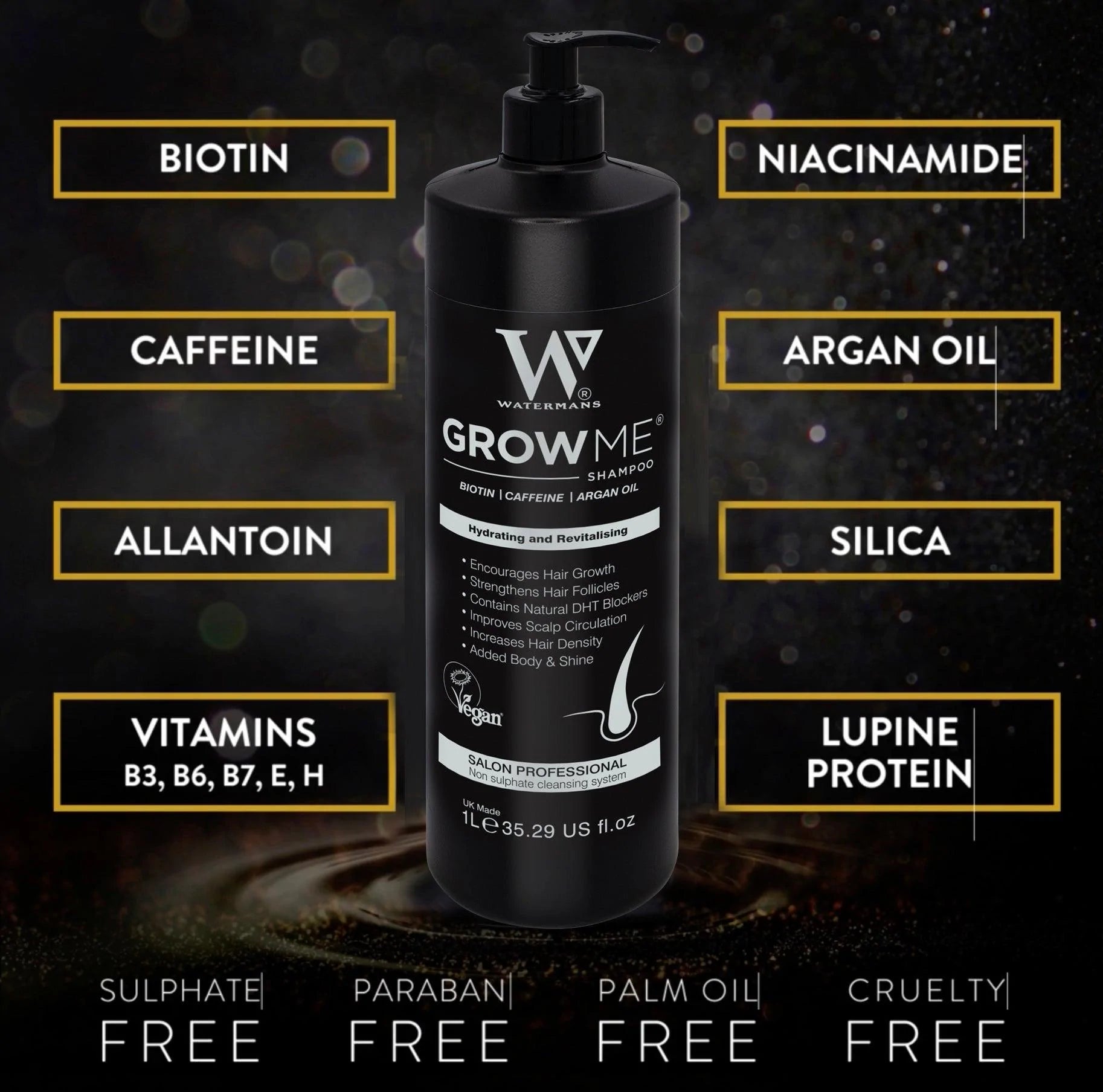
The Curly Hair Shampoo & Conditioner Set, £24.95, for cleansing and definition, plus Grow Me® Shampoo, £14.95, if thinning is also a concern. Both aim at breakage, which is what costs afro hair its length. The full range sits in our black hair care collection.
Afro hair products should do three jobs: add water, using humectants such as glycerin and panthenol; lock it in, using sealants such as shea butter, castor and camellia oil; and give enough slip that a comb passes without force, using cationic conditioners and fatty alcohols. Anything promising faster growth is selling the wrong story, because growth rate is set at the follicle. Judge a new product on how many broken hairs you find after detangling, not on how it feels on day one.
Key takeaways
- Afro hair does not fail to grow. It breaks more easily, so length is lost rather than never gained.
- Every bend in a coil is a weak point, and sebum cannot travel down a coiled strand the way it does a straight one. That is the whole reason dryness dominates the routine.
- Slip matters more than richness. A product that lets the comb pass without force does more for length than a heavy butter that does not.
- Detangle on damp, conditioned hair, in sections, from the ends upwards, with fingers or a wide tooth comb.
- Protective styles help only while they are loose. Tension at the hairline is the leading avoidable cause of lasting loss in this hair type.
- Water is the moisturiser. Oils and butters seal it in, they do not add it.
- Judge any change over three to six months with photographs, not by how one wash day felt.
Why do afro hair products need to be different?
Products for afro hair need to be different because the hair itself is structurally different in three ways that all point towards dryness and breakage. The follicle is curved rather than round, so the strand emerges as a flattened ribbon that twists as it grows. Each twist is a point where the cuticle lifts slightly and where mechanical force concentrates, which is why coily hair snaps under tension that straight hair shrugs off. And sebum, which travels easily down a straight strand and keeps it supple, cannot navigate those bends, so the mid lengths and ends are chronically drier than the scalp.
Khumalo and colleagues documented this in a 2000 electron microscope study of African hair in the Journal of the American Academy of Dermatology, finding knots, splits and fractures along the fibre at rates not seen in straight hair. Loussouarn's 2005 study of hair growth across populations, published in the International Journal of Dermatology, also found African hair grows measurably more slowly on average, but the difference in breakage dwarfs the difference in growth rate.
Then there is shrinkage. Coily hair can appear a fraction of its true length when dry, which is why people conclude their hair is not growing when in fact it is growing and breaking at roughly the same rate. Measuring a stretched strand from the same point every couple of months tells you the truth far better than the mirror does. For the handling side of the problem rather than the products, see our guide to how to grow an afro and keep the length.

What should be in good afro hair products?
Good products for afro hair contain humectants to draw water in, emollients and sealants to slow water loss, slip agents so the comb passes without force, a little protein for damaged cuticles, and gentle cleansers that do not strip what little oil the lengths have. Ingredient lists are long and mostly filler, so these are the five categories that earn their place.
| Category | Examples on the label | What it does |
|---|---|---|
| Humectants | Glycerin, panthenol, honey extract, aloe | Draw and hold water in the fibre so it flexes instead of snapping. |
| Emollients and sealants | Shea butter, argan, castor, camellia, jojoba oil | Sit on the surface and slow water loss. They seal, they do not moisturise. |
| Slip agents | Behentrimonium chloride, cetearyl alcohol, cetyl alcohol | Let the comb pass without force. The single biggest lever on retention. |
| Proteins | Hydrolysed lupine, wheat, rice or silk protein | Temporarily fill gaps in a damaged cuticle. Useful in moderation, stiffening in excess. |
| Gentle surfactants | Sulfate free cleansers such as cocamidopropyl betaine | Clean the scalp without stripping the little oil the lengths have. |
What to be sceptical about is anything sold as making hair grow faster. Growth rate is set at the follicle and is largely genetic. Nothing in a bottle changes it, and any product implying otherwise is selling you the wrong story about your own hair. Be equally wary of heavy mineral oil and petrolatum high on a leave in label, which seal well but build up and are hard to wash out of coils.
Which afro hair products do you actually need?
You need five products and one piece of fabric, and most people who struggle with length are either missing one of the five or using them in the wrong order. Everything else on the shelf is optional.
| Essential | Job | How often |
|---|---|---|
| Sulfate free shampoo | Clean the scalp without stripping the lengths | Weekly, scalp only |
| Conditioner with slip | The detangling medium. This is where length is saved or lost | Every wash, generously |
| Leave in cream or milk | Put water and humectants back into damp hair | Every wash, and to refresh mid week |
| Sealing oil or butter | Slow the water leaving. Also the pre wash oil for very dry ends | Over the leave in, lightly |
| Wide tooth comb or fingers | Detangle without force, ends upwards | In the shower, in conditioner |
| Satin or silk bonnet | Stop cotton drawing out moisture and causing friction overnight | Every night |
Optional additions, used occasionally: a clarifying wash every four to six weeks when build up is genuine, a protein conditioner once a month if the hair is colour treated or heat stressed, and a scalp focused shampoo on clarifying days if thinning is also part of the picture. A deep conditioning mask can replace the ordinary conditioner once a fortnight if the ends are very dry.
How should you use the products on wash day?
Use the products in this order: section, pre oil if very dry, shampoo the scalp only, condition and detangle in the shower, leave in on damp hair, seal with oil, then stretch and protect overnight. Order matters more than product count, and this routine works for most coily and afro textures.
- Section first, always. Four to six sections, clipped or twisted. Working on a whole loose head is how tangles turn into knots.
- Pre wash oil if your hair is very dry. Twenty minutes of a light oil on the lengths before shampooing reduces how much the wash strips.
- Shampoo the scalp only, with a sulfate free cleanser. Let the runoff clean the lengths. Our guide to sulphate free shampoo explains why this matters more for coils than for any other texture.
- Condition generously and detangle in the shower. This is the moment of maximum slip. Fingers first, then a wide tooth comb, ends upwards, one section at a time.
- Leave in while damp, then seal. Water is the moisturiser. Apply a leave in or cream to damp hair, then a light oil over the top to slow the water leaving. Doing it in the other order seals dryness in.
- Style and stretch. Twists, braids or bands reduce the tangling that happens as coils dry loose and shrink.
- Protect it overnight. A satin bonnet or pillowcase. This is the highest return, lowest effort step in the whole routine.

The single biggest lever. Detangle only on damp, thoroughly conditioned hair, in sections, from the ends upwards. Most people lose more length in five minutes of dry detangling than a month of any product can make up.
Which Watermans afro hair products fit this routine?
Three Watermans products cover the cleanse, condition and seal steps above without overlapping each other, and all three are made in the UK.

Curly Hair Shampoo and Curl Definition Conditioner Set, £24.95
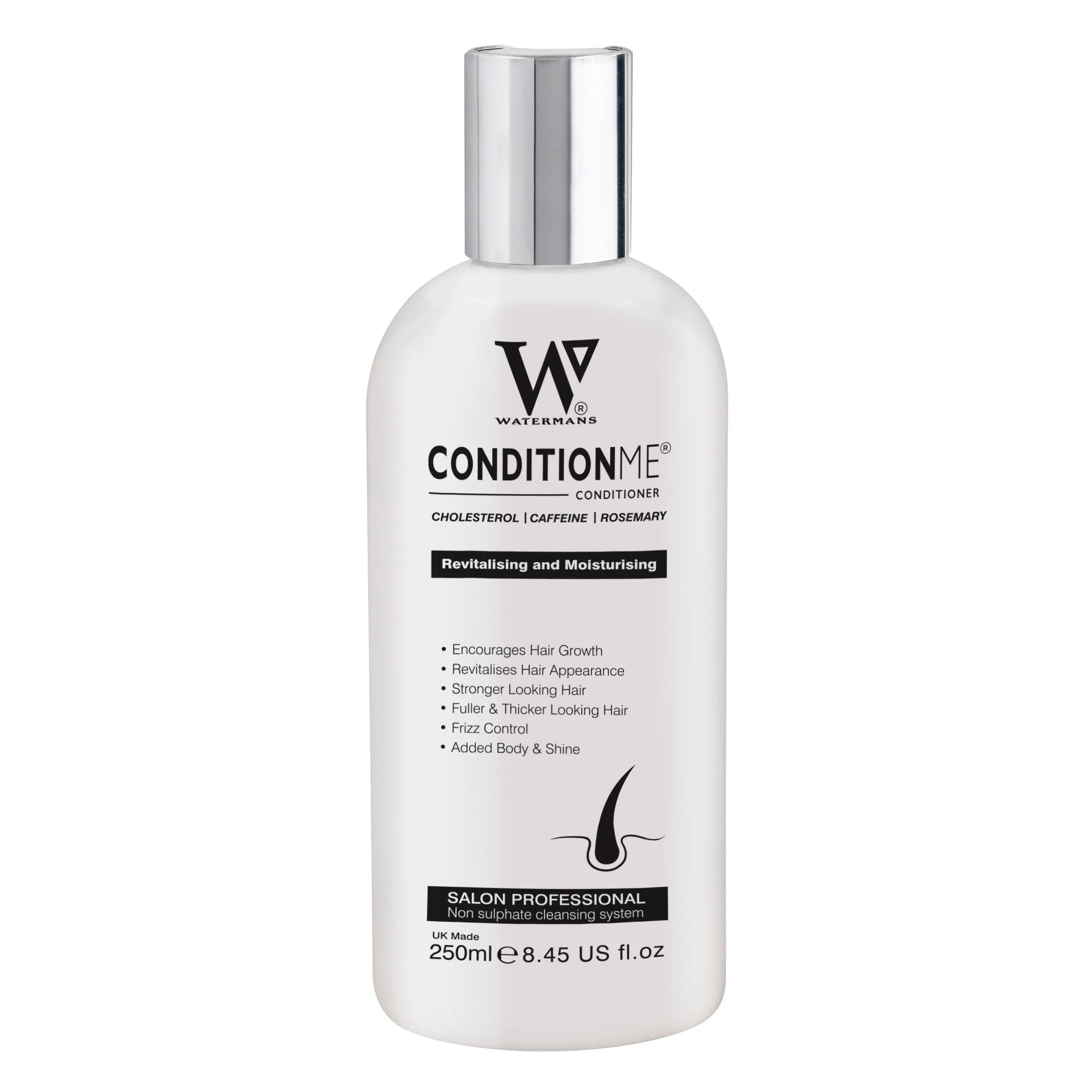
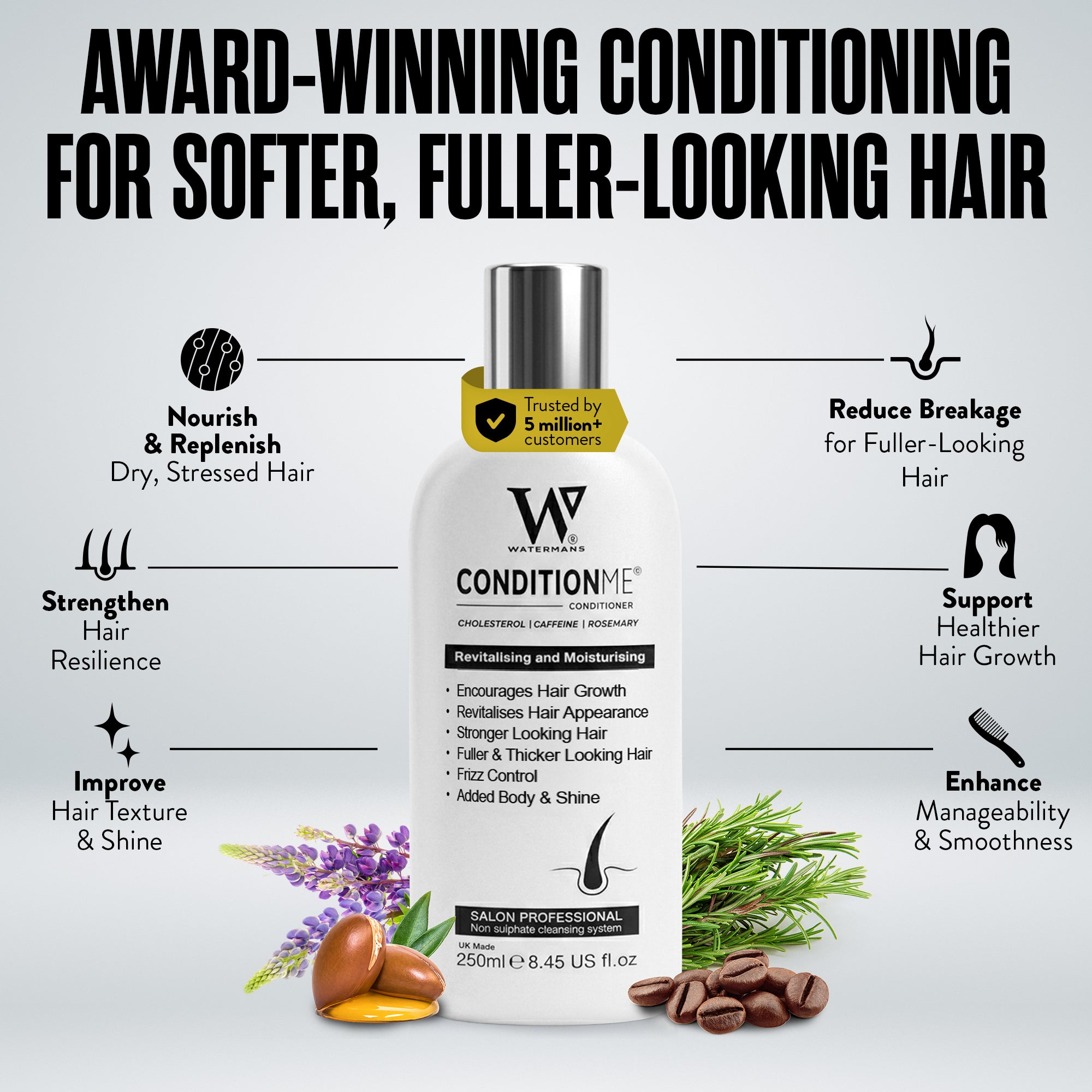
The cleanse and condition pair, formulated for curl and coil rather than adapted from a straight hair range. The conditioner is the one that carries the slip you need for shower detangling, so be generous with it and comb it through in sections.

Camellia and Black Castor Hair and Body Oil, £24.95
The sealing step, and the pre wash step if your ends are very dry. Black castor oil is a long standing staple in afro hair care for good reason, it is heavy enough to slow water loss, and the camellia makes it spread. Use it over damp hair, never on dry hair as a substitute for water.

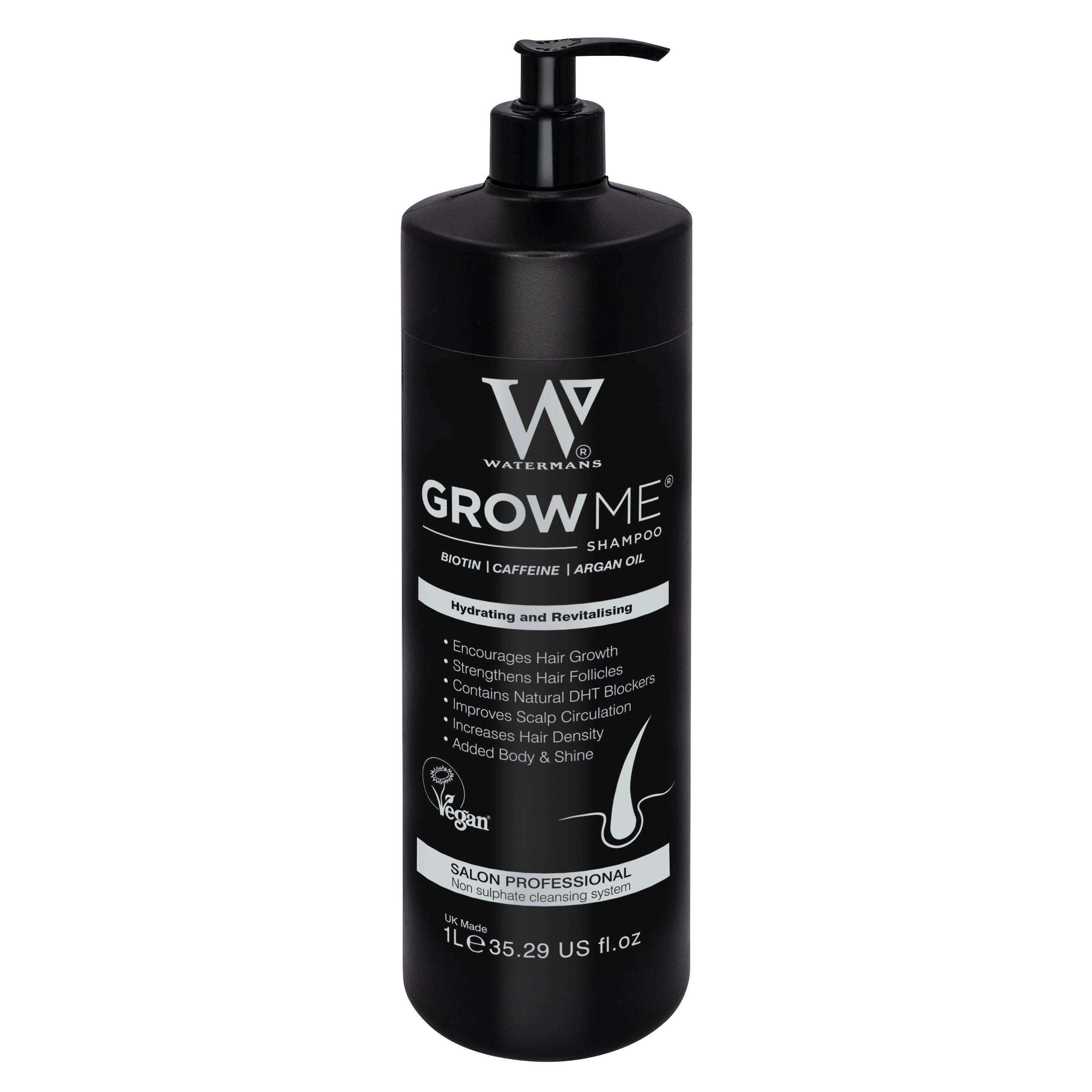
Grow Me Hair Growth Shampoo, £14.95
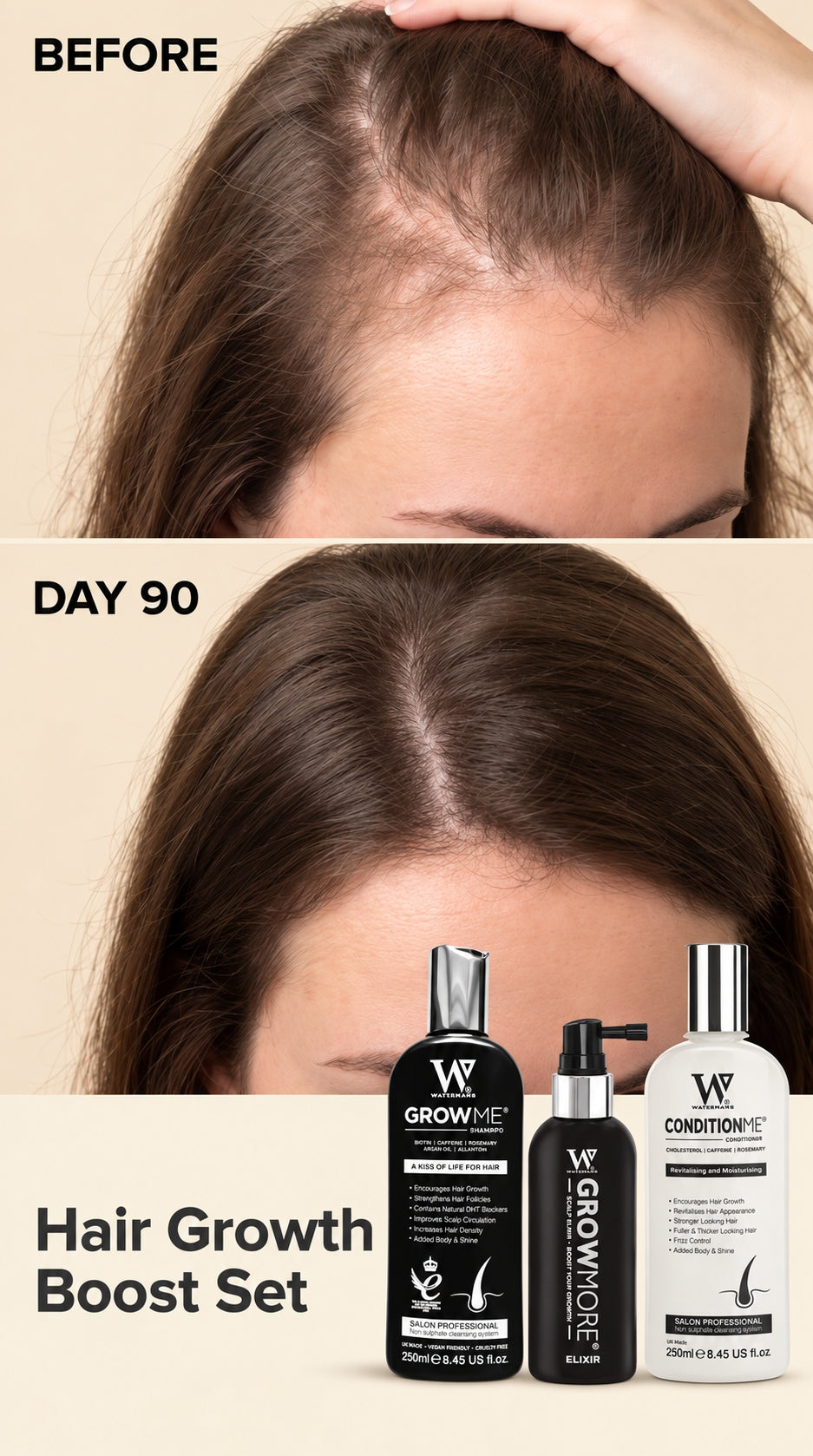
If thinning or reduced density is also part of the picture, this is the scalp focused sulfate free option, with biotin, caffeine, rosemary and niacinamide. Use it on the scalp on clarifying washes and keep the curl conditioner for the lengths. Vegan.
Over 6.5 million bottles sold since 2012. Cruelty free and made in the UK.
Get a discount on the afro hair range
Join the Watermans mailing list and we will email a discount code straight to your inbox, so you can try the afro hair range for less. Vegan, made in the UK, over 6.5 million bottles sold since 2012.
Do protective styles help or hurt?
Protective styles help while they are loose and hurt when they are tight, because a loose braid, twist or wig install genuinely reduces daily manipulation, while sustained pulling at the follicle causes traction alopecia, which DermNet and the British Association of Dermatologists both describe as the leading avoidable cause of lasting hairline loss in afro textured hair.
Traction alopecia builds silently over years and, if left long enough, the follicle does not come back. The warning signs are worth memorising: soreness or headache after installation, small bumps or pustules along the hairline, a hairline that is creeping backwards, and short broken hairs at the temples. If you are considering a professional assessment, our guide to what to ask a trichologist in Brent covers the textured hair experience question most people forget.
The rules that follow from that are simple. If it hurts, it is too tight, and a stylist who says the pain means it will last is wrong. Take styles down after six to eight weeks. Leave the perimeter and the edges looser than the rest. Do not go straight from one tight style into another. Vary the parting and the direction of tension between installs. If your edges are already thinning, the timing matters, and we explain it in the recovery window for thinning edges. Men with short coily hair face the same tension problem from tight line ups and durags, which our guide to growing hair faster as a black male covers.

Is it hair loss, shedding or breakage?
Breakage, shedding and hair loss get merged into one worry and they need different responses, and products act honestly on only the first of the three. Breakage is a strand snapping partway along its length, and you will find short broken pieces with no bulb, plus hair that never seems to pass a certain point. Products and handling fix this, and it is by far the most common issue in coily hair.
Shedding is a whole hair leaving with a small pale bulb at the root, which is the cycle working normally, though a sudden increase two to three months after illness, birth or a crash diet is telogen effluvium and usually settles on its own. Hair loss means the follicle itself is affected, which shows as a widening parting, a receding hairline or a smooth bald patch, and that is a GP conversation. No cosmetic product acts on the follicle. The three clue thinning self check is a quick way to work out which one you are looking at, and the everyday habits that protect your hair apply across every hair type.
Watermans products are 100% cosmetic and do not treat medical hair loss. Individual results may vary.
How long should you give a new routine?
Give any new routine three months minimum and six months to be fair, because hair grows around a centimetre a month and, with shrinkage, that progress is close to invisible in the mirror. Take a photograph of a stretched section from the same spot in the same light every eight weeks, and keep a note of what you changed. Change one thing at a time or you will never know what worked.
Be wary of the two week verdict. A new product often feels wonderful on day one because of the coating it leaves, and that tells you nothing about retention. Retention shows up in whether your ends are still there in April. Watermans does not run clinics, so if your hairline is receding or your parting is widening, that belongs with your GP. If your question is about products or a routine rather than a medical one, you can talk to Gail Waterman, our co-founder, as an AI avatar on the Watermans homepage.
What are the frequently asked questions about afro hair products?
Does afro hair grow more slowly than other hair types?
Studies comparing growth rates across hair types, including Loussouarn's 2005 study, find African hair grows somewhat more slowly on average, but the difference is far smaller than the difference in breakage. Retention, not growth rate, is what determines the length most people reach.
How often should afro hair be washed?
Roughly once a week suits most people, with a co wash in between if the scalp allows. Washing too rarely lets product and sweat build up on the scalp, and washing too often strips lengths that already struggle to hold oil.
Do I need a protein product?
Only if your hair is chemically processed, colour treated or heat stressed, and only occasionally. Hair that feels stiff, rough and straw like usually has had too much protein, not too little.
Is castor oil one of the better afro hair products?
It is a good sealant, which matters a great deal in this hair type, and it has a long history of use in afro hair care. There is no solid evidence it acts on the follicle. Use it for what it demonstrably does, which is slow water loss from the lengths.
Why does my hair look the same length for months?
Usually shrinkage combined with breakage. The hair is growing at the root and snapping at the ends, so the visible length stays flat. Measure a stretched strand rather than judging by eye.
Are sulfates always bad for afro hair?
Not always, but they are stripping, and coily hair has less margin than most. A sulfate free cleanser most of the time, with an occasional clarifying wash when build up is genuine, suits most people.
Can a satin bonnet really make a difference?
Yes, and it is the cheapest change on this list. Cotton draws moisture out of the hair and creates friction across eight hours a night. Satin or silk does neither.
What about hair vitamins?
They help only where you are genuinely low in something, most often iron in the UK. Ask your GP for a blood test including ferritin, thyroid function and vitamin D before buying a supplement on a guess.
What is the bottom line on afro hair products?
Choosing afro hair products is really about choosing for retention. Get slip and moisture right, detangle only on damp conditioned hair in sections, seal with an oil over water rather than instead of it, keep protective styles loose enough to be comfortable, and cover your hair at night. Then leave it alone for three to six months and judge it on a stretched measurement rather than the mirror. If your hairline is receding, your parting is widening or you have a smooth bald patch, that is a GP conversation and no product on any shelf is the answer to it.
If you want something to act on today, the curly hair shampoo and conditioner set covers the two steps where length is saved or lost. Made in the UK, over 6.5 million bottles sold since 2012.
Sources and references
- Khumalo NP and colleagues, What is normal black African hair? A light and scanning electron microscopic study, Journal of the American Academy of Dermatology, 2000, on the knots, splits and fractures that make coiled hair fragile.
- Loussouarn G and colleagues, Diversity of hair growth profiles, International Journal of Dermatology, 2005, on growth rate and density differences across populations.
- Franbourg A and colleagues, Current research on ethnic hair, Journal of the American Academy of Dermatology, 2003, on the structural and mechanical properties of afro textured hair.
- DermNet, Traction alopecia, on tension from tight styles as a cause of lasting loss at the hairline.
- British Association of Dermatologists, Traction alopecia leaflet, on warning signs and prevention.
- NHS, Hair loss, on what warrants a GP appointment and what is normal daily loss.