Transgender Hair Assessment: How to Work Out What Is Happening
A transgender hair assessment is the process of working out exactly what is happening to your hair before you spend money trying to change it. It means separating the three different problems that all look alike in a plughole, establishing whether hormone therapy is a factor, and building a record you can actually show a clinician. Done properly it takes about twenty minutes and a phone camera, and it saves people years of buying the wrong thing for a problem they never correctly identified.
Key Takeaways
- Start by telling hair loss, hair shedding and hair breakage apart. Almost every wasted purchase comes from getting this wrong.
- Pattern matters more than volume. Where the hair is going tells you far more than how much is coming out.
- Photographs beat memory every time, and dysphoria makes memory less reliable still. Same parting, same light, once a month.
- Note when you started or changed hormone therapy. The gap between a hormonal change and a visible shed is usually two to four months.
- Ask your GP for ferritin, full blood count, thyroid function and vitamin D. Ask for the numbers, not just whether they were normal.
- Traction from wigs, clips and tight styles is common, preventable and constantly mistaken for recession.
- Only decide what to buy after the assessment. Cosmetic care addresses breakage and scalp comfort, which is a real but specific job.

Why does a transgender hair assessment need its own approach?
Because two things are happening at once that usually happen separately. Hormone therapy changes the hair over a timescale of years, and it does so differently depending on direction. Meanwhile the ordinary causes of hair change, iron, thyroid, stress, illness, traction and heat, carry on exactly as they would for anyone else. Attributing everything to hormones is the most common mistake, and it hides causes that were straightforward to fix.
There is also a goal question that a general hair check does not ask. Someone may want more density, or a different hairline shape, or hair that simply reads differently, and those three goals have completely different answers. A transgender hair assessment has to establish what you are actually aiming for before it can say anything useful about how to get there.
Step one: is it hair loss, hair shedding or hair breakage?
These three get treated as one thing and they are not. Do this before anything else.
| Which one | The test | What it points to |
|---|---|---|
|
Hair loss follicular |
Compare photos six months apart. Is the parting wider or are the temple corners further back? Are remaining hairs finer? | A patterned, progressive process. GP and dermatology territory, plus the service managing your hormones. |
|
Hair shedding cycle |
Are fallen strands full length with a tiny pale bulb at one end? Is the loss even across the whole head? | A trigger two to four months ago. Illness, surgery, stress, iron, thyroid, a big hormonal change. |
|
Hair breakage fibre |
Are the pieces short with blunt or frayed ends and no bulb? Is there a frizzy halo at the crown or edges? | Heat, bleach, tension, wig clips, rough detangling. Fixable at home, often within weeks. |
Collect a few days of fallen hair on a sheet of white paper and look at the ends. Most people find they have two of the three, and the breakage component is usually larger than expected and is the part that can change quickest.
Step two: what is the pattern?
Pattern carries more information than quantity, and it is the part of a transgender hair assessment people most often skip. Take a phone photo of each of these, dry hair, good daylight, hair pushed back.
- The parting. Part in the same place each time and photograph straight down. A widening parting suggests a patterned, follicular process rather than a shed.
- The temples. Push hair back and photograph the front hairline straight on. Recession into two corners is androgen-driven; an even band moving back is a different picture and worth showing a GP.
- The crown. Get someone to photograph the back of your head, or use two mirrors. It is the area people notice last on themselves.
- The edges. Photograph along the front edge and above the ears. Short broken stubs here point at traction rather than loss.
Take these on the first of the month and put them in one album. Six photographs across six months answer questions that daily mirror checks never will, and they are the single most useful thing to bring to an appointment.

Step three: build a timeline
The third part of a transgender hair assessment is chronology. Because of the delay between a trigger and a visible shed, the useful question is never what changed this month. It is what changed four months ago. Write out the last two years and mark:
- When hormone therapy started, and any change in route or regimen since.
- Any surgery, illness, COVID infection or general anaesthetic.
- Significant weight change or periods of restricted eating.
- Any other medicine started or stopped, of any kind.
- Periods of high stress, poor sleep or major life upheaval.
- Hair changes: bleach, relaxers, extensions, a wig worn daily, tighter styles.
Then look four months before the shedding became noticeable. In a large proportion of cases the answer is sitting right there, and it is often something entirely unrelated to hormones.
Step four: what to ask your GP for
A transgender hair assessment is not complete without bloods, because several of the common causes are invisible without them and every one of them is straightforward to correct.
- Ferritin, which reflects iron stores. Ask for the actual number. The normal range is wide and hair is often unhappy at the lower end of it.
- Full blood count, to check for anaemia.
- Thyroid function, because an under-active thyroid frequently shows in the hair before anything else feels wrong.
- Vitamin D, commonly low in the UK.
- Your hormone levels, if you are on hormone therapy and they have not been checked recently. That is a conversation for whoever manages your care.
Bring your photographs and your timeline. Describe the pattern rather than the distress, say clearly what you want from the appointment, and ask for the numbers rather than a yes or no. If the shedding is diffuse rather than patterned, these tests are where the answer usually lives.
Get a discount on the thinning hair range
Join the Watermans mailing list and we will email a discount code straight to your inbox, so you can try the thinning hair range for less. Vegan, made in the UK, over 6.5 million bottles sold since 2012.
Step five: audit the mechanical stress
This is the part a transgender hair assessment picks up that a generic one often misses, because wigs, toppers and gender-affirming styling all concentrate pull in specific places.
- Wig and topper clips. If they sit in the same two spots every day, those spots take all the strain. Rotate positions, or use a grip cap that spreads the load instead of combs biting the same hairs.
- Adhesives on the front edge. Repeated application and removal on fine hairline hair is hard on it. Take breaks and remove gently with a proper solvent rather than pulling.
- Slicked-back and tightly gathered styles. Very effective for presentation, and hard on the temples if worn daily. Alternate with looser styles.
- Bleach plus heat. Lightening and then straightening the same hair is the fastest route to breakage there is. Pick one.
- Daily straightening or curling. Drop the temperature and the frequency before you conclude anything about density.
Traction thinning caught early is one of the few forms of hair loss that genuinely improves once the pull stops. Left for years it can become permanent, which is exactly why it belongs in the assessment rather than being noticed later.

How does hormone therapy fit into the picture?
It fits in as one factor among several, and its effects run slowly. Feminising hormone therapy generally slows androgen-driven recession, and some people see fine hair return where follicles were miniaturising but had not shut down. It does not rebuild a temple corner that receded years ago. Masculinising hormone therapy raises DHT, and where follicles are genetically sensitive, recession may begin or accelerate, with family history on both sides being the best available predictor.
In both directions a starting or changing regimen can also trigger a diffuse shed a few months later, which is a cycle effect rather than a patterned loss and usually settles. That distinction matters enormously and is why the photographs are worth taking.
Anything about starting, adjusting or stopping hormone therapy is entirely a matter for the clinicians managing your care. We sell cosmetics and are not qualified to advise on it. For background on the mechanism, hormone therapy and hair loss covers it in more detail, and transgender hair density looks at what genuinely changes density versus what only appears to.
Step six: decide what you actually want
Three goals, three different routes, and confusing them wastes the most time of all.
- More density is largely a medical question, and the answer lies with your GP, a dermatologist and the service managing your hormones.
- A different hairline shape is mostly a cutting, styling and, if you go that far, surgical question. Our guide to changing the shape of a transgender hairline covers what works without surgery.
- Hair that simply looks and behaves better is a care question: less heat, less tension, better conditioning, a scalp that is comfortable. This is where cosmetic products earn their place, and it delivers the fastest visible change of the three.
Where does cosmetic hair care honestly fit?
Narrowly, and we would rather be straight about it. No shampoo changes follicle sensitivity, moves a hormone level or brings back a closed follicle. What good products do is cleanse without stripping, keep the scalp comfortable under a wig or a system, and reduce the breakage that makes thinning hair look thinner than it is. When your assessment shows breakage is a large part of the picture, and it very often does, that is not a small thing.

Grow Me® Hair Growth Shampoo
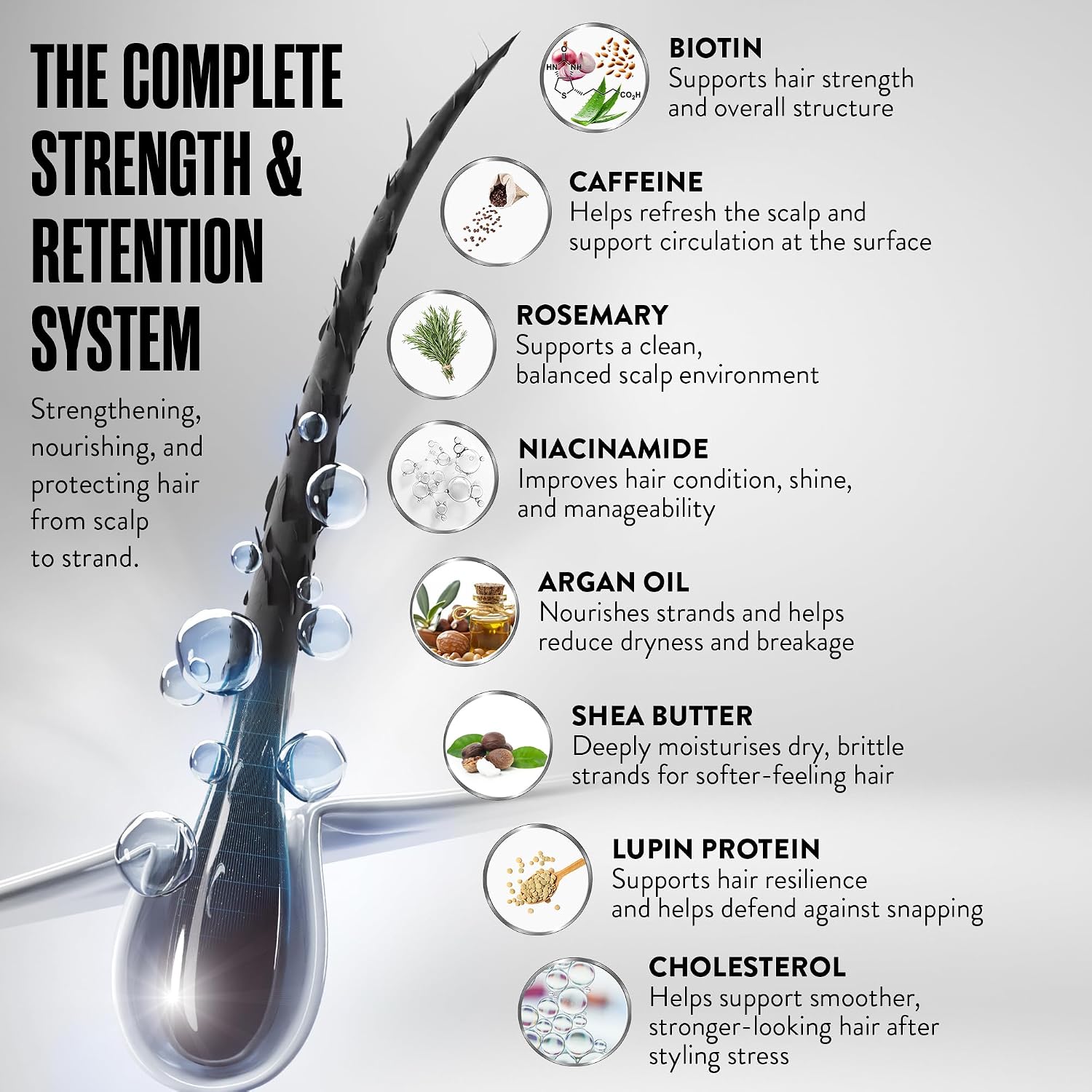
A sulfate free daily shampoo with Biotin, Caffeine, Rosemary and Niacinamide. Gentle enough for frequent washing under a wig or system, and it helps finer hair look fuller. Cosmetic only, vegan, made in the UK.

Hair Growth Boost Set
Shampoo, conditioner and the leave in scalp elixir together. The conditioning step is what reduces breakage, which is usually the quickest visible improvement once an assessment has ruled out other causes. Cosmetic only.

When should you stop assessing and see a GP?
Sooner rather than later if any of these apply: smooth round bald patches appearing quickly, a painful, burning, scaly or persistently itchy scalp, redness with loss of the small visible pore openings, eyebrows or lashes thinning alongside scalp hair, or heavy shedding that has run past six months. Scarring conditions are the reason not to wait, because ground lost there does not come back. Once you have assessed what is happening, the right order for hormone therapy hair restoration sets out what to do first, second and third. Once you know what you are working with, a styling guide by face shape and texture turns that into a cut and a drying technique.
Watermans is a cosmetics company. We do not run clinics and we cannot assess your scalp. What we can do is help you arrive at your own appointment with photographs, a timeline and a clear question, which makes that ten minutes considerably more productive.
Frequently asked questions
What should a transgender hair assessment cover?
Four things: which of loss, shedding and breakage you have; the pattern, recorded in photographs; a two year timeline of hormonal, medical and lifestyle changes; and blood tests for ferritin, full blood count, thyroid function and vitamin D. Products come after that, not before.
Can I do this myself or do I need a professional?
The observation work is entirely doable at home and is worth doing first, because it makes any professional appointment far more productive. The blood tests need a GP, and anything involving scalp pain, patches or a scarring pattern needs a doctor rather than self-assessment.
How long after starting hormone therapy will I see hair changes?
A diffuse shed, if it happens, usually shows two to four months after the change. Slower changes in texture and density unfold over one to three years. Nothing meaningful can be judged from the first eight weeks, which is why the monthly photographs matter more than the daily checking.
Is thinning always caused by hormone therapy?
No, and assuming so is the most common error. Iron, thyroid, stress, illness, crash dieting, traction and heat damage all cause hair changes for everyone, and they carry on doing so during transition. Rule those out before concluding anything.
Should I have blood tests even if I feel fine?
Yes. Low ferritin and an under-active thyroid can both show up in the hair well before you notice anything else. They are simple to check and simple to correct, which makes them the best value part of the whole assessment.
How do I tell traction thinning from patterned loss?
Traction thinning follows where the pull is: along the front edge, above the ears, or wherever clips sit. It often leaves short broken stubs rather than bare skin. Patterned loss follows a recognised shape, with widening at the parting or recession into the temple corners, regardless of styling.
What should I actually bring to a GP appointment?
Everything your transgender hair assessment produced: your monthly photographs, your written timeline, a list of everything you take, and one clear sentence about what you want from the visit. It turns a vague conversation into a specific one and makes a referral much easier to justify.
Will a shampoo change the result of my assessment?
Only where the assessment identifies breakage or scalp discomfort, and those are genuinely worth addressing. A shampoo cannot alter a hormone level, follicle genetics or an iron store, so it should be the last decision you make rather than the first.
Sources & References
- NHS, Gender dysphoria: treatment, on what UK gender services provide and how referral works.
- NHS, Hair loss, on common causes and when hair changes warrant seeing a GP.
- DermNet, Telogen effluvium, on the two to four month delay between a trigger and a diffuse shed.
- DermNet, Male pattern hair loss, on androgen-driven temple recession.
- NHS, Iron deficiency anaemia and NHS, Underactive thyroid, on two commonly missed causes worth testing.
- NHS, How to register with a GP surgery.
Sources vary in how much hair density is reported to recover on feminising hormone therapy, largely because outcomes depend heavily on how advanced the loss was at the start. We have given the range rather than the most optimistic figure.
The Bottom Line
A transgender hair assessment is observation before expenditure. Work out whether you are dealing with loss, shedding or breakage, photograph the pattern monthly, write a two year timeline, get ferritin, thyroid, full blood count and vitamin D checked, and audit where your styling and wig wearing puts tension. Then decide whether your goal is density, shape or condition, because those go to three different places. Cosmetic care handles the third, and does so honestly. Anything painful, patchy or spreading goes to a GP first.
Watermans products are 100% cosmetic and do not treat medical hair loss. Individual results may vary.