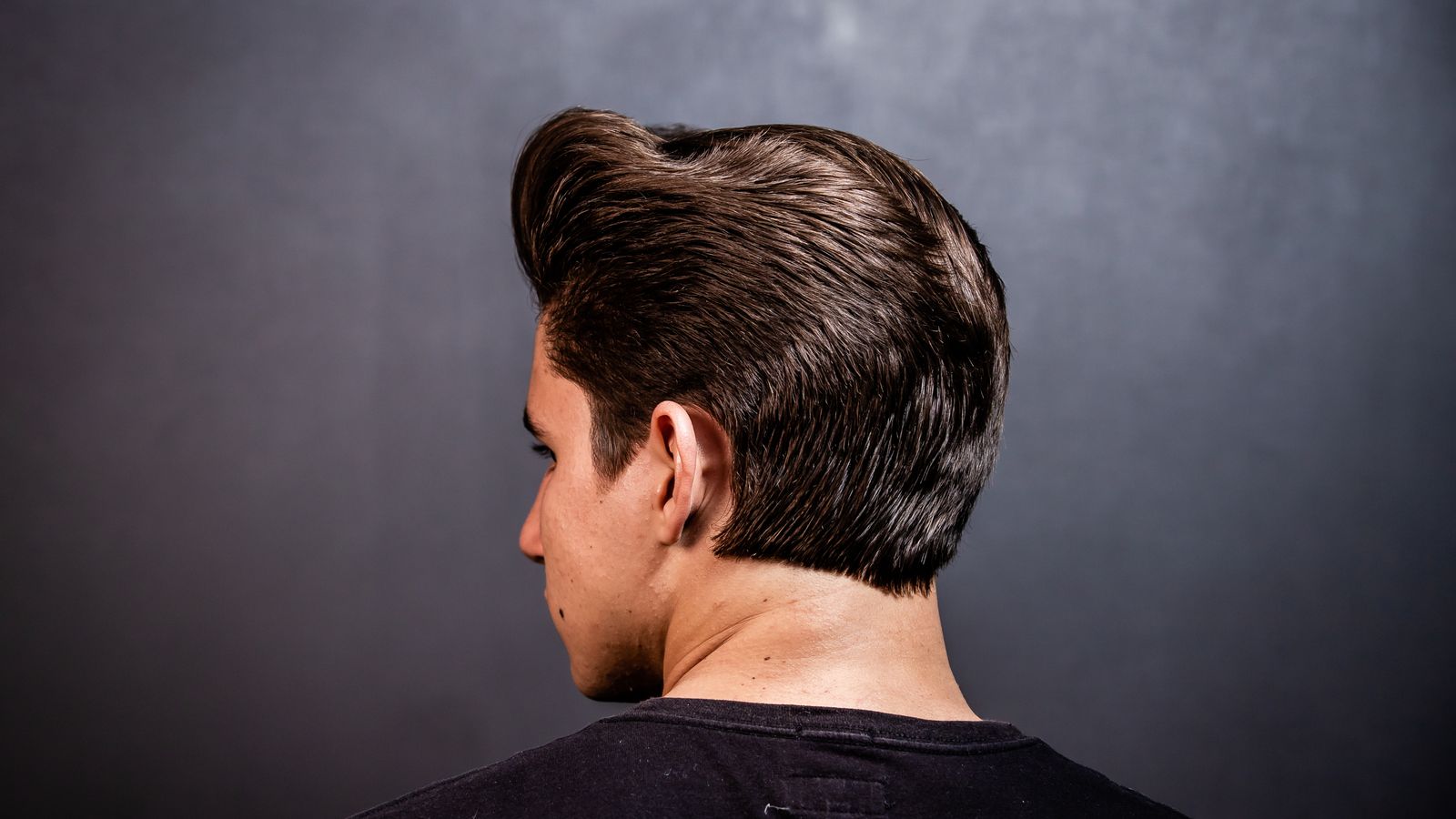
Widows Peak Hair: What It Is and How to Style It
Widows peak hair is a hairline that comes to a V in the centre of the forehead, and it is an inherited feature of how your hairline is shaped rather than a sign of hair loss. You are born with it, or you develop it in childhood as the juvenile hairline matures, and it stays put. A hairline that has recently changed shape is a different thing entirely and this page will help you tell them apart.
Our heat protection spray
Protect Me® Heat Protection Spray, £13.95. A leave in spray that shields hair from heat styling, helps control frizz and keeps colour looking fresher for longer.
Key takeaways
- Widows peak hair is a hairline shape, not thinning. Density either side of the point is normal.
- The distinguishing question is simple: has it always looked like this? A peak you have had since childhood is just your hairline.
- Recession is different. It starts at the corners, moves backward over years, and leaves finer, softer hair behind.
- Roughly a third of people have some degree of central point to the hairline. It is common, not unusual.
- Styling is the whole answer. A soft fringe, texture, or a deep side parting all work with it rather than against it.
- Slicking everything straight back is the one move that makes a peak maximally obvious, which is fine if that is the look you want.
What is widows peak hair?
Widows peak hair describes a hairline whose central point dips down toward the middle of the forehead, forming a V or a heart shape rather than a straight or gently curved line. The point sits directly above the centre of the brow, and the hair growing at that point is the same calibre and colour as the rest of your hair. That last detail is the giveaway that it is a shape and not a loss.
The name comes from an old superstition about widowhood and a pointed mourning hood, which has nothing to do with the biology and everything to do with the fact that pointed hairlines were once thought to predict early widowhood. It is folklore. There is no relationship between hairline shape and anything at all about your life.
What causes a widows peak?
Hairline shape is inherited, and the specific outline is set by how the frontal hairline forms and then matures. Most children have a straight, low, rounded hairline. During adolescence the corners typically rise and settle into an adult shape, and in some people that leaves a distinct central point. In others it leaves a straight line, and in others a soft curve.
You will still see the widows peak described as a simple dominant trait in older biology teaching, in the same lists as attached earlobes and tongue rolling. That teaching is outdated. Hairline shape does not follow a clean single-gene pattern, which is why it turns up in families unpredictably and why two parents without a peak can have a child with a pronounced one.
A few other situations produce a pointed hairline. Some rare genetic conditions include a low, pointed hairline among their features, and they are always accompanied by other findings rather than appearing alone. A peak on its own, in a healthy person, is simply a hairline.

Is it widows peak hair or a receding hairline?
The difference is direction and timing: a widows peak has always been there and stays put, while recession moves and takes hair with it. Four checks settle it in a couple of minutes.
| Check | Widows peak | Receding hairline |
|---|---|---|
| Old photographs | The same shape at 12, at 20 and now | Visibly different from five or ten years ago |
| Where the change is | A point in the centre, corners intact | The corners above the temples move back first |
| The hair itself | Full thickness right up to the edge | Finer, shorter, wispier hair at the new edge |
| The crown | Unchanged | Often thinning at the same time |
If the checks point toward recession, the useful next step is a photograph of the hairline and the crown in the same light once a month, plus a GP conversation if it is changing quickly or you want to understand your options. Our guide to early crown thinning covers how to check the back of your head properly, which is where people miss the first signs. If your question is about products or a routine rather than a medical one, you can talk to Gail Waterman, our co-founder, as an AI avatar on the Watermans homepage.
Hair loss, shedding and breakage are not the same thing
Three separate problems get lumped together and it matters, because they have different answers. Hair loss is follicular: the follicle miniaturises and produces progressively finer hair in a pattern. Hair shedding is the cycle: a surge of hairs releasing at once after illness, stress or a nutritional gap, which usually settles in six to nine months. Hair breakage is the fibre: strands snapping along their length from heat, bleach and tension, which leaves short broken pieces and a halo of flyaways. A widows peak is none of these. It is the outline your hair grows in.
Get a discount on the styling and hair care range
Join the Watermans mailing list and we will email a discount code straight to your inbox, so you can try the styling and hair care range for less. Made in the UK, over 6.5 million bottles sold since 2012.

How do you style widows peak hair?
The best cuts either break the line of the peak with texture or lean into it deliberately, and both work far better than trying to hide it under a heavy blunt fringe. Weight straight across the forehead is the one thing that consistently fights a pointed hairline, because it sits on top of the shape rather than working with it.
- A soft, broken fringe. Point-cut rather than blunt, so it separates and lets the forehead show through. This is the single most flattering option for most people.
- A deep side parting. Moving the parting well off centre cuts diagonally across the V and immediately breaks its symmetry.
- Texture on top. A textured crop, a quiff or a messy layered style draws the eye upward and outward rather than to the centre point.
- Face framing layers. On longer hair, layers starting at the jaw soften the whole frontal outline.
- Lean into it. A slicked back style or a tight ponytail makes the peak the feature, and on a strong face that reads as striking rather than as something to fix.
Two things to avoid if you would rather it were subtle: a blunt centre parting, which mirrors and doubles the point, and a heavy straight fringe cut to a hard line, which almost always sits awkwardly over a peak. If you have a peak and you want a fringe, ask specifically for a soft, textured, slightly longer version.

Can you get rid of a widows peak?
Not with anything you can buy, and the permanent options are cosmetic procedures rather than products. A widows peak is where your follicles are, so short of moving or removing follicles it stays where it is. Three routes exist and it is worth being honest about all three.
- Styling. Free, reversible, and effective. It handles the appearance rather than the hairline, which for almost everyone is the actual goal.
- Laser hair removal or electrolysis on the point. Sometimes offered to soften a very pronounced peak. It is permanent, it needs a properly qualified practitioner, and it is not reversible if you change your mind, which people do.
- Hairline surgery. Grafting to fill the corners or lower the outline is real and it is major elective surgery, with a cost and a recovery to match. Anyone offering a certain result on the day you enquire is selling, not advising.
Waxing, plucking or shaving the point is the option people try first and regret. Shaving grows back within days at a blunt angle that looks worse, and repeated plucking of the same hairs can damage those follicles over time, which is a permanent change made by accident.
What we make, and what it is honestly for
Our products are cosmetics. They support a healthy scalp environment and reduce breakage so hair looks fuller and thicker, and they are not medicines. Nothing in a bottle changes where your hairline sits, so for this topic the honest recommendation is a good cut and the products that make styling easier.

Protect Me® Heat Protection Spray, £13.95
Most of the styling above involves a dryer, and the front hairline takes the brunt of it. Protection to 230°C, plus frizz and colour protection, so a fringe you blow dry forward every morning stays in better condition.

Camellia & Black Castor Hair & Body Oil, £24.95
A couple of drops through the front sections smooths flyaways at the hairline, which is exactly where they are most visible on a pointed outline. Camellia and black castor oil, useful for a blow-out finish or a slicked back look.
Does a widows peak mean you will go bald?
No. A widows peak is a hairline shape and pattern hair loss is a separate process driven by inherited follicle sensitivity to androgens, and having one tells you nothing about the other. Plenty of people with a strong peak keep a full head of hair for life, and plenty of people with a perfectly straight juvenile hairline recede in their twenties.
The confusion is understandable, because early recession can create a shape that resembles a peak: as the corners move back, whatever is left in the centre starts to look like a point. The way to tell is the hair quality at the edge and whether the shape is changing. A genuine peak has full, normal hair right to the edge and has looked the same for as long as you can remember. If you are unsure, our guide to how to get thicker looking hair covers what actually helps density, and what does not.
Frequently asked questions
How common is a widows peak?
Fairly common. Estimates vary because there is no agreed cut-off between a slight central dip and a true point, but somewhere around a third of people have a noticeable one. It appears across all hair types and all ethnicities, and it is equally common in men and women.
Is a widows peak genetic?
Hairline shape is inherited, but not in the neat single-gene way older textbooks claimed. The trait is influenced by multiple genes, which is why it appears unpredictably in families and why two parents without a peak can have a child who clearly has one. If you were taught it was a simple dominant trait at school, that lesson has been superseded.
Do women get widows peaks?
Yes, at much the same rate as men. It is often less noticed simply because longer hair and side partings cover it, and it becomes obvious the moment hair goes up into a ponytail or a bun. Several very well known actors have pronounced ones and it has done nothing to hurt them.
Can a widows peak appear later in life?
A true peak does not appear in adulthood. What does happen is that a hairline matures through adolescence into its adult shape, which can reveal a point that was not obvious at ten years old, and that early recession in adulthood can create a peak-like outline. If a shape you did not have at 25 shows up at 35, that is worth looking at as recession rather than as a new peak.
Which haircut hides a widows peak best?
A soft, textured, slightly longer fringe worn forward, or a deep side parting. Both break the symmetry of the V rather than sitting on top of it. Avoid a blunt centre parting and a heavy straight-cut fringe, which both emphasise the point.
Does shaving or plucking the point help?
No, and it usually makes things worse. Shaved hair returns within days with a blunt tip that looks coarser and darker, and plucking the same hairs repeatedly over years can damage those follicles permanently. Neither is a good trade for a shape most people around you have never noticed.
Will a widows peak affect hair transplant options?
It does not rule anything out. Surgeons routinely design a hairline that keeps, softens or removes a peak according to what the person wants and what the donor supply allows. The relevant considerations are the same as for anyone: donor density, age, and whether pattern hair loss is still progressing.
Is a widows peak more visible with fine hair?
Yes, and the same is true of any hairline shape. Fine hair sits flatter against the scalp and lets more light through at the edges, so widows peak hair reads more sharply on a fine texture than on a thick one. Volume at the root and a bit of texture do more to soften the effect than any change of parting.
Sources and references
- MedlinePlus Genetics: Genetics and human traits, on why simple single-gene explanations of common traits are outdated
- NHS: Hair loss
- StatPearls, NCBI Bookshelf: Androgenetic Alopecia
- StatPearls, NCBI Bookshelf: Physiology, Hair
What is the bottom line on widows peak hair?
Widows peak hair is an inherited hairline shape rather than thinning, and the way to be sure is to check old photographs and look at the hair quality right at the edge. If it has always been there and the hair is full to the line, it is your hairline. If the corners are moving and the hair at the edge is finer, that is recession and it is a different conversation. Either way, styling is where the quick wins are: soften the line with texture and a side parting, or lean into it and let it be a feature.
Watermans is made in the UK, and has sold over 6.5 million bottles since 2012.
If you are not giving up the straighteners, at least use the Protect Me heat protectant spray.
Watermans products are 100% cosmetic and do not treat medical hair loss. Individual results may vary.