

Home Remedies for Hair: Which Ones Work, Ranked by Evidence
Two home remedies for hair have real clinical trial evidence behind them, and rosemary oil is the strongest of them. Most of the rest are either plausible but untested, or repeated so confidently online that people assume the research exists when it does not. This guide sorts the popular ones into three honest tiers, explains what each was actually tested on, and names the two that can genuinely damage your hair. It also states the thing most of these articles avoid: no kitchen ingredient reverses pattern hair loss.
Last updated: August 2026
Key takeaways
- Rosemary oil has the best evidence of any home remedy for hair, from a 2015 trial that compared it against 2 percent minoxidil over six months. It was a small study without a placebo arm.
- Onion juice showed regrowth in a 2002 study, but that was on alopecia areata, a different condition from pattern hair loss, and alopecia areata often regrows on its own.
- Coconut oil applied before washing is the best supported use of any kitchen oil, because it reduces protein loss during the wash rather than growing anything.
- Rice water has no controlled trial evidence for hair growth, and used heavily it can leave hair stiff and brittle rather than stronger.
- Castor oil has caused documented cases of acute hair felting, where hair matts into an irreversible tangle that usually has to be cut out.
- None of these change the hormonal or genetic processes behind pattern hair loss. If your hair is genuinely thinning, that conversation belongs with a GP.

How should you judge a home remedy for hair?
The useful question is not whether something is natural, it is what was actually measured and in whom. Three problems make hair remedies unusually easy to oversell, and knowing them lets you assess any claim you meet.
- Hair conditions often improve on their own. Alopecia areata regrows spontaneously in a large share of cases, and telogen effluvium usually resolves once the trigger passes. Anything applied during that window gets the credit.
- Hair cycles slowly. Anagen lasts years, so no honest before-and-after exists at four weeks. Any remedy claiming visible growth in a fortnight is measuring something else, usually how the hair looks when it is conditioned.
- Looking thicker is not being thicker. Oils and proteins coat the strand and change how light reflects and how hair sits. That is a real cosmetic effect and it is not growth.
Which home remedies for hair actually have evidence?
Here is the honest ranking. The tier reflects the quality of the evidence, not how popular the remedy is or how good it feels to use.
| Remedy | Evidence tier | What it was actually tested for |
|---|---|---|
| Rosemary oil | Limited but real human trial | Androgenetic alopecia, compared with 2 percent minoxidil over 6 months |
| Coconut oil, pre-wash | Good, but for damage not growth | Protein loss during washing, measured on hair tresses |
| Onion juice | One small study, different condition | Patchy alopecia areata, not pattern hair loss |
| Aloe vera | Limited, for the scalp not the hair | Seborrheic dermatitis symptoms such as scaling and itch |
| Rice water | No controlled evidence | Nothing in a published human trial for growth |
| Egg or mayonnaise masks | No evidence | Nothing. Whole egg protein is too large to penetrate the shaft |
| Apple cider vinegar rinse | No evidence for growth | Nothing for growth. Mild cosmetic smoothing at best |
| Castor oil | No evidence, plus a real risk | Nothing for growth. Documented cases of acute hair felting |

Does rosemary oil really work for hair growth?
Rosemary oil is the one home remedy with a genuine human trial behind it. A 2015 study published in Skinmed compared rosemary oil against 2 percent minoxidil in men with androgenetic alopecia over six months and reported comparable increases in hair count in both groups, with rosemary causing less scalp itching.
That result is genuinely interesting and it deserves the caveats that usually get dropped when it is quoted. The study was small, it ran in one centre, it had no placebo group, and 2 percent is the lower minoxidil strength rather than the 5 percent most men use. Hair counts also rose in both arms, which is what you would expect from a scalp getting daily attention and massage for six months. So the honest reading is that rosemary is worth trying and is not established as equivalent to a licensed treatment.
If you use it, dilute properly. Essential oils are not applied neat, and undiluted rosemary oil on the scalp causes irritant reactions. Around 5 drops per tablespoon of a carrier oil is a sensible dilution. We go deeper into the evidence in the benefits of rosemary oil ranked by evidence, and cover the popular pairing in rosemary and mint for hair growth.

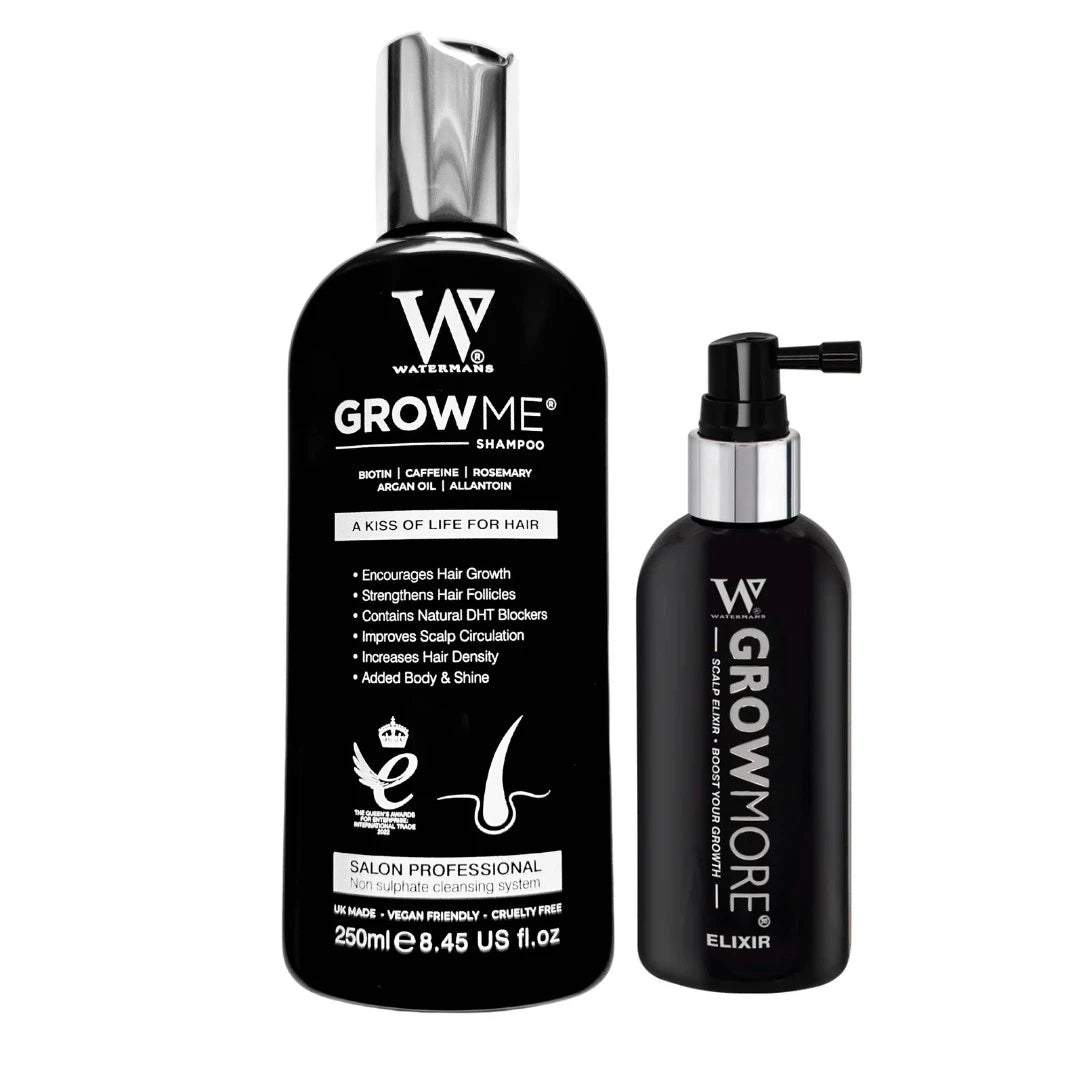
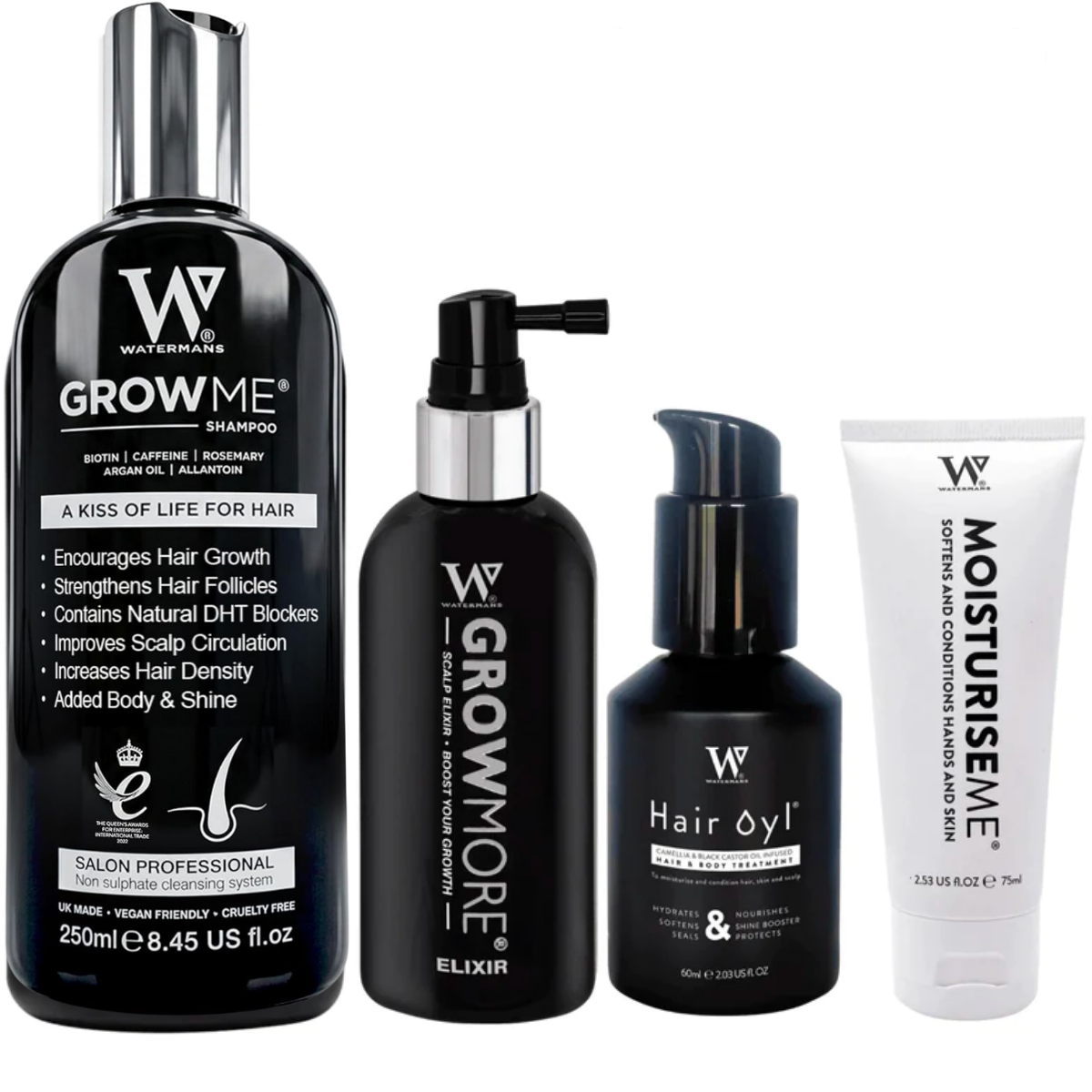
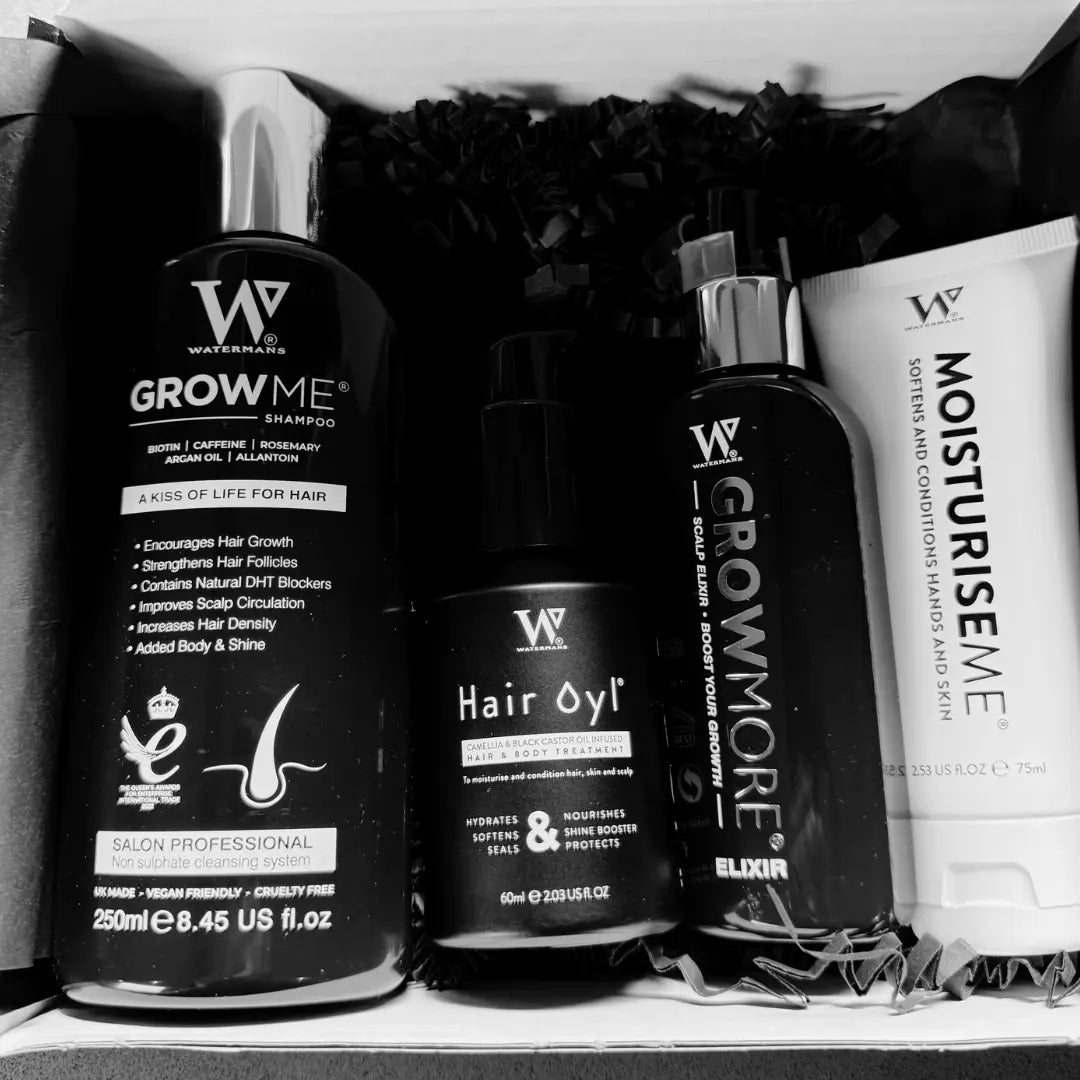
Grow More Leave-In Scalp Elixir, GBP 25.50
A leave-on overnight scalp serum formulated with rosemary, caffeine, biotin, niacinamide and hydrolysed lupine protein, already diluted to a cosmetic level so you are not measuring drops of essential oil at the bathroom sink. Supports the appearance of fuller, thicker-looking hair. Cosmetic care only. It is not a treatment for hair loss and it is not a substitute for minoxidil or a GP appointment.
Vegan and made in the UK.
Does onion juice regrow hair?
Onion juice has one study behind it, and the detail of that study is where the internet stops reading. A 2002 paper in the Journal of Dermatology applied crude onion juice twice daily to people with patchy alopecia areata and reported regrowth in a majority of the treated group within six weeks, far above the tap water control.
The critical point is the condition. Alopecia areata is an autoimmune condition in which the immune system attacks the follicle, and it is not the same as androgenetic alopecia, the hormonal, genetic thinning that most people mean by hair loss. It also has a high spontaneous remission rate, so short trials on it are difficult to interpret, and this one was small and not blinded. Nothing in that paper says onion juice does anything for a receding hairline or a widening parting.
If you want to try it for a diagnosed patchy loss, do a patch test first, expect the smell to survive several washes, and keep it away from your eyes. Our guide to alopecia areata covers what the condition actually is and the treatments that are properly evidenced for it.

Is rice water good for hair?
Rice water is the remedy with the widest gap between confidence and evidence. There is no controlled human trial showing that rice water grows hair. The usual supporting claim, that it contains inositol which repairs and protects the strand, comes from ingredient-level reasoning and manufacturer material rather than from a trial of rice water on people's heads.
The tradition it borrows from is real. The Yao women of Huangluo in China are well known for very long hair and for washing it in fermented rice water. That is a genuine cultural practice, but it sits alongside a lifetime of minimal heat styling, minimal chemical processing and gentle handling, and those are the variables most likely to be doing the work.
There is also a downside worth knowing. Rice water deposits protein, and hair that receives a lot of protein without matching moisture becomes stiff, straw-like and more prone to snapping. This is why some people find their hair worse after a few weeks of rice water rinses, not better. If you try it, use it occasionally rather than weekly, and follow with a proper conditioner.
Which kitchen oil is actually worth using on hair?
Coconut oil, and for a reason that has nothing to do with growth. Research published in the Journal of Cosmetic Science in 2003 found that coconut oil reduced protein loss in hair both when applied before washing and after, and attributed this to its lauric acid content and low molecular weight allowing it to penetrate the shaft. Mineral oil and sunflower oil did not show the same effect in that work.
That makes pre-wash oiling a legitimately useful habit. Hair swells when it absorbs water and shrinks as it dries, and that repeated cycle roughens the cuticle over years. An oil that reduces how much water gets in reduces that stress. Apply to the lengths an hour before washing, and go light at the roots.
The one remedy that can genuinely wreck your hair: castor oil. There are documented case reports of acute hair felting after castor oil use, in which hair becomes irreversibly matted into a single solid mass, usually as a result of thick oil combined with long hair and vigorous washing. In most reported cases the only solution was cutting the matted hair off.
This does not mean castor oil is dangerous in normal cosmetic use. It means neat, heavy application to long hair followed by rough washing carries a real risk, and that the ingredient has no evidence for hair growth to justify taking it.
A blended, properly formulated oil avoids that problem, because the thick castor component is diluted with lighter oils that rinse out cleanly.
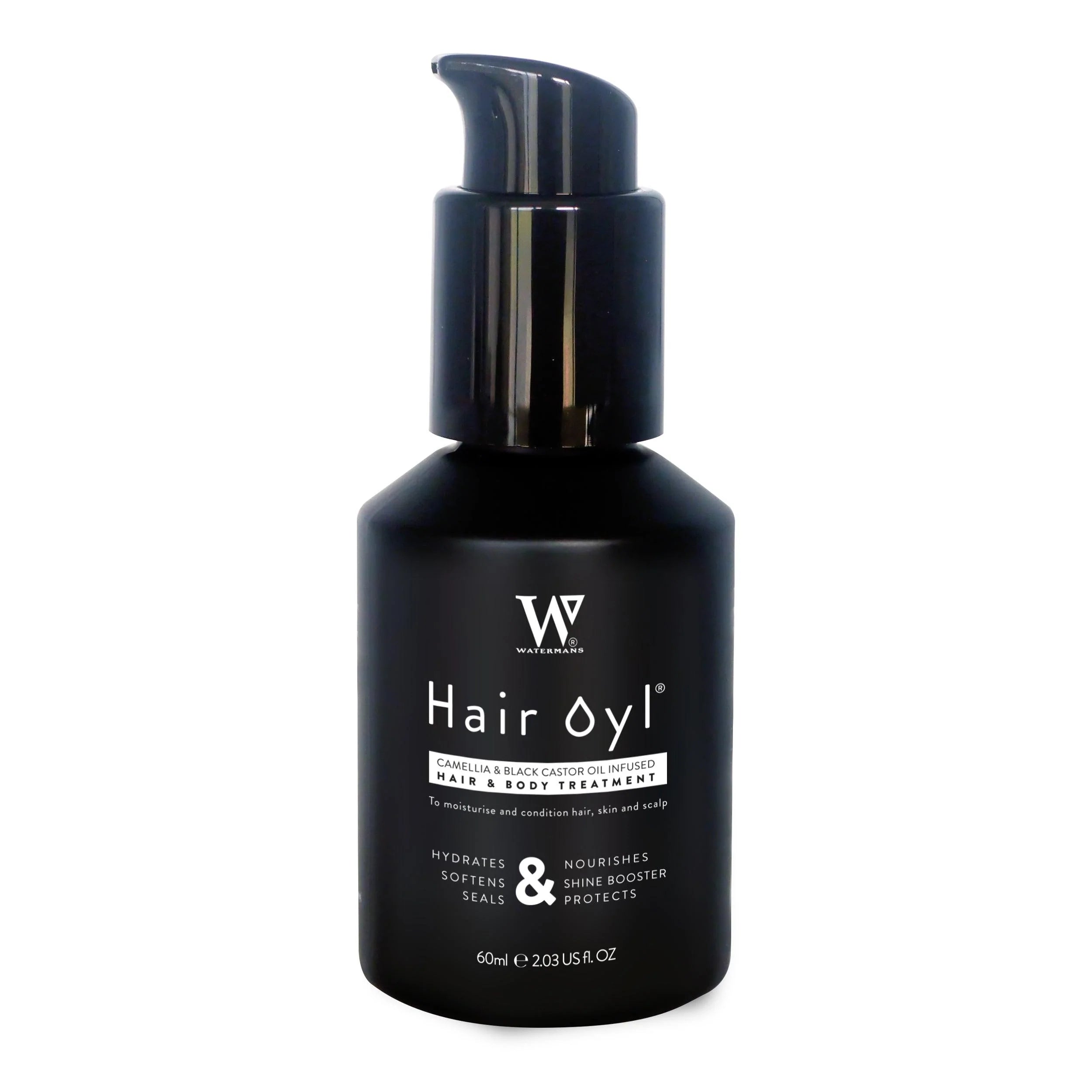
Camellia and Black Castor Hair and Body Oil, GBP 24.95
Black castor oil blended with lighter camellia oil, so it conditions and adds shine without the heavy, matting consistency of neat castor oil. Use it as a pre-wash treatment on the lengths or a small amount on dry ends. This is a conditioning oil, not a growth treatment, and no oil regrows hair.
Vegan, UK-made, from a range that has sold over 5 million bottles since 2012.
What about eggs, mayonnaise and apple cider vinegar?
These three come up constantly and none of them has evidence for hair growth. They are not all equally pointless, though, and the differences are worth knowing.
- Egg masks. Whole egg protein molecules are far too large to penetrate the hair shaft, so the smoothing effect comes from the fat in the yolk coating the surface. That is a conditioning effect you could get from any conditioner, without the salmonella risk of raw egg near your mouth and eyes, and without the problem that hot water cooks it into your hair.
- Mayonnaise. Effectively an oil-and-egg conditioner. It works as a coating for the same reason and has the same drawbacks, plus vinegar and salt.
- Apple cider vinegar rinses. Acidic rinses do smooth the cuticle slightly, which is genuine, and most conditioners already do this more reliably and without the smell. Undiluted vinegar irritates the scalp, and it does nothing for growth.

Does scalp massage help hair growth?
Scalp massage is free, pleasant and low risk, which is a genuinely good combination. The evidence usually cited is a small 2016 Japanese study in which participants massaged their scalps daily and reported thicker hair, and a later self-reported survey. Both were small, uncontrolled and relied on participants assessing their own hair.
The proposed mechanism is increased blood flow, which sounds convincing but has a problem: blood supply is not the limiting factor in pattern hair loss. The follicles in a thinning scalp are miniaturising in response to hormonal signalling, not starving. So treat massage as a pleasant habit that may help and certainly will not hurt, rather than as a treatment. Doing it while a conditioner or oil is on is a sensible way to make it a habit.
When should you stop trying remedies and see a doctor?
This is the part these articles usually skip, and it is the most important section on the page. Home remedies are reasonable for general hair condition. They are the wrong tool for actual hair loss, and the delay caused by working through a list of them can matter, because some conditions have a window in which treatment preserves what is left.
Book a GP appointment rather than a shopping trip if you have:
- Sudden or heavy shedding, especially handfuls when washing
- Patchy loss with smooth, clear circles of scalp
- Scalp pain, burning, pustules, or scaling with the loss
- Smooth, shiny scalp where you can no longer see follicle openings, which can indicate scarring alopecia where time matters
- Hair loss alongside fatigue, weight change, heavy periods or a new medication
- Any hair loss in a child
A GP can check the causes that are genuinely correctable, including iron and ferritin, thyroid function, recent illness, pregnancy, crash dieting and medication side effects. Several of those resolve completely once identified, and no remedy on this page will find them. Our guide to what causes thinning hair works through the common causes, and keeping your scalp healthy covers the routine side. If your issue is flaking rather than shedding, see treating a flaky scalp.
The honest summary
Rosemary oil is worth a try if you are patient and dilute it properly. Coconut oil before washing is a genuinely good habit for reducing damage. Aloe vera can soothe an irritated scalp. Everything else on the popular list is either unproven, purely cosmetic, or in the case of neat castor oil on long hair, carries a risk that outweighs a benefit nobody has demonstrated.
The thing worth internalising is that no kitchen ingredient changes the hormonal and genetic processes behind pattern hair loss. Remedies improve how hair looks and feels. Treatments change what the follicle does, and those come from a GP.
Want the rosemary and caffeine without the measuring jug? Watermans makes vegan, UK-made hair care and has sold over 5 million bottles since 2012. Try Grow More scalp elixir overnight, or the Camellia and Black Castor oil as a pre-wash treatment.
Cosmetic hair care only, not a treatment for hair loss. For sudden, patchy or painful hair loss, or any hair loss in a child, see your GP.
Frequently asked questions about home remedies for hair
Which home remedy is best for hair growth?
Rosemary oil has the strongest evidence. A 2015 trial published in Skinmed compared it with 2 percent minoxidil over six months in androgenetic alopecia and found comparable hair count increases. The study was small, single centre and had no placebo arm, so treat it as promising rather than proven.
Does onion juice work for hair loss?
A 2002 study in the Journal of Dermatology found regrowth in patchy alopecia areata after twice-daily onion juice. That is a different condition from pattern hair loss and it often regrows spontaneously. There is no evidence onion juice helps a receding hairline or widening parting.
Is rice water good for hair growth?
There is no controlled human trial showing rice water grows hair. It deposits protein, which can leave hair stiff and brittle if used often without matching moisture. Occasional use followed by conditioner is fine, but the growth claims are not supported.
Can castor oil damage your hair?
Yes, in specific circumstances. There are documented case reports of acute hair felting after castor oil use, in which hair matts into a solid irreversible mass that usually has to be cut out. The risk is highest with neat, heavy application to long hair followed by vigorous washing.
Does coconut oil help hair grow?
No, but it reduces damage, which is more useful than it sounds. Research in the Journal of Cosmetic Science in 2003 found coconut oil reduced protein loss during washing, attributed to lauric acid penetrating the shaft. Apply to the lengths an hour before washing.
Do egg masks actually do anything for hair?
Only what a conditioner does. Whole egg protein is too large to penetrate the hair shaft, so the smoothing comes from fat in the yolk coating the surface. There is also a salmonella risk from raw egg near the face, and hot water can cook it into the hair.
Does scalp massage really increase hair growth?
The evidence is a small 2016 study and a later self-reported survey, both uncontrolled. The blood-flow mechanism is plausible but blood supply is not the limiting factor in pattern hair loss. Treat it as a pleasant, free habit rather than a treatment.
When should I see a doctor about hair loss instead of trying remedies?
See a GP for sudden or heavy shedding, patchy smooth bald areas, scalp pain or pustules, a shiny scalp with no visible follicle openings, hair loss alongside fatigue or weight change, or any hair loss in a child. Some causes are correctable and some are time sensitive.