

Home Remedies for an Itchy Scalp: What Works and What Doesn't
Last updated: August 2026. Most home remedies for an itchy scalp do very little, and a few of the most popular ones make the itch worse. Only three have any real human evidence behind them: 5% tea tree oil shampoo, colloidal oatmeal, and simply washing more often with a gentle shampoo. Oils, apple cider vinegar, lemon juice and baking soda are the ones that most often backfire.
That matters because an itchy scalp is not one condition. It is a symptom with at least eight different causes, and the remedy that soothes one of them can inflame another. This guide sorts the popular home remedies by what they were actually tested on, explains the single most common mistake, and tells you when to stop experimenting and see a pharmacist or GP.
Key takeaways
- 5% tea tree oil shampoo is the only home remedy for an itchy scalp with a decent controlled trial behind it, improving dandruff severity by 41% over four weeks in a 126 person study.
- Putting oil on a flaky, itchy scalp is the most common mistake, because the yeast behind most dandruff cannot make its own fats and feeds on the ones you apply.
- Baking soda sits at around pH 8 to 9 while your scalp sits near pH 5, so it strips the barrier that is already struggling.
- Washing more often, not less, usually settles a flaky itchy scalp faster than any DIY mixture.
- Itch with hair loss, patches, pain, weeping or crusting is a doctor visit, not a kitchen project.
- A gentle sulphate free shampoo used consistently beats a rotating cast of home remedies, because the scalp needs one steady routine to recover.
Do home remedies for an itchy scalp actually work?
A small number work, most do nothing measurable, and several actively harm the scalp barrier. The honest split is roughly three remedies with human evidence, four with only laboratory or anecdotal support, and at least four that dermatologists routinely see causing contact irritation. The deciding factor is almost never the ingredient. It is whether the remedy matches the cause of your particular itch.
There is also a timing problem that makes every home remedy look better than it is. Scalp irritation naturally fluctuates over a two to three week cycle, flaring with cold weather, stress, illness and heavy styling, then settling on its own. Anything applied during a flare gets the credit for the recovery that was already coming.

What is actually making your scalp itch?
Eight causes account for the vast majority of itchy scalps, and they need opposite treatments. Seborrheic dermatitis needs an antifungal and less oil. A genuinely dry scalp needs more lipid. Contact allergy needs the trigger removed. Guessing wrong is why so many people cycle through remedies for months without progress.
| Cause | How to spot it | What it needs |
|---|---|---|
| Dandruff and seborrheic dermatitis | Yellowish, greasy, larger flakes, often with redness at the hairline, brows and nose creases | Antifungal shampoo, more frequent washing, less oil |
| Genuinely dry scalp | Fine, white, dusty flakes, tight feeling, dry skin elsewhere too | Gentler cleansing, added lipids, less hot water |
| Product build-up | Itch that starts after a new dry shampoo, gel or heavy oil routine | Proper cleansing, fewer leave-in layers |
| Contact allergy | Itch beginning within hours to days of a new product or hair dye | Identify and remove the trigger, patch testing |
| Scalp psoriasis | Thick, silvery, well defined plaques that may extend past the hairline | GP or dermatologist, prescription treatment |
| Head lice | Intense itch, worse at night, eggs cemented to the hair shaft near the root | Pharmacy treatment, wet combing |
| Scalp ringworm (tinea capitis) | Scaly patch with broken hairs or a bald patch, most common in children | GP, oral antifungal, creams alone do not clear it |
| Folliculitis | Sore, itchy spots centred on individual follicles | Pharmacist or GP, stop occlusive products |
If your flakes are yellowish and greasy rather than white and dusty, you almost certainly have seborrheic dermatitis rather than a dry scalp, and every moisturising remedy on the internet is pointing you the wrong way. Our guide to seborrheic dermatitis and a flaky scalp walks through that distinction in detail.
Which home remedies for an itchy scalp have real evidence behind them?
Ranked by the strength of the human evidence, not by popularity. The third column is the one that matters most, because almost every remedy below was tested on something other than the condition people use it for.
| Remedy | Evidence tier | What it was actually tested on |
|---|---|---|
| 5% tea tree oil shampoo | Best supported | 126 people with dandruff, 4 weeks, 41% improvement in severity versus 11% on placebo (Satchell and colleagues, Journal of the American Academy of Dermatology, 2002) |
| Colloidal oatmeal | Reasonable | Itch and barrier repair in eczema on body skin, not scalp specifically. A recognised skin protectant |
| Washing more often | Reasonable | Frequency itself reduces flaking and yeast load. Boring, free, and the most reliable single change |
| Aloe vera | Weak but plausible | One small 1998 trial in seborrheic dermatitis showed reduced scaling and itch. Never replicated at scale |
| Rosemary | Weak, wrong target | Studied for hair growth, not itch. Neat essential oil on an irritated scalp is a common cause of contact dermatitis |
| Coconut and other oils | Helps dryness, worsens dandruff | Good evidence for reducing protein loss from the hair shaft. No evidence for scalp itch, and a real mechanism for making flaking worse |
| Apple cider vinegar | No scalp evidence | Dilute soaks tested on atopic dermatitis in 2019 did not improve the skin barrier and caused irritation in most participants |
| Baking soda | Avoid | Nothing. Sits around pH 8 to 9 against a scalp near pH 5, stripping the barrier you are trying to repair |
| Lemon juice | Avoid | Nothing. Contains furocoumarins, which can cause a blistering reaction when skin is then exposed to sunlight |
Why does putting oil on a flaky scalp make the itching worse?
Because the yeast that drives most dandruff cannot manufacture its own fatty acids. Malassezia species lack the enzyme system to make them, so they scavenge lipids from the scalp surface. Coating a flaking scalp in coconut, olive or almond oil hands that yeast an unlimited food supply, which is why so many people report their flakes doubling a week into an oiling routine.
This is the single most useful thing on this page, because oiling is the first advice most people are given and it is exactly backwards for the most common cause of an itchy scalp. Oil is genuinely useful for a dry, tight scalp with fine white flakes and for the mid lengths and ends of the hair. It is the wrong move for a greasy, yellow flaking scalp.
Do not put these on an already irritated scalp
- Neat essential oils. Tea tree, rosemary and peppermint are all documented contact allergens undiluted. Around 5 drops per tablespoon of carrier is the usual guidance, and even then patch test first.
- Lemon juice or any citrus. Phytophotodermatitis is a real and painful reaction.
- Baking soda. Wrong pH by three or four orders of magnitude.
- Garlic or raw onion. Both are recognised causes of contact dermatitis on broken skin.
- Neat vinegar. Undiluted acetic acid on inflamed skin causes chemical burns in case reports.
How often should you wash an itchy, flaky scalp?
More often than you probably are. For dandruff and seborrheic dermatitis, washing every day or every other day reduces both the flake load and the oil the yeast feeds on. The widespread advice to wash less to let the scalp settle applies to a dry scalp and does the opposite of helping a greasy flaking one.
Water temperature matters more than most people expect. Hot water strips scalp lipids and leaves the barrier more reactive, so lukewarm is the better default. Rinse for longer than feels necessary, because leftover shampoo and conditioner residue near the roots is itself a common trigger.

Does a sulphate free shampoo help an itchy scalp?
It helps if harsh cleansing is part of your problem, which it often is. Sodium lauryl sulphate is the more stripping of the common sulphates, and swapping to a gentler surfactant system reduces the tightness and reactivity many people mistake for dryness. It is not an antifungal, so it will not clear true dandruff on its own.
The practical approach is to make the everyday shampoo a gentle one, then use a medicated antifungal shampoo from the pharmacy two or three times a week alongside it if your flakes are the greasy yellow kind. We cover the trade offs in more detail in our guide to switching to a sulphate free shampoo.

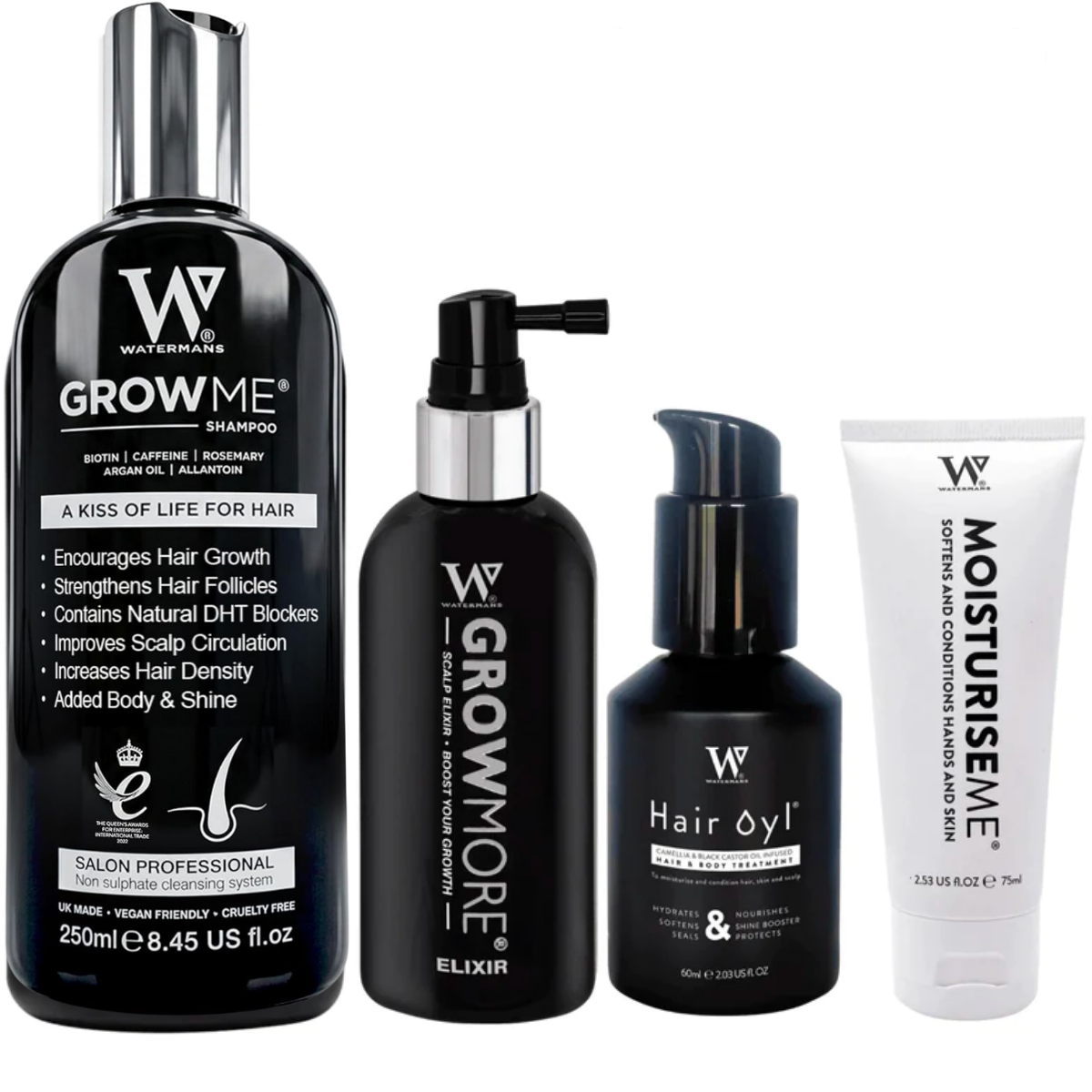
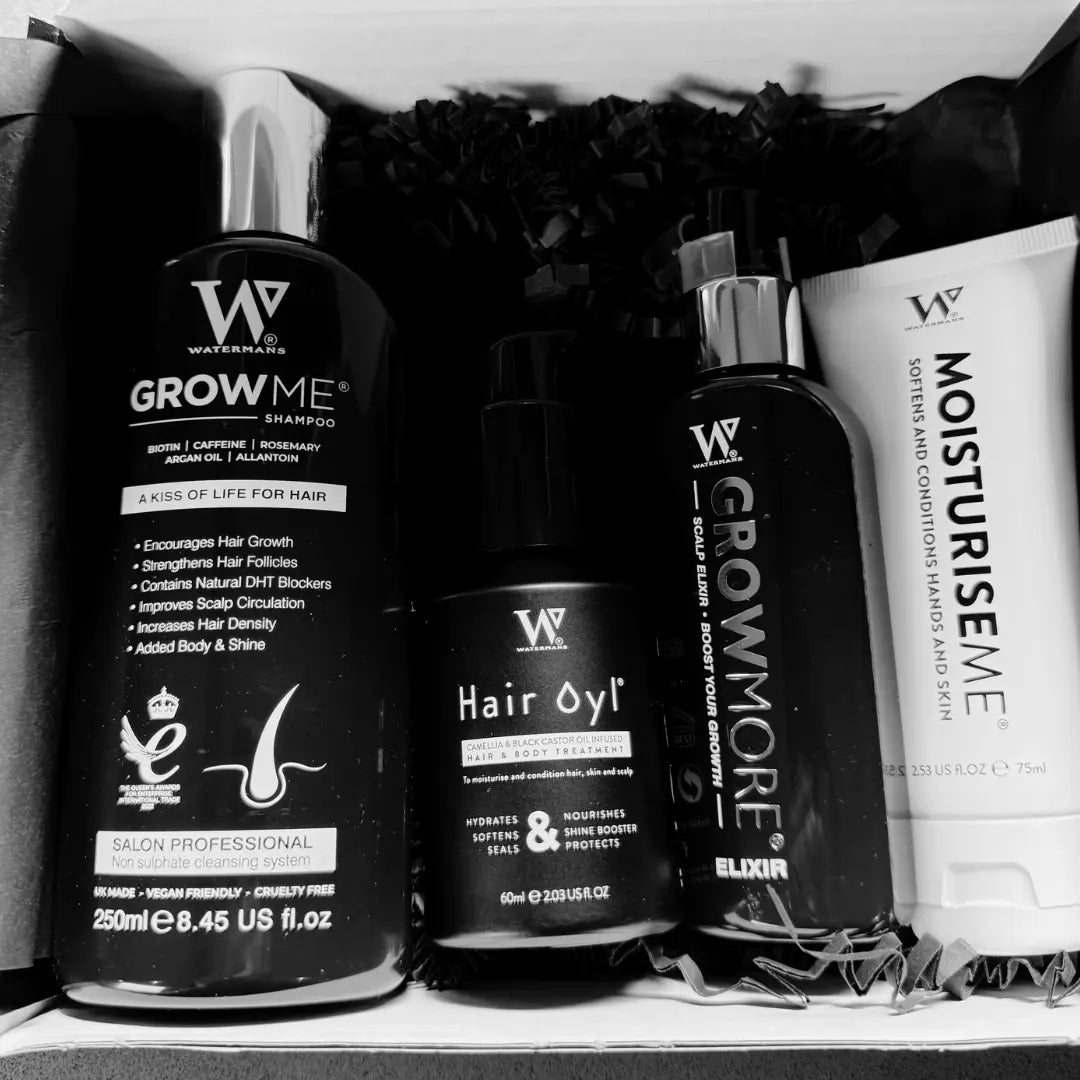
Grow Me® Hair Growth Shampoo, £14.95
A sulphate free everyday shampoo with niacinamide, caffeine, biotin and rosemary. The reason it sits on this page is the gentle surfactant base, which suits a scalp that reacts to stripping cleansers.
This is a cosmetic shampoo, not an antifungal or a treatment for dandruff, psoriasis or any scalp condition.
What is a sensible two week reset for an itchy scalp?
Strip the routine back to as few variables as possible for fourteen days. Most people are running six or seven products at once, which makes it impossible to tell what is helping and what is causing the problem. A reset does not treat anything, it simply lets you see clearly.
- Stop every leave-in product at the roots. That includes dry shampoo, root sprays, gels and oils.
- Wash every day or every other day with one gentle shampoo, in lukewarm water, rinsing thoroughly.
- Keep conditioner to the mid lengths and ends only, never the scalp.
- Add one thing at a time if you want to try a remedy, and give it a full week before judging.
- Photograph your parting in the same light on day one and day fourteen. Memory is unreliable about slow change.
- If nothing has improved by day fourteen, stop experimenting and see a pharmacist.
A note on scratching
Scratching is not a neutral act. It breaks the skin barrier, which increases inflammation, which increases itch, and the loop tightens. It also snaps hair at the root and can leave short broken fragments that look alarmingly like shedding. If you catch yourself scratching, cold water on the area or a cool damp cloth interrupts the signal without the damage.
Can an itchy scalp cause hair loss?
Persistent scratching and inflammation can cause hair to break and shed, and severe untreated inflammatory conditions can affect the follicle. Ordinary dandruff does not cause permanent hair loss. If you are seeing genuine thinning alongside the itch, the itch is usually a separate issue happening at the same time rather than the cause.
The distinction to look for is broken fragments versus whole shed hairs. A hair that has shed naturally has a small pale bulb at the root end. A short, blunt fragment with no bulb is breakage, which is what scratching and tension produce. Our guide on working out why your hair is thinning covers how to tell them apart.
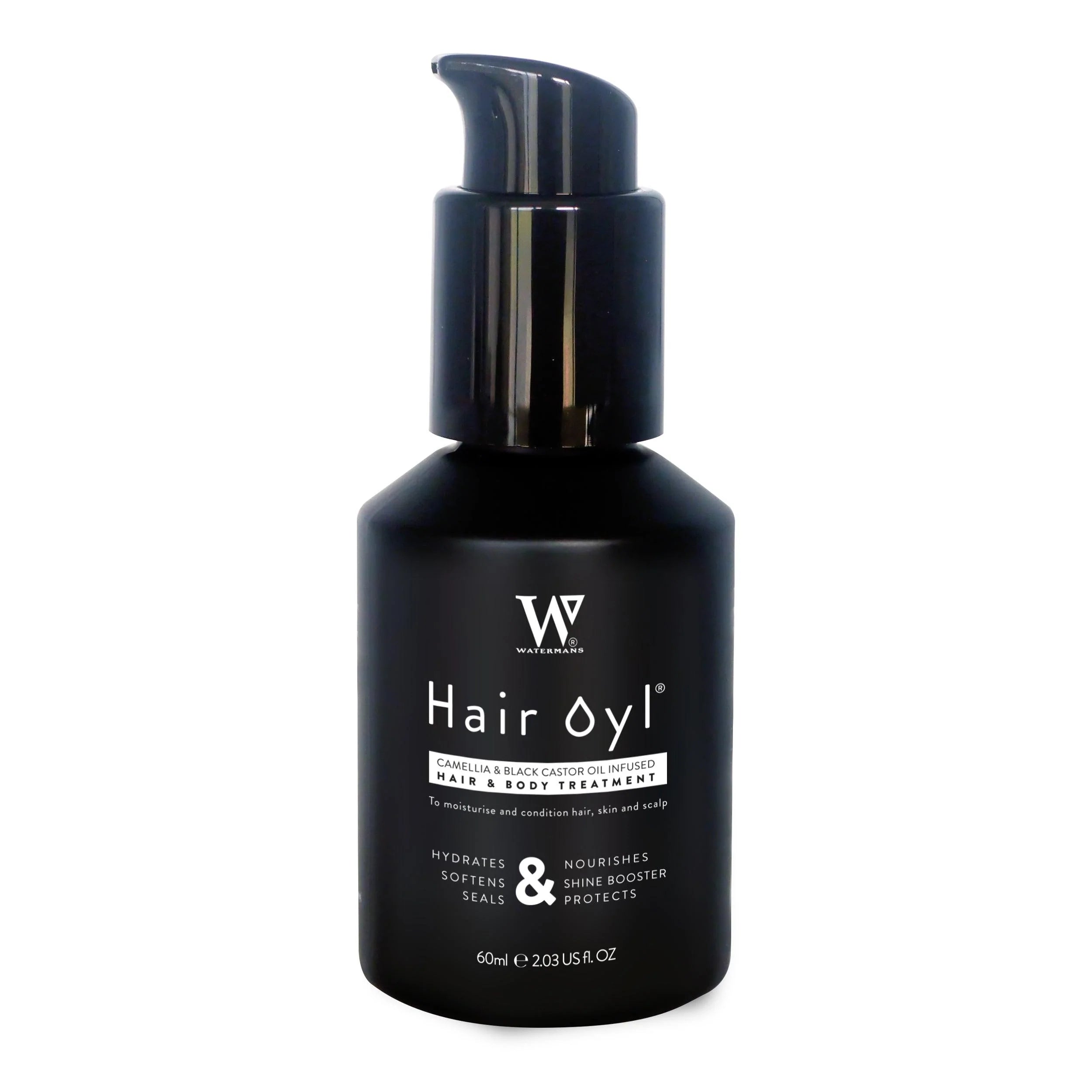
Camellia & Black Castor Hair & Body Oil, £24.95
A pre-diluted blend for genuinely dry hair and dry skin, which saves you measuring essential oil drops at the sink. Best used on the mid lengths and ends.
Do not use this, or any oil, on a greasy yellow flaking scalp. Read the section above on why oil feeds the yeast behind dandruff.
See a pharmacist or GP rather than trying another remedy if you have
- Itch with a bald or scaly patch, especially in a child, which needs ruling out for scalp ringworm
- Thick silvery plaques that extend beyond the hairline
- Weeping, crusting, painful spots or any sign of infection
- A smooth shiny area of scalp with no visible follicle openings, where time matters
- Itch that has not improved after four weeks of a medicated antifungal shampoo used correctly
- Sudden severe itch after starting a new medication
Frequently asked questions
What is the fastest home remedy for an itchy scalp?
Washing with a gentle shampoo in lukewarm water and rinsing thoroughly is the fastest reliable relief, often within a day or two. For dandruff specifically, a 5% tea tree oil shampoo has the best trial evidence, though it took four weeks to show a 41% improvement in the study that supports it.
Is coconut oil good for an itchy scalp?
Coconut oil is good for the hair shaft and poor for a flaky scalp. It reduces protein loss during washing, which is well supported, but Malassezia yeast feeds on applied lipids, so oiling a greasy flaking scalp often increases flaking within a week. Use it on lengths and ends only.
Does apple cider vinegar cure an itchy scalp?
No. There are no controlled trials of apple cider vinegar on the scalp, and a 2019 study of dilute soaks on eczema found no meaningful improvement in the skin barrier while most participants reported irritation. Undiluted vinegar on inflamed skin can cause chemical burns.
Should I wash my hair less if my scalp itches?
Usually the opposite. Washing every day or every other day reduces flaking and yeast load for dandruff and seborrheic dermatitis, which cause most itchy scalps. Washing less only helps a genuinely dry scalp with fine white flakes and a tight feeling.
Can stress cause an itchy scalp?
Stress does not create the underlying condition but it reliably worsens seborrheic dermatitis and psoriasis flares, and it increases scratching. Many people notice their scalp settles during a calm month and flares during a difficult one, which is one reason home remedies look more effective than they are.
Is baking soda safe to use on the scalp?
No. A baking soda solution sits at around pH 8 to 9 while healthy scalp skin sits near pH 5. Applying it repeatedly strips the acid mantle and leaves the barrier more reactive, which is the opposite of what an itchy scalp needs. There is no evidence supporting its use.
How long should I try a home remedy before giving up?
Two weeks for comfort and four weeks for flaking. Scalp skin turns over roughly every two to four weeks, so nothing applied to it can show its real effect faster. If four weeks of consistent use has changed nothing, the remedy is not working and the cause may need diagnosing.
Can an itchy scalp be a sign of something serious?
Rarely, but it can. Scalp ringworm, scarring alopecias, severe psoriasis and skin infections all present with itch and all need medical treatment rather than home remedies. Any itch alongside hair loss, patches, pain, weeping or a smooth shiny area of scalp should be seen by a GP.
Trusted by more people than any home remedy. Watermans has sold over 5 million bottles since 2012, is vegan and cruelty free, and is made in the UK. If your scalp reacts to harsh cleansers, a gentle everyday shampoo used consistently will do more for you than any mixture from the kitchen cupboard.
Shop Grow Me sulphate free shampoo or read our companion piece on home remedies for hair growth and what the evidence really says, which covers rosemary, onion juice, rice water and castor oil in the same way this page covers itch.
Related reading: how to keep your scalp healthy, why hair growth products sometimes cause itching, and how to rescue genuinely dry hair.