

Sunscreen for Your Scalp: The Spot Almost Everyone Misses
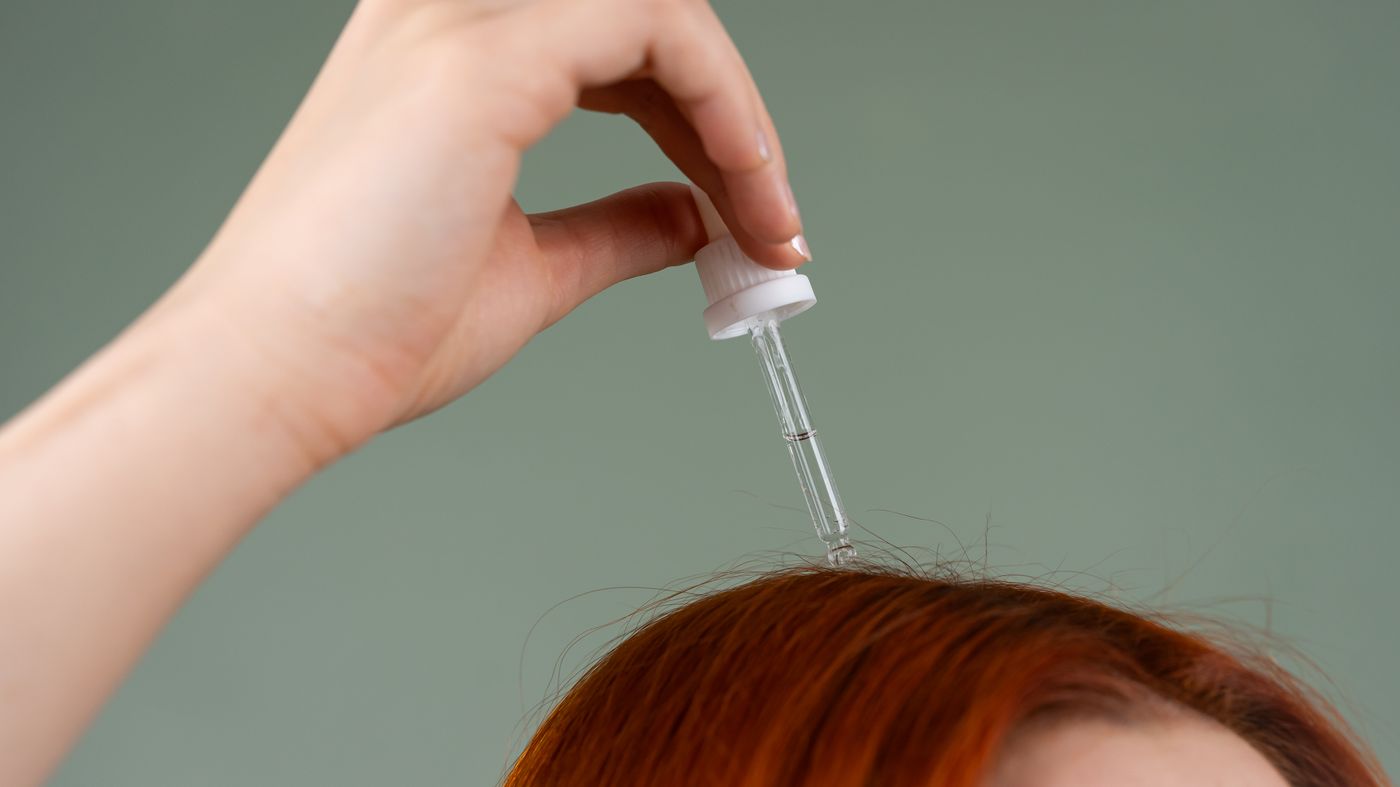
Last updated: August 2026. The scalp is the single most commonly missed area in sun protection, and the parting, crown and hairline are where it shows first. Hair gives less protection than people assume, a parting gives almost none, and a thinning crown gives none at all. The practical fixes are a wide brimmed hat, or a spray, powder or gel SPF that reaches skin without leaving hair greasy.
This is also the sun safety mistake with the most serious tail. Skin cancers on the scalp are typically found later than those on the face or arms, simply because nobody is looking there. Everything below is about getting protection onto the skin you cannot easily see.
Key takeaways
- A parting is exposed skin. Hair either side of it does not shade the line itself.
- Most people apply between a quarter and a half of the sunscreen used in SPF laboratory testing, so a bottle labelled SPF 50 is often delivering far less in real life.
- SPF 30 filters roughly 97% of UVB and SPF 50 roughly 98%, so the gap between them is far smaller than the numbers suggest. Applying enough matters more than the number on the bottle.
- In the UK, protection is worth using whenever the UV index is 3 or above, which is broadly April to September between 11am and 3pm.
- Powder, spray and gel formats are the only ones most people will actually use on a scalp with hair.
- A scalp mole, sore or scaly patch that has not healed in four weeks needs a GP appointment, not another look in the mirror.
Why does the scalp burn so easily?
Because it faces almost straight up. The top of the head receives the most direct overhead sun of any part of the body during the middle of the day, and unlike the face it is rarely shaded by brows, nose or sunglasses. Add that almost nobody applies sunscreen there and the scalp ends up the highest exposure, lowest protection site on the body.
Hair does help, but far less than people expect and very unevenly. Dense, dark, long hair gives meaningful shade. Fine hair, short hair, a shaved head, a widening parting or a thinning crown give little or none. The protection you have is not a property of having hair, it is a property of how much scalp is actually covered at the angle the sun is hitting it.

Which parts of the head burn first?
The parting, the crown, the tops of the ears and the back of the neck, in that order. These four account for most scalp and head sunburn, and all four are places you cannot see without a mirror or a photograph. Anyone with a receding hairline adds the temples to that list.
| Spot | Why it is missed | Best fix |
|---|---|---|
| The parting | People assume having hair is enough. The line itself is bare skin | SPF powder brushed along the line, or move the parting for a few days |
| The crown | Out of sight, and thinning there is often the reason it is newly exposed | Hat, or spray SPF parted through in sections |
| Tops of the ears | Skipped because they are fiddly, and hair rarely covers them | Stick SPF, which is easier than lotion on a small area |
| Back of the neck | Covered when hair is down, fully exposed the moment it goes up | Apply whenever you tie hair up, not just at the start of the day |
| Temples and hairline | Face sunscreen usually stops short of the hairline | Deliberately take face SPF up into the hairline |
| A shaved or very short head | Treated as a face, when it is a large flat surface facing the sun | Treat it as a body area, with a proper amount and reapplication |
What is the best sunscreen for a scalp that still has hair?
Whichever format you will genuinely reapply, which for most people with hair means a powder, a spray or a light gel rather than a lotion. Lotion works perfectly well chemically, but it leaves hair looking greasy, so people skip it, and the sunscreen you skip has an effective SPF of zero.
| Format | Works well for | The catch |
|---|---|---|
| SPF powder | Partings and hairlines, easy to top up over makeup and hair | Very easy to under apply. Best as a top up on a base, not the only protection |
| Spray | Crown and dense hair, if you part it in sections and spray the skin | Spraying the hair rather than the scalp achieves nothing. Never spray near the face |
| Gel or fluid | Short hair and shaved heads, absorbs without heaviness | Alcohol based versions can sting an already irritated scalp |
| Stick | Ears, hairline, small precise areas | Slow over a large area, and easy to lay down too thin a film |
| Lotion | Shaved heads, back of the neck | Greasy on hair, which is why it gets skipped |
| A wide brimmed hat | Everything above, with no reapplication and no residue | Loose weaves let UV through. Nothing protects the back of the neck if the brim is narrow |
The most useful habit on this page
Apply to the parting on the way out of the door, then move the parting a centimetre every few days through summer. It gives the exposed strip a rest, it costs nothing, and it also stops the same line of scalp taking every hit day after day. Anyone who has burned a parting once will not forget how sore it is.
How much sunscreen do you actually need?
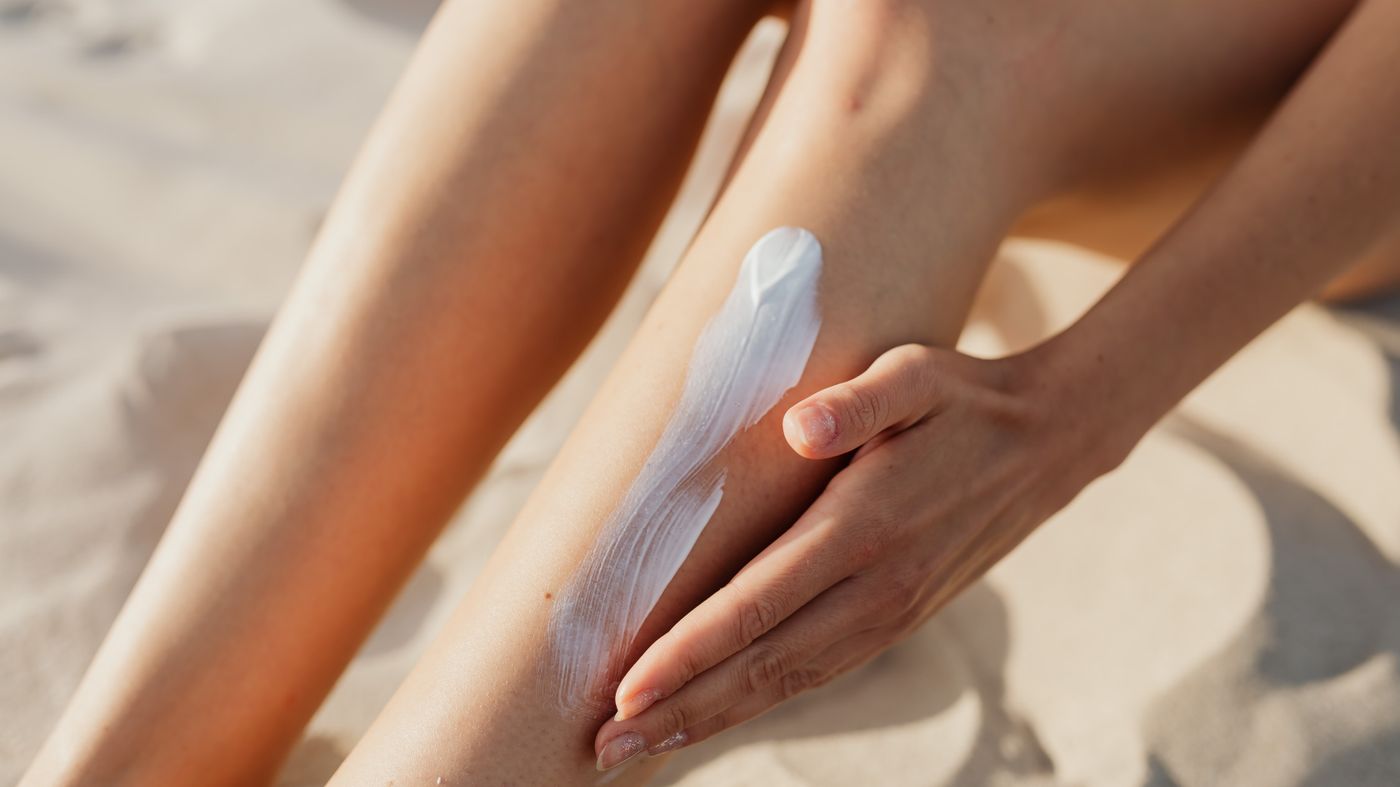
Far more than most people use. SPF is measured in the laboratory at 2mg of product per square centimetre of skin, and real world studies repeatedly find people applying between a quarter and a half of that. Because protection does not scale in a straight line, under applying a bottle of SPF 50 can leave you with protection closer to a low SPF.
The practical measures are a shot glass, roughly one ounce, to cover an adult body, and about a quarter of a teaspoon for the face alone, taken up into the hairline. For a shaved head, treat it as a body area rather than part of the face, because the surface is much larger than it looks.
Reapplication matters more than the number on the bottle. Every two hours is the standard advice, and immediately after swimming, heavy sweating or towel drying, because towelling removes a film of product regardless of what the water resistance claim says.
Do you need sunscreen on a cloudy day in the UK?
Often yes. Cloud reduces UV but does not remove it, and UVA passes through cloud and window glass with little reduction. The useful rule is the UV index rather than how sunny it feels: at UV index 3 or above, protection is worth using, and in the UK that is broadly April to September between 11am and 3pm.
Two specific traps catch people out. The first is a breezy British summer day, where the wind removes the heat cue that normally makes you seek shade. The second is altitude and reflection, since snow, water and pale sand all bounce UV back up under a hat brim and onto the underside of a face and neck.

Does a sunburnt scalp cause hair loss?
A single burn does not cause lasting hair loss. A severe burn causes inflammation and peeling, and heavy peeling with scratching can leave hair looking thinner for a few weeks as damaged hairs break. What follows is usually recovery, not permanent loss, provided the scalp is left alone to heal.
The sensible aftercare is boring: cool water, a bland moisturiser, no picking at peeling skin, no oils or actives on broken skin, and a gentle shampoo rather than anything medicated or exfoliating until it has settled. If a burn blisters, covers a large area, or comes with feeling unwell, that is a pharmacy or GP matter rather than a home one.
If flaking persists long after the burn has settled, it is worth reading our guide to home remedies for an itchy scalp, because sun exposure often unmasks a seborrheic dermatitis that was already there.

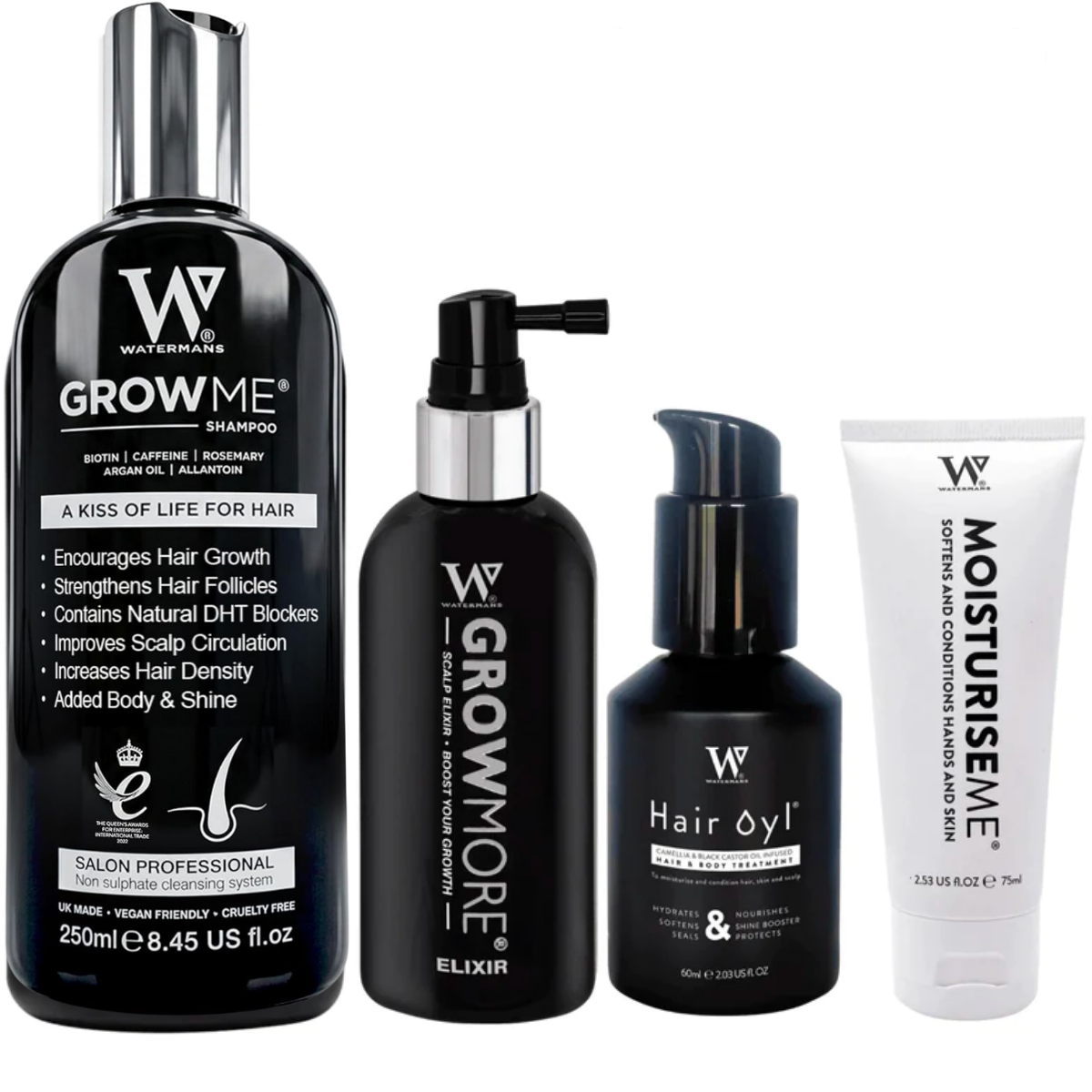
Grow Me® Hair Growth Shampoo, £14.95
A sulphate free everyday shampoo. The relevance here is simply that a scalp recovering from sun exposure does better with a gentle wash than with a stripping one.
This is not a sunscreen, contains no SPF, and offers no protection from UV.
What should you look for on your scalp, and how often?
Check twice a year for anything new, changing, bleeding, or refusing to heal. The scalp deserves its own check because it is the one area nobody sees, and skin cancers found there tend to be picked up later than those on the face or arms purely because of that.
The easiest method is to ask whoever cuts your hair. A hairdresser or barber has a better view of your scalp than you will ever get, sees it every few weeks, and will usually mention something that looks different if you ask them to keep an eye out. Failing that, use a phone camera and a second mirror.
See a GP about anything on the scalp that is
- A sore, scab or ulcer that has not healed within four weeks
- A mole that is changing in size, shape or colour, or has an uneven edge or more than one colour
- A rough, scaly or crusty patch that keeps coming back after it flakes off
- Anything that bleeds when you brush or wash, without an obvious knock
- A new lump, especially a shiny or pearly one
- Any blistering burn, or a burn with fever, chills or feeling unwell
None of this is a reason to panic. Most scalp lumps and patches are harmless. It is a reason to get looked at quickly, because on the scalp the usual problem is delay, not difficulty.

Moisturise Me® Face & Hand Cream, £15.00
A bland, buttery cream with shea, cocoa and allantoin. Useful for the dry, tight skin left behind once a mild burn has settled, on intact skin only.
Not an aftersun product and not a sunscreen. Do not apply it, or anything else, to broken or blistered skin.
An honest note
Watermans is a hair care company. We do not make sunscreen, and the two products above are not sun protection. The most important thing on this page, a broad spectrum SPF 30 or higher and a hat with a decent brim, is something you should buy from a pharmacy or supermarket. We would rather say that plainly than pretend otherwise.
Frequently asked questions
Can you put normal sunscreen on your scalp?
Yes, any broad spectrum SPF 30 or higher is chemically fine on the scalp. The only real obstacle is texture, since a thick lotion leaves hair greasy. If you have hair, a spray, powder or light gel is far more likely to be applied properly and reapplied through the day.
Does hair protect your scalp from the sun?
Partly, and unevenly. Dense, dark, long hair provides meaningful shade, while fine or short hair, a shaved head, a parting and a thinning crown provide very little. The parting is bare skin regardless of how much hair sits either side of it, which is why it burns first.
How often should you reapply sunscreen on your scalp?
Every two hours while outdoors, and straight after swimming, heavy sweating or towel drying. Towelling physically removes product whatever the water resistance claim says. A powder or spray format makes this realistic, because most people will not reapply a lotion to their hair mid afternoon.
Is SPF 50 much better than SPF 30?
Less than the numbers imply. SPF 30 filters roughly 97% of UVB and SPF 50 roughly 98%. The bigger variable by far is how much you apply, since most people use a quarter to a half of the amount used in laboratory testing, which cuts real world protection sharply.
Do you need sunscreen on a cloudy day?
Often yes. Cloud reduces UV without removing it, and UVA passes through cloud and glass. Use the UV index rather than how warm it feels: at index 3 or above protection is worthwhile, which in the UK covers most of April to September between 11am and 3pm.
Does a sunburnt scalp cause hair loss?
Not permanently from a single burn. Severe burning and peeling can cause temporary breakage and shedding that makes hair look thinner for a few weeks, and it usually recovers. Repeated severe burns damage skin over time, which is a skin health concern rather than a hair loss one.
Is a hat better than sunscreen for the scalp?
For the top of the head, usually yes, because it needs no reapplication and leaves no residue in hair. Check the weave, since loose straw lets UV through, and remember a narrow brim leaves the ears and back of the neck exposed. The best answer is usually both.
How do I check my own scalp for sun damage?
Use a phone camera and a second mirror, or ask your hairdresser or barber to look while they work. They see your scalp more often and more clearly than you do. Anything that bleeds, crusts, changes or fails to heal within four weeks should be seen by a GP.
Real proof, honestly stated. Watermans has sold over 5 million bottles since 2012, is vegan and cruelty free, and is made in the UK. What we can help with is looking after hair and scalp through a hot summer. What we cannot do is replace a proper SPF, so please use one.
Read next: how to protect your hair from sun, chlorine and salt water, which covers the strands rather than the skin, plus how to keep your scalp healthy and how to care for dry skin. If your crown is newly exposed, our guide to why hair thins is the place to start.