

Pica Iron Deficiency: Why You Crave Ice, Clay or Raw Rice
Pica iron deficiency is the pattern doctors see when a strong, hard to ignore urge to chew ice, clay, soil or raw rice turns out to be driven by low iron. The craving is not a personality quirk and it is not a lack of willpower. It is a recognised symptom, listed by the NHS alongside tiredness and hair coming out when you brush or wash it, and it usually settles once iron stores are back where they should be.
Key takeaways
- Pica means craving and eating things that are not food. Craving ice specifically is common enough to have its own name, pagophagia.
- The NHS lists wanting to eat non food items such as paper or ice as a symptom of iron deficiency anaemia.
- The same NHS symptom list includes hair coming out when brushing or washing, which is why the two so often turn up together.
- A ferritin and full blood count blood test is the way to find out. It is quick, cheap and available from any GP surgery.
- The craving usually fades within weeks of iron being restored, well before your blood results look completely normal.
- Hair takes longer. Expect three to six months before the shedding settles and new growth becomes visible.
What is pica iron deficiency?
Pica is the medical name for craving and eating substances with no nutritional value. Pica iron deficiency describes the specific version of it that comes from low iron, which is by far the most common nutritional trigger. The craving tends to be oddly specific. People do not simply want "something crunchy", they want that particular texture, that particular cold, that particular chalky mouthfeel, and nothing else scratches the itch.
Doctors take it seriously because the craving is often the first thing a person notices, sometimes months before the tiredness gets bad enough to mention. Someone will get through three bags of crushed ice a day for weeks and only connect it to their health when a colleague raises an eyebrow. That timing is useful. It means the craving can act as an early flag.

Why does low iron make you crave ice or clay?
Honest answer first: nobody has fully settled this. Two explanations have the most support, and good researchers disagree about which matters more.
The first idea is neurological. Chewing ice appears to increase blood flow to the brain, and in someone whose oxygen carrying capacity is already reduced, that brief lift may feel genuinely good. On this account the body is not seeking iron at all, it is seeking alertness, and ice happens to deliver it.
The second idea is that the craving is a misfiring foraging instinct, an ancient drive to eat soil or mineral rich earth when the body senses a shortfall. The awkward fact for this theory is that clay and soil actually bind iron in the gut and make absorption worse, so if it is a foraging instinct it is a counterproductive one.
What both explanations share is the observed pattern: correct the iron, and the craving goes. That consistency is the strongest evidence that iron is the driver, whatever the mechanism turns out to be.
Which cravings point to which problem?
Not every non food craving means the same thing, and the substance matters. This table sets out what each craving is called, what it most often signals, and the practical risk that comes with it.
| Craving | Name | Most often signals | Main risk |
|---|---|---|---|
| Ice, frost, freezer scrapings | Pagophagia | Low iron, the classic presentation | Cracked enamel and chipped teeth |
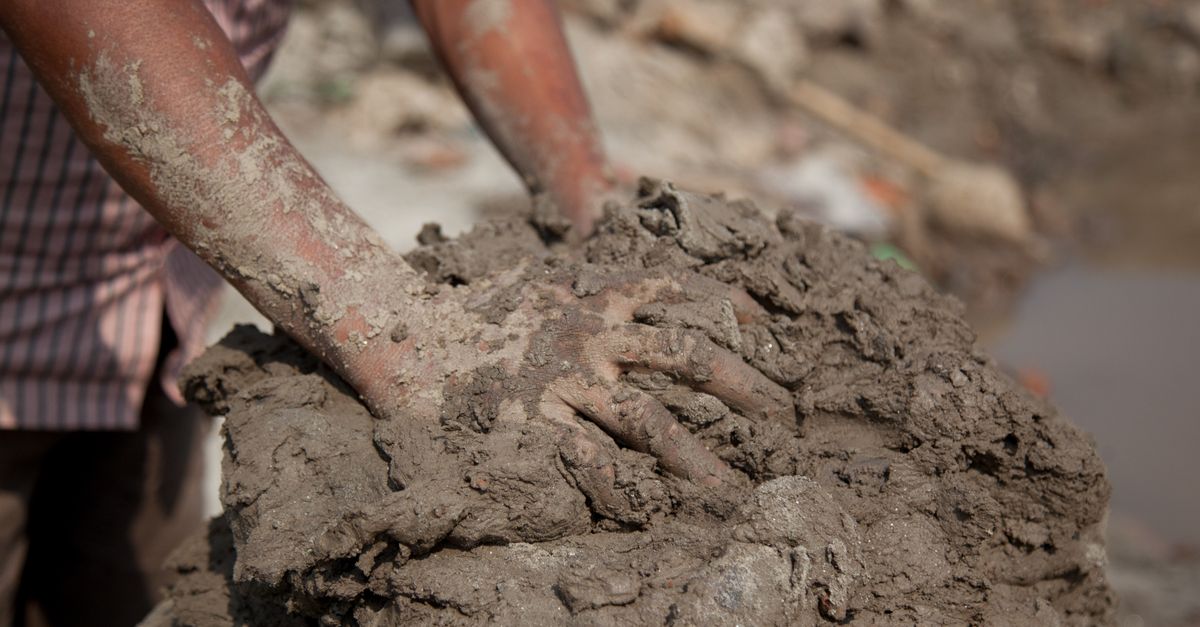
| Clay, soil, chalk | Geophagia | Low iron or low zinc | Lead, parasites, blocked iron absorption |
| Raw rice, uncooked pasta, flour | Amylophagia | Low iron, often in pregnancy | Tooth damage and gut discomfort |
| Paper, card, tissue | Xylophagia | Low iron | Blockage if quantities are large |
If your craving sits in the clay or soil row, read our companion guide on the real risks of eating clay, ice and raw rice, which goes substance by substance through what is actually dangerous. This page is about what the craving means. That one is about what it can do to you.
What other signs turn up alongside the craving?
Pica iron deficiency rarely arrives on its own. The NHS symptom list for iron deficiency anaemia is worth knowing in full, because most people recognise three or four items on it the moment they read it.
- Tiredness that sleep does not fix, and breathlessness on stairs you used to manage easily.
- Noticeably pale skin, and pallor inside the lower eyelid.
- Headaches, a thumping heartbeat, or ringing in the ears.
- Hair coming out when brushing or washing it.
- Brittle, spoon shaped or ridged nails.
- Sore cracks at the corners of the mouth, and a smooth or sore tongue.
- Restless legs at night, and difficulty swallowing.
Two of those deserve a flag. Restless legs and difficulty swallowing are both easy to write off as unrelated, and both are well recognised in low iron. If you have the craving plus either of those, mention them together when you see your GP.

What should you ask your GP for?
Be specific, because a standard full blood count on its own can miss the early stage. Ask for a full blood count and a ferritin level. Ferritin reflects how much iron you have in storage, and it drops before your haemoglobin does, so it catches the problem earlier.
Say the word pica out loud in the appointment. Many people feel silly admitting they have been eating ice by the pint or chewing chalk, and skip it. It is one of the most useful things you can tell a GP, and no reasonable clinician will find it strange. They will have heard it many times.
It also matters that low iron is a finding, not an endpoint. The important question is why iron is low. In women who menstruate, heavy periods are the most common answer. In men, and in women after the menopause, unexplained low iron needs looking into properly, because the gut is a common source of slow blood loss. Expect your GP to ask about that, and let them.
Does pica iron deficiency cause hair shedding?
Low iron is genuinely associated with increased hair shedding, and it helps to be precise about which of three different things is happening, because they need different responses.
- Hair shedding is a cycle problem. A stress on the body, and low iron counts as one, pushes more follicles than usual out of their growing phase and into the resting phase at the same time. Two to three months later they all let go together. The follicles are healthy and still there.
- Hair loss is a follicle problem. Conditions such as androgenetic alopecia or alopecia areata change the follicle itself, and iron has nothing to do with them.
- Hair breakage is a fibre problem. The strand snaps partway along its length from heat, tension or chemical damage. You will see short broken pieces rather than full length hairs with a small white bulb.
Iron sits squarely in the first category. That is good news, because cycle problems recover. Our full guide to telogen effluvium and its recovery timeline covers what to expect month by month, and the three mechanisms behind thinning hair explains how to tell them apart at home.
One caution. Low iron is not the only internal cause of a sudden increase in shedding, and thyroid problems produce a very similar picture. If your blood test comes back with normal iron, ask about thyroid related hair changes before assuming the shedding has no explanation.

Get a discount on the hair shedding range
Join the Watermans mailing list and we will email a discount code straight to your inbox, so you can try the hair shedding range for less. Vegan, made in the UK, over 5 million bottles sold since 2012.
How is iron restored, and how long does it take?
Once a blood test confirms pica iron deficiency, your GP will normally arrange iron replacement and, separately, look for the cause of the loss. Food alone is rarely enough to refill empty stores, though it matters a great deal for keeping them full afterwards.
The NHS reference intakes for iron are 8.7mg a day for men aged 19 and over, 14.8mg a day for women aged 19 to 49, and 8.7mg a day for women aged 50 and over. Good sources include red meat, liver, beans, lentils, tofu, nuts, dried apricots, fortified breakfast cereals and dark green leafy vegetables.
Two practical points make a real difference. Vitamin C improves absorption of the iron in plant foods, so a glass of orange juice or some pepper in the same meal genuinely helps. Tea and coffee do the opposite, so leave a gap of an hour either side of an iron rich meal rather than washing it down.

A realistic timeline. The craving usually fades within two to six weeks of starting iron replacement, often long before ferritin looks healthy on paper. Energy follows over a couple of months. Hair is the slowest of the three, because the follicles that let go have to complete a resting phase before new hairs push through. Three to six months is normal, and it is not a sign that nothing is working.
How do you look after hair while iron levels recover?
During the recovery months your job is retention, not stimulation. Hair that has been shedding heavily leaves you with a lot of short new growth of different lengths, and that new growth is fine, fragile and very easy to snap. Losing it to breakage undoes the recovery you are waiting for.
The practical version is unglamorous and works: wash gently and regularly rather than sparingly, detangle with a wide tooth comb on conditioned hair from the ends upward, drop the heat setting, and stop pulling everything into tight ponytails and slicked back buns while the new growth is short.
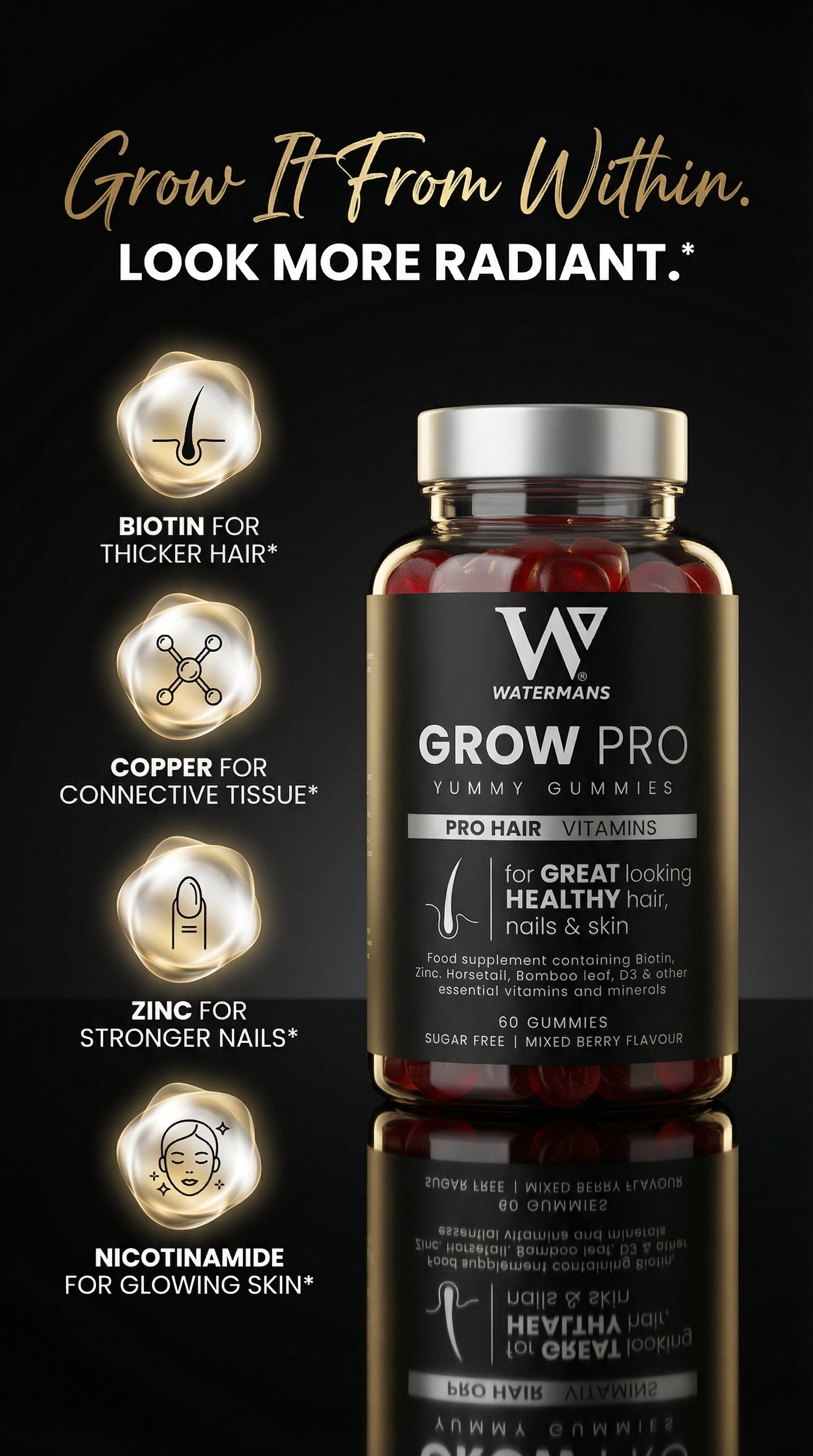
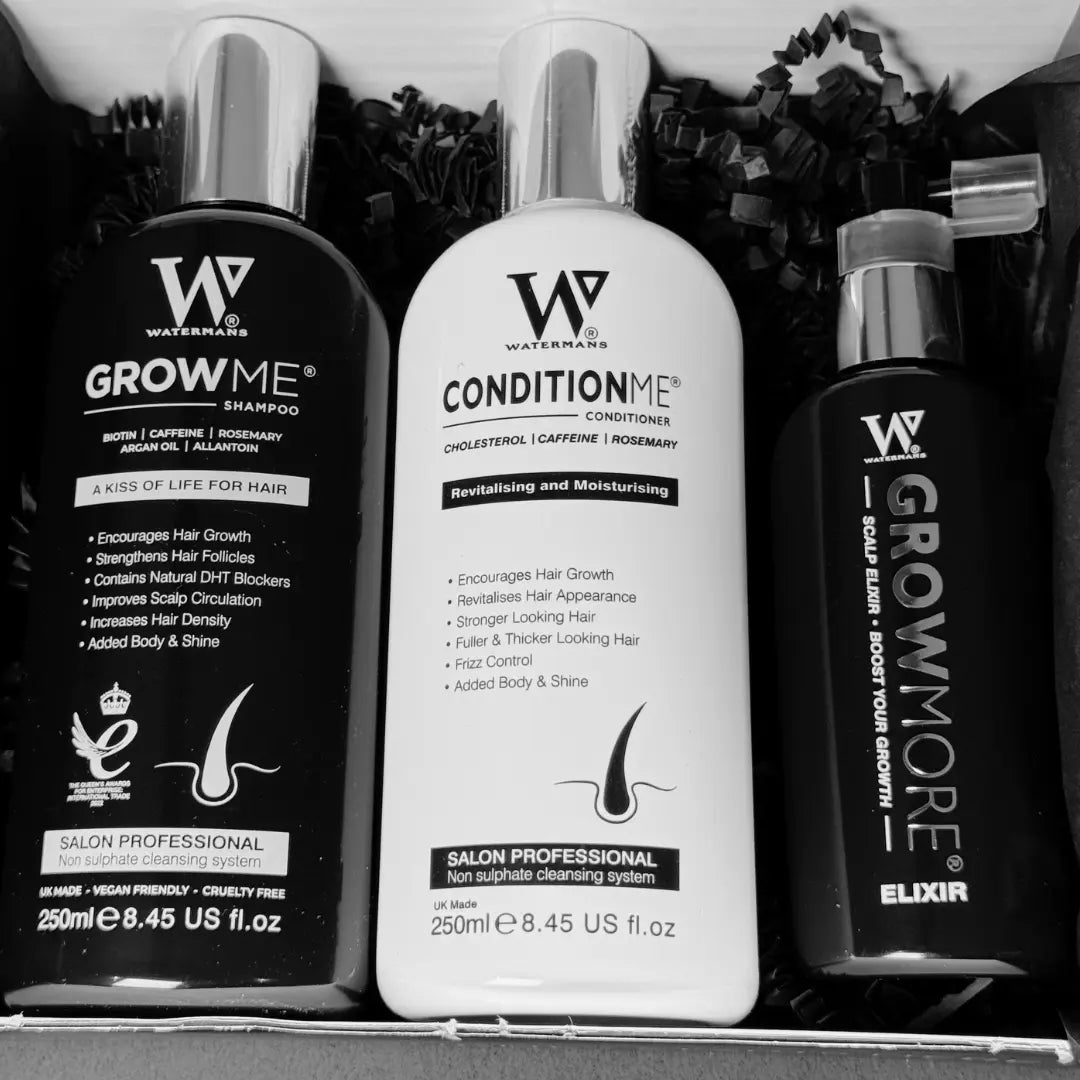
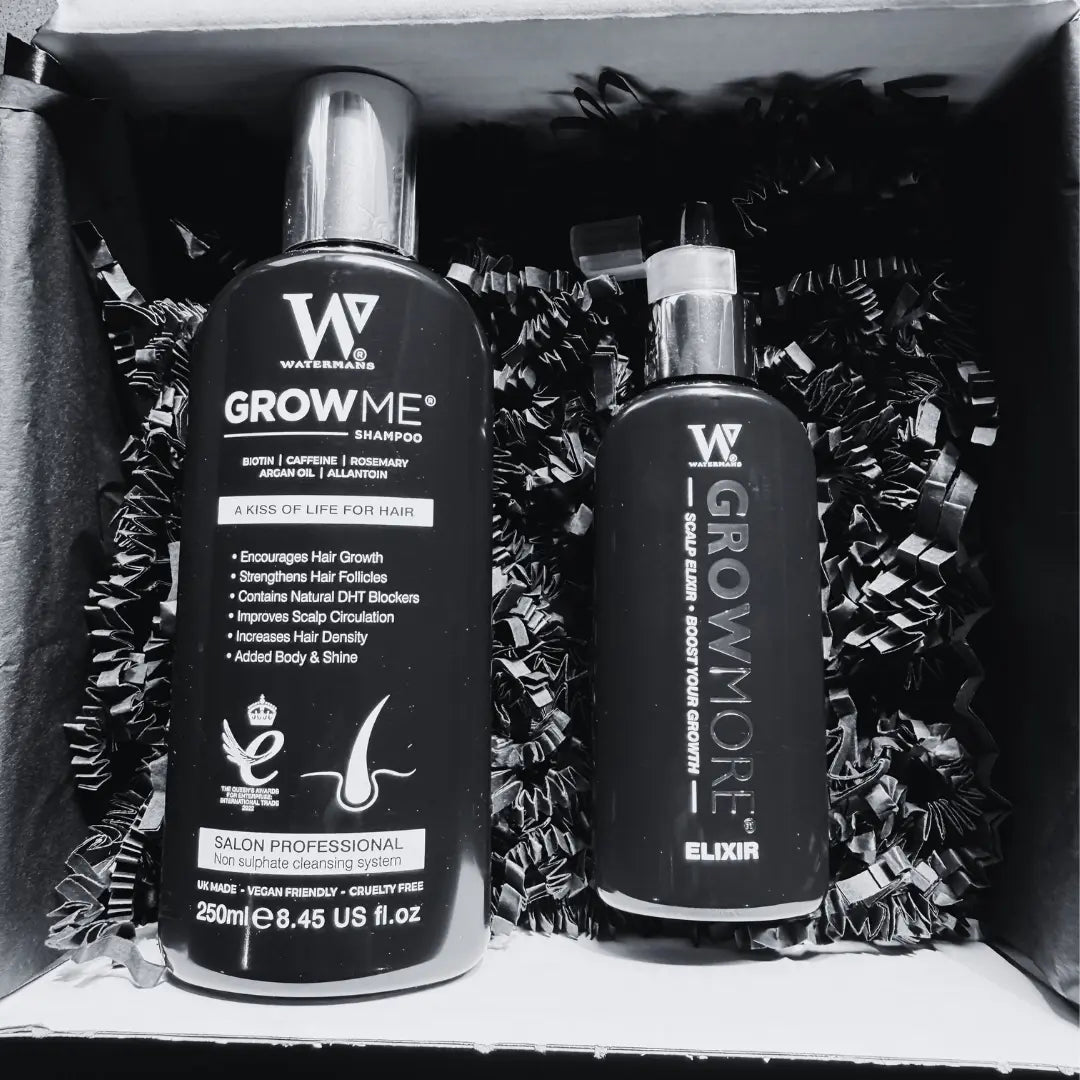
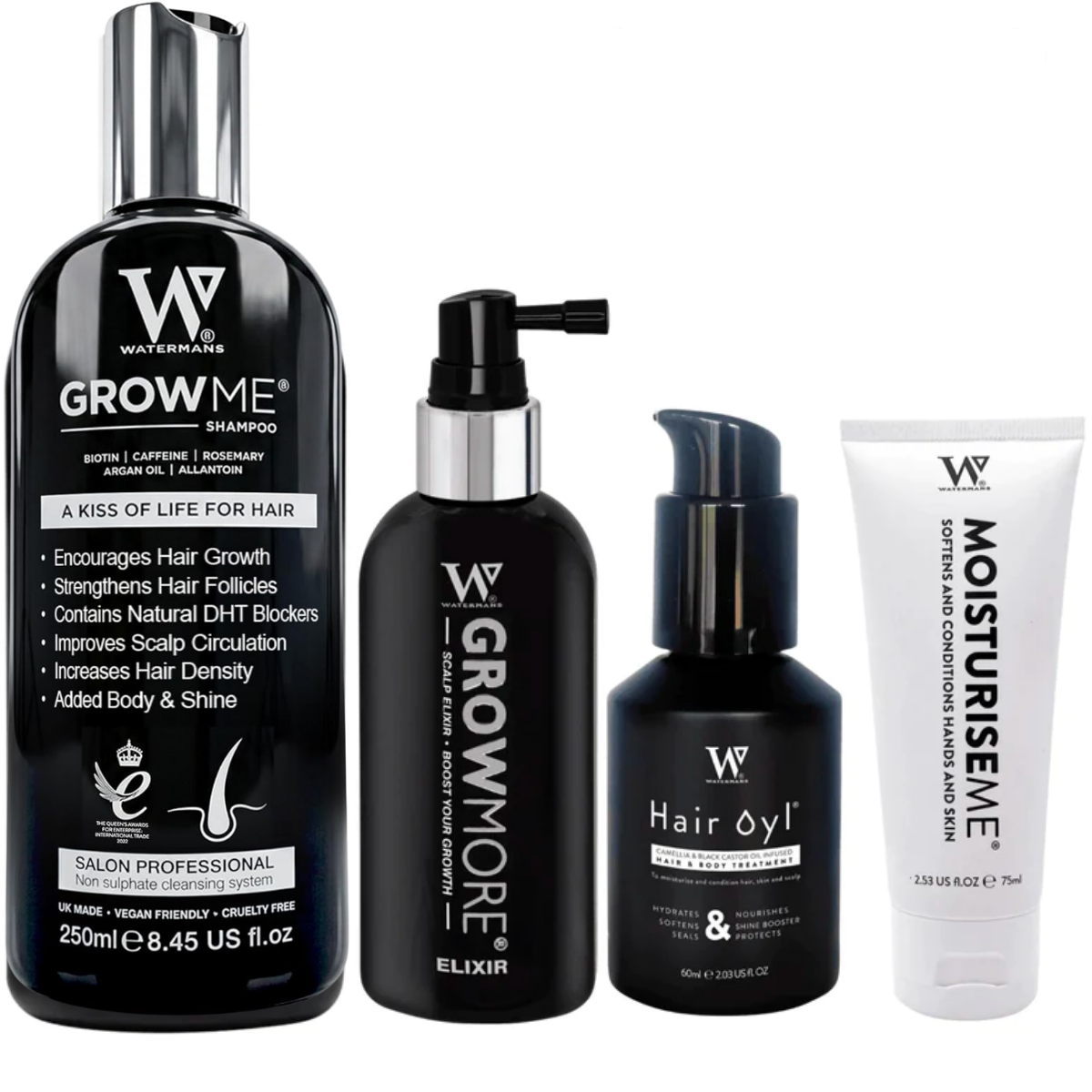
On the product side, a gentle sulfate free shampoo and a conditioner that helps strands slide apart instead of tearing will do more for you in these months than anything marketed as intensive. Watermans products are cosmetic. They will not change your iron levels, and the iron is the part that matters here. What they can do is keep the hair you have looking fuller and reduce the breakage that steals your new growth.

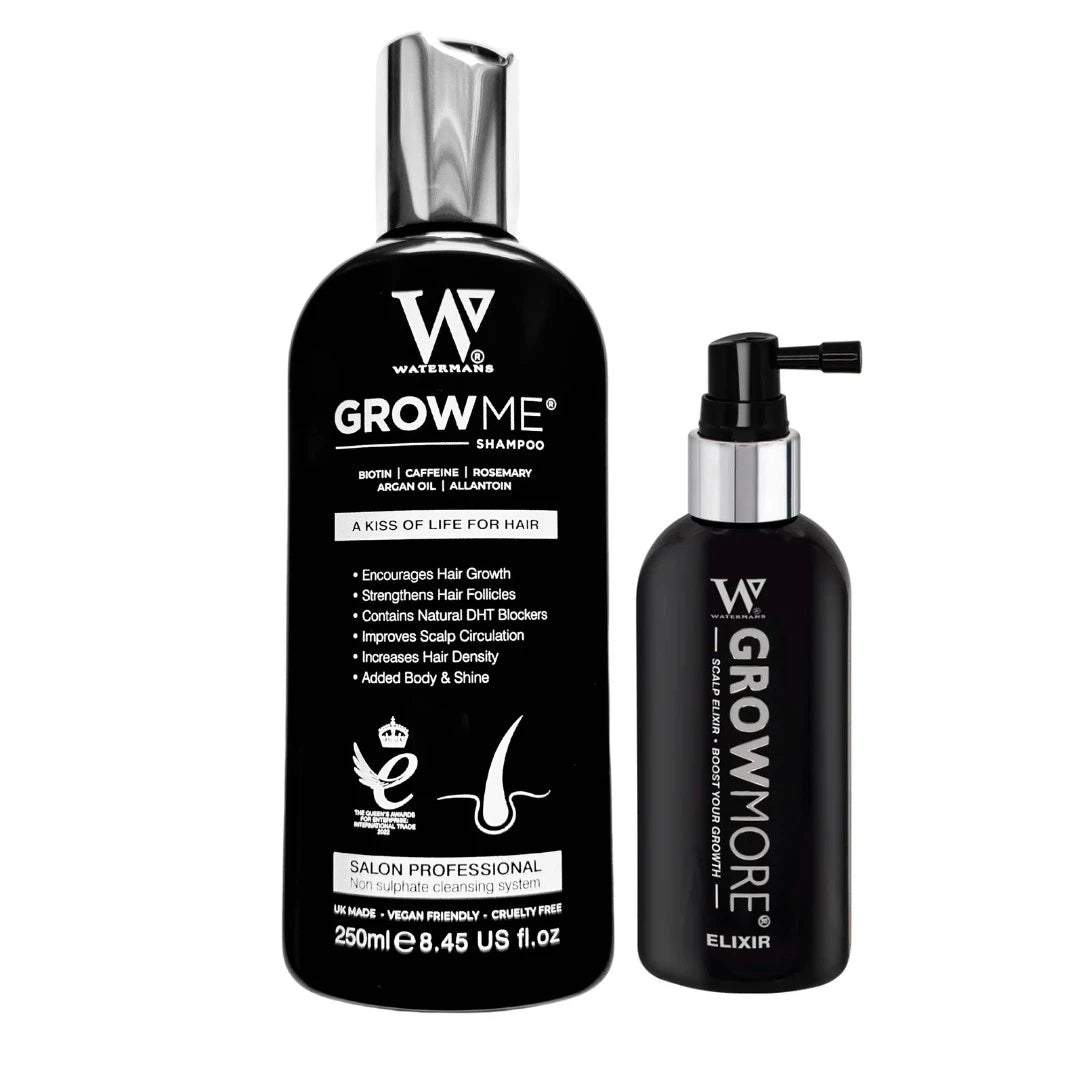
Grow Me® Hair Growth Shampoo, £14.95
Sulfate free, vegan and made in the UK, with biotin, caffeine, rosemary and niacinamide. A gentle everyday cleanse for a scalp that is going through a shedding phase, formulated to support fuller looking hair.

Condition Me® Hair Growth Conditioner, £13.95
Slip is the point. Easier detangling means fewer strands lost in the comb, which is exactly what short, fine new growth needs while your iron recovers.
Over 5 million bottles sold since 2012. Vegan and made in the UK.
Frequently asked questions
Is craving ice always a sign of pica iron deficiency?
No, but it is the single most common explanation in adults, and it is worth a blood test rather than a guess. Some people simply enjoy chewing ice out of habit, in hot weather, or as a way of managing dry mouth. The distinguishing feature is compulsion. If you are going out of your way to get ice, getting through it in large quantities daily, and feeling agitated when there is none, that is the version that warrants a ferritin test.
Can you have pica with normal haemoglobin?
Yes, and this catches people out. Haemoglobin falls late. Iron stores empty first, which is why ferritin is the more sensitive early marker and why it is worth asking for by name. Someone can be told their full blood count is normal while their ferritin is on the floor and their craving is in full swing.
Is pica common in pregnancy?
It is more common in pregnancy than at any other time, because iron demand rises sharply. Cravings for ice, raw rice, chalk and soil are all well recognised in pregnancy. Tell your midwife, who will already be monitoring your bloods and can act on it quickly.
Does eating clay or soil make iron deficiency worse?
It can. Clay and soil bind minerals in the gut and reduce how much iron you absorb from the food you eat, so the craving can deepen the very shortfall that caused it. That is one of several reasons clay is the substance to stop first.
How quickly does the craving stop once iron is corrected?
Most people notice it fading within two to six weeks of starting iron replacement, and many describe it switching off almost completely rather than tapering. It is often the earliest sign that iron is going back in, well before energy improves.
Will my hair go back to how it was?
In shedding driven by low iron, the follicles are intact, so hair density usually returns once the underlying cause is corrected. The timeline is the hard part. Expect shedding to settle over three to six months and visible density to take longer, because each new hair grows roughly a centimetre a month.
Should I just buy iron tablets myself?
Get tested first. Taking iron without knowing your levels can mask a bleeding problem that needs finding, and too much iron is harmful in its own right, particularly in people with haemochromatosis. A ferritin test costs the NHS very little and tells you what you are actually dealing with.
Do hair supplements help with pica iron deficiency?
Not for the iron itself. General hair, skin and nail supplements are not an iron replacement, and buying one instead of seeing a GP delays the thing that will actually resolve the craving. Get your iron sorted through your GP first, and regard any supplement as a general nutritional top up afterwards, not as the answer.
The short version
Pica iron deficiency is a real, recognised pattern, not an embarrassing habit. If you are craving ice, clay, chalk or raw rice with any intensity, ask your GP for a full blood count and a ferritin level, say the word pica in the appointment, and expect a conversation about where the iron is going. The craving usually stops within weeks of iron being restored. Hair shedding takes three to six months to settle, and gentle handling during that window protects the new growth you are waiting for.
Sources & references
- NHS, Iron deficiency anaemia. Lists pica and hair coming out when brushing or washing among the symptoms, and covers causes and investigation.
- NHS, Iron: vitamins and minerals. Source of the UK reference intakes quoted above and of the dietary sources list.
- National Institute for Health and Care Excellence, Clinical Knowledge Summary: anaemia, iron deficiency. The assessment and management framework UK GPs work from.
- British Dietetic Association, Iron rich foods and iron deficiency. Practical dietary guidance, including the vitamin C and tea or coffee absorption points.
- NHS, Hair loss. General NHS guidance on hair changes and when to seek help.
Watermans products are 100% cosmetic and do not treat medical hair loss. Individual results may vary. This article is general information, not personal medical advice. If you are craving non food substances, or your hair shedding is not settling, please see your GP.