


Hair Care on Low Energy Days: The Minimum That Works
When you have no energy, the honest answer to hair care is that almost all of it is optional. Three things genuinely matter: wash your scalp often enough that it stays comfortable, put conditioner on the mid lengths and ends every single wash, and detangle gently. That is the whole minimum. Everything else, the masks, the oils, the heat styling, the multi step routines, is optional extra you can pick up again when you have the capacity for it. Skipping them costs you very little. Skipping those three costs you hair, through breakage rather than shedding.
This page is for anyone going through a period where getting in the shower at all is an achievement: illness, a new baby, grief, burnout, a long low stretch, caring for someone else. If that is where you are, please also talk to your GP, and know that the Samaritans are free on 116 123 at any hour. What follows is only the hair part, kept deliberately small.
Key Takeaways
- Three steps are non negotiable: wash the scalp, condition the ends, detangle gently. Under five minutes total.
- Not washing is not resting your hair. An unwashed scalp gets itchy, and scratching does more damage than shampoo ever will.
- Conditioner is the highest value step in the whole routine. If you only do one thing beyond washing, do this one.
- Put it up loosely. A loose claw clip or a soft scrunchie protects hair. A tight elastic worn in the same spot daily causes traction damage.
- Skip heat entirely for now. It is the most effort and the most damage. Air drying costs nothing and asks nothing of you.
- Do not start a new regimen while you are depleted. Complicated routines fail, and the failure becomes one more thing to feel bad about.
Why the minimum is genuinely enough
Most hair loss during a difficult period is happening at the follicle, months upstream, and nothing in a bathroom cabinet changes that. What you control at the bathroom sink is a different question entirely: how much of the hair you still have survives being handled.
That distinction is freeing. It means you can drop nearly everything from your routine without making the underlying situation worse, as long as you keep the small number of steps that prevent mechanical damage. It also means the guilt people carry about a lapsed routine is largely misplaced.
If you want the mechanism behind the shedding itself, and the timeline for when it typically settles, stress and hair shedding explains why it turns up months after the event that caused it.

Step one: wash the scalp, not the hair
The most common mistake in a depleted phase is stretching washes as far as possible, on the belief that washing causes loss. It does not. The hairs that come out in the shower were already released and were simply waiting to be dislodged. Washing less often means several days of normal shedding arrives at once, which looks catastrophic and is not.
Meanwhile the scalp is accumulating oil, sweat, dead skin and dry shampoo. That combination gets itchy, and scratching an itchy scalp with your nails does far more damage than any shampoo.
The low effort version: shampoo goes on the scalp only. Massage with the pads of your fingers for about thirty seconds. Rinse. The lengths get cleaned by the water running through them and do not need their own scrub. Twice a week is plenty for most people, more if your scalp tells you so.
If a full shower is too much today: a scalp rinse at the sink with water alone is better than nothing, and dry shampoo is fine occasionally. Just do not let dry shampoo stack up across a week, because it is the buildup that makes scalps sore.
Step two: conditioner every wash, ends only
If you do nothing else on this page, do this. Conditioner is the step that decides whether the hair you still have stays on your head or snaps off in a brush.
Hair is at its most fragile when it is wet. It stretches, and when you drag a brush through wet unconditioned hair it breaks rather than slides. Conditioner coats the cuticle so the comb passes through instead of pulling.
The low effort version: a coin sized amount, mid lengths to ends only, never the scalp. Leave it while you do something else in the shower. Rinse. That is thirty seconds of work and it is the single highest return step in any hair routine. There is more on getting this right in how to use conditioner properly.
Step three: detangle without fighting it
More length is lost to bad detangling than almost anything else, and it happens quietly, a few strands at a time.
- Wait until hair is damp rather than dripping wet.
- Start at the very ends, not the roots.
- Work upward in short sections, holding the hair above where you are combing so you are not pulling from the scalp.
- Use a wide tooth comb. A fine brush through knotted hair is how handfuls happen.
- When you hit a knot, stop and separate it with your fingers rather than forcing the comb through.
It takes two minutes and it saves a genuinely surprising amount of hair.

What you can safely drop
| Step | Keep or drop | Why |
|---|---|---|
| Washing the scalp | Keep | Comfort, and it stops the scratching that causes damage |
| Conditioner on the ends | Keep | The highest value 30 seconds in the whole routine |
| Gentle detangling | Keep | Where most avoidable loss actually happens |
| Blow drying and straightening | Drop | Most effort, most damage. Air drying asks nothing of you |
| Weekly mask | Optional | Useful if hair is dry or damaged, but it replaces conditioner rather than adding a step |
| Scalp serums and multi step routines | Drop for now | Pick them up when you have capacity. They are not the foundation |
| Tight ponytails and buns | Drop | Daily tension in one place causes damage that eventually does not recover |
Get the five minute hair routine card
A printable card for the bathroom door: the three steps that matter, the wet detangling order, what to do on the days you cannot shower, and the two week reset for when you have a little more in the tank. Sent once, free.
One email at a time, no spam, unsubscribe whenever you like.
The one step worth adding back first
When you have a little more capacity, the step that gives you the most for the least effort is a weekly mask, and specifically as a replacement for your conditioner rather than an extra stage. Same shower, same amount of work, more conditioning where the hair is oldest and most fragile.

Masque Me® Deep Conditioning Hair Mask
An 8 in 1 mask with rosemary, caffeine, provitamin B5, argan oil and hydrolysed lupine protein. Use it instead of conditioner once a week on the mid lengths and ends. Leave it on while you finish your shower, then rinse. No extra time required.
£24.95 · vegan and made in the UK
The second thing worth having, if you like the idea of one bottle doing several jobs, is a multi use oil. A few drops smoothed through damp ends before air drying reduces the frizz that makes people reach for straighteners, which is how you quietly remove heat styling from your week without deciding to.
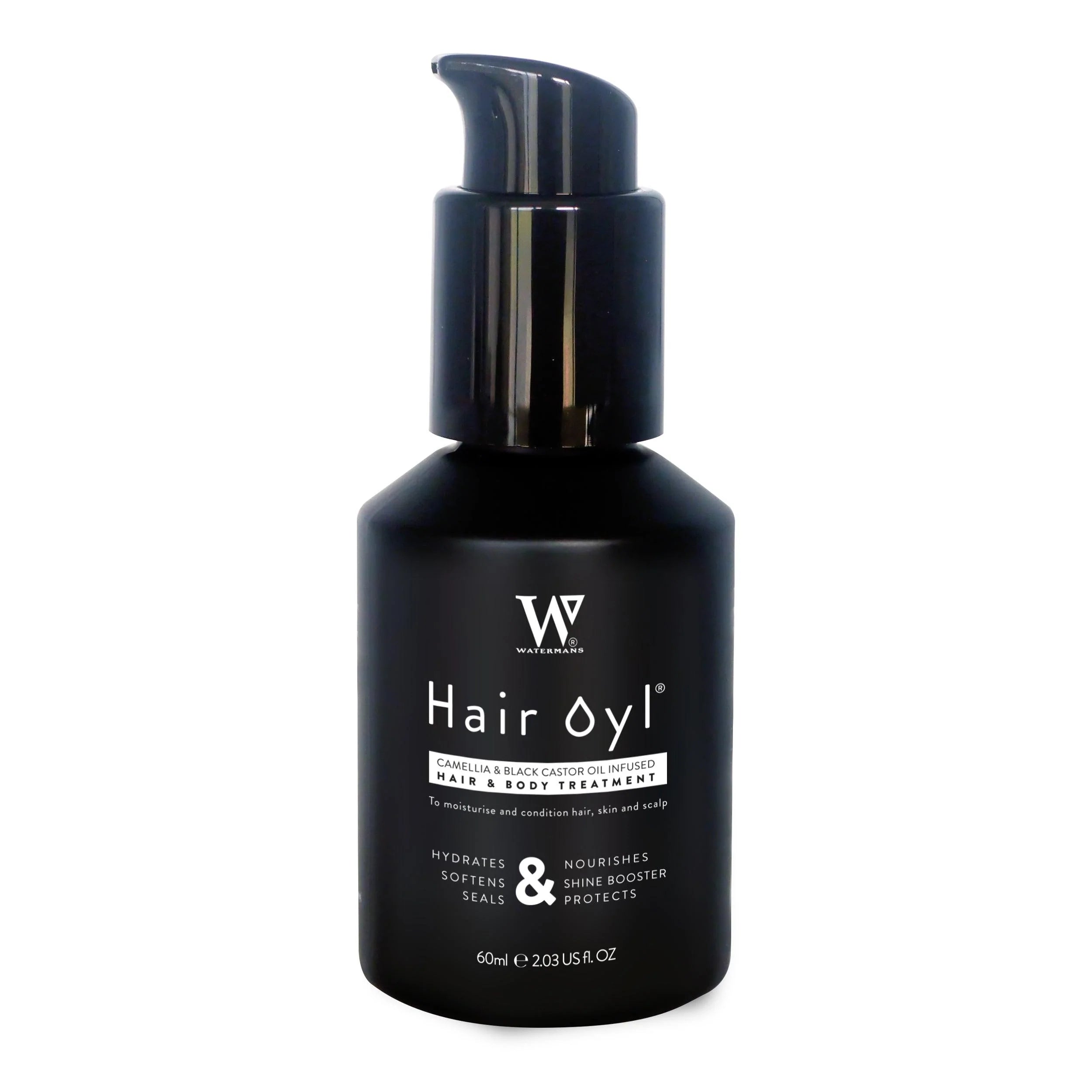
Camellia & Black Castor Hair & Body Oil
Black castor and camellia oil with omega 3, 6 and 9. Two or three drops through damp ends, or on dry skin, or as a pre wash oil if you have the time. One bottle covering hair, scalp and body is fewer decisions on a hard morning.
£24.95 · vegan and made in the UK

Overnight and in between days
These cost nothing and require no decisions.
- Loosely plait or twist long hair before bed. Loose hair rubs against the pillow all night and tangles, and morning detangling is where the damage lands.
- A satin or silk pillowcase is the least effort upgrade available. You buy it once and it works while you sleep. Cotton grips the hair and creates friction.
- Loose claw clips over tight elastics. If your hair is up all week, move where the tension sits rather than using the same spot every day.
- Do not sleep with wet hair if you can avoid it. Wet hair is at its weakest, and a night of friction against it causes real breakage.
The days when nothing happens
Some days you will not wash your hair, or brush it, or think about it, and that is genuinely fine. Hair is remarkably tolerant of neglect. A week of nothing does not undo anything, and it does not cause hair loss.
What is worth avoiding is the cycle where a lapsed routine becomes evidence of failing, which makes the next attempt harder. The three step minimum on this page exists precisely so there is a version small enough to be achievable on a bad week. Do that when you can. Do nothing when you cannot. Both are acceptable.
And if the difficult period is ongoing rather than behind you, please make that the actual priority. Speak to your GP. The Samaritans are on 116 123, free and available at any hour. Mind has practical information at mind.org.uk. Your hair will follow the rest of you, and it will wait.
Frequently asked questions
How often should I wash my hair if I have no energy?
Twice a week is a sensible floor for most people, and shampoo only needs to go on the scalp. If your scalp feels itchy or tight before then, wash sooner. Stretching washes to reduce shedding does not work, because the hairs you see were already released and waiting.
Does not washing my hair cause hair loss?
Not directly, but it leads to it indirectly. A scalp with days of oil, sweat and dry shampoo on it gets itchy, and scratching causes mechanical damage. Buildup can also make the scalp uncomfortable and flaky, which is unpleasant in its own right.
Is conditioner really necessary?
It is the step we would keep above almost any other. Wet hair is fragile and unconditioned wet hair breaks when you comb it. Thirty seconds of conditioner on the mid lengths and ends prevents a meaningful amount of everyday breakage.
Can I skip brushing altogether?
For a few days, yes. Longer than that and knots consolidate into mats that cost you far more hair to undo than gentle daily detangling would have. If brushing feels like too much, a wide tooth comb through damp conditioned ends is the easy version.
Will my hair recover once I feel better?
In most cases yes. Shedding brought on by illness, stress or a low period is usually temporary, and the follicles have paused rather than closed. Expect shedding to slow within three to six months of the underlying period easing, with density returning over the following six to twelve.
Should I cut my hair short to make it easier?
Only if you actually want to. Shorter hair is genuinely less work to wash, dry and detangle, so it is a reasonable practical choice. It will not change anything happening at the follicle, and making a big decision about your appearance in the middle of a hard stretch is worth sitting on for a week first.
Are expensive products worth it right now?
No. A basic shampoo and any conditioner used properly will outperform an expensive routine used sporadically. Spend the effort on consistency of the three steps rather than on upgrading the products.
Watermans products are 100% cosmetic and do not treat medical hair loss. Individual results may vary.
Where to start
Do the three steps. Wash the scalp, condition the ends, detangle from the bottom up. Let it air dry, put it up loosely, and stop there. When you have a bit more capacity, swap your conditioner for a mask once a week, and add a silk pillowcase because it works without you doing anything.
That is a complete routine. It is not a compromised version of a better one. Watermans has sold over 5 million bottles since 2012, and every formula is vegan and made in the UK.