

How to Protect Hair From the Sun, Chlorine and Salt Water
Last updated: August 2026. The most effective way to protect hair from the sun is to soak it in clean fresh water and apply a leave-in conditioner before you go out, then cover it. Hair that is already saturated with clean water absorbs far less pool or sea water, and a leave-in adds a physical film between the strand and everything trying to dry it out.
That single habit does more than any product bought afterwards, for one blunt reason: hair is not living tissue. It has no blood supply and no repair mechanism, so damage to the strand cannot be undone, only masked or cut off. Everything worth doing happens before the damage, not after.
Key takeaways
- Wet hair with clean water before swimming. A strand can take up roughly a third of its own weight in water, so filling it first leaves far less room for chlorinated or salt water.
- Chlorine does not turn blonde hair green. Copper does, picked up from pipework and some algaecides, and chlorine simply helps it bind.
- UV degrades keratin and oxidises the pigment, which is why colour fades fastest on holiday and why sun exposed lengths snap before the roots do.
- Salt water damages by drawing moisture out and by leaving abrasive crystals behind, so rinsing at the beach matters as much as washing at home.
- Hair cannot heal. Conditioners, oils and bond products improve how a damaged strand behaves, but the only permanent fix for split ends is scissors.
- The riskiest holiday habit is tying wet, salt heavy hair up tightly for hours, which combines swelling, weight and tension.
What does the sun actually do to hair?
Ultraviolet light breaks down the keratin proteins in the outer cuticle and oxidises the melanin that gives hair its colour. The visible results are lightening, brassiness in colour treated hair, a rougher feel, more tangling and more breakage at the ends, which have had the longest exposure.
The damage is cumulative and permanent. A hair on your shoulders is roughly two years old, which means the ends have lived through two summers of sunlight, chlorine, heat styling and brushing. That is why the same head of hair can feel healthy at the root and straw-like at the tips.

Which hair is most at risk from sun and swimming?
Bleached, highlighted and chemically relaxed hair is the most vulnerable, because those processes have already lifted the cuticle and weakened the internal structure. Fine hair follows, since there is less mass to absorb the damage, and very curly or coily hair is at high risk of dryness because natural oils travel down a coiled strand poorly.
| Hair type | Main risk | Priority protection |
|---|---|---|
| Bleached or highlighted | Porosity, brassiness, green tint, snapping | Pre-soak and leave-in every single swim, no exceptions |
| Colour treated brunette or red | Fast fade, red tones going flat | Cover the hair, rinse immediately after swimming |
| Fine hair | Breakage, tangling, looking thinner | Light leave-in, detangle wet with fingers first |
| Curly and coily | Dryness, frizz, loss of curl definition | Heavier leave-in or oil, loose protective style, cover |
| Chemically relaxed | Severe fragility, breakage mid shaft | Minimise swimming, cover, avoid all tension while wet |
| Thick, dark, untreated | Lowest risk, mostly dryness at the ends | Rinse after swimming, condition the ends |
Is chlorine or salt water worse for your hair?
Chlorine is harder on hair than sea water, particularly on bleached or colour treated hair. It is a strong oxidiser that strips the natural oil layer and reacts with the cuticle, and pool water is used repeatedly over hours in a way sea water usually is not. Salt water is drying rather than chemically aggressive.
Salt damages in two quieter ways. It draws water out of the strand by osmosis, leaving hair dehydrated, and it dries into microscopic crystals that act as an abrasive every time hair moves or is brushed. That is why beach hair feels gritty and tangles so easily by the end of the day.
Why does blonde hair turn green in a swimming pool?
Copper, not chlorine. The green tint comes from copper picked up from pool pipework, heating systems and certain algaecides, which oxidises and binds to porous hair. Chlorine is an accomplice rather than the culprit, because it oxidises the copper and roughens the cuticle so it has more to cling to.
This is worth getting right because the usual fix aims at the wrong target. A clarifying or chelating shampoo, which binds metals, deals with the copper. Anti-chlorine claims alone often will not. And the reason it shows on blonde hair specifically is contrast, since the same deposit on dark hair is invisible.
The two minute routine that prevents most of it
- Soak hair in clean fresh water at the poolside shower or from a bottle until it is genuinely wet, not damp.
- Smooth a leave-in conditioner or a little oil through the lengths and ends, avoiding the scalp.
- Put it in a loose plait or low bun, or wear a swim cap, or cover it with a hat.
- Rinse with fresh water the moment you get out, before the salt or chlorine dries in.
What is the best way to wash hair after the beach or the pool?
Rinse thoroughly with fresh water first, for longer than feels necessary, then shampoo once and condition the mid lengths and ends. Rinsing before shampooing removes most of the salt and chlorine mechanically, so the shampoo is not trying to do that job while also stripping the oils hair has left.
Use a clarifying or chelating shampoo once a week during a swimming holiday rather than every day. It removes mineral and product build-up, which is exactly what you want weekly and exactly what you do not want daily on already dry hair. Follow it with a deep conditioner or mask on the same day.
Detangle only when hair is loaded with conditioner, working from the ends upward with fingers or a wide tooth comb. Wet hair stretches and snaps far more readily than dry hair, and beach hair full of salt crystals is the worst possible thing to drag a brush through.

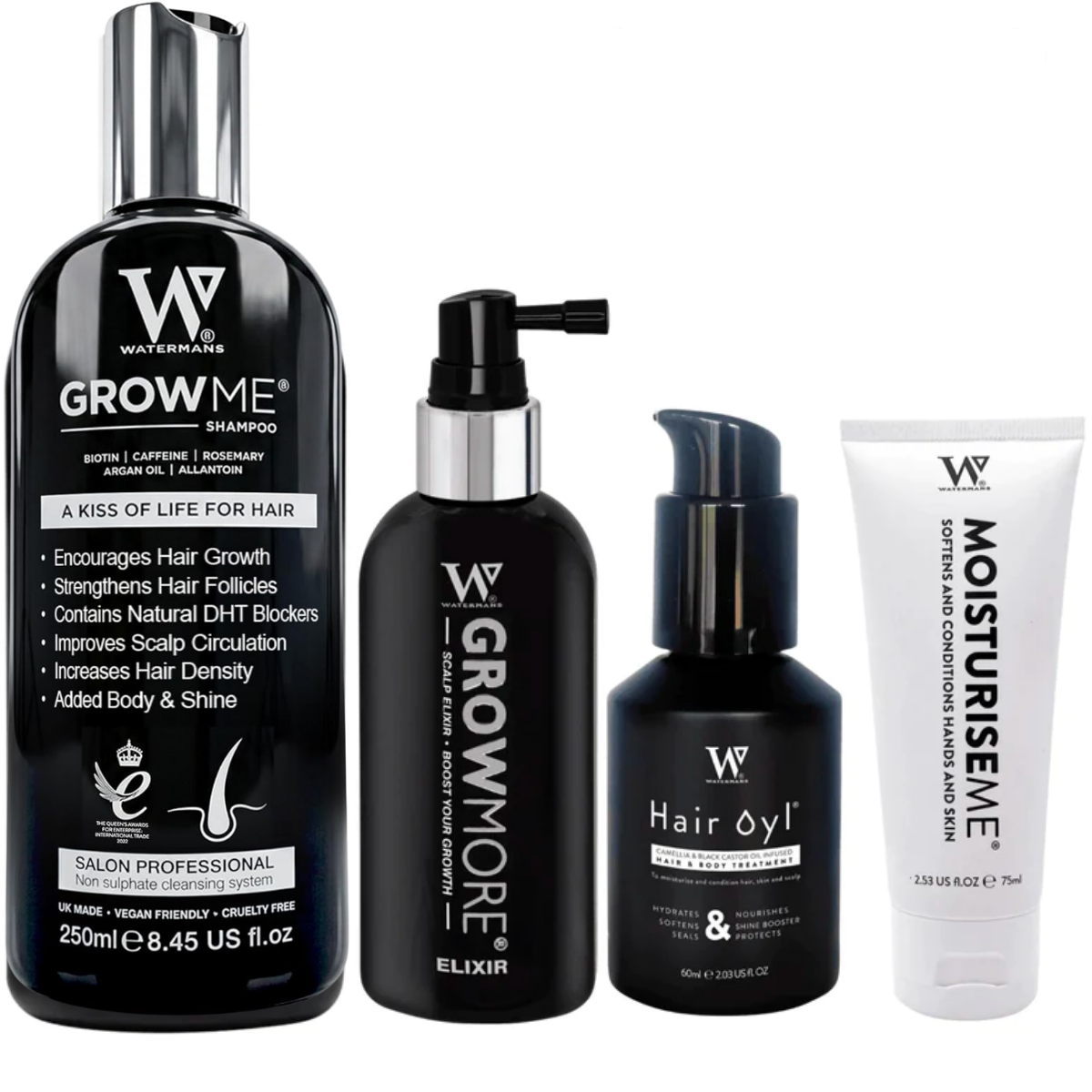
Protect Me® Leave-In Conditioner and Heat Protection Spray, £13.95
A light leave-in that sits on this page for the pre-swim step: sprayed through damp lengths it adds a conditioning film, helps with frizz and detangling, and protects against heat up to 230°C when you dry off and style later.
This is a leave-in conditioner, not a sunscreen. It carries no SPF and does not block UV.
Does the sun fade hair colour, and how quickly?
Yes, and faster than almost anything else you do to coloured hair. UV oxidises both natural melanin and artificial dye molecules, and reds fade fastest because those pigment molecules are the least stable. A week of strong sun can undo a salon colour that would otherwise have held for six.
Two things slow it down meaningfully. Physical cover is the most effective, whether that is a hat, a scarf or simply sitting in shade at midday. After that, keeping hair conditioned and less porous gives dye molecules fewer escape routes, which is why fading accelerates on hair that is already damaged.

Can sun damaged hair be repaired?
Not restored, but it can be made to look and behave much better. Conditioners, masks and oils fill gaps in a damaged cuticle, reduce friction and cut breakage, which improves shine, softness and how the hair moves. What none of them do is rebuild the protein that ultraviolet light has broken apart.
Split ends are the clearest case. Once a strand has split there is no product that fuses it back together, and continuing to work around it lets the split travel further up the shaft. A trim every eight to twelve weeks during a heavy sun and swimming period genuinely protects length, counterintuitive as that sounds.

Masque Me® Hair Mask, £24.95
A deep conditioning treatment with argan oil, provitamin B5 and hydrolysed lupine protein, for the weekly step after a clarifying wash. Aimed at the mid lengths and ends where sun and salt do their damage.
Conditioning improves how damaged hair looks and behaves. It does not repair a split end or reverse UV damage.
The holiday habit that causes real damage
Scraping wet, salt heavy hair into a tight bun or ponytail and leaving it for hours. Wet hair swells and stretches, the added water makes it heavier, and salt makes it brittle, so the tension at the hairline is much higher than it feels. Repeated over a two week holiday this is a genuine cause of breakage and of hairline thinning. Loose plaits, claw clips and fabric scrunchies instead. Our guide to tight hairstyles and traction alopecia explains how far that can go.
Do you need to protect your scalp as well as your hair?
Yes, and it is the more urgent of the two. Hair damage is a cosmetic problem, while scalp damage is a skin health one, and the parting and crown are the most commonly sunburnt and least protected skin on the body. A hat solves both problems at once, which is why it appears in every section above.
The full detail sits in our companion guide to sunscreen for your scalp, including which SPF formats actually work through hair and the signs on the scalp that need a GP appointment.
Frequently asked questions
How do I protect my hair from the sun?
Cover it, and condition it. A hat or scarf is the only thing that genuinely blocks UV, and a leave-in conditioner or light oil reduces the dryness and friction damage that follows. Before swimming, soak hair in clean fresh water first so there is less room for chlorine or salt.
Is chlorine or sea water worse for hair?
Chlorine, particularly on bleached or colour treated hair. It is a strong oxidiser that strips oils and reacts with the cuticle over hours of repeated exposure. Sea water is drying rather than chemically aggressive, damaging mostly by pulling moisture out and leaving abrasive salt crystals behind.
Why does my blonde hair turn green after swimming?
Copper in the pool water, from pipework and some algaecides, oxidises and binds to porous hair. Chlorine helps it stick but is not the cause. A chelating or clarifying shampoo, which binds metals, removes it, and pre-soaking hair in fresh water reduces how much is picked up.
Should I wash my hair every day on holiday?
Rinse with fresh water after every swim, but do not shampoo every time. Rinsing removes most of the salt and chlorine mechanically. Shampoo once a day at most, use a clarifying shampoo weekly rather than daily, and always follow with conditioner on the lengths and ends.
Does hair sunscreen actually work?
UV filters formulated for hair do reduce colour fade and protein loss in laboratory testing, but coverage on a moving head of hair is uneven and few people reapply. Treat them as a useful extra rather than a substitute for a hat, which is far more reliable.
Can sun damaged hair be repaired?
It can be improved but not restored. Hair has no living cells and no repair mechanism, so conditioners, masks and oils work by filling the damaged cuticle and reducing friction. A split end cannot be fused back together, which is why regular trims protect length during heavy sun exposure.
Does swimming cause hair loss?
Swimming causes breakage rather than hair loss. Chlorine and salt make strands brittle, and tight wet styles add tension, so more hair snaps. That looks like shedding but the giveaway is short, blunt fragments with no pale bulb at the root end, which means breakage.
Should I wear a swim cap?
If you swim regularly, yes. A cap will not keep hair completely dry, but it dramatically reduces contact with chlorinated water, which is the main variable. Wet hair with fresh water and apply a leave-in conditioner before putting it on, and it will do most of the job.
Made in the UK, vegan, and over 5 million bottles sold since 2012. If summer has left your lengths dry and your colour flat, the useful sequence is a clarifying wash, a deep conditioning mask, and a leave-in on damp hair before every swim from then on.
Shop Protect Me leave-in spray or read our guides to repairing damaged hair, what causes hair damage, how to prevent split ends and how to use conditioner properly.