Vitamins for Hair Growth: What to Eat, What to Take
Do vitamins for hair growth work? They work when you are genuinely short of something, and they do very little when you are not. Biotin and zinc carry authorised claims for maintaining normal hair, low iron is the most common testable cause of shedding in women, and protein is the raw material the whole fibre is built from. A supplement fills gaps in a diet. It does not act on hormonal thinning.
Our hair, skin and nails gummies
GrowPro® Hair, Skin & Nails Gummies, £22.95. Sugar free daily gummies for people who would rather chew than swallow a tablet, supporting hair care from the inside out.
This guide is the nutrient by nutrient version: what each one actually does, what can legally and honestly be claimed for it, which foods deliver it, and the point at which a blood test is a far better use of your money than another bottle. If the question you are really asking is whether to take a supplement at all, our companion piece on whether hair vitamins are worth taking answers that one head on.
Key takeaways
- Biotin and zinc are the two nutrients with authorised claims for contributing to the maintenance of normal hair. That is a maintenance claim, not a growth promise.
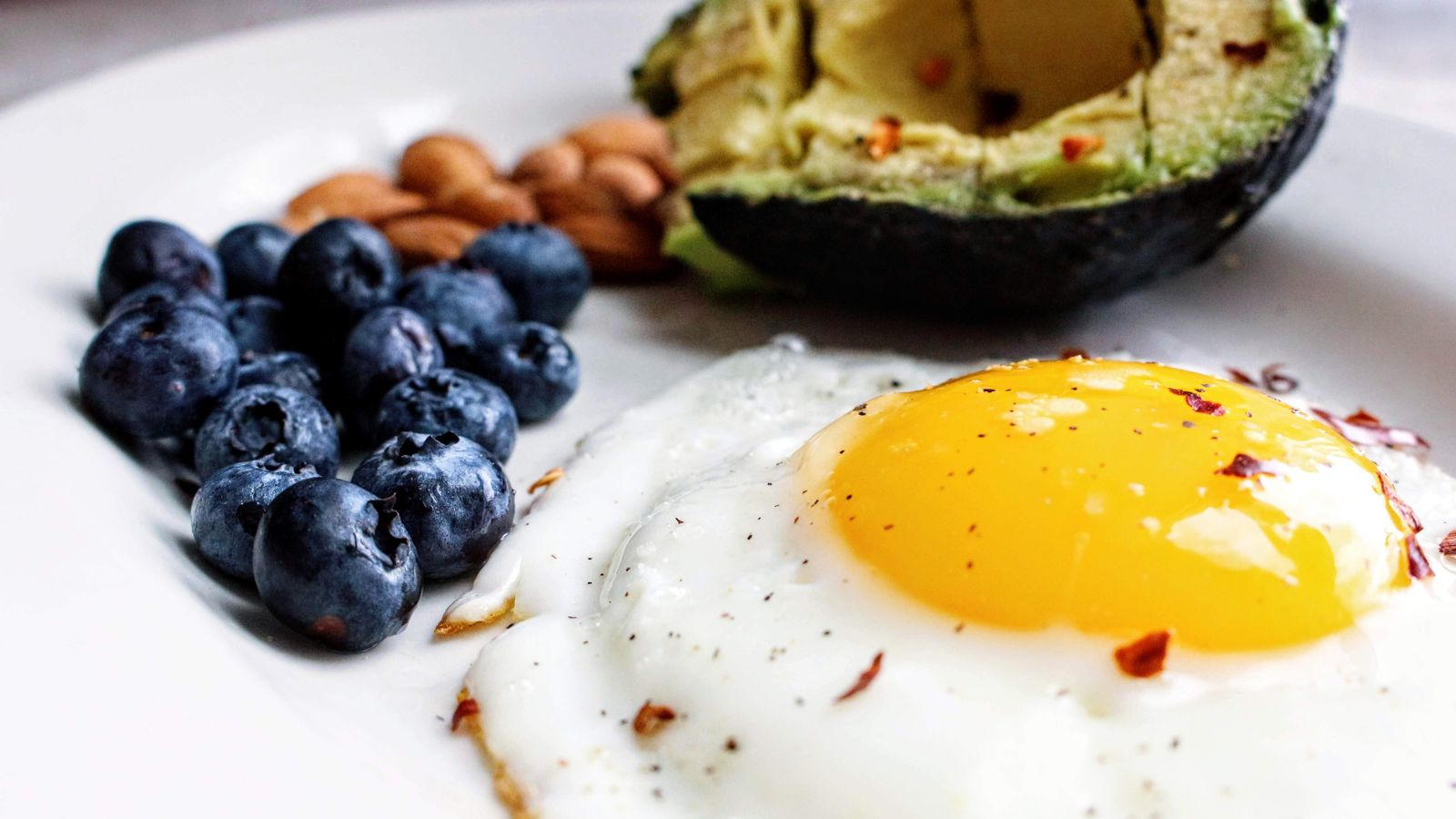
- Food first: eggs, fish, beans, nuts, leafy greens and seeds cover most of what hair needs.
- Iron deserves special attention in women. Low ferritin is the most common testable cause of diffuse shedding.
- Never supplement iron blind. Ask your GP for a blood test, because too much iron is genuinely harmful.
- Work out whether you have hair loss, hair shedding or hair breakage first. Only one of the three responds to nutrition.
- More is not better. Excess vitamin A and selenium can trigger shedding rather than reduce it.
- Give any nutritional change 3 to 6 months. Benefit only shows in new growth, and hair grows about a centimetre a month.

Do vitamins for hair growth actually do anything?
Vitamins for hair growth do something real in one specific situation: when a nutrient you are short of is limiting what the follicle can build. Hair cells are among the fastest dividing in the body, and the body always feeds vital organs before it feeds hair, so a shortfall shows up in hair earlier than almost anywhere else. Correct that shortfall and the follicle goes back to doing what it was already capable of.
What no supplement does is add capability the follicle never had. If your parting is widening because of hormone sensitivity, that is happening inside the follicle and no nutrient corrects it. This is why the honest version of this topic is quite narrow: nutrition is necessary, it is not sufficient, and a bottle sold on the promise of new density is selling something it cannot deliver.
Why do hair loss, hair shedding and hair breakage need different answers?
These three words get used interchangeably and it costs people money. Hair loss means the follicle is producing finer hair or has stopped producing visible hair. Hair shedding means whole hairs are completing their cycle and releasing from the root. Hair breakage means the fibre is snapping partway along while the follicle beneath it is perfectly healthy. Nutrition is genuinely relevant to one of the three and largely irrelevant to the other two.
| Which one | The tell | Does nutrition help? |
|---|---|---|
| Hair loss | Parting widening over months, new hairs finer and shorter than the old ones | Not really. This is a GP conversation, not a supplement one |
| Hair shedding | Lots of full length hairs with a small white bulb at one end, often after a trigger | Yes, where a deficiency or severe dieting is the trigger. This is the one nutrition owns |
| Hair breakage | Short broken fragments with no bulb, split ends, a frizzy halo along the parting | Only indirectly. This is a heat, bleach and handling problem |
The bulb is the quickest home check there is. A hair with a small pale swelling on one end released from the follicle and belongs in the shedding column, where nutrition may well be part of the story. A hair that is blunt or frayed at both ends snapped, and no amount of biotin will change that.
Which nutrients matter, and what can honestly be claimed?
Only a small number of nutrients have authorised claims in Great Britain for hair, and the wording of those claims is deliberately modest. The table sets out what is genuinely established against what is marketing.
| Nutrient | What it does for hair | Honest status |
|---|---|---|
| Biotin (B7) | Sits in the enzymes that build keratin, the protein hair is made from | Authorised claim: contributes to the maintenance of normal hair. Deficiency is rare on a normal diet |
| Zinc | Supports the cell division a growing follicle depends on, and the oil glands around it | Authorised claim: contributes to the maintenance of normal hair. Low zinc is testable |
| Iron | Carries oxygen to follicles, which are unusually oxygen hungry | Strong link between low ferritin and diffuse shedding. Needs a blood test, never blind supplementation |
| Protein | Provides the amino acids keratin is assembled from | Well established. Severe restriction reliably causes shedding a season later |
| Vitamin D | Involved in the follicle cycle; low levels are common in the UK in winter | Association rather than proof for hair. Worth testing anyway for general health |
| Saw palmetto | A palm berry extract with early research interest in pattern thinning | Preliminary and small. We make no claim for it and you should be wary of anyone who does |
| Silica and horsetail | Traditionally associated with hair elasticity and shine | Traditional use, thin modern evidence. A supporting extra, not a headline act |
| Collagen | Marketed heavily for hair, skin and nails | Thin evidence for hair specifically. Your body does not route ingested collagen to follicles on request |
Biotin, the one everyone has heard of
Biotin has the strongest name recognition and the weakest case for most people, because genuine biotin deficiency is uncommon in anyone eating a normal mixed diet. Where it exists, correcting it improves hair and nails quickly. Where it does not, extra biotin does nothing visible. One practical warning worth knowing: high dose biotin interferes with some laboratory tests, including thyroid and cardiac markers, so tell your GP if you take it. If you are choosing a format rather than a nutrient, our guide to liquid biotin for hair covers where the liquid version genuinely helps.
Zinc, the quiet one that matters more
Zinc supports the rapid cell division a follicle needs and is absorbed less efficiently from plant sources than animal ones, which makes it a more realistic gap for people eating mostly plant based. Shellfish, meat, beans and pumpkin seeds are the practical sources.
Iron, the one to test rather than guess
Iron is the single most productive thing to check if you are shedding. Ferritin reflects your stores, and it can be low enough to affect hair while a standard full blood count still reads normal, which is why asking specifically for ferritin matters. Heavy periods, plant based diets and pregnancy all push it down. Pair iron rich food with vitamin C to improve absorption.

Protein, the part people skip
Hair is protein, so an inadequate intake is the most direct nutritional route to thin, slow growing hair. A palm sized portion at each meal from eggs, fish, poultry, dairy, beans or tofu covers it for most people. Crash dieting is the classic trigger, and the shedding it causes typically shows up around three months later, long after the diet has been forgotten.
Food first: where do you get each nutrient?
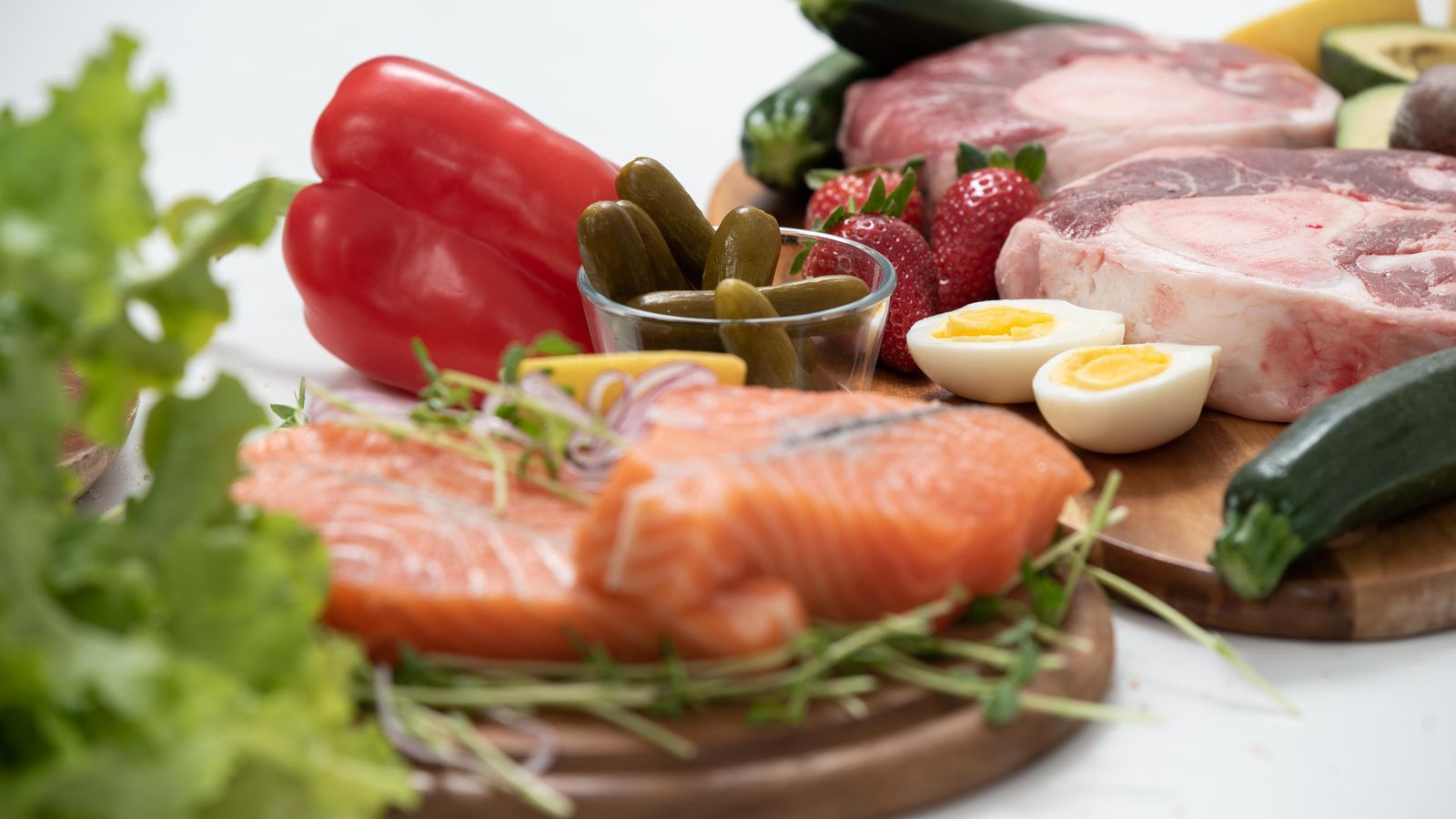
The best vitamins for hair growth are the ones you eat without thinking about it. Food should lead, because whole foods deliver these nutrients in combinations and quantities the body handles well. A supplement is a gap filler, not a replacement.
| Nutrient | Best food sources | A supplement earns its place when |
|---|---|---|
| Biotin | Eggs, almonds, sweet potato | Your diet is processed heavy or egg free |
| Zinc | Shellfish, meat, beans, pumpkin seeds | You eat mostly plant based, where zinc absorbs less well |
| Iron | Red meat, lentils, spinach, fortified cereal | A blood test says so, and only then |
| Protein | Eggs, fish, poultry, dairy, beans, tofu | Rarely. Food does this job better |
| Vitamin D | Oily fish, eggs, fortified foods | October to March in the UK, as advised for everyone |
Get a discount on the thinning hair range
Join the Watermans mailing list and we will email a discount code straight to your inbox, so you can try the thinning hair range for less. Vegan, made in the UK, over 6.5 million bottles sold since 2012.
When is a blood test the better spend?
A blood test beats any of the vitamins for hair growth on the shelf whenever you are actually losing hair rather than optimising. Four tests are worth asking your GP about: ferritin, full blood count, thyroid function and vitamin D. They are free on the NHS, they take a fortnight, and in a meaningful minority of cases they explain the whole thing and point at a fix no gummy could have delivered. If you are choosing between formats, our guide to liquid hair vitamins covers where the liquid version genuinely helps.
The logic is simple. Supplementing without a test means guessing which nutrient is short, and most of the time none of them are, so you pay for expensive urine. Testing first means you either find something correctable or you rule nutrition out and stop wasting money on it. If you are not sure which category you are in, working out the underlying cause of thinning hair is the right place to start.

Can you take too much?
Yes, and this is the part the category tends to skip. More is not better with micronutrients, and two in particular can make hair worse rather than better when overdone.
- Vitamin A. Excess vitamin A is a recognised cause of hair shedding. It accumulates in the body, so high dose supplements taken long term are the risk, not the odd carrot.
- Selenium. The gap between a useful intake and a harmful one is narrower than for most nutrients, and excess selenium can cause hair loss and brittle nails.
- Iron. Harmful in excess and genuinely dangerous for people with haemochromatosis, which is why it should follow a blood test rather than a hunch.
- Stacking products. A multivitamin plus a hair gummy plus a fortified drink can quietly add up past sensible levels. Read the labels together, not separately.
If you are combining more than one supplement, a pharmacist will check the totals for you free of charge, which is a better use of five minutes than most things in this category.
How long before vitamins for hair growth show anything?
Three to six months, and the reason is mechanical rather than pharmacological. Nutrition affects hair as it is being built, so any benefit appears in new growth emerging from the root. Hair grows roughly a centimetre a month, which means the improvement is physically below the surface for weeks before you could possibly see it. Before buying a supplement, our guide to which tests to run before taking hair vitamins lists the blood tests usually worth raising with your GP.
That has a practical consequence. Judging a supplement at six weeks is judging hair that was already built before you started. Take a photograph of the same parting in the same light at the start, and look again at three months and six. If nothing has changed by six months, the nutrient you were topping up was probably not the thing holding your hair back. Our guide to hair skin and nails vitamins covers the blood test problem worth knowing about before you buy.
What can vitamins for hair growth not do?
Being clear about the ceiling is what makes the rest of this worth reading. No supplement acts on the hormone sensitivity behind pattern thinning, none of them repairs a fibre that has already snapped, and none undoes the damage of a scarring condition. Nutrition sets the conditions for a follicle to do its job well. It does not change what job the follicle is programmed to do.
The other half of the picture is entirely external. Heat, bleach, friction and wet brushing cause most of the visible damage people blame on diet, and those are free to fix. Our six top tips for healthy hair covers the handling side properly. If zinc is on your list, zinc supplementation for hair explains how much you need and why more is not better. For the foods that supply these vitamins, the best foods for hair growth lists the everyday sources the NHS recommends. We look at methionine for hair separately, with the practical steps.

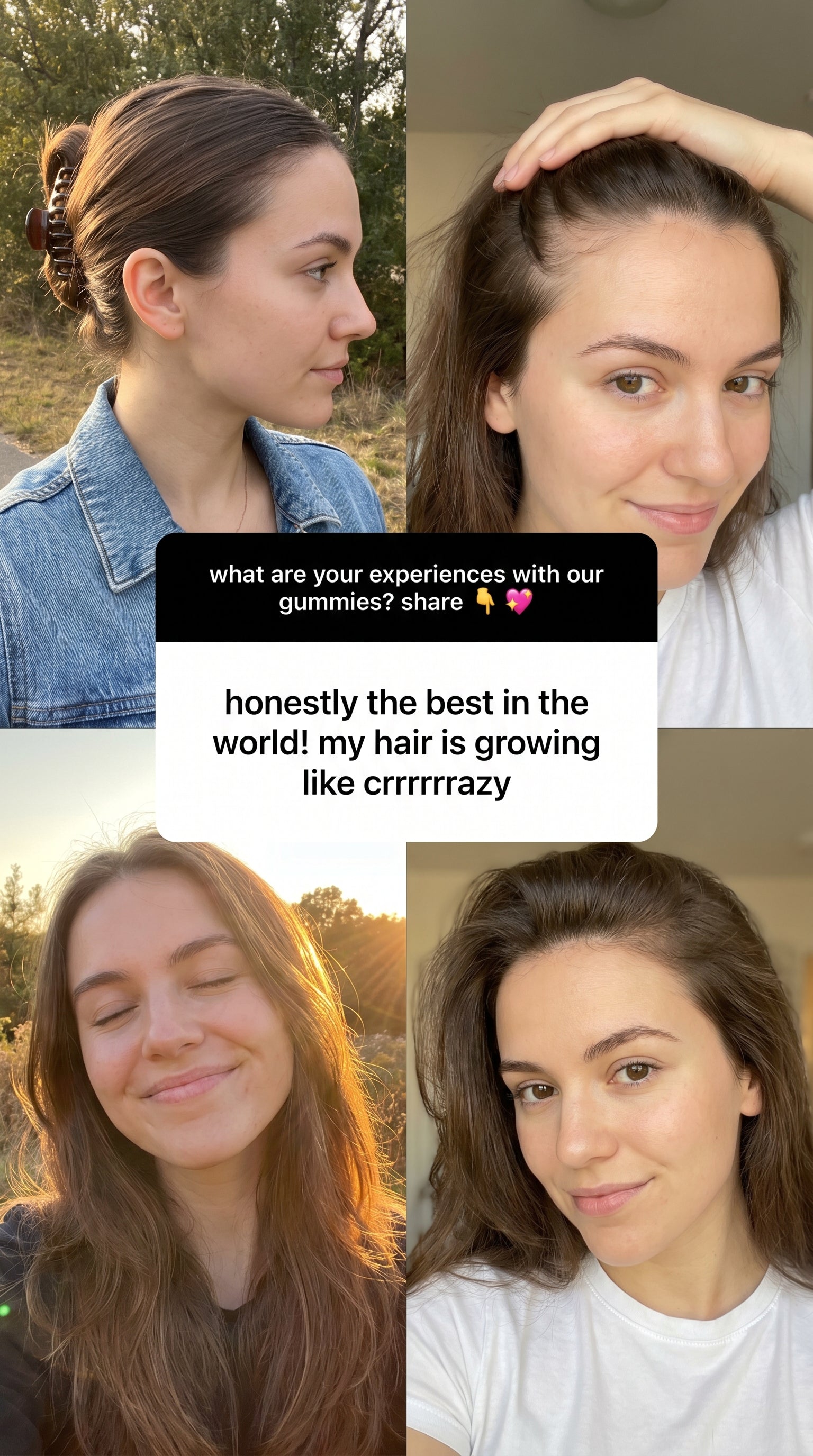
GrowPro Yummy Hair Gummies
Biotin, zinc, saw palmetto, silica and horsetail in one daily mixed berry gummy, for covering the gaps described above. Vegan and cruelty free.
What it is not: a medicine. A food supplement fills dietary gaps. It does not act on the cause of pattern thinning, and it is no substitute for a blood test.

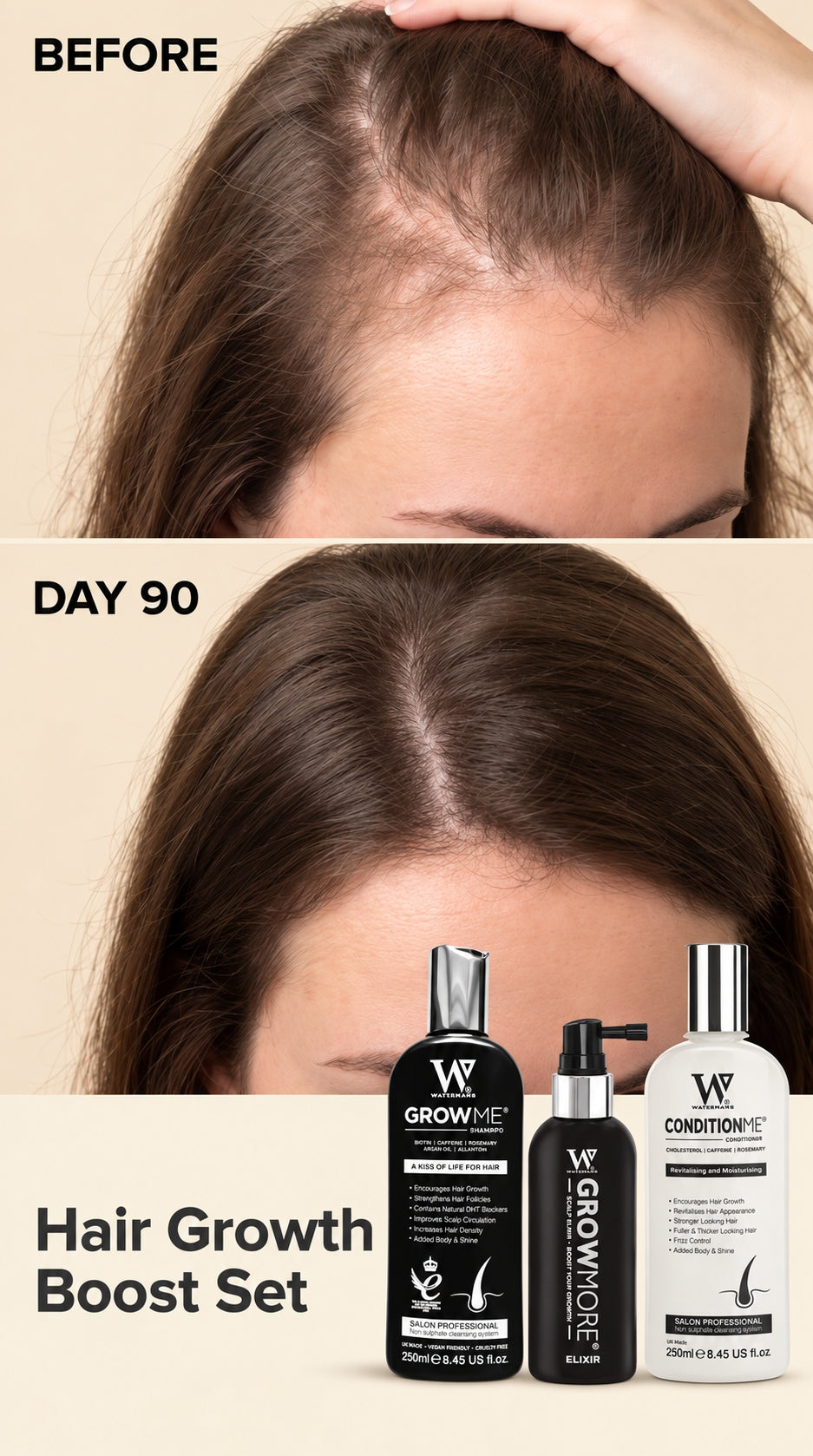
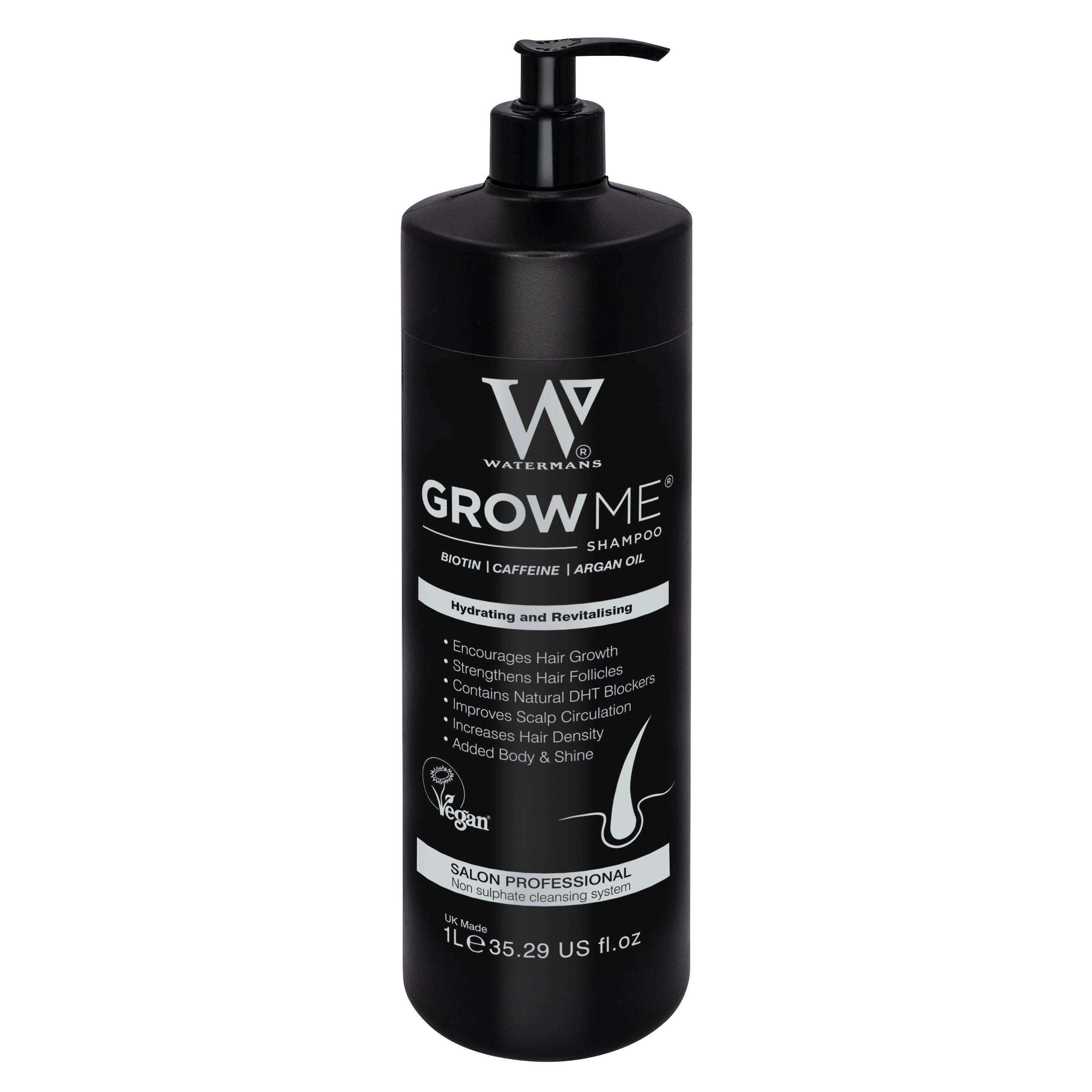
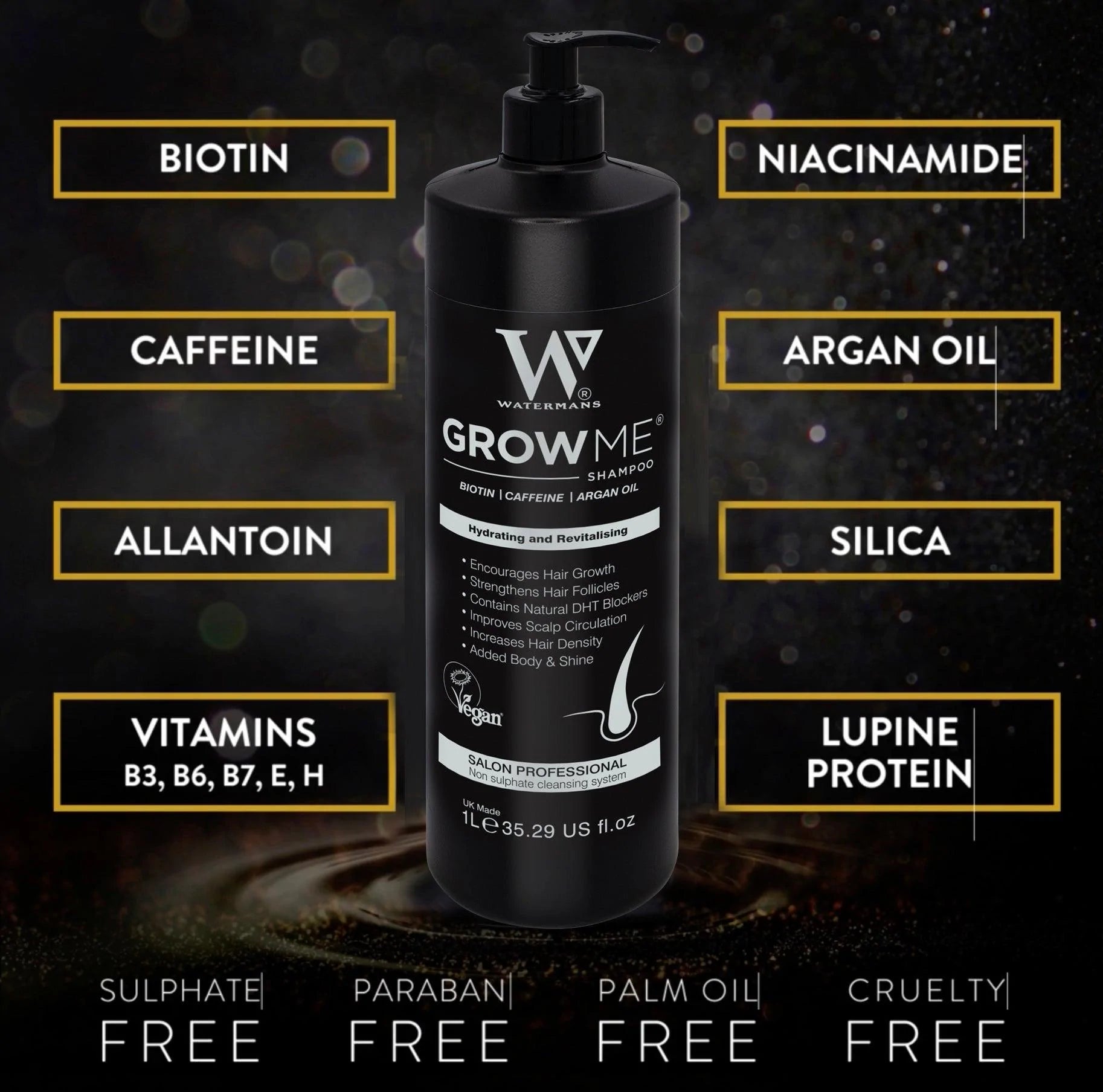
Grow Me® Hair Growth Shampoo, £14.95
The outside half of the job. A sulfate free shampoo with caffeine, biotin, rosemary and niacinamide that cleanses without stripping, so the hair you are feeding from the inside is not snapping off from the outside.
What it is not: a medicine. It is a cosmetic shampoo for scalp condition, reduced breakage and fuller-looking hair.
Frequently asked questions
Which vitamin matters most for hair growth?
There is no single winner. Biotin and zinc carry the authorised maintenance claims, protein is the raw material, and low iron is the most common testable cause of shedding in women. Covering the basics beats megadosing any one of them, and a blood test beats guessing which is short.
Do vitamins for hair growth work if my diet is already good?
Usually not in any way you would notice. A supplement corrects a shortfall, so if there is no shortfall there is nothing for it to correct. That is not a criticism of supplements, it is just what they are for. Test before assuming a gap exists.
Are hair vitamins suitable for both men and women?
Yes, the nutrients themselves are identical regardless of sex. Women should pay closer attention to iron, particularly with heavy periods or a plant based diet. Men noticing a receding hairline or thinning crown should pair nutrition with a GP conversation, because that pattern is not a nutritional problem.
Can I get everything from food?
Mostly yes, and food should lead. Supplements exist for genuine gaps: restrictive diets, absorption issues, or a stretch of life where consistent eating is unrealistic. Vitamin D is the one exception where UK guidance suggests a supplement for everyone through the darker months.
Can too many vitamins harm hair?
Yes. Excess vitamin A is a recognised cause of shedding, and too much selenium can cause hair loss and brittle nails. Stacking a multivitamin with a hair supplement is the usual way people get there without noticing. Ask a pharmacist to check the combined totals.
Does biotin interfere with blood tests?
High dose biotin is known to distort some laboratory results, including thyroid and cardiac markers, which can lead to a confusing or misleading result. Tell your GP or the phlebotomist that you take it, and ask whether to pause it before a test.
How long until I should give up on a supplement?
Six months is the fair point. Benefit only appears in new growth, and hair grows about a centimetre a month, so anything sooner is judging hair that was built before you started. If a photograph of the same parting shows nothing at six months, nutrition was not the limiting factor.
Should I take collagen for my hair?
The evidence for hair specifically is thin, despite heavy marketing. Ingested collagen is broken down into amino acids like any other protein, and the body decides where those go. Eating enough total protein achieves the same thing more cheaply.
What is the bottom line on vitamins for hair growth?
Vitamins for hair growth are worth taking when you have a gap and worth skipping when you do not. Get protein on the plate at every meal, cover biotin and zinc through food where you can, and ask your GP for ferritin, full blood count, thyroid function and vitamin D before you spend anything privately. Avoid megadoses, especially vitamin A and selenium. Then give it three to six months and judge from a photograph rather than memory. And if the parting is widening rather than the hair simply shedding, that is a GP conversation, not a supplement one.
Watermans has sold over 6.5 million bottles since 2012. The range is cruelty free and made in the UK.
For the cosmetic side of a fuller look, Grow Me hair growth shampoo is the step that does the heavy lifting.
Sources & References
- NHS, B vitamins and folic acid. Biotin intakes and why deficiency is uncommon.
- NHS, Others (including zinc and selenium). Intakes and the risks of taking too much.
- NHS, Vitamin A. Why excess vitamin A is a genuine risk rather than a theoretical one.
- NHS, Iron. Recommended intakes and the harm of supplementing without need.
- NHS, Iron deficiency anaemia. Symptoms, testing and correction on the NHS.
- NHS, Vitamin D. The October to March guidance for the UK.
Watermans products are 100% cosmetic and do not treat medical hair loss. Individual results may vary.
This article is general information about nutrition and cosmetic hair care, not medical advice. Speak to a GP or pharmacist before starting a supplement, particularly if you take other medicines or are pregnant. If your question is about products or a routine rather than a medical one, you can talk to Gail Waterman, our co-founder, as an AI avatar on the Watermans homepage.