Shampoo for Greasy Hair: What to Look For and How to Use It
A shampoo for greasy hair has one job: lift sebum off the scalp without roughening the lengths. Look for a proper cleansing surfactant paired with a milder one, a mildly acidic pH, a light formula with no heavy oils or butters, and a label that allows daily use. No shampoo changes how much sebum the glands make, because that is set mostly by genetics and hormones. Technique matters as much as the bottle. If the problem is only the roots, see greasy roots between washes.
Our sulphate free daily shampoo
Grow Me® Hair Growth Shampoo, £14.95. A sulphate free daily shampoo that supports a healthy scalp environment and helps reduce breakage, so lengths hold on and look fuller.
Key takeaways
- No shampoo reduces sebum output. Judge a bottle on its cleansing base, its pH, how light it is and whether the label allows daily use.
- Sebum output is driven by genetics, hormones and age, not by how often you wash.
- The rebound myth is largely wrong: washing less does not durably reduce oil production.
- Most people under wash the scalp and over wash the lengths, which is exactly backwards.
- Two shampoo rounds on the scalp beat one long one on the lengths.
- If flakes come with the oil, it may be dandruff rather than plain greasiness, and that is handled differently.
What actually causes greasy hair?
Sebaceous glands sit alongside each hair follicle and secrete sebum continuously. Sebum is not the enemy: it waterproofs the fibre, keeps the scalp barrier intact and carries antimicrobial lipids. Oily hair is simply the visible result of producing more of it than your wash routine removes. If the roots are the problem, our guide to choosing a shampoo for oily scalp sets out what to look for on the label.
The rate is governed by a few things you do not control. Androgen levels drive sebaceous gland activity, which is why oiliness often steps up in the teenage years and can shift around hormonal changes. Gland density on the scalp is far higher than on most of the body. Age matters too, with output generally declining later in life. Straight, fine hair looks greasy sooner than coarse or curly hair, because sebum travels down a straight shaft easily and struggles to navigate a coiled one.
A 2026 study in Skin Research and Technology compared scalp skin in people with high sebum production against those with lower output. The high sebum group differed in measurable ways beyond the oil itself, including barrier and hydration characteristics, and shampoo cleansing changed those surface conditions. In short, the scalp with oily hair is a slightly different environment, and it responds to how it is cleaned.

What should you look for in a shampoo for greasy hair?
A shampoo for greasy hair should be judged on four things: its cleansing base, its pH, how much conditioning material it leaves behind and whether it can be used every day. All four are on the back of the bottle, and they say more than the words oil control on the front.
A review of hair cosmetics in the International Journal of Trichology explains why the base matters. Anionic surfactants are the main cleansing agents in shampoo and are very good at removing sebum and dirt, but they are strong cleaners that can increase friction and frizz, so formulators add milder secondary surfactants, such as the amphoteric betaines, to soften the wash. The same review notes that there is no published analysis of how well sulphate free shampoos clean, which is a good reason to judge any bottle on your own scalp rather than on a label claim.
| What to check | What suits an oily scalp | What to be wary of |
|---|---|---|
| Cleansing base | A cleansing surfactant listed straight after water, backed by a milder one such as cocamidopropyl betaine | Cream cleansers and co-washes, which are built for dry hair and leave oil behind |
| pH | A mildly acidic formula. Citric acid in the list is a common sign the pH has been adjusted | Soap based bars, which are alkaline and raise friction between strands |
| Conditioning load | A light formula sold for fine, normal or oily hair | Rich formulas for very dry or damaged hair, with oils and butters near the top of the list |
| How often you can use it | Directions that allow daily use | A clarifying or deep cleansing shampoo used as the everyday wash |
| Flakes with the oil | An anti-dandruff shampoo, following the NHS dandruff guidance | Assuming the flakes are just grease and washing harder |
| Cost per wash | Two short rounds use more product, so compare the price per 100ml | Paying more for oil control on the front when the base inside is the same |
Clarifying shampoos deserve a separate word, because they are often sold to people with oily roots as the everyday answer. A clarifier is a strong occasional wash for product residue, about once a fortnight, and a poor daily choice. Our guide to clarifying shampoo explains when one earns its place.
How often should you wash greasy hair?
As often as it needs, which for many people with oily hair means daily or every other day. There is no virtue in leaving a greasy scalp unwashed, and no evidence that doing so improves anything.
The instruction to wash less often is one of the most repeated pieces of hair advice in circulation, and for a genuinely oily scalp it is usually wrong. It comes from the idea that washing strips the scalp, which then produces more oil to compensate. Sebaceous glands do not work on that kind of feedback loop. They respond to hormonal signalling, not to how recently you used shampoo. What does happen when people stop washing is that the existing oil simply accumulates and they eventually decide their hair has adjusted, when what has changed is their tolerance.
There is one grain of truth worth keeping. A harsh, high foaming detergent can leave the scalp uncomfortable and the lengths dry and rough, which makes people wash aggressively, damage the fibre, then blame the frequency. The fix is a gentler shampoo used properly, not a longer gap.
Why is washing technique more important than frequency?
Watch most people shampoo and they pile it on top of the head, work it through the lengths and rinse. The scalp, which is where the oil is actually produced, gets almost no direct contact. The lengths, which produce no oil at all, get scrubbed. If residue is the problem, our guide to choosing and using a scalp scrub covers who actually needs one.
Do it the other way round.
- Wet thoroughly. A full minute under the water. Warm, not hot. Hot water is uncomfortable for the scalp and roughens the cuticle on the lengths.
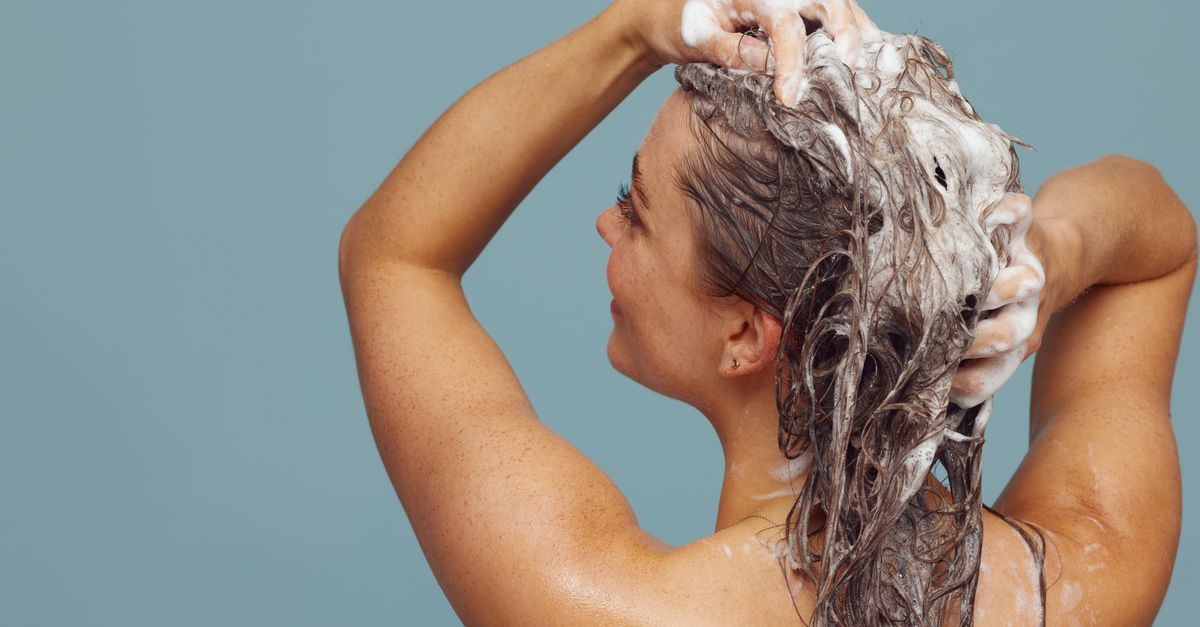
- First wash, small amount, scalp only. Use your fingertips, never your nails, and work in small circles across the whole scalp including behind the ears and the nape. This round mostly lifts the oil and product. It will barely foam. That is normal.
- Rinse fully, then wash again. The second round foams properly because there is less oil in the way, and this is the round that actually cleans. Two short washes beat one long one for oily hair.
- Conditioner from the ears down. Never on the scalp. The lengths need it, the roots do not.
- Rinse longer than feels necessary. Residue left behind is a common cause of hair looking dull and getting greasy faster.
The shampoo pH matters too. Work published in the International Journal of Trichology examined the pH of shampoos and its effect on the fibre, noting that more alkaline formulas increase friction between strands and can worsen cuticle damage and frizz. A mildly acidic shampoo is kinder to the fibre while still cleaning the scalp properly.
The free fix first: before buying anything, spend one week doing two scalp focused shampoo rounds with your existing bottle, keeping conditioner off the roots. A large share of oily hair complaints improve on technique alone, and that costs nothing.
Get a discount on your next order
Join the Watermans mailing list and we will email a discount code straight to your inbox. Made in the UK, over 6.5 million bottles sold since 2012.
Is it greasy hair, or is it scalp build-up?
These two get confused constantly, and the difference decides what you should do.
Oily hair is sebum: it feels slick and oily, appears at the roots first, and shows up within a day or two of washing. Scalp build-up is residue sitting on the scalp surface, made of dry shampoo, styling product, conditioner left too high, and mineral deposits from the water. It feels waxy or gritty rather than slick, can be scraped off, and accumulates over weeks rather than days.
A third possibility is dandruff. If the oil comes with visible white or yellowish flakes and an itchy scalp, the NHS guidance on dandruff is the place to start rather than a shine focused shampoo. Dandruff is a distinct scalp condition and not simply greasiness, though the two often occur together because the yeast involved feeds on scalp lipids.
Why are my roots greasy but my ends dry?
Because they are two different problems on the same head, and treating the whole length as one thing makes both worse.
The roots are greasy for the reasons above. The ends are dry because sebum never reaches them, and because they are the oldest part of the hair. A hair that is 30cm long has been through years of washing, brushing, heat and weather at the tip while the root end is weeks old. Add hard water, colour, or straighteners and the ends are genuinely damaged while the roots are freshly oiled.
The answer is to handle them separately. Shampoo the scalp, condition the mid lengths and ends, and use any richer product only from the ears down. If your water is hard, that also contributes to the rough, dull feel through the lengths, which we cover in our guide to hard water and hair.
Why are oily hair, shedding and breakage three separate things?
People with oily hair often report that more hair is coming out, and it is worth being precise about what is happening, because the responses differ completely.
- Hair loss means follicles producing progressively finer hair or ceasing production. It shows as a widening parting or a thinner ponytail over months. Oiliness does not cause it.
- Hair shedding means normal cycling hairs releasing. If you wash less often, several days of shed hairs release at once and it looks alarming, when the daily rate has not changed at all. Washing oily hair daily does not increase shedding; it just distributes it.
- Hair breakage means the fibre snapping mid length, leaving short broken pieces and frizz. Aggressive scrubbing of the lengths, hot water and rough towel drying all cause it, and all three are common in people fighting oily hair.
If you are seeing genuine thinning rather than oiliness, that is a different conversation and worth raising with your GP. See our guide on stopping hair breakage at home if the pieces are short and snapped.
Watermans products are 100% cosmetic and do not treat medical hair loss. Individual results may vary.

Which everyday habits make oily hair worse?
| Habit | Why it makes oily hair worse | What to do instead |
|---|---|---|
| Touching or twirling hair | Transfers oil from fingers and stimulates the scalp | Tie it back when you are concentrating |
| Brushing repeatedly through the day | Drags sebum from roots down the whole length | Brush once, properly, and clean the brush weekly |
| Conditioner near the roots | Adds weight and film exactly where you do not need it | From the ears down, every time |
| Dry shampoo day after day | Absorbs oil but layers residue into scalp build-up | Use it to buy a day, not to replace washing |
| Very hot water | Roughens the cuticle and leaves the scalp irritated | Warm to wash, cool for the final rinse |
| Dirty pillowcase and hats | Reintroduces oil onto clean hair | Change the pillowcase twice a week |
Is a sulphate free shampoo for greasy hair strong enough?
Sulfate free shampoos clean less aggressively, which sounds like the wrong choice for an oily scalp but often is not. The reason is that a very strong detergent leaves the lengths rough and the scalp uncomfortable, so people compensate with harsher handling. A gentler formula used twice, with proper fingertip work on the scalp, removes the oil without that trade off.
The honest caveat is that if you use a lot of silicone heavy styling product, a gentler shampoo may not shift all of it, and residue will accumulate. In that case you need an occasional clarifying wash rather than a permanently harsher daily one. We go into the detail in our piece on sulfate free shampoo for oily hair.
Is there a Watermans shampoo for greasy hair?
Yes, with a caveat. We will not claim ours is the best shampoo for greasy hair, so judge it against the checklist above. Grow Me® lists a sulphate free cleansing surfactant (sodium C14-16 olefin sulfonate) straight after water, backs it with cocamidopropyl betaine, includes citric acid, and its directions allow daily use. It is fragranced, which is worth knowing if perfume bothers your scalp.
Two of ours are a sensible fit here. We are not going to pretend the rest of the range is relevant to an oily scalp.

Grow Me® Shampoo, £14.95
Sulfate free, so it cleans the scalp without the stripped, rough feel that makes people over handle their lengths. Fine for daily use. Made in the UK, vegan, and over 6.5 million bottles sold since 2012.

Condition Me® Conditioner, £13.95
For the mid lengths and ends only, which is the half of the greasy roots and dry ends problem that most people neglect. It reduces breakage and helps detangling so you handle the fibre less.
Frequently asked questions: what else do people ask about shampoo for greasy hair?
What is the best shampoo for greasy hair?
The best shampoo for greasy hair is one that cleans your scalp fully in two short rounds and can be used as often as you need to wash, which for many people is daily. Check for a cleansing surfactant near the top of the ingredients, a light conditioning load and daily use in the directions. No single bottle is right for everyone, and technique changes the result more than the brand does.
Why does my hair get greasy the day after washing?
Because sebum production is continuous and your glands are simply productive. If the hair is slick at the roots within 24 hours, the usual causes are genetics and hormones setting a high baseline, plus a wash that did not fully clean the scalp. Try two scalp focused shampoo rounds rather than one before concluding anything else.
Does washing oily hair every day make it produce more oil?
No. Sebaceous glands respond to hormonal signals, not to washing frequency, and there is no good evidence for a rebound effect. Daily washing with a gentle shampoo is fine for an oily scalp.
Will dry shampoo fix oily hair?
Dry shampoo absorbs surface oil and buys you a day, which is genuinely useful. It does not clean anything, and used repeatedly it layers starch and propellant residue onto the scalp, which becomes build-up. Use it as a stopgap.
Is oily hair a sign of a health problem?
Usually not. Oiliness on its own is a normal variation. Worth mentioning to your GP if it appears suddenly alongside other changes such as unusual hair growth elsewhere, irregular periods or significant weight changes, since those together can point to a hormonal cause worth investigating. If your question is about products or a routine rather than a medical one, you can talk to Gail Waterman, our co-founder, as an AI avatar on the Watermans homepage.
Does diet affect oily hair?
The evidence linking specific foods to scalp oiliness is weak, and much weaker than the confident advice you will find online. A generally balanced diet is worth having for many reasons, but cutting out dairy or fat is unlikely to change how greasy your hair gets.
Should I use a clarifying shampoo on oily hair?
Occasionally, yes, particularly if you use a lot of styling product or dry shampoo. Once a fortnight is plenty for most people. Using one daily strips the lengths and leaves you with dry, rough ends alongside the oily roots.
Why is my hair greasy at the roots but frizzy at the ends?
Because the roots are new and freshly oiled while the ends are years old, weathered and never reached by sebum. Handle them as two separate zones: shampoo the scalp, condition the ends, and keep heat off the lengths where you can.
Can hard water make oily hair worse?
Hard water does not increase oil production, but it does leave mineral deposits that combine with product residue and make hair feel coated and dull, which is easily mistaken for greasiness. If you live in a hard water area it is worth ruling in or out.
What is the bottom line on shampoo for greasy hair?
Greasy hair is a normal consequence of active sebaceous glands, and no shampoo for greasy hair changes how much sebum you produce. Choose one that cleans the scalp fully, sits lightly on the lengths and can be used daily. What changes the result after that is washing the scalp rather than the lengths, doing two short rounds instead of one long one, keeping conditioner off the roots, and not letting dry shampoo become a substitute for cleaning.
Start with technique for a fortnight before you buy anything. If you still need a product change after that, a gentler sulfate free shampoo used daily is a better answer than a harsher one used less often. And if flakes and itching come with the oil, look at dandruff separately rather than assuming oily hair is the whole story.
If you take one thing from this, make it the wash step, and our sulphate free hair growth shampoo is built for exactly that. Vegan, made in the UK.
Sources & References
- Physiological Characteristics of Scalp Skin With High Sebum Production and the Impacts of Shampoo Cleansing. Skin Research and Technology, 2026.
- Dias MFRG and colleagues. The Shampoo pH can Affect the Hair: Myth or Reality? International Journal of Trichology, 2014.
- Gavazzoni Dias MFR. Hair Cosmetics: An Overview. International Journal of Trichology, 2015, for how shampoo surfactants remove sebum.
- NHS. Dandruff, for telling flaking apart from ordinary oiliness.