Hair Breakage: What Causes It and How to Stop It
Hair breakage is the hair fibre snapping partway along its length while the follicle underneath carries on working normally. That is the whole distinction, and it is the one that decides what actually helps. Because breakage happens outside the scalp, it responds to how you wash, dry, brush, colour and heat your hair, not to anything happening at the root. Fix the handling and the snapping slows down within weeks.
Our heat protection spray
Protect Me® Heat Protection Spray, £13.95. A leave in spray that shields hair from heat styling, helps control frizz and keeps colour looking fresher for longer.
Key takeaways
- Hair breakage snaps the fibre. Hair shedding releases a whole strand, bulb and all. Hair loss means the follicle is producing less.
- Check the end of a lost hair: a small pale bulb means shedding, a blunt or frayed end means breakage.
- Wet hair is at its weakest and stretches up to 30 percent before snapping, so detangling wet without slip is the biggest avoidable cause.
- Heat above roughly 185°C begins to change the keratin structure itself, which is damage no conditioner can undo.
- Damaged hair cannot be healed, only smoothed and protected. The real win is stopping new breakage while damaged length grows out.
What is hair breakage, and how is it different from hair loss?
Hair breakage is mechanical failure of the strand itself, whereas hair loss is a follicle producing less hair or none at all. A broken hair still has a living follicle behind it that is growing perfectly well. That is why breakage is the most fixable of the three common hair problems, and why it responds to a change in routine rather than to anything medical.
The hair fibre has three layers. The cuticle is the outer sheath of overlapping scales that lie flat on healthy hair. The cortex underneath holds the keratin bundles that give hair its strength and elasticity. When the cuticle scales lift, chip away or are stripped off, the cortex is exposed, moisture moves in and out unchecked, and the strand loses the flexibility that lets it bend instead of snapping.
How can you tell hair breakage from shedding at home?
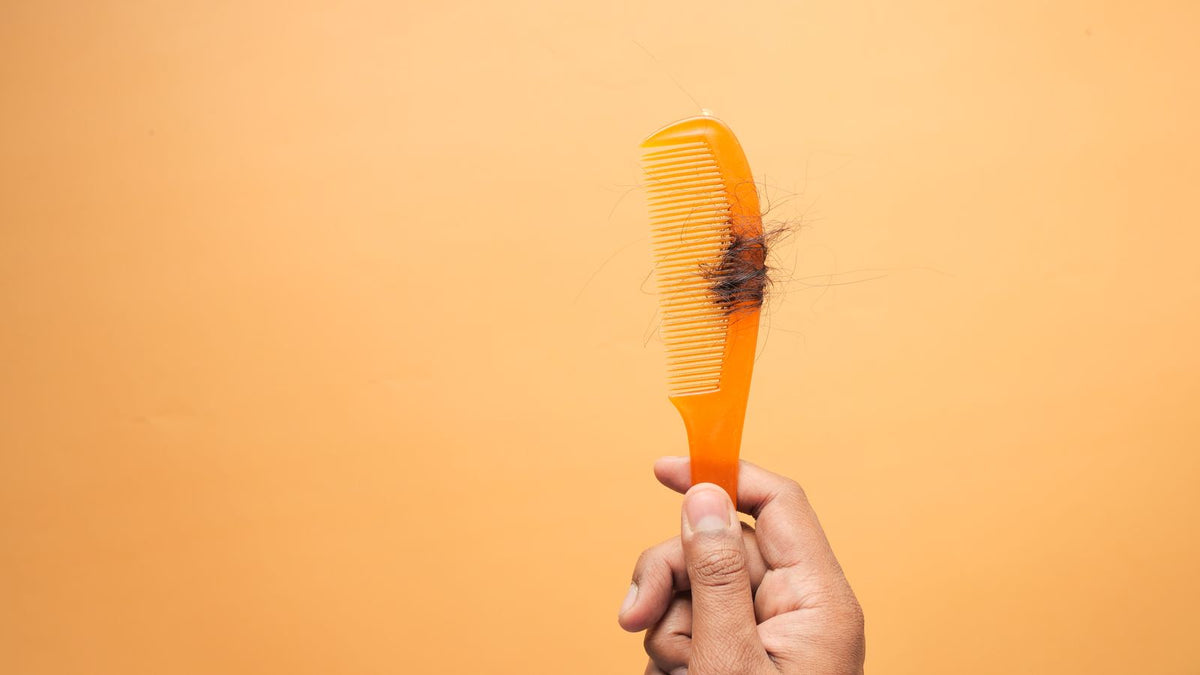
Look at the root end of a hair you have just lost, in good light, against a plain background. A shed hair carries a small white or pale bulb where it left the follicle. A broken hair has no bulb at all: the end is blunt, split or frayed, and the piece is usually shorter than the rest of your hair.
| Clue | Hair breakage | Hair shedding | Hair loss |
|---|---|---|---|
| End of the strand | Blunt or frayed, no bulb | Small pale bulb at the root | Small pale bulb at the root |
| Length of the pieces | Short, uneven, often much shorter than your hair | Full length | Full length, often finer than before |
| Where you notice it | Around the face, on clothes, short flyaways at the crown | Shower drain, hairbrush, pillow | Widening parting, receding hairline, visible scalp |
| Scalp itself | Normal, density unchanged | Normal, density may dip temporarily | Density genuinely reduced |
| What changes it | Handling, heat, chemistry, conditioning | Time and the underlying trigger | Medical assessment, sometimes nothing cosmetic |
All three can run at once, which is why the check matters. If you are also seeing a wider parting or more scalp than you used to, read the 90 day action plan for thinning hair alongside this page. If handfuls started a couple of months after illness or a stressful period, telogen effluvium is the likelier explanation for that part.
What causes hair breakage?
Five forces account for nearly all of it: mechanical stress from brushing and styling, heat from tools, chemical processing, environmental weathering, and simple time. Hair at the ends of long hair may be five or six years old and has survived thousands of washes, so damage accumulates from the tip upwards long before anyone notices.
- Mechanical stress. Brushing wet hair, ripping through tangles, tight elastics, rough towels and sleeping on cotton all pull the cuticle apart.
- Heat. Straighteners and tongs frequently run at 200°C or more. Keratin starts to change structurally somewhere around 185°C.
- Chemistry. Bleach lifts the cuticle to remove pigment. Relaxers break and reform the bonds that give hair its shape. Both leave the fibre weaker.
- Weathering. UV, chlorine, salt water and hard water all erode the cuticle gradually over months.
- Protein and moisture imbalance. Too little of either makes hair snap, and the two failure modes look completely different.
The wet hair trap
Healthy hair can stretch by around 30 percent of its length when wet before it gives way, and far less when dry. That elasticity sounds protective, but it means a wet strand under a brush is being stretched well past where it will recover. Detangle with fingers or a wide tooth comb, from the ends upwards, and only once conditioner is in.

How does heat styling cause hair breakage?
Heat drives water out of the cortex faster than the fibre can tolerate, and above roughly 185°C it begins to alter the keratin itself. Repeated heating and cooling cycles leave microscopic cracks in the cuticle, and once those scales are chipped away they do not grow back. The strand that results is rougher, duller and far quicker to snap under a brush.
Three changes cut heat damage sharply without giving up styling. Turn the tool down: most hair types straighten at 150 to 170°C, and the highest settings exist for coarse, resistant hair rather than for speed. Make one pass instead of three, which needs the hair fully dry first. And always put a barrier between the plates and the cuticle.

Protect Me® Heat Protection Spray £13.95
Leave-in heat protection spray rated to 230°C, with niacinamide, panthenol, caffeine, rosemary and sunflower oil. Spray on damp hair before drying and again before straightening, and comb it through so the coverage is even rather than patchy.
How does the moisture and protein balance affect hair breakage?
Hair needs both water and keratin protein, and too much of either causes snapping in its own distinctive way. Over-moisturised hair feels limp, spongy and stretchy when wet, and separates rather than springs back. Over-proteined hair feels rough, rigid and straw-like, and snaps cleanly with almost no stretch at all. Daily wetting sits right in the middle of that balance, and our guide to whether you should wet your hair every day explains what water alone actually does.
| Sign | Too little protein | Too little moisture |
|---|---|---|
| Feel when wet | Mushy, over-stretchy, slow to recover | Rough, squeaky, tangles instantly |
| Feel when dry | Limp, flat, lifeless | Brittle, coarse, straw-like |
| How it breaks | Stretches then gives way | Snaps sharply with no stretch |
| What to add | A protein-containing mask or conditioner | Deep conditioning, oils, less heat and washing |
| What to ease off | Heavy oils and daily deep conditioning | Protein treatments and clarifying washes |
The stretch test settles it in thirty seconds. Take one wet strand and pull gently. If it stretches a long way and stays stretched, you need protein. If it snaps almost immediately with no give, you need moisture. If it stretches a little and springs back, the balance is right and you should change nothing.

Masque Me® Hair Growth Mask £24.95
An 8 in 1 deep conditioning mask with rosemary, caffeine, provitamin B5, argan oil and hydrolysed lupine protein. Use it once a week on mid-lengths and ends, for ten minutes, on hair that is damp rather than dripping.
Get a discount on the damaged hair range
Join the Watermans mailing list and we will email a discount code straight to your inbox, so you can try the damaged hair range for less. Made in the UK, over 6.5 million bottles sold since 2012.
How should you wash, dry and brush hair to reduce hair breakage?
Handle hair least when it is wettest, and always work from the ends upwards. The washing and drying routine is where most avoidable breakage is created, and small changes here show up faster than any product swap. Every step below costs nothing and takes no extra time.
- Wet thoroughly before shampoo. Properly saturated hair needs less product and less friction to clean.
- Shampoo the scalp, not the lengths. The suds running down are enough for the ends, which are the oldest and most fragile part.
- Condition mid-lengths to ends, every wash. Slip is the point. Detangling without it is where strands come apart.
- Detangle in the shower, conditioner still in, wide tooth comb, ends first. Work upwards in sections rather than dragging from the roots.
- Squeeze, do not rub. Blot with a microfibre towel or an old cotton t-shirt. Turban-twisting a wet length is real tension on a weak fibre.
- Let it dry to damp before heat. Blasting soaking hair boils water inside the cortex and does more damage than the finishing pass.
- Sleep on silk or satin, or in a loose plait. Cotton drags. Eight hours of it, nightly, adds up over a year.

Does colouring, bleaching or relaxing make hair breakage worse?
Chemical processing is the single biggest step change most people make to their hair fibre, and bleach is the most demanding of the three. Lightening requires the cuticle to lift so the pigment inside the cortex can be removed, and the fibre never returns to its original strength afterwards. Relaxers work by breaking and reforming internal bonds, which alters the structure permanently.
None of that means you should not colour your hair. It means processed hair needs a different maintenance routine, not the same one. Stretch the gap between appointments, keep bleach off previously lightened lengths where you can, add a weekly mask rather than a daily one, and drop your heat setting by 20°C permanently. Colour damage plus heat damage on the same strand is what produces the mid-length snapping so many people blame on the colour alone.
Can diet and health affect hair breakage?
Nutrition changes the hair that is still being made in the follicle, not the hair already on your head, so its effect on breakage is slow and indirect. A strand growing out under a sustained shortfall of protein, iron or calories can emerge finer and weaker, and a finer strand snaps more easily. That takes months to show and months to correct.
The NHS Eatwell guidance is a better starting point than any supplement aisle, because whole-diet adequacy is what matters here rather than a single nutrient. Low iron is the deficiency most often linked with hair problems in the UK, and it is worth a blood test rather than a guess, since taking iron you do not need can cause harm. Very low calorie dieting is a recognised trigger for a shedding episode, which is a separate problem that often arrives alongside breakage and gets blamed on it.
When is hair breakage a reason to see a GP?
Make a GP appointment if breakage arrives suddenly without a change in your routine, if the scalp is sore, scaly, itchy or inflamed, if hair snaps close to the scalp in defined patches, or if breakage comes with tiredness, brittle nails or a change in weight. Those combinations can point to something systemic that no conditioner addresses, and a GP can check iron and thyroid levels. If your question is about products or a routine rather than a medical one, you can talk to Gail Waterman, our co-founder, as an AI avatar on the Watermans homepage.
Watermans does not run clinics and does not offer consultations, assessments or medical advice of any kind. The Institute of Trichologists lists qualified UK hair specialists if you want that alongside your GP rather than instead of one.

Which products actually reduce hair breakage?
Conditioners, masks and heat protectants genuinely change the outcome, because breakage is a surface and structural problem that sits squarely in cosmetic territory. What no product can do is repair a strand back to its original state. Damaged hair is smoothed and held together, not healed. The honest goal is stopping new breakage so that damaged length grows out and gets cut off.

Condition Me® Hair Growth Conditioner £13.95
The everyday one, and the one that matters most. Cholesterol, shea butter, glycerin, silica and hydrolysed lupine protein give enough slip to detangle wet hair without tearing. Use it every single wash, mid-lengths to ends.
Order of operations
If you change one thing this week, make it conditioning every wash and detangling with the conditioner still in. If you change two, add heat protection before every hot tool. The weekly mask is the third step, not the first, because it fixes less breakage than the two habits above it.
How long does it take to see less hair breakage?
Handling changes show within two to four weeks, because you stop creating new damage immediately and the brush simply collects fewer short pieces. What takes far longer is losing the already damaged length, since scalp hair grows roughly 1 cm a month, so 15 cm of compromised ends is over a year of growing out.
Track it properly rather than by feel. Count the short broken pieces in your brush on the same day each week, photograph the same section of ends in the same light monthly, and note whether your hair is finally getting past the length it always seemed stuck at. A trim every 10 to 12 weeks removes split ends before they travel further up the strand. Breakage from heat and tight styling is especially common in the teenage years, which our guide to hair loss in teenagers covers in full. If you would rather cover a widening parting while you decide what to do about it, our guide to wigs and toppers for thinning hair compares the two and explains how to clip a piece in without breaking the hair underneath. Once you know the cause, our step by step guide to reducing hair breakage turns it into a routine for wash day, drying, heat, styling and sleep.
What are the most frequently asked questions about hair breakage?
Can hair breakage be repaired?
No, not in the literal sense. A snapped or split strand cannot be rejoined, and conditioners work by smoothing the cuticle and temporarily binding the split together. The genuine fix is stopping new hair breakage while the damaged length grows out and is trimmed away.
Is hair breakage causing my hair to look thinner?
It can. Widespread breakage at the mid-lengths leaves shorter, wispier pieces that make a ponytail feel thinner even though follicle density is unchanged. Check the ends of the lost hairs: bulbs mean shedding, blunt ends mean breakage.
How often should I use a hair mask for breakage?
Once a week for most hair, and no more than twice unless hair is bleached or very coarse. Daily deep conditioning tips hair into the over-moisturised state, where it feels spongy when wet and separates rather than springing back.
Does cutting my hair stop hair breakage?
Cutting removes existing splits so they cannot travel further up the strand, which protects length. It does not change the handling, heat or chemistry creating the damage, so trimming alone means the same breakage reappears in a few months.
Why does my hair break at the same length every time?
Because hair is reaching the point where the ends are old enough that accumulated damage outpaces growth. Ends on shoulder-length hair are often three to four years old. Reduce heat and friction and that ceiling usually moves within a year.
Is breakage worse in winter?
Often, yes. Indoor heating lowers humidity, hats and scarves add friction, and hair moves between cold outdoor air and dry indoor air repeatedly. A weekly mask and a silk-lined hat both help through the colder months.
Can hard water cause breakage?
Hard water leaves mineral deposits that make hair feel rough and tangly, and rougher hair snaps more under a brush. A monthly clarifying wash and conditioning every wash manage it. A shower filter helps some people and does nothing for others.
Should I use protein or moisture for breakage?
Do the stretch test on a wet strand. Long stretch that does not spring back means protein is what you are short of. Immediate snapping with no give means moisture. Springs back means the balance is right, so change nothing.
What is the bottom line on hair breakage?
Hair breakage is the one common hair problem you can largely solve yourself, because it happens on the outside of the scalp and answers to how you handle your hair. Confirm it is breakage by checking for the bulb, work out whether you are short of protein or moisture, and then change the handling before you change the shelf.
Condition every wash and detangle wet hair with slip, from the ends up. Put a barrier between hot plates and your cuticle, every time. Add a weekly mask, sleep on something smooth, and trim every 10 to 12 weeks. Expect fewer short pieces in the brush within a month, and expect the damaged length itself to take a year to grow out. That timeline is normal.
If you only change one product, make it the one you use most. A hair growth conditioner with genuine slip turns wet detangling from the most destructive minute of your week into the least, and that single swap does more against breakage than anything else on this page.
Sources & references
- NHS, Hair loss
- DermNet, Hair loss (alopecia) overview
- Hair Cosmetics: An Overview, International Journal of Trichology (PMC)
- StatPearls, Anatomy: Hair Follicle
- StatPearls, Physiology: Hair
- NHS, How to eat a balanced diet
- NHS, Iron
- The Institute of Trichologists
Watermans products are 100% cosmetic and do not treat medical hair loss. Individual results may vary.