Pomade Acne: Why Hair Products Break Out Your Hairline
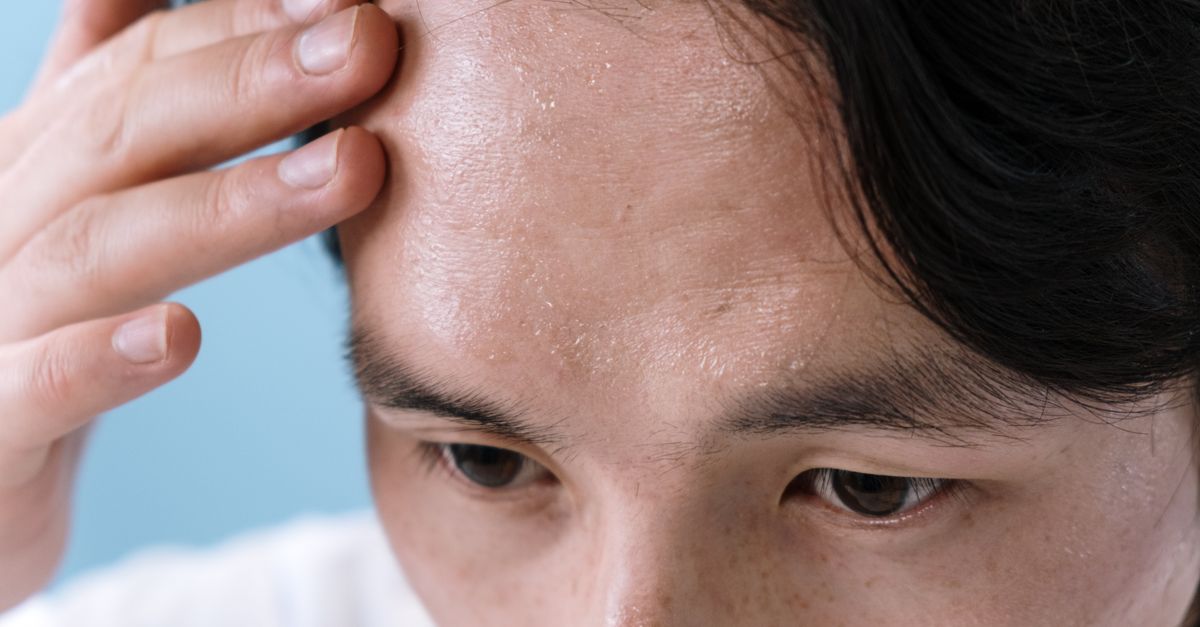
Pomade acne is the crop of small, uniform spots that appears along the hairline, temples and upper forehead in people who use hair styling products. It is caused by occlusive ingredients migrating from the hair onto the skin and blocking pores, which is why it sits exactly where product meets face. The useful thing about it is that it is one of the few skin complaints with an obvious, fixable cause sitting in your bathroom cabinet.
Our hair growth shampoo
Grow Me® Hair Growth Shampoo, £14.95. A sulphate free daily shampoo that supports a healthy scalp environment and helps reduce breakage, so lengths hold on and look fuller.
Key takeaways
- Location is the clue. Spots hugging the hairline and temples, sparing the rest of the face, point to a product cause.
- The spots tend to look similar to each other, small and closed, rather than the mixed picture of ordinary acne.
- Heavy oils, waxes and silicones in leave-in products are the usual culprits. Rinse-out products are far less often to blame.
- It clears when the product stops reaching the skin, though that takes weeks rather than days.
- Persistent, painful or scarring spots are a pharmacist or GP matter, not something to fix by changing shampoo.
What is pomade acne and where does it appear?
The name comes from pomade, the heavy wax based product traditionally used to slick hair down, but the effect is not limited to pomade. Gels, waxes, clays, leave-in creams, heavy oils and even some conditioners can do it if they sit on skin rather than hair.
The mechanism is straightforward. Occlusive ingredients form a film. That film is exactly what you want on a hair fibre, where it adds shine and hold. On facial skin it traps sebum and dead skin cells inside the follicle opening, and a blocked follicle becomes a comedone. Add warmth, sweat and a pillow that transfers product back onto your face overnight, and you have a reliable machine for producing small spots in a very specific band.
That band is the diagnostic feature. Ordinary acne is scattered across the areas with the most oil glands: forehead, nose, chin, sometimes the back and chest. Pomade acne clusters tightly where hair touches skin, and often stops abruptly a couple of centimetres down the forehead.

How do you tell pomade acne from ordinary acne?
Use position, uniformity and timing together rather than any one of them alone.
| Feature | Pomade acne | Ordinary acne |
|---|---|---|
| Where | Hairline, temples, upper forehead, sometimes the nape | Across the face, often chin, nose and jaw too |
| What the spots look like | Small, closed, similar to one another | Mixed sizes, blackheads, papules, sometimes deeper lumps |
| Timing | Started after a new styling product or a change in routine | Often hormonal, follows cycles or adolescence |
| Response | Settles when the product stops touching skin | Needs a proper skin routine, sometimes medical input |
Worth being clear about the limits of a page like this: we cannot tell you what your spots are, and plenty of people have both at once. If the pattern does not fit neatly, or nothing improves after a genuine six week trial, a pharmacist is a free and quick next step. Spots sitting on the scalp itself rather than the hairline are a different question again, covered in our guide to spots and bumps on the scalp.
Which ingredients are most often behind pomade acne?
Turn the bottle over. The offenders cluster near the top of the ingredient list, because position roughly tracks concentration.
- Heavy waxes. Beeswax, carnauba and petrolatum based formulas give strong hold precisely because they do not move, which is also why they block pores.
- Coconut oil. Popular, genuinely useful on hair, and one of the more pore blocking oils on facial skin. A common surprise for people who switched to a natural routine and broke out.
- Heavy silicones. Dimethicone and its relatives are excellent on the fibre and film forming on skin. Lighter volatile silicones are less of a problem because they evaporate.
- Cocoa butter and lanolin. Rich, occlusive, and fine on hair, less so on a warm forehead.
- Isopropyl myristate and similar esters. Used to improve feel and spread, well known for blocking pores.
Notice the pattern: none of these are bad ingredients. They are good hair ingredients in the wrong place. That distinction matters, because the answer is usually about application rather than banning a product outright.

Get a discount on your next order
Join the Watermans mailing list and we will email a discount code straight to your inbox. Made in the UK, over 6.5 million bottles sold since 2012.
How do you stop pomade acne without giving up styling?
Most people do not need to abandon their products. They need to keep them off their skin.
- Start application about two centimetres from the roots. The hold you want is in the lengths anyway. Product at the very root does little for the style and most of the damage to your skin.
- Emulsify in your palms first. Warming a small amount between your hands spreads it thinly, so less is deposited in a lump at the front.
- Wash your hands and rinse your hairline afterwards. The transfer route people forget is their own fingers going back to their face all day.
- Cleanse the hairline properly at night. Most people wash their face and stop at the hairline, which is exactly where the product is. Take your cleanser right up into it.
- Change the pillowcase more often. Product transfers to fabric and back again for several nights. Twice a week while you are sorting it out.
- Rinse hair thoroughly. Conditioner left along the hairline and nape is a common and easily fixed cause.
- Use less. Almost everyone uses more than they need, and the excess is what ends up on skin.
If that does not work, switch products one at a time rather than replacing your whole shelf at once, and give each change six weeks. Skin turns over slowly, and the spots already forming today were set in motion a few weeks ago.

This applies to our products too. We sell conditioner, a mask and a hair oil, and all three are richer than a shampoo by design. If you are prone to hairline breakouts, keep them on the mid lengths and ends, rinse thoroughly, and do not apply our hair oil to your hairline or temples. We would rather tell you that than have you break out and blame your skin. Related reading: our guide to hairline breakouts.
How long does it take to clear?
Expect four to eight weeks before you can judge fairly, and do not read the first fortnight as failure. A comedone that is already forming will still surface even after you remove the cause. What you should see is fewer new spots appearing, which is a different and earlier signal than the existing ones disappearing.
Keep a note of what you changed and when. People routinely change three things at once, improve, and have no idea which change mattered, which means they carry unnecessary restrictions for years.
Does washing your hair more often help?
Usually a little, yes, and this is one of the few situations where increasing wash frequency genuinely makes sense, because the goal is removing product rather than removing oil. The caveat is doing it without stripping and irritating the scalp, since an irritated scalp brings its own problems. If washing more often leaves your scalp tight, itchy or flaky, the answer is a gentler cleanser rather than going back to washing less, and our guides to scalp itching from hair products and keeping a healthy scalp both cover that balance.

Grow Me Hair Growth Shampoo, 14.95 GBP
Relevant here for one narrow reason: it is sulphate free, so washing more often to clear styling product is less likely to leave the scalp stripped and irritated. It is a cosmetic shampoo for hair, not a skin product, and it is not something we would put forward as an answer to acne.
When should you see a pharmacist or GP?
Speak to a pharmacist, which is free and needs no appointment, if the spots are not improving after six to eight weeks of genuinely keeping product off your skin, or if you are not sure what you are looking at. See your GP if spots are painful, deep or leaving marks or scars, if they are spreading well beyond the hairline, if the skin is inflamed, weeping or crusting, or if it is affecting your mood or confidence, which is a legitimate reason on its own. If your question is about products or a routine rather than a medical one, you can talk to Gail Waterman, our co-founder, as an AI avatar on the Watermans homepage.
We are a hair care company. We do not sell skin medicines, we cannot examine your skin, and we deliberately do not name specific acne medicines on this page, because that advice belongs with someone who can check whether it suits you. What we can do honestly is tell you how hair products cause this and how to stop them doing it.

Condition Me Hair Growth Conditioner, 13.95 GBP
Included with a caveat rather than a pitch. Conditioner belongs on the mid lengths and ends, not the scalp or hairline, and it should be rinsed out thoroughly. Applied that way it is unlikely to contribute to hairline spots. Applied at the roots and half rinsed, any conditioner can.
Frequently asked questions
Is pomade acne the same as ordinary acne?
The spots themselves are blocked follicles either way. The difference is the cause and therefore the fix: pomade acne is driven by product sitting on skin, so removing the product removes the cause, whereas ordinary acne has internal drivers that a styling change will not alter.
Do I have to stop using styling products completely?
Usually not. Most people improve by changing where and how much they apply rather than by giving up. Start further from the roots, use less, and cleanse the hairline properly at night.
Is coconut oil really a problem?
On facial skin it is one of the more pore blocking oils, which catches out people who assume natural means gentle. On hair it is fine. Keep it off the hairline and forehead.
Why did a product I have used for years suddenly cause this?
Reformulation, a change in climate or sweating, a new hat or helmet, longer hair sitting differently on your face, or simply using more of it. Any of those can tip a borderline situation over.
Does a fringe make it worse?
It can, because it holds product directly against the forehead all day and traps warmth. If you have a fringe and hairline spots, that combination is worth testing by pinning it back for a few weeks.
Will a clarifying shampoo fix it faster?
It may help remove build up, but using a harsh clarifying wash daily tends to irritate the scalp. Once a week at most, with a gentler shampoo in between.
Can hats and helmets cause the same thing?
Friction and trapped sweat under a band produce a similar looking crop of spots, sometimes alongside the product effect. Wash the lining, and let skin dry before putting a hat back on.
How do I know it is working?
Count new spots rather than total spots. Fewer arriving is the first genuine sign of progress, and it shows up well before the existing ones fade.
What is the bottom line on pomade acne?
Pomade acne is a location problem, not an ingredient scandal. Hair products that are perfectly good on hair block pores when they sit on facial skin, so spots gather in a tight band along the hairline and temples. Apply further from the roots, use less, rinse properly, cleanse right up into the hairline at night, and change one thing at a time over six weeks. If it is painful, scarring or stubborn, that is a pharmacist or GP conversation rather than another purchase.
The routine side of this starts at the shampoo, and Grow Me hair growth shampoo is where we would point you.
Watermans products are 100% cosmetic and do not treat medical hair loss. Individual results may vary.
Sources and references
- NHS, Acne, on causes, self care and when to seek help.
- National Institute for Health and Care Excellence, Clinical Knowledge Summaries: Acne vulgaris, on assessment and management thresholds in UK practice.
- British Association of Dermatologists, Acne information leaflet for the public.
- DermNet, Acne vulgaris, on comedone formation and cosmetic contributors.