Rebound Alopecia: Why Hair Falls Again and What Helps
Rebound alopecia is the name people give to hair that starts falling again after a period of stability or visible improvement. It is not a separate disease. It is what happens when the underlying reason your hair was shedding was paused rather than resolved, and the pause ends. The second wave often feels worse than the first, partly because the scalp is starting from a thinner baseline and partly because hope has been raised. Working out which of the three problems you actually have is what turns rebound alopecia from a mystery into something you can plan around.
Our hair growth shampoo
Grow Me® Hair Growth Shampoo, £14.95. A sulphate free daily shampoo that supports a healthy scalp environment and helps reduce breakage, so lengths hold on and look fuller.
Key Takeaways
- Rebound alopecia is a return of shedding after a calm spell, not a new condition in its own right.
- Tell hair loss, hair shedding and hair breakage apart before you change anything. They look alike in the plughole and need opposite responses.
- The most common driver is a support that was withdrawn: a medical option stopped, an iron level that slipped back, a stressful period that returned.
- The second episode looks worse because you are starting from a lower density, not necessarily because the process has accelerated.
- Steady, boring routines beat crisis routines. Switching products every three weeks hides whether anything is working.
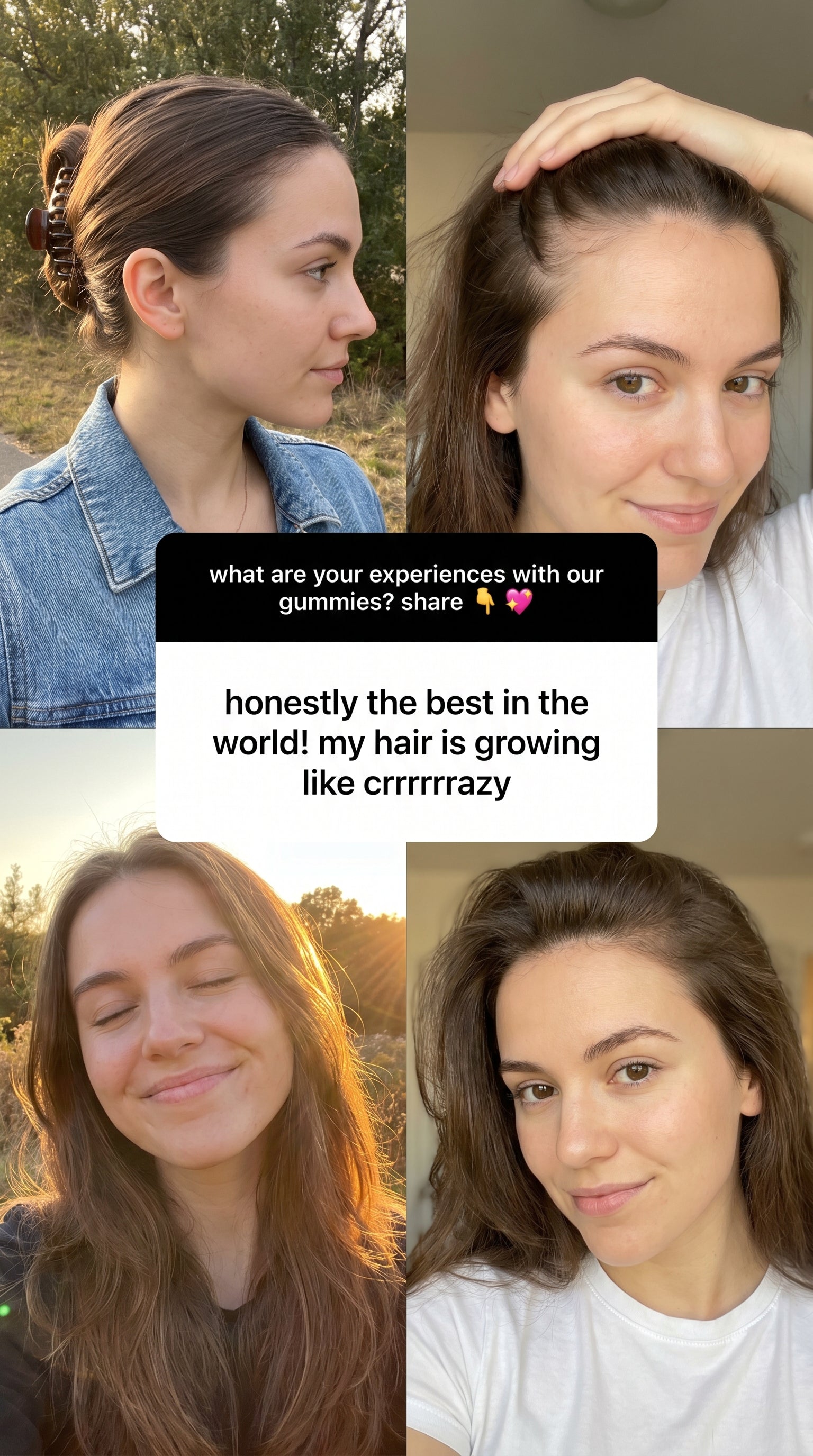
- Photograph the same parting, same light, same day of the month. Hair changes too slowly to judge from memory.
- Any sudden, patchy, painful or scarring change belongs with your GP rather than a shopping basket.
What does rebound alopecia actually mean?
Rebound alopecia describes a pattern rather than a mechanism. Hair sheds heavily, something changes, the shedding settles, and then months or years later it returns, often quite abruptly. Because the word alopecia simply means hair loss, the phrase covers several very different situations that happen to share a shape.
The useful question is never "do I have rebound alopecia". It is "what was holding the shedding back, and what changed". Once you can answer that, the path forward is usually obvious. Without that answer, people cycle through products for years while the actual driver sits untouched.
Is it hair loss, hair shedding or hair breakage?
These three get lumped together and they are not the same thing. Getting this wrong is the single most expensive mistake people make when facing this, because the response to one actively worsens another.
| What it is | What you see | What actually helps |
|---|---|---|
|
Hair loss Follicular. Follicles miniaturise or are damaged. |
Widening parting, receding temples, visible scalp in one area, patches. Strands get finer over years. | Medical assessment. This is a GP or dermatology conversation, not a shampoo decision. |
|
Hair shedding Cycle. Too many follicles enter the resting phase at once. |
Diffuse loss all over, whole strands with a small white bulb, handfuls when washing. Usually 2 to 4 months after a trigger. | Find and fix the trigger. Iron, thyroid, illness, crash dieting, major stress. It commonly settles. |
|
Hair breakage Fibre. The strand snaps along its length. |
Short broken pieces, no bulb on the end, frizzy halo at the crown, rough feel, split ends. | Less heat, less tension, gentler detangling, conditioning. This is where cosmetics genuinely help. |
A quick check: look at the end of a fallen strand. A tiny pale bulb means the hair completed its cycle and was released, which points to shedding. A blunt or frayed end with no bulb means it snapped, which is breakage. Many people living through a second shed have two of these at once, and the breakage component is usually the part they can fix themselves this week.

What triggers rebound alopecia most often?
The pattern has a short list of usual suspects. Working through them honestly is more productive than any product change.
A medical option was stopped
Where hair density was being held by a medicine, stopping it typically means the follicles return to the path they were on before. The hair that had been maintained is then shed over the following months. This is the single most common story behind the phrase. What matters here is that the decision to start, continue, taper or stop any medicine belongs entirely with the clinician who manages it. We sell cosmetics and have no business advising on medicines, so please take that conversation to your GP rather than to a comments section.
A nutritional level slipped back
Low iron stores are a well-recognised contributor to diffuse shedding, and levels can drift down again once supplementation stops, particularly with heavy periods or a restricted diet. The NHS notes that iron deficiency anaemia is common and worth testing for rather than guessing at. The same applies to thyroid function, where an under-active thyroid can show up in the hair long before anything else feels wrong.
The stress period came back
Telogen effluvium, the technical name for stress-driven shedding, runs on a delay of roughly two to four months between the trigger and the visible shed. A second difficult year produces a second shed, and because the delay is long, people rarely connect the two. If the shedding started in March, look at what was happening the previous December.
Nothing changed except the underlying pattern
Sometimes there was no rebound at all. Androgenetic hair loss progresses slowly and in steps, with quiet years and noisier ones. A noisier year after a quiet one can feel like a relapse when it is simply the same process continuing. Photographs settle this argument in a way that memory cannot.
Get a discount on the thinning hair range
Join the Watermans mailing list and we will email a discount code straight to your inbox, so you can try the thinning hair range for less. Made in the UK, over 6.5 million bottles sold since 2012.
Why does the second episode look worse than the first?
Three things stack up, and only one of them is about the rate of loss.
You are starting lower. Losing the same proportion of hair from a thinner head shows far more scalp. The shed may be identical in size to the first one and still look twice as bad.
The contrast is sharper. If density improved for a while, your recent memory is set to the better state, so the drop reads as a bigger fall than the calendar justifies.
Some ground genuinely does not come back. Follicles that stopped producing years ago are far harder to bring back into service than ones that are only beginning to miniaturise, and scarred follicles cannot be recovered at all. This is the honest reason why acting early beats any product choice.
A note on panic buying. The instinct during rebound alopecia is to change everything at once: new shampoo, three supplements, a scalp device and a different diet, all in the same week. If something then improves, you will never know which part did it, and if something irritates your scalp you will not know what to remove. Change one thing at a time and give it three months.

What should you do in the first month?
A short, unglamorous list beats a long one you abandon.
- Photograph, do not estimate. Same parting, same window, same time of day, once a month. This is the only reliable record you will have in six months.
- Book a GP review and ask for bloods. Ferritin, full blood count, thyroid function and vitamin D are the usual starting set. Ask what your ferritin number actually is rather than whether it is "normal", because the normal range is wide.
- Write a timeline. List every illness, medicine change, diet change, big stressor and life event from the last twelve months. Then look four months before the shedding started.
- Strip the tension out. Loosen ponytails, drop the tight buns, take braids and extensions down if they have been in a long time. Traction is one of the few causes you can remove today.
- Cut the heat right back. Air dry more often, drop the straightener temperature, and stop the daily 200 degree pass. This addresses the breakage layer, which is often a third of what you are seeing.
- Pick one gentle routine and stay on it. Three months minimum before you judge it.
How long does it take to see whether anything is working?
Longer than anyone wants. Scalp hair grows roughly one centimetre a month, and a follicle that re-enters its growing phase produces a fine, short hair that is invisible in a mirror for months. Realistically:
- Weeks 0 to 8: nothing visible. Shedding may continue or even briefly increase. This is normal and not evidence that your routine has failed.
- Months 3 to 4: the shed rate is usually the first thing to settle, if the trigger has genuinely been removed. Density has not changed yet.
- Months 6 to 9: short new growth may become visible at the hairline and parting as a fringe of fine baby hairs.
- Months 9 to 12: the first point at which a photograph comparison means anything at all.
Anyone selling a visible change in four weeks is selling you the styling effect of a conditioner, which is real but is not the same thing as density.

Does diet make a difference to a rebound shed?
It matters at the deficiency end and much less above it. Correcting a genuinely low iron store or a poor protein intake can change the shedding picture. Adding a supplement on top of already adequate levels generally does nothing, and high dose selenium and vitamin A can make hair worse rather than better.
The sensible order is: test, correct what is actually low, then eat normally. Food first is not a slogan here, it is simply the approach least likely to backfire. Aim for a decent protein source at each meal, iron from red meat, pulses or dark greens with a source of vitamin C alongside, and enough total calories, because sustained under-eating is itself one of the more reliable ways to push follicles into the resting phase.
Where does cosmetic hair care honestly fit?
In one place, and it is worth being precise about it. A shampoo cannot change follicle sensitivity, alter a hormone level or bring back a follicle that closed years ago. What a well-formulated one can do is cleanse without stripping, keep the scalp comfortable, and reduce the breakage that makes thinning hair look thinner than it is. When you are dealing with rebound alopecia, protecting the hair you still have is not a consolation prize. It is often the largest visible difference available to you in the short term.

Grow Me® Hair Growth Shampoo
A sulfate free daily shampoo with Biotin, Caffeine, Rosemary and Niacinamide. It cleanses gently, suits frequent washing, and helps finer hair look fuller. Cosmetic only, vegan, made in the UK.

Hair Growth Boost Set
Shampoo, conditioner and the leave in scalp elixir together. The conditioning step is the part that reduces breakage, which is usually the quickest visible win when density is low. Cosmetic only.
For more depth on the parts of this that are not about products, our guide to what causes telogen effluvium and how long it lasts covers the shedding timeline properly, pattern hair loss and its stages explains the slow follicular side, and the four stages of the hair growth cycle makes the delay between trigger and shed much easier to understand.
When should you stop reading and see a GP?
Some presentations are not a hair care question at all. See your GP promptly if the hair comes out in smooth round patches, if the scalp is painful, burning, scaly or persistently itchy, if there is redness and loss of the visible pore openings, if the eyebrows or lashes are affected, or if the shedding arrives alongside fatigue, weight change, heavy periods or a new medicine. Scarring conditions are the reason not to wait, because ground lost there cannot be recovered and early specialist input genuinely changes the outcome. There is more detail on why hair sheds two to four months after an illness or operation.
Watermans is a cosmetics company. We do not run clinics, we cannot assess your scalp, and we would rather send you to your GP a month early than a year late. If your question is about products or a routine rather than a medical one, you can talk to Gail Waterman, our co-founder, as an AI avatar on the Watermans homepage.
Frequently asked questions
Is rebound alopecia permanent?
It depends entirely on which of the three problems is driving it. Cycle-based shedding is usually temporary and settles once the trigger is gone. Androgenetic hair loss is progressive and needs ongoing management. Scarring conditions cause permanent change, which is why any painful, red or scaly scalp needs a GP rather than a shopping basket.
How long does a rebound shed last?
Where the cause is a cycle disruption, the heavy phase commonly runs for three to six months and then eases, with density recovering over the following six to twelve months. If heavy shedding continues past six months, that is a reason to go back to your GP rather than to wait it out.
Can a shampoo stop the shedding?
No, and any product claiming otherwise is overselling. A shampoo works on the scalp surface and the hair fibre. It can reduce breakage and support a comfortable scalp environment, both of which affect how your hair looks, but it cannot change a hormone level or a follicle's genetics.
Should I stop washing my hair while it is shedding?
No. The hairs that come out during a wash were already released and would have come out on the pillow or the brush instead. Washing less simply concentrates the loss into fewer, more alarming episodes, and leaves the scalp less comfortable.
Why did my hair improve and then get worse again?
Usually because whatever was holding the shedding back was removed. A medicine stopped, an iron level drifted down, a stressful period returned, or a temporary shed simply ran its natural course and then a second trigger arrived. Building a twelve month timeline is the fastest way to find it.
Are supplements worth taking for a rebound shed?
Worth taking if a blood test shows you are low in something, and largely pointless if it does not. High doses of selenium and vitamin A in particular can make hair worse. Test first rather than stacking bottles.
Does the second shed mean I will go bald?
Not by itself. A shed is a rate, not a destination. The thing that predicts long term density is the underlying pattern and how early it is managed, which is exactly what a GP or dermatology assessment is for.
How do I tell breakage from shedding at home?
Look at the ends of the fallen hairs. A small pale bulb at one end means the strand was released by the follicle, which is shedding. Short pieces with blunt or frayed ends and no bulb are breakage. If most of what you are collecting is short and bulbless, heat, tension and detangling habits are where to start.
Sources & References
- NHS, Hair loss, on common causes, what is normal and when to see a GP.
- DermNet, Telogen effluvium, on the delay between trigger and shed and typical recovery.
- British Association of Dermatologists, Telogen effluvium information leaflet.
- DermNet, Female pattern hair loss and Male pattern hair loss, on the progressive follicular picture.
- NHS, Iron deficiency anaemia and NHS, Iron, on testing and safe intake.
- NHS, Underactive thyroid, on thyroid symptoms that include hair changes.
Where sources differ, they differ most on how much nutrition contributes above the deficiency threshold. The dermatology sources are consistently more cautious about supplementation than the popular coverage is, and we have followed the cautious reading here.
What is the bottom line on rebound alopecia?
Rebound alopecia is a pattern with a cause, and the cause is almost always something that was holding the shedding back and then stopped. Separate loss from shedding from breakage, build a twelve month timeline, get bloods done, take the tension and heat out of your routine, and then pick one gentle regime and stay on it long enough to judge. Cosmetic care earns its place by protecting what you have while the slower work happens elsewhere. If the scalp is painful, patchy or scarring, that part is not ours to help with, and your GP should see it soon.
If you would rather start small, swap the wash first and see how the scalp feels on Grow Me hair growth shampoo. Vegan and made in the UK.
Watermans products are 100% cosmetic and do not treat medical hair loss. Individual results may vary.