Dermal Papilla: The Cells That Decide Your Hair
The dermal papilla is a small cluster of specialised cells at the very base of each hair follicle, tucked inside the cup shaped hair bulb about three to four millimetres below the skin surface. This cluster is the control centre of the follicle: it decides how long a hair grows, how thick it is, and when the cycle restarts. Nothing you put on your scalp reaches it.
Our hair growth shampoo
Grow Me® Hair Growth Shampoo, £14.95. A sulphate free daily shampoo that supports a healthy scalp environment and helps reduce breakage, so lengths hold on and look fuller.
Key takeaways
- The dermal papilla sits three to four millimetres down, inside the hair bulb, and directs the cells that actually build the hair.
- The number of cells in the papilla tracks the thickness of the hair the follicle produces. Fewer cells, finer hair.
- The papilla survives the resting phase, which is why shedding after illness, stress or childbirth recovers on its own.
- In pattern hair loss the papilla cells themselves carry the androgen receptors. That is why the change is hormonal and not something a cosmetic can alter.
- Topical products act on the scalp surface and the emerged fibre. Any brand claiming its shampoo works on the papilla is making a claim it would have to prove.
What is the dermal papilla, and where does it sit?
The papilla is a ball of mesenchymal cells, derived from connective tissue rather than skin, that sits enclosed within the base of the hair follicle. Picture an egg cup: the bulb of the follicle is the cup, and the papilla is the egg sitting inside it, separated from the surrounding matrix cells by a thin membrane but in constant chemical conversation with them.
Depth matters for anyone judging product claims. Terminal scalp follicles extend roughly three to four millimetres into the dermis and subcutaneous fat, and the papilla sits at the deepest point. A capillary loop runs into the papilla to supply it, which is the only route in. For scale, the whole thickness of scalp epidermis is about a tenth of a millimetre.
Each papilla is tiny. A terminal hair follicle papilla contains on the order of a few thousand cells, and a vellus follicle papilla far fewer. That cell count is not incidental, as the next section explains.
How does the dermal papilla control hair growth?
The papilla issues chemical instructions to the matrix keratinocytes immediately around it, and those matrix cells are the ones that divide rapidly and physically build the hair shaft. Matrix cells are among the fastest dividing cells in the human body, which is why hair grows at roughly one centimetre a month and why chemotherapy, which targets fast dividing cells, affects hair so severely.
Two variables are set by the papilla. The first is how long the growing phase runs, which determines maximum hair length: anagen lasts two to seven years on the scalp and only weeks on the eyebrows, and the difference is written into the follicle, not into the hair. The second is fibre thickness, and here the relationship is close to linear. Papilla cell number correlates with the diameter of the hair produced.
Why that correlation explains what you see in the mirror
If papilla size sets fibre thickness, then anything shrinking the papilla shrinks the hair. That is exactly the process called miniaturisation, where a follicle produces a slightly finer, shorter hair with each cycle until it is barely visible. It also explains why a vellus hair and a terminal hair can sit next to each other on the same scalp: the follicles differ, not the conditions on the surface.

What happens to the dermal papilla during the hair cycle?
The papilla persists through the whole cycle while most of the lower follicle is dismantled and rebuilt around it. During anagen, the growing phase lasting two to seven years, the papilla sits deep in the fat layer directing construction. Around 85 to 90 per cent of scalp hairs are in this phase at any moment.
In catagen, a transitional phase of two to three weeks, the lower follicle regresses and the papilla is pulled upward, staying in contact with a shrinking column of cells. Through telogen, the resting phase of roughly three months, the papilla waits beneath the club shaped root of the old hair. When the follicle restarts, the papilla signals the stem cells in the bulge to descend, and a new hair begins.
That survival is the reason temporary shedding recovers. In telogen effluvium, triggered by illness, surgery, childbirth or severe stress, large numbers of follicles enter telogen early and shed together about three months later. The papillae are intact, so hair grows back over the following six to nine months without anything being done to it.
The hair cycle from the papilla's point of view
| Phase | How long | What the dermal papilla is doing | What you would notice |
|---|---|---|---|
| Anagen (growing) | 2 to 7 years on the scalp | Directing matrix cells to build the shaft, deep in the dermis | Normal growth, about 1 cm a month |
| Catagen (transition) | 2 to 3 weeks | Drawn upward as the lower follicle regresses | Nothing at all |
| Telogen (resting) | About 3 months | Dormant, waiting beneath the club root | The hair is anchored loosely and comes away easily |
| Exogen (shedding) | Overlaps telogen | Preparing to signal the next cycle | 50 to 100 hairs a day, which is normal |
Get a discount on the thinning and scalp care range
Join the Watermans mailing list and we will email a discount code straight to your inbox, so you can try the thinning and scalp care range for less. Vegan, made in the UK, over 6.5 million bottles sold since 2012.
Why does the dermal papilla matter in pattern hair loss?
Papilla cells from balding scalp carry androgen receptors, and that single fact is the mechanism behind androgenetic alopecia. Dihydrotestosterone, a derivative of testosterone made by the enzyme 5 alpha reductase, binds those receptors in genetically susceptible follicles. The papilla then alters the signals it sends, shortening anagen and producing a finer hair each cycle. Our guide to low testosterone belly is the place to go next on that.
Two details explain the familiar pattern. Follicles at the back and sides of the head express far fewer of these receptors, which is why the nape stays thick while the crown and temples thin, and why transplanted hair from the back keeps growing in its new position. Susceptibility is largely inherited, which is why family history is the strongest predictor anyone has.
The honest consequence for hair care is uncomfortable but worth stating plainly. If the driver is a hormone binding a receptor on a cell four millimetres below the surface, a cosmetic product applied to the scalp is not operating in that arena. Hair care can make the hair you have look and behave better. It cannot change a hormonal process, and it is not intended to.
Can a shampoo or serum reach the dermal papilla?
Topical cosmetic products act on the surface of the scalp and on the hair fibre that has already emerged, and they do not deliver active ingredients to the papilla in any meaningful quantity. The skin barrier exists precisely to stop things getting in, a shampoo sits on the scalp for around sixty seconds before being rinsed, and the papilla is several millimetres further down than most molecules in a rinse off product will ever travel.
Leave on scalp products have longer contact time, so the comparison is less stark, but the burden of proof still sits with anyone claiming follicle level action. Under the UK CAP Code an advertised claim is the advertiser to prove, and quoting a laboratory study on isolated cells does not substantiate a claim about a product on a human head.
So what is a scalp product for? Cleansing away sebum and build up, keeping the scalp comfortable and free of flaking, reducing the breakage that happens during washing and combing, and depositing conditioning agents that make hair look fuller. Those are real, useful and entirely cosmetic.

Grow Me® Hair Growth Shampoo £14.95
Sulphate free daily shampoo with caffeine, rosemary, biotin, niacinamide and hydrolysed lupine protein. Cleanses gently and reduces breakage so hair looks fuller.

Grow More® Leave-In Scalp Elixir £25.50
An overnight leave-on scalp serum for lower density areas, with caffeine, rosemary, niacinamide and biotin. Massaged in along the parting, it doubles as your nightly scalp routine.
What is hair cloning research trying to do with these cells?
Hair cloning research aims to multiply a person's own papilla cells in the laboratory and implant them to induce new follicles, and the central obstacle has been known for decades. Papilla cells grown flat in a conventional culture dish rapidly lose their inductive ability, meaning they stop being able to tell surrounding skin cells to form a follicle.
Growing the cells in three dimensional spheroids restores some of that ability, and small early stage human studies have induced limited new hair. Nothing has reached routine use. Anyone reading about a breakthrough should check whether the work was done in cell culture, in mice, or in people, because the three are separated by many years and most things that work in a dish never work in a person.

How do you tell a follicle problem from shedding or breakage?
Three different problems get called thinning, and the papilla is only involved in one of them. Hair loss means the follicle itself is affected, either miniaturising as in androgenetic alopecia or attacked as in alopecia areata. The signature is a pattern: a widening parting, a receding temple line, or discrete round patches.
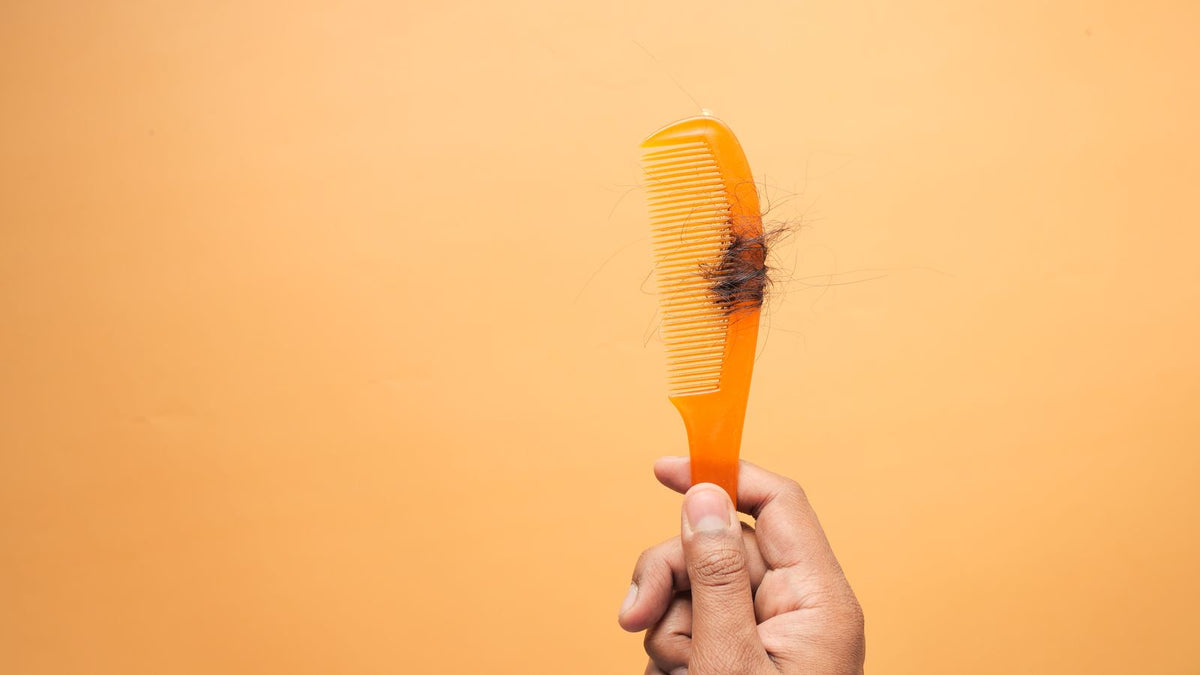
Shedding means healthy follicles moved into telogen early and released their hairs together, so you find whole hairs with a small pale bulb at the end, at normal thickness. Breakage means the follicle is fine and the strand snapped somewhere along its length, so you find short pieces with blunt ends and no bulb. Check the end of a fallen hair and you have separated the three in about ten seconds.
When should you speak to a GP about hair changes?
Speak to your GP if shedding continues past six months, if hair comes out in discrete round patches, if the scalp is scarring, scaly or painful, or if thinning arrives with fatigue, weight change or irregular periods. Unexplained diffuse thinning in women is a recognised reason for blood tests including ferritin and thyroid function, which a GP can arrange.
Scarring alopecias destroy the follicle and the papilla with it, and that damage is permanent, so early assessment genuinely matters there. A registered trichologist, for example through the Institute of Trichologists, can examine the hair and scalp in detail. Watermans makes cosmetic hair care and does not run clinics or offer assessments. If your question is about products or a routine rather than a medical one, you can talk to Gail Waterman, our co-founder, as an AI avatar on the Watermans homepage.
Frequently asked questions
What does the papilla at the base of a follicle actually do?
The papilla issues the chemical signals that tell the surrounding matrix cells to divide and build a hair shaft. It sets how long the growing phase lasts, which determines maximum hair length, and how thick the fibre is. The matrix cells do the building; the papilla decides what gets built.
Does the papilla die when hair falls out?
Not in ordinary shedding. The papilla survives the resting phase intact and signals the follicle to start a new cycle, which is why hair grows back after telogen effluvium. It is destroyed only in scarring alopecias, where the damage is permanent, and it shrinks rather than dies in pattern hair loss.
Can any product regenerate papilla cells?
No cosmetic product does, and none is permitted to claim it. Laboratory research is working on multiplying a person's own papilla cells and implanting them, but that work is at an early stage and has not reached routine use. Be sceptical of any shampoo advertised as working on follicle cells.
How deep is the papilla under the skin?
Terminal scalp follicles reach roughly three to four millimetres into the dermis and subcutaneous fat, with the papilla at the deepest point. For comparison, the epidermis of the scalp is around a tenth of a millimetre thick, so the papilla is far below anything a rinse off product reaches.
Why does hair at the back of the head not thin in the same way?
Follicles at the back and sides express far fewer androgen receptors in their papilla cells, so dihydrotestosterone has much less effect on them. That regional difference is why pattern loss concentrates at the crown and temples, and why hair moved from the back of the head keeps growing in its new site.
Does scalp massage affect the papilla?
There is no direct evidence that massage changes activity at the base of the follicle. A small study of nine men using a massage device for four minutes daily over 24 weeks measured a modest increase in hair thickness, which is far too small a group to conclude from. Massage is free and harmless, so it is reasonable to do, with modest expectations.
Is a fine hair a sign the papilla has shrunk?
Sometimes, but not always. Some people simply have fine hair genetically, with a smaller papilla they have had all their life. What matters is change: if crown hairs are noticeably finer than nape hairs from the same head, that points to miniaturisation and is worth discussing with a GP.
Can nutrition affect the papilla?
Severe deficiency can. A papilla depends on a single capillary loop for oxygen and nutrients, and iron deficiency in particular is associated with hair shedding, which is why ferritin is a standard blood test for unexplained thinning in women. Supplementing beyond a corrected deficiency has not been shown to help, and excess of some nutrients can cause shedding.
What is the bottom line on the dermal papilla?
The dermal papilla is where hair is actually decided, and it is out of reach of anything you can buy in a bottle. Knowing that is useful rather than depressing, because it tells you where to spend effort. Patterned thinning, patchy loss and a scarring scalp belong with a GP, promptly, because those are follicle level problems.
Everything above the skin is genuinely yours to improve. Keeping the scalp clean and comfortable, cutting breakage during washing and combing, protecting the fibre from heat and conditioning it properly all make hair look fuller and last longer on your head. That is a modest promise honestly kept, which is worth more than a claim about cells nobody can reach.

If you want a scalp routine that is honest about what it does, start with the hair growth shampoo: a gentle sulphate free cleanse that lifts build up and cuts the breakage that happens every time you wash and comb.
Related reading
- the four stages of the hair growth cycle explained
- how long the anagen phase lasts and how long hair can get
- what starts and speeds up androgenic alopecia
- pattern hair loss stages and causes
Sources and references
- StatPearls: Physiology, Hair (NCBI Bookshelf)
- StatPearls: Androgenetic Alopecia (NCBI Bookshelf)
- InformedHealth: What is the structure of hair and how does it grow?
- DermNet: Female pattern hair loss
- DermNet: Telogen effluvium
- NHS: Hair loss
Watermans products are 100% cosmetic and do not treat medical hair loss. Individual results may vary.