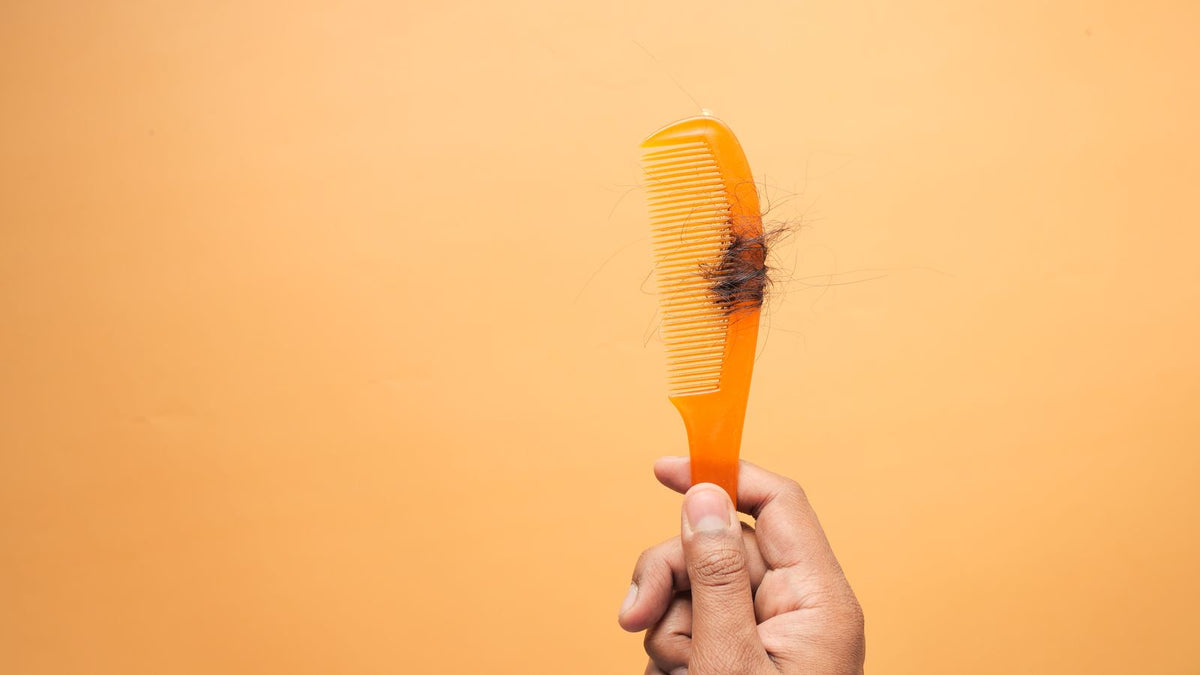
Hair Pull Test: How Many Strands Is Normal?
The hair pull test is a simple check in which you grasp roughly 60 hairs near the scalp and draw your fingers steadily along them. Fewer than six hairs coming away is considered normal. More than six suggests active shedding worth investigating. A hair pull test takes twenty seconds, costs nothing, and tells you whether your shedding is genuinely above normal or whether you are simply noticing it more.
Our hair growth shampoo
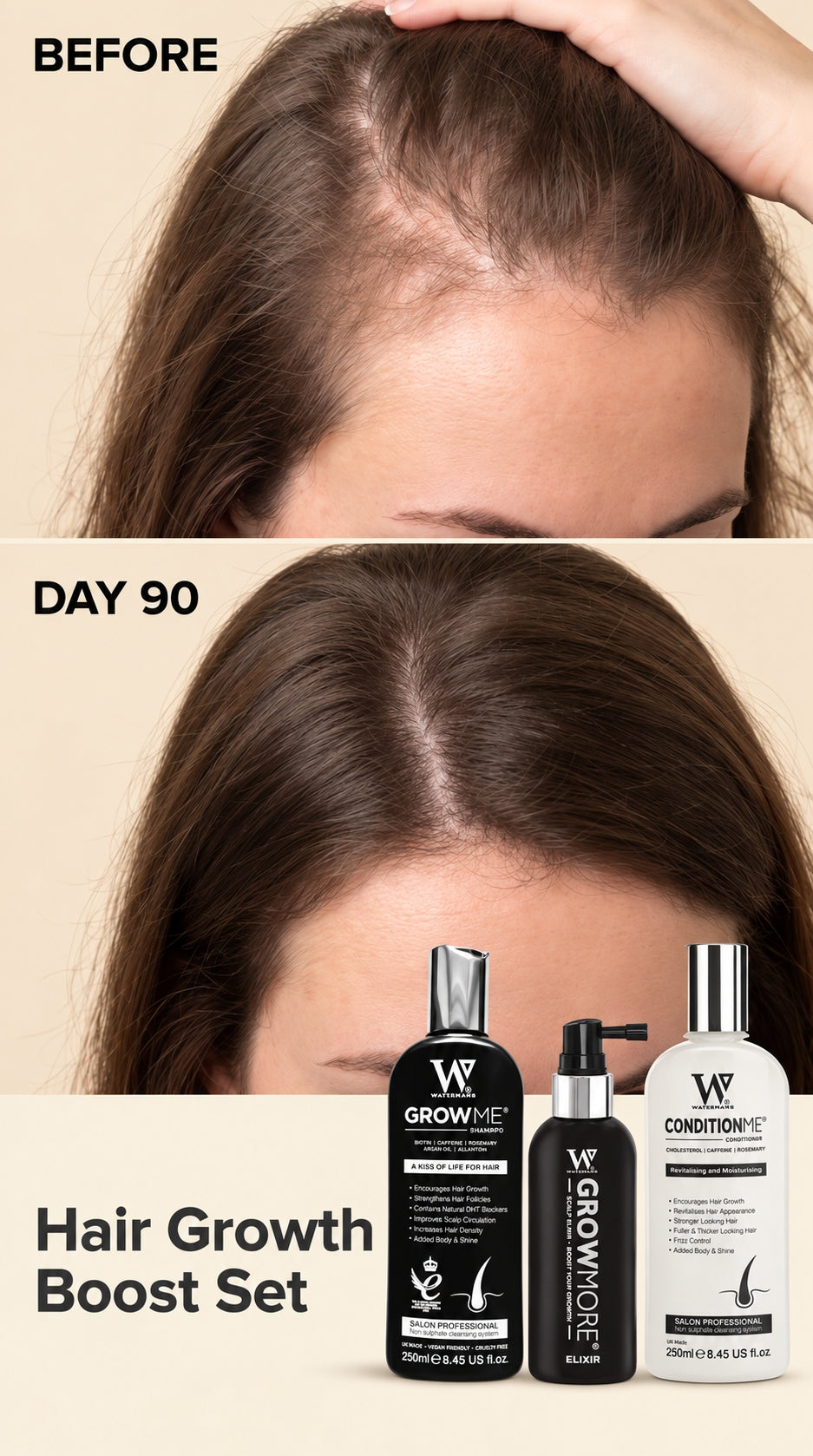
Grow Me® Hair Growth Shampoo, £14.95. A sulphate free daily shampoo that supports a healthy scalp environment and helps reduce breakage, so lengths hold on and look fuller.
Key takeaways
- Grasp about 60 hairs, draw firmly and steadily, and count what comes away. Six or fewer is normal; more than six counts as positive.
- Do not wash your hair for at least 24 hours beforehand, or you will wash away the loose hairs the test is meant to catch.
- Losing 50 to 100 hairs a day is normal. The test measures whether you are above that, not whether you have hair loss.
- A positive result points at shedding from the root, not at breakage. Check the ends of the hairs: a pale bulb means root, a blunt end means snapped.
- The test is a rough indicator you can repeat at home. It is not a medical verdict, and it cannot tell you the cause.
What is the hair pull test, and what does it measure?
The hair pull test measures how many hairs are currently loose in their follicles and ready to come away. Every follicle cycles independently through growth, transition and rest, and hairs in the resting (telogen) phase are held only loosely by a club shaped root. Gentle traction dislodges those and leaves growing hairs firmly anchored.
Around 85 to 90 per cent of scalp hairs are in the growing phase at any moment, and about 10 to 15 per cent are resting, which is why a normal result is a small number rather than zero. Losing 50 to 100 hairs a day is normal for an adult, and with roughly 100,000 follicles on the scalp that daily loss is a fraction of one per cent.
The test is used routinely in clinical settings as a first step when someone reports increased shedding, usually alongside a scalp examination. The home version uses the same technique. What it gives you is a repeatable number to track, which is far more useful than the impression that there is "a lot of hair" in the shower.
Loss, shedding and breakage are three different problems
Hair loss means the follicle is affected, as in androgenetic alopecia, and shows as a pattern: a widening parting or receding temples. Shedding means healthy follicles moved into the resting phase early and released their hairs together. Breakage means the follicle is fine and the strand snapped along its length. The pull test detects shedding. It cannot see breakage at all, because broken pieces are not attached to a follicle.
How do you do a hair pull test at home, step by step?
Preparation matters more than technique, and the single most common mistake is washing first. Leave hair unwashed and unbrushed for at least 24 hours before testing, because shampooing and vigorous brushing remove exactly the loose telogen hairs the test is designed to count. Testing on freshly washed hair will give a falsely reassuring result.
The hair pull test in six steps
| Step | What to do | Why it matters |
|---|---|---|
| 1 | Do not wash or brush for at least 24 hours | Washing already removes the loose resting hairs you are trying to count |
| 2 | Grasp about 60 hairs between thumb, index and middle finger, close to the scalp | Sixty is the reference number the six hair threshold is based on |
| 3 | Draw your fingers firmly and steadily to the ends, without yanking | Slow steady traction dislodges resting hairs; a sharp tug snaps growing ones and invalidates the count |
| 4 | Count the hairs left in your hand onto white paper | Dark paper hides light hair and vice versa; contrast matters more than people expect |
| 5 | Repeat at the crown, both temples and the nape | Pattern loss is regional, so a single site tells you very little |
| 6 | Note the date and the counts | One reading is noise. A trend over three months is information |
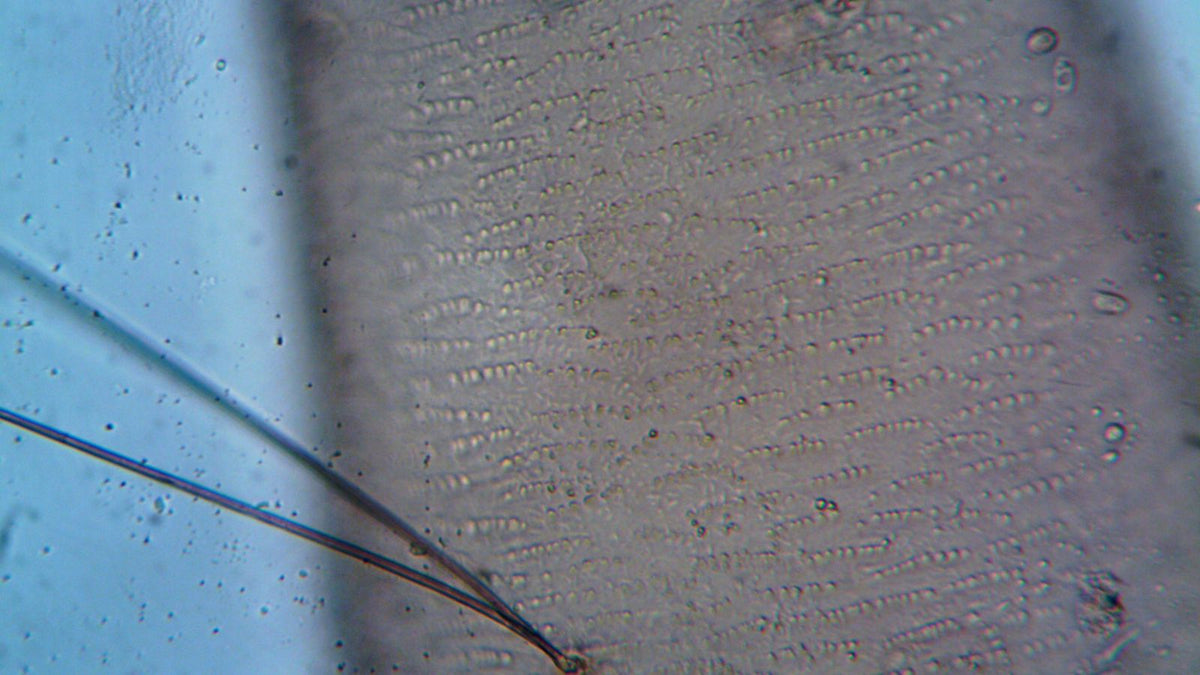
Look at what came away as well as how much. Telogen hairs carry a small, pale, club shaped bulb at the root end, which is what you expect. Short pieces with blunt ends and no bulb are broken fragments, not shed hairs, and they point at a completely different problem.

How many strands is a normal hair pull test result?
Six hairs or fewer from a grasp of about 60 is the standard normal result, which works out at roughly ten per cent or less. More than six from a single grasp counts as a positive test and suggests shedding above the usual rate. The threshold is a convention rather than a hard biological line, so a result of seven is not meaningfully different from a result of six.
Context changes how much weight to give a number. Shampooing removes loose hairs, so testing the morning after a wash lowers the count. Hair that has not been washed for several days will give a higher count because shed hairs have accumulated. Seasonal variation is real too, with many people shedding more in late summer and autumn.
How to read your result
| Result from ~60 hairs | What it suggests | Sensible next step |
|---|---|---|
| 0 to 6 hairs | Within the normal range | Nothing. Repeat in 3 months if you are still worried |
| 7 to 10 hairs | Mildly increased shedding | Repeat in 4 weeks on unwashed hair. Look back 3 months for illness, stress or a change |
| More than 10 hairs | Clearly increased shedding | Speak to your GP, especially if it has lasted more than 6 weeks |
| Mostly short blunt pieces, no bulbs | Breakage, not shedding | Review heat, chemical processing and detangling habits |
Get a discount on the hair shedding range
Join the Watermans mailing list and we will email a discount code straight to your inbox, so you can try the hair shedding range for less. Made in the UK, over 6.5 million bottles sold since 2012.
What does a positive hair pull test suggest?
A positive result indicates that an unusual number of follicles have entered the resting phase together, and telogen effluvium is the commonest explanation. Telogen effluvium follows a trigger by roughly three months, which is the length of the resting phase, so the useful question is not "what changed this week" but "what happened about three months ago".
Documented triggers include serious illness with fever, surgery and general anaesthetic, childbirth, significant weight loss or crash dieting, severe emotional stress, iron deficiency and thyroid disorders. Some medicines cause shedding as a side effect, and that is a conversation for the doctor who started them rather than a reason to stop anything.
A positive test can also occur in the active phase of other conditions, including alopecia areata, where a pull test at the edge of a bald patch typically comes away easily. That is one reason the test is an indicator and not an answer: the same number can arise from very different causes.
The three month rule is the most useful thing here
Because telogen lasts around three months, shedding that starts today usually points at something that happened about twelve weeks ago. People routinely blame a new shampoo they started last week. Look back a season instead: an illness, an operation, a birth, a bereavement, a crash diet. Telogen effluvium is self limiting and typically settles over six to nine months once the trigger has passed.
What can the hair pull test not tell you?
The test cannot identify a cause, cannot detect breakage, and cannot rule out gradual pattern hair loss. Androgenetic alopecia progresses through follicles producing finer hair each cycle rather than through a surge of shedding, so a person with a visibly widening parting can produce a perfectly normal pull test result. A normal result is not reassurance about pattern loss.
Nor does the test see breakage. Broken strands are no longer attached to a follicle, so traction on the remaining hair pulls nothing extra out. Someone losing a great deal of hair to bleaching, tight styles or daily straightening at 230 degrees can test entirely normal while their hair visibly thins.
Accuracy is limited too. The technique varies between people, hair washing changes the result, and long hair makes counting harder. Clinical assessment uses additional methods such as a trichogram or phototrichogram, which photograph and measure hairs in a defined area. Use the home test as a trend line, not as a verdict.

Grow Me® Hair Growth Shampoo £14.95
Sulphate free daily shampoo with caffeine, rosemary, biotin, niacinamide and hydrolysed lupine protein. Cleanses gently and reduces breakage so hair looks fuller.
How is this different from counting hairs in the shower?
Counting daily loss measures total shedding across the whole head over 24 hours, while the pull test samples one small area at one moment. Both are useful and they answer different questions. The daily count is better for tracking overall change, and the standard method is a hair collection over seven consecutive days, counting everything from the brush, pillow and shower drain.
The daily figure to compare against is 50 to 100 hairs, though that figure rises for people who wash less frequently, because several days of shedding arrives at once. Long hair also looks like far more hair than short hair at the same count, which is why people with long hair so often believe they are shedding heavily when they are not.

What should you do after a positive result?
Start with the timeline, then the basics, then the doctor if it persists. Look back three months for a trigger, since identifying one often explains everything and predicts recovery. Check that you are eating enough, since crash dieting and low calorie intake are common and under recognised causes of shedding.
Speak to your GP if shedding has continued beyond six weeks, if it is heavy, or if it comes with fatigue, weight change, irregular periods or a scalp that is sore or scaly. Blood tests including ferritin and thyroid function are routine first steps for unexplained shedding in women. Do not start iron supplements on your own, because iron overload is harmful and the tests come first.
How do you protect the hair you have while shedding settles?
Protecting existing hair is the one part of this you fully control, and it matters because shedding and breakage stack. Hair that is already shedding from the root looks far worse if it is also snapping in the comb, and reducing breakage is exactly what conditioning, gentle detangling and heat control are for.
Practical steps: detangle from the ends upwards on conditioned hair with a wide tooth comb, keep straighteners at 180 degrees or below, let hair dry to damp before blow drying, loosen tight ponytails, and use a silk or satin pillowcase to cut overnight friction. None of this affects the shedding itself. All of it affects how much hair is left on your head at the end of the month.

Condition Me® Hair Growth Conditioner £13.95
Breakage defence conditioner with cholesterol, shea butter, glycerin and hydrolysed lupine protein. Slip for detangling means fewer strands snapped by the comb.

When should you speak to a GP rather than repeat the test?
Speak to your GP if shedding has lasted more than six weeks, if hair is coming out in discrete round patches, if the scalp is scarring, scaly or painful, or if you are losing hair from eyebrows, lashes or body hair as well. Any of those goes beyond what a home check can usefully tell you.
Sudden patchy loss and scarring on the scalp both warrant prompt attention, because scarring alopecias destroy follicles permanently and early assessment genuinely changes the outcome. A registered trichologist, for instance through the Institute of Trichologists, can examine hair and scalp in detail. Watermans makes cosmetic hair care and does not run clinics or offer assessments. If your question is about products or a routine rather than a medical one, you can talk to Gail Waterman, our co-founder, as an AI avatar on the Watermans homepage. To track whether any of this is changing over time, our guide to hair density measurement sets out a home photo method that is actually repeatable. The balance of growing and resting hairs behind this test is explained in our guide to the anagen telogen ratio.
Frequently asked questions
How many hairs should come out in a hair pull test?
Six or fewer from a grasp of about 60 hairs is the normal result, which is roughly ten per cent. More than six counts as positive and suggests shedding above the usual rate. Repeat at the crown, temples and nape, because shedding and pattern loss are often regional rather than even across the head.
Should I wash my hair before doing the test?
No. Leave hair unwashed and unbrushed for at least 24 hours beforehand. Shampooing and brushing already remove the loose resting hairs the test is meant to count, so testing on freshly washed hair produces a falsely low number and a false sense of reassurance.
Is losing 100 hairs a day normal?
Yes. Losing 50 to 100 hairs a day is normal for an adult with roughly 100,000 scalp follicles. People who wash less often see several days of shedding arrive together, which looks alarming and is not, and long hair looks like much more hair than short hair at exactly the same count.
Can this test detect pattern hair loss?
Not reliably. Androgenetic alopecia works by follicles producing a finer hair with each cycle rather than by a burst of shedding, so someone with a clearly widening parting can produce a normal result. Compare the thickness of crown hairs against nape hairs instead, and take a widening parting to a GP.
What if the hairs have no bulb on the end?
Then you are looking at breakage rather than shedding. A shed hair carries a small pale club shaped bulb at the root end. A blunt end with no bulb means the strand snapped somewhere along its length, which points at heat, chemical processing, tight styles or rough detangling.
How often should I repeat the check?
Monthly at most, and every three months is usually more informative. A single count is noise, because washing, season and technique all move the number. Record the date and the count at each site, and let a rising trend over several months be the signal worth acting on.
Does shedding after childbirth show up on this test?
Usually yes. Postpartum shedding is a form of telogen effluvium that typically begins two to four months after birth, as the follicles held in the growing phase during pregnancy release together. It is self limiting and most people see it settle within six to nine months without any intervention.
Can stress alone cause a positive result?
Severe physical or emotional stress is a well documented trigger for telogen effluvium, and the shedding typically appears about three months afterwards rather than during the stressful period. Everyday work pressure is a much weaker candidate than bereavement, serious illness, surgery or significant weight loss.
What is the bottom line on the hair pull test?
The hair pull test turns a vague worry into a number you can repeat, and that alone makes it worth twenty seconds. Six or fewer from sixty hairs is normal. More than six, on unwashed hair, means genuine shedding and sends you looking back three months for a trigger rather than blaming this week's shampoo.
Keep its limits in view. A normal result does not rule out pattern hair loss, and the test is blind to breakage entirely. If shedding lasts beyond six weeks, comes in patches, or arrives with other symptoms, that is a GP conversation. Meanwhile, protect what is on your head: less heat, gentler detangling, looser styles and proper conditioning.
While shedding settles, the goal is keeping every hair that is still attached. A gentle hair growth conditioner gives enough slip to detangle without snapping strands, which is where most avoidable loss actually happens.
Related reading
- what causes telogen effluvium, and the recovery timeline
- a three clue self check for thinning hair
- the three mechanisms behind thinning hair
- alopecia areata symptoms, causes and what helps
Sources and references
- NHS: Hair loss
- DermNet: Telogen effluvium
- DermNet: Alopecia areata
- StatPearls: Physiology, Hair (NCBI Bookshelf)
- NHS: Iron in your diet
- NHS: Your body after childbirth
- The Institute of Trichologists
Watermans products are 100% cosmetic and do not treat medical hair loss. Individual results may vary.