Donor Density: The Number That Decides a Hair Transplant
Every hair moved in surgery has to come from somewhere, and that somewhere is finite.
Donor density is how much hair is packed into the back and sides of the scalp, the area surgeons take grafts from. It sets the ceiling on what hair restoration surgery can achieve, because nothing is created in the process: hair is only redistributed. Someone with a generous donor area and limited thinning has options. Someone with a sparse one and extensive loss has very few, and no clinic can manufacture more.
Our hair growth shampoo
Grow Me® Hair Growth Shampoo, £14.95. A sulphate free daily shampoo that supports a healthy scalp environment and helps reduce breakage, so lengths hold on and look fuller.
Key takeaways
- The donor area is the hair at the back and sides, not the thinning area.
- Surgery moves hair, it does not create it, so the donor area is a fixed budget.
- The NHS notes grafts each contain 1 to 4 hairs, which is why counts are quoted in grafts rather than hairs.
- A hair transplant is not available on the NHS because it counts as cosmetic surgery.
- UK costs run from about £1,000 to £30,000 according to the NHS.

What is donor density and why does it decide the outcome?
Donor density is the amount of hair growing per unit of scalp in the safe zone at the back and sides of the head, measured before anything else. Surgeons assess it before anything else because hair restoration is a redistribution exercise, not a manufacturing one. Every graft placed at the hairline is a graft permanently removed from the back, so the donor area functions as a budget that can be spent once.
That framing explains why two people quoted the same number of grafts can get very different results. A dense donor area can give up several thousand grafts and still look untouched, because the remaining hairs close the visual gap. A sparse one thins visibly as soon as grafts are taken, trading a covered crown for a see-through back. Good surgeons refuse cases for exactly this reason.
How is donor density assessed before surgery?
Assessment is done with magnification rather than by eye. A surgeon or trichologist uses a handheld dermatoscope to look at a marked square of scalp at the back of the head, counts the follicular units inside it, and notes how many hairs sit in each unit. DermNet describes this magnified scalp examination, trichoscopy, as a non-invasive way of seeing structures that are not visible to the naked eye.
Three numbers come out of that check: how many follicular units per unit area, how many hairs sit in each unit, and how thick the individual fibres are. The third matters more than people expect, because coarse hair covers far more scalp per strand than fine hair does. The same measuring approach is used away from surgery too, which we cover in what a phototrichogram measures.
Grafts are not hairs
Clinics quote prices per graft, and a graft is a follicular unit. The NHS describes each graft as containing 1 to 4 hairs. So 2,000 grafts might be 3,000 hairs or closer to 6,000 depending on the person. When comparing quotes, ask how many hairs, not just how many grafts, or you are comparing two different things.
Why is the back of the head used as the donor area?
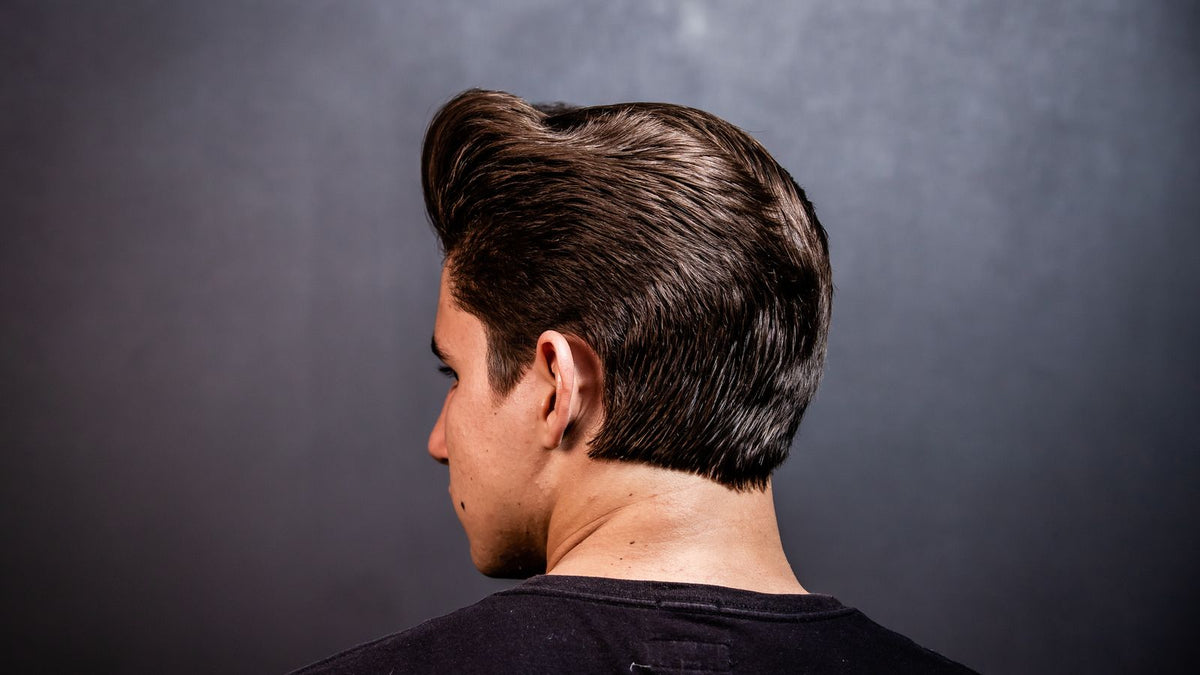
Follicles at the back and sides carry far fewer androgen receptors than those at the crown and hairline, so they do not respond to the hormonal signal that drives pattern thinning. Crucially, that indifference travels with the follicle. A hair moved from the back to the crown keeps behaving like back-of-the-head hair, which is the entire principle hair restoration surgery rests on.
It also explains why the donor zone has borders. The safe area sits in a band around the back and sides, and hair taken from too high up may itself be destined to thin later, leaving gaps that appear years after the surgery. A surgeon who maps that band conservatively is protecting you from a result that looks good at thirty and odd at fifty. Our page on hair transplant timing covers why age matters so much here.
What does donor density mean for how much coverage is realistic?
Realistic coverage is a subtraction sum. Take the total grafts the donor area can safely give up over a lifetime, subtract what is needed to make the hairline look natural, and whatever remains is available for the crown. The crown is a circular area that consumes grafts quickly, which is why many surgeons advise spending the budget on the frontal third first, where framing the face buys the most visible change.
| Donor picture | Realistic aim | Common advice |
|---|---|---|
| Dense donor, limited frontal loss | Hairline and frontal third restored well | Usually a straightforward single session |
| Dense donor, extensive loss | Frontal third prioritised, crown partial | Spend on the face-framing area first |
| Sparse donor, limited loss | Modest, conservative work | Often worth waiting and reassessing |
| Sparse donor, extensive loss | Coverage not achievable | A good surgeon will decline |
The last row is the one worth taking seriously. Being turned down is a sign of a careful surgeon, not a failed consultation, and a clinic that accepts every case regardless is telling you something about how it operates.

How do FUT and FUE affect the donor area differently?
The two methods take hair from the same region but leave different marks. The NHS describes follicular unit transplantation, or the strip method, as removing a thin strip of hair-bearing skin from the back of the head, dividing it into grafts and closing the site with stitches, leaving a linear scar that should not be visible unless the hair is very short.
Follicular unit extraction works differently. The NHS describes the back of the head being shaved and individual grafts removed one by one, leaving many tiny scars that are not very noticeable. Each approach spends that supply in its own way, and neither is universally better. Which suits you depends on how short you wear your hair, how much laxity your scalp has and how many grafts are needed.
| FUT (strip) | FUE | |
|---|---|---|
| How hair is taken | Thin strip of skin, then divided | Individual grafts, one by one |
| Shaving | Only the strip area trimmed | Back of the head shaved |
| Scarring (NHS) | One linear scar | Many tiny scars |
| Wearing hair very short | Linear scar may show | Generally more forgiving |
| Closure | Stitches | No stitches |
If you are weighing the two, our detailed comparison of FUE against FUT goes through the trade-offs case by case, and whether DHI beats FUE covers the newer variation clinics often upsell.
Get a discount on the thinning hair range
Join the Watermans mailing list and we will email a discount code straight to your inbox, so you can try the thinning hair range for less. Made in the UK, over 6.5 million bottles sold since 2012.
What should you ask a clinic about donor density before committing?
Ask questions that force specific answers rather than reassurance. The NHS recommends checking that the surgeon is registered with the General Medical Council and holds a licence to practise, that any independent clinic in England is registered with the Care Quality Commission, and checking the British Association of Hair Restoration Surgery register. Those three checks take ten minutes and filter out a great deal.
Then ask about your own head. What is my measured donor density, and in what units? How many grafts can this donor area safely give across my lifetime, not just today? How many hairs, not grafts, am I paying for? What happens to the plan if my thinning progresses another ten years? A clinic that answers those four clearly is worth listening to; one that redirects to a discount is not.
The NHS also suggests asking how many of these procedures the surgeon has performed, how many involved complications, what follow-up to expect and what happens if something goes wrong. Write the answers down. A surgeon who is comfortable being asked will not mind you taking notes.
How much does hair restoration surgery cost in the UK?
The NHS states that a hair transplant in the UK can cost anywhere between one thousand and thirty thousand pounds, depending on the extent of the hair loss, the type of procedure and the quality of the clinic and its team. It is not available on the NHS, because it is classed as cosmetic surgery, so the cost falls to you in full.
That range is wide because it covers everything from a small hairline touch-up to multi-session work. Very low quotes, particularly abroad, usually reflect fewer grafts, less surgeon time or technicians doing more of the work. The NHS also warns to be careful when searching online for clinics, because some pay to advertise in search listings, and a top result is an advert rather than a recommendation.

What happens to donor density if thinning keeps progressing?
Pattern thinning does not stop because someone has had surgery. The transplanted hairs keep their inherited resistance and stay put, but the original hairs sitting between and behind them carry on miniaturising on their own schedule. Over ten or fifteen years that can leave a restored hairline in front of a scalp that has thinned behind it, which is the classic badly planned result.
Surgeons manage this by planning for the worst realistic case rather than the current one. That means a more conservative hairline placed slightly higher, grafts held in reserve rather than all spent in one session, and a frank conversation about whether a second procedure will be needed and affordable later. A plan that only works if your thinning stops today is not a plan.
It is also why age is such a strong filter. Someone in their early twenties has not yet shown how far their thinning will go, so the safe assumption is that it will go a long way, and spending the whole donor budget before that pattern is clear removes every option later.
How do you look after the hair you already have while you decide?
Nothing in a bottle changes donor density, and we are not going to suggest otherwise. What everyday care does do is protect the hair currently on your head from mechanical damage, which matters because breakage subtracts from how dense your hair looks without any follicle being lost. Hair that snaps at mid-length reads as thinning even when the follicles are perfectly healthy.
Keep the scalp clean and comfortable, condition so fibres bend rather than snap, and moderate the heat. If you do go ahead with surgery, follow your own surgeon's aftercare instructions rather than any general advice, including ours, because the operated area has particular needs in the first weeks.

Grow Me® Hair Growth Shampoo £14.95
Sulfate-free daily shampoo with caffeine, rosemary, niacinamide and biotin. Cleanses without stripping and supports a healthy scalp environment while you weigh your options.

Condition Me® Hair Growth Conditioner £13.95
Breakage-defence conditioner with cholesterol, shea butter and hydrolysed lupine protein. Hair saved from snapping is visible density you keep, with no surgery involved.

Protect Me® Heat Protection Spray £13.95
Leave-in heat protection spray to 230 degrees. Useful if you blow-dry or straighten, since heat damage is one of the fastest ways to lose apparent thickness.
When should you see a GP before considering surgery?
See a GP if your hair loss has come on quickly, appears in discrete patches rather than a pattern, or comes with a sore, scaly or itchy scalp. The NHS advises seeing a GP to get an idea of what is causing hair loss before thinking about going to a commercial hair clinic, and notes that surgery is suitable for permanent hereditary baldness rather than for other types such as the kind causing bald patches.
That order of operations protects you from paying for surgery aimed at the wrong problem. A GP can look at the scalp and check ordinary causes such as low iron or thyroid changes at no cost. If your question is about products or a routine rather than a medical one, you can talk to Gail Waterman, our co-founder, as an AI avatar on the Watermans homepage. Watermans sells cosmetic hair care and does not run clinics, perform surgery or assess anyone for it. To see how donor supply turns into coverage, our follicular unit density guide explains hairs per unit and why transplants can look sparse. If you are weighing up surgery, our guide to donor hair quality sets out the seven signs that decide how far grafts will go.
What are the frequently asked questions about donor density?
Can donor density be increased?
No. The number of follicles in the donor area is fixed, and surgery only moves them. Scalp care, supplements and devices do not add follicles. Anything promising to expand the donor supply is making a claim that the underlying biology does not support.
Does the donor supply change with age?
It can decline gradually, since overall hair count falls slowly over decades and the donor zone is not completely immune to age. This is one reason surgeons plan conservatively for younger people, whose thinning has not yet finished progressing.
How many grafts can a donor area give in total?
It varies enormously with individual scalp laxity, hair calibre and starting supply, which is why a specific number here would be misleading. It is the central question to ask your own surgeon after they have measured your scalp, and a good one will give a lifetime figure rather than a single-session one.
Is body hair a substitute for scalp donor hair?
Body hair differs in texture, growth cycle length and curl, so results are generally less predictable and it is not a straightforward replacement for scalp donor supply. Discuss it with a surgeon rather than assuming it expands the budget.
Will the donor area look thinner after surgery?
Some reduction is unavoidable because hair has been removed, and how visible it is depends on the starting supply and how much was taken. A well-planned harvest spreads extraction so the area thins evenly rather than showing patches.
Does a transplant stop existing thinning?
No. Moved hair keeps its own resistance to pattern thinning, but the original hair around it carries on doing whatever it was going to do. That mismatch is why planning for future progression matters as much as the surgery itself.
Is a hair transplant available on the NHS?
No. The NHS states it is not available because it is cosmetic surgery, so the full cost falls to you. The NHS quotes a UK range of about one thousand to thirty thousand pounds depending on extent, technique and clinic.
Can women have hair restoration surgery?
Some can, though female pattern thinning is often diffuse and can involve the donor zone too, which reduces the usable supply. Careful measurement matters even more here, and a cautious surgeon will say when it is not appropriate.
What is the bottom line on donor density?
Donor density is the number that decides whether hair restoration surgery can work for you, because the operation redistributes hair rather than creating it. A generous donor area buys real options; a sparse one limits them however good the clinic is. Getting that measured honestly, before any talk of price or graft counts, is the single most useful thing you can do.
Check the surgeon on the GMC register, check the clinic with the CQC, ask how many hairs rather than grafts you are buying, and ask what the plan looks like in ten years. And while you decide, protect the hair you already have from heat and breakage, because that costs very little and no operation gives it back.
If you want one practical change while you think it over, a gentle daily wash is the least dramatic and most useful: our hair growth shampoo cleanses without stripping a scalp you are already watching closely.
Watermans products are 100% cosmetic and do not treat medical hair loss. Individual results may vary.
Sources & references
- NHS, Hair transplant (cosmetic procedures), checked 17 September 2026.
- NHS, Hair loss, checked 17 September 2026.
- NHS, Cosmetic procedures, checked 17 September 2026.
- DermNet, Trichoscopy, checked 17 September 2026.
- Care Quality Commission, checked 17 September 2026.
- DermNet, Male pattern hair loss, checked 17 September 2026.