Scalp DHT: What It Actually Does to Hair Follicles
The hormone gets the blame, but the real story happens at the follicle.
Scalp DHT is dihydrotestosterone acting on hair follicles in the skin of the scalp. It is made from testosterone by an enzyme called 5-alpha reductase, and in people who inherit a sensitivity to it, it shortens the growing phase of the hair cycle and shrinks follicles over successive cycles. That is why pattern thinning shows at the crown and hairline first. Scalp DHT is not a residue sitting on the skin, so it cannot be washed off.
Our hair growth shampoo
Grow Me® Hair Growth Shampoo, £14.95. A sulphate free daily shampoo that supports a healthy scalp environment and helps reduce breakage, so lengths hold on and look fuller.
Key takeaways
- DHT is a normal androgen made from testosterone by the enzyme 5-alpha reductase.
- DermNet reports that DHT can shorten the growing phase from a usual 3 to 6 years down to weeks or months.
- Sensitivity to it is inherited, and the susceptibility genes come from both parents.
- It acts inside the follicle, so no shampoo rinses it off the scalp.
- Cosmetic scalp care supports the hair you have; it does not change inherited follicle sensitivity.

What is scalp DHT and where does it come from?
Dihydrotestosterone is an androgen the body makes from testosterone using an enzyme called 5-alpha reductase. Both men and women produce it. When people talk about the hormone at the scalp they mean it reaching the hair follicles in the skin of the head, where some follicles carry receptors that respond to it and others largely do not. The hormone is ordinary; the follicle response is what varies. For the evidence on the most popular herbal option, see our guide to saw palmetto hair loss supplements.
That distinction is the whole subject in one sentence. DermNet describes pattern hair loss as a genetically determined sensitivity to the effects of dihydrotestosterone in some areas of the scalp, which means two people with identical hormone levels can have completely different hair at fifty. The hormone is a trigger that only fires where the lock accepts the key.
How does scalp DHT change the hair growth cycle?
Every hair follicle runs a cycle: a long growing phase called anagen, a short transition, then a resting phase before the hair is released and a new one starts. DermNet reports that DHT is believed to shorten the anagen phase from a usual duration of three to six years down to weeks or months in susceptible follicles. A shorter growing phase means the hair never reaches its old length.
Alongside that shortening comes miniaturisation. Each time a susceptible follicle cycles it produces a slightly finer, shorter hair than last time, until what grows is a barely visible vellus hair rather than a thick terminal one. Nothing falls out dramatically. The scalp simply becomes more visible as the fibres covering it get thinner, which is why people often notice the change in photographs before they notice it in the mirror.
| Stage | What the follicle does | What you see |
|---|---|---|
| Healthy anagen | Grows for 3 to 6 years | Full-length, thick hair |
| Shortened anagen | Grows for months, not years | Hair that never gets long |
| Early miniaturisation | Produces a finer shaft each cycle | Parting looks wider in bright light |
| Advanced miniaturisation | Produces short vellus hair | Visible scalp at crown or hairline |
Why does scalp DHT affect the crown and hairline but not the back of the head?
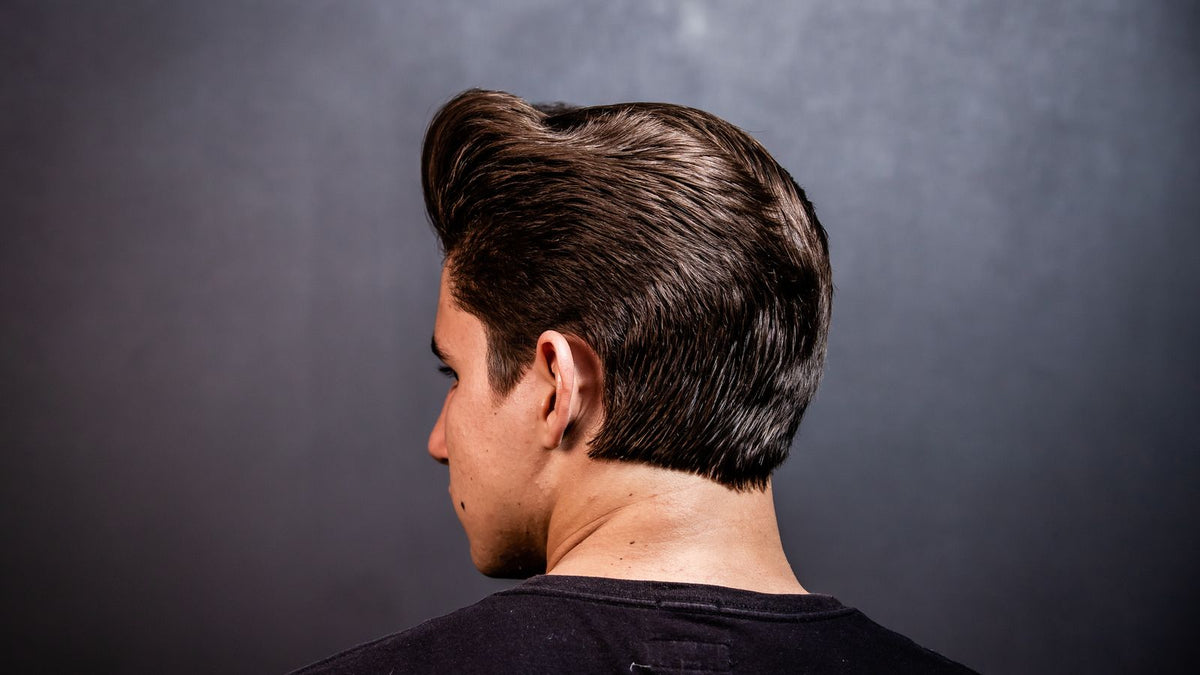
Follicles are not identical across the head. The ones at the crown, temples and front carry a higher density of androgen receptors and a stronger local response, while the follicles along the back and sides are largely indifferent to the same hormone. That regional difference is fixed in the follicle itself before birth, which is why pattern thinning follows the same recognisable map in family after family.
The practical consequence is one that surgeons rely on. Hair taken from the back of the head keeps that indifference even when it is moved to the crown, which is the entire basis of hair transplant surgery and why the back of the head is called the donor area. If you want the detail on how that area is assessed, read how terminal hair density is measured.
Loss, shedding and breakage are three different problems
This hormone causes hair loss in the strict sense: follicles producing progressively finer hair. Shedding is a cycle event, where more hairs than usual reach the end of anagen at once, and the NHS puts normal daily loss at 50 to 100 hairs. Breakage is mechanical, where the fibre snaps along its length and the follicle is perfectly healthy. Heat, bleach and tight styling cause the third, and no hormone is involved.
Can you wash scalp DHT away?
No, and this is the single most common misunderstanding about the subject. Dihydrotestosterone is not a film of grease or a deposit sitting on the skin waiting to be lifted off. It is produced and acts within the tissue around and inside the follicle, below the surface a shampoo reaches. Washing removes sebum, sweat, product build-up and dead skin, all of which is worth doing, but none of it is the hormone.
Clean scalp skin is still worth having for its own reasons: comfort, less itch, less flaking, and a better surface for anything you leave on. It just is not a way of clearing a hormone. The question comes up so often that we wrote a page on whether DHT can be removed from the scalp, and the short answer there is the same as here.

Do shampoos marketed around scalp DHT actually do anything?
A shampoo sits on the scalp for perhaps sixty seconds and is then rinsed away, which limits what any wash-off product can plausibly achieve at follicle level. Honest cosmetic shampoos are worth using for cleansing, for scalp comfort and for reducing the mechanical damage that makes thin hair look thinner. Claims that a shampoo changes an inherited hormonal sensitivity go beyond what a cosmetic product can support.
Watermans sells cosmetic hair care, so we will say plainly what our own products do and do not do. Grow Me is a sulfate-free daily shampoo with caffeine, rosemary, niacinamide, biotin and hydrolysed lupine protein. It cleanses gently, supports a healthy scalp environment and reduces breakage, which makes existing hair look fuller. It does not alter follicle sensitivity, and nobody should buy it expecting that. The wider debate about acting on this hormone at all is covered in our page on the downsides of interfering with DHT.

Grow Me® Hair Growth Shampoo £14.95
Sulfate-free daily shampoo with caffeine, rosemary, niacinamide, biotin and hydrolysed lupine protein (ANAGELINE). Cleanses without stripping and supports a healthy scalp environment.
Get a discount on the thinning hair range
Join the Watermans mailing list and we will email a discount code straight to your inbox, so you can try the thinning hair range for less. Made in the UK, over 6.5 million bottles sold since 2012.
What does a sensible scalp routine look like alongside pattern thinning?
A useful routine has three jobs: keep the scalp clean and comfortable, stop losing hair you already grew to breakage, and make what you have look as dense as it honestly can. None of those jobs requires a claim about hormones, and all three make a visible difference to how thin hair reads in daylight. Consistency matters far more than the number of products.
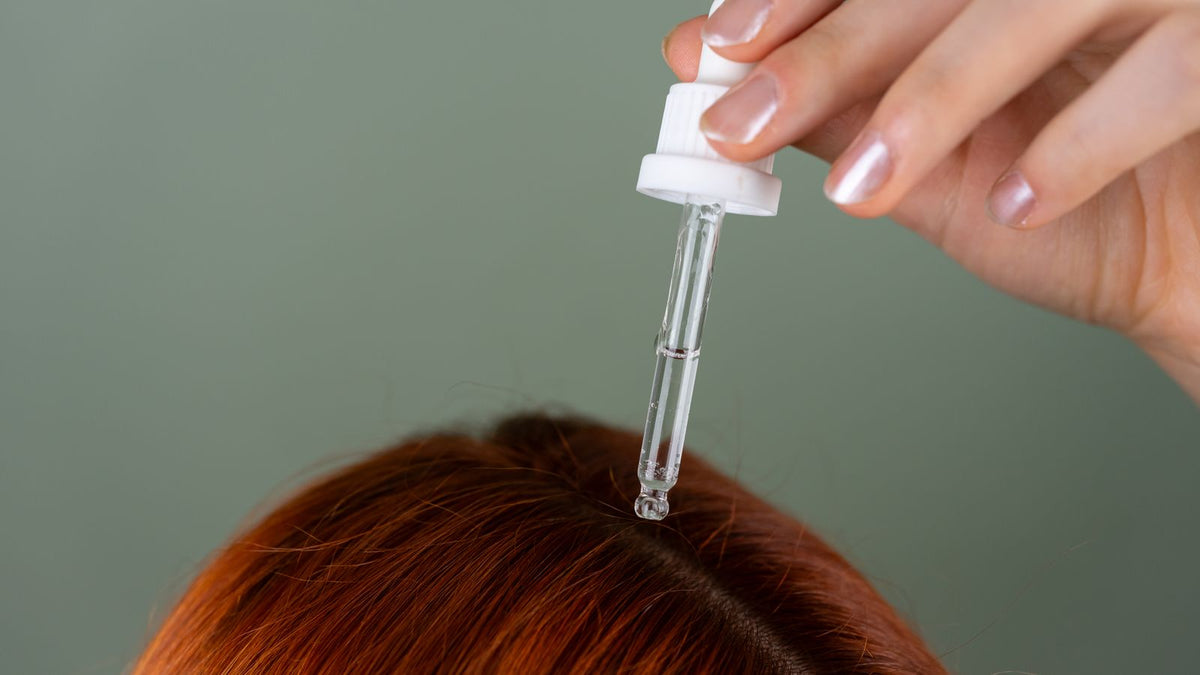
Wash often enough that the scalp is not greasy or itchy, which for most people is every day to every third day. Condition the mid-lengths and ends every wash, because fine hair snaps more easily than coarse hair and every snapped fibre subtracts from apparent density. Use a leave-on product at the scalp if you want one, since a leave-on has hours of contact rather than a minute. Keep heat moderate and use protection when you do reach for a dryer.

Grow More® Leave-In Scalp Elixir £25.50
Leave-on overnight scalp serum with caffeine, rosemary, niacinamide, biotin and hydrolysed lupine protein. Stays on the scalp for hours rather than seconds, which is the practical argument for a leave-on over a wash-off.

Condition Me® Hair Growth Conditioner £13.95
Breakage-defence conditioner with cholesterol, shea butter, silica and hydrolysed lupine protein. Fine hair snaps easily, and hair saved from snapping is density you keep.
How do you tell scalp DHT thinning from a shedding phase?
Pattern thinning is gradual, patterned and painless: months to years, concentrated at the crown, temples or parting, with the back and sides untouched. A shedding phase is fast and diffuse: a noticeable increase in hairs on the pillow and in the shower across the whole head, usually starting two to three months after an illness, a birth, a crash diet or a period of severe stress.
The two can overlap, which is why people get confused. A shedding phase on top of existing pattern thinning makes the parting look dramatically worse for a few months and then settles, while the underlying pattern carries on at its own slow pace. A rough at-home check such as the hair pull test can hint at which is happening, but it is a crude guide and never a substitute for a GP looking at your scalp.
| Feature | Pattern thinning | Shedding phase |
|---|---|---|
| Speed | Years | Weeks to a few months |
| Where | Crown, temples, parting | All over the head |
| Hairs lost daily | Often normal | Clearly above the usual 50 to 100 |
| Trigger | Inherited sensitivity | Illness, birth, stress, rapid weight loss |
| Usual course | Slowly progressive | Usually settles on its own |

Does testing hormone levels tell you anything useful about scalp DHT?
For most people with ordinary pattern thinning, a blood test for androgens adds very little, because the issue is follicle sensitivity rather than circulating quantity. Someone can have entirely normal hormone levels and pronounced pattern thinning, and someone else can have higher levels and keep their hair. The number in the blood does not describe what the receptors in the scalp are doing.
Testing does earn its place when other signs point to an underlying cause: hair changes alongside irregular periods, new coarse facial hair, acne appearing in adulthood, or rapid change over months rather than years. Those are questions for a GP, who can decide what is worth checking. Our page on what DHT levels actually mean goes further into why the number alone is a weak guide.
When should you see a GP about scalp DHT and thinning hair?
See a GP if the change has been fast, if there are bald patches rather than diffuse thinning, if the scalp is sore, scaly or itchy, or if hair change comes with tiredness, weight change or period changes. The NHS advises speaking to a GP if you are worried about hair loss, and specifically suggests doing so before going to a commercial hair clinic, which is sound advice worth repeating.
A GP can look at the scalp, check ordinary causes such as low iron or thyroid changes, and explain what the options are. The NHS is also candid that no option is 100 per cent effective. If your question is about products or a routine rather than a medical one, you can talk to Gail Waterman, our co-founder, as an AI avatar on the Watermans homepage. Watermans does not run clinics and cannot tell you what is behind your thinning.
What are the frequently asked questions about scalp DHT?
Is DHT bad for you?
No. Dihydrotestosterone has normal roles in the body, and it is only unwelcome where scalp follicles carry an inherited sensitivity to it. Treating a normal androgen as a toxin misreads the biology, which is why interfering with it systemically has trade-offs worth understanding.
Does washing your hair more often reduce DHT at the scalp?
No. Washing removes sebum, sweat and product build-up from the surface. The hormone is produced and acts within the tissue around the follicle, below where a shampoo reaches, so frequency of washing does not change it either way.
Can women have pattern thinning driven by scalp DHT?
Yes. Female pattern hair loss involves the same androgen pathway, though it usually shows as diffuse thinning across the mid-frontal scalp rather than a receding hairline. DermNet reports around 40 per cent of women show signs of hair loss by age 50.
Does scalp massage change DHT at the follicle?
There is no good evidence that massage alters hormone activity at the follicle. Massage is pleasant, it helps a tight or itchy scalp feel better, and it is a sensible way to work a leave-on product in. Treat it as comfort and product distribution rather than biology.
Why is hair at the back of the head unaffected?
Follicles at the back and sides carry far fewer androgen receptors and do not respond to the same hormone in the same way. That regional difference is set in the follicle itself, and it is why the back of the head is used as the donor area in transplant surgery.
Is DHT the reason my hair is breaking?
Almost certainly not. Breakage means the fibre snapping partway along its length, which is mechanical damage from heat, bleach, friction or tight styling. Pattern thinning produces finer hairs from the follicle instead. The two feel similar but have nothing in common.
Do caffeine and rosemary do anything for the scalp?
Both are long-standing cosmetic scalp ingredients and both are in our own formulations, used for scalp comfort and for the look and feel of the hair. We describe them cosmetically because that is what a cosmetic product can honestly claim, and we would rather be plain about it than overstate.
Can inherited pattern thinning be stopped with shampoo?
No cosmetic shampoo changes an inherited follicle sensitivity, and any product suggesting otherwise is overreaching. What good scalp care genuinely does is keep the scalp comfortable and reduce breakage, so the hair you have looks as full as it can.
What is the bottom line on scalp DHT?
Scalp DHT matters because of an inherited sensitivity in certain follicles, not because of the amount of hormone present or anything sitting on the skin. It shortens the growing phase and shrinks follicles cycle by cycle at the crown, temples and parting, while the back and sides carry on untouched. That pattern is the signature, and recognising it saves a lot of money on products aimed at the wrong problem.
What is genuinely in your hands is everything mechanical: a comfortable clean scalp, conditioned hair that bends instead of snapping, moderate heat, and getting a sudden or painful change looked at properly. That will not change your genetics, and it will make a real difference to how much hair you keep hold of.
If you want a daily wash that cleanses without stripping a scalp you are already worried about, our hair growth shampoo is the straightforward place to start.
Watermans products are 100% cosmetic and do not treat medical hair loss. Individual results may vary.
Sources & references
- DermNet, Male pattern hair loss, checked 17 September 2026.
- DermNet, Female pattern hair loss, checked 17 September 2026.
- NHS, Hair loss, checked 17 September 2026.
- DermNet, Telogen effluvium, checked 17 September 2026.
- The Institute of Trichologists, checked 17 September 2026.