Butterfly Pea Flower for Hair: 3 Recipes, Honest Limits
It is the most photogenic thing in hair care, which is exactly why the claims about it got out of hand.
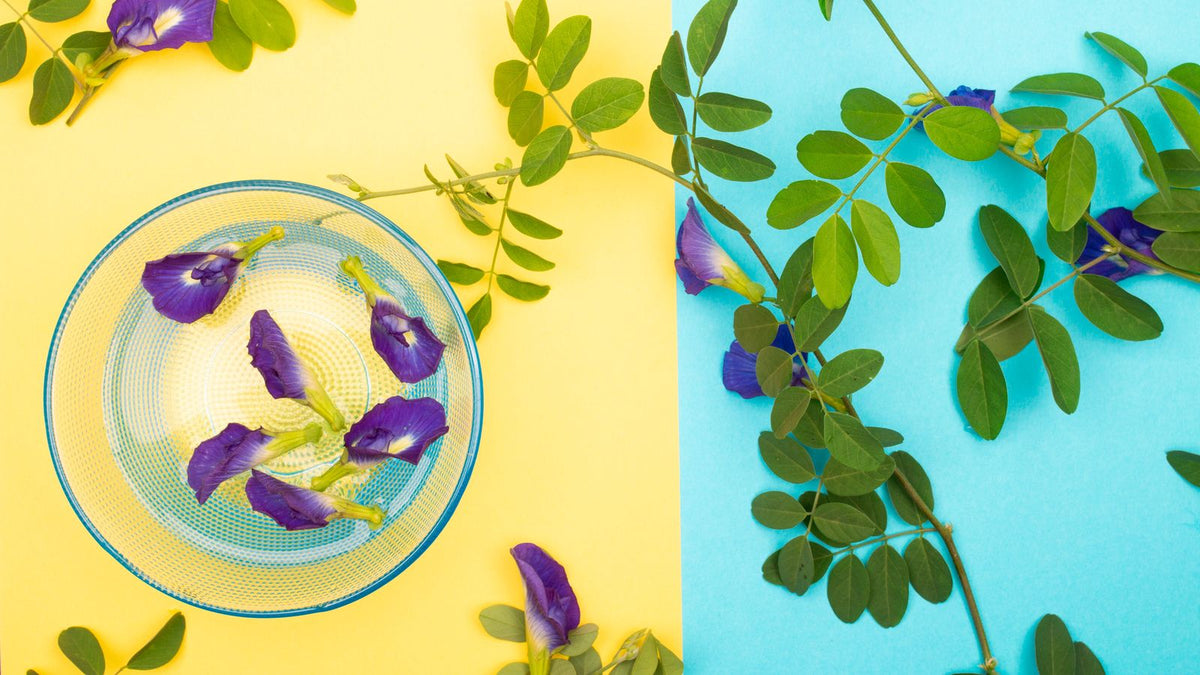
Here is the honest picture on butterfly pea flower for hair. Clitoria ternatea is a vivid blue flower whose colour comes from anthocyanins, the same family of antioxidant pigments found in blueberries. Steeped into a cooled rinse and poured over washed hair once or twice a week, it conditions, adds shine and can leave a soft tint on very light hair. There is no human trial of it on hair, so the growth claims are traditional rather than tested.
Our hair growth conditioner
Condition Me® Hair Growth Conditioner, £13.95. Detangles and strengthens the hair fibre so lengths snap less on the brush and look thicker through the ends.
Key takeaways
- Butterfly pea flower is Clitoria ternatea. Its blue comes from anthocyanins, a group of antioxidant plant pigments.
- It genuinely conditions, adds shine and soothes, and those effects are noticeable from the first rinse.
- The human research on it is about drinking it, not about applying it to hair. Growth claims are unproven.
- The pigment can tint blonde, grey and freshly bleached hair. On dark hair it is essentially invisible.
- Three easy preparations: a cooled rinse, an infused oil, and a conditioning mask. Patch test all of them.
What is butterfly pea flower?
Before getting to the recipes, it helps to know what you are actually steeping. Clitoria ternatea is a climbing legume native to Southeast Asia, grown across Thailand, Malaysia and Indonesia and widely used in cooking and drinks. The petals turn water an intense blue, and adding anything acidic such as lemon juice swings the colour to purple, which is why it turns up in cocktails and in a great many social media videos.
The colour is not decorative chemistry. It comes from anthocyanins, water soluble pigments in the flavonoid family that also act as antioxidants. In a hair context, though, what matters more prosaically is that a flower infusion is a mildly acidic, pigment rich, water based liquid, and that combination flattens the cuticle and reflects light. That is where the shine comes from.

What does the evidence actually say?
The most useful thing anyone can tell you here is what has and has not been studied. There is genuine human research on Clitoria ternatea, including a randomised crossover trial that looked at what happened to blood sugar response and antioxidant capacity after healthy volunteers drank a flower beverage. It is a real study and it says nothing whatsoever about hair.
No published human trial has tested butterfly pea flower for hair as a rinse, an oil or a mask. That leaves traditional use, which is long and genuine, and laboratory work on the plant's antioxidant content, which does not transfer automatically to a scalp. So the fair position is this: the conditioning, shine and soothing effects are real, immediate and easy to verify on your own head. The growth claims are borrowed credibility, and where the marketing and the evidence disagree, believe the evidence.
What are three ways to use butterfly pea flower for hair?
1. The cooled rinse, the one to start with
Steep a quarter of a cup of dried petals, or two or three blue tea bags, in a cup of just boiled water for fifteen to twenty minutes. Strain and let it cool to lukewarm, because hot liquid on the scalp is uncomfortable and pointless. Shampoo and condition as normal, then pour the infusion slowly over your hair and scalp, catching it in a jug and pouring it through a second time if you want. Massage it in, leave two or three minutes, then rinse with cool water.
2. Infused oil for dry lengths
Pack a clean jar with a quarter cup of dried petals, cover with a cup of jojoba or fractionated coconut oil, seal it and leave it somewhere warm and dark for about two weeks, shaking it every few days. Strain through muslin. Use a few drops on dry mid lengths and ends, or as a pre wash treatment on the scalp once a week. The oil picks up far less colour than the water infusion does.
3. Conditioning mask
Mix a quarter cup of strong cooled infusion with a quarter cup of aloe vera gel and a tablespoon of honey. Apply from mid length down, leave thirty minutes and rinse before shampooing. This is the version for coarse, bleached or very dry hair, and the one most likely to leave a tint, so strand test it if your hair is light.
| Preparation | Contact time | Tint risk on light hair | Best for |
|---|---|---|---|
| Cooled rinse | 2 to 3 minutes | Low to moderate | Shine, everyone, weekly |
| Infused oil | Overnight or pre wash | Very low | Dry ends and dry scalps |
| Conditioning mask | 30 minutes | Highest | Coarse, bleached or very dry hair |

Does butterfly pea flower tint your hair?
This is the part of using butterfly pea flower for hair that most articles wave at and move on from, which is unhelpful, because whether the pigment shows up is the single biggest practical difference between one reader and another.
Anthocyanins are water soluble and they deposit on the surface of the hair rather than penetrating it the way a permanent dye does. On dark brown or black hair there is nothing for a pale blue pigment to show against, so you get shine and no visible colour. On natural blonde, grey or white hair you can get a soft blue or lilac cast that usually washes out over two or three washes. On bleached or high lift blonde hair, where the cuticle is porous and open, that cast can hold considerably longer and can look distinctly ashy.
None of that is damage. It is a surface deposit, and clarifying shampoo lifts most of it. But if you have just paid a colourist for a specific shade of blonde, do a strand test on a hidden section before you pour a jug of blue over your head.
What is the difference between hair loss, hair shedding and hair breakage?
People generally look up butterfly pea flower for hair because they want more of it, so it is worth separating the three things that can be going wrong.
- Hair loss is a follicle problem. Pattern hair loss shrinks genetically sensitive follicles over years. Scarring conditions destroy them. A botanical rinse does nothing for either, and both are worth taking to your GP rather than a herbal shop.
- Hair shedding is a cycle problem. A large batch of follicles enters the resting phase at once, usually two to three months after an illness, childbirth, rapid weight loss or a long stretch of stress, and it settles when the trigger does.
- Hair breakage is a fibre problem. The shaft snaps along its length from heat, bleach, tight styling or rough detangling. This is the one a conditioning rinse genuinely helps, and for a lot of people it is the actual problem.
A useful test: if your parting looks the same but your brush is fuller, that is shedding. If you keep finding short broken pieces and your hair feels rough and tangly, that is breakage, and a weekly rinse is a sensible thing to add.
Get a discount on the dull and dry hair range
Join the Watermans mailing list and we will email a discount code straight to your inbox, so you can try the dull and dry hair range for less. Made in the UK, over 6.5 million bottles sold since 2012.
Where is a formulated product simply easier?
A homemade rinse is cheap, pretty and genuinely effective at what it does. It is also a fortnight of waiting for an infused oil, a strainer full of soggy petals, and a slightly different strength every time you make it. If the ritual is the point, keep it. If the result is the point, a formulated product gives you the same surface conditioning with none of the variables.

Breakage defence with hydrolysed lupine protein, shea butter, glycerin and cholesterol. If shine and detangling are what you are chasing with a rinse, this does the same job in ninety seconds, every time, at the same strength.
View Condition Me
A sulphate free cleanser with biotin, caffeine, argan oil and rosemary. Worth pairing with any botanical rinse, because a gentle shampoo leaves the cuticle in a better state for the rinse to smooth down.
View Grow Me
A ready blended conditioning oil for hair, scalp and skin. The straightforward alternative to steeping petals in a jar for a fortnight, if the infused oil is the version of this you liked the sound of.
View the oil
How do you buy and store it?
Everything above assumes decent raw material, and this is where most people trying butterfly pea flower for hair for the first time go wrong. Dried petals should be a deep, saturated blue and should stain water strongly within a minute or two of hitting hot liquid. Faded, greyish petals have lost most of their pigment and will give you a weak, disappointing infusion. Look for the botanical name Clitoria ternatea on the pack, and for a single ingredient rather than a blend if you want to know what you are working with.
Store the dried flowers in an airtight jar away from light, where they will keep their colour for a year or more. The brewed infusion is a different matter entirely: it is water and plant matter with nothing preserving it, so make it fresh, keep any leftovers in the fridge and throw them away after two days. A cloudy or sour smelling infusion goes down the sink, not on your head.
Frequently asked questions
Does butterfly pea flower make hair grow?
There is no human trial of butterfly pea flower applied to hair or scalp. The published research on Clitoria ternatea in people is about drinking it, looking at antioxidant capacity and blood sugar response, which tells you nothing about what a rinse does to a hair shaft. The conditioning and shine effects are real and immediate. The growth claims are traditional and anecdotal.
Will it dye my hair blue?
On dark hair, effectively no. On very light blonde, grey or white hair it can leave a soft blue or lilac cast, and on porous or freshly bleached hair that cast holds on longer than you might expect. If you do not want any tint at all, strand test on a hidden section first and keep the contact time short.
How do I make the rinse?
Steep a quarter of a cup of dried flowers in a cup of just boiled water for fifteen to twenty minutes, strain out the petals and let it cool to lukewarm. After shampooing and conditioning, pour it slowly over the hair and scalp, work it through, leave it two or three minutes, then rinse with cool water.
How often should I use butterfly pea flower for hair?
Once or twice a week is plenty for a rinse or a mask. The infused oil is gentler and suits two or three times a week on dry lengths. There is no benefit to daily use and, if your hair is light coloured, there is a real risk of a tint building up.
Can I just use the tea bags from the supermarket?
Yes, and it is often the easiest route. Two or three tea bags in a cup of hot water gives you roughly the strength of a quarter cup of loose petals. Check the ingredients, because many blue teas are blends with lemongrass or hibiscus, and hibiscus is acidic enough to affect very light colour on its own.
Is it safe for colour treated hair?
Generally yes, and it is gentler than most things people pour on coloured hair. The caution is the opposite of the usual one: the risk is not damage but the pigment sitting on top of your colour, which matters on blonde, silver or pastel shades and not at all on brunettes.
Does drinking the tea help my hair?
Not directly. Drinking it contributes antioxidants to your diet like any plant based drink, which is a general health point rather than a hair one. The conditioning effect on hair comes from the liquid touching the hair, so if hair is your goal, put it on your head rather than in your mug.
Can I use it if I have an itchy or flaky scalp?
A cool botanical rinse is unlikely to make simple dryness worse and some people find it soothing. If you have persistent flaking with redness and greasiness, that is more likely seborrhoeic dermatitis, which wants a medicated shampoo from a pharmacy rather than a herbal rinse. Patch test either way.
What is the bottom line on butterfly pea flower for hair?
Used as a weekly cooled rinse, butterfly pea flower for hair is a genuinely nice thing: cheap, gentle, and reliably good for shine, slip and a comfortable scalp. Steep it, cool it, pour it through after conditioning, leave it a couple of minutes and rinse. Strand test first if your hair is blonde, grey or freshly bleached, because the pigment is a surface deposit that shows up on light hair and disappears on dark. Just buy it for shine and conditioning rather than for growth, because the human research on this plant is about a drink, and if your real concern is a widening parting or sudden shedding, your GP is the right first step. If your question is about products or a routine rather than a medical one, you can talk to Gail Waterman, our co-founder, as an AI avatar on the Watermans homepage.
Worth reading next: our honest guides to brahmi powder for hair and batana oil, how to repair bleach damaged hair if your ends are the problem, and what genuinely helps when you are shedding more than usual.
The scalp is where this starts, so give our sulphate free hair growth shampoo a couple of months of honest use.
Sources and References
- Acute effect of Clitoria ternatea flower beverage on glycemic response and antioxidant capacity in healthy subjects: a randomised crossover trial, BMC Complementary and Alternative Medicine, 2018 the human research on this plant, which concerns drinking it rather than applying it.
- DermNet, Allergic contact dermatitis on why any new plant preparation needs a patch test.
- NHS, Herbal medicines and complementary therapies on quality, regulation and checking with a pharmacist first.
- DermNet, Seborrhoeic dermatitis on telling simple dryness from greasy flaking that needs a medicated shampoo.
- Physiology, Hair, StatPearls, NCBI Bookshelf on hair shaft and cuticle structure, and why surface deposits behave as they do.
- NHS, Hair loss on when hair loss is worth seeing a GP about.
Watermans products are 100% cosmetic and do not treat medical hair loss. Individual results may vary. Watermans is a UK family business that has sold over 6.5 million bottles since 2012. The range is cruelty free and made in the UK.