Chia Seeds for Hair Growth: Eat Them, Do Not Apply Them
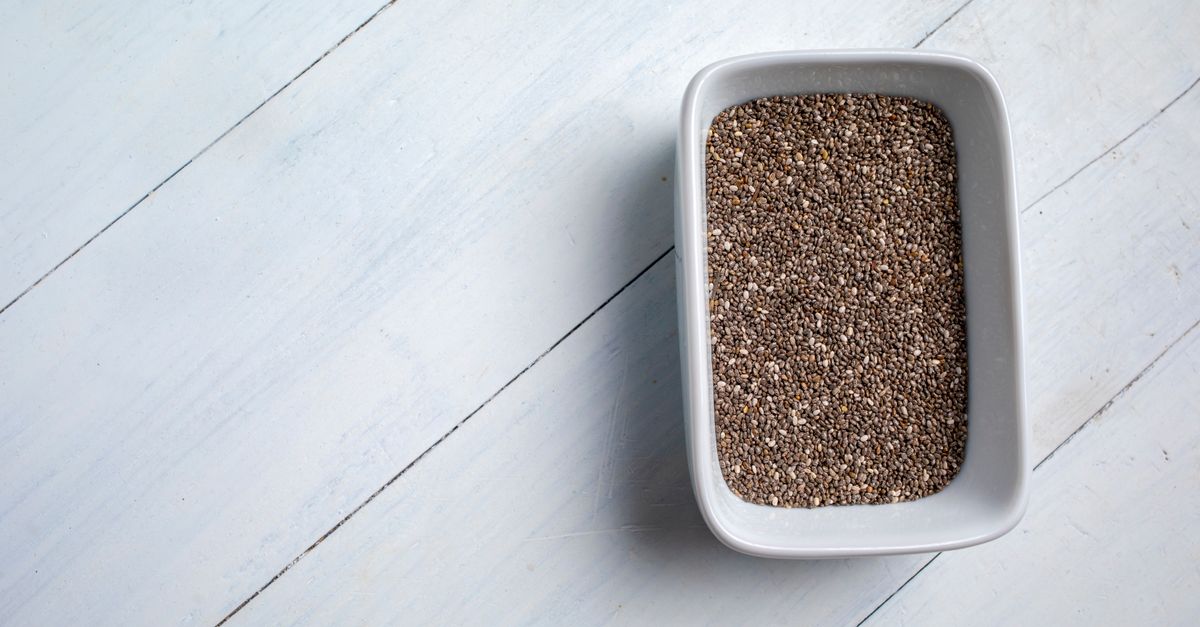
Chia seeds for hair growth work from the inside, not from a bowl on your bathroom shelf. Two tablespoons deliver useful protein, zinc, magnesium and plant omega 3, all of which the body draws on when it builds a hair fibre. Chia gel applied to hair is a conditioning and styling ingredient that adds slip and softness, and it does not reach the follicle. Eat them, and expect a slow, quiet contribution rather than a visible change.
Our hair, skin and nails gummies
GrowPro® Hair, Skin & Nails Gummies, £22.95. Sugar free daily gummies for people who would rather chew than swallow a tablet, supporting hair care from the inside out.
Key takeaways
- Eating chia seeds for hair growth is the version that has a real mechanism behind it. Applying chia gel is a conditioning effect that rinses away.
- Two tablespoons (28g) give roughly 4.6g protein, 5g plant omega 3, 1.3mg zinc, 2.2mg iron and 94mg magnesium.
- Zinc is the one nutrient in chia with an authorised UK claim for maintaining normal hair.
- Chia omega 3 is ALA, and the body converts only a small fraction of it into the long chain forms found in oily fish.
- Allow three to six months. Nutrition only shows up in hair formed after the change.
- Always hydrate chia before eating it. Never swallow it dry and then drink.
What Is Actually in Chia Seeds?
Before any hair claim, it is worth seeing the raw numbers, because chia is genuinely nutrient dense and the figures do a better job of arguing its case than the marketing does. The values below come from the United States Department of Agriculture food composition database, for dried chia seeds.
| Nutrient | Per 100g | Per 28g (2 tbsp) | Why hair cares |
|---|---|---|---|
| Protein | 16.5g | 4.6g | Hair is roughly 90 percent keratin, a protein |
| Omega 3 (ALA) | 17.8g | 5.0g | Supports skin barrier lipids, including the scalp |
| Zinc | 4.58mg | 1.3mg (13% NRV) | Authorised UK claim for maintaining normal hair |
| Iron | 7.72mg | 2.2mg (15% NRV) | Low iron stores are strongly linked to shedding |
| Magnesium | 335mg | 94mg (25% NRV) | Involved in protein synthesis generally |
| Fibre | 34.4g | 9.6g | Not hair specific, but why portion size matters |
One caveat belongs right next to that iron figure. Chia iron is non-haem iron, the plant form, and chia is also high in phytate, which binds minerals and reduces how much of them you absorb. So the 2.2mg on the label is not 2.2mg into your bloodstream. Pairing chia with a source of vitamin C, berries in a chia pudding for instance, measurably improves non-haem iron absorption, which is a small change with a real basis behind it.

How Do Chia Seeds for Hair Growth Work From the Inside?
A hair follicle is one of the most metabolically demanding structures in the body. It is spinning out a protein fibre continuously for years at a time, and it is also entirely non-essential to survival. That combination is the whole story of nutrition and hair: when the body is short of something, the follicle is early in the queue to have its supply cut and late in the queue to get it back. Chia is one line on a much longer shopping list, and our guide to vitamins for hair growth, and what to eat rather than swallow sets out where the rest of it comes from.
This is why chia seeds for hair growth are worth eating and why the effect is undramatic. You are not adding a hair ingredient. You are making a shortfall less likely in a system that gets deprioritised first. If you had no shortfall to begin with, adding chia changes nothing about your hair, and any honest article has to say so.
Zinc is the clearest link. Zinc has an authorised claim in Great Britain for contributing to the maintenance of normal hair, and low zinc is a recognised contributor to shedding. Protein matters for the obvious reason that hair is keratin, and people on genuinely low protein intakes do see hair thin. Iron matters because low ferritin is one of the most consistently reported findings in women with diffuse shedding.
What Is the ALA Problem Nobody Mentions?
Chia is sold hard on its omega 3 content, and the figure is real: 5g in two tablespoons is more than most people get from anything else in a day. The complication is which omega 3 it is. Chia provides alpha linolenic acid, ALA, the plant form. The forms your body mainly uses in cell membranes are EPA and DHA, which come from oily fish and algae.
Humans convert ALA into EPA and DHA, but inefficiently, and the conversion rate is low enough that dietary work in this area consistently finds ALA supplementation raises EPA modestly and barely moves DHA. That does not make chia omega 3 worthless. It does mean chia is not a straight substitute for oily fish, and anyone eating chia specifically as their omega 3 strategy should know that.
The practical version
Eat chia for its zinc, protein, magnesium and fibre, and count its omega 3 as a bonus rather than the headline. If oily fish or an algal supplement is an option for you, that is where the long chain omega 3 actually comes from.

Get a discount on the thinning hair range
Join the Watermans mailing list and we will email a discount code straight to your inbox, so you can try the thinning hair range for less. Made in the UK, over 6.5 million bottles sold since 2012.
Does Putting Chia Gel on Your Hair Do Anything?
Something, yes, but not what the recipe videos imply. Soaked chia releases a mucilage, a soluble fibre gel, and that gel does what film-forming polymers do: it coats the hair fibre, smooths the cuticle temporarily, adds slip while you detangle, and gives light hold as it dries. People with curly or wavy hair often like it as a natural styling gel, and that is a legitimate use.
What it does not do is reach a follicle. The follicle sits in the dermis, several millimetres below the scalp surface, and a food-grade gel sitting on top of the skin has no route to it. Any article telling you a kitchen chia mask feeds your follicles is describing something that does not physically happen. Horsetail is the other traditional hair herb people ask about, and our guide to horsetail for hair covers its oil, rinse and extract forms and what the evidence supports.
Two pieces of published work are worth knowing about here, because they are usually either ignored or badly misrepresented. A 2010 trial in Annals of Dermatology tested topical chia seed oil on dry, itchy skin and reported improvements in hydration and itching. That is skin comfort, and a dry, uncomfortable scalp is a genuine problem worth solving, but it is not hair growth. Separately, a 2025 laboratory study formulated a chia seed polysaccharide into a microencapsulated delivery system and reported effects on hair regeneration in a preclinical model. That is a long way from a bowl of soaked seeds, and it is honest to say so rather than to cite it as if it validated the kitchen version.
What this means when someone quotes a study at you
There is real chia science, and none of it tests what most articles recommend. Nobody has shown that soaking chia and putting it on your head changes hair density. The evidence supports chia as a food and as a skin-comfort oil.
How to Use Chia Seeds for Hair Growth: Which Four Ways Are Practical?
Three of these are for eating, which is where the mechanism is. The fourth is topical, offered honestly as a styling and conditioning option.
1. Overnight chia pudding. Two tablespoons of chia into 150ml of milk or a fortified plant alternative, stirred twice in the first ten minutes so it does not clump, then left in the fridge overnight. Top with berries in the morning, which adds the vitamin C that helps you absorb the iron.
2. Stirred into what you already eat. A tablespoon into porridge, yoghurt or a smoothie. This is the version people actually keep up, and consistency over months matters far more than any particular recipe.
3. As an egg replacement in baking. One tablespoon of chia with three tablespoons of water, left for ten minutes, replaces one egg. A useful route into a vegan diet, which is also the diet most likely to be short of the nutrients above.
4. As a hair gel, if you want to. Simmer two tablespoons of chia in 250ml of water for a few minutes, cool, then strain through a fine sieve or a stocking. Straining is the step people skip and then spend twenty minutes picking seeds out of their hair. Apply to damp hair, leave for ten to twenty minutes, rinse thoroughly. Expect slip and soft hold, nothing more.

GrowPro® Hair Growth Gummies from £22.95
Sugar-free vegan gummies with biotin, zinc, silica and vitamins C, D3 and B12. Where chia contributes zinc as part of a meal, these are a straightforward way to cover the same nutrients daily. Zinc and biotin contribute to the maintenance of normal hair.
How Much Chia, and How Long Before Anything Changes?
Two tablespoons a day is the amount to aim at when you are eating chia seeds for hair growth, and there is a reason not to exceed it enthusiastically. Two tablespoons carry nearly 10g of fibre, which is a third of the UK recommended daily intake in one small addition. Going from none to four tablespoons overnight reliably produces bloating and cramping, and people then decide chia disagrees with them when the problem was simply the jump.
On timing, scalp hair grows at roughly one centimetre a month. A nutritional change only affects the fibre being built from that point forwards, so the earliest you could see any difference is when a few centimetres of new growth are visible, which is three to four months at best. Six months is a fairer window for judging whether anything has changed, and a photograph of your parting today is worth more than your memory of it will be.

Who Should Be Careful With Chia?
Chia is a food and it is safe for most people, but a few groups should pay attention. Anyone with a swallowing difficulty or a narrowed oesophagus should be cautious, because dry chia absorbs many times its weight in liquid and can swell before it reaches the stomach. Always hydrate it first. Anyone with IBS or a sensitive gut should increase the amount slowly over a couple of weeks. If you take blood-thinning or blood-pressure medicine, mention a large regular chia intake to your GP or pharmacist, since chia has modest effects on both and it is worth them knowing. And if you have a known seed allergy, approach chia with the same caution as any other seed. If your question is about products or a routine rather than a medical one, you can talk to Gail Waterman, our co-founder, as an AI avatar on the Watermans homepage. Other single foods get the same scrutiny here: we looked at whether bone broth is good for hair growth and landed on much the same answer.
Why do hair loss, shedding and breakage need different answers?
Diet is a genuine lever for one of these three and close to irrelevant for another, so it matters which one you are dealing with.
Hair shedding is the one where chia has the most to offer. Telogen effluvium, an unusually large share of follicles resting at once, is frequently triggered by low iron, a very low calorie period, illness or a nutritional gap. Fixing the gap is the fix. Our guide to what genuinely helps with hair shedding covers what to get tested.
Hair loss, in the follicular sense of androgenetic alopecia or a scarring condition, does not respond to diet. Nutrition still matters, because a deficiency layered on top makes the picture worse, but no food changes the underlying process and anyone telling you otherwise is selling something.
Hair breakage happens outside the body entirely. The fibre snaps from heat, bleach, tension or rough handling, and what you eat has no bearing on it. This is a routine and handling problem, and it is the fastest of the three to improve.
Please note: Watermans products are 100% cosmetic and do not treat medical hair loss. Individual results may vary.

Condition Me® Conditioner from £13.95
For the breakage half of the problem that no seed can reach. Cholesterol, shea butter and hydrolysed lupine protein give slip so hair snaps less when you detangle, for stronger-looking strands.

Masque Me® Hair Mask from £24.95
If you like the idea of a chia gel mask, this is the version formulated to actually bind to the hair fibre rather than rinse straight off. Deep conditioning for dry, damaged or colour-worn hair, with rosemary, argan oil and provitamin B5.
Frequently Asked Questions
How many chia seeds should I eat a day for my hair?
Two tablespoons, around 28g, is a sensible daily amount and enough to contribute meaningfully to your zinc, magnesium and plant omega 3 intake. More is not better. Chia is very high in fibre, and jumping straight to four or five tablespoons a day usually causes bloating and cramping.
How long before I see any difference?
Think in terms of three to six months, not weeks. Hair grows roughly one centimetre a month, and any nutritional change only shows up in the hair that is formed after the change. Nothing you eat today alters the hair already on your head.
Are chia seeds for hair growth better eaten or applied?
Eaten, without much contest. Eating chia supplies zinc, protein, magnesium and plant omega 3 that your body can actually use in building hair. Applying chia gel coats the fibre and adds slip and hold, which is a styling and conditioning effect that sits on the outside and rinses away.
Do I need to grind or soak chia seeds first?
Soak them, always. Dry chia absorbs many times its weight in liquid and can swell in the throat if you swallow it dry and then drink, so hydrate it first. Grinding is optional for chia, unlike flaxseed, because the shell is thin enough that whole soaked seeds still release their nutrients.
Will chia seeds help with postpartum shedding?
Not directly. Postpartum shedding is a hormonal shift pushing many follicles into the resting phase at once, and it resolves on its own over six to twelve months. Good nutrition supports the new growth that follows, so chia has a supporting role, but it is not the reason the shedding stops.
Is chia better than flaxseed for hair?
They are close. Flaxseed carries slightly more plant omega 3 per gram, chia carries more calcium and does not need grinding. Chia also makes a better gel for topical use. The honest answer is that whichever one you will actually eat regularly is the better one for you.
Can chia gel replace my conditioner?
It can add slip and softness for a wash, and plenty of people like it, but it does not have the cationic ingredients that let a conditioner bind to damaged areas of the fibre and stay there through rinsing. It is a pleasant addition rather than a replacement, and it can leave residue on fine hair.
Should I take a supplement instead?
Only if you have a gap worth filling. Zinc and iron are worth correcting if a blood test shows you are low, and taking either at high doses when you are not low can cause problems of its own. Food first is the sensible default, and chia is a genuinely good food.
Do chia seeds for hair growth work if my hair loss is genetic?
No. Androgenetic hair loss is follicular miniaturisation driven by hormones and genetics, and no food changes that process. Good nutrition still matters, because a deficiency on top of pattern hair loss makes everything worse, but chia will not alter the underlying pattern.
What is the bottom line on chia seeds for hair growth?
Chia seeds for hair growth are worth eating and not worth expecting much from in a bowl on the bathroom shelf. Two tablespoons a day is a genuinely good addition to a diet, supplying zinc that has an authorised claim for maintaining normal hair, plus protein, magnesium, iron and plant omega 3. Hydrate them, pair them with vitamin C, build up slowly, and give it six months before you judge.
Chia gel on the hair is a decent natural styling and slip ingredient, and a pleasant thing to make, and that is the whole of its role. If your hair is genuinely thinning, the useful next steps are working out whether you are seeing loss, shedding or breakage, and getting your ferritin and thyroid checked. Food supports all of that. It does not replace any of it.
If you would rather cover the basics from the inside too, our hair vitamins take two a minute a day.
Sources and References
- United States Department of Agriculture, FoodData Central. Seeds, chia seeds, dried (SR Legacy 170554). fdc.nal.usda.gov
- Zare T, Fournier-Level A and colleagues. Chia (Salvia hispanica L.), a functional superfood: new insights into its botanical, genetic and nutraceutical characteristics. Annals of Botany, 2024. PubMed 39082745
- Klein L, Kipp K and colleagues. Impact of alpha linolenic acid supplementation on long chain n-3 fatty acid profiles across Western, flexitarian, vegetarian and vegan diets. Frontiers in Nutrition, 2025. PubMed 41473194
- Jeong SK, Park HJ and colleagues. A trial of topical chia seed oil for dry, itchy skin. Annals of Dermatology, 2010. PubMed 20548903
- Qiao Z, Zhang K and colleagues. Chia seed polysaccharide based self assembled microencapsulation and hair regeneration in a preclinical model. Small, 2025. PubMed 40289658
- Great Britain nutrition and health claims register (authorised claims for zinc and biotin in relation to normal hair). gov.uk
- NHS. Hair loss: overview, causes and when to get medical advice. nhs.uk/conditions/hair-loss
Where the evidence runs out: we could find no published trial testing eaten or topically applied chia against hair density in people. The nutritional case above is reasoned from chia composition and from what is established about those individual nutrients, not from a chia hair study, because no such study exists.