Batana Oil: What to Check Before You Buy and How to Use It
Batana oil went viral, and viral is rarely the same thing as accurate.
Here is the short version. Batana oil is a thick, dark oil pressed from the roasted nut of the American oil palm, used for generations by the Miskito people of Honduras. Buy a jar that lists Elaeis oleifera first and smells of roasted nuts, not perfume. Use it as a pre wash treatment on the mid lengths and ends for thirty minutes, once or twice a week, then shampoo it out. It softens hair and reduces breakage, but has no published clinical trial behind the growth claims.
For where oiling fits alongside the tests that actually explain shedding, see our guide to what to do before booking a trichologist in Hounslow.
If you want an oil we actually make
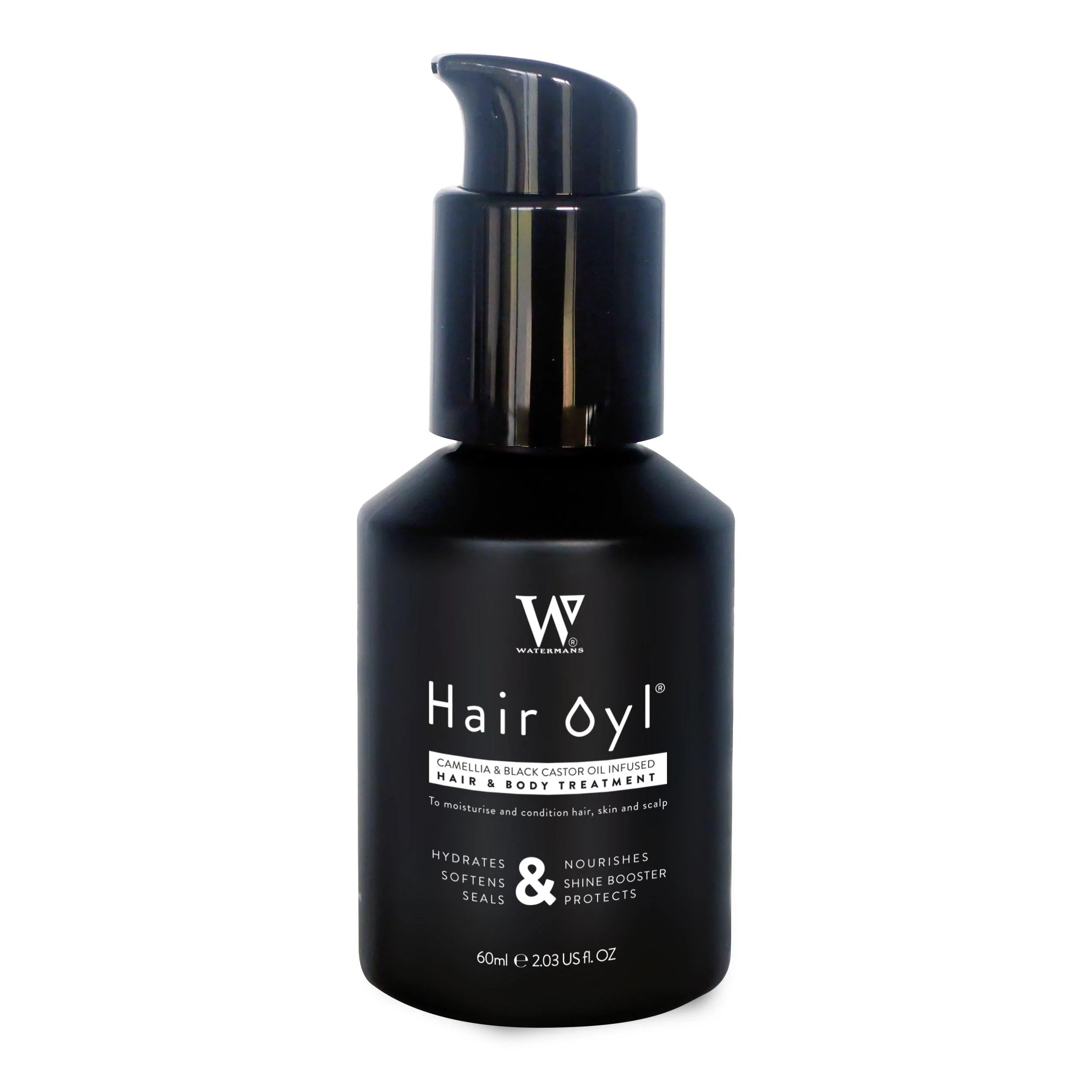
Camellia & Black Castor Hair & Body Oil, £24.95. Black castor and camellia with omega 3, 6 and 9, for softness and less friction damage on dry or coarse hair. How batana compares is below.
Key takeaways
- Batana oil is a rich conditioning oil from the nut of Elaeis oleifera, traditional in Honduras.
- It genuinely softens, adds slip and reduces the friction breakage that costs you length.
- There is no published clinical trial on batana and hair growth. The viral before and after photos are anecdotes.
- It is heavy. Use it as a pre wash treatment unless your hair is coarse, curly or coily.
- Patch test first, avoid it entirely if you have a nut allergy, and be careful if you get greasy flaking.
What is batana oil, and where does it come from?
Batana is pressed from the nut of Elaeis oleifera, the American oil palm, which grows across Central and South America. The nuts are traditionally roasted before pressing, which is where the oil gets its dark colour and its distinctive smoky, nutty smell. The Miskito people of La Moskitia in Honduras have used it on hair and skin for generations, and it is often sold under the name that community gave it.
Chemically it is dominated by oleic acid, a long chain monounsaturated fatty acid, along with palmitic and linoleic acids and some vitamin E. That composition is worth knowing, because it explains both what the oil is good at and where its limits are.

What does batana oil genuinely do, and what does it not do?
It is worth settling this before the methods, because how to use it well depends on knowing what you are asking it to do.
- It conditions and softens. Fatty acids coat the hair shaft, smooth the cuticle scales and add slip, so hair combs more easily and looks glossier. This is real and immediate.
- It reduces breakage. Most of what people call thin hair is hair that keeps snapping before it gets long. Less friction during detangling means fewer breaks, and fewer breaks means more length retained.
- It softens dry skin. As a rich emollient it is a decent body and cuticle oil, which is how it was traditionally used as well.
- It does not act on the follicle. No oil reaches the follicle in any meaningful way, and no trial has tested batana for hair growth in people. Anyone claiming otherwise is selling something.
How to use batana oil: which five methods actually work?
These are ordered deliberately. The first method suits everyone and is where you should start. The later ones suit progressively coarser, drier hair, and the last one is not about hair at all.
1. Pre wash treatment, the default
Warm a small amount between your palms until it loosens, then work it through the mid lengths and ends of dry hair. Leave it thirty minutes, or a couple of hours if you have time, then shampoo out. You may need two rounds of shampoo. This is the method to start with, because it delivers the conditioning benefit and then leaves.
2. Scalp massage oil
If your scalp is dry and tight, warm a little and massage it in with your fingertips for five to ten minutes before washing. Keep it to the scalp itself rather than saturating the hair. Skip this entirely if you get greasy flaking rather than dry flaking, for the reasons covered below.
3. A very small amount on damp ends
After washing, rub a drop or two between your palms and press it onto the last few inches of damp hair. This seals the cuticle as the hair dries and keeps frizz down. Start with less than you think, because a little travels a long way and there is no undoing it without another wash.
4. In a DIY mask
Blend a tablespoon with a couple of tablespoons of plain yoghurt or aloe vera gel and a teaspoon of honey, apply from mid length down, leave thirty minutes and rinse thoroughly before shampooing. This suits coarse or bleached hair that drinks up everything you give it.
5. Skin, cuticles and edges
It works perfectly well on dry elbows, heels and nail cuticles. Patch test first, and remember the smell is strong and lingers, so this is an evening job rather than a morning one.
| Method | How much | Best for |
|---|---|---|
| Pre wash treatment | A teaspoon to a tablespoon, washed out | Every hair type, including fine hair |
| Scalp massage | A few drops, scalp only | Dry, tight scalps. Not for greasy flaking |
| Leave in on damp ends | One or two drops | Coarse, curly and coily hair |
| DIY mask | A tablespoon in a blend | Bleached or very dry lengths |
What does the evidence on hair oils actually show?
There is no research on batana and hair specifically, so the honest thing is to reason from what is known about oils generally. The most useful work here compared coconut, mineral and sunflower oils and found that coconut oil, which is rich in the small, straight chained lauric acid, actually penetrated the hair shaft and reduced protein loss, while the other two mostly sat on the surface. We have a separate guide to batana oil for hair growth if that is the part you need.
That matters for batana because batana is dominated by oleic acid, a much larger, kinked molecule that does not slip between the cuticle scales in the same way. The reasonable expectation, then, is a very good surface conditioner that coats, smooths and protects, rather than something that gets inside the fibre. That is a genuinely useful thing for an oil to do. It is simply not the same claim as the ones being made online, and where good sources disagree about how far any oil penetrates, the fair summary is that it depends heavily on the fatty acid profile rather than on the plant it came from.

What is the difference between hair loss, hair shedding and hair breakage?
Almost everyone who reaches an article about this oil is hoping for more hair. Which of these three you actually have decides whether an oil is relevant at all.
- Hair loss is a follicle problem. Pattern hair loss shrinks sensitive follicles over years. Scarring conditions destroy them outright. An oil does nothing for either, and this is where seeing your GP matters far more than a shopping decision.
- Hair shedding is a cycle problem. A batch of follicles is pushed into rest at once, typically two to three months after an illness, childbirth, rapid weight loss or a stretch of severe stress, and it settles once the trigger passes.
- Hair breakage is a fibre problem. The shaft snaps along its length from heat, bleach, tight styling or rough detangling. This is the one an oil genuinely helps with, and for a lot of people it is the real problem.
If your hairbrush is fuller than it used to be but your parting looks the same, that is shedding. If your hair feels rough, tangles badly and you keep finding short broken pieces, that is breakage, and a conditioning oil like batana is a sensible thing to reach for.
Get a discount on the dry and breakage prone hair range
Join the Watermans mailing list and we will email a discount code straight to your inbox, so you can try the dry and breakage prone hair range for less. Made in the UK, over 6.5 million bottles sold since 2012.
What mistakes do people make with batana oil?
Four errors account for almost every disappointed review, and none of them is really about the oil. Getting it right is mostly a matter of avoiding these.
Using far too much. Batana is thick. Half a teaspoon covers more hair than most people expect, and the fix for over application is another wash, which undoes the point.
Putting it on the roots of fine hair. Fine hair goes flat and looks greasy for days. Keep it to the mid lengths and ends unless you are washing it out the same day.
Using it on a flaky, greasy scalp. Seborrhoeic dermatitis involves a yeast that lives on skin lipids, and heaping oil onto it can make things worse rather than better. Persistent greasy flaking with redness wants a medicated shampoo from a pharmacy, not an oil.
Expecting it to do the follicle job. This is the big one. Six months of diligent oiling will leave you with softer, glossier, less breakable hair and exactly the same number of follicles.
Where does a ready made blend make more sense?
Raw batana is messy, strongly scented and inconsistent between suppliers. If you want the conditioning benefit without the smoke smell and the double shampoo, a formulated blend does the same surface job with far less faff.

A lighter, ready blended conditioning oil for hair, scalp and skin, built around black castor and camellia oils. It does the same surface conditioning job as raw batana with a fraction of the mess and a scent you can wear out of the house. Cosmetic conditioning, nothing more.
View the oil
A deep conditioning mask with hydrolysed lupine protein, argan oil, panthenol and rosemary. If your ends are snapping rather than simply feeling dry, a protein and moisture mask usually does more for them than an oil applied on top.
View Masque Me
Batana has always been most at home on coily and curly hair, which needs oils more and tolerates them better. If that is your texture, a cleanse and condition pair built for curls is the base worth getting right before any oil goes near it.
View the curly set
What should you check before you buy batana oil?
Before you buy batana oil, check three things: that Elaeis oleifera is the first or only ingredient, that the oil is dark and thick rather than pale and runny, and that the seller makes no hair growth promises. Those three checks weed out most diluted blends and most misleading listings in a couple of minutes.
| What to check | Good sign | Warning sign |
|---|---|---|
| Ingredient list | Elaeis oleifera (batana) first, or the only ingredient | A carrier oil or fragrance listed ahead of batana |
| Colour and texture | Dark brown to near black, solid or semi solid at room temperature | Pale, runny and clear like a salad oil |
| Smell | Roasted, nutty and smoky | Coconut, vanilla or a strong added perfume |
| Claims on the label | Conditioning, softness, shine | New hair growth photographs or promises of thicker hair in weeks |
| Origin | Named country of origin, ideally Honduran sourcing stated | No origin, no batch information and no ingredient list at all |
We do not sell batana, so this is a neutral checklist rather than a pitch for our own jar.
Knowing how to use it is not much use if what is in the jar is mostly something else. Demand went up sharply and quality followed the usual path. Real batana is thick, dark brown to almost black, solid or semi solid at room temperature, and smells distinctly of roasted nuts and smoke. If a product is pale, pours like water and smells of coconut or perfume, it is a blend at best.
Read the ingredients rather than the front label. Elaeis oleifera should appear at or near the top, not third behind a carrier oil and a fragrance. Be wary of anything marketed with new growth photographs, since a seller willing to make that claim is not a seller being careful about anything else. And be aware that heavy demand has raised sustainability and sourcing questions in the producing communities, which is worth a moment of thought before you buy.
Frequently asked questions
Where should I buy batana oil?
Buy batana oil from a seller who lists Elaeis oleifera as the first or only ingredient, states where it was sourced and makes no hair growth claims. Real batana is dark, thick and smells of roasted nuts. If a listing is pale, cheap and heavily scented, it is usually a blend with a little batana added for the name.
Does batana oil make hair grow?
There is no published clinical trial on batana and hair growth, which is worth saying plainly given how confidently the internet claims otherwise. What it does do is condition, soften and reduce the friction that snaps hair mid length. Less breakage means more of your hair reaches a visible length, which looks like growth and is not the same thing.
How often should I use it?
Once or twice a week is plenty for a pre wash treatment or a scalp massage oil. It is a heavy oil, so daily use on the lengths tends to leave hair limp and needing more washing, which defeats the point. A very small amount on dry ends can be used more often if your hair is coarse or curly.
What is the simplest way to start?
The simplest way to use it is a pre wash treatment. Warm a small amount between your palms, work it through the mid lengths and ends, leave it on for thirty minutes, then shampoo it out. That single method gives you most of the benefit with none of the greasy hair risk.
Will it weigh my hair down?
It can, and this is the most common complaint. Batana is thick and rich. Fine and straight hair usually tolerates it only as a pre wash treatment that gets washed out. Coarse, curly and coily hair generally handles it far better and can take a little on damp ends as a leave in.
Do I use it on wet or dry hair?
Both work and they do slightly different jobs. On dry hair before washing it has time to soften the fibre and reduce the swelling that happens during the wash. On damp hair afterwards it seals the cuticle and controls frizz. Use less than you think on damp hair, because it spreads much further.
Is real batana oil different from what I see online?
Often, yes. Genuine batana is a thick, dark, strongly scented oil pressed from the roasted nut, and it smells nutty and smoky rather than pleasant. Very pale, thin, lightly fragranced products sold as batana are frequently blends with a small percentage of the real thing. Check the ingredients list rather than the label on the front.
Can I use it on my scalp if I have dandruff?
Be careful here. Heavy oils can make seborrhoeic dermatitis worse, because the yeast involved feeds on some of the lipids in oils. If you get persistent greasy flaking and redness, an oil is the wrong direction and a medicated shampoo from a pharmacy is the right one. Occasional simple dryness is a different thing and oil can help that.
Is it safe if I have a nut allergy?
Batana comes from the nut of the American oil palm, so if you have any nut allergy, do not use it without speaking to your GP or pharmacist first. Everyone else should patch test on the inner forearm and wait 24 hours before putting it anywhere near the scalp.
What is the bottom line on batana oil?
Batana oil is worth buying as a conditioning oil, as long as the jar passes the checklist above. Knowing how to use it comes down to using less of it than you expect, keeping it to the mid lengths and ends, leaving it on for half an hour before you wash, and repeating once or twice a week. Done that way it is a genuinely good conditioning oil that leaves hair softer, glossier and far less likely to snap when you comb it. Just buy it for that. There is no trial behind the growth claims, and if your real worry is thinning at the parting or sudden shedding, your GP is a better first stop than any bottle. If your question is about products or a routine rather than a medical one, you can talk to Gail Waterman, our co-founder, as an AI avatar on the Watermans homepage.
Worth reading next: our honest guides to brahmi powder for hair and horsetail infused oil, how to repair bleach damaged hair if breakage is your real problem, and what genuinely helps when you are shedding more than usual.
For a pre wash oil that rinses cleanly, the Camellia and Black Castor hair oil is the one we make.
Sources and References
- Rele and Mohile, Effect of mineral oil, sunflower oil, and coconut oil on prevention of hair damage, Journal of Cosmetic Science, 2003 the study behind the fatty acid and penetration reasoning above.
- Physiology, Hair, StatPearls, NCBI Bookshelf on hair shaft structure and the growth cycle.
- DermNet, Seborrhoeic dermatitis on why heavy oils can worsen greasy flaking.
- NHS, Dandruff on when a medicated shampoo is the right answer instead.
- DermNet, Allergic contact dermatitis on patch testing any new botanical product before use.
- NHS, Hair loss on when hair loss is worth seeing a GP about.
Watermans products are 100% cosmetic and do not treat medical hair loss. Individual results may vary. Watermans is a UK family business that has sold over 6.5 million bottles since 2012. The range is cruelty free and made in the UK.