Hair Care After Exercise and Sweating: A Practical Guide
You trained hard, your hair is damp and salty, and you are standing in the changing room wondering whether to wash it again.
Good hair care after exercise and sweating usually means rinsing rather than shampooing. Sweat is mostly water with salt and a little urea, so plain warm water removes most of it. Shampoo is for the oil and product build up that water cannot shift, which for most people is two or three times a week rather than daily. The bigger risks are leaving hair tied tightly while it dries and rubbing it hard with a towel.
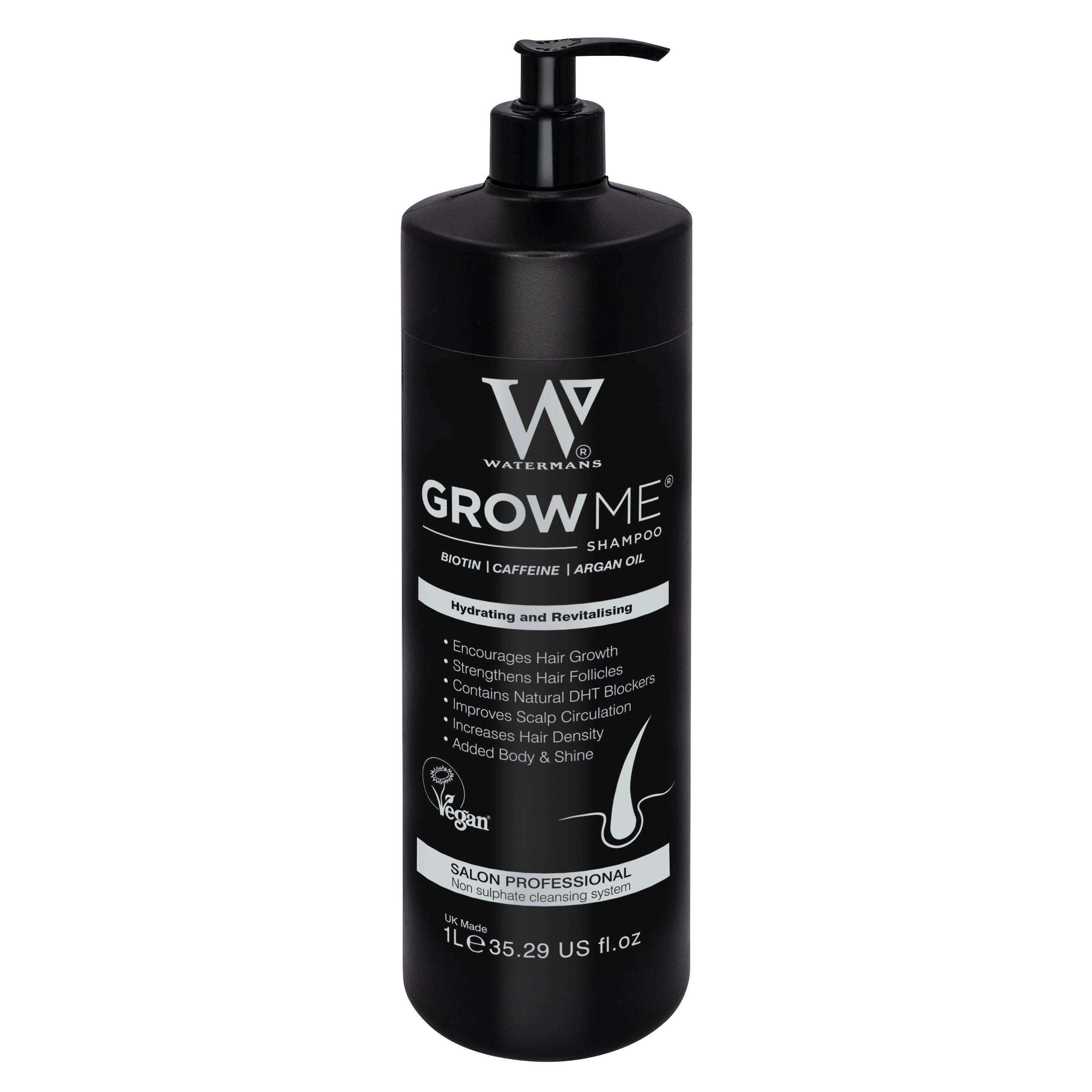
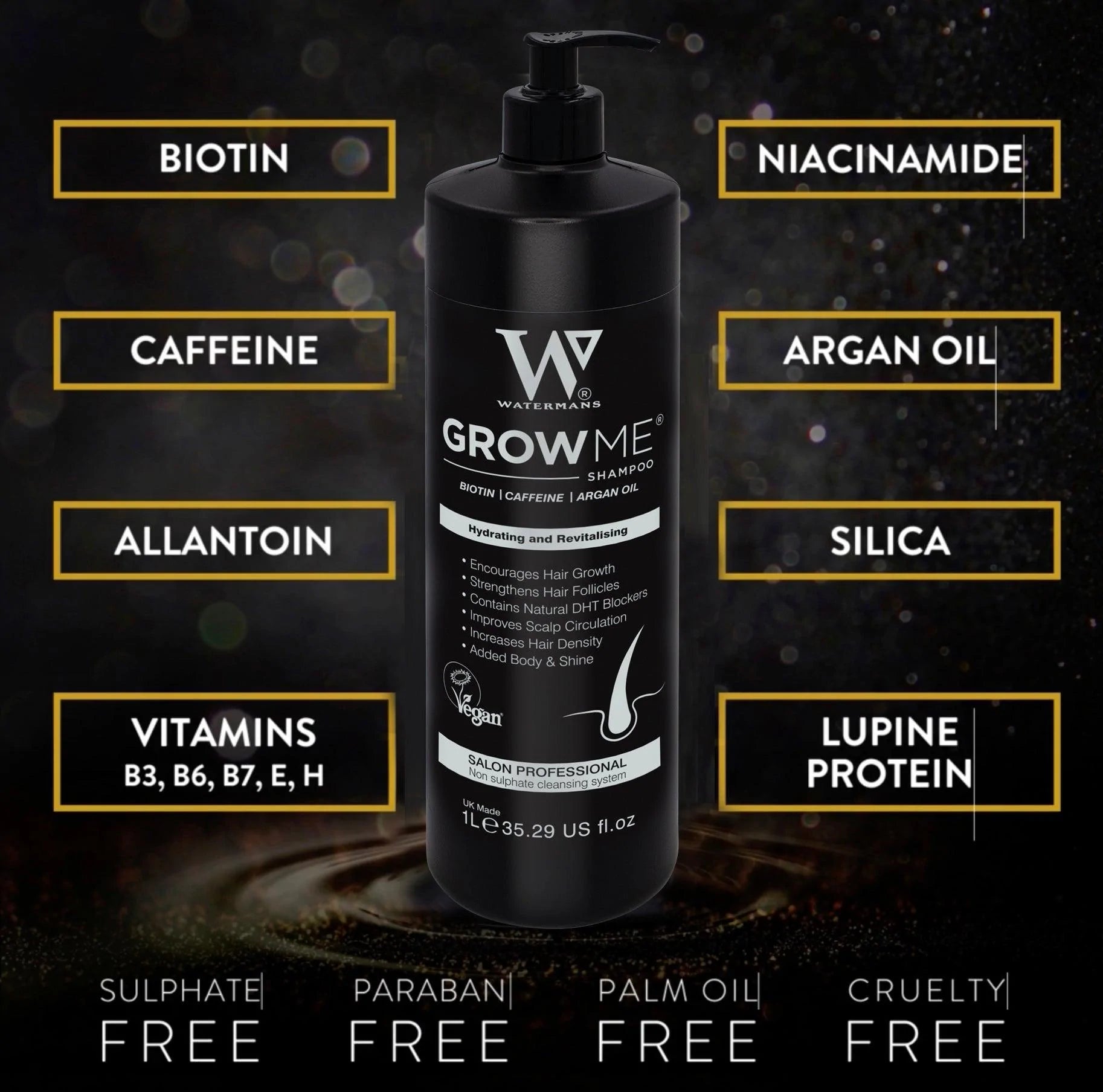
Our hair growth shampoo
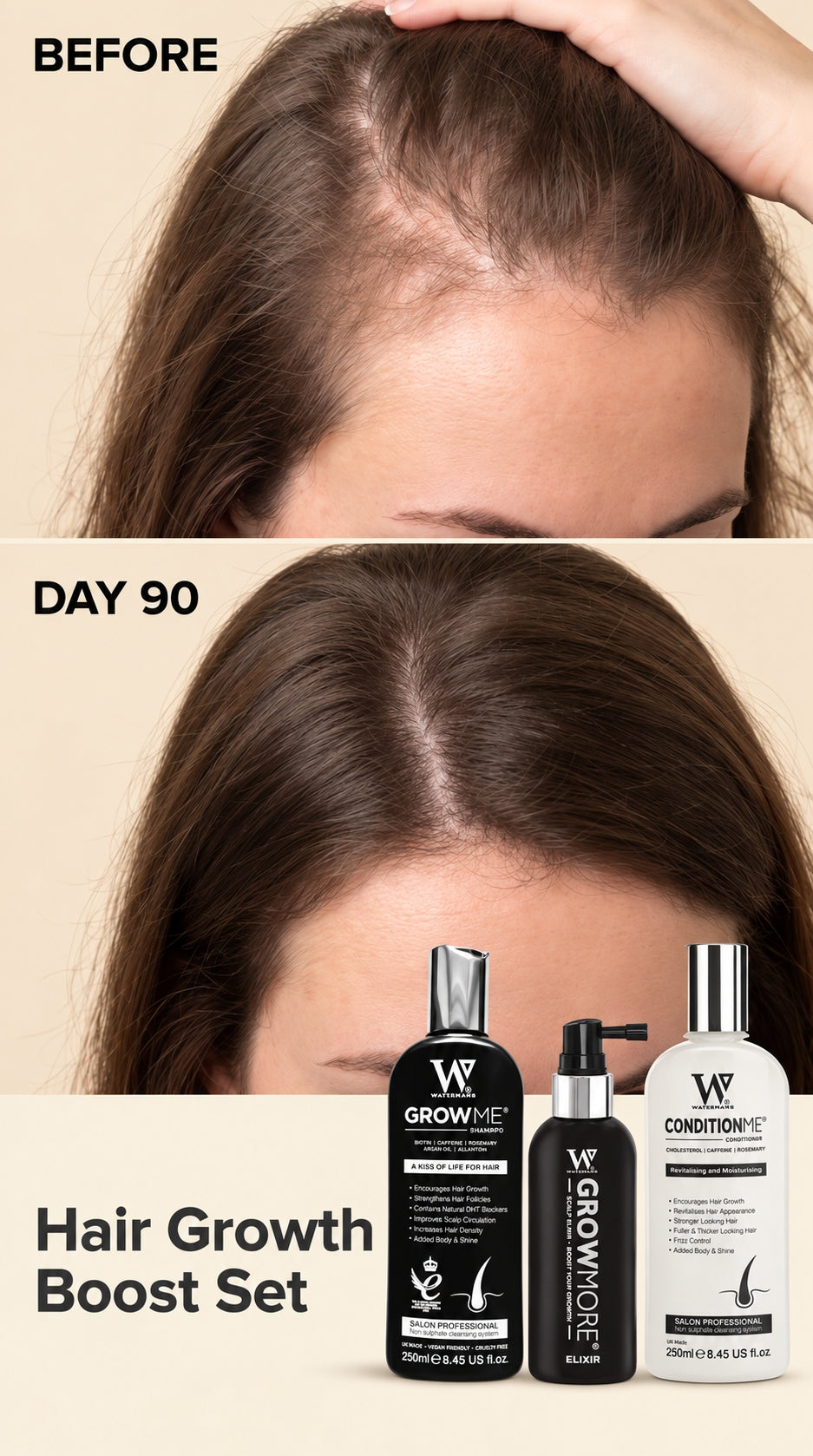
Grow Me® Hair Growth Shampoo, £14.95. A sulphate free daily shampoo that supports a healthy scalp environment and helps reduce breakage, so lengths hold on and look fuller.
Why does sweat feel so bad in your hair when it is mostly water?
Sweat leaves your skin as a dilute salt solution. Once the water evaporates, the salt, urea and trace minerals stay behind on the scalp and along the hair shaft. That residue is what makes hair feel stiff, gritty and dull, and it is why hair can look worse an hour after a session than it did during it. The National Health Service describes sweat itself as odourless, with smell developing only when skin bacteria break down the residue it leaves.
Your scalp is also producing sebum the whole time, and exercise raises skin temperature, which makes sebum thinner and quicker to spread. So a post workout scalp is carrying two different things at once: a water soluble salt residue, and an oil that water alone will not lift. Understanding that split is the whole basis of sensible hair care after exercise and sweating, because the two need different answers.

Key takeaways
- Rinse more, shampoo less. Warm water removes salt residue. Shampoo is for oil and product.
- Let it down. A tight band left in damp hair for hours is harder on your hair than the sweat was.
- Squeeze, do not scrub. Wet hair is at its most fragile, and towel friction is a common cause of breakage.
- Daily trainers are not doomed. A gentle sulfate free shampoo lets you wash more often without stripping the lengths.
- Salt and chlorine behave differently. Pool water needs a proper rinse straight away, ideally before you swim too.
Do you actually need to wash your hair after every workout?
For most people, no, and this is the single biggest misconception in hair care after exercise and sweating. If a session left you lightly damp, a warm water rinse and a proper dry is enough. If you finished a long or very hot session, or you wear heavy styling product, the scalp will feel coated rather than just damp, and that is the signal for shampoo rather than water alone.
The honest test is your scalp, not your schedule. Press a fingertip against the skin at your parting and rub gently. If your finger comes away slick, that is sebum and it needs shampoo. If it comes away clean but your hair feels crunchy, that is salt and a rinse will fix it. Our guide on how often you should wash your hair goes deeper into setting a baseline frequency, and this page is about the exercise days that sit on top of it.
What is the best routine for hair care after exercise and sweating?
The routine below works for most hair types and takes about the same time as what you are probably already doing.
| Session type | What to do | Why |
|---|---|---|
| Light session, barely damp | Take the band out, air dry, brush when dry | Nothing needs removing, and dry hair brushes with far less snapping |
| Sweaty session, no heavy product | Warm water rinse, conditioner on mid lengths and ends only | Water clears the salt, conditioner restores slip without adding oil at the root |
| Long or very hot session | Gentle shampoo at the scalp only, then condition the lengths | Sebum has spread and needs a surfactant, but the ends do not need washing |
| Swimming | Wet hair with clean water before you get in, shampoo straight after | Hair already full of clean water absorbs less pool water |
How should you dry and tie hair after training?
This is where most avoidable damage happens. Wet hair swells and its internal bonds are temporarily weaker, so it stretches further before it snaps. Rubbing it briskly with a rough towel lifts the outer cuticle layer, which is what leaves hair frizzy and prone to catching. Squeeze the water out in sections instead, then blot with a soft towel or an old cotton shirt.
Tying wet hair up and leaving it is the second problem. A tight elastic held for hours while hair dries applies steady tension right at the follicle, and repeated over months that tension is what leads to traction alopecia, the hair loss pattern that shows up first at the temples and hairline. If you have to tie it, use a soft fabric band, sit it lower on the head, and take it out as soon as you are home.
If you use a hairdryer to speed things up, keep it moving and off the hottest setting. And if you tend to pull a cap straight on afterwards, our piece on wearing a hat every day covers what headwear does and does not do.

Get a discount on your next order
Join the Watermans mailing list and we will email a discount code straight to your inbox. Made in the UK, over 6.5 million bottles sold since 2012.
Does sweating cause hair loss, shedding or breakage?
These three are different things and they get muddled constantly, so it is worth separating them.
- Hair loss means the follicle itself is affected, as in androgenetic alopecia or alopecia areata. Sweat does not do this. Exercise does not do this.
- Shedding is the normal cycle, where hairs in the telogen phase release and are replaced. Most people lose somewhere in the region of fifty to a hundred a day. If you only wash twice a week, three days of shedding arrives in one shower and looks alarming. Washing more often on training days does not increase shedding, it just spreads the same hairs across more drains.
- Breakage is the fibre snapping partway along its length. This is the one exercise genuinely can drive, through wet towel friction, tight bands and constant brushing of damp hair. Broken hairs are short, blunt at one end, and have no little white bulb at the root.
If you are seeing a wider parting, a receding hairline or clear thinning at the crown rather than short broken pieces, that is not about your gym routine and a cosmetic product will not answer it. Speak to your GP, who can arrange blood tests and refer you onwards if needed. If your question is about products or a routine rather than a medical one, you can talk to Gail Waterman, our co-founder, as an AI avatar on the Watermans homepage.
Watermans products are 100% cosmetic and do not treat medical hair loss. Individual results may vary.
Which products help, and which are a waste of money?
Hair care after exercise and sweating needs two things from a shelf: a shampoo mild enough to use more often than average, and something that puts slip back into the lengths so wet hair survives being handled. You do not need a separate post workout range, and you do not need a clarifying shampoo more than occasionally.

Sulfate free, so it lifts sebum without stripping the lengths every time. That matters if training pushes you to four or five washes a week. Caffeine, rosemary and biotin support a comfortable scalp environment and fuller looking hair.

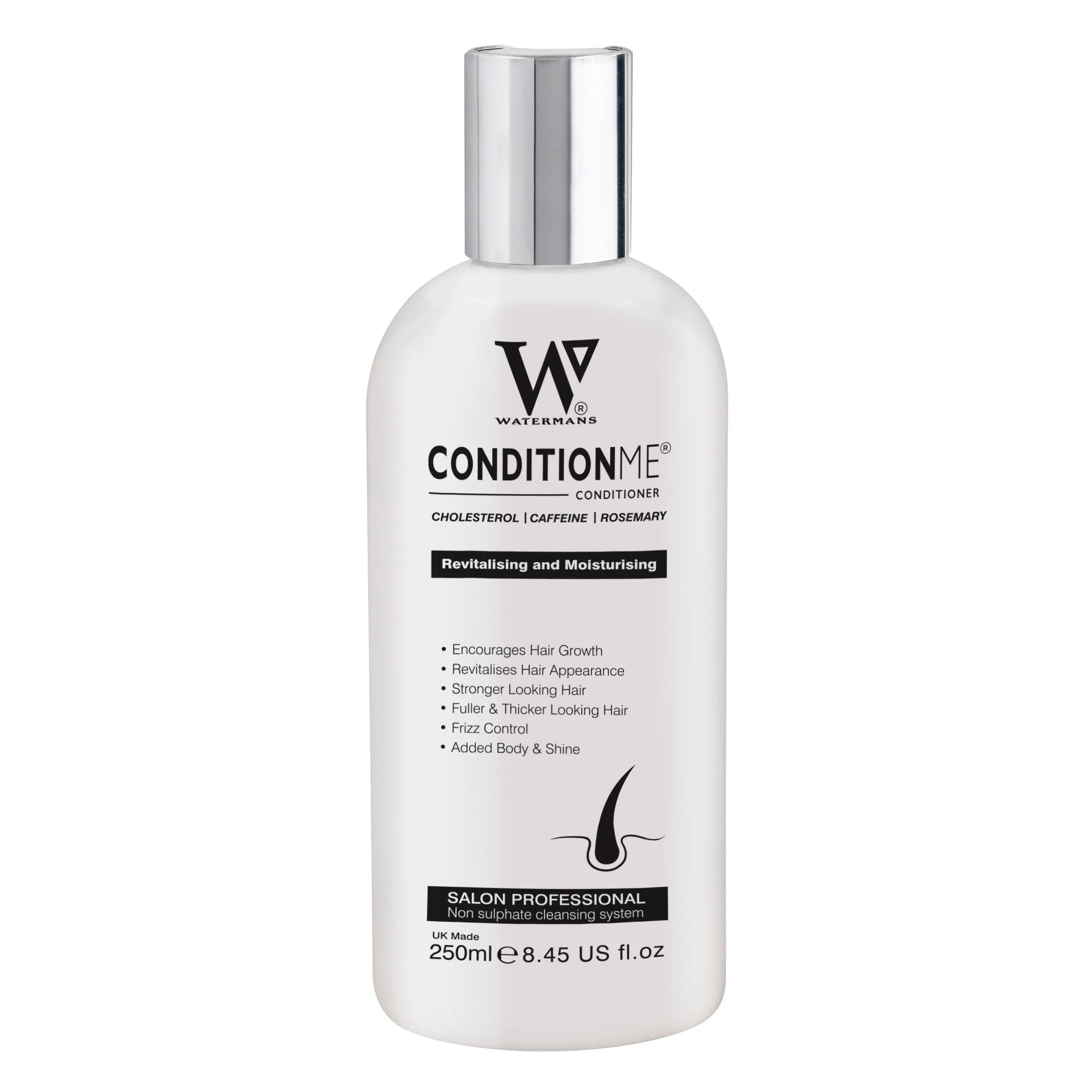
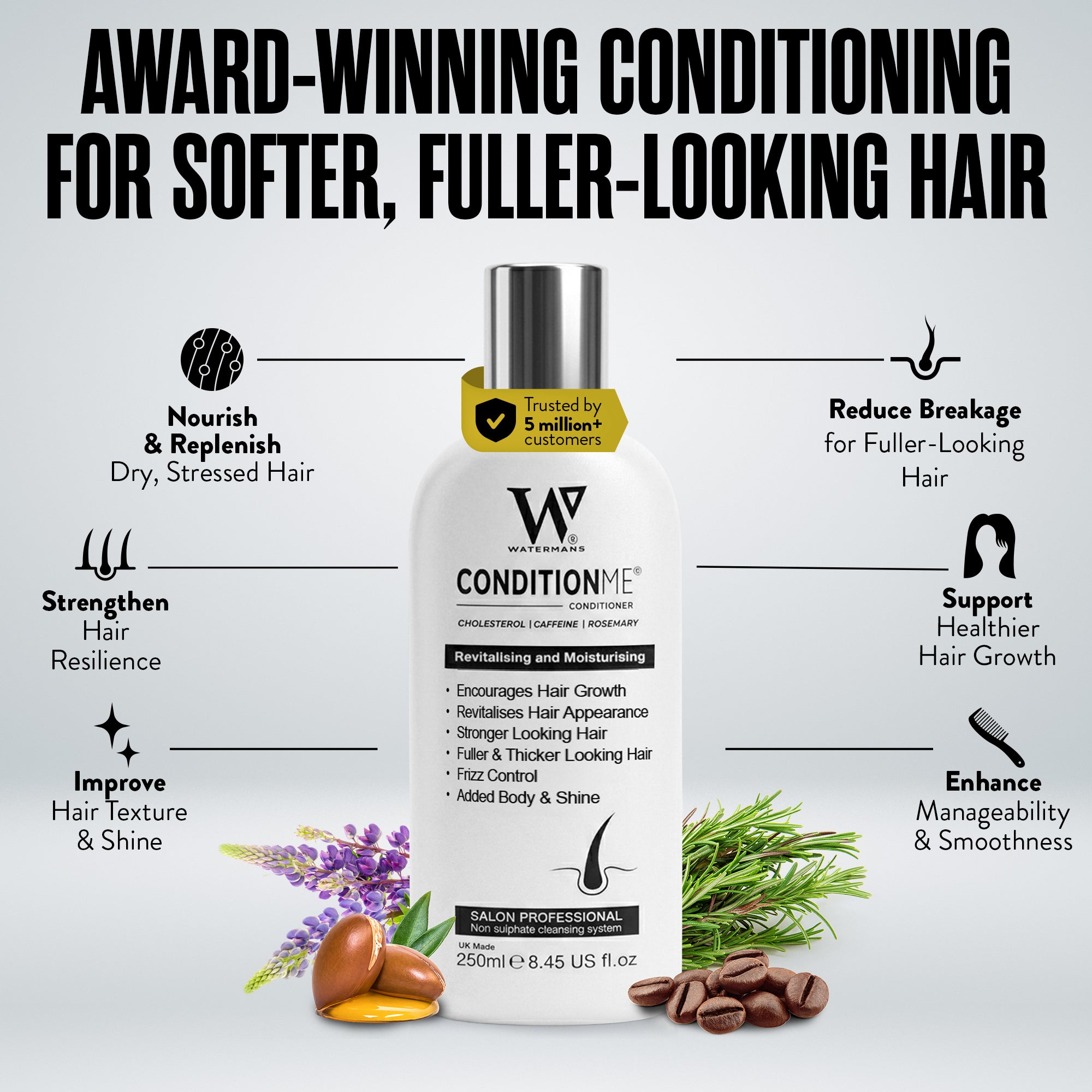
The breakage side of the problem. Slip means the comb passes through instead of dragging, which is most of the battle on damp hair. Keep it off the scalp and on the mid lengths and ends.
Honest note: if your hair feels fine and you are not seeing breakage, you do not need to buy anything at all. Rinsing properly and taking the band out is free, and it is the part that does most of the work.
What about swimming and chlorine?
Chlorinated water is a different problem from sweat. Chlorine binds to the hair fibre and has a drying, roughening effect, and on lightened or porous hair it can shift the tone. The trick is saturation: wet your hair thoroughly with clean water before you get into the pool, because hair that is already full of clean water takes up far less pool water. Rinse immediately afterwards rather than driving home with it in, and shampoo the same day. Our note on wetting your hair daily without washing it is relevant here, because that is essentially what a rinse only routine is.
Frequently asked questions
Is it bad to wash your hair every day if you train every day?
Not inherently. Daily washing is a problem when the shampoo is harsh, not because water touches your hair. A mild sulfate free formula used at the scalp, with conditioner on the lengths, is fine daily for most people. Fine or oily hair usually copes better with it than very curly or coily hair, which tends to prefer rinsing between washes.
Should I use dry shampoo after the gym instead of washing?
Occasionally, yes, and it is genuinely useful when you have no time. But dry shampoo absorbs oil, it does not remove salt or anything else, so it layers on top of the residue rather than clearing it. Using it several days running leaves a build up at the roots that then needs a proper wash anyway.
Does sweat make hair grow more slowly?
No. Growth happens below the skin at the follicle, and sweat sits on the surface. There is no mechanism by which surface sweat changes the rate of growth.
Why does my scalp itch after exercise?
Usually salt residue plus warmth, occasionally an existing scalp condition flaring. Rinsing after sessions solves most of it. Persistent itching with flaking or redness is worth a GP or pharmacist conversation rather than another product.
Is a swim cap worth it?
For frequent swimmers, yes. It will not keep hair completely dry, but it cuts how much pool water reaches the hair, and combined with the pre soak it makes a noticeable difference to how dry hair feels afterwards.
Should I put my hair up before or after showering?
Neither if you can avoid it. Hair is weakest when wet, so let it dry loose where you can. If you must tie it, wait until it is at least mostly dry and use a soft band with no metal join.
Does hair care after exercise and sweating differ for curly or coily hair?
Yes. Curly and coily textures are drier by nature because sebum travels down a coiled fibre less easily, so full shampooing after every session is usually too much. A water rinse with a light conditioner, sometimes called co washing, suits most curl patterns better, with a full shampoo once or twice a week.
Can wearing a headband cause hair loss?
A loose one, no. A tight one worn every session in the same position can contribute to tension at the hairline over time, in the same way a tight ponytail does. Vary the position and loosen it.
What is the bottom line on hair care after exercise and sweating?
Sensible hair care after exercise and sweating is mostly subtraction. Rinse the salt out with warm water, save shampoo for the days your scalp actually feels oily, keep conditioner on the lengths, and stop tying damp hair tightly while it dries. Do that and the breakage that most people blame on the gym largely disappears. If what you are seeing is genuine thinning rather than short snapped hairs, no shampoo is the answer to that, and a GP is the right next step.
For the cosmetic side of a fuller look, our sulphate free hair growth shampoo is the step that does the heavy lifting. Vegan and made in the UK.
Sources and references
- National Health Service, Body odour, on sweat composition and why odour develops. nhs.uk
- National Health Service, Hair loss, on when hair changes warrant a GP conversation. nhs.uk
- DermNet, Seborrhoeic dermatitis, on scalp sebum and flaking. dermnetnz.org
- British Association of Dermatologists, public information on hair and scalp conditions. bad.org.uk