Gender-Affirming Hair: Cuts, Styling and Care for Trans and Nonbinary People
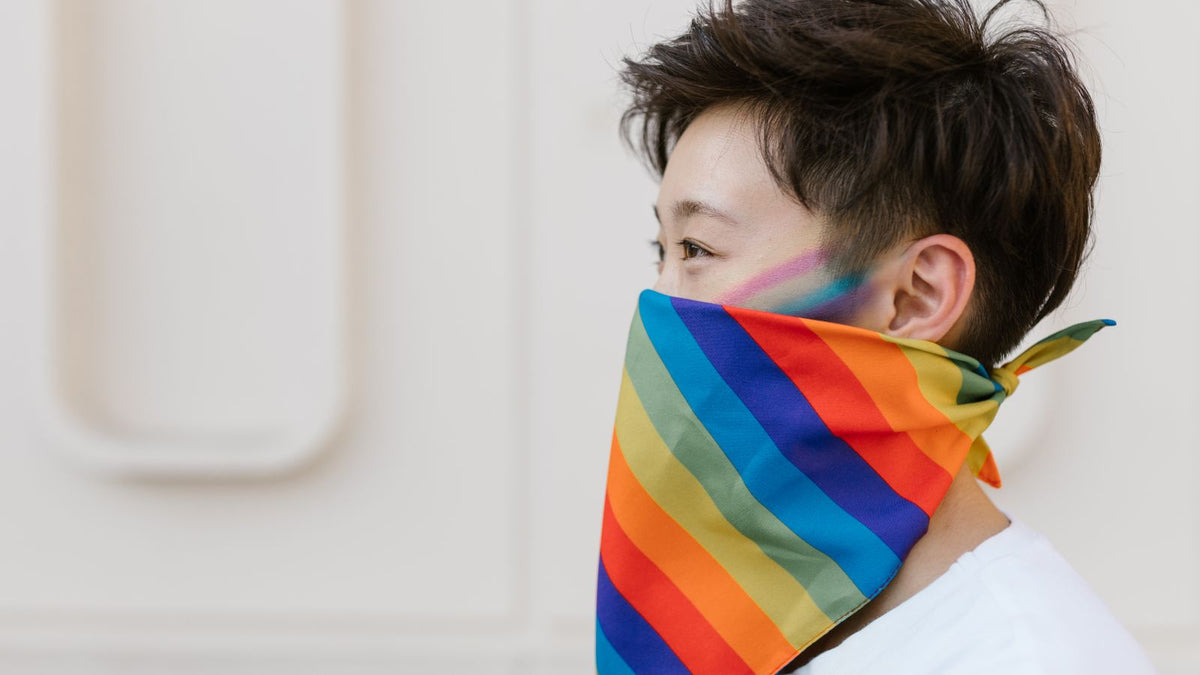
Gender-affirming hair is about making your hair match who you are, whether that means a sharper, more masculine cut, longer and softer styles, or something deliberately in between. For many trans and nonbinary people, hair is one of the first and most visible changes they can make, and one of the most affirming. This guide covers cuts, growing out, colour, wigs and toppers, everyday care, and how hormones may change your hair over time.
Our hair growth shampoo
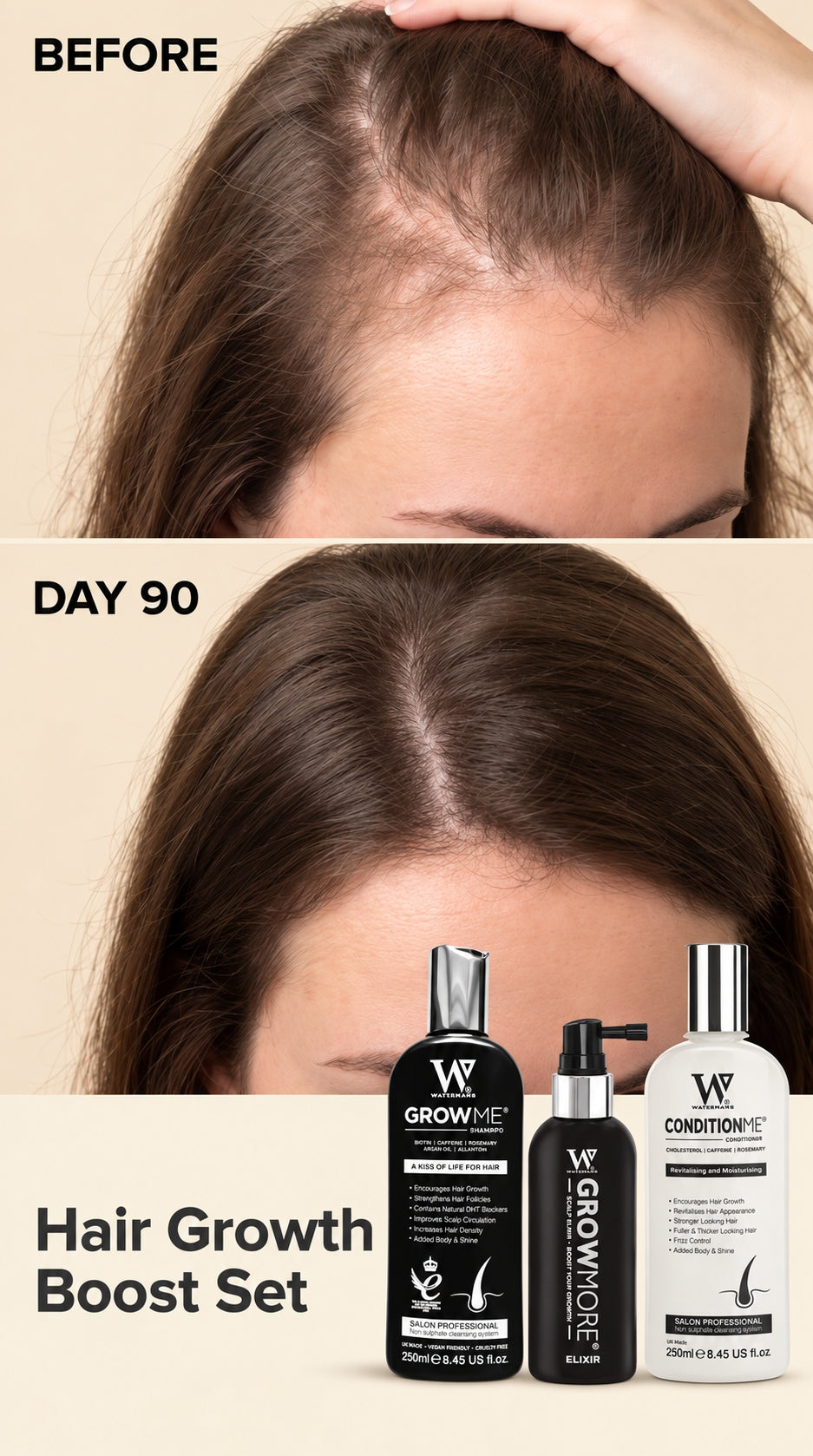
Grow Me® Hair Growth Shampoo, £14.95. A sulphate free daily shampoo that supports a healthy scalp environment and helps reduce breakage, so lengths hold on and look fuller.
Gender-affirming hair means choosing cuts, colour, styling and hair pieces that help your appearance match your gender identity. It works with or without hormones: a good barber or stylist, a routine that protects the hair you are growing, and safe wig or topper habits do most of the work. Hormone therapy can gradually change texture and density, so a routine often evolves over time.
Key takeaways
- A confident cut is the fastest change you can make; it takes an hour, not a year.
- Hair grows roughly a centimetre a month, so growing long hair is a project of many months; plan cuts that look intentional at each stage.
- DermNet lists hair extensions and tight braids, weaves and chignons among the causes of traction alopecia, so give your hairline regular breaks.
- The NHS says synthetic wigs last 6 to 9 months and real-hair wigs 3 to 4 years.
- Hormone therapy for adults is provided through specialist NHS gender services, and the NHS strongly advises against buying medicines online without supervision.
What does gender-affirming hair mean?
Gender-affirming hair means any hairstyle, cut, colour or hair piece that helps you look and feel more like yourself, in line with your gender identity. It is not one look. For a trans man it might be a short fade; for a trans woman, long layers and curtain bangs; for a nonbinary person, an undercut, a mullet or a style that shifts from day to day. There is more on dream of hair in a separate guide.
What these have in common is intention. Hair frames the face and is one of the first things other people notice, so it carries a lot of weight in how you are read and, just as importantly, how you see yourself in the mirror. The guide below covers both directions and the ground in between. If you want a deeper dive on one path, our guides to feminizing haircare and nonbinary hair go into more detail.

Which cuts create a more masculine look?
The cuts that create a more masculine look usually keep the sides and back short, add structure on top, and square off the lines around the face: a skin or taper fade, a textured crop, a short quiff, a side part with clean edges, or a classic short back and sides. Straight, defined lines at the temples and neckline read as more traditionally masculine.
Ask your barber for a squared neckline rather than a rounded one, and for sideburns that are cut straight rather than tapered to a point. Keeping a little length on top lets you add volume and texture with a matte paste or clay. If your hair is thick, thinning it through the sides stops it puffing out. Many barbers now advertise as trans-friendly, and it is fine to say what you are aiming for at the start: good barbers welcome a clear brief.
Which cuts create a softer, more feminine look?
The cuts that create a softer, more feminine look add movement around the face and blur hard lines at the hairline and jaw: face-framing layers, curtain bangs, a side-swept fringe, a textured bob, or long layers once you have the length. Movement and volume at the crown read as softer than flat, straight hair.
A side part is one of the simplest changes: it adds lift at the root and creates a soft diagonal across the forehead. Curtain bangs can also cover a higher forehead or temple recession while hair grows. Ask your stylist to plan a shape that looks deliberate at every stage of growing out, rather than one that only works when your hair is long.
| Goal | Cuts to ask for | Styling tips |
|---|---|---|
| More masculine | Fade, textured crop, short quiff, short back and sides | Matte paste or clay; squared neckline and sideburns |
| More feminine | Face-framing layers, curtain bangs, textured bob, long layers | Side part, root volume, soft waves |
| Androgynous or nonbinary | Undercut, mullet, shag, asymmetric bob | Switch parting and texture to shift the look |
Get a discount on the styling and hair care range
Join the Watermans mailing list and we will email a discount code straight to your inbox, so you can try the styling and hair care range for less. Made in the UK, over 6.5 million bottles sold since 2012.
How do you grow your hair out without an awkward stage?
You grow your hair out without a truly awkward stage by planning a series of intentional cuts, trimming only the ends that are splitting, and protecting the length you have. Hair grows roughly a centimetre a month, so going from a short cut to shoulder length usually takes well over a year.
A good stylist can shape the in-between stages into a pixie, then a textured crop, then a bob, so there is never a point where it looks unplanned. Keep the back slightly shorter than the front while the sides catch up. Between cuts, focus on retention: condition every wash, detangle gently from the ends up, and keep heat low. Hair that snaps as fast as it grows never gets longer.

Grow Me® Hair Growth Shampoo £14.95
A sulfate-free shampoo with caffeine, biotin, rosemary and niacinamide that cleanses gently and helps hair look fuller at the root. A good everyday base while you grow your hair out or keep a short cut fresh.

Are wigs, toppers and extensions a good option?
Wigs, toppers and extensions are a good option when you want length, volume or a different look straight away, and they can be the most affirming choice while your own hair grows. The NHS says synthetic wigs last 6 to 9 months and are easier to look after, while real-hair wigs last 3 to 4 years but need more care.
The main risk is constant pulling. DermNet lists regularly wearing tight braids, weaves and chignons, and using hair extensions, among the causes of traction alopecia, hair loss from repeated tension on the roots, usually along the hairline. To protect your own hair, change where clips sit, take wigs off to sleep, avoid glue along the hairline, and give your scalp days off. A wig cap that fits well reduces friction too.
Hairline check
If you notice broken hairs, soreness or thinning along your hairline or where clips sit, loosen the style and give that area a rest. Traction alopecia can become permanent if the pulling carries on, so act early.
Is it hair loss, hair shedding or hair breakage?
Hair loss, hair shedding and hair breakage are three different problems, and each has a different answer. Hair shedding is whole hairs falling out root and all, which is normal: the NHS says we lose 50 to 100 hairs a day. Hair breakage is the fibre snapping part-way along, usually from bleach, heat, tight styles or rough detangling.
Hair loss in the medical sense means follicles producing less hair over time, such as pattern thinning at the temples and crown. DermNet describes male pattern hair loss as a receding hairline and hair loss on the top and front of the head, caused by hormones combined with a genetic predisposition. For many trans women, thinning that began before transition is a key concern, while some trans men notice changes after starting testosterone. A cosmetic routine protects and styles the hair you have; questions about thinning belong with your GP or gender service. Our guide to hormone therapy and hair explains what can change.
| Problem | What you see | Everyday response |
|---|---|---|
| Shedding | Whole hairs with a white bulb at the root | Usually normal; see a GP if sudden or heavy |
| Breakage | Short snapped pieces, split ends, frizz | Less heat and bleach, gentle detangling, conditioner |
| Pattern thinning | Receding temples, thinner crown, wider parting | Styling to disguise; ask your GP or gender service |
How can colour and styling products help?
Colour and styling products help by changing texture, dimension and hold, which shifts how a cut reads. Soft balayage and warm tones tend to look gentler; a single, deeper shade and a matte finish tend to look sharper. Lighter pieces around the face brighten the skin, and a darker root can make thinner areas less obvious.
Colour is kinder to hair when it is spaced out, and the NHS recommends testing hair dye on a strand of hair at least 48 hours before using it, following the packet instructions every time. Bleach weakens the fibre, so condition well afterwards. For styling, matte clays and pastes give masculine texture, while mousse, a round brush and loose waves add softer volume. Whatever you choose, protect hair before heat.

Protect Me® Heat Protection Spray £13.95
A leave-in heat protection spray for use before a blow dry, curling iron or straightener. It also helps with frizz and colour fade on styled hair.

Condition Me® Hair Growth Conditioner £13.95
A conditioner with cholesterol, shea butter and lupine protein that helps lengths feel stronger and detangle easily, useful when colour or growing out leaves ends dry.

How might hormone therapy change your hair?
Hormone therapy might gradually change your hair's texture, oiliness and density, but the effects vary a great deal from person to person and build up over months and years. The NHS lists hormone therapy among the options offered to adults through specialist gender dysphoria services.
Some people on feminising hormones notice softer hair and a less oily scalp; some on testosterone notice oilier skin and, over time, thinning at the temples or crown if they are genetically prone to it. Because hormones are a medical treatment, questions about them belong with your GP or gender service. The NHS strongly advises against buying medicines online without medical supervision. The NHS also notes that hair transplants are available privately but not on the NHS. Our guide to transgender hair care covers how routines adapt over time.
When should you see a GP?
You should see a GP if you notice sudden or patchy hair loss, heavy shedding lasting more than a few months, a sore or scaly scalp, or thinning that is getting quickly worse. The NHS advises seeing a GP if you are worried about your hair loss. If you are on hormone therapy, your gender service is the right place to ask how it affects your hair. Watermans does not offer medical advice or consultations. If your question is about products or a routine rather than a medical one, you can talk to Gail Waterman, our co-founder, as an AI avatar on the Watermans homepage.
What are the frequently asked questions about gender-affirming hair?
What is the most affirming first step for my hair?
For most people it is a cut. A barber or stylist who understands your goal can change how you are read in a single appointment.
Which haircut looks most masculine?
Short sides, structure on top and squared edges, such as a fade, textured crop or short back and sides, tend to read as more masculine.
Which haircut looks most feminine?
Face-framing layers, curtain bangs and a side part soften the hairline and jaw, and long layers add movement once you have length.
How long does it take to grow hair out?
Hair grows roughly a centimetre a month, so going from a short cut to shoulder length usually takes well over a year.
Can wigs damage my own hair?
They can if clips or glue pull on the same spot every day, which can lead to traction alopecia. Give your hairline breaks and change where clips sit.
Will hormones change my hair?
They may gradually change texture, oiliness and density, but effects vary. Ask your GP or gender service what to expect.
How long do wigs last?
The NHS says synthetic wigs last 6 to 9 months and real-hair wigs 3 to 4 years.
What is the bottom line on gender-affirming hair?
The bottom line on gender-affirming hair is that the cut does most of the work, a gentle routine protects your progress, and wigs or toppers can bridge the gap while your own hair grows. Brief your barber or stylist clearly, protect your hairline from tension, keep heat and bleach in check, and take any sudden or patchy hair loss to your GP or gender service.
If you want one product to anchor your routine, a gentle hair growth shampoo for fuller-looking roots is a good place to start.
Sources & references
- NHS, Gender dysphoria: treatment, checked 18 September 2026.
- NHS, Hair loss, checked 18 September 2026.
- NHS, Hair dye reactions, checked 18 September 2026.
- DermNet, Traction alopecia, checked 18 September 2026.
- DermNet, Male pattern hair loss, checked 18 September 2026.
- DermNet, Female pattern hair loss, checked 18 September 2026.
Watermans products are 100% cosmetic and do not treat medical hair loss. Individual results may vary.