Menopausal Hair Thinning: Signs, Causes and What Helps
Menopausal hair thinning is the gradual loss of density that many women notice from their mid forties onward, when falling oestrogen changes how long each hair stays in its growing phase. Hair does not fall out in patches. It gets finer, the parting looks wider, and the ponytail feels smaller. It is extremely common, it happens slowly, and the daily habits below make a real difference to how full your hair looks while it happens.
Our hair growth shampoo
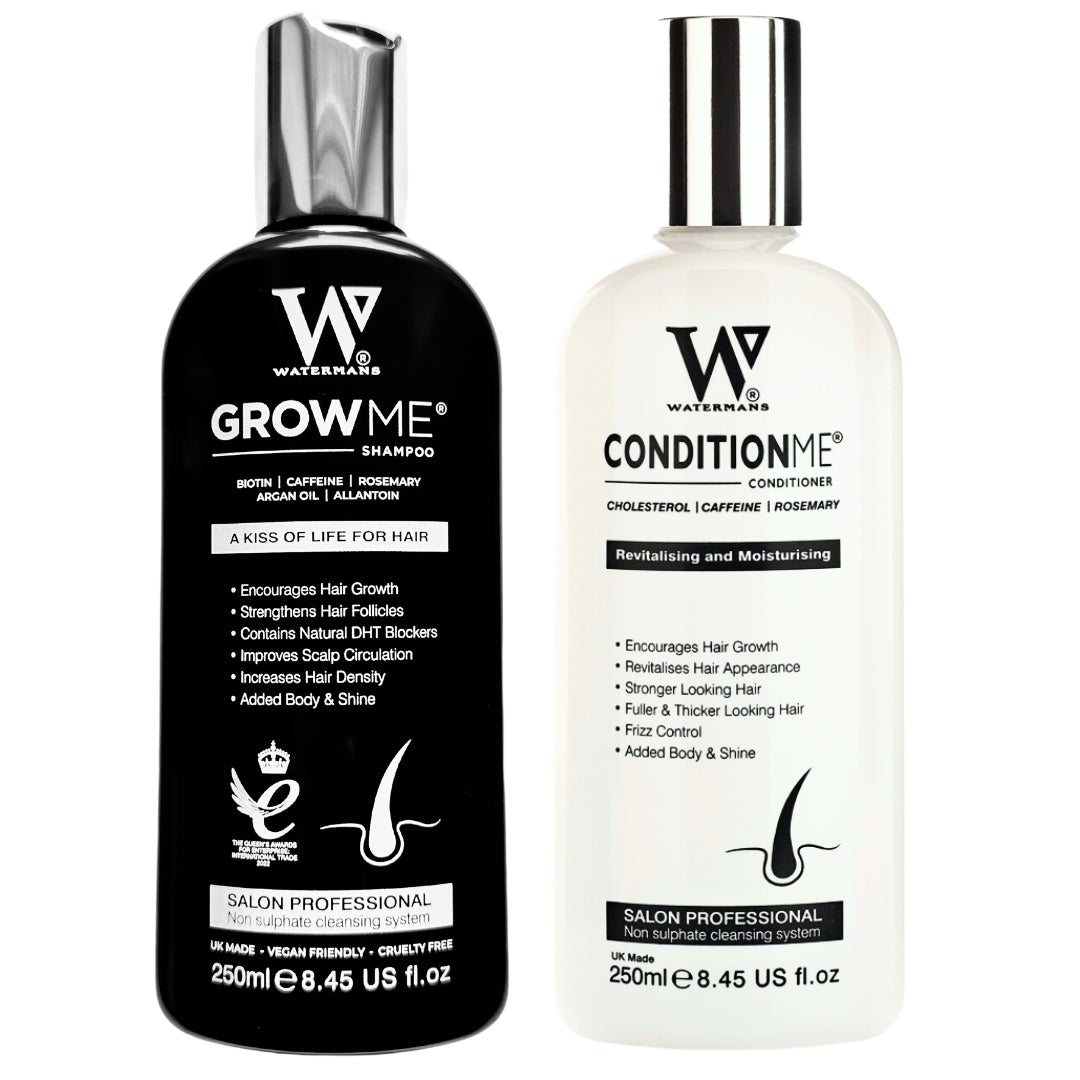
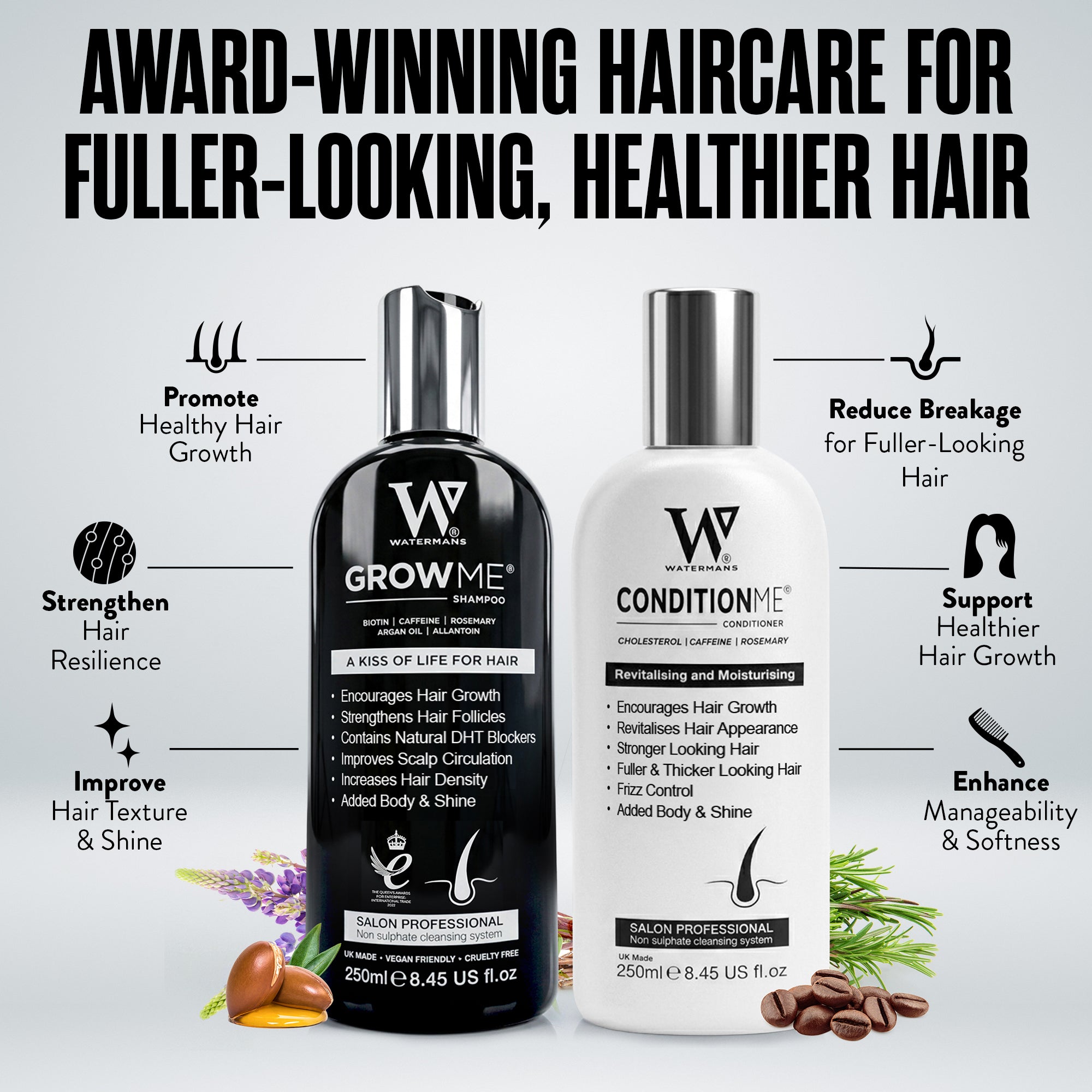
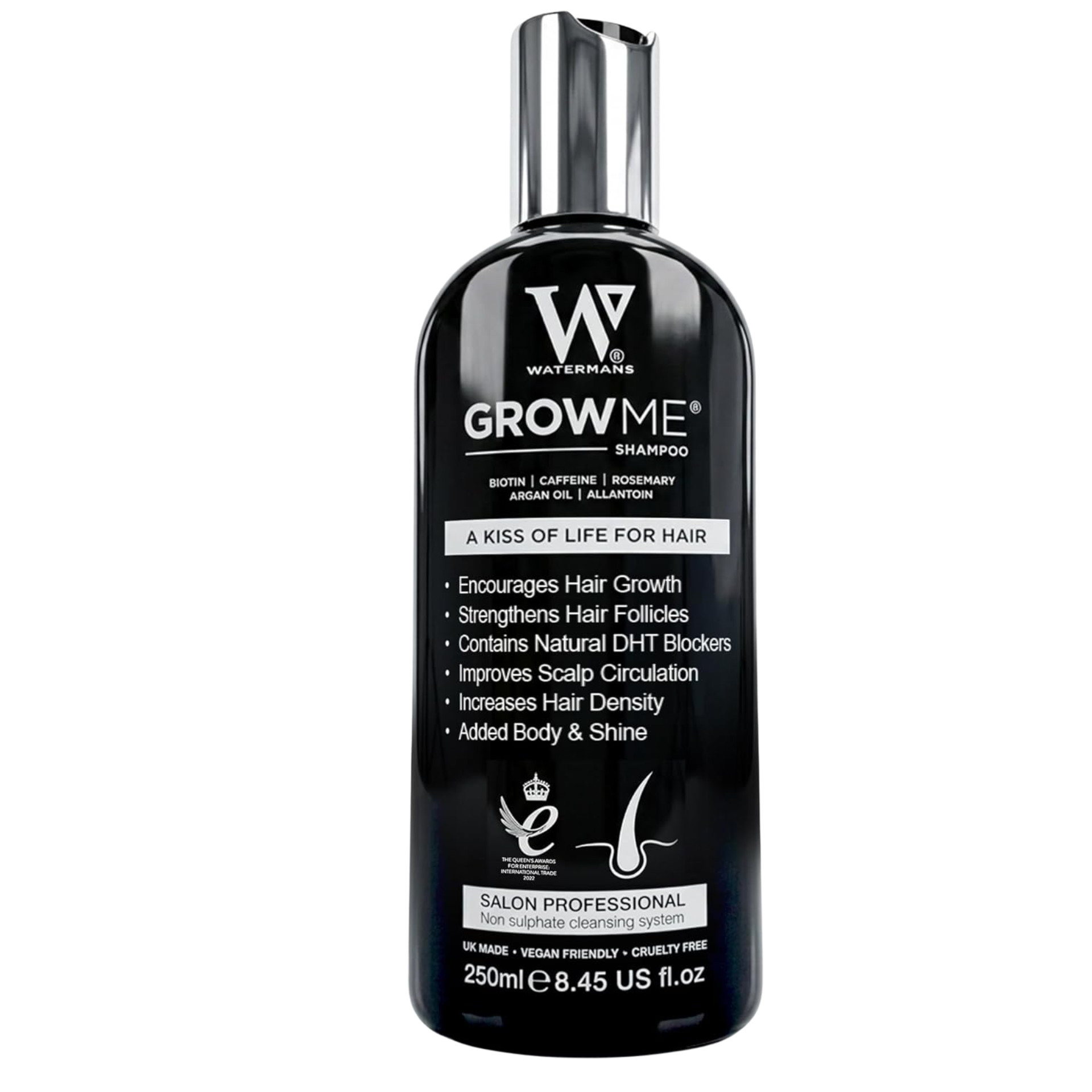
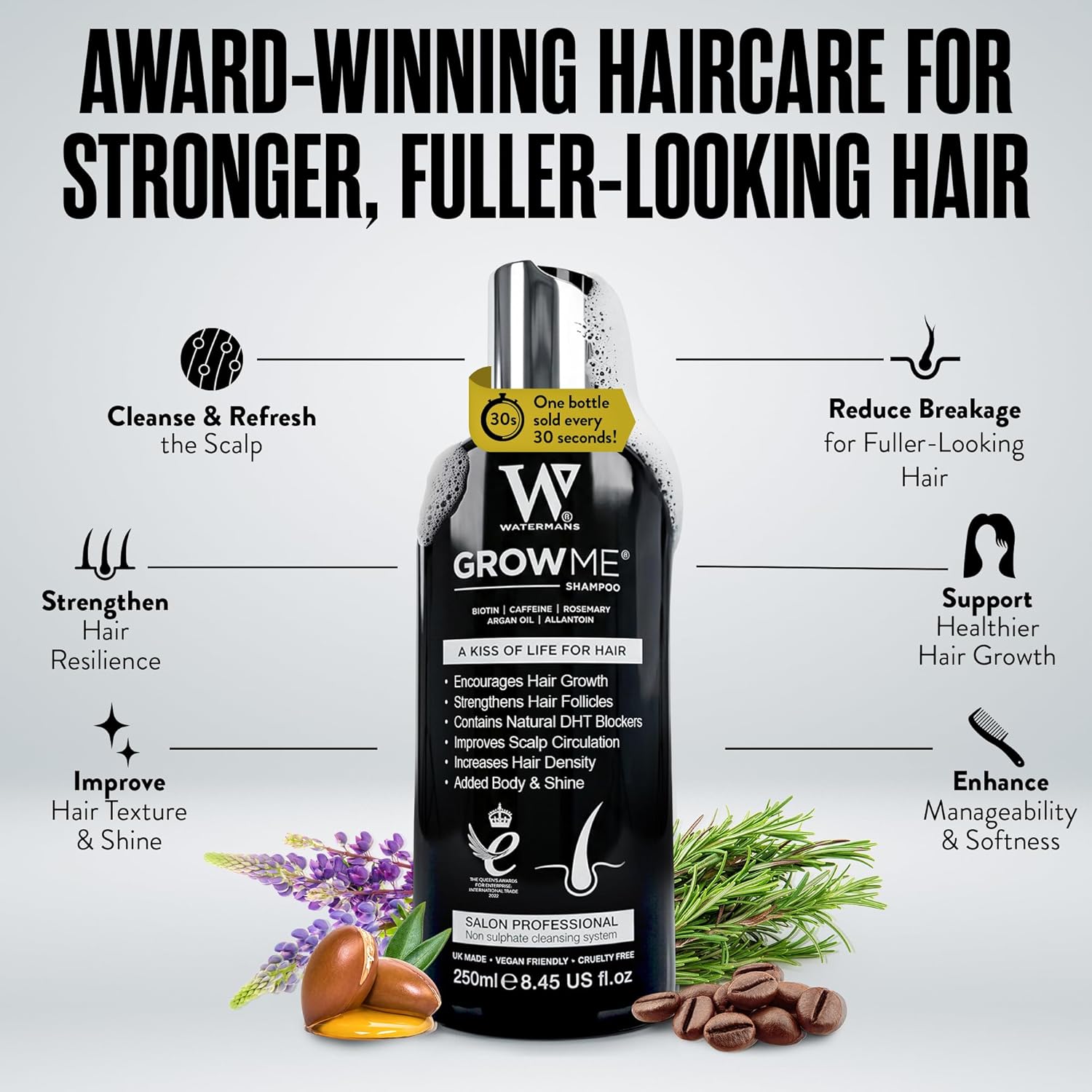
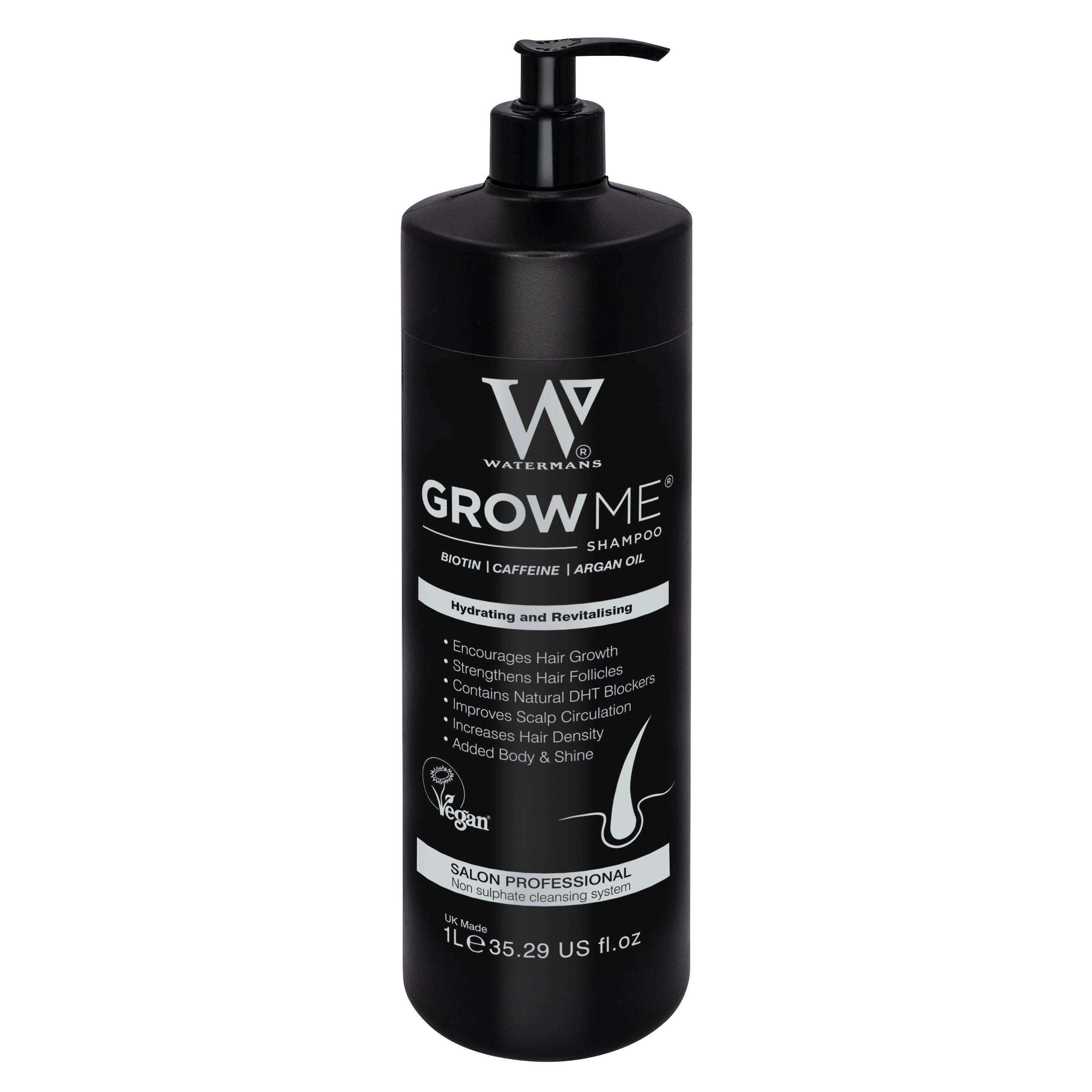
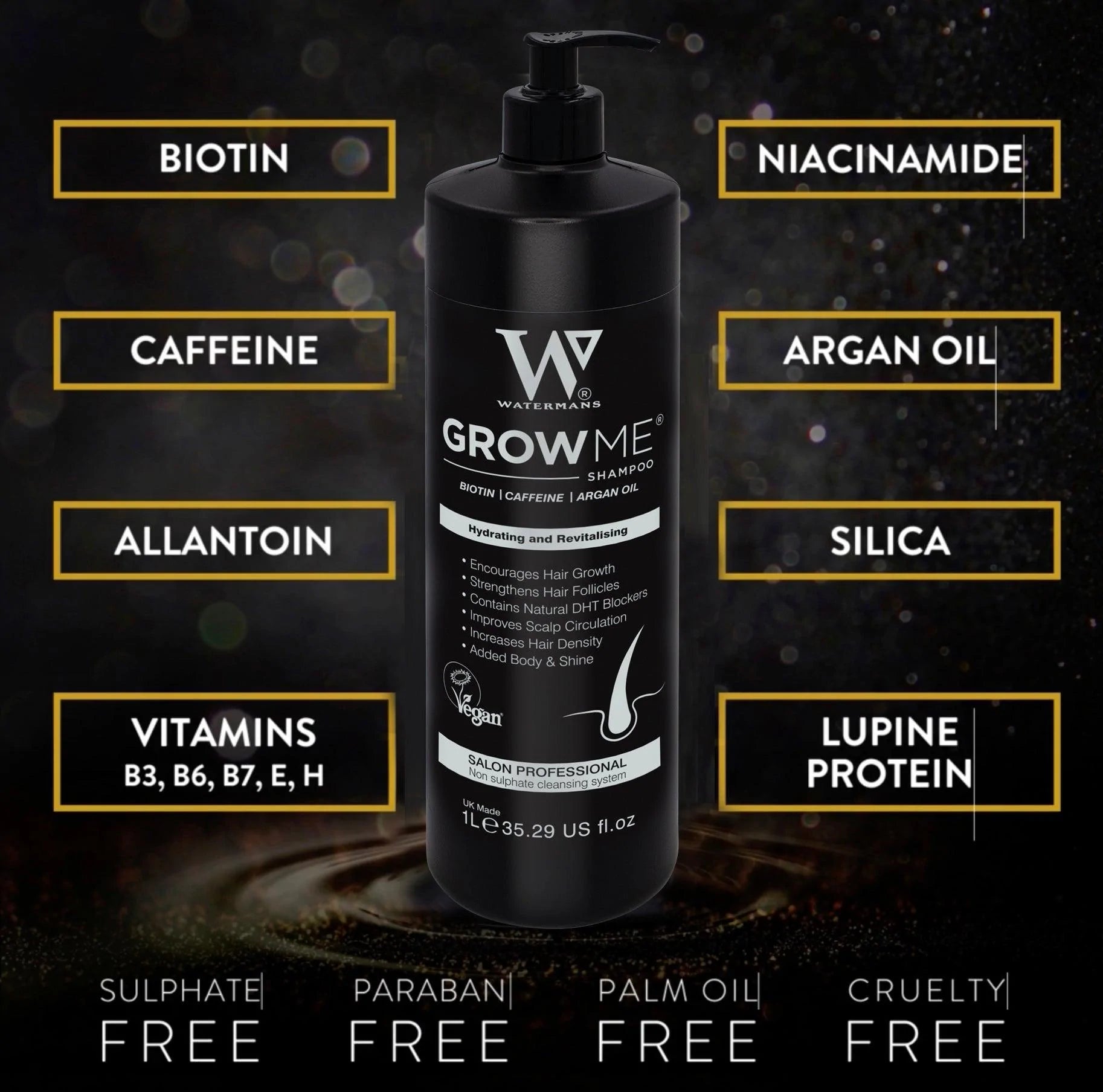
Grow Me® Hair Growth Shampoo, £14.95. A sulphate free daily shampoo that supports a healthy scalp environment and helps reduce breakage, so lengths hold on and look fuller.
Key takeaways
- Oestrogen helps keep hair in its long growing phase. When it falls, more hairs rest and shed at once, and each new hair grows back a little finer.
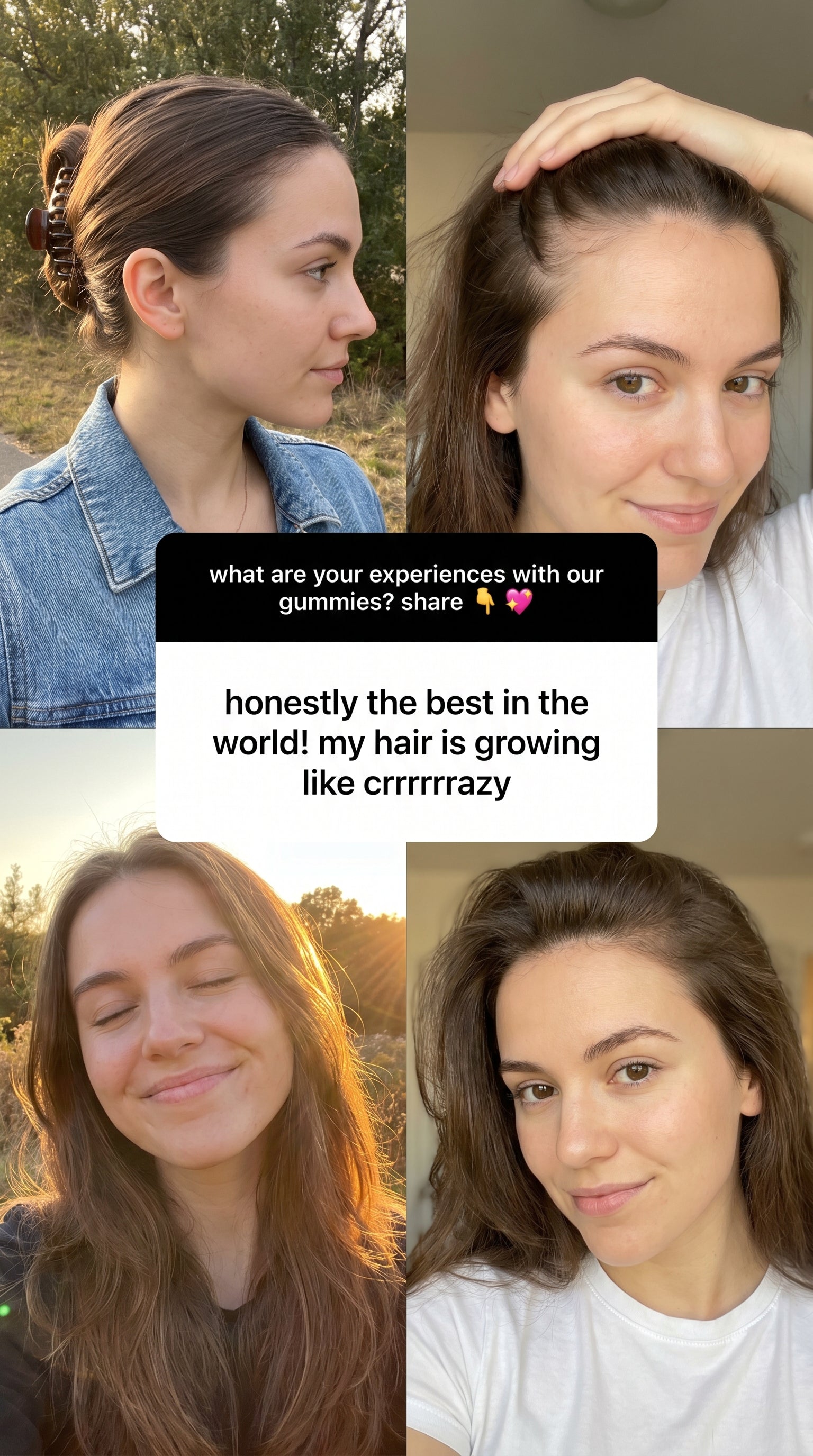
- Menopausal hair thinning usually shows up as a widening parting and a thinner ponytail, not as bald patches.
- Loss, shedding and breakage are three different things with three different fixes. Most midlife hair complaints are a mix of all three.
- Breakage is the part you have most control over day to day, and it is often what makes thinning look worse than it is.
- See a GP if the change is sudden, patchy, or comes with tiredness, weight change or an itchy, sore scalp.

What is menopausal hair thinning?
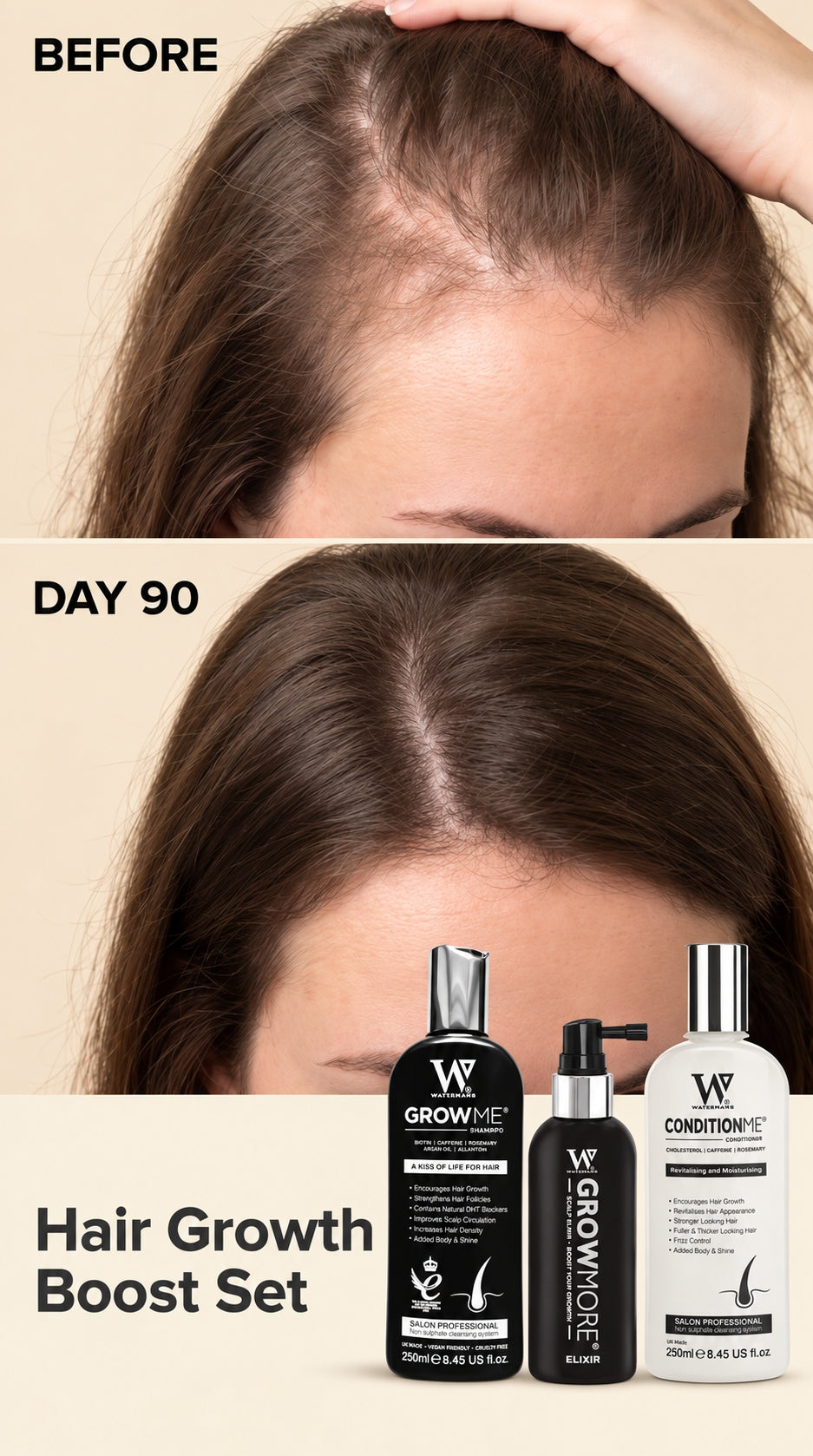
Menopausal hair thinning is a diffuse reduction in hair density across the top of the scalp that develops around perimenopause and menopause. Diffuse means spread out. The hair gets sparser everywhere on the crown rather than disappearing from one spot, which is why the first clue is usually the parting rather than a patch.
Two things happen at the same time. Fewer hairs are on your head at any given moment, because more of them have slipped into the resting phase together. And the hairs that do grow back come through with a smaller diameter, so even an unchanged hair count feels thinner in the hand. Trichologists call that second part miniaturisation, and it is the reason midlife hair can feel flat and soft where it used to feel springy.
The scale is worth knowing, because it is easy to feel like the only one. Surveys of women going through the menopause transition consistently report hair changes in roughly a third to a half of respondents, sitting alongside better known symptoms such as hot flushes and disturbed sleep.
Why does hair change during perimenopause and menopause?
Hair changes at menopause because oestrogen is one of the signals that keeps a follicle in its growing phase. Every hair on your head runs a cycle: a long growing phase called anagen that lasts a few years, a short transition called catagen, and a resting phase called telogen that ends when the hair is released and a new one starts underneath.
Oestrogen lengthens anagen. That is why hair often feels thick and glossy in pregnancy, when oestrogen is high, and why so many women shed heavily a few months after giving birth when it drops again. Perimenopause is a slower version of the same drop, spread over years instead of weeks, so the shedding is less dramatic but the density change is more permanent.
There is a second half to it. Androgens, the hormones present in smaller amounts in women, do not rise much at menopause, but their influence relatively increases as oestrogen falls away. In women who are genetically sensitive to that influence, follicles on the crown respond by producing progressively finer hairs. This is why menopausal hair thinning so often follows the same crown and parting pattern that runs in families.
Nothing about this is a personal failing, and nothing about it is sudden. If your hair changed overnight, hormones are probably not the whole story, and the section on seeing a GP below matters more than the routine advice.
How is hair loss different from shedding and breakage?
Hair loss, hair shedding and hair breakage are three separate problems, and telling them apart decides what actually helps. Hair loss means the follicle itself is producing less, or nothing. Hair shedding means normal hairs are leaving the scalp faster than usual, usually temporarily. Hair breakage means the fibre is snapping partway along its length, so the root is fine and the hair is simply shorter and thinner at the ends.
| What it is | What you see | Where it comes from | What helps |
|---|---|---|---|
| Hair loss (follicular) | Wider parting, sparser crown, finer strands over months and years | Follicle miniaturisation, hormonal sensitivity, alopecia conditions | A GP or dermatology review, plus styling and cosmetic support for density |
| Hair shedding (cycle) | Handfuls in the shower or brush, often starting two to four months after a trigger | Illness, surgery, crash dieting, low iron, childbirth, acute stress | Fix the trigger, check bloods, wait. It usually settles by itself |
| Hair breakage (fibre) | Short flyaway ends, rough feel, hair that never gets past a certain length | Heat, bleach, tight styles, hard brushing, dry ends | Gentler washing and drying, conditioner every wash, less tension and heat |
Most women dealing with midlife density change have all three at once. The hormonal part is slow and only partly within your control. The shedding part often has a fixable cause sitting behind it. The breakage part is entirely within your control, and it is usually the fastest visible win, because hair that stops snapping keeps the length and the body it already has. Our guide to what causes thinning hair and how the three mechanisms differ goes through each one in more detail.
What are the first signs of menopausal hair thinning?
The first signs are almost always noticed in the mirror rather than in the drain. Look for these, in roughly the order women tend to spot them:
- A wider parting. The single most reported early sign. More scalp shows along the part line, particularly under bathroom lighting.
- A smaller ponytail. The band goes round an extra turn. This is a density measure you can actually track, so it is worth noting where the band sits today.
- Finer individual hairs. Hair feels softer and flatter and will not hold a style the way it used to.
- More scalp at the temples. The hairline itself usually stays, but the density just behind it drops.
- Slower length gain. Hair seems to sit at one length because the ends break as fast as the roots grow.
What you should not see is a smooth, coin sized bald patch, a sore or scaly scalp, or hair coming out in clumps from one area. Those point somewhere other than hormones and are worth a GP appointment rather than a new shampoo.
Get a discount on the thinning hair range
Join the Watermans mailing list and we will email a discount code straight to your inbox, so you can try the range for less. Vegan, made in the UK, over 6.5 million bottles sold since 2012.
What can you do about menopausal hair thinning at home?
The daily routine cannot change your hormones, but it can change how much of the hair you still have survives to be seen. Retention is the whole game in midlife. A hair that grows for four years and then snaps at eighteen months never gets to be long hair, and eight snapped hairs read as thin hair even when the follicle count has barely moved.

Wash in a way that protects the fibre
Wash as often as your scalp needs, which for most women is every two to three days. Going longer does not make hair grow. It lets oil and product build up, which makes fine hair look flatter and tempts harder brushing. Use lukewarm water rather than hot, work the shampoo into the scalp with your fingertips rather than piling the lengths on top of your head, and let the suds rinse down through the ends rather than scrubbing them.
Condition every single wash, ends first
Conditioner is not optional once hair is fine. It smooths the cuticle so strands slide past each other instead of catching, which is what stops the snapping. Apply from the mid lengths down, leave it while you do something else, then rinse. If you have been skipping conditioner because it weighs your hair down, you are almost certainly applying it at the roots. Our step by step on how to use conditioner properly covers the placement in detail.
Take the tension out
Tight ponytails, hard bristle brushes and daily straighteners all cost you hair that the follicle already did the work of growing. Detangle from the ends upward with a wide tooth comb, use a soft covered band rather than an elastic, and let hair air dry partway before any heat goes near it. Sleep on a smooth pillowcase if you wake up with tangles.
Style for the appearance of density
A blunter cut and a shorter overall length make fine hair read as thicker, because the weight of long hair drags flat against the scalp and shows the parting. Moving your parting a centimetre to one side lifts the roots and covers scalp immediately. Root lift at the crown does more for perceived density than anything you can buy.
Which products support hair through menopausal hair thinning?
Cosmetic products work on the hair fibre and the scalp surface, not on your hormones, and choosing them on that basis keeps expectations honest. What a good shampoo and conditioner routine does is reduce breakage, so more of the hair you grow stays on your head at full length and the whole head looks fuller.

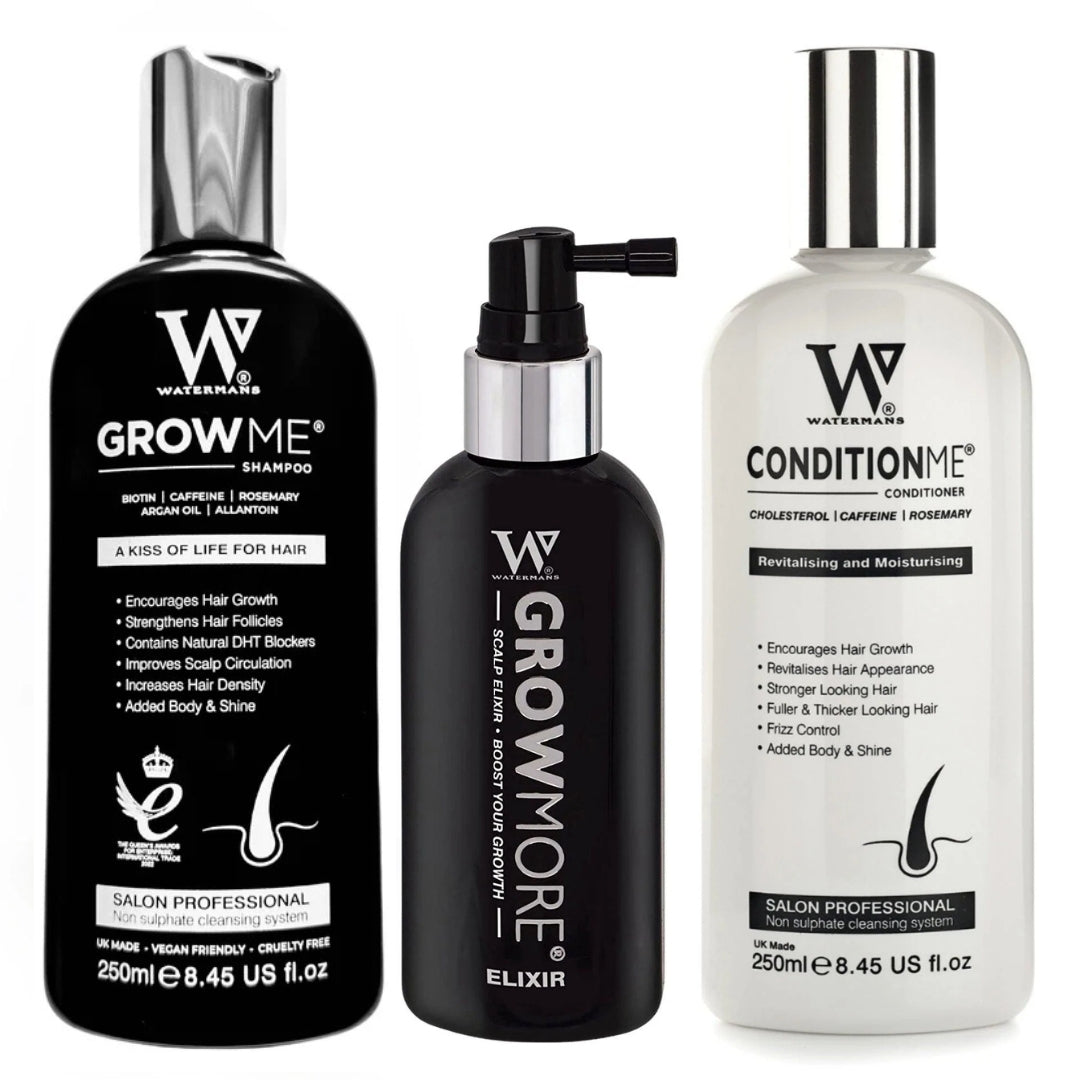
Grow Me® Strength & Retention Shampoo
A daily shampoo built around biotin, caffeine, niacinamide and lupin protein. It cleans the scalp without stripping it and helps reduce breakage, so fine midlife hair keeps its length. Vegan and made in the UK.

Grow Me® Shampoo & Conditioner Set
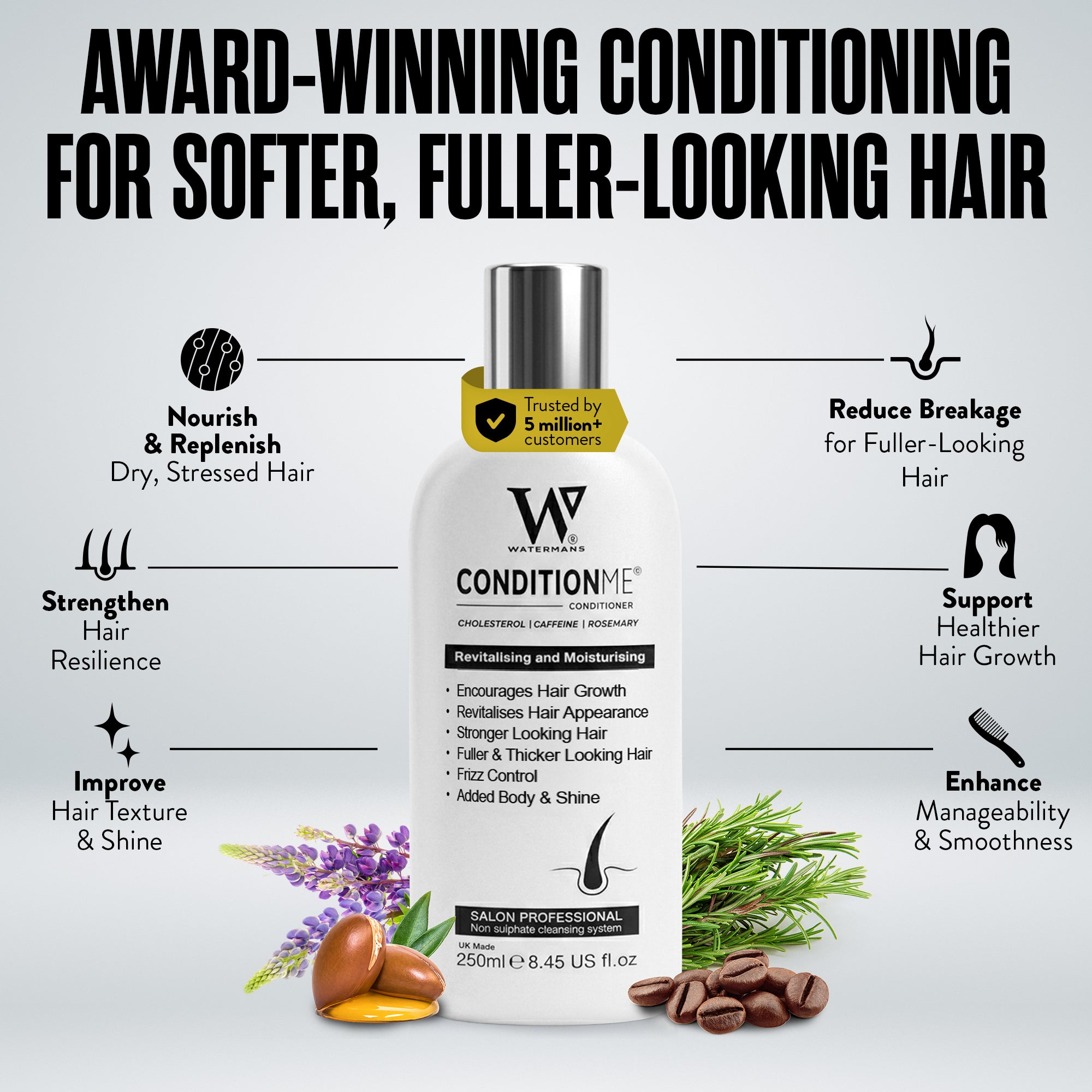
The pairing that matters most if breakage is your issue. Conditioning every wash is what stops the ends snapping, and the set removes the temptation to skip it.

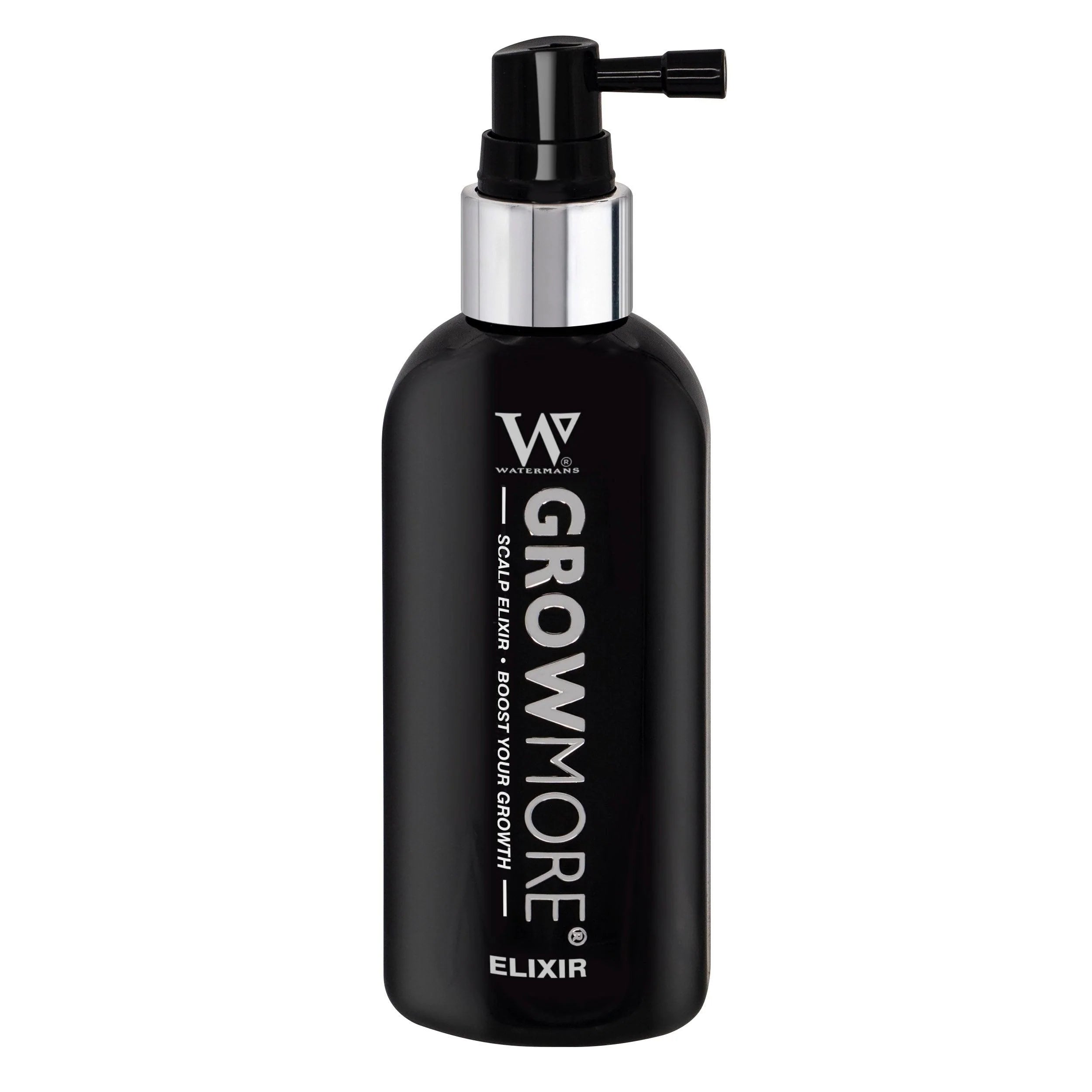
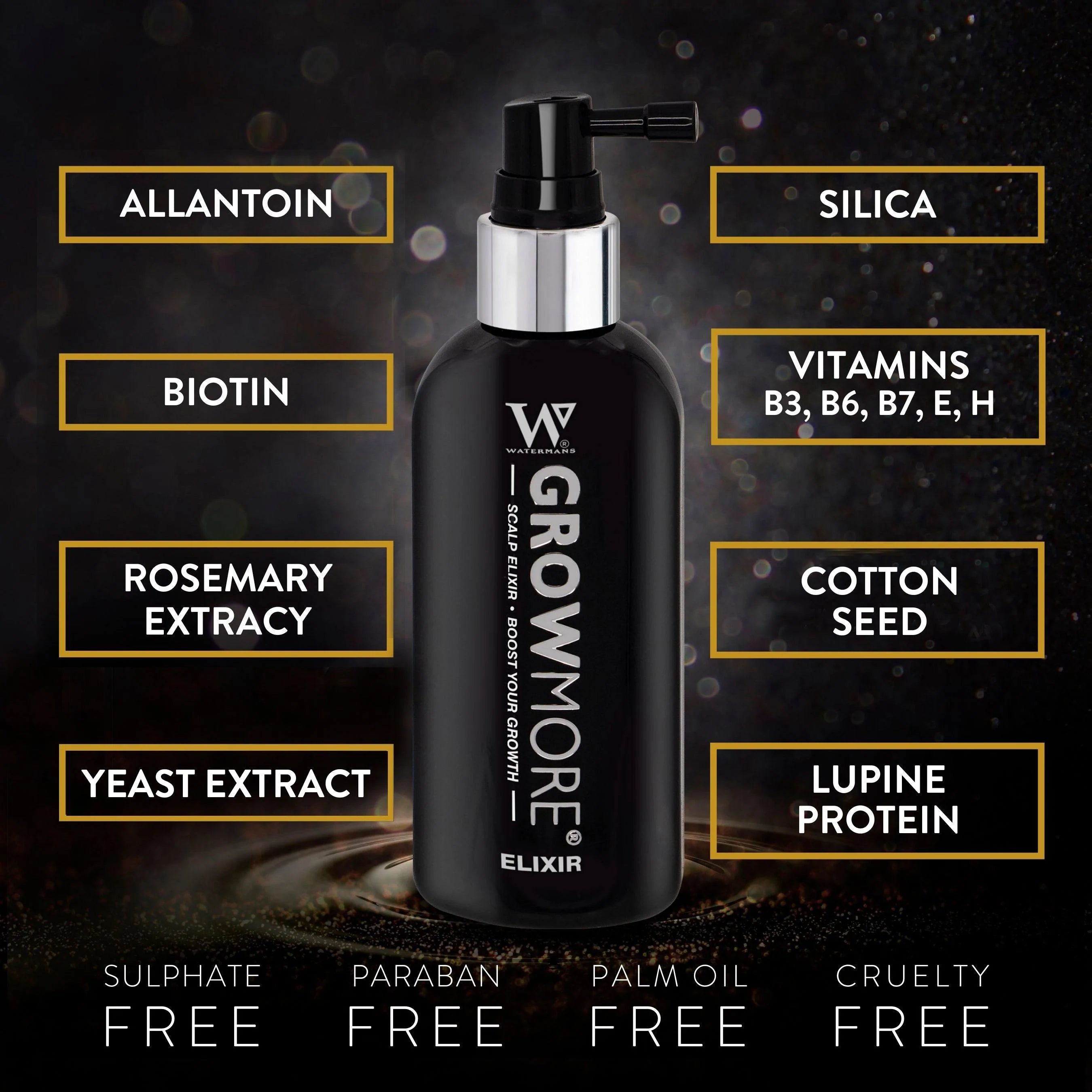
Grow More® Leave-In Density Serum
A leave-on scalp elixir for anyone who wants a step beyond washing. Applied to a dry scalp at night and left in, it is the optional extra rather than the foundation.
Watermans products are 100% cosmetic and do not treat medical hair loss. Individual results may vary.
What should you eat and check when hair changes at menopause?
Nutrition will not restore a hormonally driven density change, but a genuine shortfall will absolutely make shedding worse on top of it, and shortfalls are common in midlife. This is the part most often missed, because the fix is cheap and the symptom looks identical to the hormonal picture.

- Protein. Hair is mostly keratin, a protein. Persistent under eating, and low protein intake in particular, pushes follicles into the resting phase. Spread protein across the day rather than loading it into one meal.
- Iron. Low ferritin is one of the most common findings behind heavy shedding in women, and heavy or irregular perimenopausal periods are a classic cause. This is a blood test, not a guess.
- Vitamin D. The NHS advises everyone in the UK to consider a daily 10 microgram supplement through autumn and winter, since we cannot make enough from sunlight in those months.
- Enough calories. Rapid weight loss is a reliable way to trigger a shed two to three months later. If you are dieting hard and shedding, those two facts are probably related.
Do not start iron supplements on a hunch. Too much iron is harmful, and the only way to know is a test. Ask your GP for ferritin, full blood count and thyroid function if shedding is heavy, since an underactive thyroid produces very similar hair changes and is easily missed at this age.
When should you see a GP about hair change at menopause?
See a GP when the pattern does not match the slow, diffuse picture described above. Speak to your own doctor if any of the following apply:
- Hair is coming out in clumps, or the change happened over weeks rather than years.
- There are smooth, distinct bald patches, or hair loss on the eyebrows, lashes or elsewhere on the body.
- The scalp is sore, itchy, scaly, scarred or shiny where the hair has gone.
- Hair change comes with fatigue, weight change, feeling cold, low mood or changes to your periods.
- You are distressed by it. That on its own is reason enough, and there are medical options a doctor can discuss with you that a shampoo company cannot.
Watermans does not run clinics and cannot assess a scalp. What we can do is the cosmetic half, which is keeping the hair you have in good condition while you sort out the rest with someone qualified to look at it. For the follicle-level explanation of why hair behaves this way through a hormonal change, see our guide to HRT and hair follicle health. If your question is about products or a routine rather than a medical one, you can talk to Gail Waterman, our co-founder, as an AI avatar on the Watermans homepage.
Frequently Asked Questions About Menopausal Hair Thinning
At what age does menopausal hair thinning usually start?
Most women first notice menopausal hair thinning in perimenopause, commonly in their mid forties to early fifties, though it can begin earlier. It develops over years rather than weeks, so the earliest sign is usually a slightly wider parting rather than any noticeable shedding.
Is this kind of thinning permanent?
The hormonal change behind it is permanent, but the picture is rarely all or nothing. Density often stabilises rather than continuing to fall, and a large part of how thin hair looks comes from breakage and styling, both of which can be improved at any age.
How much hair shedding is normal each day?
Losing somewhere in the region of 50 to 100 hairs a day is considered normal, and you notice far more of them on a wash day simply because several days of already released hairs come away at once. Shedding that fills your hand every day, or that started suddenly, is worth a GP visit.
Does washing hair less often help with thinning?
No. Washing less often does not slow hair loss and tends to make fine hair look flatter, because oil and product build up at the roots. Wash as often as your scalp needs, using lukewarm water and fingertips on the scalp rather than scrubbing the lengths.
Can hair vitamins help with midlife hair thinning?
Supplements only make a difference where there is a genuine shortfall, most often iron or vitamin D. Taking them without knowing your levels rarely changes anything and can be harmful in the case of iron, so a blood test through your GP comes first.
Does HRT change hair at menopause?
Hormone replacement is a medical decision made with a doctor, and hair is only one of many factors weighed up in that conversation. It is not something a cosmetic brand can advise on, so raise it with your GP or a menopause specialist.
What is the fastest way to make thinning hair look fuller?
Move your parting to the other side, cut the length shorter and blunter, and stop the breakage with conditioner at every wash. Those three changes alter how full the hair looks within days, long before anything affecting the follicle could show.
What is the bottom line on menopausal hair thinning?
Menopausal hair thinning is a slow, diffuse density change driven by falling oestrogen, and it is one of the most common and least discussed parts of the menopause transition. You cannot shampoo your hormones back, and any brand that tells you otherwise is selling you something. What you can do is protect every hair you still grow: condition at every wash, take the heat and tension out, keep your protein and iron where they should be, and get a blood test rather than guessing. Then style for lift instead of length. If the change is fast, patchy or painful, that is a GP conversation and not a haircare one. For more on the wider picture, read our guide to menopause and thinning hair and our explainer on whether hair loss is normal for a woman. We look at how to wash a woman's hair separately, with the practical steps.
Sources & References
- NHS, Menopause, for the symptom picture and timing of the menopause transition.
- NHS, Hair loss, for normal daily shedding, when hair loss warrants a GP visit and what a GP can look at.
- NHS, Vitamin D, for the UK autumn and winter supplement advice quoted above.
- NICE guideline NG23, Menopause: identification and management, for how the menopause transition is defined and managed in the UK.
- British Menopause Society, for UK specialist guidance and public information on the menopause transition.
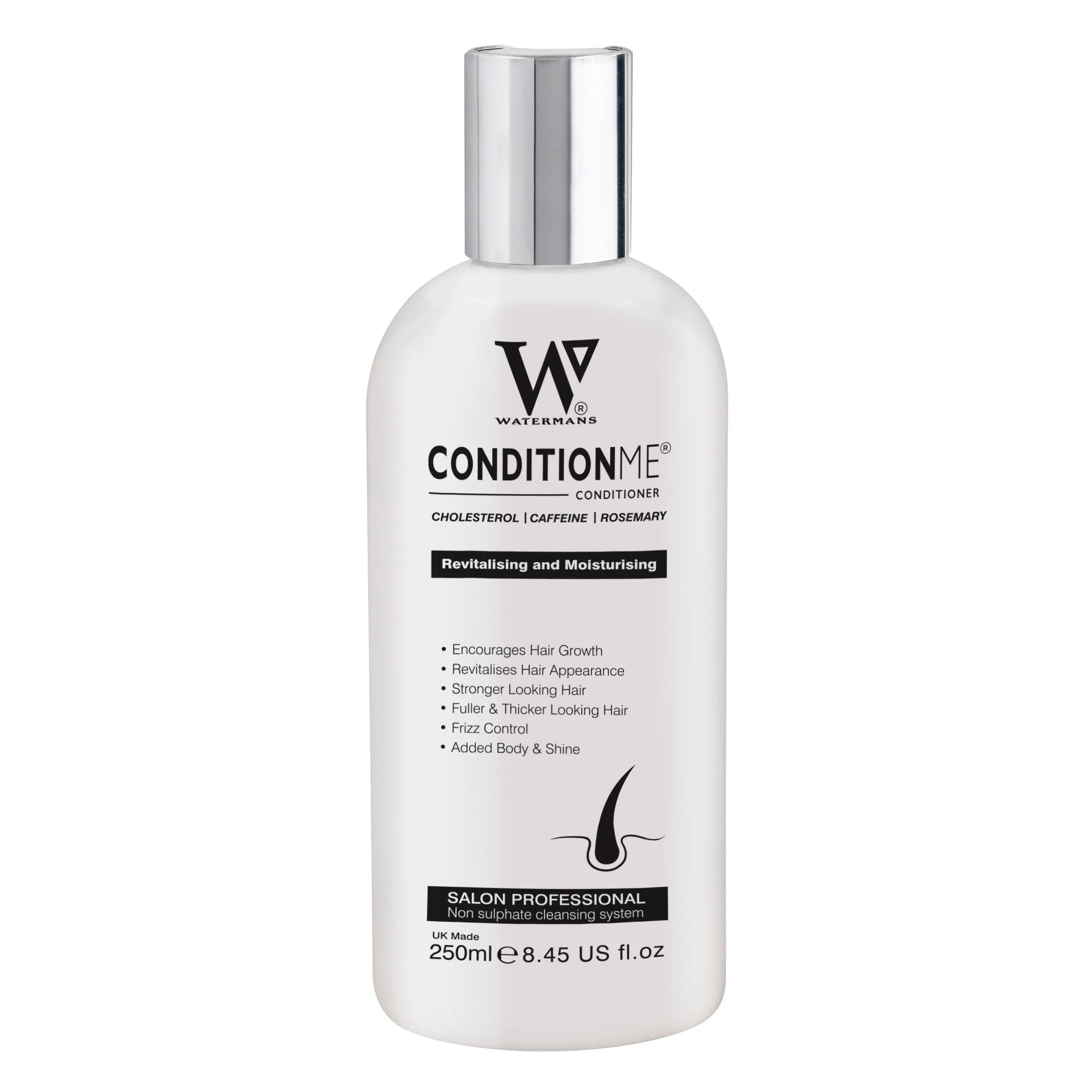
If you are changing one thing this month, make it the wash: our sulphate free hair growth shampoo is sulphate free and built for the scalp. Vegan and made in the UK.