How to Use Hair Serum: A Step by Step Guide
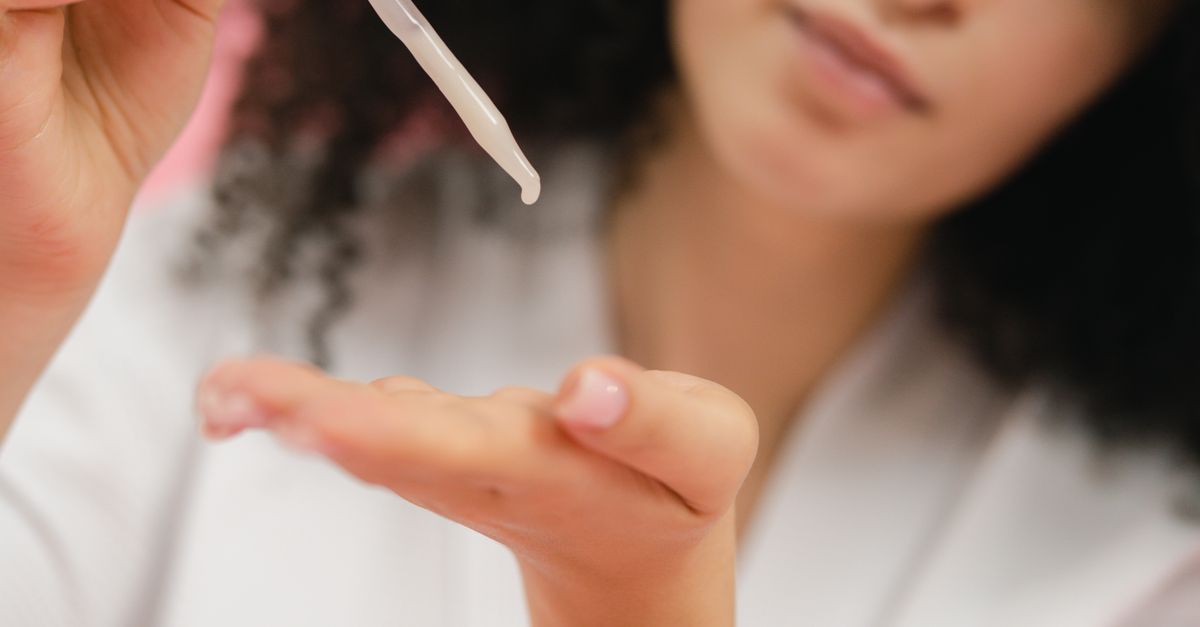
How to use hair serum depends on which kind is in your hand. A smoothing or finishing serum goes on the mid lengths and ends: one or two pumps, warmed between the palms, on damp or dry hair and kept away from the roots. A scalp serum goes on the skin instead: about 1ml, a full dropper, applied along parted rows of towel dried or dry hair and spread with the fingertips.
Our overnight scalp elixir
Grow More® Overnight Scalp Elixir, £25.50. A leave in scalp serum worked into the roots at night, supporting a healthy scalp environment while you sleep.
Key takeaways
- Hair serum means two different products. A finishing serum is for the lengths and ends, a scalp serum is for the skin, and they go in opposite places.
- Coverage beats quantity. A thin film over the whole area does more than a puddle in one spot.
- About 1ml, or four to six pumps, covers the top of an average adult head. Larger areas need proportionally more, not double.
- Part the hair into rows first. Product applied to the surface of the hair mostly never reaches the skin at all.
- More product does not do more. Past the point where the skin is wet, the extra runs off, sits on the hair or drips.
- Scalp products go on the scalp. Conditioners, masks and oils belong on the mid lengths and ends, where the damage is.
- If the scalp is sore, flaking heavily, bleeding or intensely itchy, that is a GP question, not a product question.
How to use hair serum: which kind do you have?
Hair serum is a label used for two different products, and the bottle in your hand decides where it goes. A finishing serum is a styling product for the hair fibre, often built on silicones such as dimethicone, that smooths frizz and adds shine. A scalp serum is a light leave on liquid meant for the skin of the scalp, usually sold with a dropper.
The first step in how to use hair serum is therefore reading what the bottle says it is for. A review of hair cosmetics in the International Journal of Trichology describes dimethicone as the most widely used silicone in hair care, one that protects the hair shaft from abrasion, while some silicones add shine by reflecting light. That is the job of a finishing serum, and it is why that kind belongs on the lengths rather than the roots.
| Question | Finishing serum | Scalp serum |
|---|---|---|
| Where it goes | Mid lengths and ends, never the roots | The skin of the scalp, along partings |
| How much | One to two pumps, or a pea sized amount, for shoulder length hair | About 1ml, one full dropper or four to six pumps |
| Wet or dry hair | Damp hair before styling, or a drop on dry hair to finish | Towel dried or fully dry hair |
| How to spread it | Warm between the palms, smooth down the lengths, comb through | Apply in rows, then spread with the fingertip pads |
| Rinse it out? | No, it stays in until the next wash | No, it stays on until the next wash |
| Most common mistake | Starting at the roots, which leaves hair flat and greasy | Dropping it on top of the hair, where it never reaches skin |
For a finishing serum on the lengths, the method is short:
- Start with clean, towel dried hair, or dry hair if you are only taming flyaways.
- Dispense one pump into your palm and rub your hands together so the serum is spread thinly across both.
- Smooth your hands over the hair from about ear level down to the ends, where hair is oldest and driest.
- Comb through with a wide tooth comb or your fingers so no section gets a heavy patch.
- Add a second pump only if the ends still feel dry. Fine hair rarely needs it, thick or coarse hair often does.
A finishing serum is not automatically a heat protectant, so check the label before you pick up a dryer or straighteners. If the bottle does not say so, use a dedicated heat protection spray first. Our guides to choosing a leave in hair serum and what a hydrating hair serum does go deeper on the lengths side. The rest of this guide covers the scalp side, which is where most of the mistakes happen.
How to use hair serum on the scalp: how much is enough?
A scalp serum works on a small amount spread thinly and deliberately. For most leave on scalp products sold in a dropper or pump bottle, 1ml is the working figure for the top of an adult head, which is the crown, the parting and the front hairline. That is one full standard dropper, or roughly four to six pumps depending on the pump size. It should feel like slightly damp skin afterwards, not like wet hair.
Volume is the wrong way to think about it, though, and that is why so many people get this wrong in both directions. What matters is whether the product actually made contact with the skin across the whole area you meant to cover. A person applying 2ml carelessly to the top of their hair may deliver less to the scalp than someone applying 0.5ml carefully into parted rows. The bottle is not the unit of measurement. The skin is.

Scale the amount to the area rather than to how worried you feel. A receding front hairline is a small strip and needs very little. A diffusely thinner top of the head is a much larger surface and needs more, but even then the increase is modest. As a rough guide, count the top of the head as one unit at around 1ml, and add roughly half as much again if you are also covering the back of the crown.
Why does scalp product end up on the hair instead of the skin?
Product ends up on the hair because hair is in the way, and because most people apply it the way they apply styling products. Hair on an adult head is dense enough that anything dropped onto the surface is absorbed by the fibres before it can travel down to the skin. The denser and longer the hair, the worse this gets, which is a cruel irony given that the people most careful about their scalp often have plenty of hair left in the areas they are worried about.
Three habits make it worse. Applying to soaking wet hair dilutes the product and lets it run off with the water. Applying to styled hair, especially anything with hairspray or dry shampoo in it, puts a barrier between the product and the skin. And rubbing the product around the surface with a flat palm spreads it across the hair rather than pushing it into the partings.

Towel dried or fully dry hair is the sweet spot for most leave on scalp products. Damp is fine, dripping is not. If you are applying after washing, give it a few minutes with a towel first so the hair is no longer carrying free water that will dilute and carry away what you put on.
How do you apply hair serum to the scalp so it reaches the skin?
Parting into rows is the single technique that changes results most, and it takes about ninety seconds. Use the tail of a comb or just your fingers to make a parting down the middle, apply along the exposed line of skin, then move the parting about two centimetres across and repeat. Work across the whole area in parallel rows, the way you would if you were applying something to a scalp you could actually see.
- Start with towel dried or dry, unstyled hair.
- Make a centre parting and apply a few drops directly along the exposed skin.
- Move the parting two centimetres to one side, part again, apply again.
- Continue across the whole area, then repeat on the other side of the centre.
- Finish by spreading with fingertips, not nails, using small circles for thirty seconds or so.
The fingertip spreading at the end matters more than people expect. It evens out the heavier drops, gets the product into the gaps between rows, and makes the coverage genuinely continuous rather than a set of stripes. Use the pads of the fingers and keep the pressure gentle, since dragging at the roots of hair that is already fragile is not doing you any favours. Getting the partings right is most of how to use hair serum on the scalp, because the amount only matters once it is landing on skin.

Wash your hands afterwards. It sounds obvious, and it is the step most often skipped when people are in a rush at bedtime.
Get a discount on your next order
Join the Watermans mailing list and we will email a discount code straight to your inbox. Vegan, made in the UK, over 6.5 million bottles sold since 2012.
Does using more hair serum work better?
Using more does not work better once the skin is already covered, and this is worth being blunt about because the opposite belief sells a great deal of product. Past the point where the surface is wet, the extra has nowhere useful to go. It runs down the forehead and the back of the neck, soaks into the hair fibres where it does nothing for the scalp, transfers onto the pillow, and leaves the hair looking greasy and flat the next morning.
This is why how to use hair serum well comes down to a modest amount applied carefully rather than a generous one applied quickly. The practical consequences of overapplying are all bad and none of them are dramatic, which is why people keep doing it. Greasy roots make hair look thinner, not thicker, so someone worried about density can make the visible problem worse while trying to fix it. Heavier residue means more frequent washing. And on some scalps, a thick occlusive layer sitting on the skin is simply more likely to cause irritation.
| Area covered | Rough amount | Parting rows | How it should feel after |
|---|---|---|---|
| Front hairline only | A few drops, well under 0.5ml | 1 to 2 | Barely damp, invisible once dry |
| Parting and crown | About 1ml, 4 to 6 pumps | 4 to 6 | Cool and slightly damp, not wet |
| Whole top of head | 1 to 1.5ml | 6 to 10 | Evenly damp, nothing running |
| Too much | Anything that drips | n/a | Wet hair, greasy roots, product on the forehead |
How often should you use hair serum?
Frequency should follow the instructions on the specific bottle rather than a general rule, because products differ enormously in what they contain and how long they are meant to stay on. Most leave on scalp products are designed for once daily or twice daily use, and most rinse off products are used on wash days only. Doubling up on frequency has the same problem as doubling up on the amount: it adds residue and irritation risk without adding benefit. A finishing serum is simpler: use it when you style, which for most people means after each wash.
Consistency matters far more than intensity. A modest amount applied most days over months is a better use of a bottle than a heavy application every so often when you remember and feel worried. If you are wondering how long to keep going before deciding whether something is doing anything, our guide on how long before hair products show results sets out realistic timeframes.
Which products belong on the scalp and which do not?
Scalp products and length products have different jobs and swapping them wastes both. Anything designed to act on the scalp environment, such as a leave on scalp serum or elixir, needs skin contact and belongs in the partings. Conditioners, masks and most oils are designed for the hair fibre, where breakage happens, and belong on the mid lengths and ends. Putting a rich conditioner on the roots weighs the hair down and adds nothing the scalp needs.
Shampoo is the exception that people get backwards. Shampoo is genuinely a scalp product: it is there to clean skin and remove oil and residue, so it should be worked into the scalp and largely allowed to rinse through the lengths on its way out. Conditioner is the opposite. Our guide to using conditioner properly covers that side of it, and key ingredients for hair growth is worth reading if you want to know what is actually in these bottles.

Grow More® Leave In Hair Density Serum
A leave on scalp elixir with biotin, caffeine, rosemary and niacinamide, supplied with a dropper precisely so you can control the amount. Around 1ml into parted rows is the intended use. It supports a healthy scalp environment and stronger looking strands. It is a cosmetic product, not a medicine.
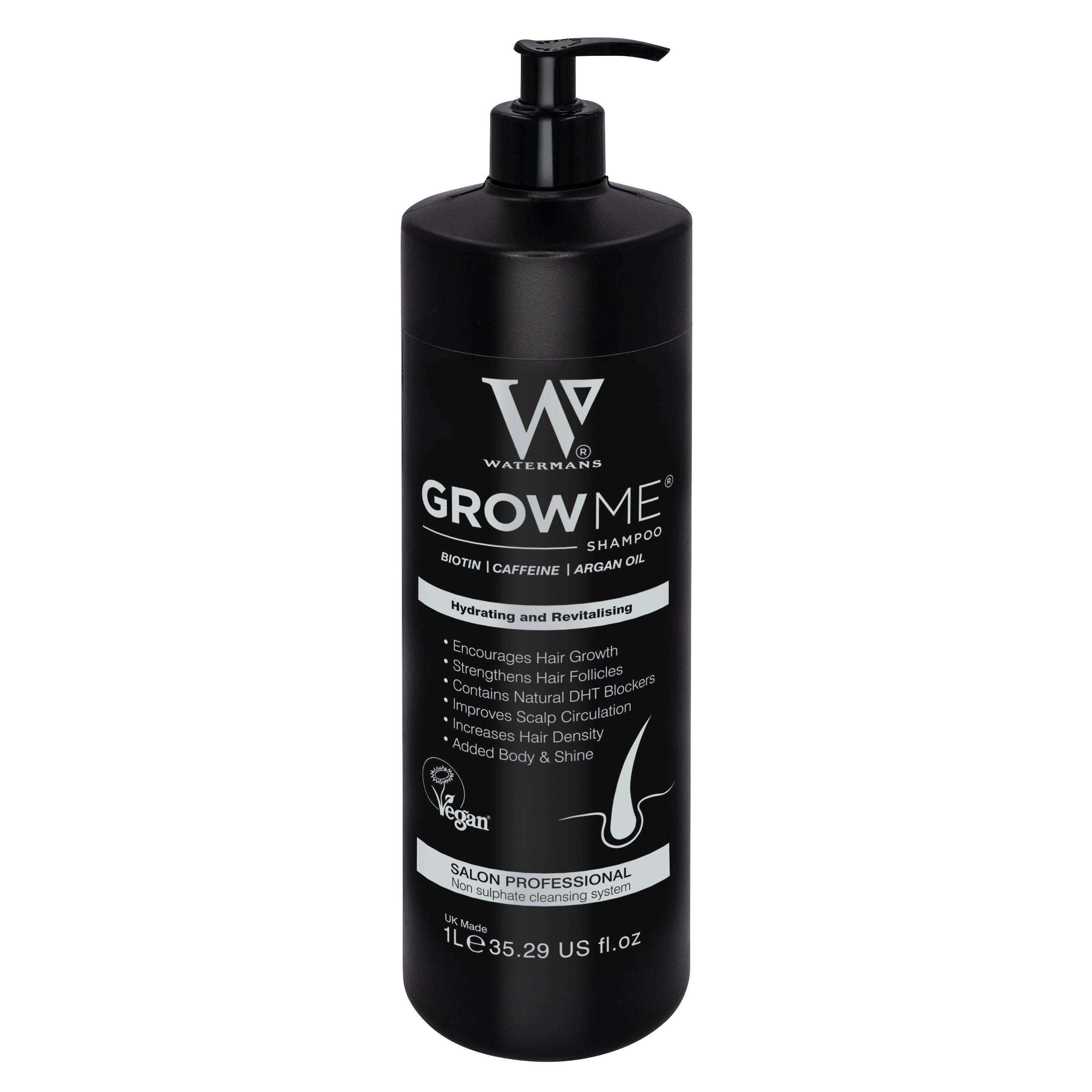
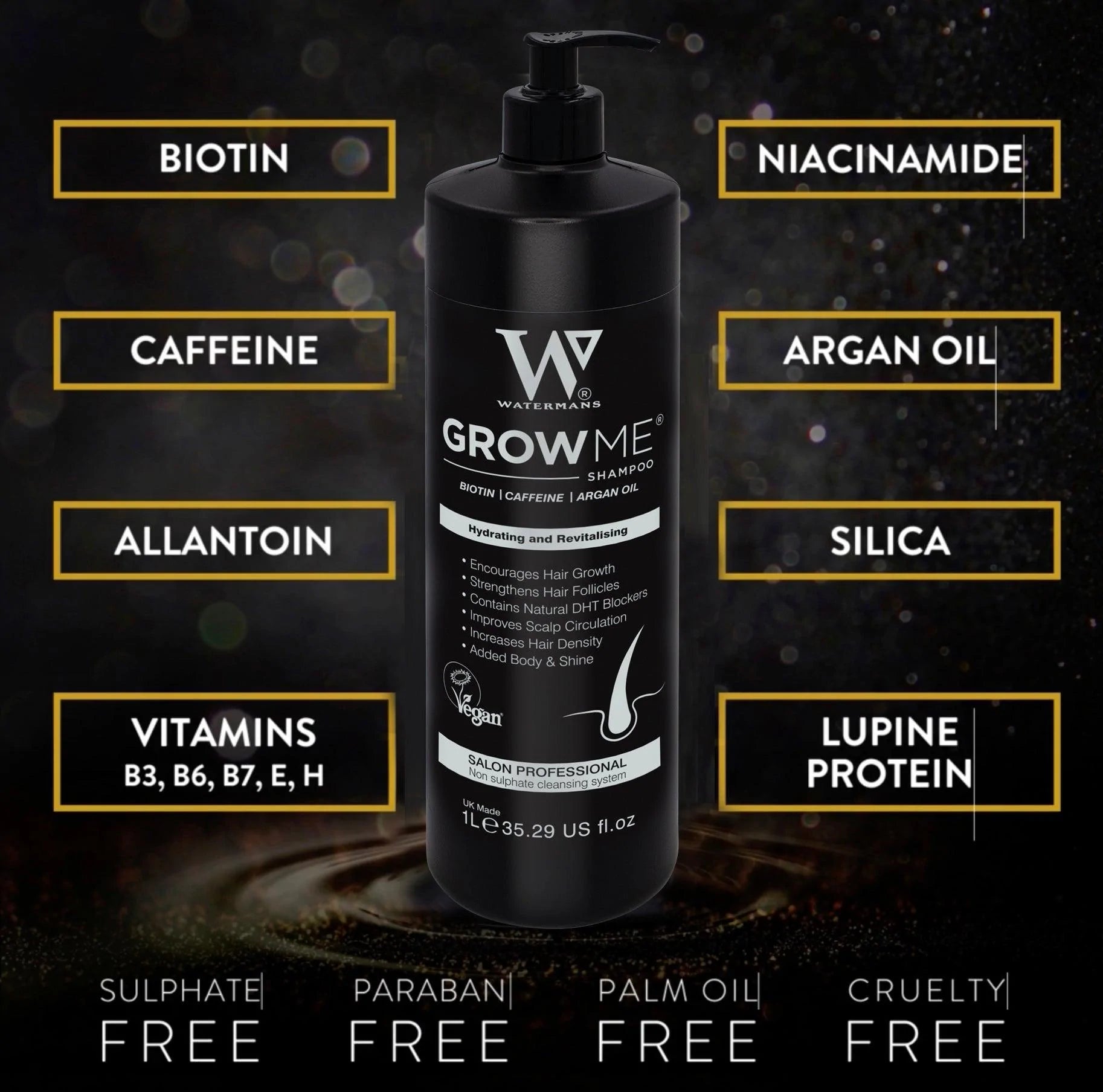
For the cleansing half of the routine, our Grow Me® Hair Growth Shampoo is sulfate free and meant to be worked into the scalp rather than piled onto the lengths. A ten pence sized amount is enough for most people, emulsified in wet hands first so it spreads instead of landing in one spot. If your hair is long, the lengths will be cleaned adequately by what rinses through them.
Watermans products are 100% cosmetic and do not treat medical hair loss. Individual results may vary. Watermans is a UK made and cruelty free brand, with over 6.5 million bottles sold since 2012.
Frequently asked questions
How to use hair serum on fine hair without it looking greasy?
Use less and start lower. For a finishing serum, one pump warmed between the palms and smoothed from ear level down to the ends is enough for fine hair, and the roots should get none. For a scalp serum, apply along parted rows at night and let it dry before bed, so nothing sits on the surface of the hair.
How much scalp serum do you need if the hair is very thick?
Thick hair needs the same amount of product but more parting rows to deliver it, because the obstacle is the hair in the way rather than the size of the scalp. Use the same 1ml for the top of the head and make eight to ten partings instead of four, so the product reaches skin across the whole area.
Should hair be wet or dry when you apply hair serum?
Towel dried or fully dry is best for most leave on scalp products. Soaking wet hair dilutes the product and carries it away with the running water, while heavily styled hair puts a film between the product and the skin. A finishing serum is more forgiving: damp hair before styling or a single drop on dry hair both work.
Can you use too much scalp product?
Yes. Anything beyond the amount that wets the skin runs off, soaks into the hair, transfers to the pillow and can leave the roots greasy, which makes hair look flatter and thinner rather than fuller. On sensitive scalps a heavy layer also raises the chance of irritation.
How long should it stay on before washing?
Leave on products are designed to stay until the next wash, so no rinsing is needed. Rinse off products should follow the time stated on their own label. Leaving a rinse off product on much longer than instructed does not improve it.
Does massaging it in help?
Massaging helps in the practical sense that it spreads the product evenly and gets it into the gaps between partings. Use fingertip pads rather than nails and keep it gentle. Vigorous scrubbing at fragile roots adds mechanical stress without adding benefit.
Why does my hair look greasy the next day?
Greasy looking roots almost always mean too much product, product applied to the hair rather than the skin, or both. Halve the amount, apply into partings on drier hair, and see whether coverage is still complete before assuming the product is wrong for you.
What if my scalp stings or flakes after applying?
Stop using it and see whether the symptoms settle. Persistent soreness, heavy flaking, bleeding or intense itching are reasons to see a GP or pharmacist rather than to change the amount, since an inflamed scalp is a skin condition and not something a cosmetic routine will sort out. If your question is about products or a routine rather than a medical one, you can talk to Gail Waterman, our co-founder, as an AI avatar on the Watermans homepage.
What is the bottom line on how to use hair serum?
How to use hair serum comes down to matching the product to the place. A finishing serum goes on the lengths and ends, one or two pumps and never the roots. A scalp serum goes on the skin, and coverage matters more than the number on the bottle: around 1ml into parted rows covers the top of an average adult head, applied to towel dried or dry hair and finished with thirty seconds of fingertip spreading. More than that runs off, greases the roots and makes hair look thinner rather than fuller. Match the amount to the area, apply it consistently rather than heavily, and if the scalp itself is sore or flaking, get that looked at instead of buying a bigger bottle.
If the shampoo is already sorted, the Grow More hair growth serum is the next step worth adding. Made in the UK, with over 6.5 million bottles sold since 2012.
Sources & References
- Gavazzoni Dias MF, Hair cosmetics: an overview, International Journal of Trichology, 2015, on dimethicone as the most widely used silicone in hair care and on silicones protecting the hair shaft and adding shine.
- NHS, Hair loss, on when scalp and hair symptoms are worth seeing a GP about rather than managing with cosmetic products.
- British Association of Dermatologists, Seborrhoeic dermatitis information leaflet, on inflamed and flaking scalps being a skin condition needing proper care rather than a hair care problem.