SHBG and Hair Thinning: What Your Result Actually Means
SHBG, or sex hormone binding globulin, is a protein made by the liver that binds testosterone and oestrogen in the bloodstream and holds them inactive. Only the unbound fraction can reach a receptor and do anything, so this one protein quietly decides how much of your hormone output is actually available to tissues, including the follicles on your scalp.
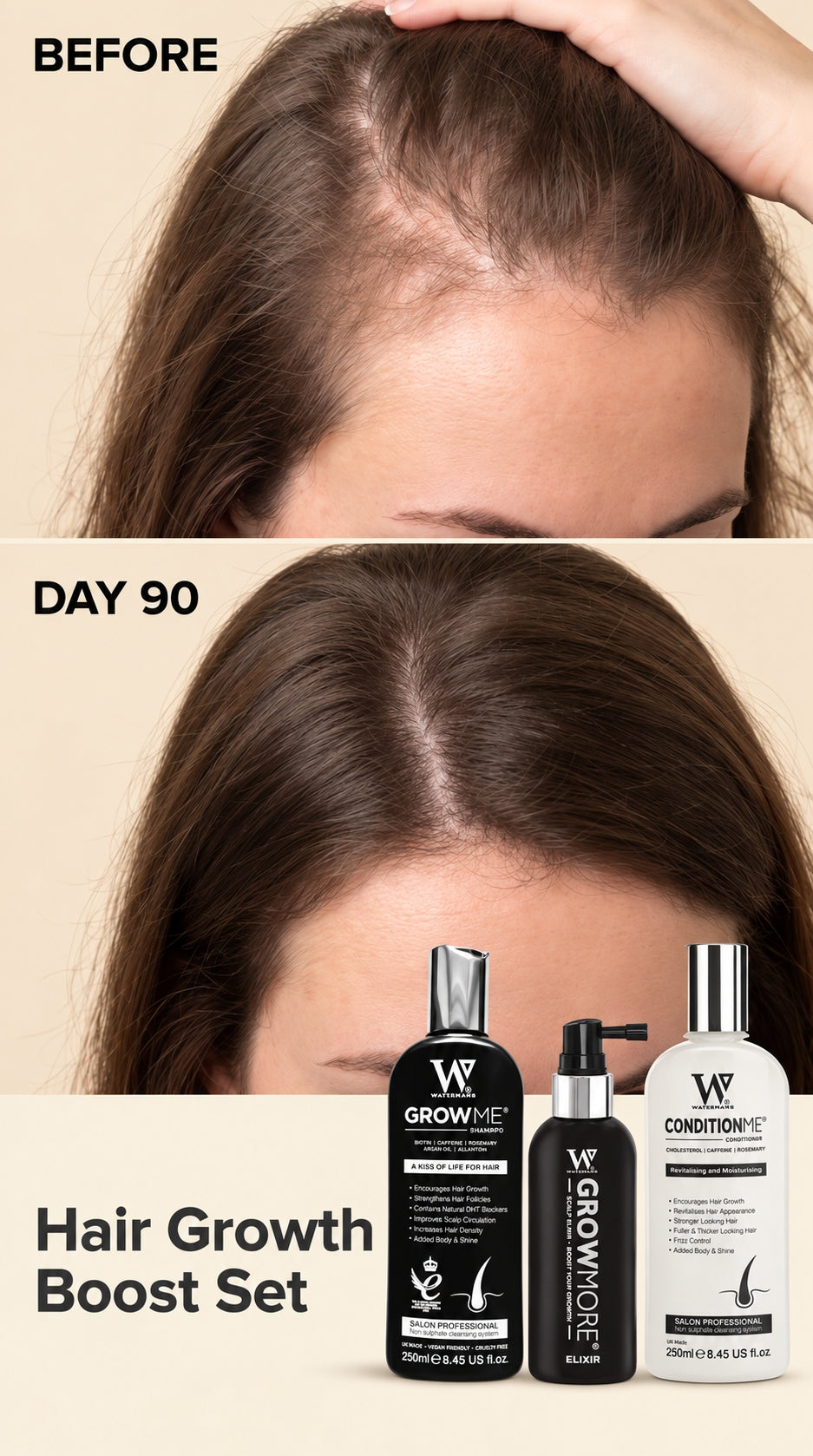
Our hair growth shampoo
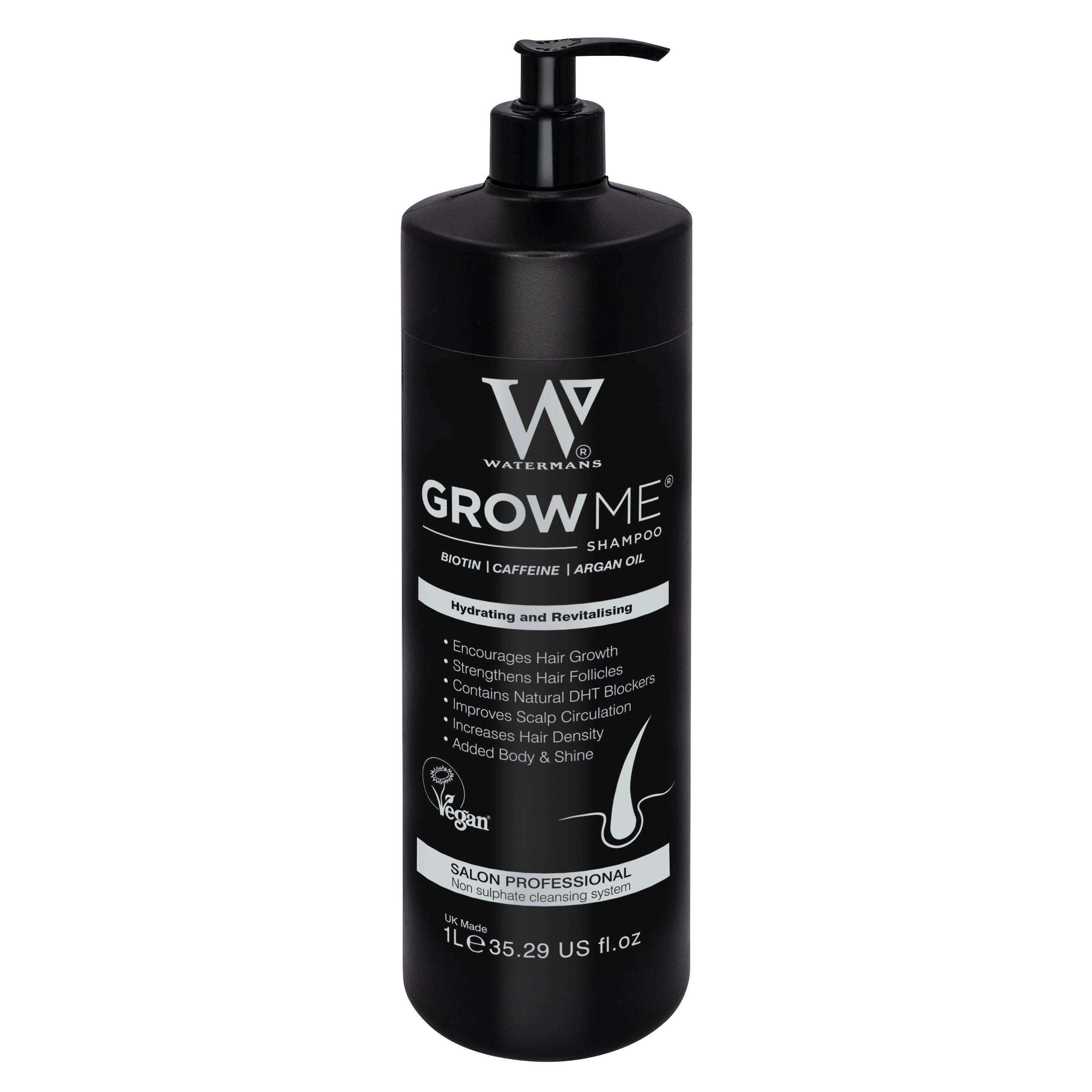
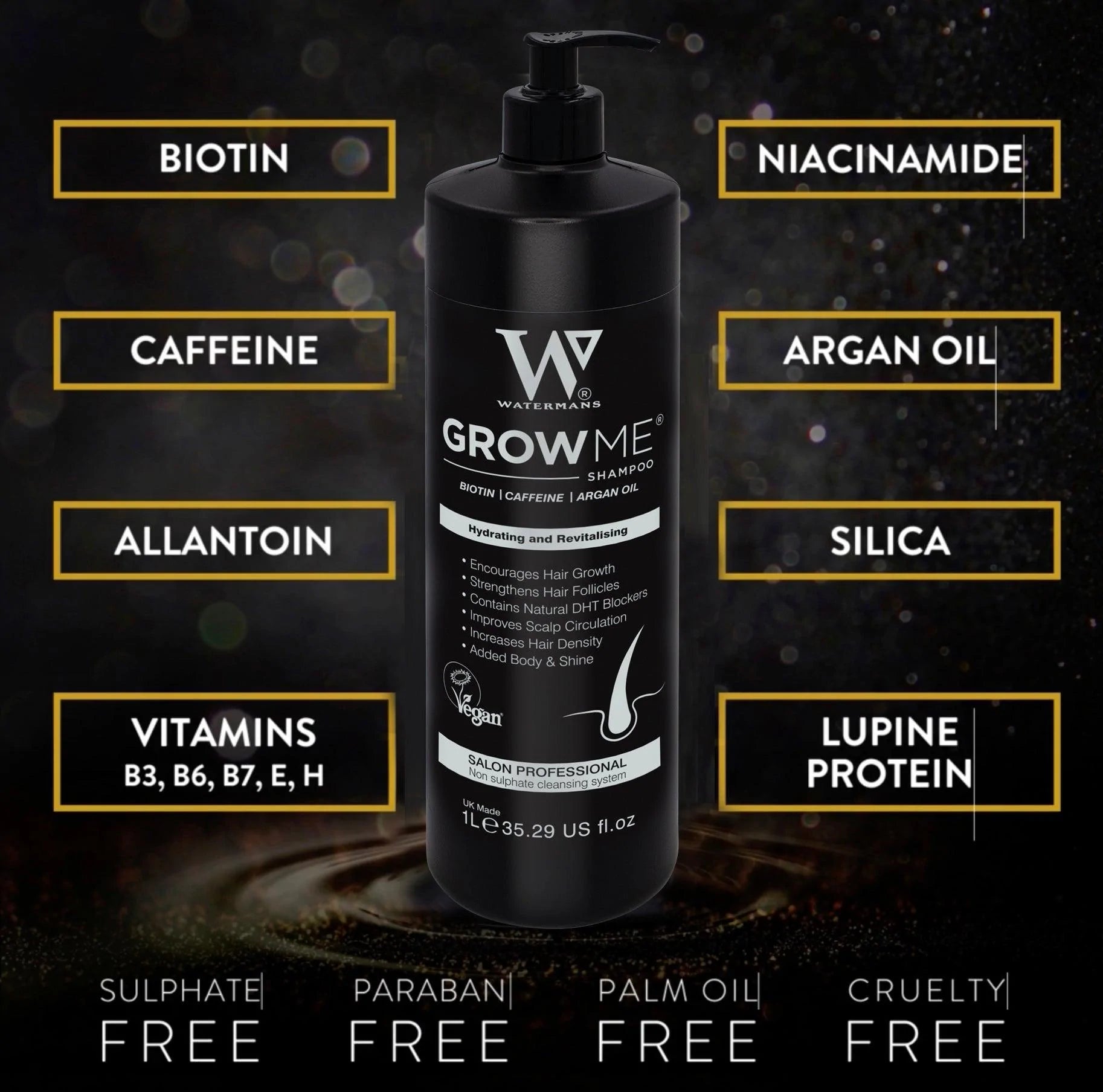
Grow Me® Hair Growth Shampoo, £14.95. A sulphate free daily shampoo that supports a healthy scalp environment and helps reduce breakage, so lengths hold on and look fuller.
Key takeaways
- The liver makes it, and it acts as a carrier that holds sex hormones in an inactive state.
- Low levels leave more free testosterone available, which matters if your follicles are androgen sensitive.
- Insulin resistance, excess weight, an underactive thyroid and some liver problems tend to lower it.
- Oestrogen, an overactive thyroid, ageing and weight loss tend to raise it.
- It is a blood test through a GP and it is interpreted alongside total testosterone, never on its own.
What is SHBG?
Sex hormone binding globulin is a transport protein produced mainly in the liver and released into the blood. Its job is to bind testosterone tightly and oestrogen more loosely, carrying them around the body in a form that cannot enter cells. Lab Tests Online UK describes it as the main determinant of how much of the circulating hormone is biologically available.
Most testosterone in the bloodstream is not free. A large share is bound to this carrier protein, a further share is loosely attached to albumin, and only a small percentage circulates completely unbound. That small percentage, plus the loosely bound portion, is what tissues can actually use.
What does sex hormone binding globulin do to free testosterone?
The carrier protein and free testosterone move in opposite directions. When carrier levels fall, the same total testosterone reading leaves more hormone unbound and available to tissues. When carrier levels rise, the same total reading leaves less available. This is why two people with identical total testosterone results can have very different symptoms.
| If the carrier protein is | Free testosterone tends to be | Common drivers | What it can mean for hair |
|---|---|---|---|
| Low | Higher for the same total | Insulin resistance, excess weight, underactive thyroid | More androgen available to sensitive follicles |
| High | Lower for the same total | Oestrogen, overactive thyroid, ageing, weight loss | Less androgen available, other causes more likely |
| Normal | In proportion to the total | Nothing in particular | Look at the total and the whole picture |
Our separate page on free testosterone and hair loss covers the unbound fraction itself, what a result means and how it is calculated. This page is about the protein that sets that fraction, which is the upstream question.
Why does SHBG matter for hair?
Scalp follicles in androgen sensitive areas respond to dihydrotestosterone, which the body makes from testosterone. More available testosterone means more raw material, and in a follicle that is genetically sensitive the result over years is a shorter growing phase and a finer fibre each cycle. That process is miniaturisation and it is what a widening parting looks like.

Two cautions keep this honest. Sensitivity matters more than supply, which is why plenty of people with low carrier protein levels keep thick hair for life. And the effect is slow, measured in years, so a low reading does not explain a sudden burst of shedding that started last month.
A low result is a clue, not a verdict
Hormone results are interpreted alongside your symptoms, your cycle, your thyroid function and your iron stores. A single number out of range explains far less than it appears to, and chasing it in isolation is how people end up spending money on the wrong problem.
What lowers SHBG?
Insulin resistance is the most common driver of a low result. Higher circulating insulin suppresses production of the carrier protein in the liver, which is one reason low levels are so frequently seen alongside polycystic ovary syndrome, excess weight around the middle and type 2 diabetes. The NHS lists scalp thinning among the features of PCOS for exactly this reason. Our guide to hair thinning with diabetes is the place to go next on that.
An underactive thyroid lowers it too, as do some liver conditions and, in men, low oestrogen states. Because several of these are common and correctable, a low result is often more useful as a pointer towards a metabolic or thyroid question than as a hair finding in itself.
If PCOS is in the picture, our guide to PCOS hair loss and how to manage it goes through the hair side specifically, and the NHS page on PCOS covers what a GP will check.
What raises SHBG?
Oestrogen is the strongest everyday driver upwards, which is why levels rise in pregnancy and with oestrogen containing medication. An overactive thyroid raises it sharply. Ageing raises it gradually in men, weight loss raises it, and a high fibre, lower refined carbohydrate diet is associated with higher levels, most likely through improved insulin sensitivity rather than any direct effect.

The menopause complicates the picture rather than simplifying it. Oestrogen falls, which would tend to lower the carrier protein, while ageing and body composition pull in different directions. NICE guidance on menopause focuses on symptoms rather than on chasing individual hormone numbers, and that is a sensible model for hair too.
For the hair side of that transition, menopause hair thinning, symptoms and what helps is the more directly useful page.
Is your hair problem loss, shedding or breakage?
Hair loss, hair shedding and hair breakage are three different problems, and hormone results are only relevant to the first two. Hair loss means follicles producing finer hair or none, which is the slow pattern process androgens drive. Hair shedding means healthy follicles releasing hairs early after illness, childbirth, stress or a hormonal change, recovering over six to nine months.
Hair breakage has nothing to do with hormones at all. The fibre snaps from heat, tension, colour processing or rough detangling while the follicle stays healthy. Anyone who reached this page after a blood test should still check which of the three they are looking at, because breakage is the most common and no hormone result will change it.
| Clue | Hair loss | Hair shedding | Hair breakage |
|---|---|---|---|
| Speed | Years | Weeks to months, then recovers | Continuous while the cause continues |
| Pattern | Parting, temples, crown | Even across the whole scalp | Mid lengths and ends |
| Hormone tests useful | Sometimes | Sometimes, alongside thyroid and ferritin | No |
| First move | GP conversation | Count it for a week | Change handling, heat and detangling |
Get a discount on the hormonal hair thinning range
Join the Watermans mailing list and we will email a discount code straight to your inbox, so you can try the hormonal hair thinning range for less. Vegan, made in the UK, over 6.5 million bottles sold since 2012.
How is SHBG tested in the UK?
SHBG is measured on an ordinary blood sample, usually alongside total testosterone, and often with thyroid function, ferritin and, for women with irregular periods, other reproductive hormones. Timing matters for women who still have cycles, so a GP will normally ask for the sample in the first few days of a cycle. Morning samples are preferred for testosterone.

Reference ranges vary between laboratories and between men and women, so a result only means something against the range printed on your own report. The free androgen index, calculated from total testosterone and the carrier protein, is often reported alongside and is the number a GP tends to look at first.
| Test | Why it is included | Typical timing |
|---|---|---|
| Sex hormone binding globulin | Sets how much hormone is available | Morning, with the others |
| Total testosterone | Meaningless for hair without the carrier result | Morning sample preferred |
| Thyroid function | Both under and overactive thyroid shift the carrier protein and cause shedding | Any time |
| Ferritin | Low iron stores are a common, correctable cause of shedding | Any time |
Can you change the carrier protein through lifestyle?
Levels respond to the things that improve insulin sensitivity: losing excess weight where relevant, regular exercise, more fibre and fewer refined carbohydrates. Those changes are worth making on their own merits, and the effect on the carrier protein is a side effect rather than the goal. Supplements marketed to shift it directly are not supported by evidence worth acting on.
Nothing you apply to your scalp changes a blood protein made in your liver. What topical care does is protect the hair you still have, which matters a great deal when density is already falling for hormonal reasons. Every hair lost to snapping is density you gave away for no biological reason at all.

Grow Me® Hair Growth Shampoo £14.95
Sulphate free, with caffeine, rosemary, biotin and niacinamide. Cleans without stripping and supports a healthy scalp environment for fuller looking hair. Cosmetic care, with no effect on hormone levels and no claim to have one.

Grow More® Elixir Scalp Serum £25.50
A leave on overnight scalp serum for the parting and temples, where hormonal thinning usually shows first. Rosemary, caffeine, niacinamide and hydrolysed lupine protein.
When should you see a GP about hormonal hair thinning?
Make a GP appointment if your parting has widened within a year, if shedding is heavy or worsening after four months, if you have irregular or absent periods, new facial or body hair, unexplained weight change or persistent tiredness, or if the scalp is sore, scaly or patchy. Those combinations are what blood tests are for, and the NHS route costs nothing. If your question is about products or a routine rather than a medical one, you can talk to Gail Waterman, our co-founder, as an AI avatar on the Watermans homepage.
Go prepared. A seven day hair count, dated photographs of your parting in consistent light, and a list of your symptoms will get you a more useful ten minutes than a description will. Watermans is a cosmetic hair care brand and does not offer consultations, clinical assessments or appointments of any kind. Because this binding protein is what makes a total result misleading, the bioavailable testosterone measurement is often the more useful number to ask about. Your SHBG result also feeds a calculation, and our free androgen index guide explains how that number is worked out and read.
What are the most frequently asked questions about hormone binding and hair?
What does a low SHBG result mean?
It usually means more of your testosterone is unbound and available to tissues. Low results are most often linked to insulin resistance, excess weight or an underactive thyroid, and are interpreted alongside total testosterone rather than on their own.
Does a low result cause hair loss?
Not by itself. It increases the availability of androgens, and hair thins only where follicles are genetically sensitive to them. Plenty of people with low readings never lose density.
What is a normal range?
Ranges differ by laboratory, by sex and by age, so the only range that matters is the one printed on your own report. Compare your number to that, not to a figure quoted online.
Can diet change the carrier protein level?
Indirectly. Improving insulin sensitivity through weight loss where relevant, exercise, more fibre and fewer refined carbohydrates is associated with higher levels. No supplement has convincing evidence for shifting it directly.
Should I ask for this test if my hair is thinning?
Ask your GP rather than deciding in advance. For most people with gradual thinning, ferritin and thyroid function are the higher yield tests, and hormone panels are added when periods are irregular or there are other androgen related signs.
Does the menopause raise or lower it?
Both directions apply at once. Falling oestrogen pushes levels down while ageing and body composition changes can push them up, which is one reason menopause hair changes are not explained by a single number.
Is this the same as a free testosterone test?
No, but they are related. The carrier protein is measured directly, while free testosterone is usually calculated from it and from total testosterone. Laboratories often report a free androgen index derived from both.
Can a shampoo or serum change my hormone levels?
No, and Watermans does not claim otherwise. Topical cosmetic products work on the hair fibre and the scalp surface. A blood protein made by the liver is well outside what any shampoo can reach.
What is the bottom line on SHBG?
SHBG sets how much of your testosterone is actually available, so a low result raises the amount of androgen reaching follicles that are sensitive to it. That is a slow process measured in years, not an explanation for sudden shedding, and sensitivity matters more than supply. Get it interpreted alongside total testosterone, thyroid function and ferritin rather than in isolation.
While the medical side is worked out, protect what you have. A sulphate free hair growth shampoo cleans without stripping and cuts the breakage that makes hormonal thinning look worse than it is.
Watermans products are 100% cosmetic and do not treat medical hair loss. Individual results may vary.
Sources & references
- Lab Tests Online UK, Sex Hormone Binding Globulin (what the test measures)
- NHS, Blood tests
- NHS, Polycystic ovary syndrome (features including scalp thinning)
- NICE Clinical Knowledge Summaries, Polycystic ovary syndrome
- NICE guideline NG23, Menopause (symptom led assessment)
- DermNet, Female pattern hair loss (miniaturisation)