DHI vs FUE: Which Hair Transplant Method Is Better?
Is DHI better than FUE? Honestly: neither is universally "better". DHI is a refinement of FUE, both extract follicles the same way, the difference is how they are implanted. DHI's implanter pen gives fine control over angle and density (great for hairlines), while classic FUE handles larger sessions and often costs less. Published results show both can achieve excellent graft survival, and the surgeon's skill matters far more than the acronym. Here is a clear, honest comparison to take into your consultations.
Key Takeaways
- DHI and FUE extract grafts identically; DHI implants them directly with a Choi pen, FUE uses pre-made channels.
- DHI suits detailed hairline work and smaller sessions; FUE suits bigger sessions and usually costs less.
- Surgeon skill and clinic quality influence results far more than the technique name.
- Both are surgical procedures with real recovery, risks and costs, choose the clinic carefully.
- A transplant does not stop future loss elsewhere; many patients also need ongoing medical treatment.
What Is FUE?
Follicular Unit Excision (FUE) extracts individual follicular units from the donor area (usually the back of the head) with a small punch, then implants them into tiny pre-made incisions in the thinning area. It leaves dot scars that hide well even with fairly short hair, and it has largely replaced the older strip (FUT) method for people who want minimal visible scarring.
What Is DHI?
Direct Hair Implantation (DHI) is a variation of FUE. Extraction is the same, but implantation uses a spring-loaded implanter (Choi) pen that places each graft directly, controlling depth, angle and direction in one motion, without pre-made channels. Grafts spend less time outside the body, and many surgeons find the pen gives especially natural-looking hairlines and lets them work between existing hairs without shaving the whole recipient area.

DHI vs FUE: The Honest Comparison
| Factor | FUE | DHI |
|---|---|---|
| Hairline precision | Very good with a skilled surgeon | Excellent, pen controls angle and depth |
| Session size | Larger (often 2,000 to 4,000+ grafts) | Usually smaller per session |
| Cost | Generally lower | Generally higher (more labour and tooling) |
| Shaving needed | Recipient area usually shaved | Often possible without full shave |
| Graft time outside body | Longer (stored between steps) | Shorter (direct implantation) |
| Best for | Larger areas, budget-conscious patients | Hairlines, density refinement, unshaved work |
On results: well-run studies and clinic audits show both techniques achieving high graft survival. There is no strong evidence that one produces better growth than the other in skilled hands, which is why the surgeon and clinic should be your real selection criteria.
How to Choose (the Part That Actually Matters)
- Choose the surgeon, not the acronym: ask who performs the procedure (surgeon or technicians), how many they do, and see healed results at 12 months, not 10 days.
- Get more than one consultation: a good clinic will assess your donor area, loss pattern and future loss honestly, and will sometimes tell you a transplant is not right yet.
- Plan for future loss: a transplant moves hair; it does not stop pattern loss progressing elsewhere. Many surgeons recommend medical treatment (like finasteride or minoxidil, doctor-guided) to protect non-transplanted hair.
- Budget realistically: beware prices that look too good, revision surgery costs more than doing it well once.

Caring for Hair Around a Transplant
Aftercare belongs to your surgeon: follow their timeline for washing, products and activity to the letter. Once they clear you for normal hair care, a gentle, sulphate-free shampoo is a sensible everyday choice for both the transplanted and existing hair.

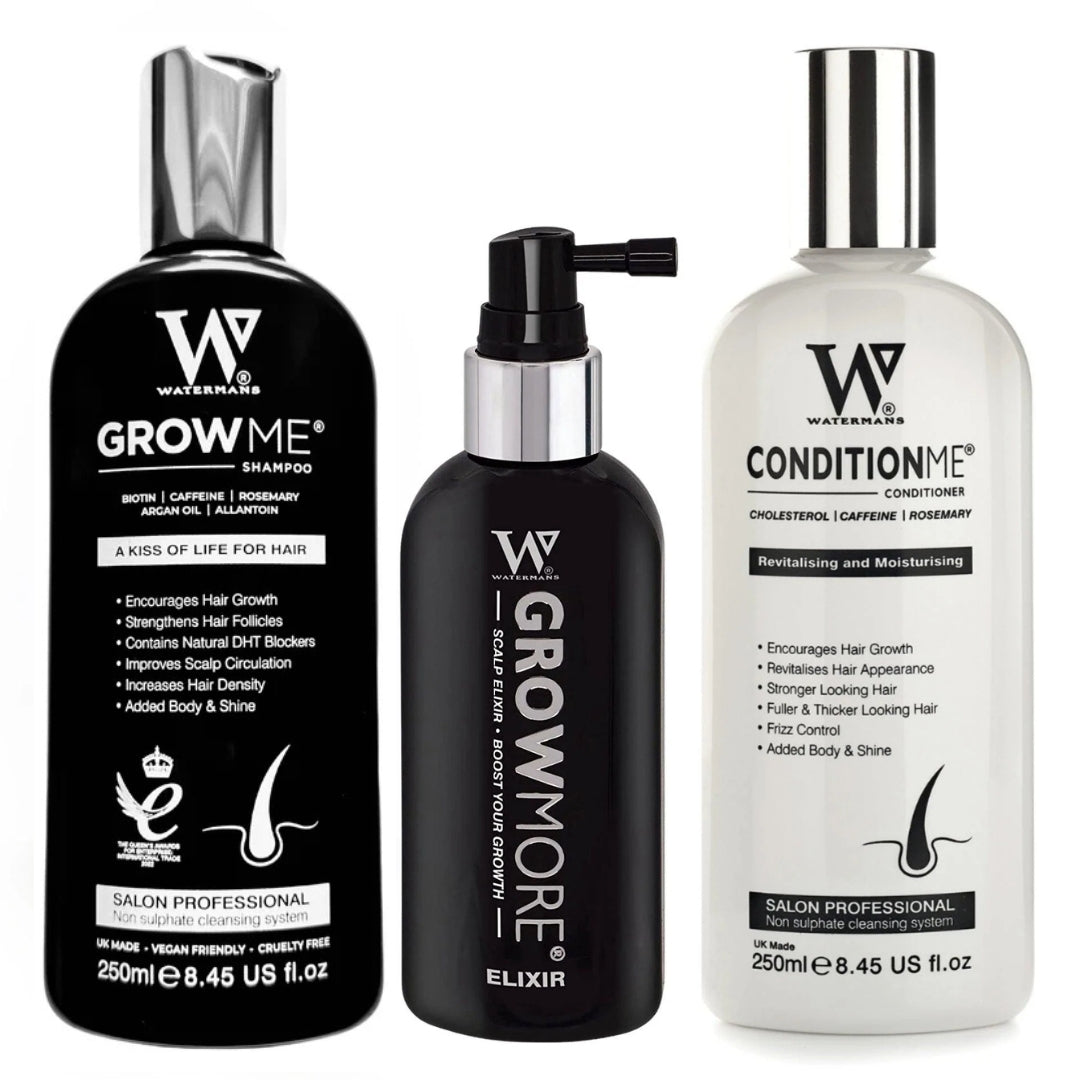
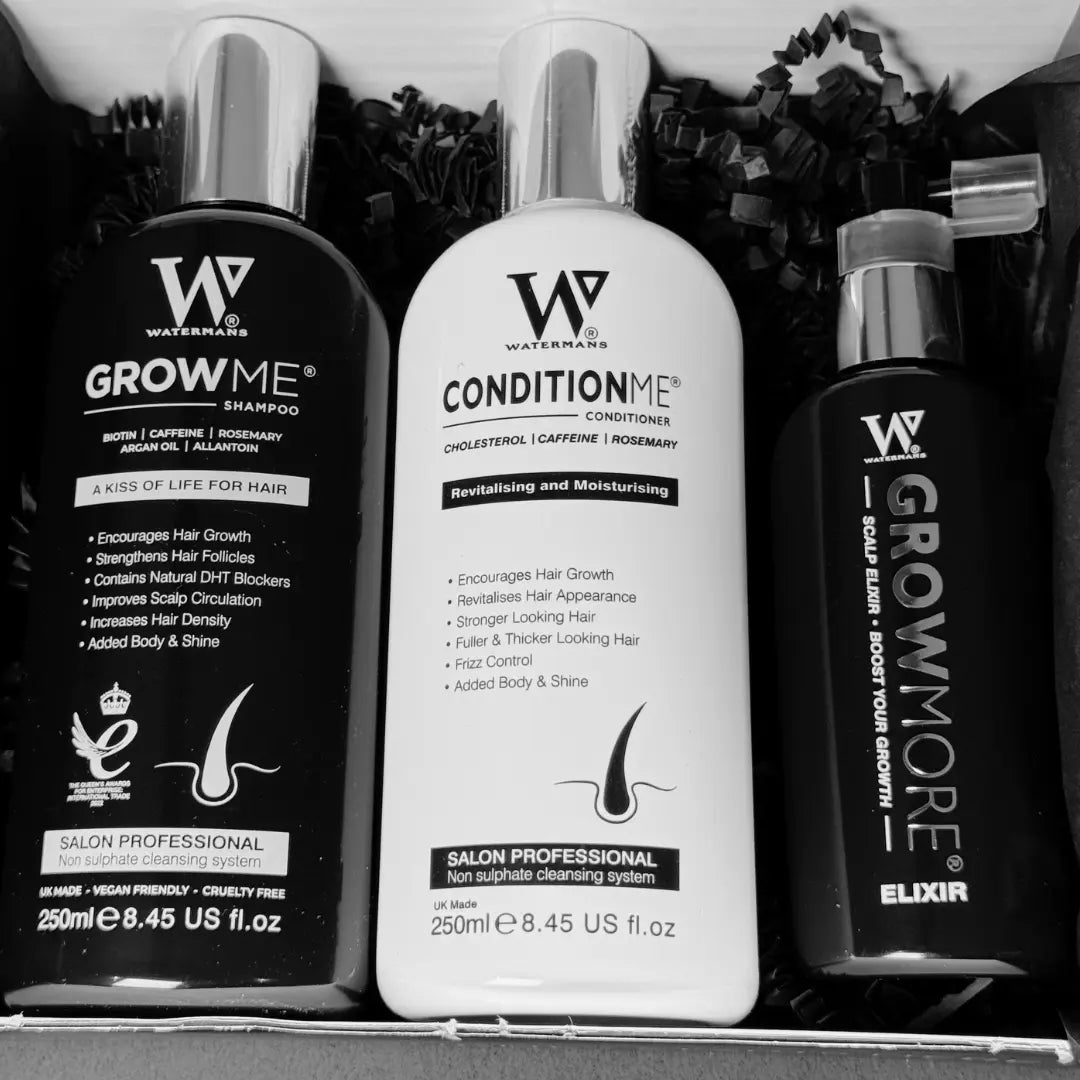
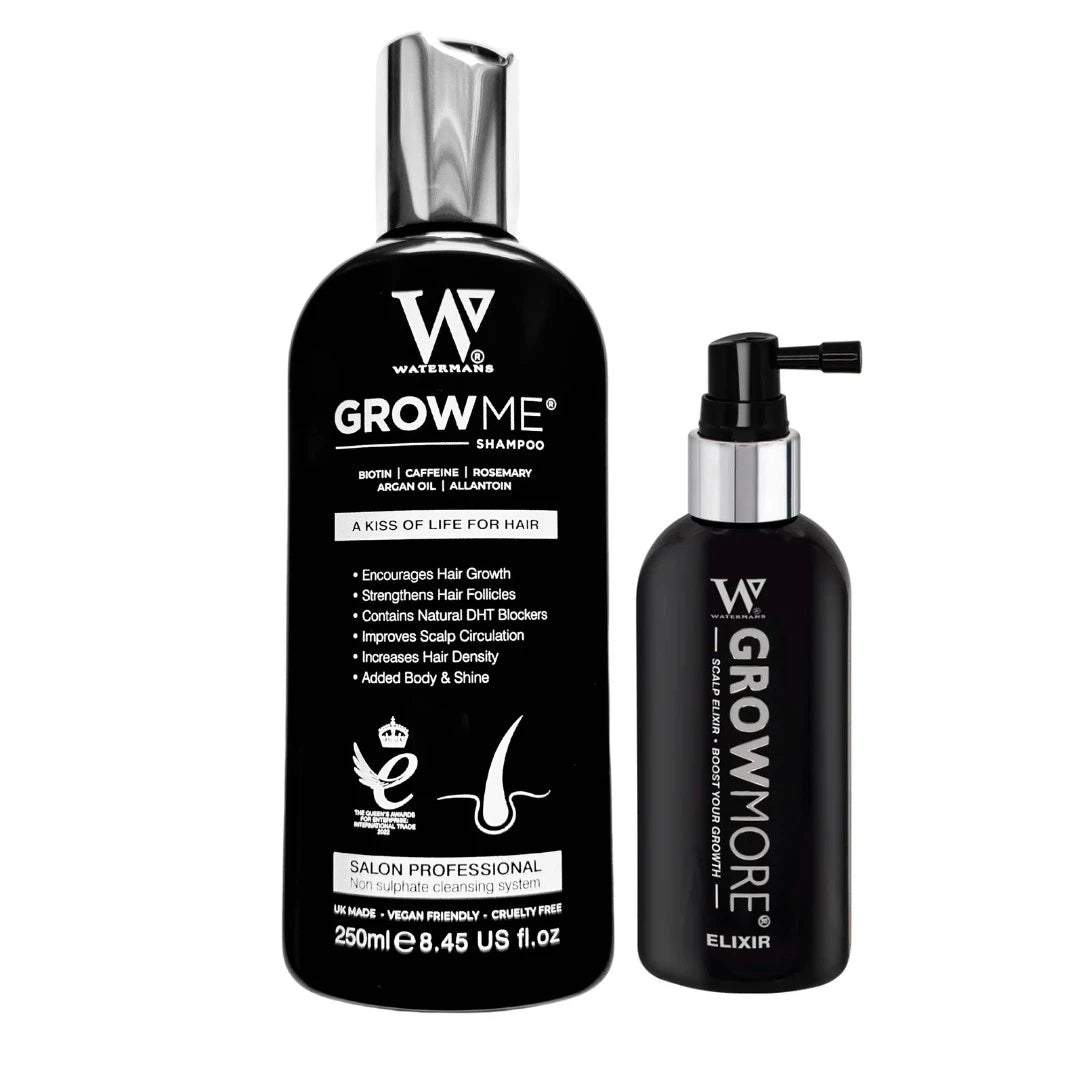
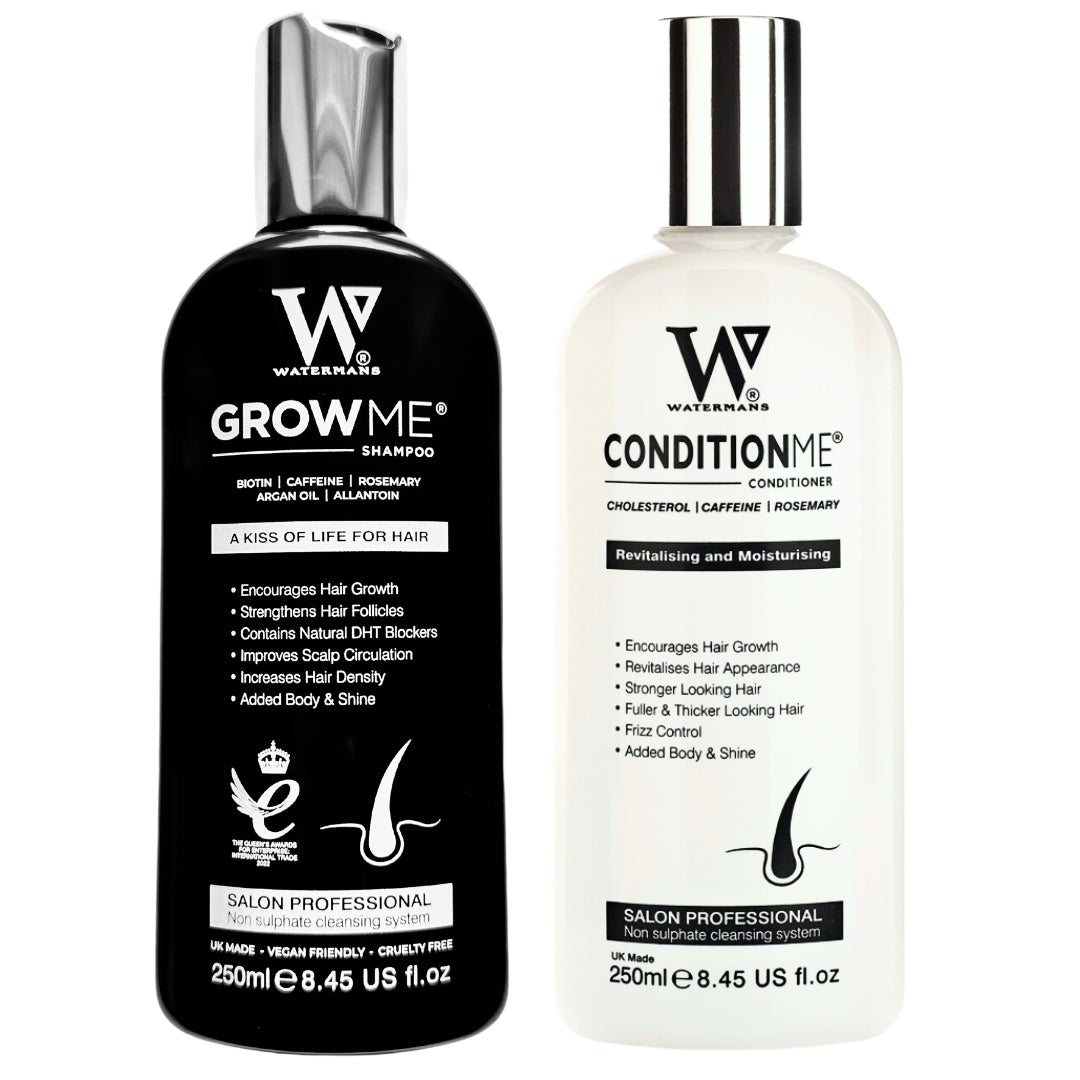
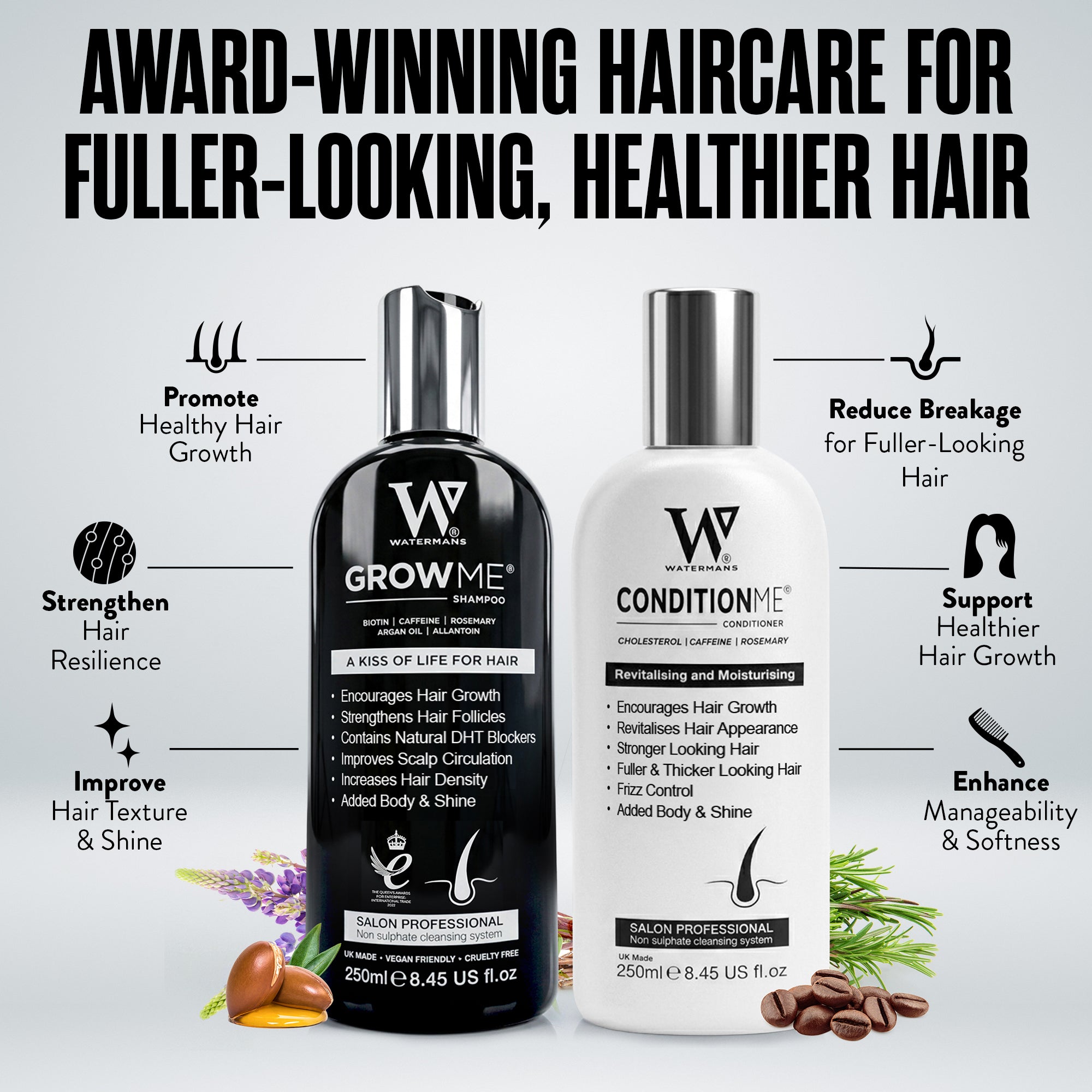
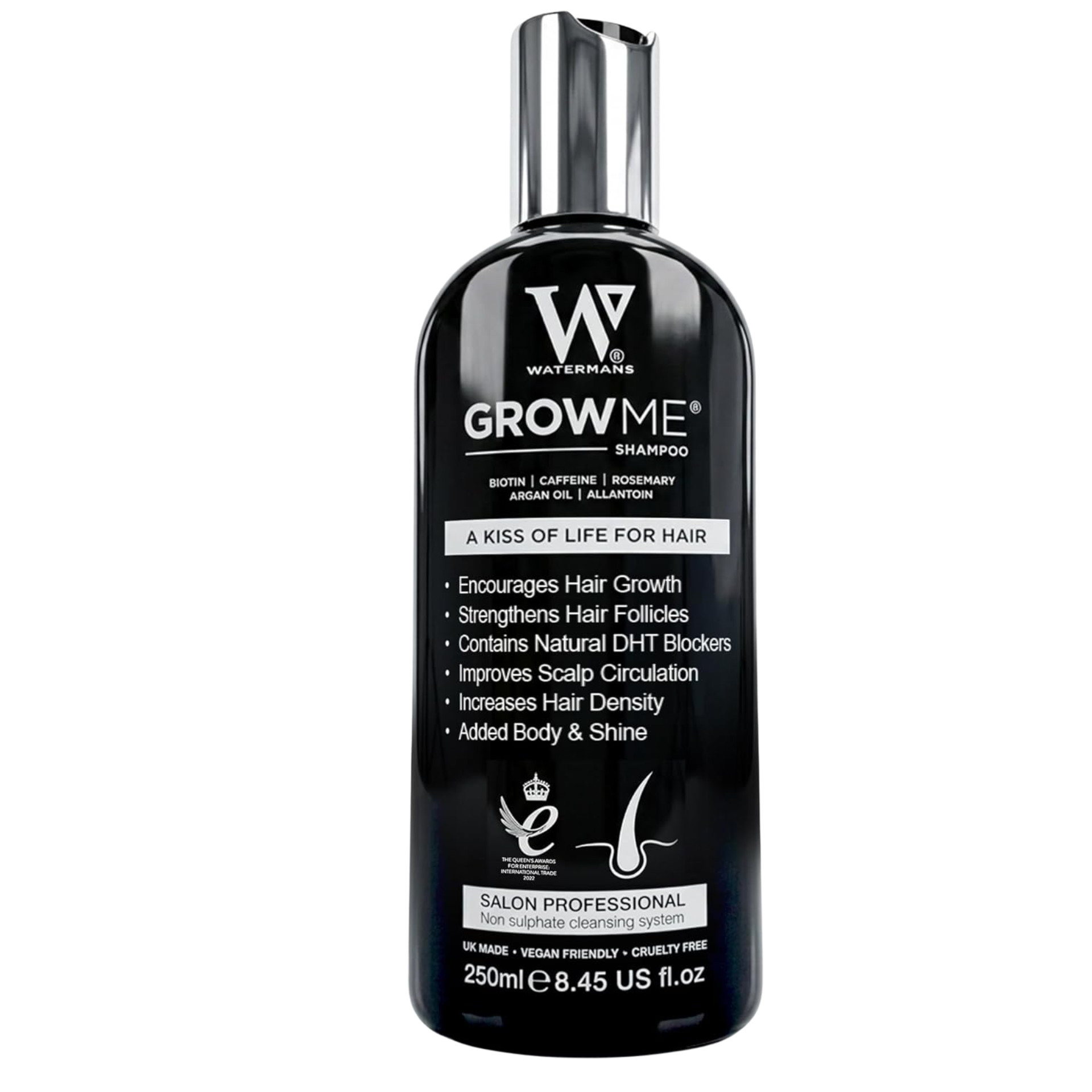
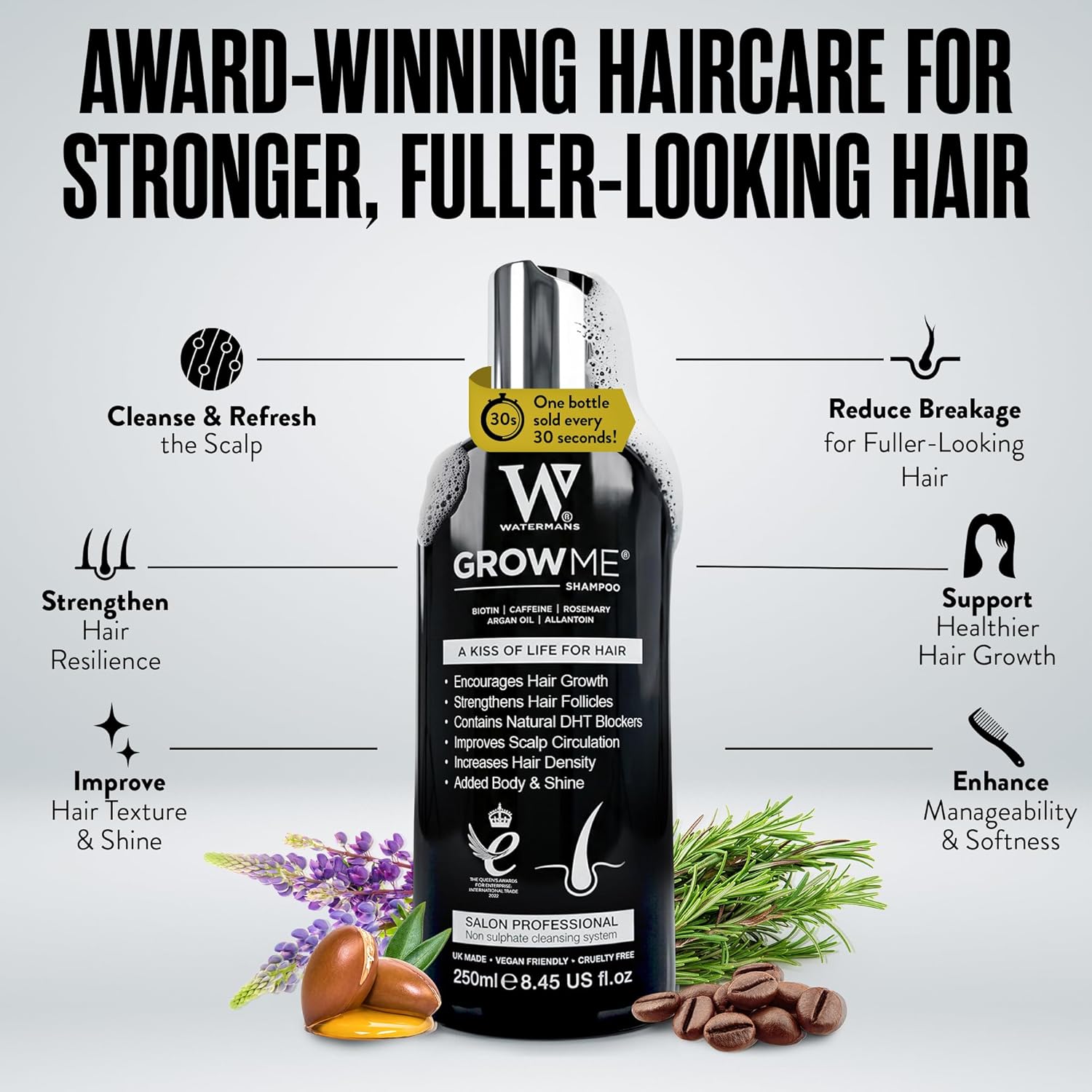
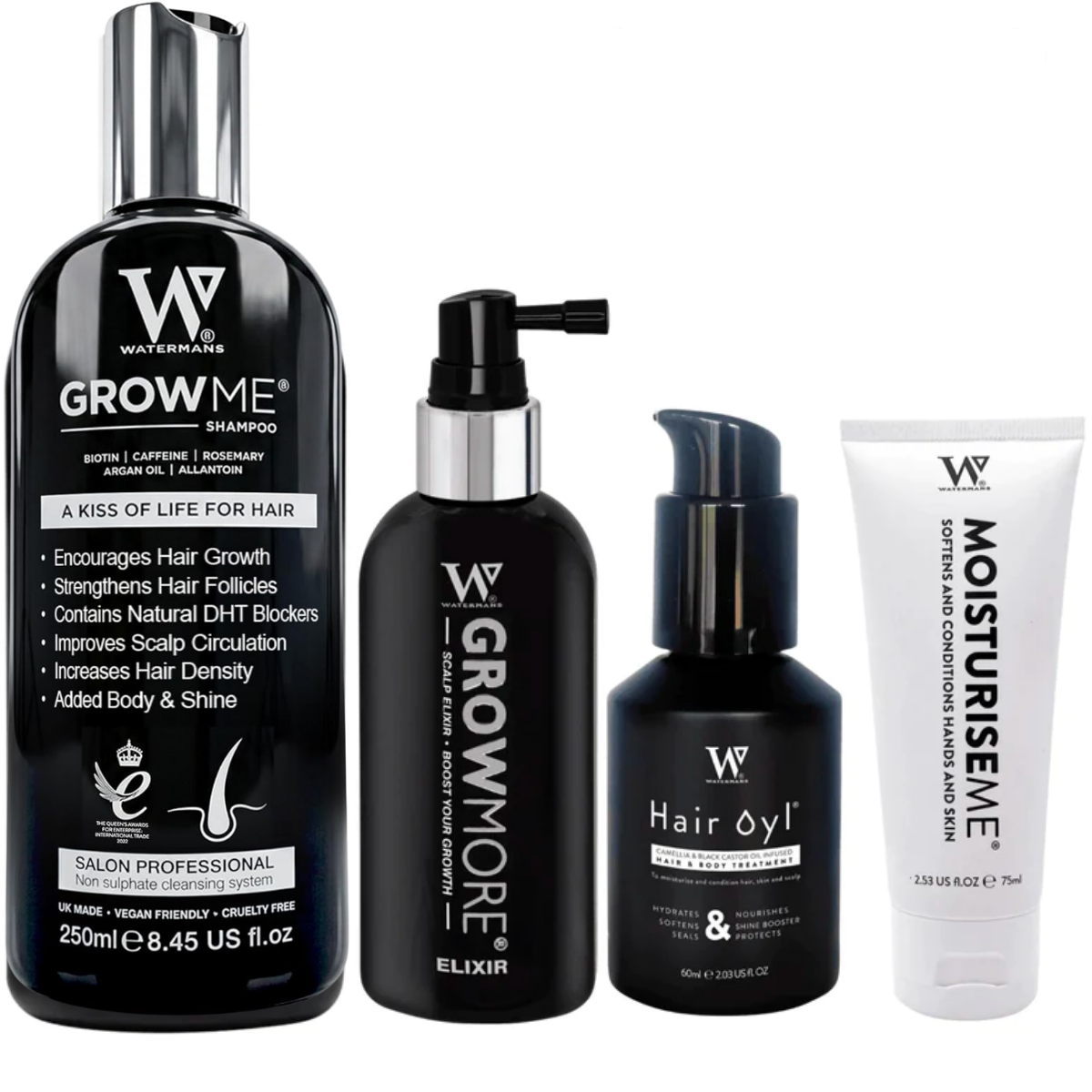
Grow Me® Shampoo
A gentle, sulphate-free daily shampoo with biotin, caffeine and argan oil, everyday cosmetic care once your surgeon clears normal washing. Not a medical treatment and not a substitute for surgical aftercare.
View Grow Me ShampooWatermans is a UK family business that has sold over 5 million bottles since 2012. The range is vegan and cruelty-free.
Frequently Asked Questions
Is DHI more successful than FUE?
Not clearly. Both achieve high graft survival in skilled hands. DHI's advantage is implantation control (hairline detail, no-shave work); FUE's is session size and cost.
How long do the procedures take?
Typically 4 to 8 hours depending on graft count, DHI often runs longer per graft because each is placed individually.
Which is less painful?
Both are done under local anaesthetic and most patients report mild discomfort afterwards, differences between the two are small.
Will the results look natural?
With a skilled surgeon, yes for both. Ask to see healed 12-month results of hairlines they have personally designed.
Does a transplant stop hair loss?
No. Transplanted hair is typically permanent, but pattern loss can continue elsewhere, which is why many surgeons pair surgery with doctor-guided medical treatment.
How soon can I use normal hair products again?
Follow your surgeon's aftercare exactly, usually gentle washing after several days and normal products within a couple of weeks, but their timeline overrides any general guide.
DHI versus FUE is really a question of implantation style: pen-placed precision versus larger, more affordable sessions, with the surgeon's skill counting far more than the label. Consult properly, plan for future loss, and follow aftercare to the letter. For the groundwork, see our guides to FUE vs FUT transplants and how to tell if grafts are damaged.