Diffuse Thinning: Is It Reversible and What Helps?
Diffuse thinning means hair getting finer and sparser fairly evenly across the whole scalp, rather than receding at the temples or opening up in one patch. Whether it improves depends entirely on the cause. When a cycle disturbance such as telogen effluvium is behind it, density usually returns within six to twelve months of the trigger being sorted. When the underlying process is progressive follicular miniaturisation, the realistic goal is slowing and managing it rather than undoing it.
What to use while you work out the cause
Grow Me® Shampoo, £14.95 and the Grow More® Scalp Elixir, £25.50 are cosmetic support for a fragile phase, and Hair Building Fibres cover thinning on the day. None of them change the cause, which is what the rest of this page is about.
Key takeaways
- Diffuse thinning is a pattern of distribution, not an explanation in itself. Several very different conditions produce the same even, all over look.
- The single most useful split is cycle problems, which recover, versus follicle problems, which do not recover on their own.
- Iron stores, thyroid function and recent life events explain a large share of cases, and all three are checkable.
- Look back three to four months from when shedding started. That lag is the most misleading feature of hair.
- A great deal of what people call diffuse thinning turns out to be breakage, which behaves completely differently and improves fastest.
- If your parting is visibly wider than a year ago, or shedding has run past six months, that is a GP conversation.
What is diffuse thinning, and how does it differ from pattern hair loss?
The term describes hair loss spread more or less evenly over the entire scalp. The classic experience is that nothing looks obviously bald, yet the ponytail is thinner, the scalp shows through under bright light, and photographs from two years ago look different in a way that is hard to pin down.
Pattern hair loss, by contrast, is regional. In men it typically starts at the temples and crown while the back and sides stay dense. In women the parting widens over the top of the scalp while the frontal hairline is usually preserved. The distinction matters because it points at different mechanisms, and therefore at different outlooks.
The complication, and it is a genuine one, is that female pattern hair loss can present diffusely in its earlier stages, particularly the type sometimes described as diffuse unpatterned alopecia. So an even distribution does not rule out an androgen driven process. That is exactly why examination of the scalp, looking for variation in fibre calibre, does more than any amount of self assessment in a mirror.
Is diffuse thinning reversible?
Sometimes fully, sometimes partly, and sometimes not at all. Being honest about which one applies is more useful than optimism.
Where the mechanism is telogen effluvium, an abnormally large share of follicles has been pushed into the resting phase at once by a shock such as illness, surgery, childbirth, a general anaesthetic, a crash diet, a bereavement or a period of sustained stress. Those follicles are structurally intact. Once the trigger has passed, they re enter the growing phase and density rebuilds, typically over six to twelve months. This is the genuinely recoverable form and it is common.
Where the mechanism is nutritional or endocrine, correcting the underlying issue usually allows hair to recover, though the correction has to be real and sustained. Low ferritin, an underactive thyroid or a long spell of under eating all fall here.
Where the mechanism is progressive miniaturisation, follicles are producing steadily finer, shorter hairs each cycle. That is not a temporary state that resolves itself, and no cosmetic product changes it. Medical options exist through a doctor, and the sensible framing is holding ground rather than undoing what has happened.

What causes diffuse thinning?
The list is longer than most people expect, and more than one cause is often running at once.
| Cause | Typical clues | Outlook |
|---|---|---|
| Acute telogen effluvium | Sudden heavy shedding two to four months after an identifiable event | Usually self limiting, density rebuilds over six to twelve months |
| Chronic telogen effluvium | Shedding fluctuating over more than six months, often in women aged 30 to 60 | Often waxes and wanes for years but rarely causes baldness |
| Low iron stores | Fatigue, breathlessness, heavy periods, pale complexion | Good, once stores are genuinely restored and maintained |
| Thyroid disease | Cold intolerance, weight change, dry skin, fatigue, or the opposite set | Good once thyroid function is stabilised, though it can take months |
| Postpartum shedding | Starts roughly two to five months after birth | Almost always settles by twelve to fifteen months |
| Under eating or rapid weight loss | Follows a sustained deficit, very low protein intake or surgery for weight loss | Good once intake is restored consistently |
| Female pattern hair loss presenting diffusely | Gradual over years, parting widening, varied fibre thickness | Progressive, manageable with medical input, not self correcting |
| Medication effects | Onset a few months after starting something new | Usually improves after a medical review, never stop anything without advice |
| Breakage mistaken for thinning | Short blunt fragments, split ends, ragged mid lengths, parting unchanged | The most improvable of all, and the fastest to respond |
Notice how many rows carry a good outlook. That is the reassuring part of diffuse thinning: the majority of causes are ones that improve. Our guide to what causes telogen effluvium goes deeper on the most common of them, and if your other symptoms fit the thyroid row, our article on thyroid related hair loss is the better starting point.
Get a discount on the thinning hair range
Join the Watermans mailing list and we will email a discount code straight to your inbox, so you can try the thinning hair range for less. Made in the UK, over 6.5 million bottles sold since 2012.
What is the difference between hair loss, hair shedding and hair breakage?
Almost every wasted year in this area comes from solving the wrong one, so it is worth separating them properly.
Hair loss is a follicle problem. The follicle itself changes, producing progressively finer and shorter fibres, and eventually very little. Androgenetic alopecia works this way. The hair that remains is thinner in calibre, not merely fewer in number, which is why the scalp shows through even when the count has not dropped dramatically.
Hair shedding is a cycle problem. The follicle is healthy and full sized, but too many hairs have entered the resting phase simultaneously and are released together. Shed hairs are full length and carry a small pale bulb at the root end. This is the mechanism behind most reversible diffuse thinning.
Hair breakage is a fibre problem. Follicle and cycle are both normal, but the strand snaps somewhere along its length from heat, bleach, tight styling, hard water or simple friction. You lose length rather than count, so the ends look wispy while the roots stay dense.
Getting this wrong is expensive. Someone with breakage who buys supplements for a year gets nowhere, while a change of routine would have shown results in eight weeks. Someone with genuine miniaturisation who spends three years on conditioning masks loses the window in which medical options work best.
How can you tell them apart at home?
Three checks that cost nothing and are surprisingly reliable.
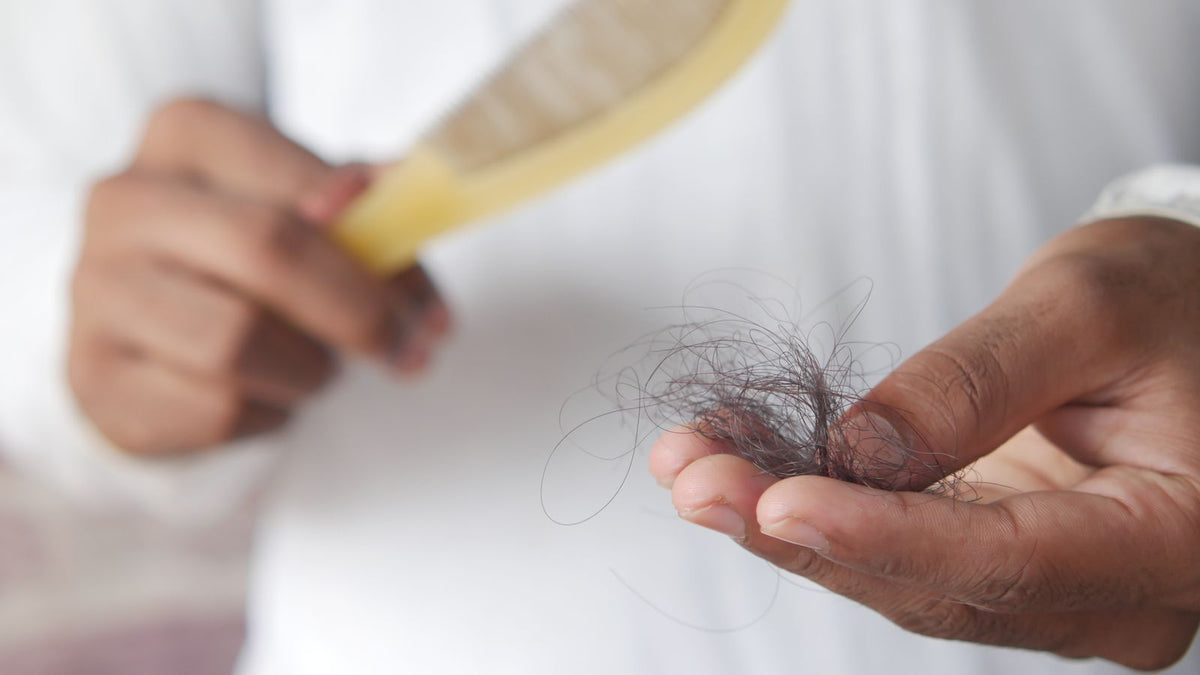
First, look at what is coming out. Hold a few of the strands from your brush against a light background. A shed hair is full length with a small, pale, slightly bulbous root. A broken piece is shorter than the surrounding hair and has a blunt or frayed end with no bulb. Mostly bulbs means shedding. Mostly blunt fragments means breakage.
Second, measure your parting. Take a photograph in the same spot, same light, hair parted the same way, once a month. Memory is unreliable and photographs are not. A parting that is genuinely wider over six to twelve months points at miniaturisation rather than shedding.
Third, count roughly. Losing between 50 and 100 hairs a day is normal. Collect what comes out over a full day, including the shower, and count it once. Most people who think they are losing hundreds are within range, and the reassurance is worth the ten minutes. Our article on whether your hair loss is normal covers what those numbers mean in practice.
Which tests are worth raising with your GP?
Diffuse thinning is one of the situations where blood work genuinely changes what happens next, because several of the common causes are invisible without it.
A full blood count and ferritin are the usual starting point. Ferritin reflects iron stores rather than circulating iron, and it can be low while a standard anaemia check looks normal, which is why asking for it specifically is worth doing. Thyroid function tests are the other standard, since both underactive and overactive thyroid disease affect hair. Where periods are irregular or there is unexplained facial or body hair, androgen markers may be added. Vitamin D and B12 are sometimes checked depending on your history and diet.

Take a short written timeline with you: when the shedding started, what was happening three to four months before that, any new medication, any weight change, and how your periods have been if relevant. It makes a ten minute appointment far more productive. To be clear, Watermans does not run clinics and cannot assess anyone. We make cosmetic hair care, and anything involving tests or medical options belongs with your GP or a dermatology referral. If your question is about products or a routine rather than a medical one, you can talk to Gail Waterman, our co-founder, as an AI avatar on the Watermans homepage. If you want the detail on that, our guide to hair care without medication walks through it step by step.
How long does recovery actually take?
Slower than anyone wants, and the arithmetic is unavoidable. A follicle released from the resting phase needs roughly two to four months before a new hair is visible at the surface. Scalp hair then grows about one centimetre a month.
So even in the best case, where the cause was identified and dealt with promptly, expect three to six months before shedding calms, six to twelve months before density looks meaningfully better, and eighteen months or more before length has caught up. Anyone promising a visible turnaround in four weeks is describing something other than how hair grows. Our guide to the best hair growth serum explains which formats suit early diffuse thinning and which do not.
One practical consequence: judge any change you make on a six month view, not a six week one, and take photographs so you are comparing evidence rather than mood.
What helps day to day?
Alongside whatever medical route applies, the everyday levers are about keeping what you grow.
Eat enough and spread protein across the day rather than loading it into one meal. Do not run an aggressive deficit while worrying about your hair, because sustained under eating is itself a trigger. Handle wet hair gently, since that is when the fibre is weakest, and use a wide tooth comb from the ends upwards rather than dragging a brush from the roots. Reduce heat styling and loosen tight ponytails, braids and clips, because traction and heat quietly convert thinning hair into thinner looking hair. Cleanse regularly enough to keep the scalp comfortable and free of build up, since an uncomfortable scalp encourages scratching and mechanical damage.
On products, the honest promise is about the fibre and the scalp, not the follicle. Reducing breakage means more of what you grow stays on your head, and when each fibre is finer than it used to be, that retention is worth more than it ever was.

A sulphate free daily cleanse with caffeine, biotin and rosemary that leaves the scalp comfortable and hair looking fuller. Vegan, made in the UK, over 6.5 million bottles sold since 2012.

Grow More Leave In Scalp Elixir
A lightweight leave in for the scalp and lengths, formulated to support a healthy scalp environment as part of a daily routine. Cosmetic support, not a medical option.

Keratin fibres that cling to existing hair and make a wider parting far less obvious in minutes. Purely cosmetic, washes out, and useful for the months while everything else takes its time.
Frequently Asked Questions
Is diffuse thinning reversible?
It depends on what is driving it. Diffuse thinning caused by telogen effluvium, low iron stores, thyroid disease or a spell of under eating usually improves within six to twelve months once the underlying cause is properly addressed. The same pattern caused by progressive follicular miniaturisation does not resolve by itself, and the realistic aim there is holding ground with medical input.
How do I know if I have diffuse thinning or breakage?
Examine what comes out on your brush against a light background, because this one check settles it. Shed hairs are full length and carry a small pale bulb at the root end. Broken pieces are noticeably shorter than the rest of your hair, with a blunt or frayed end and no bulb. Mostly bulbs points to shedding, mostly short fragments points to breakage, and the two need entirely different responses.
How much hair loss per day is normal?
Somewhere between 50 and 100 hairs a day is typical, with far more on wash days because several days worth releases at once. That is why washing less often makes shedding look worse rather than better. Most people convinced they are losing hundreds are within the normal range once they actually collect and count for a day.
Which blood tests are worth asking about?
Full blood count and ferritin, plus thyroid function, are the standard starting point. Ferritin is the one to name specifically, because iron stores can be genuinely low while a routine anaemia check comes back normal. Depending on your history, androgen markers, vitamin D or B12 may be added.
Can stress alone cause diffuse thinning?
Yes, and it is one of the most common triggers. Significant physical or emotional stress pushes an abnormal share of follicles into the resting phase, and they release together two to four months later. That delay is precisely why so many people connect the shedding to whatever was happening the week it started rather than the season before.
Will diffuse thinning make me bald?
Telogen effluvium does not cause baldness, however frightening the handfuls look. It reduces density for a period and then recovers. Progressive miniaturisation can lead to substantial loss across many years, which is the whole reason it is worth establishing which process is at work rather than waiting and hoping.
Do supplements help diffuse thinning?
Only where there is a real shortfall to correct. Restoring low iron stores or fixing a genuinely poor diet can make a considerable difference. Taking supplements in the absence of a deficiency has little behind it, and it is worth knowing that excess selenium and excess vitamin A can both make shedding worse rather than better.
When should I stop waiting and see a doctor?
Speak to your GP if shedding has continued beyond six months, if your parting is visibly wider than it was a year ago, if there is scalp pain, scaling, redness or any sign of scarring, or if you have other symptoms such as fatigue, weight change or irregular periods. Earlier is better, because some options work best before a great deal of ground has been lost.
What is the bottom line on diffuse thinning?
Diffuse thinning is a description of how hair is thinning, not an explanation of why, and the why decides everything. The most common causes, telogen effluvium, low iron, thyroid disease and under eating, all carry a good outlook and genuinely improve once dealt with. Progressive miniaturisation does not, and it deserves a medical conversation sooner rather than later. Before anything else, check whether you are actually shedding or breaking, photograph your parting monthly so you are working from evidence, look back three to four months for a trigger, and ask your GP about ferritin and thyroid function. Then give it six months, because that is how long hair takes to answer.
For the everyday version of all this, Grow Me hair growth shampoo does the scalp work while you get on with the rest. Vegan, made in the UK.
Watermans products are 100% cosmetic and do not treat medical hair loss. Individual results may vary.
Sources and References
- NHS, Hair loss. Common causes, what is normal, and when to seek medical help.
- NHS, Iron deficiency anaemia. Symptoms, causes and how it is investigated.
- NICE Clinical Knowledge Summaries, Iron deficiency anaemia. Primary care guidance including the role of ferritin.
- NHS, Underactive thyroid. Symptoms including hair change, and how thyroid function is tested.
- NHS, Iron. UK reference intakes and dietary sources.