Datura for Hair Growth: Why You Must Never Use It
Do not use datura for hair growth. Datura is a poisonous member of the nightshade family, its tropane alkaloids are absorbed through skin as well as by swallowing, and there is no published evidence that it does anything for hair at all. The plant appears in hair recipes online because it looks exotic and grows freely, not because it works. If you have already applied it, wash it off and read the warning signs below.
Our hair growth shampoo
Grow Me® Hair Growth Shampoo, £14.95. A sulphate free daily shampoo that supports a healthy scalp environment and helps reduce breakage, so lengths hold on and look fuller.
Safety warning
Every part of the datura plant is poisonous, including the leaves, flowers, roots and especially the seeds. If you or someone else has swallowed any part of it, or is showing confusion, hallucinations, a racing heart, dilated pupils or hot dry skin after handling it, call 999 immediately. For advice when nobody is seriously unwell, call NHS 111. Take a photograph of the plant with you if you can.
Key takeaways
- Datura for hair growth has no evidence behind it. We searched the published literature and found no study testing it on hair in people.
- Every part of the plant contains tropane alkaloids. The seeds are the most concentrated.
- Alkaloid content varies wildly between plants and seasons, so there is no safe amount to work from.
- The alkaloids are heat stable, so boiling or infusing into oil concentrates them rather than removing them.
- Skin absorbs them. A scalp application under a warm towel is a genuine route in, not a harmless topical.
- Poisoning is a 999 call. Onset is often within an hour of swallowing.
Why Is Datura for Hair Growth a Dangerous Idea?
Most plant hair remedies are, at worst, a waste of an afternoon. Datura is in a different category, and it is worth being precise about why rather than simply saying it is toxic.
The plant produces tropane alkaloids, a family of compounds that block part of the nervous system responsible for the automatic functions you never think about: saliva, sweating, pupil size, heart rate, bladder control and the pace of your gut. Blocking those all at once produces a recognisable and frightening pattern of effects, and in a serious case it produces seizures, dangerously high body temperature and heart rhythm disturbances.
The concentration of these alkaloids is not stable. It varies between individual plants, between the leaf and the seed, between a wet summer and a dry one, and even between the top and bottom of the same plant. Case reports repeatedly describe people who took what they believed was a small, previously tolerated amount and ended up in hospital. That is the core reason no home preparation of this plant can be made safe: you cannot know what you are working with.

What Is Datura, and Where Does the Hair Myth Come From?
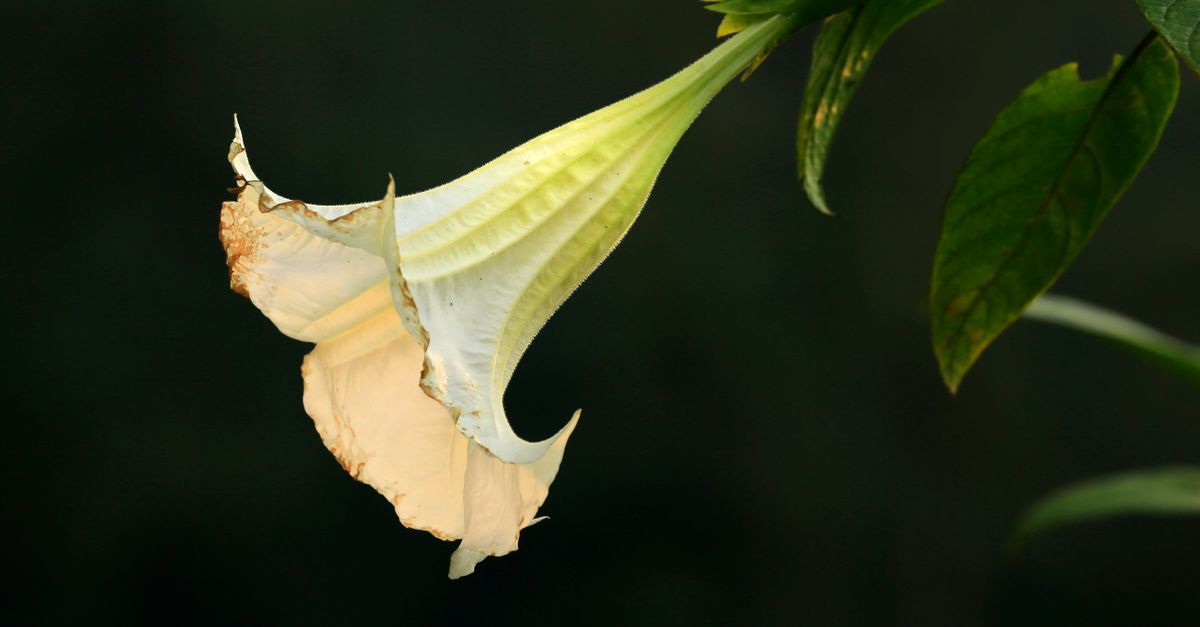
Datura is a genus in the Solanaceae, the nightshade family, alongside deadly nightshade and henbane. In Britain you will most often meet Datura stramonium, called thorn apple or jimson weed, which turns up on disturbed ground, allotments and building sites. It has large trumpet flowers and a distinctive spiky seed pod, and it is common enough that most people have walked past it.
The plant does have a long history in traditional medicine across South Asia, North Africa and the Americas, generally for pain and for breathing complaints, and generally accompanied by explicit warnings about its danger and by preparation methods held by trained practitioners. It has never been a standard hair remedy in any of those traditions.
What happened instead is a familiar internet pattern. A striking plant with genuine traditional standing gets attached to a high-demand search topic, the warnings get stripped out because they make poor content, and the recipe spreads. Searches for datura for hair growth exist because the content exists, not because anyone reported a result. The same has happened with several other plants, which is why we now check the literature before writing about any of them, as we did for batana oil and brahmi powder. Our guide to batana oil for hair growth is the place to go next on that.

How Do Datura Toxins Get Into the Body?
People assume that anything applied rather than swallowed is safe by definition. That assumption is wrong for this plant, and there are four routes worth knowing.
Through the skin. Tropane alkaloids are absorbed across skin. Absorption is slower than swallowing but it rises with warmth, with occlusion under a cap or towel, with the size of the area covered, and with any break in the skin from scratching or a razor. A scalp application ticks most of those boxes at once. Forensic work has been able to detect datura alkaloids in hair samples following chronic exposure, which tells you plainly that the compounds reach the bloodstream and circulate.
Through the eyes. This is the route people never anticipate. A trace of preparation transferred from a finger to an eye causes a widely dilated pupil and blurred vision for days. Historically this happened often enough that the effect was used cosmetically, and it is the single most common accidental exposure from garden nightshades.
Through the mouth. A rinse running down your face in the shower, a hand not washed before eating, a child touching a bowl left on the side. Swallowing is the most dangerous route by a wide margin.
By inhalation. Burning or steaming any part of the plant carries the alkaloids in smoke or vapour, and inhaled exposure acts quickly.
Why an oil infusion is the worst version
The recipes circulating for datura for hair growth usually involve simmering leaves or seeds in a carrier oil. Tropane alkaloids are heat stable and fat soluble, so this is an efficient extraction: you are concentrating the toxins into a preparation designed to be left on warm skin for hours. It is close to the worst possible way to handle this plant.
What Does Datura Poisoning Look Like, and What Should You Do?
Effects usually begin within 30 to 60 minutes of swallowing, and more slowly after skin contact. They can last a long time, sometimes a day or more, because the alkaloids also slow the gut and therefore their own clearance.
Watch for a very dry mouth and difficulty swallowing or speaking. Blurred vision with noticeably enlarged pupils. Skin that is hot, dry and flushed, with no sweating. A fast heartbeat. Difficulty passing urine. Confusion, restlessness, agitation, and in more serious exposures vivid hallucinations, seizures or loss of consciousness.
If you suspect datura poisoning, call 999. Do not wait to see whether it settles, and do not try to make the person sick. If they are conscious, keep them calm, cool and supervised, because agitation and overheating are part of what makes this dangerous. Take a photograph or a sample of the plant with you. If nobody is seriously unwell but you are worried after handling the plant, call NHS 111 for advice.
UK hospitals have access to the National Poisons Information Service, so the clinical team will get expert guidance quickly. Your job is simply to get the person there and to tell them exactly what was involved.
Get a discount on the thinning hair range
Join the Watermans mailing list and we will email a discount code straight to your inbox, so you can try the thinning hair range for less. Vegan, made in the UK, over 6.5 million bottles sold since 2012.
What Should You Do If You Have Already Used It?
If you have applied a datura preparation to your scalp and feel completely well, wash it off now with plenty of soap and warm water, rinse your hair thoroughly, wash your hands twice, and avoid touching your eyes. Change the pillowcase and towel. Bin the remaining preparation rather than keeping it, and wash the bowl separately.
Then watch yourself for the rest of the day. If your vision blurs, your mouth goes very dry, your heart races or you feel confused or unusually agitated, that is a 999 call, not a wait-and-see. Tell them what you applied, because the effects can otherwise look like several other things and naming the plant saves a great deal of time.
Which Safer Things Genuinely Help Hair?
If you arrived here looking for something that works, this is the more useful half of the page. None of it is exotic, which is precisely why it holds up.
| What to do | What it actually helps | Timescale |
|---|---|---|
| Ask your GP for ferritin, full blood count, thyroid function and vitamin D | Finds the commonest correctable causes of shedding | Weeks |
| Eat enough protein and enough total food | Follicles are deprioritised first when intake drops | 3 to 6 months |
| Drop the heat setting and use a heat protectant | Breakage, which is what makes ends look thin | Immediate |
| Detangle from the ends upwards on conditioned hair | Mechanical snapping during styling | Immediate |
| Loosen tight ponytails, braids and clips | Tension damage at the hairline | Weeks to months |
| Use a gentle shampoo consistently | Scalp comfort and fibre condition | Weeks |

If you like the idea of a plant-based routine, that is entirely reasonable. It just needs to come from plants with a known safety profile in cosmetics, used at cosmetic concentrations, rather than from a nightshade prepared in a kitchen.

Grow Me® Hair Growth Shampoo from £14.95
A sulfate-free everyday shampoo with rosemary, caffeine, biotin and niacinamide at cosmetic concentrations. It cleanses without stripping and reduces breakage for fuller-looking hair. Vegan, made in the UK, over 6.5 million bottles sold since 2012.

Grow More® Scalp Elixir from £25.50
A leave-on overnight scalp elixir, if you want something to apply to the scalp overnight in place of a home-made oil. Cosmetic support for the scalp environment, with a known ingredient list.
What is the difference between hair loss, hair shedding and hair breakage?
People reach for extreme remedies when ordinary ones have not worked, and ordinary ones often have not worked because they were aimed at the wrong problem.
Hair loss is follicular. The follicle miniaturises or is destroyed, as in pattern hair loss or a scarring alopecia. It needs a proper medical opinion, and no plant preparation changes it.
Hair shedding is a cycle problem. Too many follicles enter the resting phase at once, typically two to three months after an illness, a crash diet, low iron or a period of severe stress. It usually settles once the cause is dealt with, and our guide on what genuinely helps with hair shedding covers the checks worth making. It is also the reason people panic and go looking for drastic remedies.
Hair breakage is fibre damage from heat, bleach, tension or rough handling. It is the fastest to improve and the most responsive to what you actually do each day. If your hair is not getting longer, breakage is a more likely explanation than anything happening at the follicle, and our piece on so-called dormant follicles covers why.
Please note: Watermans products are 100% cosmetic and do not treat medical hair loss. Individual results may vary.
Frequently Asked Questions
Is datura for hair growth safe if I only use a small amount?
No. The alkaloid content of datura varies enormously between plants, between parts of the same plant and between seasons, so there is no such thing as a known small amount. Two seed heads from the same garden can differ several fold. That variability is exactly why datura causes so many accidental poisonings.
What happens if datura oil touches my scalp?
The scalp is skin, and skin absorbs the tropane alkaloids in datura, particularly where it is warm, occluded under a towel or already broken by scratching. Absorption through the scalp is slower than swallowing but it is real, and the risk climbs sharply if the preparation then reaches your eyes or mouth.
Can I use datura leaves in a hair oil if I boil them first?
Boiling does not destroy tropane alkaloids. They are heat stable, which is why cooking has never made this plant safe. Infusing datura into a carrier oil actively extracts the alkaloids into the oil, so a home-made datura hair oil is more concentrated than the leaf you started with, not less.
Is datura the same as angel's trumpet?
They are close relatives. Datura and Brugmansia, commonly called angel's trumpet, are both in the nightshade family and both contain the same class of tropane alkaloids. Brugmansia is a woody shrub with hanging flowers, datura is usually lower growing with upward facing flowers. Neither belongs anywhere near your hair.
Someone recommended datura for hair growth in a traditional remedy. Are they wrong?
The plant does appear in several traditional systems, usually for pain or breathing complaints and usually with explicit warnings attached, applied by people trained in handling it. It has never been a mainstream hair remedy. What has happened is that the plant's traditional standing has been borrowed by social media accounts that dropped the warnings.
What are the first signs of datura poisoning?
A very dry mouth and difficulty swallowing, blurred vision with widely dilated pupils, flushed hot dry skin, a racing heartbeat, confusion, agitation and sometimes hallucinations. Onset is typically within 30 to 60 minutes of swallowing and slower after skin contact. If you suspect it, call 999.
Is it safe to grow datura in the garden?
Growing it is legal and it is a striking plant, but treat it as you would any toxic ornamental. Wear gloves when handling or pruning it, wash your hands afterwards, keep the seed pods away from children and pets, and never bring any part of it indoors for a home preparation.
What should I use instead for thinning hair?
Start by finding out what is actually happening, because loss, shedding and breakage need different answers. Ask your GP for ferritin, full blood count, thyroid function and vitamin D. Alongside that, a consistent gentle routine that reduces breakage does more for how thick hair looks than any plant preparation. If your question is about products or a routine rather than a medical one, you can talk to Gail Waterman, our co-founder, as an AI avatar on the Watermans homepage.
What is the bottom line on datura for hair growth?
Datura for hair growth is not a remedy with a small risk attached. It is a poisonous plant with no evidence of any hair benefit whatsoever, prepared in ways that concentrate its toxins, applied to warm skin for hours at a time. There is no version of this recipe worth trying, no amount small enough to be predictable, and no preparation method that removes the danger.
If your hair is thinning and you are frustrated enough to be reading about nightshades, that frustration is real and worth acting on. Act on it by finding out which of the three problems you have, getting your bloods checked, and putting a consistent gentle routine in place. That is slower than a miracle plant, and it is the only one of the two that exists.
The shampoo is the step you actually repeat, which is why our sulphate free hair growth shampoo is the one worth getting right. Vegan, made in the UK.
Sources and References
- Aćimović M and colleagues. Datura stramonium, a dangerous weed: an overview of poisoning cases in the 21st century. Planta Medica, 2025. PubMed 40086888
- Tarawneh A, Nafi O and colleagues. Datura in paediatric poisoning: a retrospective clinical study from Jordan. Pediatric Emergency Care, 2024. PubMed 38718809
- Shifa DM, Leyew AY and colleagues. Datura stramonium seed ingestion leading to unintentional poisoning in a 3 year old: case report. International Journal of Emergency Medicine, 2024. PubMed 39478444
- Measurement of Datura alkaloids in hair following chronic exposure. Forensic Science International, 2012. PubMed 23084788
- NHS. Poisoning: symptoms and what to do. nhs.uk/conditions/poisoning
- National Poisons Information Service. npis.org
- NHS. When to use 111. nhs.uk
On the evidence: we searched the biomedical literature for any study of datura and hair growth or hair loss in people and found none. The records that pair the words datura and hair are a plant tissue-culture technique, an agricultural soil study, and forensic toxicology measuring alkaloids inside hair samples after exposure. None of them supports using this plant on hair.