
Keranique Side Effects: What Users Report and What to Do
Keranique side effects are, for most people, skin deep. The reactions users report most often are scalp itching, redness, dryness and flaking, some unwanted fine hair where product has run onto the face, and a short burst of extra shedding in the first few weeks. A smaller number report dizziness or a racing heartbeat, and those are the signals that mean stop and speak to a pharmacist or your GP rather than push on and hope.
Key Takeaways
- Most reported Keranique side effects are cosmetic and local: itching, redness, dryness and flaking on the scalp.
- Alcohol, fragrance and propylene glycol in leave-on scalp products are common irritants, quite separately from any active ingredient.
- An early rise in shedding during the first two to eight weeks is widely reported and usually settles.
- Dizziness, palpitations, chest discomfort or swelling are the rare reactions that mean stop and get advice the same day.
- Part of the Keranique range is regulated as a medicine, not a cosmetic. Questions about that part belong with a pharmacist, not a hair care blog.
- A gentle, drug-free cosmetic routine is a lower-risk starting point if you would rather not take on a side effect profile at all.
What is Keranique, and which part of the range causes the reports?
Keranique is an American hair care brand aimed mainly at women with fine or thinning hair. The range splits into two very different halves, and that split explains almost everything about the Keranique side effects people post about online.
One half is ordinary cosmetics: shampoo, conditioner, a volumising spray, styling products. The other half is a leave-on scalp product that is regulated as a medicine rather than as a cosmetic. Watermans makes cosmetic hair care and nothing else, so we do not discuss medicines, their ingredients or how they work anywhere on this site. If your question is about that half of the range, the right person to ask is a pharmacist or your GP, and in the UK you can also report a suspected reaction to a medicine yourself through the MHRA Yellow Card scheme.
What we can talk about, usefully and honestly, is the part that overlaps with our world: what happens to a scalp when you put a strongly formulated leave-on product on it every day, how to tell an ordinary adjustment from a genuine warning sign, and what a gentler routine looks like. That is what the rest of this guide covers.
What are the most commonly reported Keranique side effects?
The reactions below are the ones that come up again and again in user reviews and forum threads. Seeing one is not a reason to panic. Knowing them in advance is what lets you tell a normal settling-in period from something worth acting on.
1. Scalp itching, redness and stinging
This is the single most frequent complaint. A mild tingle for a minute or two after application, fading on its own, is common with any alcohol-carried leave-on product. Persistent burning, a raised rash, weeping skin or itching that keeps you awake is a different thing entirely, and means stop.
2. Dryness and flaking that looks like dandruff
Alcohol helps a leave-on product spread and dry quickly, and it also strips moisture from the skin barrier. The result is tightness and small white flakes that people often mistake for dandruff and then attack with an anti-dandruff shampoo, which dries the scalp further. Genuine dandruff and product-induced dryness need opposite responses.
3. Unwanted fine hair on the face
Some users report fine hair appearing along the hairline, temples or cheeks. In practice this is usually where product has run, been slept on, or been transferred by unwashed hands. It is one of the more distressing reports precisely because it is visible, and it is one of the strongest arguments for careful application and washing your hands afterwards.
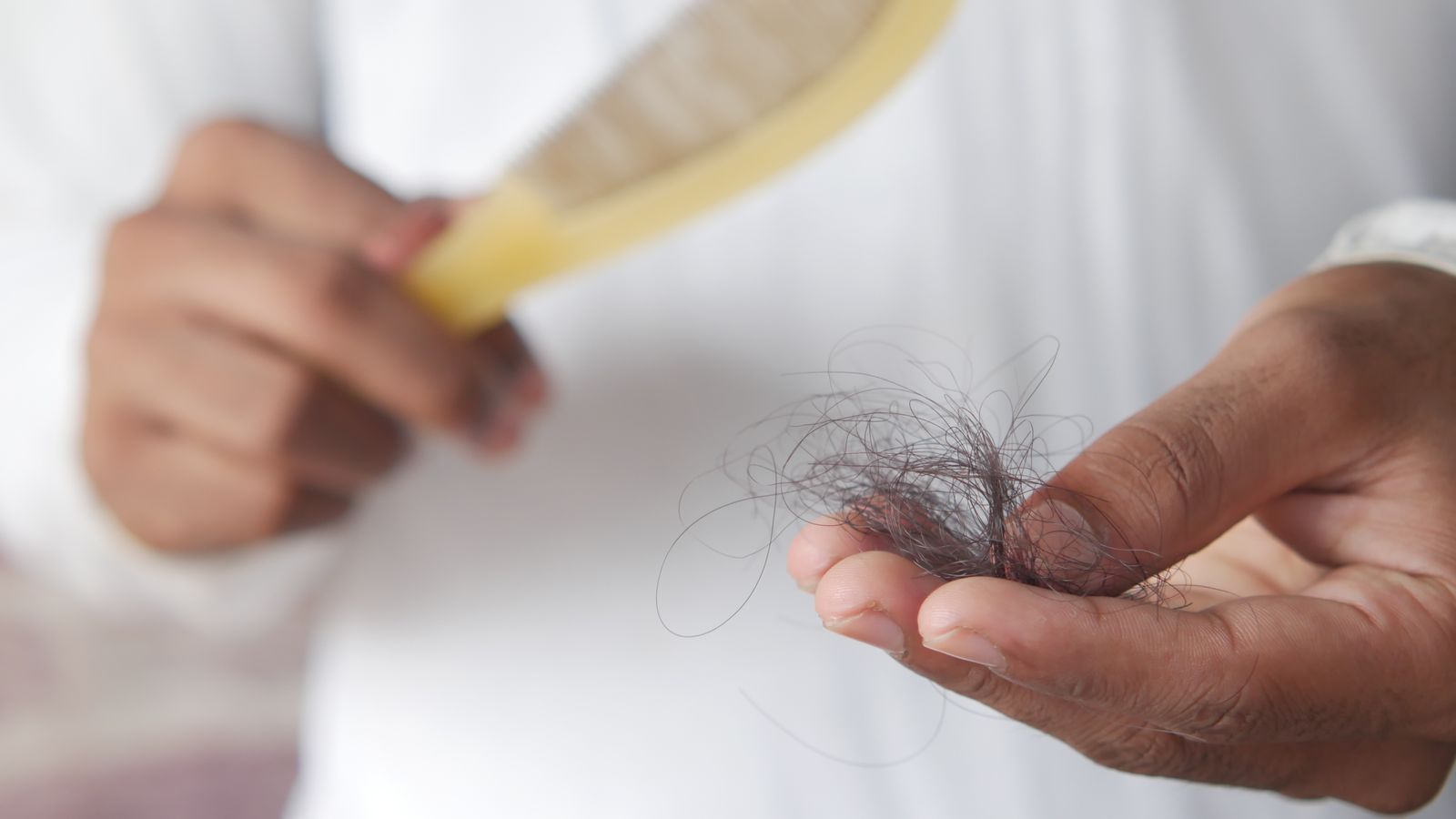
4. A burst of shedding in the first few weeks
Widely reported, widely misread, and covered properly in its own section below. Briefly: more hair in the brush during weeks two to eight is common when you change what you put on your scalp, and it usually settles.
5. Greasiness, stiffness or a residue on the hair
A daily leave-on product plus styling products plus dry shampoo builds up. Hair that suddenly looks lank, feels coated, or will not hold a style is often carrying residue rather than losing condition.
6. Dizziness or a faster heartbeat
Uncommon, and reported by a small minority. This is not a cosmetic nuisance to work around. It belongs in the stop-and-get-advice group, and it is the clearest reason why the medicine half of the range is a conversation for a pharmacist rather than a blog.

Why does a leave-on scalp product irritate skin in the first place?
Scalp skin is thinner than the skin on your arms and it is covered in follicle openings, so it reacts faster and more visibly than most people expect. Three formulation choices do most of the damage, and none of them is an active ingredient.
- Alcohol. It carries the formula, spreads it and evaporates fast. It also dehydrates the skin barrier with daily use, which is what produces the tight, flaky, itchy pattern.
- Fragrance. One of the most common causes of allergic contact dermatitis on the scalp and hairline. It is also entirely optional in a formula, which is worth remembering.
- Propylene glycol. A humectant and solvent used widely in leave-on products, and a well-recognised contact allergen for a minority of people.
Dermatologists split these reactions into two kinds. Irritant contact dermatitis is dose-related: too much, too often, on skin that is already dry, and almost anyone will react. Allergic contact dermatitis is a genuine immune response to one ingredient, it can appear after months of trouble-free use, and it will keep happening every time you meet that ingredient. If a reaction arrives out of nowhere after a long calm period, allergy is the more likely explanation, and a GP can arrange patch testing to find out which ingredient is responsible.
Worth knowing: broken, sunburnt, freshly bleached or already inflamed scalp skin absorbs far more of anything you put on it. If your scalp is sore before you start, sort that out first. Applying an active product to damaged skin is how a mild formula becomes an uncomfortable one.
Is a burst of shedding after starting normal?
Usually, yes. Hair grows in cycles, and at any moment roughly nine in ten of your follicles are in the growing phase while the rest are resting or releasing. Anything that nudges a batch of follicles to reset the cycle together produces a visible wave of shedding a few weeks later, then a return to normal. Changing your scalp routine is one such nudge. So are illness, a crash diet, childbirth, surgery and severe stress, which is why the timing of a shed almost never lines up with the thing people blame.
The practical rule is time. Shedding that rises in weeks two to eight and eases by around week twelve fits the expected pattern. Shedding that is still climbing at four months, or that comes with a visibly widening parting, patches of bare scalp, scaling, pain or sores, is not a settling-in period, and it deserves a proper look from a GP or a dermatologist. Our guide to what causes telogen effluvium walks through that timeline in detail.
Hair loss, shedding or breakage: which one are you actually seeing?
Three different things get called the same thing, and mixing them up is how people end up buying entirely the wrong product. The table separates them.
| What it is | What you see | The tell | What helps |
|---|---|---|---|
|
Hair loss follicle-level, including pattern loss and alopecia |
Widening parting, thinner crown, receding hairline, or defined bare patches | Density drops in a specific place and stays down | A GP or dermatologist first. This is a medical conversation, not a shopping one |
|
Shedding the growth cycle resetting |
More hair in the brush, drain and pillow, all over rather than in one spot | Whole hairs with a small pale bulb at the root end | Time, gentle handling, and finding the trigger from three months earlier |
|
Breakage the fibre snapping mid-length |
Short broken pieces, frizzy halo, splitting ends, hair that will not gain length | Fragments of hair with no bulb on either end | Less heat, less tension, gentler detangling, conditioner and a mask |
A good share of what gets reported as Keranique side effects is really breakage, and breakage is the one thing a good cosmetic routine genuinely improves. If your hair is snapping rather than falling from the root, a heavy leave-on scalp product is not the answer you need at all.
Get a discount on the thinning hair range
Join the Watermans mailing list and we will email a discount code straight to your inbox, so you can try the thinning hair range for less. Vegan, made in the UK, over 5 million bottles sold since 2012.
Which Keranique side effects mean you should stop straight away?
Sort the reports into two piles and the decisions get much easier. One pile is uncomfortable but local. The other involves the rest of your body.
| Reported effect | Most likely explanation | Sensible response |
|---|---|---|
| Mild itch, brief stinging | Alcohol or fragrance in the formula | Use less, less often. Reassess after two weeks |
| Dryness and flaking | Barrier dehydration, overuse | Cut the frequency, add a gentle conditioner, stop the anti-dandruff shampoo |
| Raised rash, weeping, swelling of the scalp | Possible allergic contact dermatitis | Stop now. Book time with your GP and ask about patch testing |
| Extra shedding, weeks two to eight | Growth cycle resetting | Usually settles. Reassess honestly at twelve weeks |
| Dizziness, fainting, lightheadedness | Systemic reaction | Stop and contact a pharmacist or GP the same day |
| Palpitations, chest discomfort, swollen hands or feet, sudden weight gain | Systemic reaction | Stop and seek medical advice promptly |
Do not wait it out: chest discomfort, a racing or irregular heartbeat, fainting, swelling of the face, hands or feet, or unexplained sudden weight gain all mean stop using the product and speak to a healthcare professional promptly. These reports are uncommon, and they are the ones that matter most.

How can you lower your risk of Keranique side effects?
If you have decided to go ahead, a handful of unglamorous habits do more to keep you comfortable than any product swap.
- Patch test before you commit. A small amount on the inner forearm, left for 24 hours, catches a good share of reactions before they reach your scalp.
- Follow the directions exactly. Applying more, or more often, does not speed anything up. It reliably raises the chance of irritation.
- Apply to dry, intact skin. Never onto a scalp that is broken, sunburnt, freshly bleached or already sore.
- Wash your hands every single time. This is the difference between product staying on your scalp and product ending up on your face and pillow.
- Do not stack irritants. A drying leave-on plus a harsh clarifying shampoo plus daily heat is three insults to the same skin.
- Keep a two-line diary. Date, and how the scalp felt. Patterns are obvious on paper and invisible in memory.
- Give it an honest twelve weeks, then judge. Hair cycles are slow. Two weeks tells you about tolerance, not results.

What does a gentler alternative to Keranique look like?
Plenty of people arrive at this page because they want fuller-looking hair without taking on a side effect profile at all. That is a perfectly reasonable position, and it is where a cosmetic routine earns its place. A cosmetic routine will not change what is happening inside a follicle, and we are not going to pretend otherwise. What it can do is reduce breakage, keep the scalp comfortable, and let the hair you already grow reach its full length instead of snapping off halfway.
In practice that means a sulfate-free cleanse that does not strip the scalp, a conditioner that makes detangling less violent, sensible heat habits, and patience. If you want the wider picture of what genuinely helps and what does not, our honest rundown of hair loss solutions and our guide to keeping your scalp healthy are the two places to go next. If the thinning is concentrated at the crown, our guide to crown thinning covers what that pattern usually means.

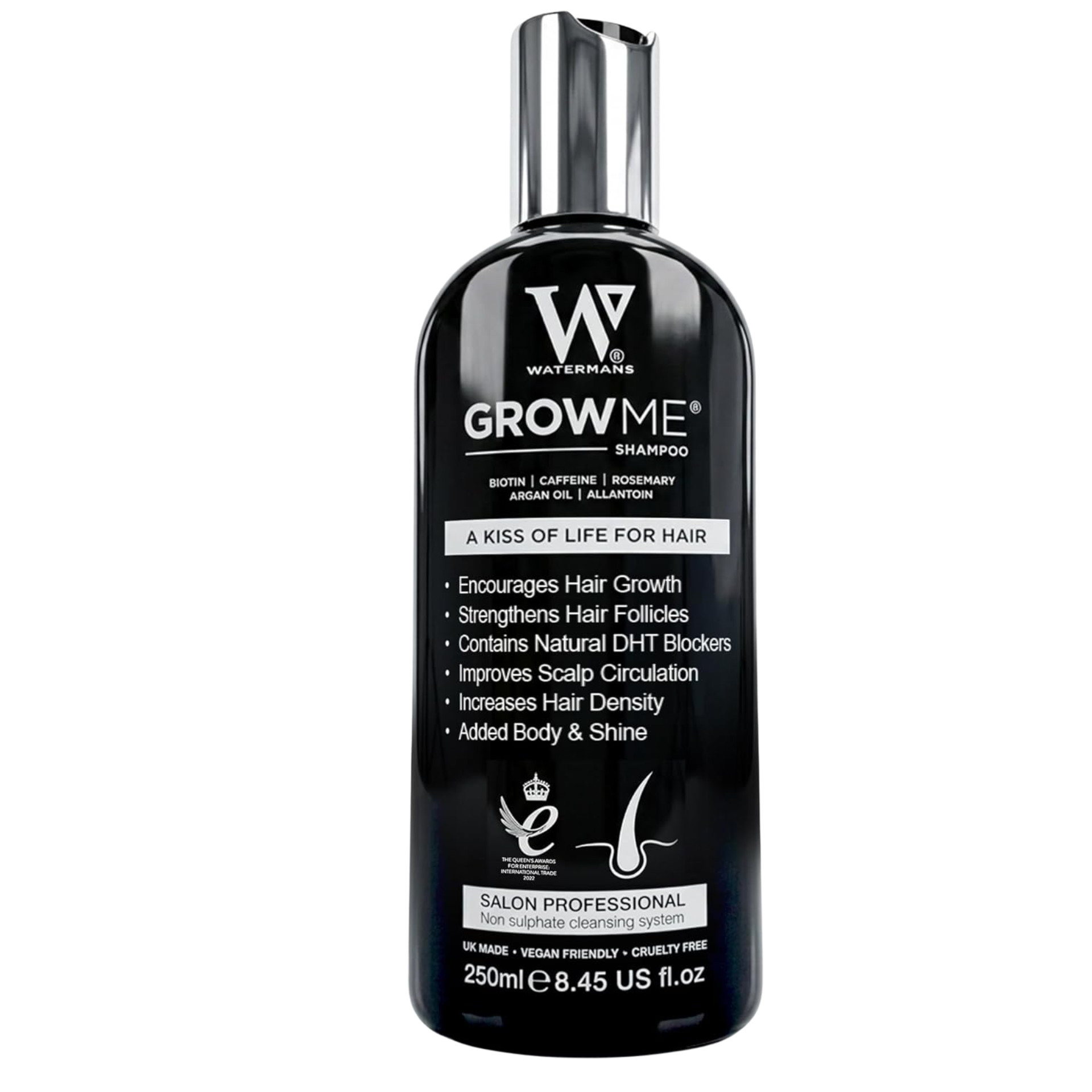
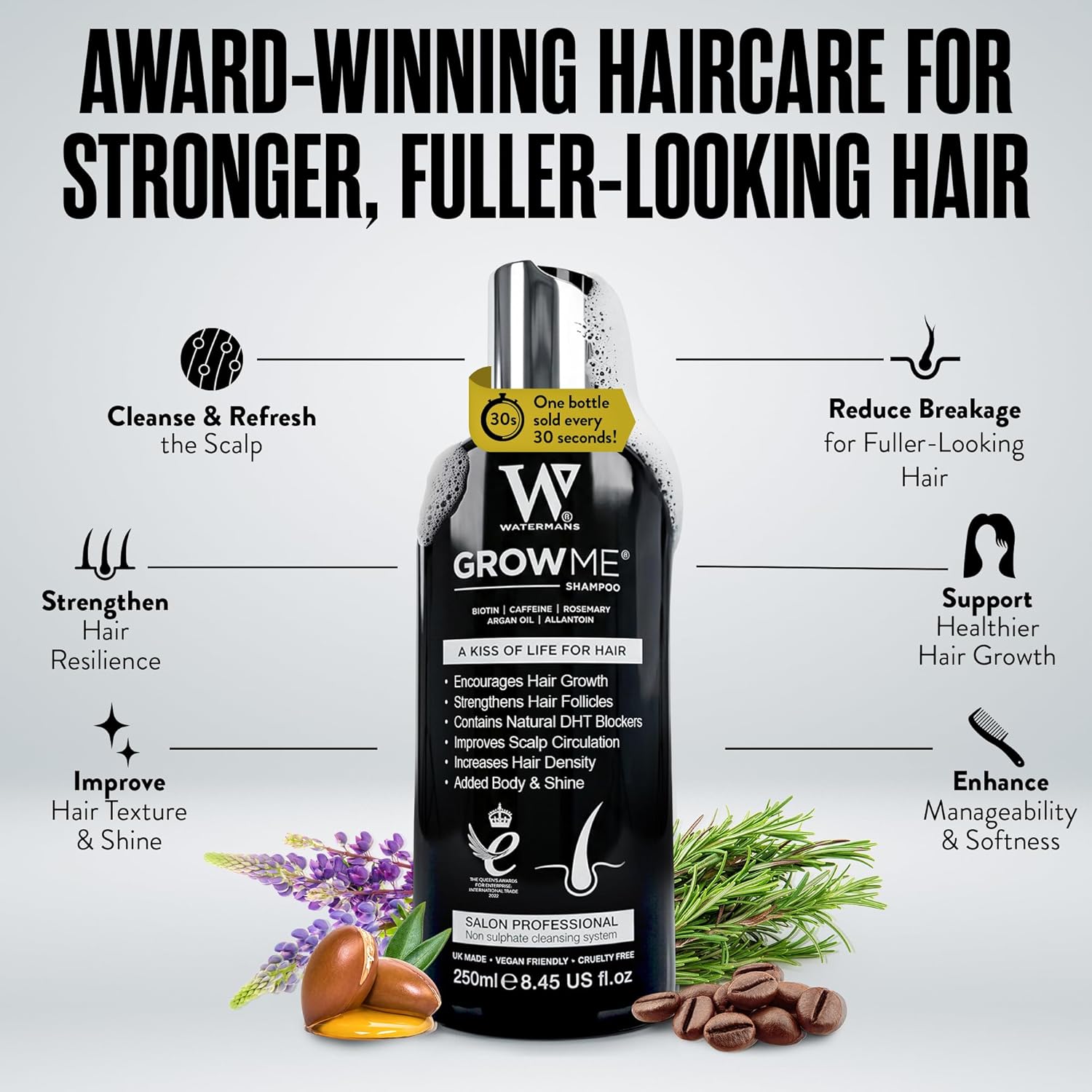
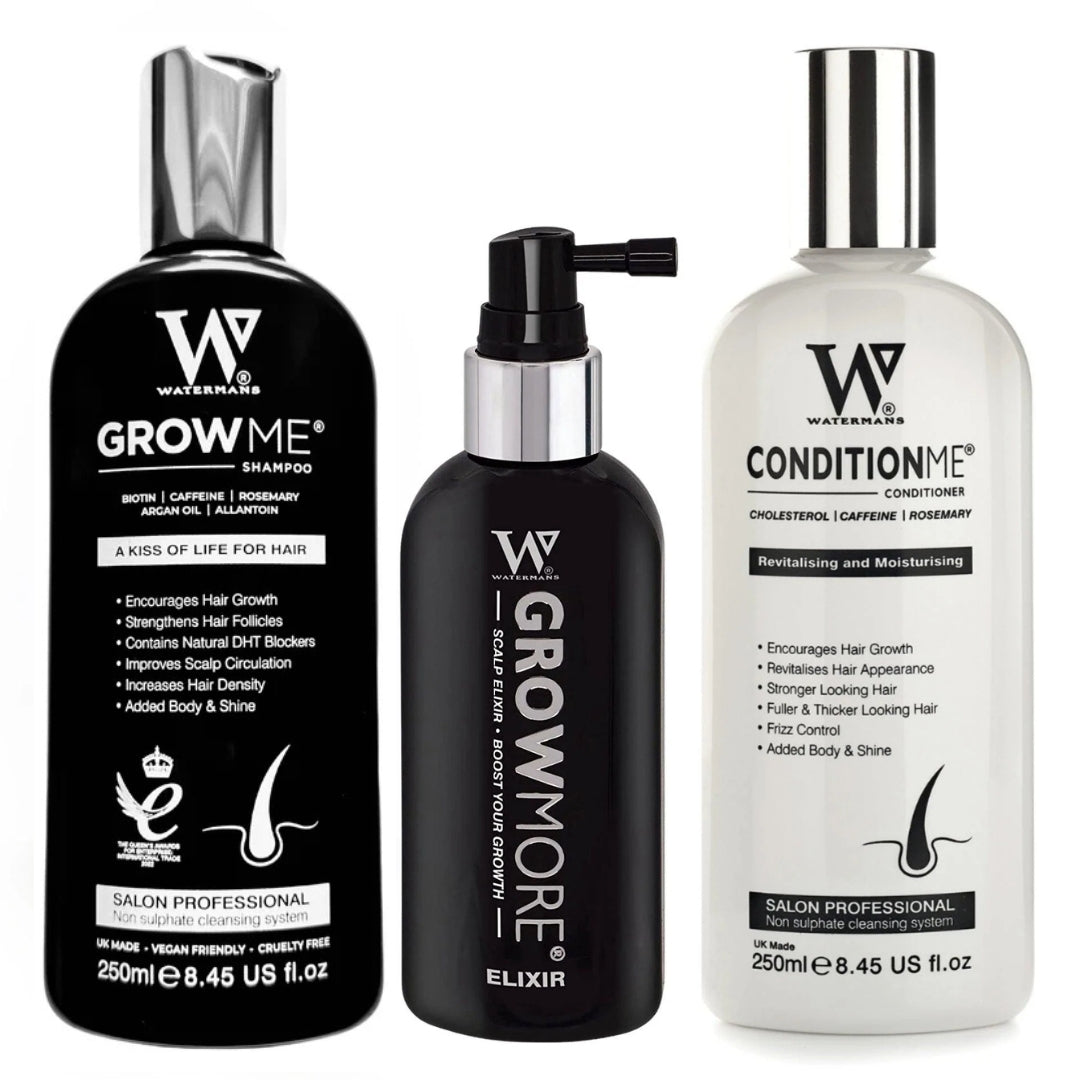
A gentle daily cleanse: Grow Me® Shampoo
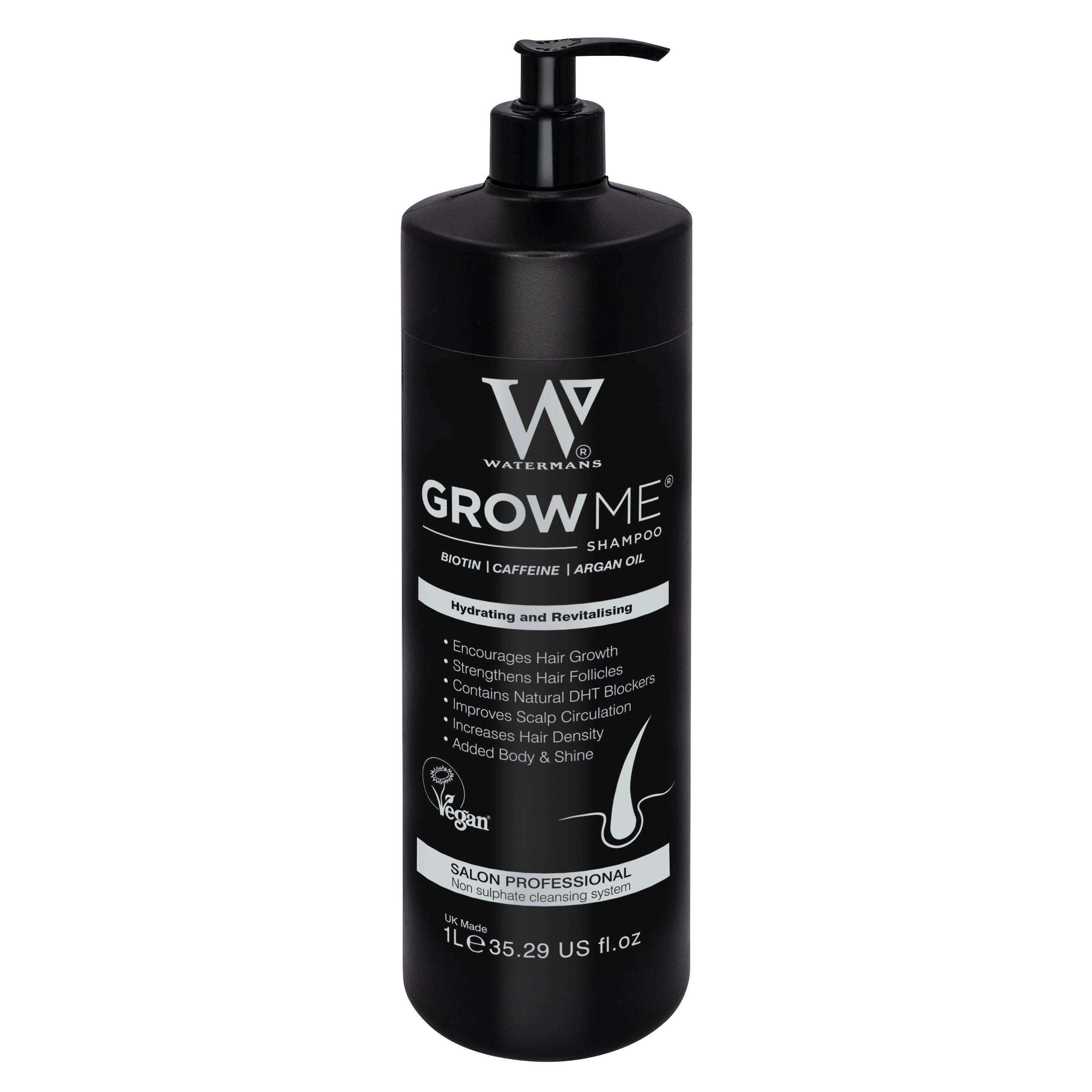
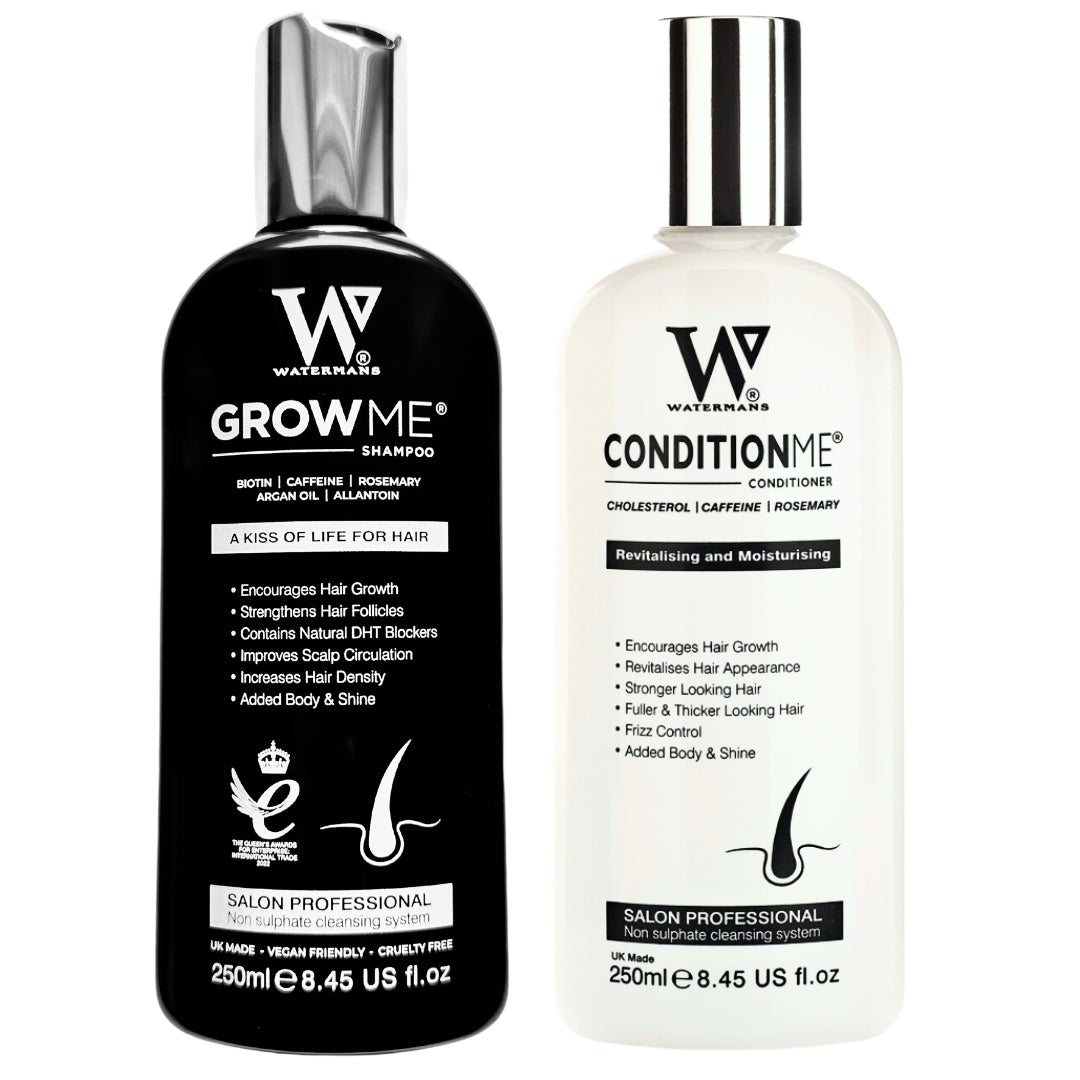
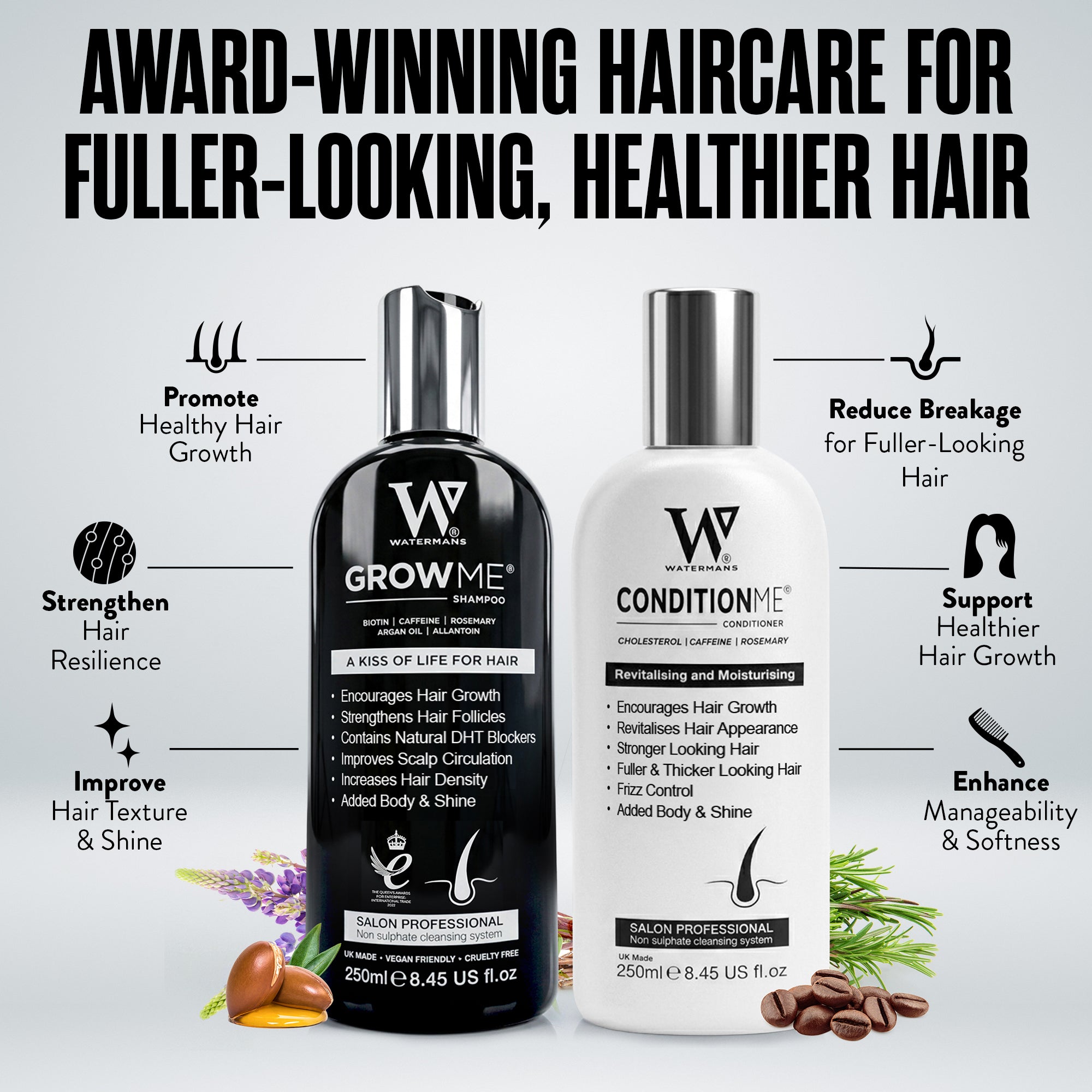
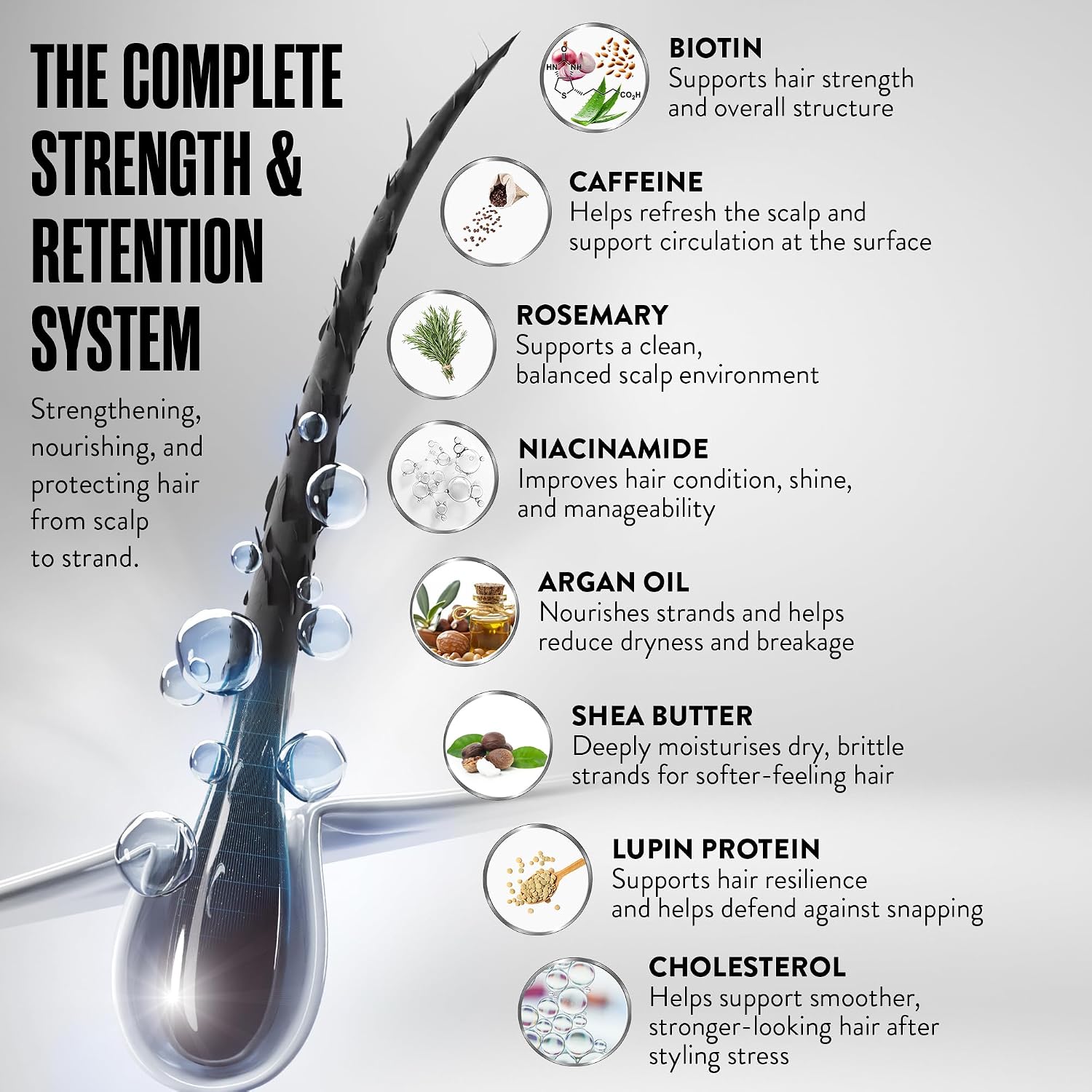
Sulfate-free and vegan, with biotin, caffeine, rosemary and argan oil. It cleans without stripping, which matters a great deal if your scalp is already sensitised. It is a cosmetic shampoo, not a medicine.
View Grow Me Shampoo
Fewer snapped ends: Condition Me® Conditioner
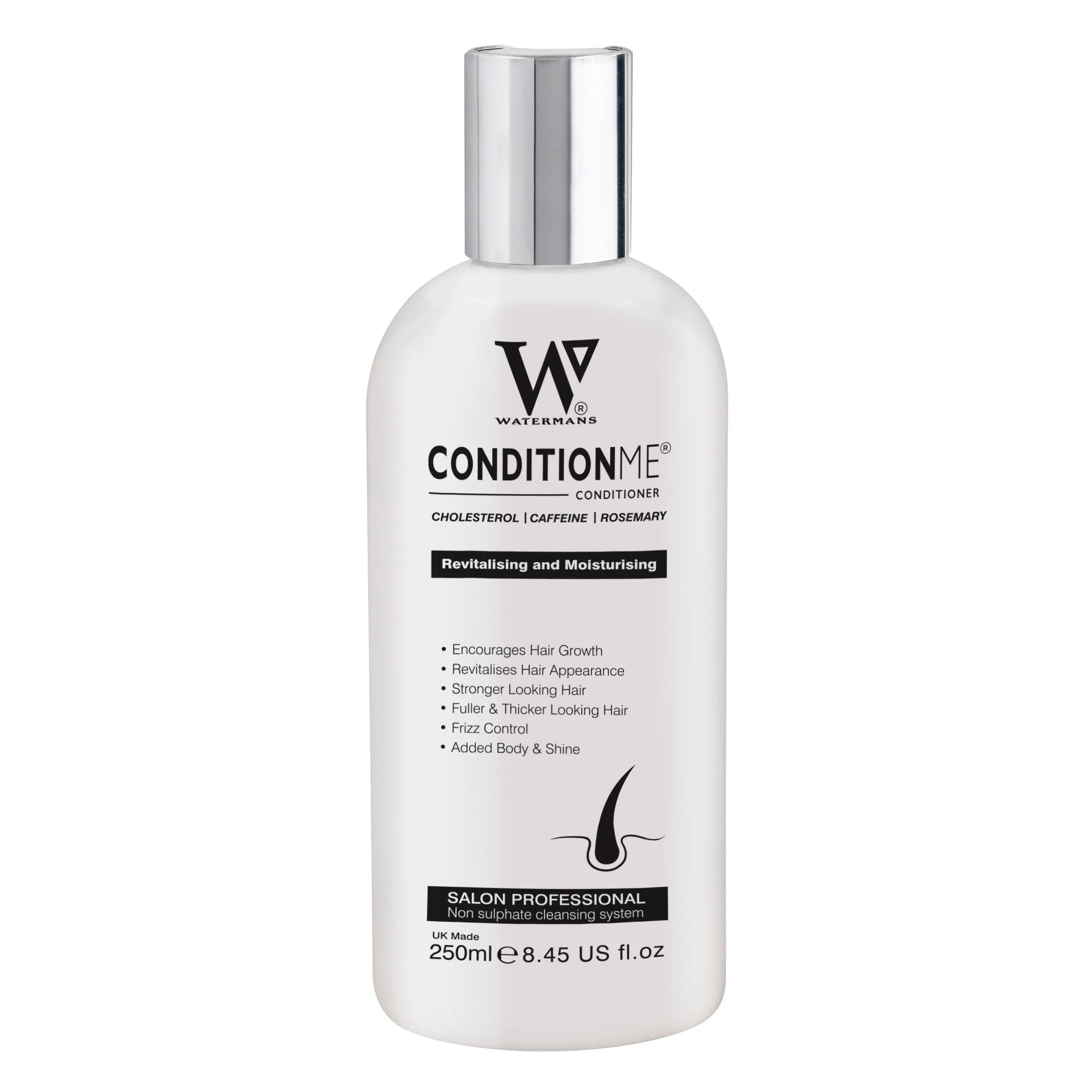
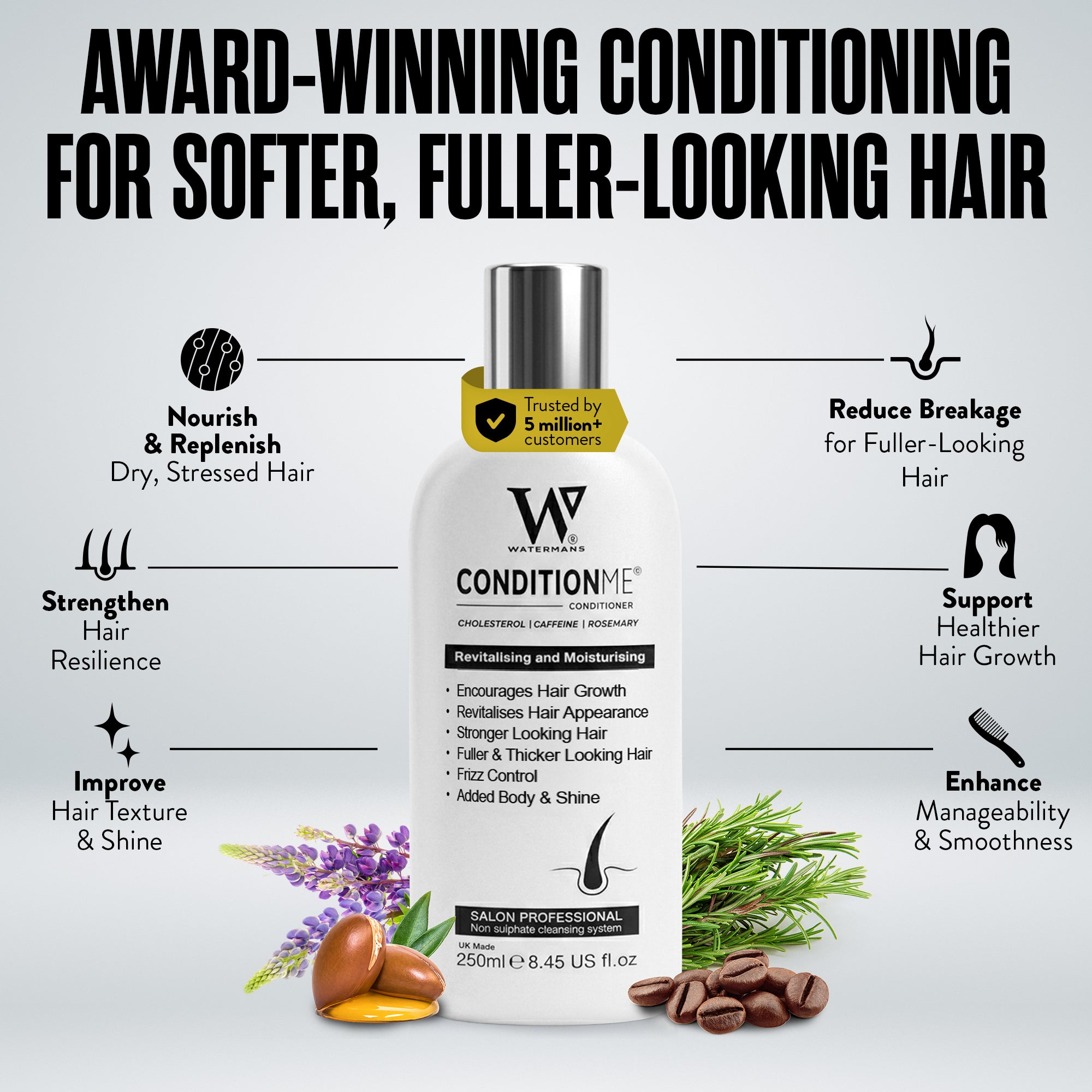
Breakage defence with shea butter, glycerin and hydrolysed lupine protein. If detangling is where your hair is being lost, this is the more useful purchase, and it pairs with the shampoo above.
View Condition Me Conditioner
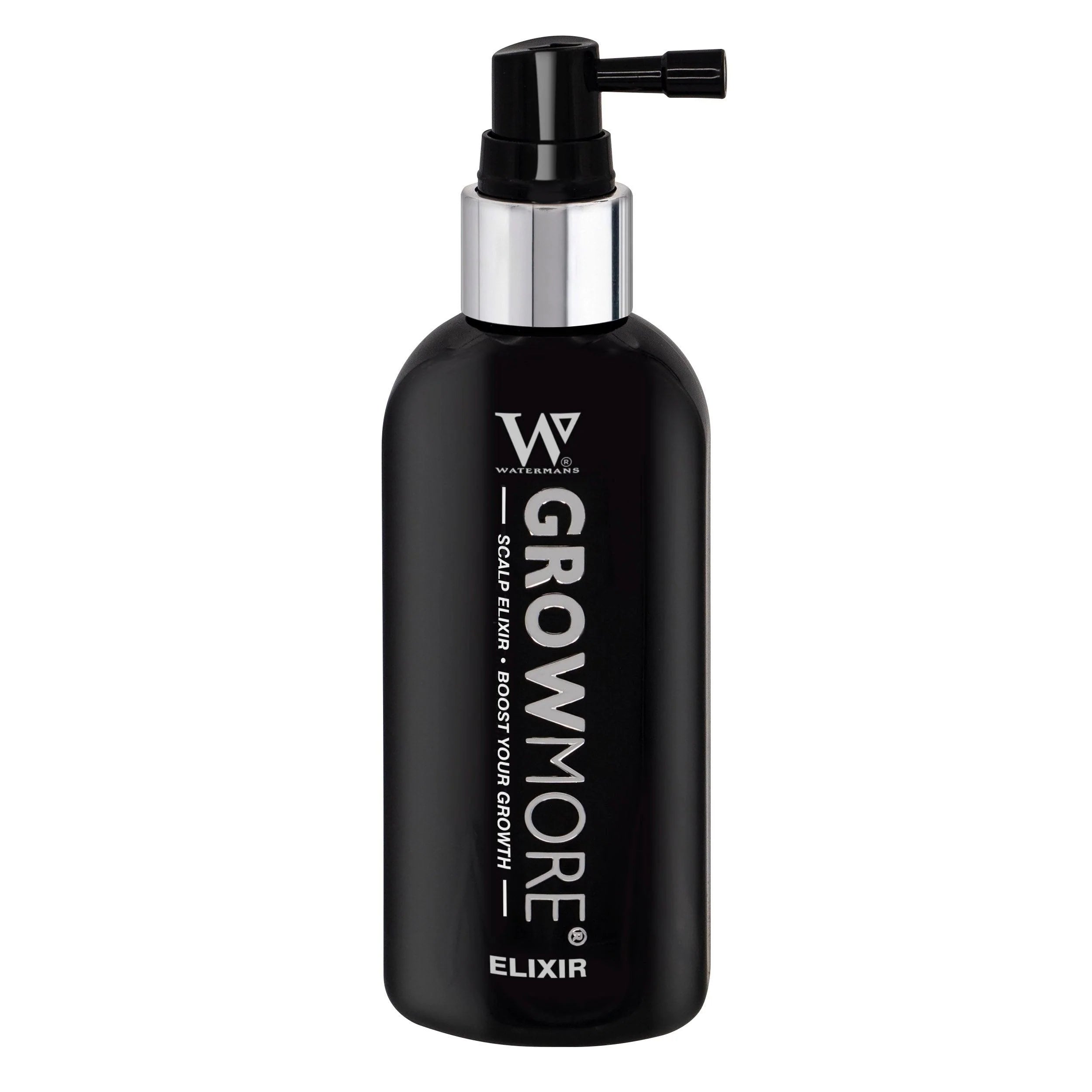
If you still want a leave-on: Grow More® Elixir
An overnight scalp serum for lower-density areas, formulated as a cosmetic rather than a medicine. Patch test it exactly as you would anything else you leave on your skin overnight.
View Grow More Elixir
The Short Version
Most Keranique side effects that people describe are local, cosmetic and manageable: itch, dryness, flaking, a bit of transferred hair on the face, and a shedding wave that settles. The formulation, not just the actives, does much of that damage, and using less of it on healthier skin fixes a surprising amount. The rare reports that involve your heart or your blood pressure are a different category and deserve a same-day phone call rather than a wait-and-see. And if you would rather not run the experiment at all, a gentle cosmetic routine costs less, carries far less risk, and is easy to build on. If you want to understand the underlying pattern first, start with what causes thinning hair.
Watermans products are 100% cosmetic and do not treat medical hair loss. Individual results may vary. Watermans has sold over 5 million bottles since 2012, and our hair care is vegan and made in the UK. Always speak to a healthcare professional about hair loss that is sudden, patchy, or causing you concern.
Frequently Asked Questions
How long do Keranique side effects last?
Mild scalp reactions such as itching or flaking often ease within a couple of weeks of cutting back how much and how often you apply. A shedding wave typically eases by around week twelve. Anything systemic should not be waited out at all.
Is the itching serious?
A brief tingle that fades is usually just alcohol in the formula. Persistent itching with redness, a raised rash, weeping or swelling suggests contact dermatitis, and that is worth stopping for and taking to a GP.
Why did my shedding get worse when I started?
Changing what you put on your scalp can nudge a batch of resting follicles to reset together, which shows up as a visible shed a few weeks later. It is unnerving and usually temporary. If it is still climbing at four months, get it looked at.
Can it cause hair on my face?
Users do report fine hair along the hairline and cheeks. Careful application, keeping product off the forehead, washing your hands afterwards and using a clean pillowcase all reduce the chance of transfer.
Do I have to keep using it to keep any benefit?
With this category of product, yes. Any cosmetic or appearance benefit depends on continued use, and hair generally returns to its previous state within a few months of stopping.
Can I use it if I am pregnant or breastfeeding?
Ask a pharmacist or your midwife before starting anything new on your scalp during pregnancy or while breastfeeding. That is a genuine medical question and not one a hair care brand should answer for you.
What is the gentlest alternative?
If the Keranique side effects above are what put you off, a drug-free cosmetic routine: a sulfate-free shampoo, a conditioner that reduces snapping, gentler heat and styling habits, and a GP conversation about diet, iron levels or hormones if the thinning is real rather than cosmetic.
Should I report a reaction to anyone?
In the UK you can report a suspected reaction to a medicine yourself through the MHRA Yellow Card scheme, and you should also tell your GP or pharmacist. Reports from the public are used to spot patterns that individual reviews never show.
Sources & References
- NHS, Hair loss: causes, when to see a GP, and what is considered normal shedding.
- British Association of Dermatologists, Telogen effluvium: public leaflet on shedding waves and their typical timeline.
- British Association of Dermatologists, Contact dermatitis: the difference between irritant and allergic reactions, and how patch testing works.
- NHS, Dandruff: why flaking is not always dandruff, and why drying products can make it worse.
- MHRA, Yellow Card scheme: how anyone in the UK can report a suspected side effect of a medicine.