Wigs and Toppers: An Honest UK Guide to Fuller Hair
If your parting has widened, coverage is the fastest fix on the list.
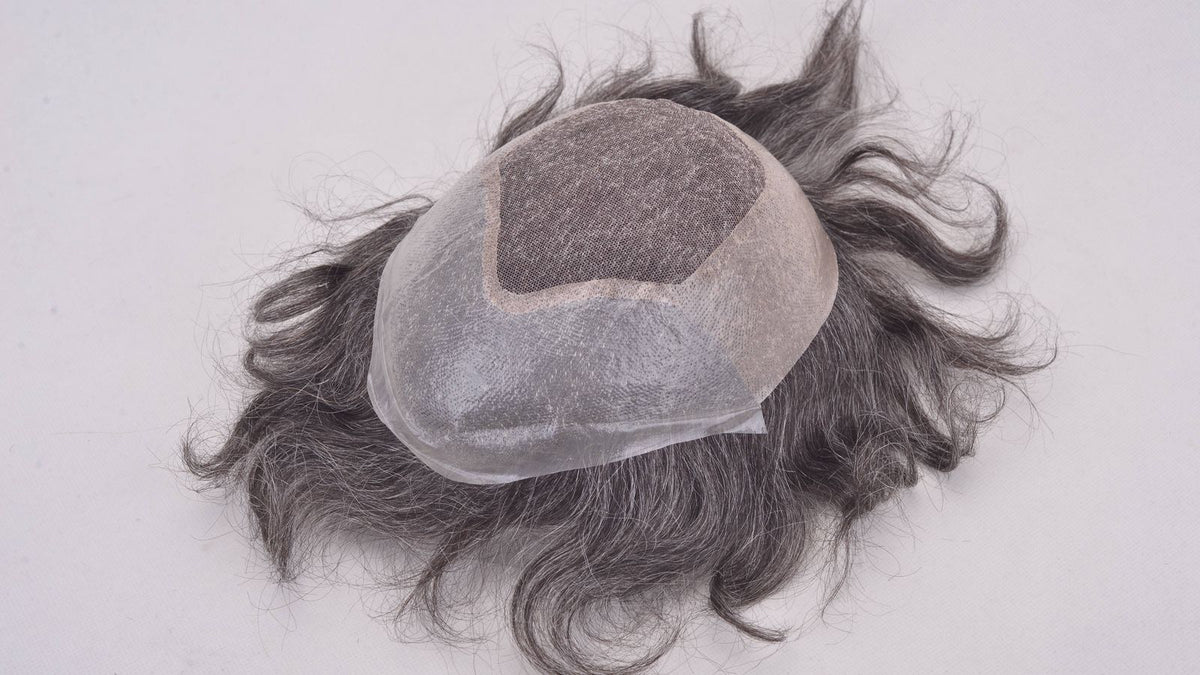
Wigs and toppers are two different answers to the same problem. A topper is a partial hairpiece that clips onto your own hair to add coverage at the parting or crown, while a wig covers the whole head. Toppers suit people who still have plenty of hair at the sides and back; wigs suit widespread thinning or full loss. Both are cosmetic, both are reversible, and neither changes what is happening in the follicles underneath.
Our hair growth conditioner
Condition Me® Hair Growth Conditioner, £13.95. Detangles and strengthens the hair fibre so lengths snap less on the brush and look thicker through the ends.
Key takeaways
- A topper clips into existing hair and covers the parting or crown; a wig covers the whole scalp.
- Synthetic pieces last roughly 6 to 9 months, real-hair pieces 3 to 4 years, according to the NHS.
- Some wigs are available on the NHS, though you may have to pay unless you qualify for help with costs.
- The main risk is breakage and traction where clips sit, not extra hair loss from the piece itself.
- Rotate clip positions, keep the hair underneath conditioned, and take the piece off at night.

What is the difference between wigs and toppers?
A wig is a full head covering with a cap that sits over the whole scalp, held by an adjustable band, grips or tape. A topper is a smaller base, roughly the size of a palm, that clips onto hair you still have and fills in a widened parting or a thinning crown. The choice between the two is decided by how much hair remains at the sides and back.
That distinction matters practically. A topper needs anchor hair to grip, so if the hair around the parting has become fine and fragile the clips have nothing solid to hold. A wig needs no anchor at all, which is why it stays the better option for widespread loss, for scalp conditions where clipping would irritate the skin, and for anyone who wants to change length or colour completely without touching their own hair.
Who are wigs and toppers actually for?
Both suit anyone whose scalp shows through more than they would like, whatever the cause. DermNet notes that around 40 per cent of women show signs of hair loss by age 50, and fewer than 45 per cent reach 80 with a full head of hair, so a widening parting is common rather than unusual. Coverage is a styling decision, not a medical one.
Three groups reach for them most often: people with hereditary pattern thinning, where the parting widens slowly over years and can be tracked on the Ludwig scale for female hair loss; people going through a heavy shedding phase who want cover while the cycle settles; and people who simply want volume for an event. The first group tends to buy a topper and keep it for years. The third often borrows or rents.
Loss, shedding and breakage are not the same thing
Hair loss means follicles producing progressively finer hair or none at all. Shedding means more hairs than usual reaching the end of the growth cycle at once, and the NHS puts normal daily loss at 50 to 100 hairs. Breakage means the fibre snapping partway along its length, so the follicle is fine but the hair is short and frayed. A topper can cause the third. It does not cause the first two.
How much do wigs and toppers cost in the UK?
Price depends almost entirely on fibre and base construction rather than on brand. Synthetic pieces start around fifty pounds on the high street and rise into the low hundreds for a good lace front. Real-hair pieces usually begin in the mid hundreds and can pass a thousand pounds for a hand-tied full wig. The NHS confirms that some wigs are available through the health service, though you may have to pay unless you qualify for help with health costs.
| Factor | Synthetic | Real hair |
|---|---|---|
| Typical lifespan (NHS) | 6 to 9 months | 3 to 4 years |
| Upkeep | Easier to look after | Harder to look after |
| Appearance | Good, less adaptable | Looks more natural |
| Heat styling | Usually not, unless heat-friendly | Yes, with heat protection |
| Comfort | Can be itchy and hot | Generally cooler and lighter |
| Cost | Lower | Higher |
Read that table as a cost-per-month calculation rather than a price tag. A synthetic piece replaced twice a year can work out dearer over five years than one well-kept real-hair topper, and the real-hair piece can be cut and coloured to match you as your own hair changes.

How do you fit a topper without damaging the hair underneath?
Fitting damage comes from three things: clipping into the same few strands every day, clipping into hair that is wet or already fragile, and leaving the piece on while you sleep. Each concentrates tension on a small number of follicles. Tension held in one spot for months is the mechanism behind traction damage, which is the single most common complaint from long-term topper wearers.
The fix is unglamorous and it works. Move the clips a centimetre or two every few days so no single row of hair carries the load. Fit the piece on dry hair, because wet hair stretches and snaps far more easily. Take it off before bed. Give the scalp one clear evening a week with nothing clipped to it, which is also the easiest moment to look properly at your own parting.
How should you care for the hair under wigs and toppers?
The hair underneath needs more conditioning than it did before, not less. Clips create friction at a fixed point, and a piece worn most days means that point is under mechanical stress for hours. Strong, well-conditioned hair bends rather than snaps, so conditioner and a leave-in are the two products that earn their place in this routine. Scalp cleansing matters too, because a covered scalp gets less air.

Condition Me® Hair Growth Conditioner £13.95
Breakage-defence conditioner with cholesterol, shea butter and hydrolysed lupine protein. Worth using on the anchor rows where clips sit, so the hair bends rather than snaps under daily tension.

Grow Me® Hair Growth Shampoo £14.95
Sulfate-free daily shampoo with caffeine, rosemary, niacinamide and biotin. A gentle wash matters when a scalp spends most of the day covered, and it supports a healthy scalp environment for the hair you still have.
If the ends of your own hair are already rough, work through what causes hair breakage before you add clips to the equation, because a topper worn over fragile hair will make the fraying more obvious, not less.
Get a discount on the thinning hair range
Join the Watermans mailing list and we will email a discount code straight to your inbox, so you can try the thinning hair range for less. Made in the UK, over 6.5 million bottles sold since 2012.
Do wigs and toppers make hair loss worse?
Wearing a piece does not accelerate hereditary thinning, and covering the scalp does not suffocate follicles. What can genuinely make things worse is sustained tension from clips, combs or tapes pulling on the same hairs for months on end. That is a mechanical problem with a mechanical answer, and it is entirely avoidable by moving the anchor points and giving the scalp rest days.
Two warning signs are worth knowing. Short broken hairs standing up along the clip line mean the fibre is snapping and the clips need moving. Tenderness or redness that lasts after the piece comes off means the tension is too high or the base is too tight. Neither is an emergency, but both mean changing something this week rather than next season.

Protect Me® Heat Protection Spray £13.95
Leave-in spray with panthenol, niacinamide and sunflower oil. Useful on heat-friendly and real-hair pieces before styling, and on your own lengths if you blow-dry around the clip line.

How do you match a topper to your own hair colour and parting?
Match to your roots, not your ends. The part of a topper that anyone actually sees is the few centimetres closest to the base, and your roots are almost always cooler and darker than the sun-lifted lengths further down. A piece matched to your ends will read as a lighter patch sitting on top of your head in daylight, which is the giveaway people notice.
Base construction is the second half of the match. A silk or monofilament top mimics scalp skin where the hair is knotted, so the parting reads as a parting rather than as a seam. Lace fronts do the same job at the hairline. Neither is necessary for a piece worn under a fringe, and both add cost, so buy the feature that covers the area you actually expose.
Density is the quiet third factor. Manufacturers often supply pieces at a density well above a natural head of hair because thick looks generous in a photograph, and the result sits obviously proud of your own hair. A stylist can thin a real-hair piece down in twenty minutes. That single cut does more for believability than any upgrade in fibre grade.
Buy in daylight, or send a daylight photo
Shop lighting and phone screens both shift colour. Compare a swatch against your roots outdoors, or send the seller a photo of your parting taken outside on an overcast day. Overcast daylight is the most neutral light most people have easy access to, and colour returns are the commonest reason a piece goes back.
How do wigs and toppers compare with the other coverage options?
Coverage sits on a scale from daily cosmetics to permanent change, and wigs and toppers occupy the reusable middle. Building fibres dust onto existing hair and wash out the same night. Toppers clip in each morning. Wigs replace the whole look. Surgery is permanent and expensive, and the NHS is clear that a hair transplant is not available on the health service because it counts as cosmetic surgery.
| Option | Effort | Reversible | Rough UK cost |
|---|---|---|---|
| Building fibres | Two minutes daily | Yes, washes out | £15 to £30 a pot |
| Topper | Five minutes daily | Yes | £150 to £800 |
| Full wig | Five minutes daily | Yes | £50 to £1,000 plus |
| Cut and colour for volume | Every six weeks | Yes | £50 to £150 a visit |
| Hair transplant | One-off surgery | No | £1,000 to £30,000 (NHS figure) |
Most people end up combining two of these rather than choosing one. A topper for work and fibres for the gym is a common pairing. If you are weighing the surgical end of the scale, read when a hair transplant is worth considering first, because timing matters more than most clinic websites admit.
When should you speak to a GP about thinning rather than covering it?
Cover the hair by all means, but get the cause looked at if the change has been fast, patchy or painful. The NHS advises seeing a GP if you are worried about hair loss, and specifically suggests doing that before going to a commercial hair clinic. Sudden shedding, bald patches, scalp soreness or hair changes alongside tiredness or weight change are all worth a conversation.
A GP can look at the scalp and say whether anything further is needed, and they can check the ordinary causes such as low iron. That costs you nothing and rules a lot out. If your question is about products or a routine rather than a medical one, you can talk to Gail Waterman, our co-founder, as an AI avatar on the Watermans homepage. Watermans does not run clinics and cannot tell you what is causing your thinning, and a simple at-home check such as the hair pull test is a rough guide only, never an answer.
What are the frequently asked questions about wigs and toppers?
Can you wear a topper every day?
Yes, provided you move the clip positions regularly and take the piece off at night. Daily wear is normal. It is unmoved clips, not frequency, that causes breakage along the anchor rows.
Will a topper show in bright light or wind?
A well-matched topper with a silk or lace top is difficult to spot because the base mimics a parting. Colour match matters more than price. Match to your roots rather than your ends, since roots are what shows at the parting.
How much hair do you need for a topper to clip onto?
Enough hair at the sides of the thinning area to hold four to six small clips without the scalp showing through where they sit. If the anchor hair is very fine, a wig or a tape-on base is usually more comfortable than clips.
Can you sleep in wigs and toppers?
It is better not to. Overnight friction tangles the fibre and keeps tension on the anchor hairs for another eight hours. Sleeping in a piece is the fastest route to matting on a synthetic and to breakage on your own hair.
How do you wash a real-hair topper?
Cool water, a gentle sulfate-free shampoo, conditioner through the mid-lengths and ends only, then air dry on a stand. Never wring or brush it while soaking wet. Real hair in a piece has no scalp feeding it, so it dries out faster than your own.
Are toppers suitable during a heavy shedding phase?
Often yes, but keep the clips loose and move them daily, because hair in a shedding phase is already leaving at a higher rate. If the scalp is sore or the shedding is sudden, see a GP before adding clips.
Do wigs and toppers work for men?
Yes. Men's hair systems are the same idea with a different base shape, usually tape or adhesive rather than clips, covering the crown and front. The care principles are identical: rest days, clean scalp, no sleeping in the piece.
Can you colour a topper to match your hair?
Real-hair pieces can be toned or darkened by a colourist, though lightening is risky because the fibre has already been processed. Synthetic pieces cannot be coloured with ordinary dye at all, which is a good reason to match carefully at purchase.
What is the bottom line on wigs and toppers?
Wigs and toppers are the quickest honest answer to a scalp that shows through, and the decision between them comes down to how much hair is left to clip onto. Toppers win on naturalness and cost when there is anchor hair; wigs win on coverage and comfort when there is not. Neither changes the follicles underneath, and neither needs to.
What separates people who wear a piece happily for years from people who give up is the care of the hair beneath it. Move the clips, condition the anchor rows, take it off at night, and get a sudden or painful change looked at by a GP rather than covered up.
If the hair under your piece is snapping along the clip line, a breakage-defence routine is the place to start: our hair growth conditioner is built for exactly that kind of daily mechanical stress.
Watermans products are 100% cosmetic and do not treat medical hair loss. Individual results may vary.
Sources & references
- NHS, Hair loss, checked 17 September 2026.
- NHS, Hair transplant (cosmetic procedures), checked 17 September 2026.
- DermNet, Female pattern hair loss, checked 17 September 2026.
- NHS, Menopause and perimenopause symptoms, checked 17 September 2026.
- The Institute of Trichologists, checked 17 September 2026.