Summer Hair Care: How to Protect Hair from Sun, Sea and Heat
Good summer hair care comes down to four things: shade your hair and scalp from strong sun, rinse before and after the pool or the sea, keep moisture topped up, and give heat tools a rest. Sun, salt, chlorine and humidity all wear down the outer layer of the hair, so strands that felt fine in April can look dry, faded and frizzy by August. This guide explains what each summer stressor does and the simple routine that keeps hair looking its best until autumn. Sea swimming is not automatically bad news, and our guide to salt water by hair type explains who benefits and who should rinse straight away.
Our heat protection spray
Protect Me® Heat Protection Spray, £13.95. A leave in spray that shields hair from heat styling, helps control frizz and keeps colour looking fresher for longer.
Summer hair care means protecting the hair fibre and the scalp from the extra stress of the warmer months: strong sunlight, chlorinated pools, salt water, sweat and heat styling. The routine is simple: cover up in the midday sun, wet and rinse hair around swimming, condition after every wash, detangle gently and use less heat. Most summer damage is breakage and dryness in the lengths, which gentle habits can limit. Styling tools do their own version of this, covered in our guide to heat damage and how to prevent it.
Key takeaways
- The NHS advises shade between 11am and 3pm from March to October in the UK, which protects your scalp and your hair.
- The American Academy of Dermatology suggests a swim cap, rinsing straight after swimming, then shampoo and a deep conditioner.
- Sun exposure changes hair colour, shine and strength, according to a 2015 review in the Journal of Photochemistry and Photobiology B.
- Summer damage is mostly breakage and dryness in the lengths, not hair loss from the root.
- Heavy shedding that starts two to four months after a hot, stressful summer is worth a GP visit if it does not settle.
Why does summer hair care matter more than the rest of the year?
Summer hair care matters more because the warmer months stack several stressors on the hair at once: stronger ultraviolet light, more swimming, sweat, humidity and often more heat styling for holidays and events. Each one roughens the cuticle, the overlapping outer layer that keeps the hair smooth and shiny, and together they add up quickly.
A 2015 review in the Journal of Photochemistry and Photobiology B describes how solar radiation affects hair colour, strength, shine, protein content and surface roughness. The review also points out that, unlike sunscreen for skin, there are no agreed standards for testing hair sun protection products, so claims on those labels are hard to compare. We look at moerie hair products separately, with the practical steps.
Your scalp needs attention too. The skin along a parting or a thinning crown is exposed directly to the sun, and it burns just like the skin on your nose. The NHS reminds us that you can burn in the UK even when it is cloudy.

What does the sun actually do to your hair?
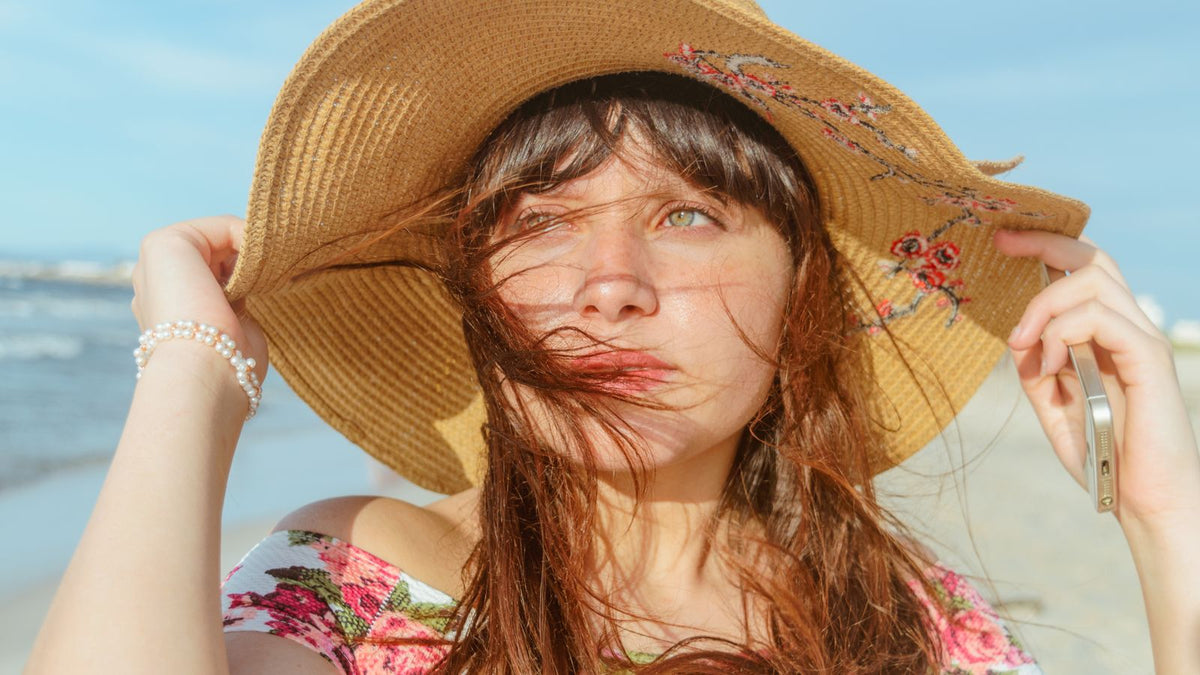
The sun breaks down the pigment and proteins in the hair shaft, which is why summer hair looks lighter, duller and feels rougher by the end of the season. Ultraviolet light fades natural and dyed colour, especially red and auburn shades, and weakens the fibre so the ends split and snap more easily.
Hair is not living tissue, so this damage accumulates rather than repairing itself. The practical answer is cover and care: the American Academy of Dermatology suggests protecting hair in the sun with a wide-brimmed hat or a leave-in conditioner that contains zinc oxide. A hat also shades the scalp, which is the part that can actually burn.
Protect the parting
If you have a clear parting or thinner hair on top, that line of skin catches the full sun. A hat is the simplest cover. Sunscreen on the scalp can feel greasy, so many people use a spray or powder formula along the parting on long days outside.
How do chlorine and salt water affect hair in summer?
Chlorine and salt water both dry the hair by drawing out moisture and roughening the cuticle, and summer is when most of us swim the most. Chlorinated pool water can leave hair feeling squeaky and straw-like, and it can tint very light or bleached hair a greenish shade because of metals in the water.
The American Academy of Dermatology gives a clear routine for swimmers: wear a swim cap, rinse your hair immediately after swimming, then wash with a shampoo made for swimmers and follow with a deep conditioner. Wetting your hair with clean tap water before you get in also helps, because hair that is already full of water absorbs less pool water.
Salt water behaves differently. It is a natural texturiser, which is why beach waves look good for an afternoon, but it leaves salt crystals on the fibre that pull out moisture as they dry. Our guide to whether salt water is good for hair covers the sea in more detail, and our guide to protecting hair from chlorine and pool water covers the pool.
| Summer stressor | What it does to hair | Simple fix |
|---|---|---|
| Strong sun | Fades colour, weakens the fibre, can burn the scalp | Hat, shade between 11am and 3pm, leave-in conditioner |
| Pool chlorine | Dries and roughens hair, can tint light hair green | Wet hair first, swim cap, rinse straight after |
| Sea salt | Draws out moisture as it dries | Rinse with fresh water, condition the same day |
| Sweat and humidity | Frizz, greasier roots, more washing | Gentle shampoo on the scalp, conditioner on the lengths |
| Heat styling | Dries and breaks already stressed ends | Air dry where you can, lowest heat setting, heat protection |
Get a discount on the dry, sun-stressed hair range
Join the Watermans mailing list and we will email a discount code straight to your inbox, so you can try the dry, sun-stressed hair range for less. Made in the UK, over 6.5 million bottles sold since 2012.
What is the best summer hair care routine?
The best summer hair care routine is a short, repeatable one: cleanse the scalp gently, condition the lengths every time, protect before sun or swimming, and handle wet hair with care. You do not need a new product for every stressor. You need the same few steps done consistently from June to September.
Step one is washing. Sweat and sunscreen build up on the scalp faster in summer, so you may wash more often. The American Academy of Dermatology suggests applying shampoo to the scalp rather than the whole length, so you remove oil and residue without drying the ends. Step two is conditioner after every wash, which the same guidance recommends to detangle and smooth the hair.
Step three is protection before exposure: a hat for the sun, a rinse with clean water before swimming, and a heat protection spray before any hot tool. Step four is gentle drying. Blot hair with a towel or a soft T-shirt rather than rubbing it, and comb from the ends upward with a wide-tooth comb.


Protect Me® Heat Protection Spray £13.95
A leave-in spray that protects against heat styling up to 230°C and helps with colour fade and frizz. Mist it through towel-dried lengths before a blow dry or a straightener on summer evenings.
Should you use less heat styling in summer?
Yes, summer is the easiest time of year to use less heat styling, because warm air dries hair naturally and textured, air-dried styles suit the season. Hair that has already been roughened by sun and chlorine is more likely to split and snap when you add a straightener or curling tongs on top.
The American Academy of Dermatology suggests letting hair air dry when possible, using the lowest heat setting that works, limiting how long a hot tool touches the hair, and using hot tools less often, aiming for once a week or even less. When you do use heat, a heat protection product helps the hair cope.

Which summer hairstyles are kindest to your hair?
The kindest summer hairstyles are loose ones that keep hair off your neck without pulling on the roots: a low braid, a loose bun or a claw clip. Tight ponytails and buns worn day after day pull on the hairline and can cause a type of hair loss called traction alopecia, which the American Academy of Dermatology lists among the habits that damage hair.
Swap elastic bands for covered bands, silk scrunchies or clips, and change where you tie your hair so the tension does not fall in the same place every day. A loose plait before bed or before the beach also stops wind and salt tangling long hair into knots that break when you brush them out.
Is it summer hair shedding, hair breakage or hair loss?
Summer hair shedding, hair breakage and hair loss are three different things, and knowing which you have tells you what to do. Hair breakage is the fibre snapping part way along, leaving short pieces with no root bulb; in summer it is the most common problem, driven by sun, chlorine, salt and heat. Hair shedding is whole hairs falling out root and all. The NHS says losing between 50 and 100 hairs a day is normal.
Many people notice more shedding in late summer and autumn. DermNet explains that in telogen effluvium, a burst of shedding, the extra hair fall appears two to four months after a trigger, and DermNet lists excessive sun exposure among the possible triggers alongside illness and stress. It usually settles over six to nine months. Our guide to the season when hair falls most explains the pattern.
Hair loss in the medical sense means follicles producing less hair over time, as in pattern hair loss, or patches such as alopecia areata. A summer routine cannot fix that, and sudden patches or heavy shedding that does not settle are reasons to see a GP.

Masque Me® Hair Mask £24.95
A rich weekly mask for summer-dry lengths. Leave it on for a few minutes after swimming days or beach trips to help ends feel softer and look smoother. Cosmetic care for the hair fibre.
How should you look after your scalp in summer?
You look after your scalp in summer by keeping it clean, covered and comfortable. Sweat, sunscreen and humidity can leave the scalp oily and itchy, so a gentle, regular wash matters more than in winter, and a hat or shade protects it from burning.
Choose a mild shampoo you are happy to use often, massage it into the scalp with your fingertips rather than your nails, and rinse well so no residue is left behind. If you get sunburn on your scalp, cool it with water, keep it out of the sun and avoid hot tools and tight styles until it settles. Persistent flaking, soreness or a rash is worth showing to a pharmacist or GP. Our guide to keeping your scalp healthy goes further.
What should you pack for holiday hair care?
For holiday hair care, pack a wide-brimmed hat, a wide-tooth comb, a leave-in conditioner or heat protection spray, a gentle shampoo and a conditioner, plus covered hair bands or a clip. That small kit covers sun, sea, pool and the evening blow dry.
Decant products into travel bottles so you are not tempted to skip conditioner because it is heavy to carry. On the flight home, a loose plait or bun stops long hair matting against the seat. If you colour your hair, ask your colourist about scheduling a colour refresh after the holiday rather than before, so chlorine and sun do not fade a new colour straight away.
| Holiday item | Why it helps |
|---|---|
| Wide-brimmed hat | Shades the scalp and the lengths from midday sun |
| Wide-tooth comb | Detangles salty or chlorinated hair with less snapping |
| Conditioner | Replaces moisture after every wash, as dermatologists advise |
| Heat protection spray | Helps hair cope with a hair dryer or straightener |
| Covered bands or clips | Keeps hair off the neck without pulling the roots |
When should you see a GP about summer hair problems?
You should see a GP about summer hair problems if you notice sudden or patchy hair loss, heavy shedding that lasts more than a few months, a painful or blistered scalp after sunburn, or a rash that does not settle. The NHS advises seeing a GP if you are worried about your hair loss, and says the GP may be able to tell the cause by looking at your hair.
Dryness, frizz and split ends are cosmetic and respond to a gentler routine. Anything that involves the scalp skin, the roots, or your general health is a medical question. Watermans does not offer medical advice, and nothing on this page replaces it. If your question is about products or a routine rather than a medical one, you can talk to Gail Waterman, our co-founder, as an AI avatar on the Watermans homepage.
What are the frequently asked questions about summer hair care?
What is the most important summer hair care step?
Covering up in strong sun and conditioning after every wash. The NHS advises shade between 11am and 3pm from March to October, and a hat protects the scalp and the lengths at the same time.
Does the sun damage hair?
Yes. A 2015 review found that solar radiation affects hair colour, shine, strength and surface roughness. A hat or a leave-in conditioner with zinc oxide helps protect it.
How do I protect my hair from chlorine?
Wet your hair with clean water first, wear a swim cap, rinse straight after swimming, then shampoo and use a deep conditioner, as the American Academy of Dermatology recommends.
Is salt water bad for hair?
Salt water adds texture but draws moisture out of the hair as it dries. Rinse with fresh water after the sea and condition the same day.
Should I wash my hair more often in summer?
Often yes, because sweat and sunscreen build up faster. Apply shampoo to the scalp rather than the lengths so you clean the roots without drying the ends.
Why does my hair fall out more in late summer?
Extra shedding often appears two to four months after a trigger such as illness, stress or a lot of sun, according to DermNet. It usually settles over six to nine months. See a GP if it does not.
Is summer hair care different for curly hair?
Curly hair dries out faster, so summer hair care for curls leans on conditioner, gentle detangling while the conditioner is in, and fewer washes if your scalp allows it.
What is the bottom line on summer hair care?
The bottom line on summer hair care is that most summer damage is dryness and breakage in the lengths, and a short routine limits it: shade and a hat in strong sun, rinse around swimming, condition after every wash, detangle gently and use less heat. Keep the scalp clean and covered, and take sudden shedding or patches to a GP.
If you style with heat on summer evenings, a heat protection spray is the easiest single step to add to your routine.
Sources & references
- NHS, Sunscreen and sun safety, checked 18 September 2026.
- NHS, Hair loss, checked 18 September 2026.
- American Academy of Dermatology, 10 hair care habits that can damage your hair, checked 18 September 2026.
- American Academy of Dermatology, Tips for healthy hair, checked 18 September 2026.
- Dario MF et al. Effects of solar radiation on hair and photoprotection. J Photochem Photobiol B 2015, checked 18 September 2026.
- DermNet, Telogen effluvium, checked 18 September 2026.
Watermans products are 100% cosmetic and do not treat medical hair loss. Individual results may vary.