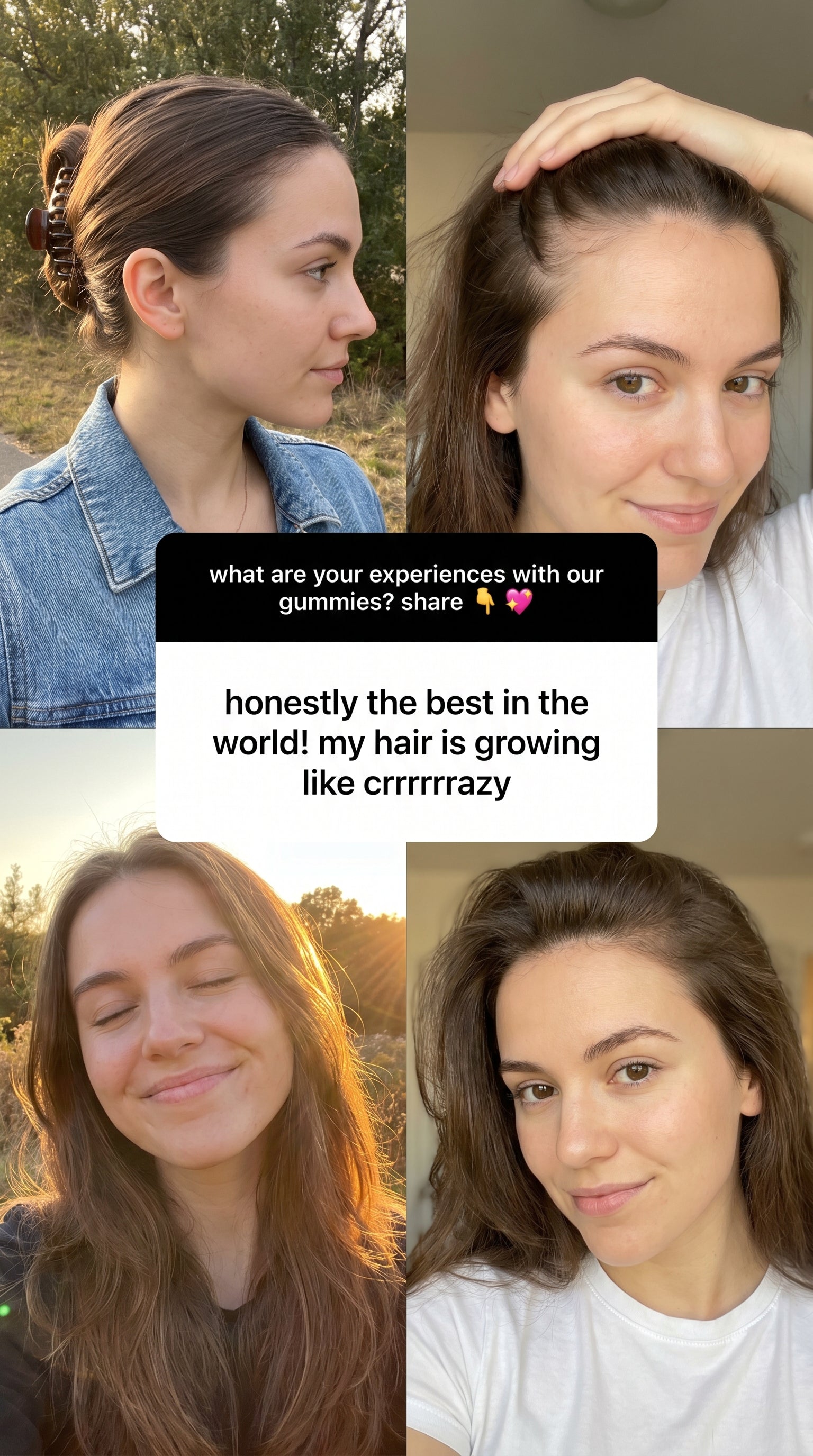
Signs of New Hair Growth: What to Look For and When
The clearest signs of new hair growth are short, fine hairs standing up along the hairline or parting, shedding that slows back towards normal, and a scalp that looks a little less visible under bright light over several months. Hair grows slowly, at roughly one centimetre a month, so these signs take time to show and are easy to miss or to confuse with breakage.
This guide explains what new growth looks like, how long it takes, how to tell it apart from broken hairs, and when a change is a reason to see a GP. If you would rather keep hormones out of it entirely, we have looked at non-hormonal hair growth and what works.
Our hair growth shampoo
Grow Me® Hair Growth Shampoo, £14.95. A sulphate free daily shampoo that supports a healthy scalp environment and helps reduce breakage, so lengths hold on and look fuller.
Signs of new hair growth include a fringe of short, upright hairs at the front hairline or along the parting, fine hairs with tapered tips rather than blunt ends, less hair on the brush or in the plughole, and a ponytail or parting that looks slightly fuller in photos taken months apart. Because hair grows about one centimetre a month, most people need three to six months of steady tracking before the signs are clear.
Key takeaways
- Hair grows at about 1 cm a month, according to DermNet, so visible change is measured in months, not weeks.
- After a burst of shedding, DermNet describes a fine fringe of new hair often appearing along the forehead hairline.
- New hairs have tapered tips; broken hairs have blunt or split ends. That is the quickest way to tell them apart.
- The American Academy of Dermatology says heavy shedding usually settles, with hair tending to regain its fullness within six to nine months.
- Patches, a sore scalp or thinning that keeps progressing are reasons to see a GP, not to wait for signs.
What are the signs of new hair growth?
These early signs are small, physical changes you can see and feel: short hairs of a few centimetres sticking up at the hairline, crown or parting, a softer, fuzzy feel at the roots, and less hair coming out when you wash or brush. They show up gradually, and they are easier to spot in good light with the hair pulled back.
DermNet, the dermatology reference run by New Zealand dermatologists, describes how after a period of heavy shedding the new hairs coming up through the scalp push out the old resting hairs, and a fine fringe of new hair is often evident along the forehead hairline. Those short hairs are frequently mistaken for frizz or breakage, when they are actually the first visible part of the next growth cycle.
If you arrived looking for predictors of how your hair will change, the honest answer is that no single sign predicts the future. What you can do is watch for these early signs, track them properly, and give them enough time.

What do new baby hairs look like compared with broken hairs?
New baby hairs look short, fine and even in length, with a tapered, pointed tip, and they usually stand up or stick out from the rest of the hair because they are too short to lie flat. Broken hairs have a blunt, frayed or split end, appear at different lengths along the shaft, and often cluster where you tie your hair or where heat and friction hit hardest.
The difference matters because the two need opposite responses. New growth needs patience and gentle handling so it is not snapped off as it lengthens. Breakage needs a change of habits: less heat, looser styles and more conditioning. Our guide to hair breakage explains the causes in detail.
| What you see | Likely new growth | Likely breakage |
|---|---|---|
| Tip of the short hair | Tapered, fine point | Blunt, frayed or split |
| Where it appears | Hairline, parting, crown, evenly spread | Where hair is tied, brushed or heated |
| Lengths | Similar lengths in one area | Many different lengths |
| On the brush | Few short hairs | Lots of short snapped pieces |
| Root bulb on fallen hairs | Shed hairs have a small white bulb | Snapped pieces have no bulb |
How long does it take to see signs of new hair growth?
It usually takes three to six months to see clear signs of new growth, because scalp hair grows at about one centimetre a month, according to DermNet. At that rate, a new hair needs a couple of months just to be long enough to notice, and several more before it adds visible fullness.
Timing also depends on what caused the thinning. After a shock to the system such as illness, childbirth or major stress, DermNet explains that increased hair fall appears two to four months after the trigger, peaks, and then tapers back to normal over six to nine months in most cases. The American Academy of Dermatology gives a similar picture for postpartum shedding, which usually peaks around four months after giving birth. Our month by month hair growth timeline goes through each stage.
Why patience matters
Most people judge a new routine after four weeks, which is far too soon. At about one centimetre a month, four weeks of growth is barely visible. Give any change at least three months before deciding whether it suits you.
Get a discount on the thinning hair range
Join the Watermans mailing list and we will email a discount code straight to your inbox, so you can try the thinning hair range for less. Made in the UK, over 6.5 million bottles sold since 2012.
Is it hair shedding, hair breakage or hair loss?
Hair shedding, hair breakage and hair loss are three different processes, and new growth looks different in each. Hair shedding is whole hairs falling out root and all as part of the hair cycle; the NHS and the American Academy of Dermatology both say losing 50 to 100 hairs a day is normal. When shedding follows a trigger, new hairs are already growing underneath, so short hairs appearing as the shedding slows is exactly what you would expect.
Hair breakage is the hair fibre snapping part way along. The follicle is unaffected, so there is nothing to grow back from the root; the aim is to keep the length you have. Hair loss in the medical sense means follicles producing finer, shorter hairs over time, as in pattern hair loss, or stopping in patches, as in alopecia areata. The American Academy of Dermatology explains that with true hair loss, hair will not grow until the cause stops, which is why ongoing thinning needs a GP rather than a waiting game.
Our guide to what causes telogen effluvium covers shedding after a trigger, and our guide to the stages of the hair growth cycle shows where new hairs come from.

How can you track signs of new hair growth at home?
You can track new growth at home by taking the same photos in the same light every month, noting how much hair you shed on wash days, and checking one fixed area, such as your parting or temples, rather than the whole head. Consistency is what makes small changes visible.
Use daylight or the same bathroom light, the same distance and angle, and hair in the same style, dry and unstyled. Photograph the front hairline, the parting from above and the crown. Write the date on each set. Once a month is enough; daily checking makes normal variation look like change. Our guide to how to measure hair growth sets out the measuring methods in more detail, including parting width and ponytail thickness.
| Check | How often | What counts as a good sign |
|---|---|---|
| Hairline and parting photos | Monthly, same light | More short upright hairs, parting looks narrower |
| Hair on the brush or in the plughole | Each wash day | Amount falling back towards normal |
| Short hairs at the front | Monthly | Fringe of fine hairs getting longer |
| Ponytail thickness | Every three months | Band wraps once less, or feels fuller |
What helps new hair growth stay healthy?
New hair growth stays healthy when you handle it gently, eat well and keep the scalp clean, because short new hairs are easy to snap before they reach any length. Nothing you put on your hair can promise faster growth, but you can stop damaging the hairs that are coming through.
The American Academy of Dermatology lists habits that damage hair, including tight ponytails, brushing wet hair roughly, rubbing hair with a towel and frequent high heat. For short new hairs at the hairline, that means loose styles, a wide-tooth comb, blotting rather than rubbing, and keeping straighteners away from the front. On diet, the NHS lists iron deficiency among the temporary causes of hair loss, so a balanced diet with enough protein and iron-rich foods matters. Our guide to the best foods for hair growth covers what to eat.

Grow Me® Hair Growth Shampoo £14.95
A daily shampoo that cleans the scalp without stripping it and helps hair look fuller, with caffeine, rosemary, niacinamide and hydrolysed lupine protein. A gentle base while you wait for new growth to lengthen.

Can you cover thin areas while you wait for new growth?
Yes, you can cover thin areas while you wait for new growth, and doing so can take a lot of the stress out of the waiting months. Hair building fibres, a different parting, a soft fringe or a loose textured style all make the scalp less visible without harming the hair coming through.
Avoid anything that pulls on the hairline, such as tight clip-in extensions over thin patches, or heavy products that need scrubbing out. Fibres cling to existing hairs and wash out with shampoo, so they sit on top of the hair rather than blocking the scalp. If you prefer a longer-term option, NHS guidance notes that some wigs are available through the NHS.

Hair Building Fibres £19.95
Fine coloured fibres that cling to existing hair to make thin areas look fuller within seconds, and wash out with your next shampoo. Useful for the months while you are tracking new growth.
When should you see a GP instead of waiting for signs?
You should see a GP instead of waiting for new growth if hair is coming out in patches, your scalp is sore, red or scaly, the thinning keeps spreading over several months, or it comes with tiredness, weight change or period changes. The NHS advises seeing a GP if you are worried about hair loss, and says the GP may be able to tell the cause by looking at your hair.
The NHS also advises seeing a GP before thinking about going to a commercial hair clinic. A GP can check for common, fixable causes such as low iron or a thyroid problem and refer you to a dermatologist when the pattern needs it. Watermans does not offer consultations or medical assessments, and nothing on this page replaces medical advice. If your question is about products or a routine rather than a medical one, you can talk to Gail Waterman, our co-founder, as an AI avatar on the Watermans homepage.
What are the frequently asked questions about signs of new hair growth?
What are the first signs of new hair growth?
Short, fine hairs standing up along the hairline, parting or crown, a fuzzy feel at the roots, and less hair falling out on wash days. DermNet describes a fine fringe of new hair often appearing along the forehead hairline after shedding.
How do I know if short hairs are new growth or breakage?
Look at the tip. New hairs have a tapered point and similar lengths in one area. Broken hairs have blunt or split ends and appear at many lengths, often where hair is tied or heated.
How long before new hair growth shows?
Usually three to six months, because hair grows about one centimetre a month. After shedding from a trigger, DermNet says hair fall tapers back to normal over six to nine months in most cases.
Does more shedding mean my hair is not growing?
Not always. With shedding after a trigger, DermNet explains that new hairs pushing up through the scalp push the old resting hairs out, so the shedding itself can come alongside new growth.
Are baby hairs at the hairline a good sign?
Short, even, tapered hairs at the hairline are usually new growth. Look after them with loose styles and gentle combing so they are not snapped off as they lengthen.
Can I speed up new hair growth?
No product can promise faster growth. You can protect the hair that is coming through by avoiding tight styles and high heat, eating a balanced diet and keeping the scalp clean.
When should I stop waiting and see a GP?
See a GP if hair loss is patchy, the scalp is sore, the thinning keeps spreading after several months, or you have other symptoms such as tiredness or weight change.
What is the bottom line on signs of new hair growth?
The bottom line on signs of new hair growth is that they are small and slow: short, tapered hairs at the hairline or parting, shedding that eases back towards normal, and photos that look slightly fuller months apart. Track the same areas monthly, protect new hairs from tension and heat, and see a GP about patches or thinning that keeps spreading.
While you wait, a gentle hair growth shampoo keeps the scalp clean without stripping the hair that is coming through.
Sources & references
- DermNet, Hair loss, checked 18 September 2026.
- DermNet, Telogen effluvium, checked 18 September 2026.
- American Academy of Dermatology, Do you have hair loss or hair shedding?, checked 18 September 2026.
- American Academy of Dermatology, 10 hair care habits that can damage your hair, checked 18 September 2026.
- NHS, Hair loss, checked 18 September 2026.
Watermans products are 100% cosmetic and do not treat medical hair loss. Individual results may vary.