Fine Hair Care: How to Wash, Style and Strengthen It
Fine hair care is a technique problem far more than a product problem. Fine hair means each individual strand is narrow, so it carries less weight before it collapses, coats more easily and snaps sooner than thick hair does. That single fact decides everything below: how often you wash, where conditioner goes, how you dry it, which cut holds and what genuinely strengthens the fibre. Get the technique right and the same head of hair looks noticeably fuller.
Our hair growth shampoo
Grow Me® Hair Growth Shampoo, £14.95. A sulphate free daily shampoo that supports a healthy scalp environment and helps reduce breakage, so lengths hold on and look fuller.
Key takeaways
- Fine is about strand diameter. Thin is about how many strands you have. They are different problems and only one of them is a hair care issue.
- Fine hair care starts with washing more often than you have been told to. Fine hair is flattened by sebum faster than any other type.
- Conditioner belongs on the mid-lengths and ends only. On the roots it is the single biggest cause of flat fine hair.
- Root lift at the drying stage does more for apparent volume than any product claim on a bottle.
- A blunt line at the ends reads as density. Heavy layering through fine hair usually reads as thinning.
What does fine hair actually mean?
Fine hair describes the diameter of each individual strand, typically under about 50 microns, against roughly 60 to 90 for medium and above 90 for coarse. It is a property you inherit, in the same way your eye colour is, and it can sit alongside a very high strand count. Plenty of people have fine hair and a great deal of it. If you are not sure whether your hair is naturally fine or genuinely thinning, our Swindon guide to fine hair versus thinning walks through the home checks.
The practical consequences are consistent. A narrow strand has less internal structure to resist bending, so it goes limp under a fraction of the product weight that coarse hair shrugs off. It has proportionally more cuticle surface for its mass, so it takes up oil and product faster and looks greasy sooner. And it has less cortex, so it snaps at a lower force, which is why fine hair so often struggles to hold length.
Doing a quick test at home is worth a minute. Take one clean, dry strand and roll it between your fingertips. If you can barely feel it, it is fine. Compare it to a sewing thread: fine hair is noticeably thinner, medium is about the same, coarse is thicker.
Watermans products are 100% cosmetic and do not treat medical hair loss. Individual results may vary.
Fine, thin or breaking: which problem do you actually have?
Fine hair, thinning hair and breaking hair are three separate things that all end up described as "my hair looks flat", and fine hair care only fixes one of them properly.
| What it is | How to tell | What changes it |
|---|---|---|
|
Fine narrow strands |
Always been this way. Ponytail feels slim but the scalp is not showing through. | Technique, cut and styling. This whole page. |
|
Hair loss or thinning fewer or shrinking follicles |
Newer. Parting widening, scalp visible in a pattern, ponytail measurably slimmer than a year ago. | A GP conversation. Cosmetics support the look but do not change follicle count. |
|
Hair shedding too many follicles resting |
Sudden and diffuse, 2 to 3 months after illness, stress or a big diet change. Full-length hairs with a pale bulb. | Time plus fixing the trigger. Ask about ferritin if it is heavy. |
|
Hair breakage the fibre snapping |
Short broken pieces of uneven length, ends that will not grow past a point, frizz halo. | Less heat, less tension, more conditioner on the ends. Fine hair is unusually prone to this. |
Fine hair and breakage very often run together, because a narrow strand snaps at a lower force. That is why the strengthening section below matters more on fine hair than on any other type.
How often should fine hair be washed?
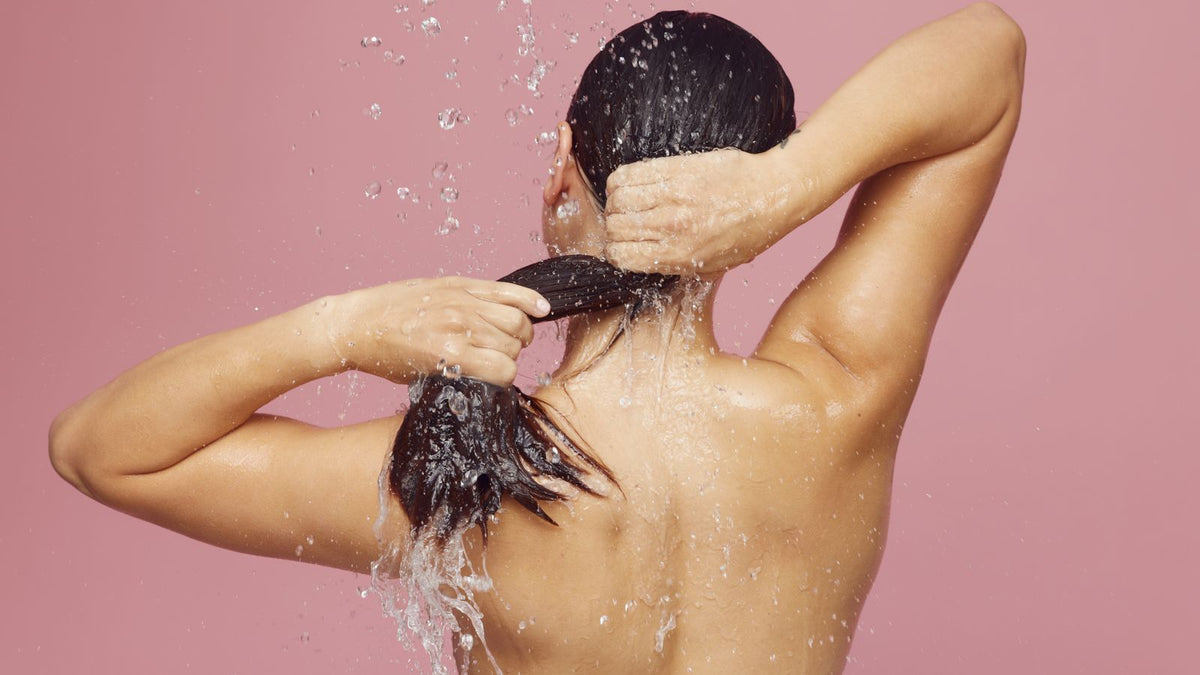
Fine hair care usually means washing more often than other types, commonly every day or every other day, because sebum weighs a narrow strand down faster. The widespread advice to "train your hair" by stretching washes out is the worst possible guidance for this hair type: it just means more days flat.
- Wash when the roots go limp, not on a fixed schedule. For most fine hair that is every 1 to 2 days.
- Shampoo the scalp, not the lengths. Lather at the roots and let the rinse-off clean the rest. Scrubbing the ends is how fine hair gets dry ends and oily roots at the same time.
- Use less than you think. A 5ml blob, roughly a teaspoon, lathers most fine hair. Excess product is the most common cause of dull, coated fine hair.
- Two quick shampoos beat one long one if you use styling products. The first lifts the product, the second actually cleans the scalp.
- Rinse for longer than feels necessary. Residue is heavier on fine hair than on any other type.
- Finish cooler. A brief cool rinse flattens the cuticle and adds shine, which reads as healthier hair.
Sulphate-free formulas suit fine hair well, as long as you accept that they lather less. Less lather is not less cleaning.

A sulfate-free wash light enough for frequent use on fine hair, with biotin, caffeine, rosemary, niacinamide and hydrolysed lupine protein. It cleans the scalp without leaving the coating that flattens narrow strands, and builds body at the root. Vegan, made in the UK, over 6.5 million bottles sold since 2012.
Where should conditioner go on fine hair?
Conditioner goes on the mid-lengths and ends, never on the scalp or the first few centimetres of root. This one placement rule is the highest-impact thing on this page, and it is the mistake almost every person with fine hair makes at some point.
The reason is mechanical rather than chemical. Conditioners work by depositing cationic ingredients that cling to the hair surface. On the ends, where the cuticle is oldest and most damaged, that deposit is exactly what you want, because it reduces friction and stops the strand snapping. At the root, that same deposit adds weight to the part of the strand that has to stand the hair up, and a fine strand simply cannot carry it.
- Squeeze the water out first. Conditioner applied to soaking hair mostly runs off, so people compensate by using more.
- Start at the ears and work down. Anything above that line is wasted at best.
- Use a 10p-sized amount for shoulder-length fine hair, and comb it through with fingers rather than piling it on.
- Leave it 60 seconds, which is long enough. Deep-conditioning fine hair for ten minutes usually just weighs it down.
- Rinse thoroughly. Under-rinsing is the second biggest cause of flat fine hair after root application.
If your ends are genuinely dry, a weekly mask on the bottom third is a better tool than a heavier daily conditioner. Weight you apply once a week is far easier to carry than weight you apply every wash.

How do you dry fine hair for maximum volume?
Root lift is created while hair dries, and it cannot be added afterwards, which makes drying the highest-leverage step in fine hair care. Once a fine strand has dried lying flat against the scalp, no product will lift it without rewetting. That makes the drying stage the single most valuable ten minutes in fine hair care.
- Rough dry to about 80 percent first, head tipped forward, fingers moving at the roots. This is where the lift comes from.
- Then finish with a brush only for the last 20 percent, lifting each section up and away from the scalp rather than pulling it flat.
- Dry the roots in the opposite direction to your parting, then flip it back. It is the oldest trick there is and it still works better than most mousses.
- Blast cool at the end of each section to set the shape while the hair is still lifted.
- Never wrap wet fine hair in a heavy towel turban. The weight and the friction together cause a surprising amount of breakage. Squeeze with a microfibre towel or a cotton t-shirt instead.
Air-drying suits fine hair only if you can leave it alone. Touching it while it dries breaks the cuticle alignment and creates frizz, which on a narrow strand shows up immediately.

Protect Me Heat Protection Spray
If the drying advice above is going to be followed daily, this is the non-negotiable. A light leave-in mist protecting to 230C, with niacinamide, panthenol and caffeine, formulated fine enough that it does not weigh narrow strands down.

Get a discount on the fine hair range
Join the Watermans mailing list and we will email a discount code straight to your inbox, so you can try the fine hair range for less. Made in the UK, over 6.5 million bottles sold since 2012.
Which styling products belong in fine hair care?
The rule for products in fine hair care is weight, not category. Anything that stays on the hair adds mass to a strand that has very little of its own, so the question is always how much is being deposited and where.
| Product | Verdict for fine hair | How to use it |
|---|---|---|
| Mousse | The best all-round choice | Golf-ball size into damp roots only, then rough dry |
| Root-lift spray | Excellent, very targeted | Damp roots in sections, dry immediately while lifting |
| Dry shampoo | Good for texture, bad as a wash substitute | Roots, 30cm away, brush it out properly rather than layering it |
| Texture or sea-salt spray | Useful in moderation, drying if overused | Mid-lengths, scrunch, follow with conditioner on the ends next wash |
| Hair oil or serum | Ends only, tiny amount | One drop, rubbed between palms, bottom 5cm |
| Wax, pomade, heavy cream | Avoid on fine hair | Almost always too heavy, and hard to wash out in one go |
Which cut and colour make fine hair look thickest?
A blunt line at the ends is the most reliable way to make fine hair look denser, and it is the part of fine hair care that happens in a salon chair rather than a shower, because density is read at the perimeter. When every strand ends at the same point the eye sees a solid edge. When ends are thinned and layered heavily, the eye sees straggle, which reads as thinning even when nothing has been lost.
- Length. Chin to collarbone is the sweet spot for most fine hair. Long fine hair loses its perimeter to breakage and drags the roots flat under its own weight.
- Layers. Some, high and soft, for movement. Avoid heavy internal layering and avoid point-cutting the ends into a wispy finish.
- Blunt bobs and lobs are consistently the strongest choice, which is why they never go away.
- Colour. Highlights and lowlights create the illusion of depth, and multi-tonal colour makes hair look thicker than a flat single shade.
- Root shadow. Slightly darker roots reduce the contrast between hair and scalp, which is exactly what makes a parting look wider than it is.
- Bleach with care. Bleach swells the fibre so hair feels thicker at first, then leaves it weaker. On an already narrow strand that trade rarely pays off.

What actually strengthens fine hair?
Strengthening fine hair means reducing how often it snaps, because you cannot widen a strand your follicle makes narrow. Everything below is about keeping the length you already grow.
- Detangle from the ends upwards, with a wide-tooth comb, on damp rather than soaking hair. Starting at the roots drags every knot down the length.
- Drop the tension. Tight ponytails, high buns worn daily and hard elastics all break fine hair at the tie line. Use a coil or a fabric scrunchie and vary the height.
- Lower the heat. Fine hair needs far less heat than the dial suggests. If your straightener has a setting above 180C, you almost certainly do not need it.
- Sleep smarter. A silk or satin pillowcase genuinely reduces overnight friction, and a loose low plait stops tangles that get ripped out in the morning.
- Trim every 8 to 10 weeks. A split travels up the strand, and on fine hair it travels fast.
- Eat enough, especially protein and iron. Hair is one of the first things the body deprioritises. Restrictive dieting shows up in the hair two to three months later.
On diet, the honest position is that supplements only help if you are actually short of something. If your diet is restricted, or shedding is heavy, ask a GP about ferritin rather than guessing on the supplement aisle.

Light enough for fine hair when kept to the mid-lengths and ends, with cholesterol, shea butter and hydrolysed lupine protein to help hair detangle instead of snapping. This is the anti-breakage half of the routine, and on fine hair it matters more than the shampoo.
Frequently Asked Questions
Can fine hair be made thicker?
Not in strand diameter, which is inherited. Fine hair can be made to look and feel considerably thicker through a blunt cut, root lift at the drying stage, multi-tonal colour and reducing breakage so more length survives. Those changes are real and visible, but they work on appearance rather than on the fibre your follicle produces.
How often should I wash fine hair?
Every one to two days for most people, and daily is fine if your roots go flat. Sebum weighs a narrow strand down faster than a thick one, so stretching washes out costs you volume for no benefit. Shampoo the scalp and let the rinse clean the lengths.
Is conditioner bad for fine hair?
No, but its placement is critical. Conditioner on the mid-lengths and ends prevents the breakage fine hair is prone to. Conditioner on the roots is the most common single cause of flat fine hair. Same product, opposite outcomes.
What is the best haircut for fine hair?
A blunt bob or lob between chin and collarbone, with minimal internal layering. Density is read at the perimeter, so a solid edge looks thicker than a wispy, heavily layered one, and shorter lengths do not drag the roots flat.
Does colouring damage fine hair?
Colour can, and bleach usually does. Deposit-only colour and gentle highlights are generally well tolerated and add visual thickness through tonal contrast. Repeated bleaching swells and weakens a strand that has little structure to spare, so the initial thicker feel comes at a cost.
Does dry shampoo damage fine hair?
The product itself does not damage the fibre, but layering it for days without washing leaves buildup on a scalp that fine hair needs kept clean, which can cause itching and flaking. Use it to buy one day, not four, and brush it out properly.
Are hair supplements worth it for fine hair?
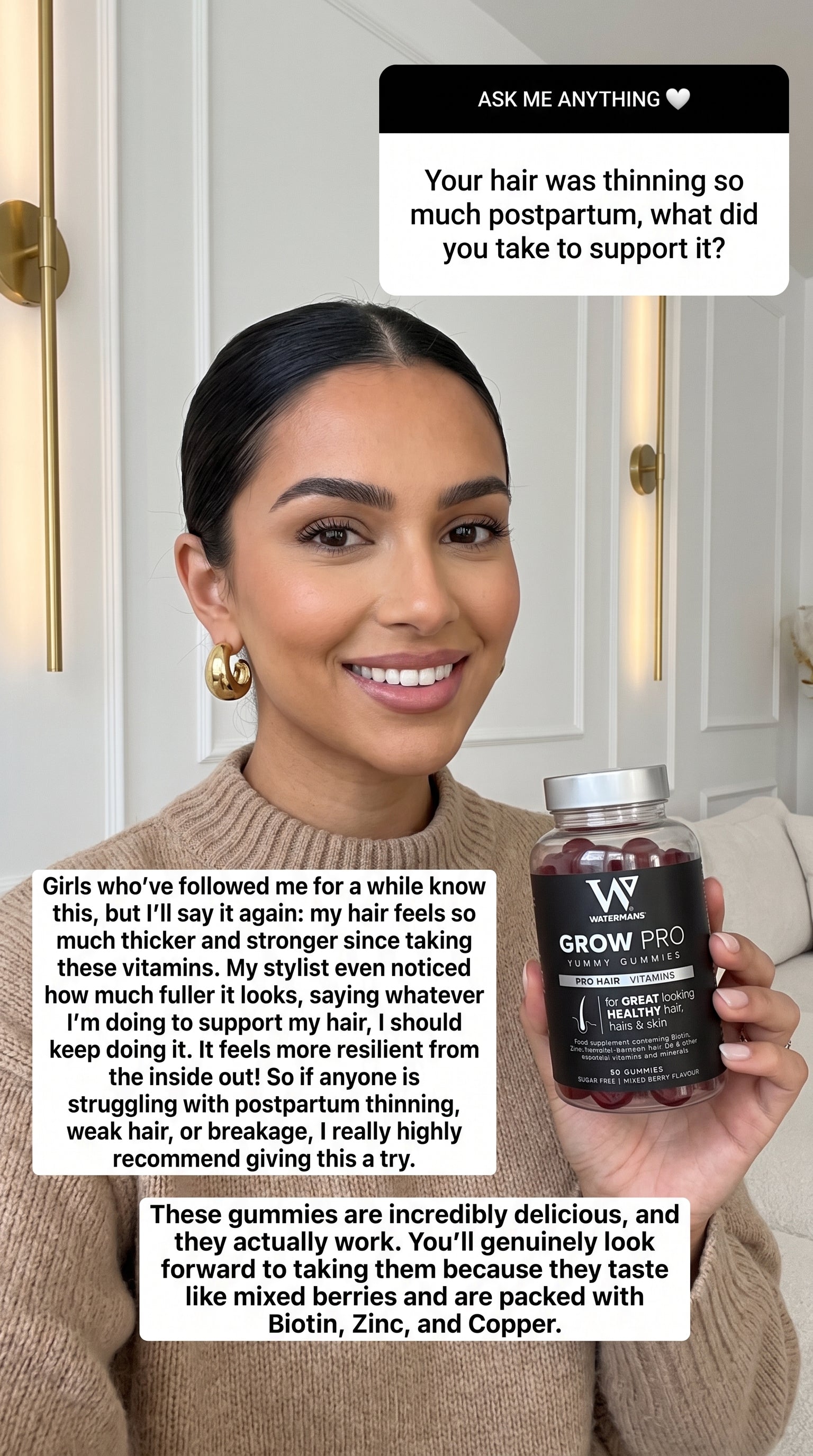
Only if you are genuinely short of a nutrient. Supplementing something you already have enough of does nothing for hair diameter or density. If your diet is restricted or you are shedding heavily, ask a GP about ferritin and thyroid rather than buying on spec. If your question is about products or a routine rather than a medical one, you can talk to Gail Waterman, our co-founder, as an AI avatar on the Watermans homepage.
Why does my fine hair never grow past my shoulders?
Almost always breakage rather than slow growth. A narrow strand snaps at lower force, so length is lost at the ends as fast as it is gained at the root. Regular trims, less heat, less tension and conditioner on the ends usually solve it within a few months.
What is the bottom line on fine hair care?
Good fine hair care comes down to five habits: wash often enough that the roots stay light, keep conditioner off the scalp, build lift while the hair dries, choose a blunt cut, and protect the ends from heat and tension so length actually accumulates. None of that requires an expensive shelf of products, and all of it works on the hair you already have. If your parting is genuinely widening rather than your hair simply being fine, that is a different problem and a GP conversation.
The routine side of this starts at the shampoo, and Grow Me hair growth shampoo is where we would point you. Vegan, made in the UK.
Watermans products are 100% cosmetic and do not treat medical hair loss. Individual results may vary.
Related reading: how to pair a shampoo and conditioner for fine hair, the seven-product toolkit for fine, thin hair, the 13 reasons hair falls flat, and the three-clue self-check for thinning hair.
Sources and References
- NHS, Hair loss, on distinguishing inherited hair characteristics from patterns that need a GP.
- NHS, Iron deficiency anaemia, on why ferritin is the blood test worth asking about when shedding is heavy.
- NHS, Vitamins and minerals, on realistic intakes, relevant before buying hair supplements.
- NHS, How to eat a balanced diet, on the protein and micronutrient basis behind the strengthening section.
- NHS, Contact dermatitis, on cosmetic and fragrance ingredients as causes of an itchy, flaking scalp.